
Understanding Why Competitors Get More AI Citations
Discover why competitors dominate AI-generated answers and learn proven strategies to increase your brand's visibility in ChatGPT, Perplexity, and Google AI Ove...
8 min read
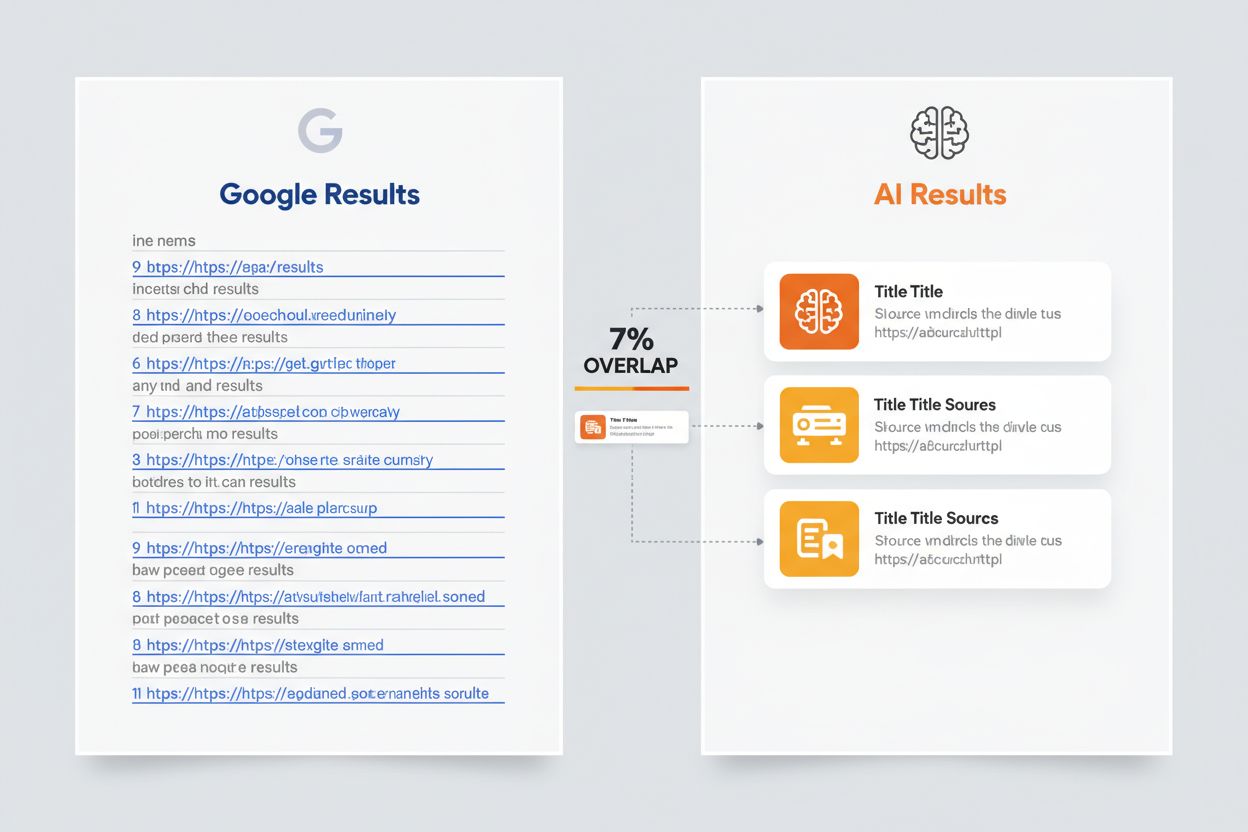
Only 7% of URLs cited by AI search engines match Google’s top results. Discover why ranking on Google doesn’t guarantee AI visibility and how to optimize for multi-platform discovery.
Only 7% of URLs cited by AI search engines appear in Google’s top results, according to recent research analyzing citation patterns across major AI platforms. While domain-level overlap reaches 21%, this dramatic gap at the URL level reveals a fundamental disconnect between traditional search visibility and AI visibility. The shocking reality is that ranking #1 on Google provides virtually no guarantee that your content will be cited by ChatGPT, Perplexity, or Google Gemini—the platforms reshaping how billions of people access information. This visibility gap represents one of the most critical blind spots in modern digital strategy.
The overlap statistics vary significantly across AI platforms, revealing distinct citation behaviors that defy traditional SEO assumptions:
| Platform | URL Overlap % | Domain Overlap % |
|---|---|---|
| Perplexity | 24% | 43% |
| OpenAI ChatGPT | 7% | 21% |
| Google Gemini | 6% | 28% |
These differences expose how each AI system operates under fundamentally different retrieval and reasoning mechanisms, making a one-size-fits-all visibility strategy impossible. Perplexity’s higher overlap with Google reflects its live web retrieval approach, while ChatGPT and Gemini’s lower overlap demonstrates their preference for semantic reasoning over ranking position.
The business implications are profound and counterintuitive: a page ranking first on Google for a high-volume keyword may receive zero citations from AI systems, while a lesser-known resource gains prominence across multiple AI platforms. This paradox intensifies when considering that AI Overviews reduce click-through rates by 47%, yet visitors from AI citations convert 4-5x better than organic search traffic. Brands face an uncomfortable truth—AI visibility delivers smaller traffic volumes but dramatically higher-quality engagement and conversion rates. The traditional metric of “more traffic equals more revenue” no longer applies in the AI-driven search landscape. Companies optimizing solely for Google rankings are simultaneously becoming invisible to the fastest-growing discovery channels.
The root cause of this disconnect lies in the technical architecture of different AI systems: Perplexity uses live web retrieval similar to traditional search engines, making its citation patterns closer to Google’s, while ChatGPT and Gemini rely on reasoning and selective citation from their training data. These systems don’t simply rank pages by authority or backlinks; they evaluate content based on semantic clarity, factual accuracy, and how well information answers specific user queries. A page optimized for Google’s ranking factors—keyword density, backlink profile, domain authority—may lack the structural clarity and semantic precision that AI systems require for citation. The AI systems prioritize content that directly addresses user intent with minimal ambiguity, often preferring sources that explicitly structure information in ways that facilitate reasoning.
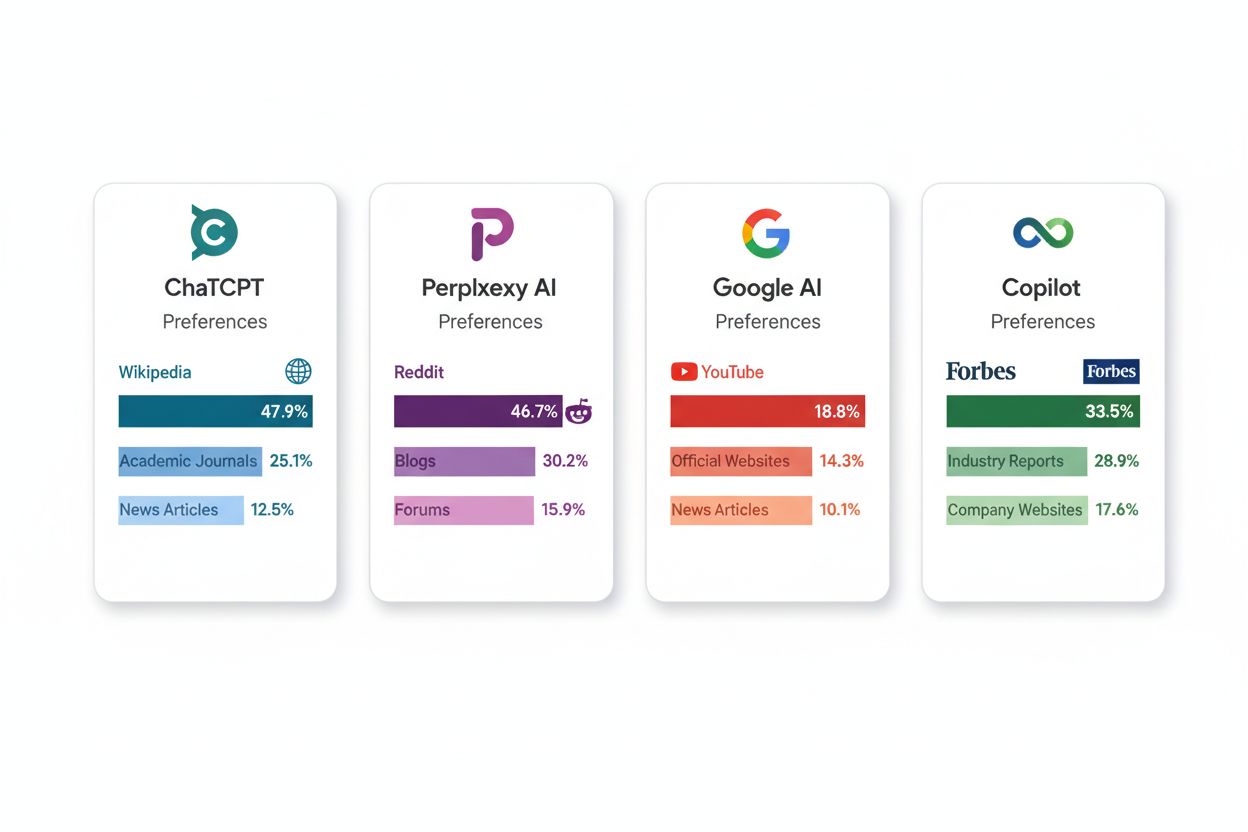
Each AI platform exhibits distinct citation preferences that reveal their underlying retrieval logic:
These patterns demonstrate that AI systems don’t simply cite the highest-ranking pages—they cite sources that align with their specific training data, retrieval mechanisms, and reasoning preferences. ChatGPT’s heavy reliance on Wikipedia reflects its training data composition, while Perplexity’s preference for Reddit and YouTube shows how live retrieval surfaces community-driven and multimedia content. Understanding these platform-specific preferences is essential for any brand seeking AI visibility, as optimizing for one platform’s citation behavior may actively harm visibility on another.
Content that dominates Google’s rankings often fails to achieve AI visibility because it lacks the semantic structure these systems prefer. 81% of pages cited by AI systems include schema markup, compared to significantly lower adoption among top Google results, indicating that AI systems reward explicit semantic clarity through structured data. E-E-A-T signals (Experience, Expertise, Authoritativeness, Trustworthiness) matter differently to AI systems than to Google’s algorithm—while Google infers these qualities from backlinks and domain authority, AI systems evaluate them through content structure, citation patterns, and how directly expertise is demonstrated. The gap between SEO optimization and AI optimization has widened because traditional SEO focuses on ranking factors that don’t correlate with AI citation behavior. A page can be perfectly optimized for Google while remaining invisible to AI systems that prioritize different signals entirely.
Brands must develop separate optimization strategies for each AI platform rather than applying a unified approach across all discovery channels. The 18-24 month window before AI citation patterns potentially match Google’s conversion volume creates an unprecedented competitive advantage for early movers who build citation authority now. Companies cited frequently by AI systems in the present will establish authority that becomes increasingly difficult for competitors to displace as these platforms mature and their citation patterns solidify. This isn’t about choosing between Google optimization and AI optimization—it’s about recognizing that AI platforms cite only 2-3 sources per query, meaning each citation slot represents exponentially more value than appearing in Google’s top 10 results. The brands that secure these limited citation slots today will dominate AI-driven discovery for years to come.
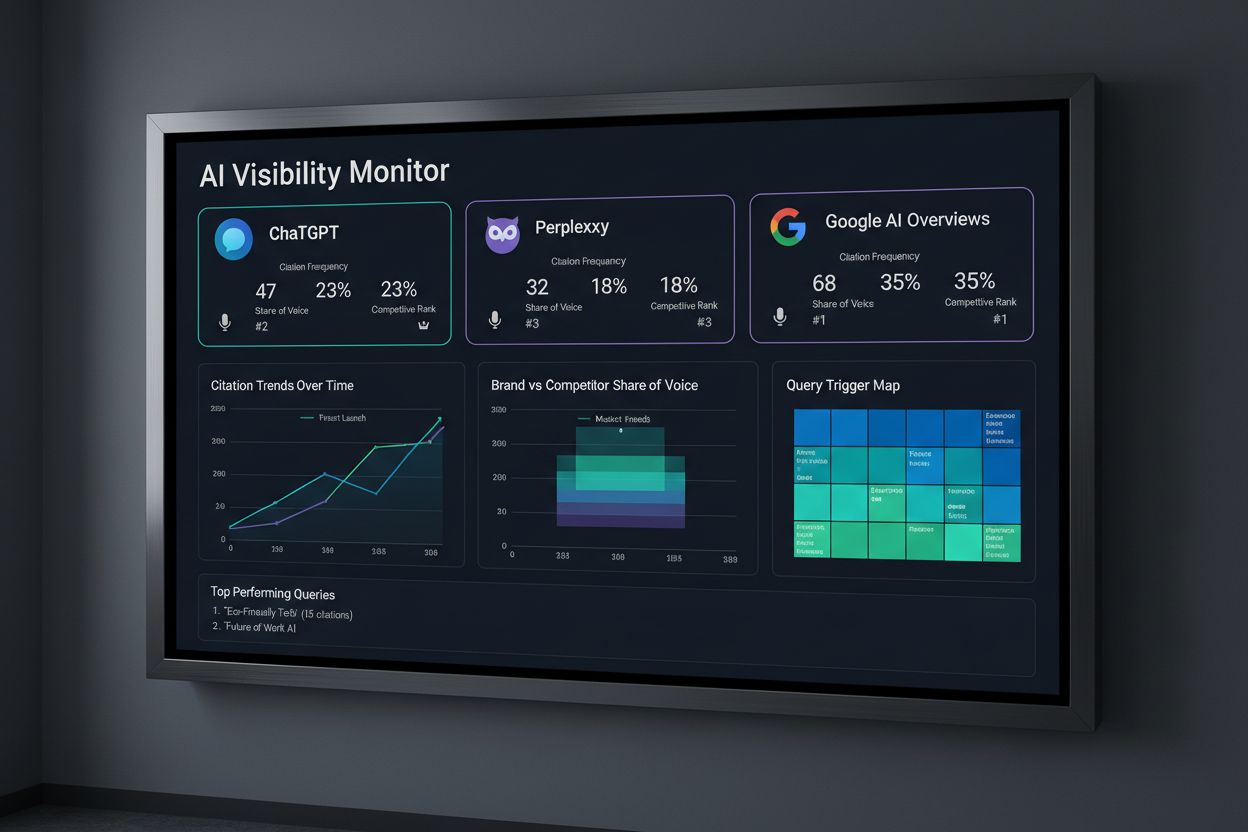
Tracking AI visibility requires fundamentally different measurement approaches than traditional SEO metrics, as Google rankings provide zero insight into AI citation frequency. Tools like Profound, Otterly.AI, and Semrush’s AI SEO Toolkit enable brands to monitor citation frequency across platforms, track share of voice among competitors, and measure sentiment in AI-generated responses. Traditional SEO dashboards measuring keyword rankings and organic traffic completely miss the AI visibility dimension, leaving brands blind to how their content performs in the fastest-growing discovery channel. Effective AI visibility measurement requires monitoring citation frequency (how often your content is cited), citation context (what queries trigger your citations), and competitive positioning (how your citation frequency compares to competitors). Without these metrics, brands cannot understand whether their content strategy is succeeding or failing in the AI-driven search landscape.
The 18-24 month competitive advantage window represents a critical inflection point where early movers in AI optimization will establish citation authority that becomes self-reinforcing and difficult to displace. As AI platforms mature and their citation patterns stabilize, the brands already cited frequently will gain compounding advantages—more citations lead to higher visibility, which leads to more user engagement, which signals quality to AI systems, which leads to more citations. Since AI platforms cite only 2-3 sources per query compared to Google’s top 10 results, each citation slot represents exponentially more traffic and authority than traditional search visibility. Companies waiting for AI visibility to become “standard practice” will find themselves competing for increasingly scarce citation slots against established authorities. The time to optimize for AI visibility is now, before the competitive landscape hardens and citation authority becomes concentrated among early movers.
AmICited.com solves the core problem of AI visibility blindness by providing comprehensive monitoring of how your brand appears across ChatGPT, Perplexity, Google Gemini, and other AI platforms. The platform tracks brand mentions, citation frequency, and competitive positioning across AI systems, revealing the AI visibility gap that traditional SEO tools completely miss. Rather than guessing whether your content strategy works in AI-driven discovery, AmICited delivers concrete data on citation patterns, share of voice, and how AI systems reference your brand compared to competitors. For brands serious about maintaining visibility as search behavior fundamentally shifts toward AI platforms, AmICited transforms the invisible overlap problem into measurable, actionable intelligence.
The 7% overlap problem refers to the finding that only 7% of URLs cited by AI search engines (like ChatGPT) appear in Google's top search results. This means ranking well on Google provides virtually no guarantee that your content will be cited by AI platforms, creating a significant visibility gap that most brands don't even know exists.
AI platforms use different retrieval and reasoning mechanisms than Google. Perplexity uses live web retrieval similar to Google, while ChatGPT and Gemini rely on semantic reasoning and selective citation from their training data. They prioritize semantic clarity and structured content over ranking position, meaning a top-ranking Google page may lack the structure AI systems prefer.
No. Ranking #1 on Google provides virtually no guarantee of AI visibility. Research shows only 7% URL overlap between Google's top results and AI citations. A page can dominate Google rankings while remaining completely invisible to ChatGPT, Perplexity, and other AI platforms that evaluate content using different criteria.
Each AI platform has distinct citation preferences: ChatGPT favors Wikipedia (47.9%), Perplexity prioritizes Reddit (46.7%), Google AI balances YouTube (18.8%), LinkedIn (15.2%), and Quora (12.4%), while Microsoft Copilot heavily favors Forbes and Gartner. These differences mean a one-size-fits-all optimization strategy won't work across platforms.
Tools like Profound, Otterly.AI, and Semrush's AI SEO Toolkit enable you to monitor citation frequency across platforms, track share of voice among competitors, and measure sentiment in AI-generated responses. AmICited.com specifically monitors how your brand appears across ChatGPT, Perplexity, Google AI Overviews, and other platforms.
Companies have approximately 18-24 months before AI citation patterns potentially match Google's conversion volume. Early movers who build citation authority now will establish advantages that become increasingly difficult for competitors to displace as these platforms mature and citation slots become more scarce.
Yes. AI visitors convert 4-5x better than traditional Google search visitors, despite lower traffic volume. This is because AI users arrive further along the buyer journey—they've already researched and compared alternatives through conversation with AI assistants before clicking through to your site.
AI systems prefer content with clear semantic structure, including schema markup (81% of cited pages include it), E-E-A-T signals demonstrated through content structure, question-based headings, direct answers in opening paragraphs, and verifiable statistics with attribution. Content optimized purely for Google rankings often lacks this structural clarity.
Track how AI platforms reference your brand across ChatGPT, Perplexity, and Google AI Overviews. Understand your AI visibility gap and optimize for the platforms reshaping search.
Discover why competitors dominate AI-generated answers and learn proven strategies to increase your brand's visibility in ChatGPT, Perplexity, and Google AI Ove...
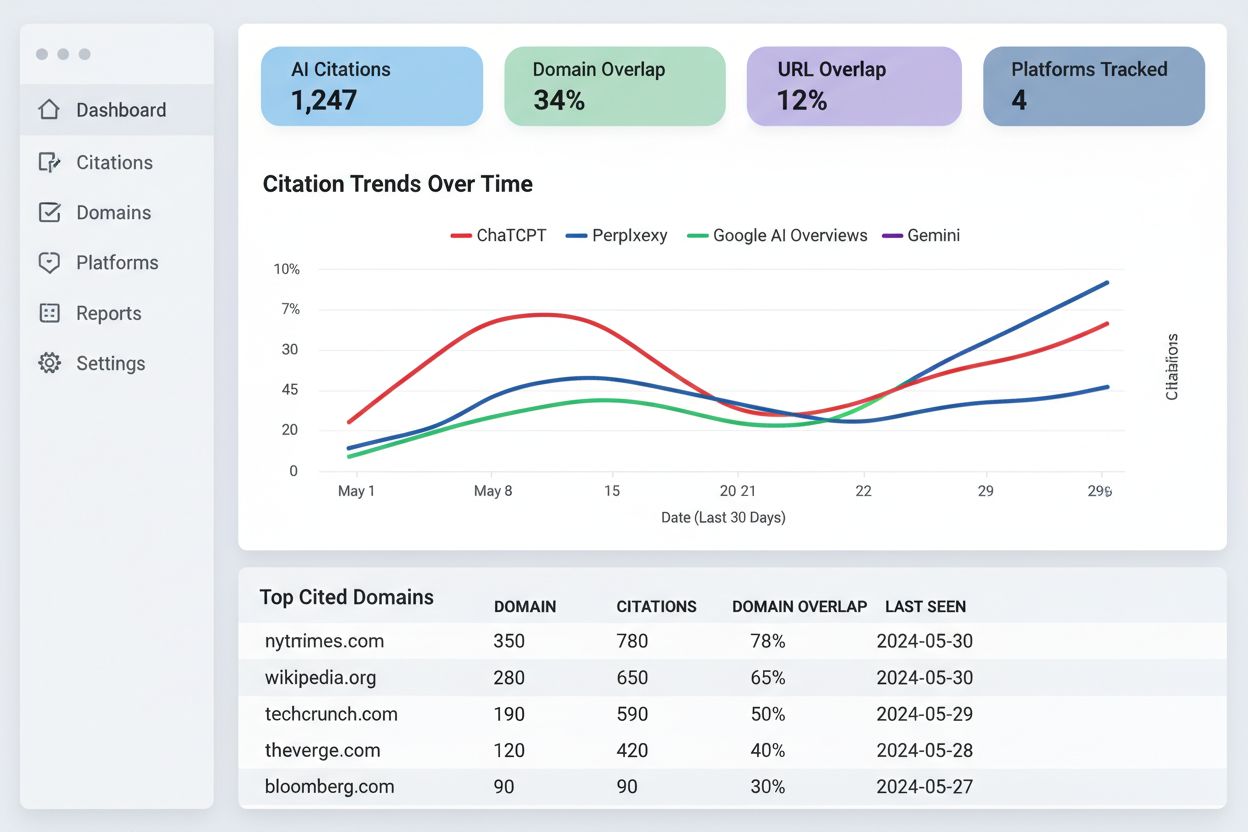
Learn about the 7% Overlap Problem - the critical finding that only 7% of URLs in Google's top 10 appear in AI citations. Understand domain vs URL overlap, why ...
Discover the strong correlation between SEO rankings and AI visibility. Learn how traditional SEO drives AI citations and what signals matter most for AI platfo...