
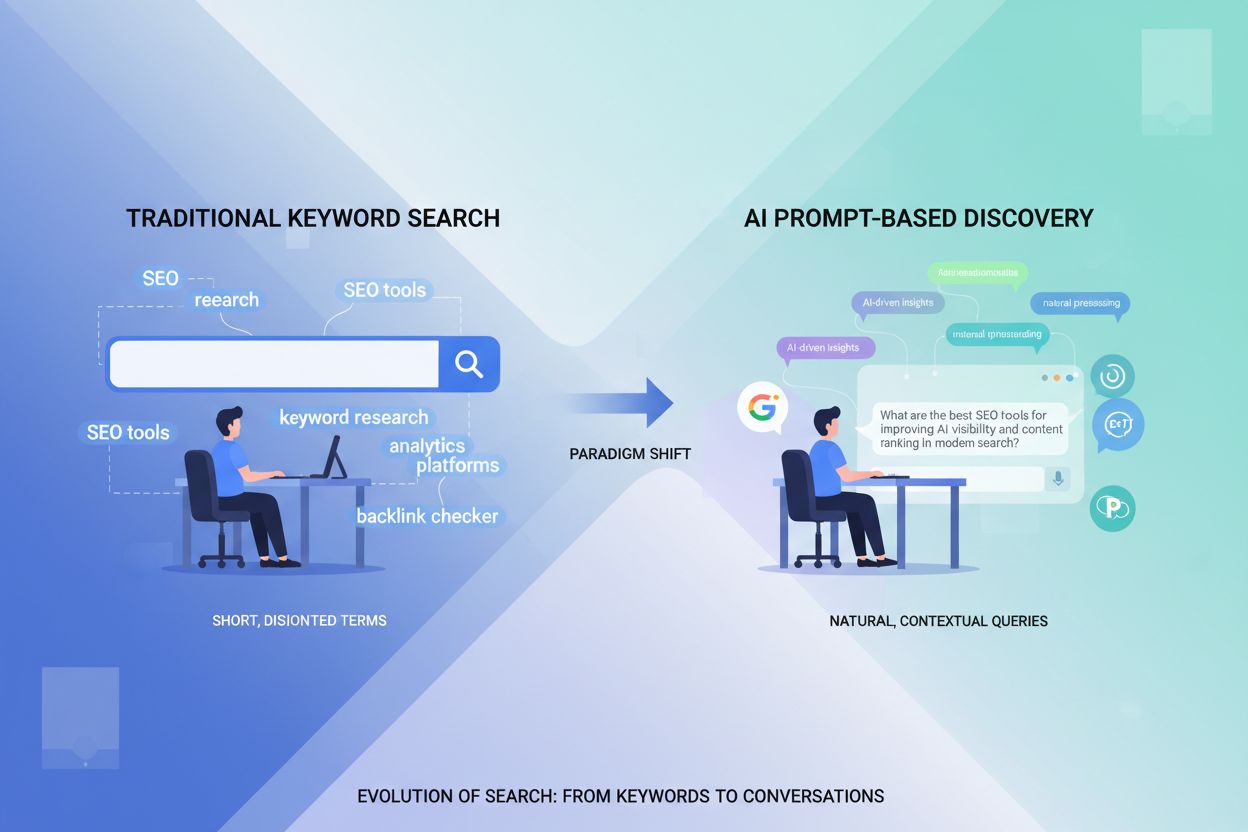
Keyword Research vs Prompt Research: The New Paradigm
Discover how prompt research is replacing traditional keyword research in AI-driven search. Learn the methodology differences and optimize your content for gene...
10 min read
Master agile optimization strategies to adapt quickly to AI platform algorithm changes. Learn how to monitor ChatGPT, Perplexity, and Google AI updates and maintain brand visibility.
The digital landscape has fundamentally shifted. ChatGPT now reaches over 400 million weekly active users, Perplexity processes billions of queries monthly, and Google’s AI Overviews appear on more than 50% of search results pages. Yet this explosive growth masks a critical challenge: these platforms are constantly evolving, and their algorithm changes happen faster than traditional marketing strategies can accommodate.
Consider the impact on content creators and marketers. Instagram’s reach declined by 18% year-over-year in 2024, largely due to algorithm shifts prioritizing video content over static posts. Similar disruptions are happening across AI platforms. When ChatGPT adjusts its citation preferences, when Perplexity changes its recency requirements, or when Google modifies how AI Overviews select sources, brands that haven’t adapted lose visibility overnight.
The problem with traditional static strategies is their inherent rigidity. A content strategy optimized for last month’s algorithm may be completely ineffective today. Static approaches assume platform rules remain constant, but AI platforms powered by machine learning continuously adapt based on user behavior, emerging trends, and competitive dynamics. What worked for brand visibility three months ago might actively harm your rankings now.
This is where agile optimization becomes essential. Rather than treating AI platform adaptation as a quarterly review, agile approaches treat it as an ongoing, iterative process. Teams monitor changes continuously, test new strategies rapidly, gather data on what works, and adjust course accordingly. The difference is dramatic: while competitors spend weeks analyzing changes and planning responses, agile teams implement and test solutions within days.
The stakes couldn’t be higher. Your brand’s visibility in AI-generated responses directly impacts customer discovery, trust, and ultimately revenue. Brands that master agile adaptation to AI platform changes will dominate their niches, while those clinging to static strategies will gradually fade from visibility.
AI platforms don’t change their algorithms randomly. Each update serves a specific purpose: improving user experience, reducing spam, promoting higher-quality content, or shifting toward emerging content formats. Understanding these change types helps you anticipate shifts and adapt proactively.
Four primary types of algorithm changes affect AI platforms:
Content Prioritization Shifts: Platforms adjust which content types receive prominence. Instagram now heavily promotes Reels over static images. Similarly, AI platforms may shift toward favoring video transcripts, interactive content, or specific content lengths.
Engagement-Based Changes: Updates that reward content generating meaningful interactions (comments, shares, saves) over passive consumption (likes, views). These changes reflect platform goals of fostering genuine community engagement.
Recency and Freshness Adjustments: Modifications to how platforms weight content age. Perplexity heavily penalizes stale content, while ChatGPT shows more tolerance for evergreen material. These changes reflect user expectations for current information.
Quality Control Mechanisms: Updates filtering spam, misinformation, and low-quality content. Platforms increasingly use machine learning to identify and deprioritize content that fails fact-checking or violates quality standards.
| Platform | Primary Ranking Factor | Secondary Factor | Update Frequency |
|---|---|---|---|
| ChatGPT | Domain Authority & Content Depth | Recency (moderate) | Weekly |
| Perplexity | Content Freshness | Domain Authority | Daily-Weekly |
| Google AI Overviews | Traditional SEO Signals | E-E-A-T Indicators | Weekly |
| Claude | Academic Credibility | Content Accuracy | Bi-weekly |
Spotting algorithm changes requires vigilant monitoring. A sudden drop in citation frequency, unexpected traffic changes, or shifts in which competitors appear in responses typically signal algorithm updates. The key is establishing baseline metrics before changes occur, making deviations obvious.
Agile methodology—originally developed for software development—translates remarkably well to AI platform adaptation. Rather than planning content strategies for six months and hoping algorithms don’t change, agile approaches break adaptation into rapid cycles of planning, execution, measurement, and iteration.
Sprint-based optimization structures AI adaptation into two-week cycles. Week one focuses on monitoring changes, analyzing performance data, and identifying which content types or topics are affected. Week two implements changes: refreshing content, testing new formats, adjusting distribution strategies, and measuring results. This rhythm keeps your team responsive without creating constant chaos.
Rapid iteration and testing replace lengthy planning cycles. Instead of debating whether to add answer capsules to your content, agile teams implement the change on a subset of pages, measure results within days, and scale what works. This data-driven approach eliminates guesswork and reveals what actually resonates with AI platforms.
Feedback loops are central to agile adaptation. Your monitoring tools provide continuous feedback about what’s working. Citation frequency data, traffic attribution, and engagement metrics inform the next sprint’s priorities. A B2B software company might discover that their how-to guides get cited more frequently than product comparisons, prompting them to shift content focus accordingly.
The balance between flexibility and consistency is crucial. Agile doesn’t mean constantly changing your brand voice or core messaging. Instead, it means adapting how you deliver that message—the formats you use, the platforms you prioritize, the refresh frequency you maintain—while keeping your fundamental value proposition consistent.
You can’t adapt to changes you don’t detect. Effective monitoring combines manual testing with automated tools, creating a comprehensive early-warning system for algorithm shifts.
Manual testing remains invaluable. Regularly ask your target queries on ChatGPT, Perplexity, Google AI Mode, and Claude. Document which brands appear, their positioning, and the types of content cited. Monthly comparisons reveal trends: Are you appearing more or less frequently? Are competitors gaining ground? Which content types get cited most? This qualitative data complements quantitative metrics.
Specialized monitoring tools automate this process at scale. Semrush AI SEO Toolkit tracks your visibility across multiple AI platforms, showing citation frequency, sentiment, and competitive positioning. OtterlyAI focuses specifically on AI search monitoring, providing detailed analytics about when and how your content gets cited. Ziptie.dev identifies unlinked brand mentions across AI platforms, revealing authority signals beyond traditional citations. AmICited specializes in tracking how your brand appears in AI-generated answers, providing the specific metrics you need for agile optimization.
Analytics interpretation transforms raw data into actionable insights. A 30% drop in Perplexity citations might indicate an algorithm change, or it might reflect seasonal search patterns. Comparing current metrics against historical baselines reveals true changes. Setting up automated alerts for significant deviations (>20% changes) helps your team respond quickly.
Monitoring system setup requires minimal infrastructure. Create a simple spreadsheet tracking key metrics weekly: citation frequency by platform, traffic from AI sources, top-performing content types, and competitor positioning. Assign one team member to update this weekly—a 30-minute task that provides invaluable strategic direction.
Agile optimization requires specific content strategies that enable rapid iteration and platform responsiveness.
Content diversification across formats reduces risk from format-specific algorithm changes. If video suddenly becomes less favored, teams with strong written content, infographics, and interactive tools maintain visibility. Develop content in multiple formats simultaneously: blog posts, videos, podcasts, interactive tools, and downloadable resources. Each format serves different user preferences and platform algorithms.
Multi-platform distribution amplifies discovery opportunities. Publishing exclusively on your website limits AI platform exposure. Simultaneously publish on Medium, LinkedIn, YouTube, Reddit, and industry-specific platforms. Each platform represents another opportunity for AI discovery while building the brand mentions and co-citations that strengthen overall authority.
Rapid content refresh cycles maintain freshness signals that AI platforms reward. Rather than publishing content once and hoping it ranks forever, implement scheduled refreshes: priority content every 2-3 days, important content weekly, supporting content bi-weekly. Updates don’t require complete rewrites—adding new examples, refreshing statistics, or expanding sections based on reader questions suffices.
A/B testing different approaches reveals what resonates with AI platforms. Test different content structures: answer capsules versus traditional introductions, comprehensive guides versus focused articles, video transcripts versus written content. Measure citation frequency for each approach, then scale what works. This data-driven methodology eliminates guesswork.
Building algorithm-resistant owned channels provides stability amid platform changes. Email lists, community platforms, and membership sites create direct audience relationships independent of algorithm shifts. A brand with 50,000 email subscribers maintains engagement even if AI platform visibility drops temporarily. Owned channels become increasingly valuable as platform dependency decreases.
While universal best practices apply across platforms, each AI platform has unique characteristics requiring tailored approaches.
ChatGPT Optimization emphasizes authority and content depth. ChatGPT’s training data includes high-authority sources, and the platform continues favoring established domains. Strategy: Create comprehensive, 2,900+ word guides establishing deep expertise. Build backlinks from authoritative sources. Develop original research or proprietary data that ChatGPT can cite. Focus on becoming the definitive resource in your niche rather than competing on volume.
Perplexity Adaptation demands extreme recency focus. Perplexity’s algorithm heavily penalizes stale content, with visibility declining noticeably after 2-3 days without updates. Strategy: Implement aggressive refresh schedules for priority content. Create time-sensitive content addressing current industry developments. Use timestamp schema markup to signal freshness. Monitor trending topics and create rapid responses. This platform rewards agility more than any other.
Google AI Overviews Strategy combines traditional SEO with AI optimization. Google’s AI features draw heavily from traditional search results, meaning pages ranking in positions 1-10 have highest citation probability. Strategy: Maintain strong traditional SEO fundamentals. Optimize for featured snippets. Implement answer capsule formatting. Build E-E-A-T signals through author expertise and content authority. Treat Google AI as an extension of traditional SEO rather than a separate channel.
Claude Optimization focuses on academic credibility and research-backed content. Claude’s training emphasizes academic sources and research papers. Strategy: Adopt academic writing styles with clear claims, supporting evidence, and balanced perspectives. Include citations to peer-reviewed research. Develop thought leadership content addressing complex topics. Build authority through speaking engagements, published research, and expert contributions.
The most effective defense against algorithm changes is reducing platform dependency through direct audience relationships.
Email list building creates an algorithm-resistant communication channel. Subscribers receive your content directly, independent of platform algorithms. A brand with 100,000 engaged email subscribers maintains audience connection even if AI platform visibility drops 50%. Strategy: Offer valuable lead magnets (guides, templates, tools) requiring email signup. Send regular newsletters providing genuine value. Build email as a core channel, not an afterthought.
Community development fosters loyalty that transcends platform changes. Communities—whether on Discord, Slack, or dedicated platforms—create spaces where members engage directly with your brand and each other. These communities generate user-generated content, authentic discussions, and word-of-mouth promotion that algorithms can’t suppress.
Direct engagement strategies strengthen relationships beyond platform algorithms. Respond personally to comments and messages. Host live Q&A sessions. Create exclusive content for community members. These interactions build emotional connections that survive algorithm changes.
Reducing platform dependency means diversifying across owned and earned channels. Rather than relying 80% on AI platform traffic, aim for 40% AI platforms, 30% email/owned channels, 20% direct traffic, and 10% other sources. This diversification provides stability when any single channel experiences disruption.
AmICited’s role in this strategy is monitoring how your brand appears across AI platforms, providing the data needed to understand platform-specific performance. By tracking citations, visibility, and competitive positioning, AmICited helps you identify which platforms deserve investment and which require adjustment. This intelligence guides your channel diversification strategy.
Agile optimization requires continuous measurement and iteration. Without clear metrics, you’re flying blind.
Citation frequency is your primary metric—how often your content appears in AI-generated responses. Track this weekly across platforms. A 20%+ change signals algorithm shifts requiring investigation. Increasing citation frequency indicates successful optimization; declining frequency suggests strategy adjustments are needed.
Engagement quality matters more than volume. Track not just whether you’re cited, but how prominently. Are you the primary source or a supporting citation? Do responses include your brand name or just a link? High-quality citations drive more traffic and build stronger authority signals.
Traffic attribution from AI platforms reveals real business impact. Use UTM parameters on links you control and segment AI platform traffic in analytics. Track conversion rates from AI-referred visitors compared to other sources. This data justifies continued investment in AI optimization.
Conversion rate analysis connects AI visibility to business outcomes. A 2% increase in citations means nothing if those visitors don’t convert. Analyze which content types and topics drive conversions from AI traffic. Double down on high-converting content while adjusting or eliminating low-performing material.
Monthly review cycles structure iteration. Each month, analyze the previous month’s data: What worked? What didn’t? Which platforms showed growth? Which competitors gained ground? Use these insights to adjust the next month’s strategy. This rhythm keeps your team responsive without creating constant disruption.
AI platform changes are inevitable and accelerating. The brands that thrive aren’t those that predict changes perfectly—they’re those that detect changes quickly and adapt faster than competitors. Agile optimization provides the framework for this rapid adaptation: continuous monitoring, rapid iteration, data-driven decisions, and flexibility balanced with consistency.
The competitive advantage belongs to teams that embrace change as constant rather than exceptional. By implementing agile optimization strategies, monitoring platforms systematically, and building direct audience relationships, you create resilience that survives algorithm shifts. Your brand becomes visible not despite platform changes, but because you’ve mastered the art of adapting to them.
The question isn’t whether AI platforms will change—they will. The question is whether you’ll be ready.
AI platforms update their algorithms continuously, with major changes occurring monthly and minor tweaks happening weekly. Perplexity shows the most aggressive update cycle, with content decay visible within 2-3 days. ChatGPT and Google AI Overviews update less frequently but still require content refreshes every 1-2 weeks for optimal visibility. Staying informed through monitoring tools helps you catch changes before they impact your visibility.
Traditional SEO focuses on long-term ranking improvements through consistent optimization of technical factors, backlinks, and content quality. Agile optimization emphasizes rapid iteration, quick adaptation to platform changes, and continuous testing of different content formats and distribution strategies. While SEO is foundational, agile optimization adds the flexibility needed to respond to AI platform algorithm changes in real-time.
Monitor algorithm changes by tracking your citation frequency, engagement metrics, and traffic patterns across AI platforms. Tools like Semrush AI SEO Toolkit, OtterlyAI, and AmICited provide automated monitoring. Manual testing by asking your target queries on ChatGPT, Perplexity, and Google AI Mode helps identify visibility shifts. A sudden drop in citations or traffic typically signals an algorithm change requiring strategy adjustment.
The fastest adaptation involves: (1) identifying which content types are affected, (2) implementing quick structural changes like adding answer capsules or updating schema markup, (3) refreshing content with new examples and statistics, and (4) testing changes across platforms. Agile teams can implement these changes within 24-48 hours, while traditional approaches might take weeks. Maintaining a content refresh schedule prevents the need for reactive changes.
Focus on multiple platforms simultaneously, but prioritize based on your audience. ChatGPT reaches the broadest audience, Perplexity appeals to research-focused users, Google AI Overviews integrate with traditional search, and Claude serves technical audiences. Implementing universal best practices (content structure, schema markup, E-E-A-T signals) improves visibility across all platforms. Platform-specific optimization comes after establishing strong fundamentals.
AmICited monitors how your brand appears across ChatGPT, Perplexity, Google AI Overviews, and Claude in real-time. The platform tracks citation frequency, identifies which content gets referenced, and reveals how competitors are positioned. This data helps you understand the impact of algorithm changes on your visibility and guides your agile optimization decisions with concrete metrics rather than guesswork.
The most important metrics are: citation frequency (how often your content appears), citation quality (prominence in responses), traffic attribution from AI platforms, engagement rates from AI-referred visitors, and conversion rates. Track these metrics weekly to identify trends and algorithm changes early. Combine quantitative data with qualitative analysis of which content types and topics get cited most frequently.
Yes, small businesses often have advantages in agile optimization because they can make decisions and implement changes faster than large organizations. With focused expertise in a niche, smaller teams can dominate specific topics and build stronger authority signals. The key is consistent monitoring, rapid iteration, and building direct relationships with audiences through owned channels like email lists and communities.
Stay ahead of AI platform changes with real-time monitoring of how your brand appears in ChatGPT, Perplexity, Google AI Overviews, and Claude. Track citations, measure visibility, and optimize your content strategy with AmICited.
Discover how prompt research is replacing traditional keyword research in AI-driven search. Learn the methodology differences and optimize your content for gene...

Explore AI Visibility Futures - forward-looking analysis of emerging trends in AI-driven brand discovery. Learn how brands will be discovered by AI systems and ...
Master multi-platform AI visibility strategy. Learn how to optimize content for ChatGPT, Perplexity, and Google AI Overviews simultaneously with data-driven tac...