

Agentic AI and Brand Visibility: When AI Makes Purchases
Discover how agentic AI is transforming shopping and what it means for brand visibility. Learn how AI agents make autonomous purchases and how to prepare your b...
10 min read

Discover how AI agents are revolutionizing online shopping with autonomous decision-making, personalization at scale, and seamless transactions. Learn what retailers need to know about agentic commerce.
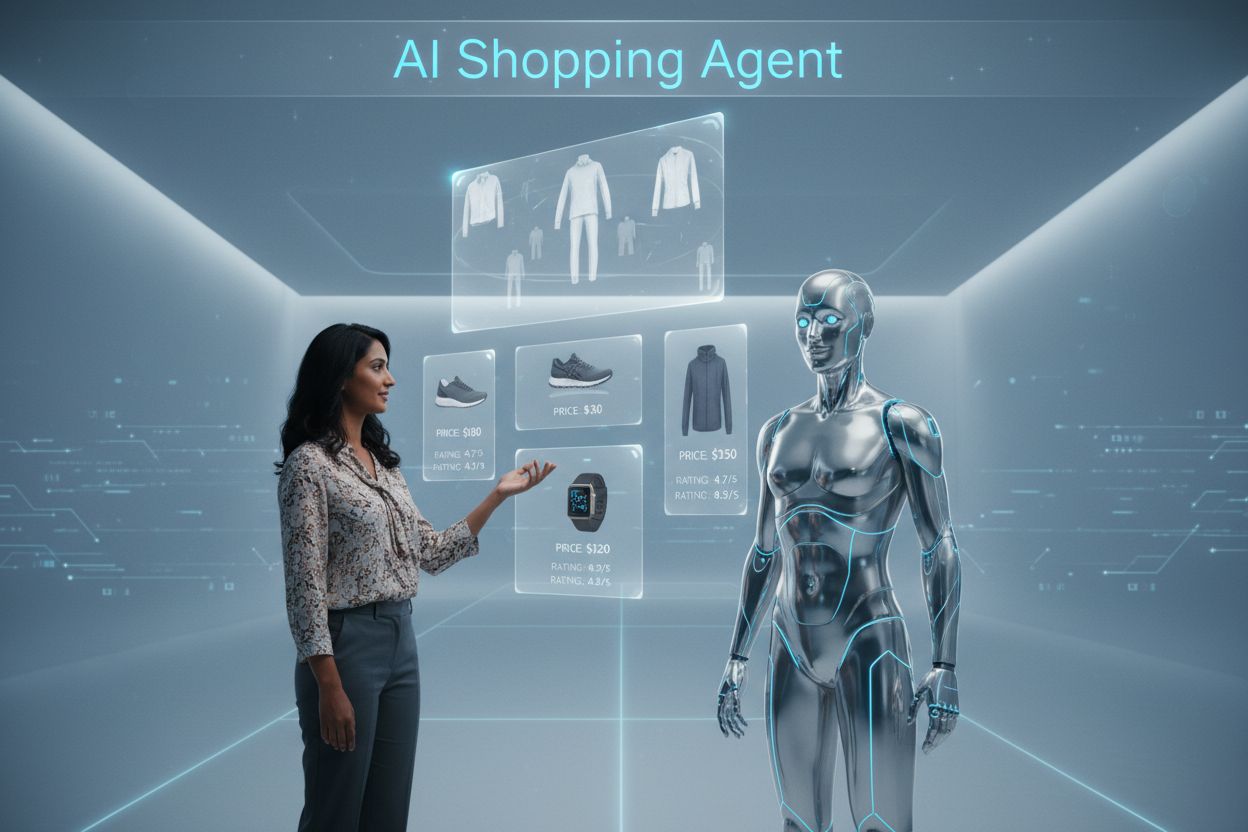
AI agents represent a fundamental shift from traditional artificial intelligence systems. Unlike conventional AI that responds to specific commands, autonomous agents operate independently, making decisions based on predefined goals and real-time environmental data. These intelligent systems possess the remarkable ability to perceive their surroundings, process complex information, and take action without constant human intervention. In e-commerce, this means AI agents can understand customer preferences, navigate product catalogs, compare prices, and execute transactions—all while learning and adapting from each interaction.
The core distinction between AI agents and standard AI lies in autonomy and decision-making capability. Traditional chatbots follow scripted responses, while AI agents evaluate multiple options, weigh consequences, and select the optimal path forward. This real-time learning capacity enables agents to improve their performance continuously. When a customer asks an AI agent to find the best laptop within a budget, the agent doesn’t simply return search results—it analyzes specifications, compares prices across retailers, reads reviews, checks inventory, and presents a curated recommendation tailored to that specific customer’s needs.
Agentic systems operate through a cycle of perception, reasoning, and action. They gather data from multiple sources simultaneously, process this information through advanced algorithms, and execute decisions at machine speed. This continuous feedback loop means agents become smarter with every transaction. For instance, an AI shopping agent learns which product categories you prefer, remembers your size preferences, understands your budget constraints, and anticipates your needs before you explicitly state them. The agent can negotiate with suppliers, manage inventory levels, and even predict demand patterns across entire markets.
The transformative power of AI agents in e-commerce stems from their ability to handle complexity at scale. They can simultaneously manage thousands of customer interactions, each with unique requirements and preferences. These agents integrate with existing retail systems—inventory management, payment processing, customer relationship management—creating a seamless ecosystem. They operate 24/7 without fatigue, consistently delivering personalized experiences that would be impossible for human teams to replicate. As machine learning models improve and computational power increases, AI agents become increasingly sophisticated, capable of understanding nuance, context, and even emotional undertones in customer communications.
The e-commerce landscape stands at an inflection point. While online shopping has become mainstream, the industry still relies heavily on traditional AI implementations and human intervention. Current systems excel at specific tasks—product recommendations, fraud detection, inventory forecasting—but lack the integrated autonomy that AI agents provide. Most online retailers still require customers to navigate websites manually, add items to carts, and complete checkout processes through multiple steps. This fragmented approach creates friction and abandonment.
The statistics reveal significant untapped potential. Cart abandonment rates hover around 70%, meaning seven out of ten customers who begin shopping never complete their purchase. Simultaneously, 80% of retailers have adopted some form of AI technology, yet most implementations remain siloed and reactive rather than proactive. Customers still spend hours comparing products across multiple websites, reading reviews, checking prices, and making decisions that could be automated. The current state represents efficiency gains within existing frameworks rather than fundamental transformation.
| Aspect | Traditional AI | Agentic AI |
|---|---|---|
| Decision Making | Rule-based, scripted responses | Autonomous, context-aware decisions |
| Learning | Batch processing, periodic updates | Real-time, continuous learning |
| Scope | Single task optimization | Multi-task, end-to-end processes |
| Adaptation | Limited to predefined scenarios | Adapts to novel situations |
| Customer Experience | Transactional | Consultative, personalized |
| Operational Efficiency | Incremental improvements | Exponential productivity gains |
| Scalability | Linear with resources | Exponential with intelligence |
The gap between current capabilities and customer expectations continues widening. Consumers increasingly expect frictionless experiences, personalized recommendations, and instant problem resolution. They want AI to work for them, not at them. Traditional e-commerce platforms struggle to meet these expectations because they’re built on customer-initiated interactions. AI agents flip this paradigm by proactively understanding needs, anticipating problems, and delivering solutions before customers even realize they need them. This represents not just an incremental improvement but a complete reimagining of how online shopping functions.
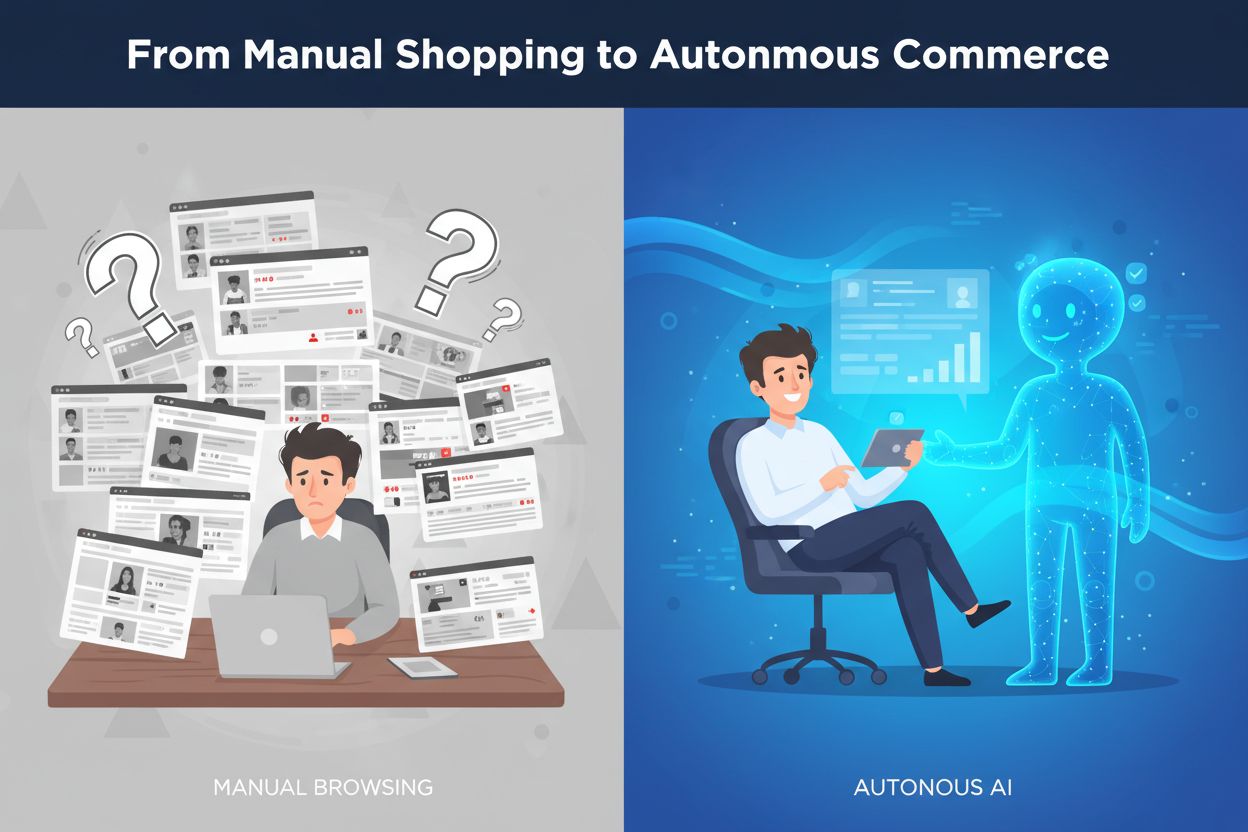
AI agents fundamentally reimagine every stage of the shopping journey through end-to-end automation. Rather than customers navigating websites, browsing categories, and manually comparing options, AI agents handle these tasks autonomously. A customer simply states their need—“I need professional running shoes for marathon training within $200”—and the agent springs into action. It searches across multiple retailers simultaneously, filters by specifications, checks real-time inventory, reads customer reviews, verifies return policies, and presents the optimal selection. This transformation eliminates the friction that currently plagues online shopping.
Personalization reaches unprecedented levels through agentic systems. These agents build comprehensive profiles of customer preferences, purchase history, lifestyle patterns, and even aspirational goals. They understand that you prefer sustainable brands, have a preference for minimalist design, and typically shop during specific seasons. The agent uses this intelligence to curate experiences uniquely tailored to you. When new products arrive that match your profile, the agent proactively notifies you. When you’re considering a purchase, the agent provides context about how it fits your existing wardrobe or collection. This level of personalization creates emotional connections between customers and brands.
Real-time decision-making enables agents to respond instantly to market conditions and customer needs. If a product you’re interested in drops in price, your agent immediately alerts you and can execute the purchase if you’ve authorized it to do so. If inventory is running low on a preferred item, the agent secures it before it sells out. If a competitor offers a better deal, the agent can negotiate with your preferred retailer or switch suppliers automatically. These decisions happen at machine speed, capturing opportunities that humans would miss. The agent continuously monitors thousands of variables—price fluctuations, inventory levels, shipping times, customer reviews—and optimizes your shopping experience in real-time.
Autonomous transactions represent perhaps the most transformative aspect of agentic commerce. With proper authorization and security protocols, AI agents can complete entire purchases without human intervention. Imagine waking up to discover your agent has already purchased your weekly groceries, scheduled delivery for when you’ll be home, and locked in the best prices available. The agent handles payment, manages receipts, tracks shipments, and even initiates returns if products don’t meet specifications. This automation extends to price negotiation, where agents can engage in dynamic pricing discussions with retailers. For bulk purchases or loyal customers, agents negotiate volume discounts, loyalty rewards, and exclusive offers—securing better deals than individual customers could achieve alone.
AI agents are already beginning to reshape e-commerce through concrete applications that deliver measurable value:
AI Shopping Concierge: Personal shopping assistants that understand your style, budget, and preferences. These agents browse entire catalogs, identify items matching your criteria, and present curated selections. They handle size conversions, color preferences, and even predict what you’ll love based on your past purchases and browsing behavior.
Inventory Management Optimization: Agents monitor stock levels across warehouses, predict demand patterns, and automatically reorder inventory before stockouts occur. They optimize warehouse placement, reduce carrying costs, and ensure popular items remain available. This reduces both overstock situations and lost sales from unavailable products.
Proactive Customer Service: Rather than waiting for customers to contact support, agents identify potential issues before they escalate. If a shipment is delayed, the agent proactively contacts the customer with updates and compensation options. If a product has known issues, the agent reaches out to affected customers with solutions.
B2B Procurement Automation: Businesses use AI agents to manage supplier relationships, negotiate contracts, and optimize purchasing. Agents compare quotes from multiple suppliers, verify quality standards, manage payment terms, and handle logistics coordination—reducing procurement cycles from weeks to hours.
Dynamic Price Negotiation: Agents engage in real-time price discussions with retailers, leveraging customer loyalty, purchase volume, and competitive offers to secure optimal pricing. This democratizes negotiation power, allowing individual consumers to access deals previously available only to bulk buyers.
Real-world examples demonstrate this potential. Google Shopping increasingly uses AI to understand search intent and surface relevant products. Amazon’s “Buy for Me” feature allows customers to authorize the platform to make purchases on their behalf. Walmart’s Sparky AI assistant helps customers find products and answer questions. These early implementations hint at the broader transformation coming as agentic systems mature and become more sophisticated.
The advantages of AI agents extend to both sides of the e-commerce equation, creating a win-win transformation:
For Consumers:
For Retailers:
The cumulative effect creates a virtuous cycle. Better experiences drive higher customer satisfaction, which increases loyalty and lifetime value. Increased transaction volume provides more data for agents to learn from, making them smarter and more effective. Improved efficiency reduces operational costs, allowing retailers to invest in further innovation. This positive feedback loop creates sustainable competitive advantages for early adopters.
While the potential is enormous, implementing agentic commerce requires addressing significant challenges:
Data Accuracy and Quality: AI agents depend on accurate product information, pricing data, and inventory levels. Inconsistent or outdated data leads to poor recommendations and failed transactions. Retailers must invest in data governance and real-time synchronization across systems.
Privacy and Security: Agents require access to sensitive customer data and payment information. Breaches could expose millions of customers to fraud and identity theft. Regulatory compliance with GDPR, CCPA, and other frameworks adds complexity.
Over-Automation Risks: Not every decision should be automated. Customers may feel uncomfortable with agents making purchases without explicit approval for each transaction. Some situations require human judgment and empathy.
Human Oversight and Control: Agents must remain accountable to human values and preferences. An agent that optimizes purely for cost might recommend products that don’t align with customer values like sustainability or ethical sourcing.
Regulatory Compliance: Different jurisdictions have varying requirements for automated transactions, consumer protection, and AI transparency. Navigating this complex landscape requires legal expertise and ongoing monitoring.
Organizations ready to lead in agentic commerce should take these strategic steps:
Audit and Enhance Product Data: Ensure product information is complete, accurate, and structured for machine readability. Include detailed specifications, high-quality images, authentic reviews, and real-time inventory data.
Modernize API Infrastructure: Build robust APIs that enable agents to access product catalogs, pricing, inventory, and order management systems in real-time. Ensure APIs can handle high-volume requests and provide reliable data.
Implement Secure Payment Infrastructure: Upgrade payment systems to support autonomous transactions with appropriate security, fraud detection, and compliance controls. Support multiple payment methods and currencies.
Build Customer Trust: Communicate transparently about how agents work, what data they access, and how customers maintain control. Implement clear opt-in processes and easy override mechanisms.
Establish Agent Governance Frameworks: Define policies for agent behavior, spending limits, escalation procedures, and human oversight. Create audit trails and monitoring systems to track agent decisions.
Pilot with Limited Scope: Start with specific use cases—perhaps a shopping assistant for a particular product category—before expanding to full autonomous purchasing. Learn from early implementations and refine approaches.
Invest in AI Talent: Recruit data scientists, machine learning engineers, and AI specialists who can build and maintain agentic systems. Partner with AI vendors if internal expertise is limited.
Monitor Competitive Landscape: Track how competitors implement agentic commerce. Identify best practices, learn from their mistakes, and position your organization to lead rather than follow.
The trajectory of agentic commerce points toward increasingly sophisticated autonomous ecosystems. Agent-to-agent commerce (A2A) represents the next frontier, where AI agents negotiate directly with each other on behalf of customers and businesses. Imagine your shopping agent communicating with a retailer’s inventory agent to negotiate bulk discounts, or your travel agent coordinating with hotel and airline agents to assemble the perfect vacation package. These agent-to-agent interactions happen at machine speed, optimizing outcomes for all parties simultaneously.
Consumer-to-merchant interactions will become increasingly consultative rather than transactional. Agents will understand not just what customers want to buy, but why they want it and what problems they’re trying to solve. A customer mentioning they’re training for a marathon won’t just receive running shoe recommendations—their agent will coordinate with fitness apps, nutrition services, and recovery specialists to create a comprehensive training support ecosystem.
Merchant-to-merchant commerce will be revolutionized as B2B procurement becomes fully automated. Supply chain agents will negotiate contracts, manage inventory across multiple suppliers, and optimize logistics in real-time. This automation will reduce friction in B2B transactions, lower costs, and enable smaller businesses to compete with larger enterprises by automating procurement complexity.
Cross-channel integration will eliminate the distinction between online and offline shopping. Agents will seamlessly coordinate purchases across websites, mobile apps, physical stores, and emerging channels. A customer might authorize their agent to purchase items from the best available source—whether that’s an online retailer, a local store, or a marketplace—based on price, availability, and delivery preferences.
Predictive shopping will anticipate needs before customers consciously recognize them. Agents will monitor usage patterns, seasonal trends, and life events to proactively suggest purchases. When your running shoes show signs of wear based on your activity tracking, your agent will recommend replacements. When your calendar indicates an upcoming business trip, your agent will suggest appropriate clothing and accessories.
As AI agents become increasingly central to e-commerce strategy, understanding how AI is being discussed, referenced, and implemented across your industry becomes critical. AmICited provides essential infrastructure for monitoring and analyzing AI mentions across the digital landscape. The platform tracks where AI technologies are being discussed, how competitors are positioning their AI capabilities, and what emerging trends are shaping the industry conversation.
For e-commerce leaders, AmICited enables competitive intelligence about AI adoption. You can monitor which retailers are publicly discussing agentic commerce, what specific capabilities they’re highlighting, and how customers are responding to these announcements. This visibility helps you understand the competitive landscape and identify opportunities to differentiate your AI strategy. Rather than discovering competitors’ AI initiatives through press releases, AmICited provides early signals about emerging capabilities and market positioning.
Tracking AI-driven discovery is particularly valuable in e-commerce. As search engines and platforms increasingly use AI to surface products, understanding how your products are being discovered through AI systems becomes essential. AmICited helps you monitor how AI agents are referencing your products, which product attributes are most frequently highlighted, and how your offerings compare to competitors in AI-driven recommendations. This intelligence informs product development, marketing strategy, and pricing decisions.
The platform also helps organizations understand the broader AI narrative shaping customer expectations. By monitoring how AI is being discussed in media, industry publications, and customer communities, you gain insights into emerging expectations and concerns. This context helps you communicate your AI initiatives more effectively, address customer concerns proactively, and position your organization as a thoughtful leader in agentic commerce rather than simply chasing technology trends. In a rapidly evolving landscape, AmICited transforms AI references from noise into actionable intelligence.
AI agents operate autonomously and make independent decisions based on goals and real-time data, while chatbots follow scripted responses and rigid decision trees. Agents can complete entire shopping journeys without human intervention, whereas chatbots typically handle single queries. This fundamental difference enables agents to provide personalized, end-to-end shopping experiences that adapt to individual customer needs.
Yes, AI agents can execute purchases autonomously when customers authorize them to do so. However, this happens within permission-based boundaries that users establish beforehand. Customers can set spending limits, require confirmation for high-value purchases, and maintain override capabilities. This balance between automation and control ensures customers feel comfortable with autonomous transactions while enjoying the convenience they provide.
AI agents protect customer data through multiple security layers including end-to-end encryption, tokenization for payment information, and secure access controls. Retailers must comply with regulations like GDPR and CCPA, maintain transparent privacy policies, and conduct regular security audits. Customers should have clear visibility into what data agents access and how it's used, with easy opt-out mechanisms available.
Early implementations are already appearing through Google Shopping, Amazon's 'Buy for Me', and Walmart's Sparky. Gartner predicts that by 2029, agentic AI systems will resolve 80% of common customer service issues without human intervention. Full mainstream adoption will likely take 3-5 years as retailers build infrastructure, address regulatory concerns, and customers become comfortable with autonomous shopping.
Retailers should start by auditing and enhancing product data for machine readability, modernizing API infrastructure for real-time access, and implementing secure payment systems. Building customer trust through transparent communication about agent capabilities is essential. Begin with limited pilots in specific use cases before expanding to full autonomous purchasing, and invest in AI talent or partnerships to build and maintain agentic systems.
Key challenges include ensuring data accuracy and quality, protecting customer privacy and security, preventing over-automation of decisions that require human judgment, maintaining appropriate human oversight, and navigating complex regulatory requirements. Each challenge has mitigation strategies: data governance for accuracy, encryption and compliance for security, granular authorization controls for automation limits, and regular audits for oversight.
AI agents eliminate friction in the shopping journey by handling research, comparison, and decision-making automatically. They provide personalized recommendations based on individual preferences and behavior, proactively address customer concerns, and streamline checkout processes. By reducing the steps required to complete a purchase and providing a consultative experience, agents significantly increase the likelihood that customers complete transactions rather than abandoning carts.
Traditional e-commerce requires customers to navigate websites, manually compare products, and complete transactions through multiple steps. Agentic commerce flips this model—AI agents act on behalf of customers and businesses, handling discovery, comparison, negotiation, and purchase autonomously. This shift from customer-initiated to agent-driven interactions creates fundamentally different shopping experiences that are faster, more personalized, and more efficient for both consumers and retailers.
Track mentions of your products and brand across AI shopping agents, Perplexity, Google AI Overviews, and ChatGPT. Understand how AI agents discover and recommend your products.
Discover how agentic AI is transforming shopping and what it means for brand visibility. Learn how AI agents make autonomous purchases and how to prepare your b...
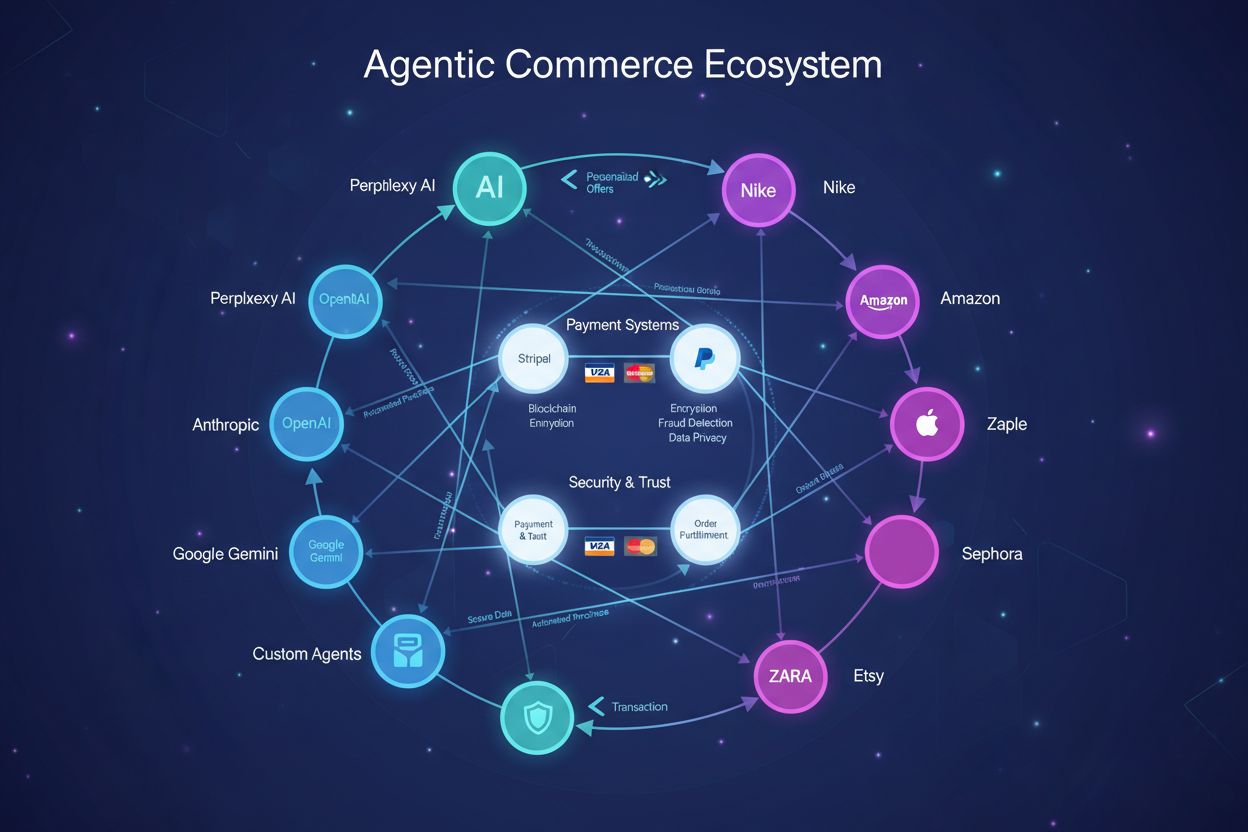
Learn how to prepare your brand for agentic commerce. Discover essential steps to make your systems AI agent-ready and stay competitive in the evolving e-commer...

Learn about Autonomous AI Commerce - AI agents that independently research, compare, and complete purchases. Explore how autonomous shopping agents work, benefi...