



AI Reputation Repair
Learn how to identify and fix negative brand sentiment in AI-generated answers. Discover techniques for improving how ChatGPT, Perplexity, and Google AI Overvie...
9 min read
Discover how LLMs perceive your brand and why AI sentiment monitoring is critical for your business. Learn to measure and improve your brand’s AI perception.
AI brand sentiment represents a fundamentally new dimension of brand perception that extends beyond traditional social media monitoring and review aggregation. It measures the tone, context, and characterization of how your brand appears when large language models reference it in their responses to user queries. Unlike a customer review or social media post, AI brand sentiment captures how an LLM has synthesized information about your company from its training data and presents it to users seeking information. This matters because LLM responses carry an implicit authority—users often treat AI-generated information as objective fact rather than opinion, making the way an AI characterizes your brand particularly influential. The sentiment isn’t just about whether mentions are positive or negative; it’s about how your brand is framed, what associations are made, and what context surrounds your company name when millions of users interact with AI systems daily. Understanding AI brand sentiment is essential because it directly shapes consumer perception in an era where AI-generated information increasingly influences purchasing decisions and brand reputation.
Large language models develop their understanding of brands through the vast corpus of text they were trained on, which includes news articles, websites, social media, reviews, and countless other sources reflecting how brands are discussed across the internet. When an LLM encounters a query about your industry or product category, it doesn’t simply retrieve pre-written answers—it synthesizes patterns from its training data to generate contextually relevant responses that reflect how your brand is typically discussed and positioned. This synthesis process means that the aggregate sentiment and framing of your brand across the internet directly influences how the LLM perceives and presents your company. If your brand is frequently mentioned alongside quality and innovation in authoritative sources, the LLM learns to associate those characteristics with your company. Conversely, if negative coverage or criticism dominates the training data, those associations become embedded in the model’s understanding. The way your brand appears in LLM responses also depends on factors like the specificity of the query, the prominence of your brand in relevant discussions, and how often your company is cited as an authority or example in your industry. This means that authority transfer—where the credibility of sources discussing your brand influences how the LLM presents it—becomes a critical factor in AI brand sentiment.
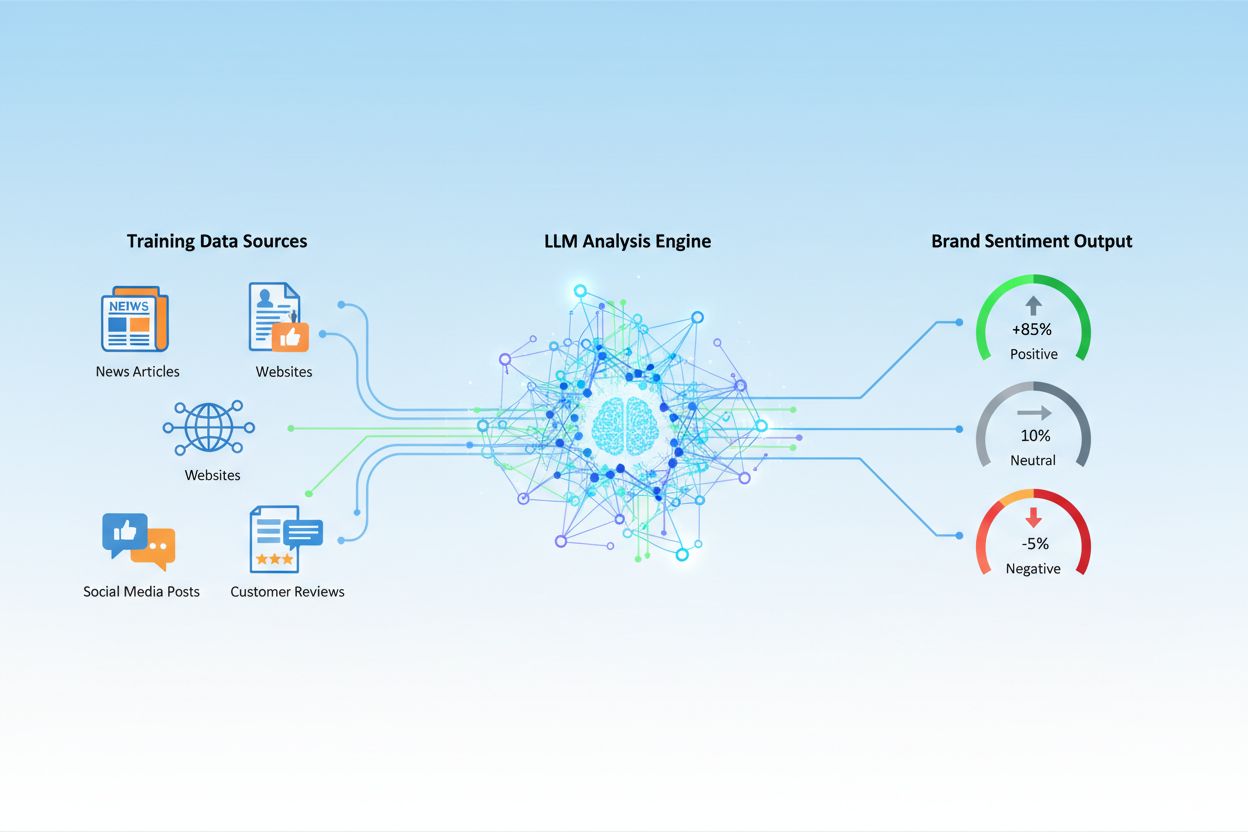

Track how AI chatbots mention your brand across ChatGPT, Perplexity, and other platforms.
AI brand sentiment operates under fundamentally different dynamics than traditional sentiment monitoring tools that track social media, reviews, and news mentions. The following table illustrates the key differences:
| Dimension | AI Brand Sentiment | Traditional Sentiment Monitoring |
|---|---|---|
| Authority & Credibility | Carries implicit authority as AI-generated content; users treat it as objective information | Clearly attributed to individual users or publications; easier for consumers to contextualize |
| Persistence & Reach | Persistent across millions of daily interactions; embedded in model responses indefinitely | Decays over time; older posts become less visible; reach limited to platform followers |
| User Verification | Users rarely fact-check AI responses; sentiment directly influences perception | Users often verify claims; sentiment is one input among many in decision-making |
| Consideration Set Impact | Determines whether your brand appears in relevant queries; shapes competitive positioning | Influences brand perception among those already aware of your brand |
| Real-Time vs. Persistent | Sentiment characterization remains consistent until model retraining; not immediately responsive to new information | Real-time updates; can respond quickly to PR efforts or crisis management |
The critical distinction is that traditional sentiment monitoring measures what people say about your brand, while AI sentiment monitoring measures what AI systems think about your brand and communicate to users. This difference has profound implications because AI responses are treated as authoritative information rather than opinion, and they reach users at the exact moment they’re making decisions about your company. A negative review on social media might be seen by hundreds of people; a negative characterization in an LLM response reaches millions. Furthermore, the persistence of AI sentiment means that outdated or inaccurate information embedded in training data can continue influencing brand perception long after the original source has been corrected or forgotten.
Measuring AI brand sentiment requires understanding the multiple dimensions that shape how LLMs characterize your brand:
Get the latest insights on AI mentions, brand monitoring, and optimization strategies.
Tracking AI brand sentiment requires a systematic approach that goes beyond occasional manual checks of how your brand appears in AI responses. At a high level, that means regularly querying LLMs with industry-relevant questions, classifying how your brand is mentioned, and watching how that characterization shifts over time so you can connect changes to your marketing initiatives, PR efforts, or competitive actions.
The specific scoring mechanics behind that classification—how algorithms turn a sentence into a positive, negative, or neutral value—are a deep technical topic in their own right; see how sentiment scoring actually works for that breakdown. And if you want the concrete, step-by-step process for setting up ongoing tracking (what to query, how often, how to log results), our sentiment tracking playbook covers that in detail.
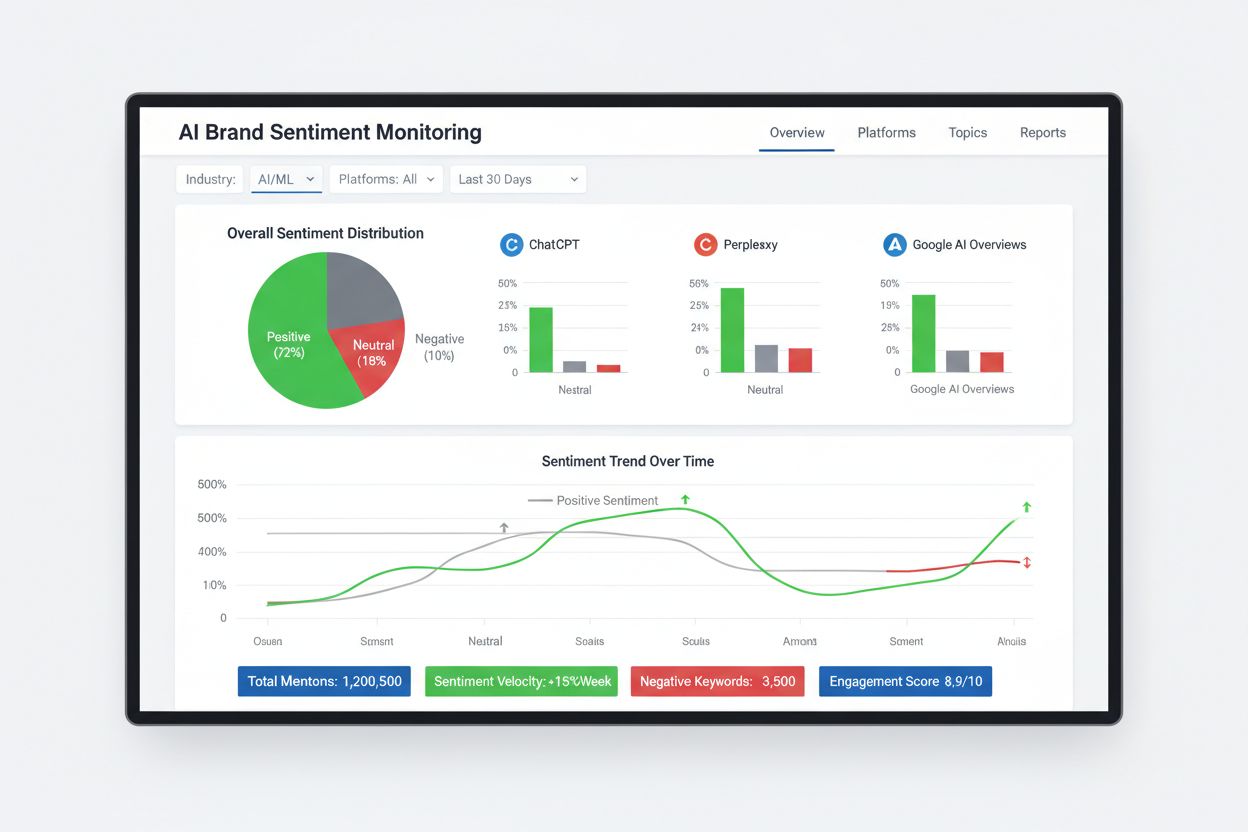
The implications of AI brand sentiment extend far beyond vanity metrics—they directly influence customer decision-making and competitive positioning in ways that traditional brand monitoring cannot capture. When a potential customer asks an LLM whether they should consider your product, the sentiment embedded in the AI’s response often becomes the deciding factor, particularly for users who trust AI systems to provide objective information. If your brand is characterized negatively or omitted entirely from relevant LLM responses, you’re invisible at the exact moment customers are making purchasing decisions, regardless of how strong your traditional marketing efforts are.
AI sentiment also shapes competitive positioning in subtle but powerful ways. If competitors are consistently mentioned alongside positive qualifications while your brand receives neutral or qualified mentions, the LLM is effectively positioning them as superior alternatives. This competitive disadvantage compounds over time as more users interact with these characterizations and form opinions based on AI-generated information. The long-term impact on brand reputation is significant because AI characterizations become part of the permanent record of how your brand is understood—they influence not just current customers but shape the baseline perception that future customers have before they ever interact with your company directly.
For B2B companies, the stakes are even higher. Decision-makers increasingly use AI systems to research vendors and evaluate solutions, and the sentiment embedded in those AI responses directly influences whether your company makes it into the consideration set. A prospect who asks an LLM to compare solutions in your category and receives a response that omits your company or characterizes it negatively may never discover your actual value proposition. This makes AI brand sentiment not just a marketing concern but a fundamental business issue that affects revenue, market share, and long-term competitive viability.
Improving your AI brand sentiment requires a strategic approach focused on influencing the information that LLMs encounter during training and the way your brand is discussed across authoritative sources. The most effective strategy is creating authoritative, high-quality content that clearly articulates your value proposition, differentiators, and expertise—content that LLMs will encounter in their training data and incorporate into their understanding of your brand. This content should address the specific problems your product solves and the benefits it delivers, ensuring that when LLMs synthesize information about your category, they associate your brand with solutions rather than problems.
Addressing misconceptions and outdated information is equally important, particularly if negative or inaccurate characterizations have become embedded in how LLMs discuss your brand. This requires creating content that directly addresses these misconceptions and provides corrected information that LLMs can incorporate into their understanding. Building third-party validation through earned media, analyst recognition, customer testimonials, and industry awards amplifies your brand sentiment because LLMs weight information from authoritative third-party sources more heavily than self-promotional content.
Competitive monitoring is essential because understanding how competitors are characterized in LLM responses reveals gaps in your own positioning and opportunities to differentiate. If competitors are consistently mentioned with specific qualifications or capabilities, you need to ensure your brand is equally visible with comparable or superior characterizations. Tracking the sentiment impact of your initiatives—whether a product launch, PR campaign, or content strategy actually improves how LLMs characterize your brand—ensures you’re investing in strategies that move the needle on AI sentiment.
Finally, aligning your content strategy with LLM optimization means creating content that LLMs will naturally encounter and incorporate into their responses. This includes optimizing for the types of queries where your brand should appear, ensuring your company is mentioned in relevant industry discussions, and positioning your brand as an authority that LLMs will cite when answering questions in your category. This is fundamentally different from traditional SEO because it’s about influencing AI perception rather than search engine rankings.
Manual monitoring of AI brand sentiment—asking ChatGPT or Perplexity the same questions every week and reading the answers yourself—is possible, but it’s time-consuming and gives limited insight into trends across multiple platforms. AmICited.com offers real-time sentiment tracking across major LLM systems including ChatGPT, Perplexity, Google AI Overviews, and other emerging AI platforms, giving brands a continuous view of how they’re characterized across the AI landscape rather than a one-time snapshot.
If you’re deciding whether to monitor manually, buy a dedicated platform, or build your own tracking pipeline, our guide to choosing an AI sentiment tracking tool breaks down the tradeoffs, what to look for, and how to build the internal business case. For brands ready to move from understanding the concept to acting on it, AmICited provides the visibility needed to make informed decisions about brand strategy and competitive positioning.
Viktor Zeman is a co-owner of QualityUnit. Even after 20 years of leading the company, he remains primarily a software engineer, specializing in AI, programmatic SEO, and backend development. He has contributed to numerous projects, including LiveAgent, PostAffiliatePro, FlowHunt, UrlsLab, and many others.

Get real-time insights into how ChatGPT, Perplexity, and other AI systems characterize your company. Track sentiment across all major LLM platforms and stay ahead of your competition.
Learn how to identify and fix negative brand sentiment in AI-generated answers. Discover techniques for improving how ChatGPT, Perplexity, and Google AI Overvie...
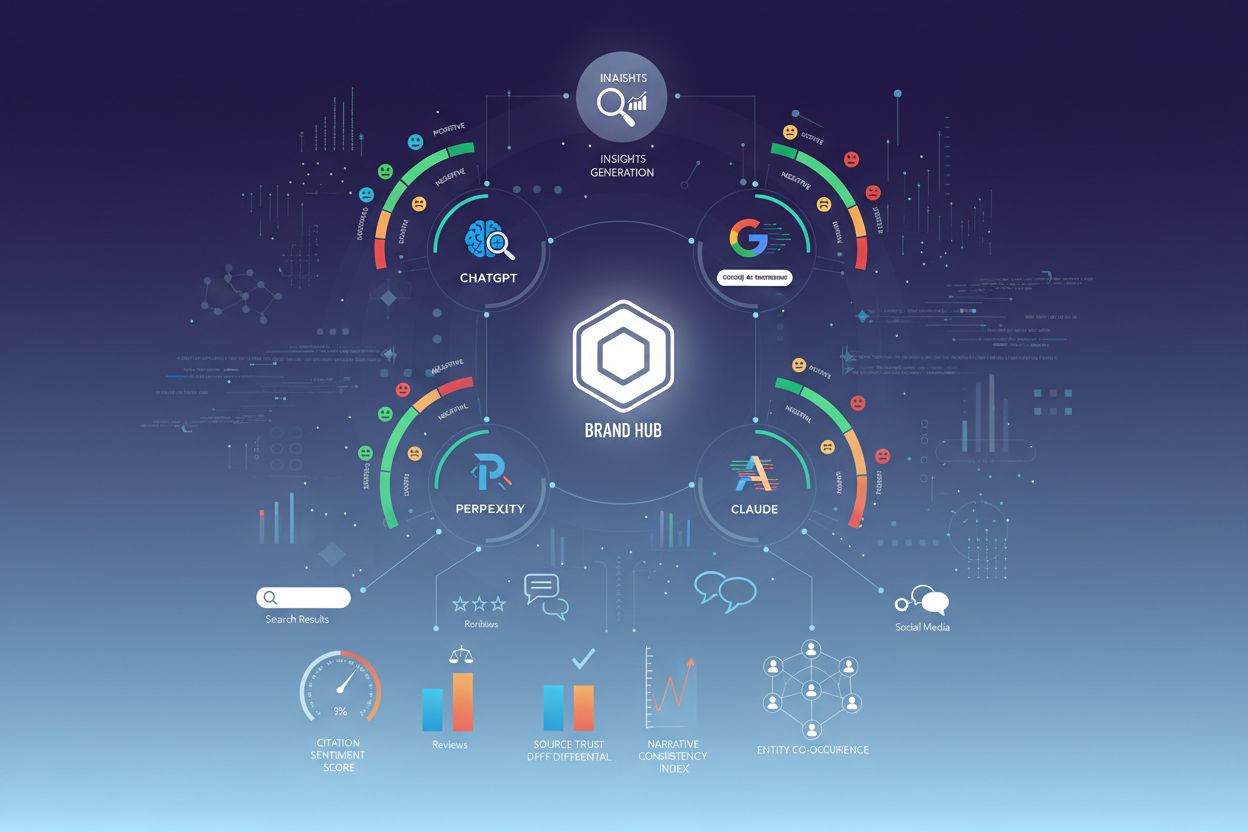
Learn what AI Sentiment Differential is and why it matters for brand reputation. Discover how to measure and monitor the difference between brand sentiment in A...

Learn what AI sentiment monitoring is, why it matters for brand reputation, and how to track how ChatGPT, Perplexity, and Gemini characterize your brand. Essent...
Cookie Consent
We use cookies to enhance your browsing experience and analyze our traffic. See our privacy policy.