
AmICited vs Writesonic GEO: Monitoring vs Content Creation
Compare AmICited AI monitoring with Writesonic GEO. Understand the differences between pure monitoring and integrated optimization for AI search visibility.
8 min read
Discover the hidden costs of AI invisibility for brands. Learn why ChatGPT mentions matter, how to measure visibility loss, and 8 tactics to regain AI presence across ChatGPT, Perplexity, and Google AI Overviews.
The shift in how people discover information has reached a critical inflection point. Approximately 20% of Americans now use AI tools like ChatGPT and Perplexity as their primary search mechanism, fundamentally altering the discovery landscape that brands have spent decades optimizing for. Where Google once dominated as the gatekeeper of information, AI systems now mediate billions of queries monthly, synthesizing information and presenting curated answers directly to users. This transition introduces a profound challenge that most brands haven’t yet recognized: AI invisibility. Unlike traditional search where your brand appears in results, AI systems often reference information without crediting the source, or worse, fail to mention your brand entirely despite it being relevant to the query. This invisibility isn’t a minor SEO concern—it’s a structural problem that silently erodes brand awareness, customer acquisition, and market positioning. For brands that have invested heavily in traditional search visibility, the realization that they’re invisible in AI-driven discovery represents a costly blind spot that compounds daily.
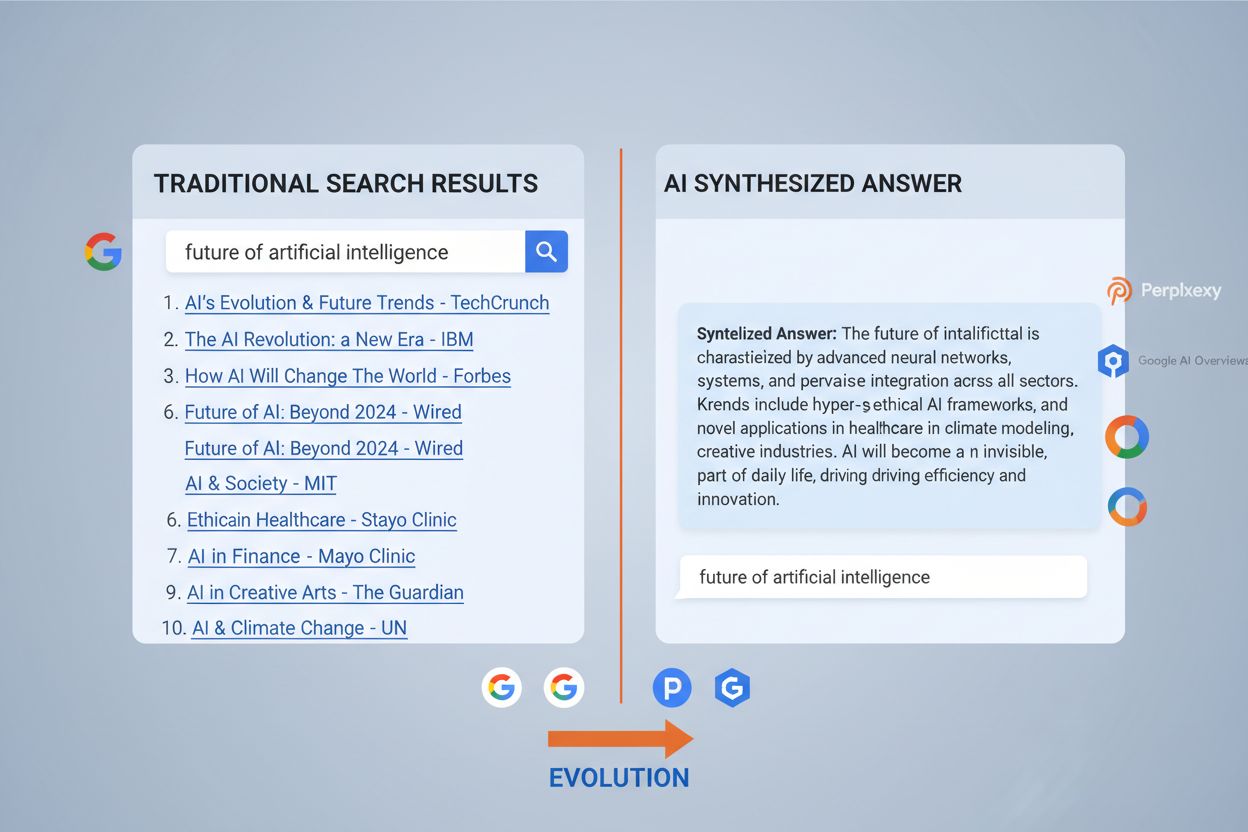
The financial impact of AI invisibility extends far beyond lost search traffic. When AI systems don’t cite your brand, you lose multiple revenue streams simultaneously: direct customer acquisition from AI-driven discovery, the brand-building effect of repeated mentions, competitive positioning against rivals who do get cited, and the opportunity to shape how your industry is understood. Consider the data: 26% of brands have zero mentions across major AI systems, while the top 25% of brands receive 10 times more AI citations than the median competitor. This creates a visibility cliff where brands either achieve meaningful AI presence or effectively disappear from an increasingly important discovery channel. The cost differential is staggering—brands with strong AI visibility benefit from higher-intent traffic (AI users have already filtered through options), better brand recall from repeated mentions, and the halo effect of being cited as authoritative. Meanwhile, invisible brands watch competitors capture market share through a channel they didn’t know existed. The comparison between traditional search and AI search reveals the fundamental difference: traditional search shows you where to look, while AI search tells users what to think, making citation and visibility exponentially more valuable.
| Metric | Traditional Search | AI Search |
|---|---|---|
| User Intent | Exploratory | Decision-ready |
| Brand Visibility | Multiple results shown | Single synthesized answer |
| Citation Impact | Traffic driver | Authority signal |
| Competitor Visibility | Distributed across results | Concentrated in top mentions |
| Brand Building | Passive (impressions) | Active (endorsement effect) |
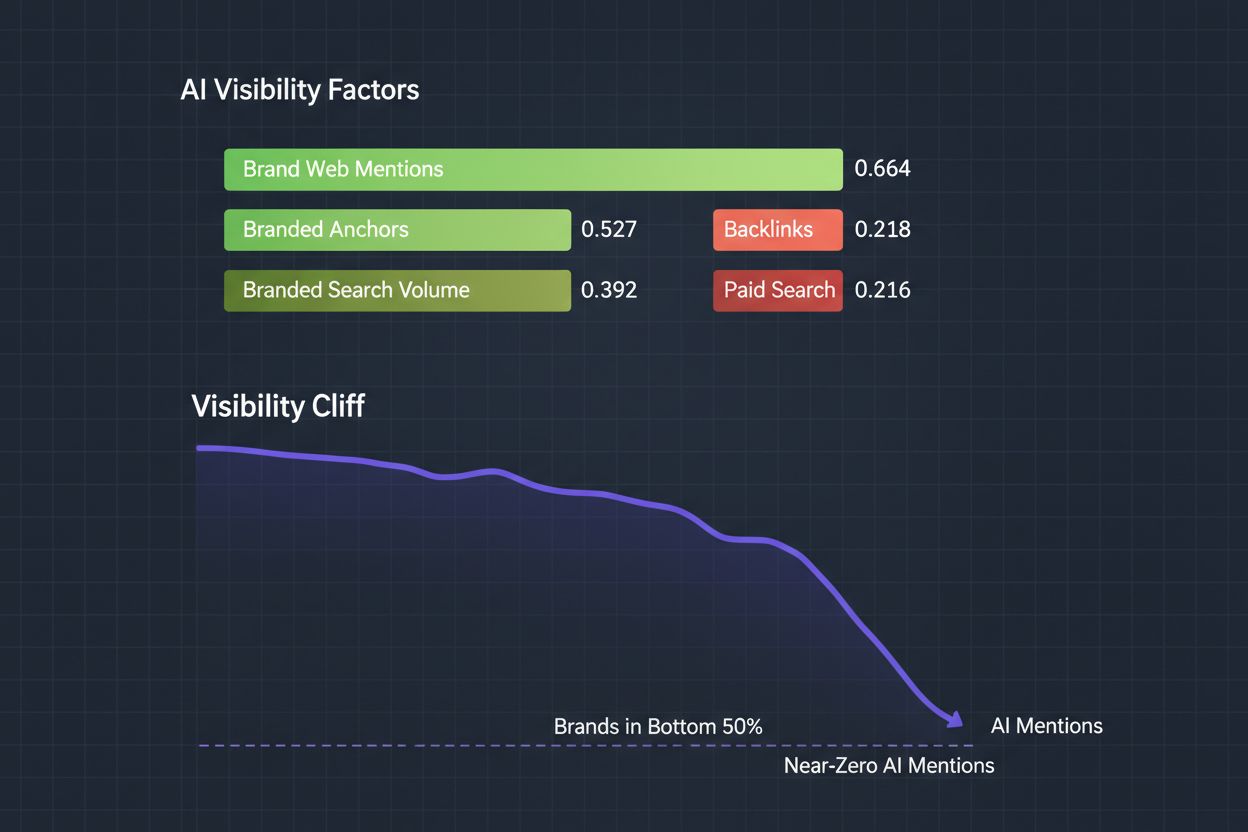
Research from Ahrefs analyzing 75,000 brands reveals the mechanics of AI visibility with striking clarity. The strongest correlation with AI citations isn’t backlinks or traditional SEO metrics—it’s brand web mentions, which show a 0.664 correlation with AI visibility. This finding fundamentally challenges conventional SEO wisdom and suggests that AI systems prioritize direct brand references and entity recognition over link authority. Branded anchor text (0.527 correlation) ranks as the second-strongest predictor, followed distantly by traditional backlinks (0.218 correlation), indicating that how your brand is discussed matters far more than who links to you. Branded search volume (0.392 correlation) also plays a significant role, suggesting that AI systems recognize and reward brands that already have established search demand. The data reveals a visibility cliff phenomenon: brands below a certain mention threshold receive almost no AI citations, while those above it experience exponential increases in visibility. This isn’t a gradual curve—it’s a structural break where visibility either exists or doesn’t. Understanding this threshold is critical because it means brands can’t rely on incremental improvements; they need strategic interventions to cross the visibility cliff and achieve meaningful AI presence.
AI systems discover and cite brands through two distinct mechanisms that operate simultaneously. First, training data ingestion: AI models are trained on vast datasets of web content, and brands mentioned frequently across quality sources become embedded in the model’s knowledge base. Second, real-time retrieval through retrieval-augmented generation (RAG), where AI systems actively search current web content to supplement their training knowledge and provide up-to-date information. This dual mechanism means your brand visibility depends on both historical presence (how often you’ve been mentioned across the web) and current relevance (whether you appear in real-time search results for relevant queries). Entity relationships matter significantly—AI systems understand that certain brands relate to specific industries, use cases, and competitor sets, and they use these relationships to determine when your brand is relevant to include in responses. The foundation for AI visibility is built on traditional SEO principles: your website must be discoverable, your content must be high-quality and authoritative, and your brand must be mentioned in contexts that matter. However, the optimization layer for AI visibility extends beyond traditional SEO, requiring explicit attention to how your brand is discussed, where it appears, and what entity relationships are established around it.
The business impact of AI invisibility becomes concrete when you examine conversion behavior and traffic patterns. Research indicates that AI search visitors convert at approximately 20 times higher rates than traditional search visitors, because they’ve already filtered through options and are making decisions rather than exploring. This means losing visibility in AI systems isn’t equivalent to losing traditional search traffic—it’s losing your highest-intent, highest-converting audience. Current estimates suggest brands are experiencing 15-25% traffic loss from zero-click AI search results, where users get answers without visiting any website. Simultaneously, 80% of users rely on AI summaries for 40% or more of their information discovery, meaning this channel is no longer marginal—it’s central to how decisions are made. Consider specific scenarios: a B2B software company losing visibility in ChatGPT loses enterprise buyers actively evaluating solutions; a healthcare brand invisible in Perplexity loses patients researching conditions; an e-commerce brand missing from Google AI Overviews loses shoppers comparing products. The opportunity cost compounds because early-mover brands that establish AI visibility now will benefit from compounding advantages as these systems become more dominant. For most brands, the cost of AI invisibility exceeds the cost of addressing it, yet the problem remains largely untracked and unmanaged.
While traditional SEO and AI visibility are correlated, they are not synonymous, and this gap represents a critical vulnerability for brands. A brand can rank well in Google for relevant keywords yet receive minimal citations in ChatGPT or Perplexity, because AI systems use different ranking mechanisms and prioritize different signals. Traditional SEO optimizes for keyword matching and link authority; AI visibility optimizes for entity recognition and mention frequency. The attribution challenge compounds this problem—most analytics platforms don’t distinguish between traffic from traditional search and AI-driven discovery, making it invisible to marketers. A positive correlation exists between Google rankings and AI citations (brands that rank well tend to get cited), but the relationship is loose enough that gaps are common and costly. Some brands rank in Google’s top 10 for competitive keywords yet receive zero mentions in AI systems, while others achieve strong AI visibility despite moderate Google rankings. This divergence occurs because AI systems weight brand mentions, entity relationships, and content freshness differently than Google’s algorithm. The implication is clear: brands need an integrated approach that maintains traditional SEO excellence while simultaneously building AI visibility through distinct tactics. Treating these as separate channels is no longer viable; they must be managed as complementary components of a unified discovery strategy.
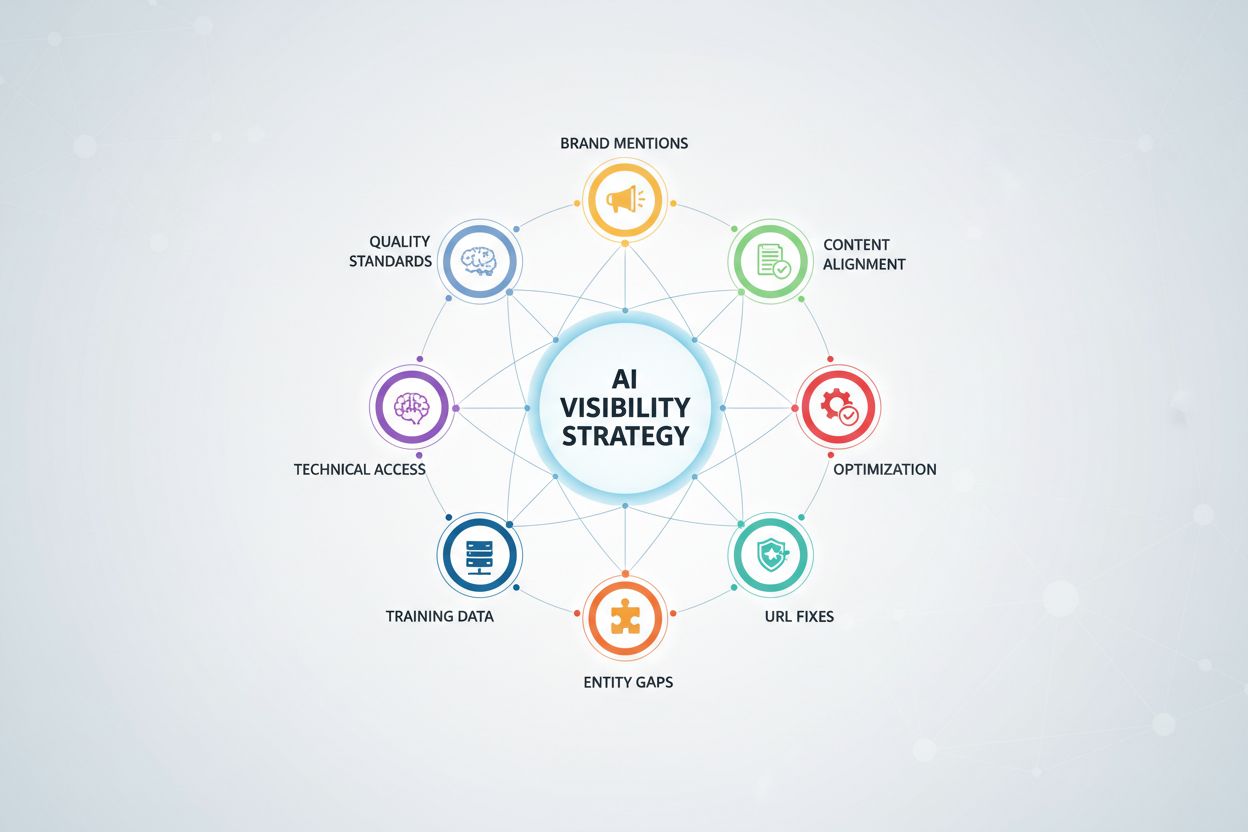
Recovering and building AI visibility requires a systematic approach across eight key areas:
Brand Mentions Strategy: Increase high-quality mentions of your brand across authoritative websites, industry publications, and relevant communities. Focus on contextual mentions that establish your brand’s relevance to specific use cases and industries.
Content Alignment: Ensure your content directly addresses the queries and topics that AI systems use for retrieval. Create comprehensive, authoritative content that answers questions completely and cites relevant sources, making your content valuable for AI systems to reference.
AI-Specific Optimization: Optimize your website structure, metadata, and content for AI retrieval systems. Use clear entity markup, structured data, and explicit brand positioning to help AI systems understand what your brand does and when it’s relevant.
URL and Technical Access: Ensure your website is fully crawlable by AI systems and that your robots.txt and technical setup don’t inadvertently block AI indexing. Verify that your content is accessible to both training data collection and real-time retrieval systems.
Training Data Presence: Build presence across platforms and publications that are commonly used in AI training datasets. This includes industry-specific databases, research repositories, and authoritative news sources that AI systems prioritize during training.
Entity Relationship Building: Establish clear relationships between your brand and relevant entities (industries, use cases, competitor sets, geographic markets). Help AI systems understand your brand’s context and relevance through strategic positioning and mentions.
Technical Access and Permissions: Implement clear policies that allow AI systems to access and cite your content. Avoid overly restrictive robots.txt rules or terms of service that discourage AI systems from using your content as source material.
Quality and Authority Standards: Maintain consistently high content quality, factual accuracy, and authoritative positioning. AI systems prioritize sources that demonstrate expertise and reliability, so quality becomes a visibility factor in ways it wasn’t in traditional SEO.
Tracking AI visibility requires specialized tools and approaches because traditional analytics platforms don’t capture this data. AmICited.com provides comprehensive monitoring across ChatGPT, Perplexity, Google AI Overviews, and other major AI systems, allowing brands to see exactly when and how they’re cited. Effective measurement requires monitoring across multiple dimensions: frequency of mentions (how often your brand appears), context of mentions (what topics trigger your brand’s inclusion), competitor comparison (how your visibility compares to rivals), and traffic attribution (how much traffic and conversions come from AI-driven discovery). Regular monitoring is essential because AI visibility changes rapidly as models are updated, new training data is ingested, and retrieval algorithms evolve. Brands should establish baseline measurements of current AI visibility, set targets for improvement, and track progress monthly. This data should inform content strategy, brand positioning, and competitive analysis. Without measurement, brands are essentially flying blind—they can’t know if their AI visibility is improving, how they compare to competitors, or whether their efforts are working. The investment in proper measurement tools pays dividends by enabling data-driven decisions about where to focus resources for maximum impact.
AI visibility is not a temporary trend or a niche concern—it’s a permanent structural shift in how information discovery works. Brands that establish strong AI visibility now will benefit from compounding advantages as these systems become more dominant and as the correlation between early visibility and long-term authority strengthens. The good news is that building AI visibility doesn’t require abandoning traditional marketing fundamentals; it builds on them. Strong content, authoritative positioning, and strategic brand building remain essential—they simply need to be executed with explicit attention to how AI systems discover and cite information. The transition should be viewed as an evolution, not a revolution. Brands that already invest in content marketing, PR, and thought leadership have a foundation to build on; they simply need to optimize that foundation for AI visibility. The brands that will thrive in the next five years are those that recognize AI visibility as a core business metric today, measure it systematically, and integrate it into their marketing strategy. The cost of invisibility compounds daily, but so do the benefits of visibility for brands that act now. The path forward is clear: understand how AI systems work, measure your current position, implement the eight strategic tactics, and monitor progress relentlessly. The brands that do this will capture disproportionate share of the highest-intent, highest-converting traffic that AI systems deliver.
AI invisibility occurs when your brand isn't mentioned in responses from ChatGPT, Perplexity, Google AI Overviews, and other AI systems. It matters because 20% of Americans now use AI as their primary search method, and these users are high-intent decision-makers. Being invisible in AI responses means losing your most valuable prospects at critical decision moments.
The cost varies by industry, but research shows AI search visitors convert at 20X higher rates than traditional search visitors. With 15-25% of organic traffic now lost to zero-click AI search, and 80% of users relying on AI summaries for 40%+ of their information discovery, invisibility can represent significant lost revenue. The opportunity cost compounds daily as competitors gain visibility.
Traditional SEO optimizes for keyword rankings and clicks. AI visibility optimizes for brand mentions and entity recognition. While correlated, they're not synonymous—you can rank well in Google but be invisible in ChatGPT. AI systems prioritize brand web mentions (0.664 correlation) over backlinks (0.218 correlation), requiring different optimization strategies.
Start with Google AI Overviews (largest reach), ChatGPT (most popular AI assistant), and Perplexity (high-intent research users). These three platforms account for the majority of AI-driven discovery. However, visibility across all major AI systems matters because different users prefer different platforms, and you want to be visible wherever your customers search.
Most brands see measurable improvements within 3-6 months of implementing AI visibility strategies, especially in high-consultative industries. However, the timeline depends on your starting position, industry competitiveness, and execution quality. Brands in the bottom 50% for web mentions face a visibility cliff and may need 6-12 months to cross into meaningful AI presence.
While traditional SEO creates a foundation for AI visibility, you can improve AI presence through brand mentions, PR, thought leadership, and strategic partnerships even without strong Google rankings. However, the most effective approach integrates both—strong traditional SEO combined with explicit AI visibility tactics creates compounding advantages.
Specialized tools like AmICited.com track your brand mentions across ChatGPT, Perplexity, Google AI Overviews, and other AI systems. You should monitor mention frequency, context, competitor comparison, and AI-driven traffic separately from traditional analytics. Regular monthly tracking reveals progress and emerging issues requiring attention.
Building high-quality brand mentions across authoritative websites shows the strongest correlation (0.664) with AI visibility. Focus on mentions in industry publications, review sites, Reddit, Quora, YouTube, and other platforms that AI systems frequently cite. This is more impactful than traditional link building for AI visibility purposes.
Stop losing high-intent customers to AI invisibility. AmICited tracks your brand mentions across ChatGPT, Perplexity, and Google AI Overviews in real-time, helping you understand and improve your AI search visibility.
Compare AmICited AI monitoring with Writesonic GEO. Understand the differences between pure monitoring and integrated optimization for AI search visibility.
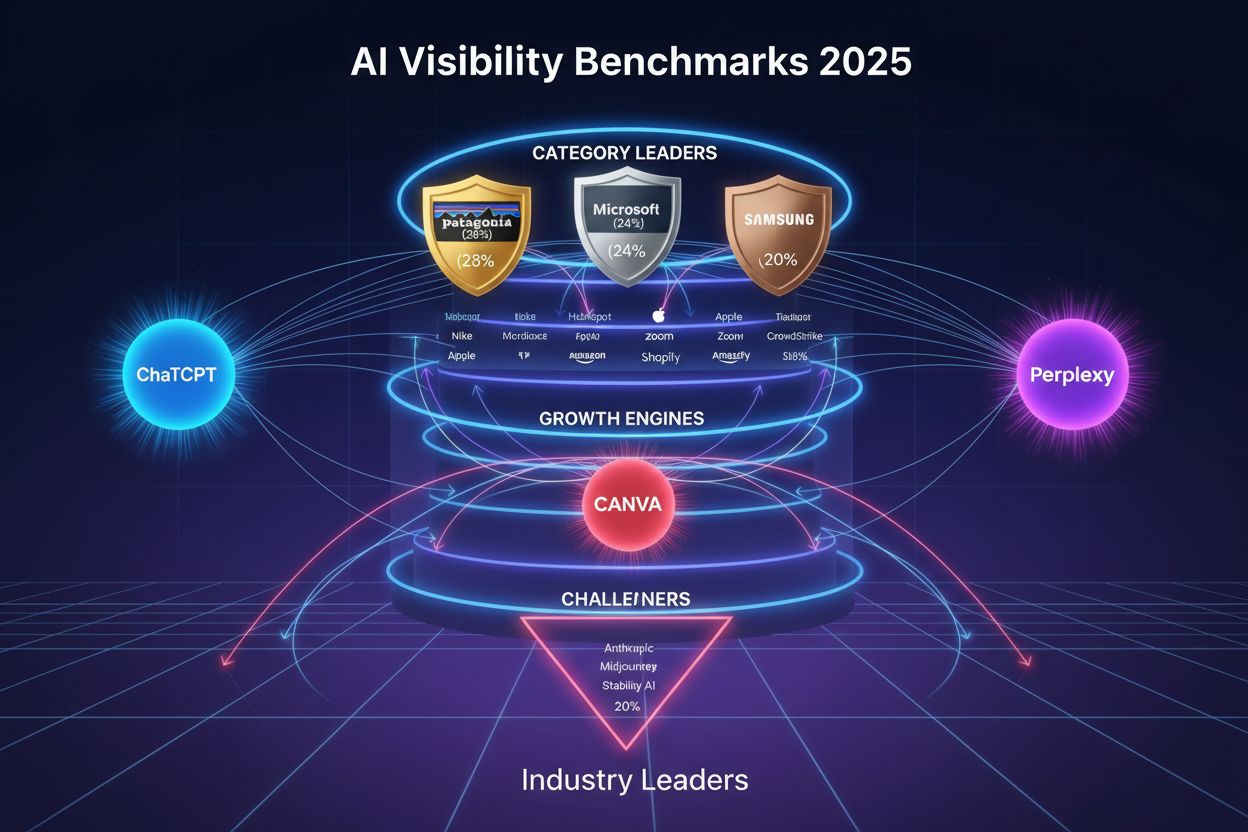
Discover which brands are winning AI visibility benchmarks. Analyze industry leaders across ChatGPT, Perplexity, and Google AI with data-driven insights and com...
Learn how to monitor and manage positive and negative AI mentions across ChatGPT, Perplexity, and Google AI Overviews. Protect your brand reputation with AI-pow...