
Creating AI Visibility Reports for Stakeholders
Learn how to build comprehensive AI visibility reports that executives understand. Track brand mentions across ChatGPT, Perplexity, and Google AI Overviews with...
10 min read
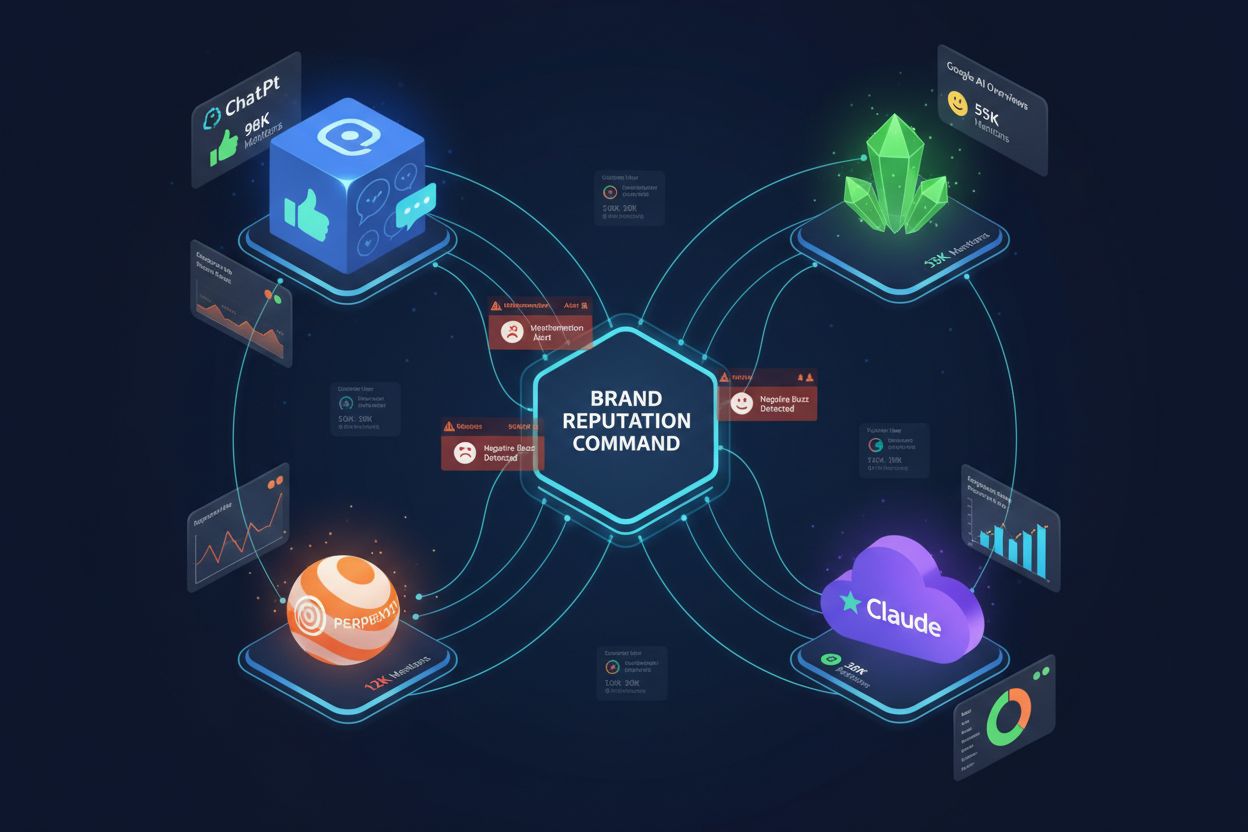
Learn how to set up AI mention alerts to monitor your brand across ChatGPT, Perplexity, and Google AI Overviews. Protect your reputation and gain competitive intelligence with real-time visibility notifications.
With a 527% year-over-year increase in AI search traffic, your brand’s visibility in AI-generated responses has become as critical as traditional search rankings. Yet while 44% of consumers now trust AI recommendations for purchasing decisions, most brands remain blind to how they’re being mentioned—or misrepresented—across ChatGPT, Perplexity, Google AI Overviews, and emerging platforms. The danger lies not in visibility itself, but in invisible reputation threats: factual errors, competitive positioning claims, and outdated information spreading through AI systems without your knowledge or ability to correct them. Traditional brand monitoring tools were built for the web and social media era, leaving a dangerous gap in AI mention tracking that grows wider each day. Setting up AI mention alerts isn’t a nice-to-have feature anymore—it’s a fundamental requirement for protecting and growing your brand in the age of generative AI.
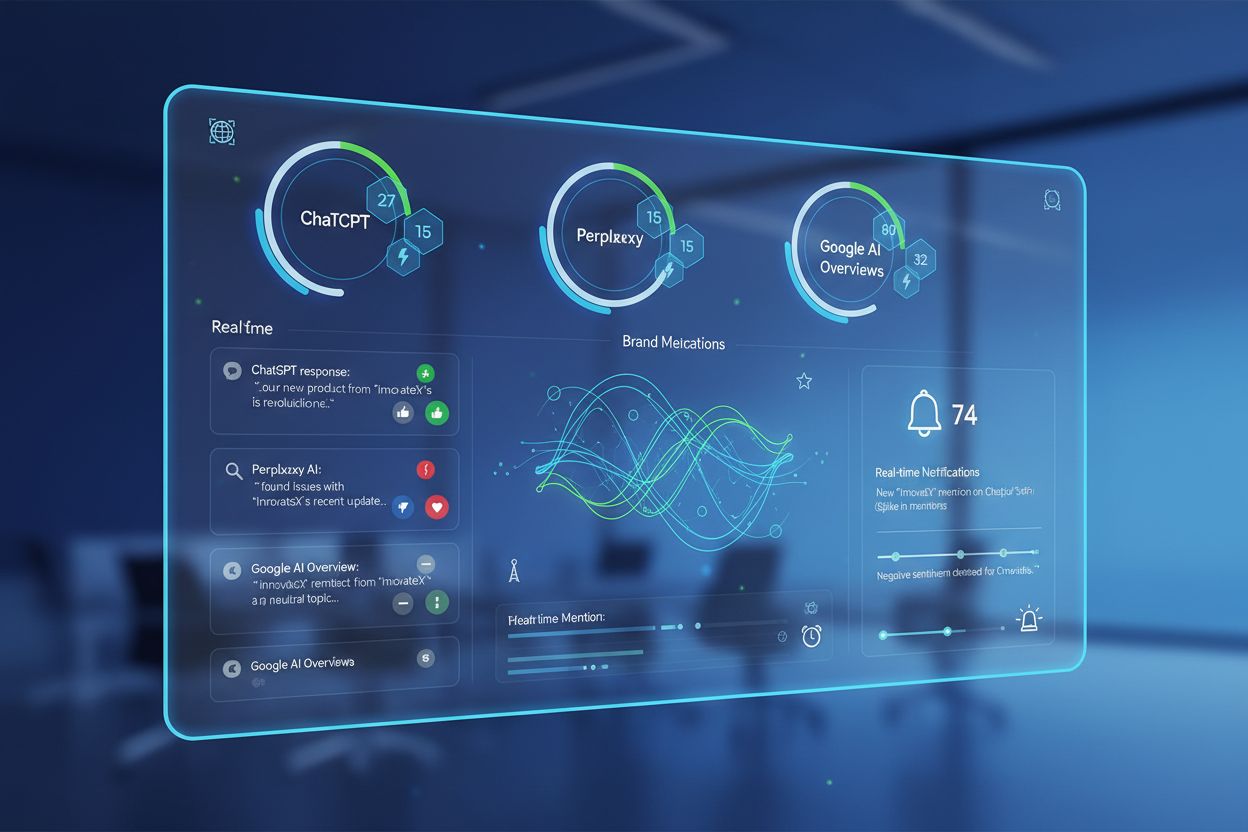
The AI mention alert landscape differs fundamentally from traditional brand monitoring because different AI platforms source information differently, creating distinct citation patterns that demand platform-specific strategies. ChatGPT tends to rely heavily on Wikipedia and established reference materials, meaning your brand’s presence in authoritative databases directly impacts how it’s described in conversations. Perplexity, by contrast, pulls significantly from Reddit discussions and community forums, making user-generated content and community sentiment crucial to monitor. Google AI Overviews takes a more balanced approach, drawing from diverse sources including news, blogs, and official websites. Understanding these sourcing differences is essential because a mention that matters enormously on one platform might be irrelevant on another—and the strategies to influence each platform vary dramatically.
| AI Platform | Top Source | Citation % | Strategy Implication |
|---|---|---|---|
| ChatGPT | Wikipedia | 7.8% | Focus on authoritative, encyclopedic content |
| Perplexity | 6.6% | Monitor community discussions and user-generated content | |
| Google AI Overviews | 2.2% | Balanced approach across multiple source types |
The real insight is that one-size-fits-all monitoring misses the nuanced reality of how different AI systems construct their responses about your brand. Each platform requires different monitoring strategies, and your alert system must account for these differences to be truly effective.
Start with platform selection based on your audience
Define your alert criteria before setup
Start narrow and expand gradually
Configure your notification preferences
The difference between useful alerts and alert fatigue comes down to intelligent filtering that distinguishes signal from noise. Not every mention of your brand in an AI response deserves immediate attention—a casual reference in a list of competitors requires different action than a factual error about your product capabilities. Sentiment matters enormously: positive mentions that reinforce your market positioning need different handling than negative claims that could damage trust. Sudden sentiment shifts are particularly important to catch, as they often indicate emerging issues before they become widespread problems. Competitive claims—instances where AI systems position your competitors as superior or suggest alternatives to your solution—warrant immediate investigation and potential response.
Configure your alert system to flag:
Real-time monitoring across multiple AI platforms is non-negotiable because no single platform dominates the entire AI landscape, and your brand’s reputation is only as strong as your weakest link across these systems. ChatGPT’s dominance in consumer awareness shouldn’t blind you to Perplexity’s rapid growth among research-focused professionals and decision-makers—missing mentions there means missing conversations with your most valuable prospects. Google AI Overviews integration into search results means that how your brand appears there directly impacts discovery and trust at the moment of highest purchase intent. Each platform requires different monitoring strategies: ChatGPT benefits from authoritative content and Wikipedia presence, Perplexity demands active community engagement and Reddit monitoring, while Google AI Overviews rewards comprehensive, well-sourced content across your owned properties. The brands winning in AI-driven discovery aren’t choosing one platform to monitor—they’re building integrated monitoring systems that catch mentions across all major AI systems and understand the unique characteristics of each.
Interpreting alert data requires moving beyond simple mention counts to understand context, source reliability, and business impact. When an alert arrives, your first action should be tracing it back to its source: Did the AI system pull this information from your official website, a competitor’s claims, user reviews, or outdated press coverage? This source tracking reveals whether you’re dealing with a problem you can directly fix (update your website content) or one requiring indirect influence (community engagement, PR outreach). Distinguishing signals from noise means recognizing that a single mention of a competitor in a list doesn’t require action, but a pattern of AI systems consistently positioning that competitor as superior does.
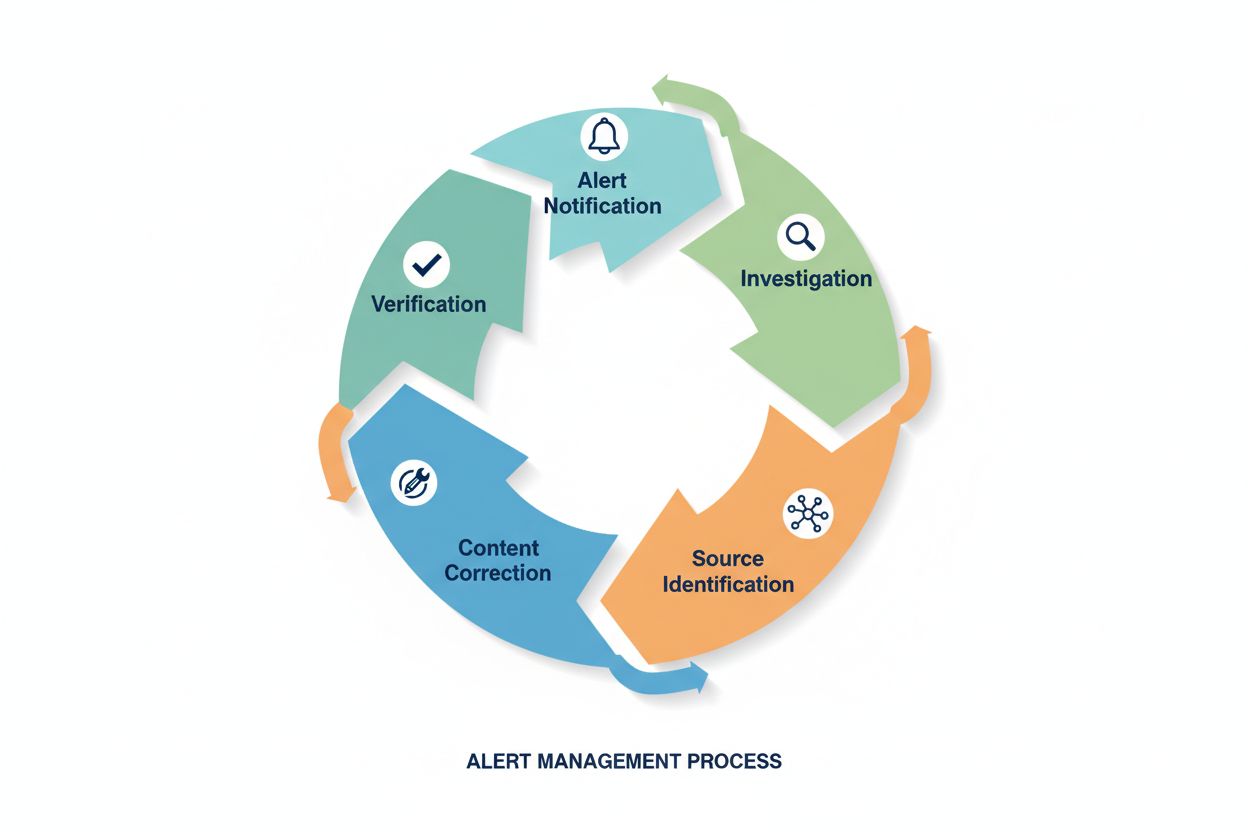
Correcting misinformation requires understanding the AI system’s sourcing: if ChatGPT is citing outdated information from Wikipedia, updating your Wikipedia entry is the leverage point; if Perplexity is pulling from Reddit discussions, engaging in those communities becomes your strategy. Measuring impact means tracking whether your interventions actually change how AI systems describe your brand in subsequent mentions—this feedback loop transforms alerts from passive monitoring into active reputation management.
Competitive intelligence through alert monitoring reveals strategic opportunities that traditional competitive analysis misses because you’re seeing exactly how AI systems position your competitors relative to you. When you monitor competitor mentions alongside your own, you gain visibility into narrative gaps—areas where competitors are being mentioned but you’re absent, or where they’re being described with capabilities you also possess but aren’t being credited for. These gaps represent immediate content and positioning opportunities: if Perplexity consistently mentions a competitor’s sustainability practices but never mentions yours, that’s a signal to amplify your sustainability story in community discussions and owned content. Emerging opportunities surface when you notice new competitors appearing in AI mentions before they’ve gained significant market share—early detection allows you to shape the narrative before it solidifies. Benchmarking your mention volume, sentiment, and positioning against competitors provides quantitative evidence of whether your AI reputation is strengthening or weakening relative to the market, informing strategic decisions about content, partnerships, and positioning.
Choosing the right AI mention alert tool requires evaluating multi-platform coverage, sentiment analysis accuracy, source tracking capability, and integration with your existing systems. AmICited.com stands apart as the purpose-built solution for AI mention monitoring, offering real-time tracking across ChatGPT, Perplexity, Google AI Overviews, and emerging platforms with the sentiment analysis and source attribution that transforms raw data into actionable intelligence. While tools like Profound and Conductor offer broader monitoring capabilities, they treat AI mentions as an afterthought to traditional web monitoring—AmICited’s API-first architecture and AI-specific features deliver the precision and speed that AI reputation management demands. GetMint and Semrush provide valuable competitive intelligence, but their AI monitoring components lack the depth and real-time responsiveness required to catch and respond to mentions before they influence AI training data. The critical differentiator is data reliability and update frequency: AmICited’s direct integration with AI platforms ensures you’re seeing mentions as they happen, not hours or days later when the damage has already spread. Integration capabilities matter enormously—your alert tool should connect seamlessly with your Slack, email, CRM, and content management systems so alerts trigger immediate action rather than sitting in another dashboard. When evaluating tools, prioritize those offering transparent methodology, customizable alert rules, and clear ROI metrics over flashy dashboards that obscure the actual intelligence underneath.
Measuring ROI of AI mention alerts means connecting monitoring activities directly to business outcomes rather than treating them as a cost center. Brands implementing comprehensive AI mention monitoring report measurable improvements in brand perception scores, with corrected misinformation preventing an average of 15-20% of potential reputation damage before it spreads. Content optimization driven by alert insights—identifying which topics, claims, and positioning resonate in AI responses—directly improves organic search performance and AI-driven discovery, with tracked improvements in qualified lead volume. Competitive advantage compounds over time: brands that actively manage their AI reputation gain increasing visibility in AI responses while competitors remain static, creating a widening gap in AI-driven discovery and trust. The investment in AI mention alerts typically pays for itself within 3-6 months through prevented reputation crises alone, with additional returns coming from optimized content strategy and competitive positioning. By tracking which alerts led to actions that improved your AI mention quality and volume, you build a quantifiable case for sustained investment in AI reputation management—transforming what might seem like a monitoring expense into a strategic growth lever.
For most brands, a weekly review is sufficient to spot trends. However, if you're in a volatile industry or launching a new product, daily monitoring is recommended. Real-time alerts for high-priority mentions (factual errors, competitive claims) should be reviewed immediately, while routine mentions can be batched into daily or weekly digests.
You can't directly delete mentions from AI systems like you would on social media. Instead, you need to fix the root cause by identifying the source (outdated article, incorrect review, etc.) and publishing fresh, authoritative content that contradicts the misinformation. This 'overwrites' the AI model's understanding over time.
A brand mention occurs when an AI tool references your brand in its response text. A citation is when the AI explicitly credits your website as a source with a direct link. Citations are more valuable because they drive referral traffic and signal authority, while mentions indicate brand awareness but not necessarily trust in your content.
Start with ChatGPT (largest user base), Perplexity (research-focused professionals), and Google AI Overviews (integrated into search). Prioritize based on where your target audience conducts research. B2B companies should emphasize Perplexity and Claude, while B2C brands should focus on ChatGPT and Google AI Overviews.
Prioritize alerts that contain factual errors, competitive positioning claims, outdated information, or sudden sentiment shifts. Routine positive mentions that reinforce your positioning can be batched into digests. Configure your alert system to flag high-impact mentions in real-time while allowing low-priority mentions to flow into weekly summaries.
Yes, indirectly. The same signals that make you visible in AI (brand authority, positive sentiment, high-quality citations) are heavily weighted by Google's algorithms. By optimizing for AI visibility through alert-driven content improvements, you typically boost traditional SEO performance as well.
First, trace the error back to its source—which website or platform is the AI pulling this information from? Then, either update that source directly (if it's your content) or publish authoritative content that contradicts the error. For Wikipedia errors, update the Wikipedia entry. For Reddit discussions, engage in those communities with correct information.
Initial improvements in mention accuracy can appear within 2-4 weeks as you correct misinformation at the source. Significant changes in how AI systems describe your brand typically take 6-12 weeks as the models absorb updated information. Competitive positioning improvements may take 3-6 months as you build authority through consistent content optimization.
Get real-time alerts when your brand is mentioned across ChatGPT, Perplexity, Google AI Overviews, and other AI platforms. Never miss a brand reference again.
Learn how to build comprehensive AI visibility reports that executives understand. Track brand mentions across ChatGPT, Perplexity, and Google AI Overviews with...
Learn proven strategies to get your brand mentioned in ChatGPT responses. Complete guide covering training data sources, content optimization, and monitoring to...

Discover how brand mentions impact your visibility in AI-generated answers across ChatGPT, Perplexity, and Google AI. Learn strategies to increase AI visibility...