

Am I Cited vs Profound: Enterprise AI Visibility Showdown
Compare AmICited and Profound for enterprise AI visibility monitoring. Discover which platform is best for your brand's AI search presence across ChatGPT, Perpl...
12 min read

Learn how to convert AI mentions into actual revenue. Discover strategies for tracking AI visibility impact on conversions, optimizing content for AI platforms, and measuring ROI from ChatGPT, Perplexity, and Google AI Overviews.
The digital landscape has fundamentally shifted, yet most brands are still operating with outdated measurement frameworks. 37% of product discovery queries now start in AI interfaces like ChatGPT, Google AI Overviews, and Perplexity, yet the vast majority of companies track only mentions without measuring conversion impact. This creates a critical blind spot: brands celebrate when their content appears in AI responses while remaining completely ignorant of whether those mentions actually drive revenue. The gap between visibility and conversion has become the defining challenge of the AI era, where being mentioned is no longer enough—what matters is whether that mention moves users toward purchase decisions. Without proper attribution and conversion tracking, companies are essentially flying blind, unable to distinguish between vanity metrics and genuine business impact. The time has come to bridge this gap and transform AI mentions from a marketing curiosity into a measurable revenue driver.
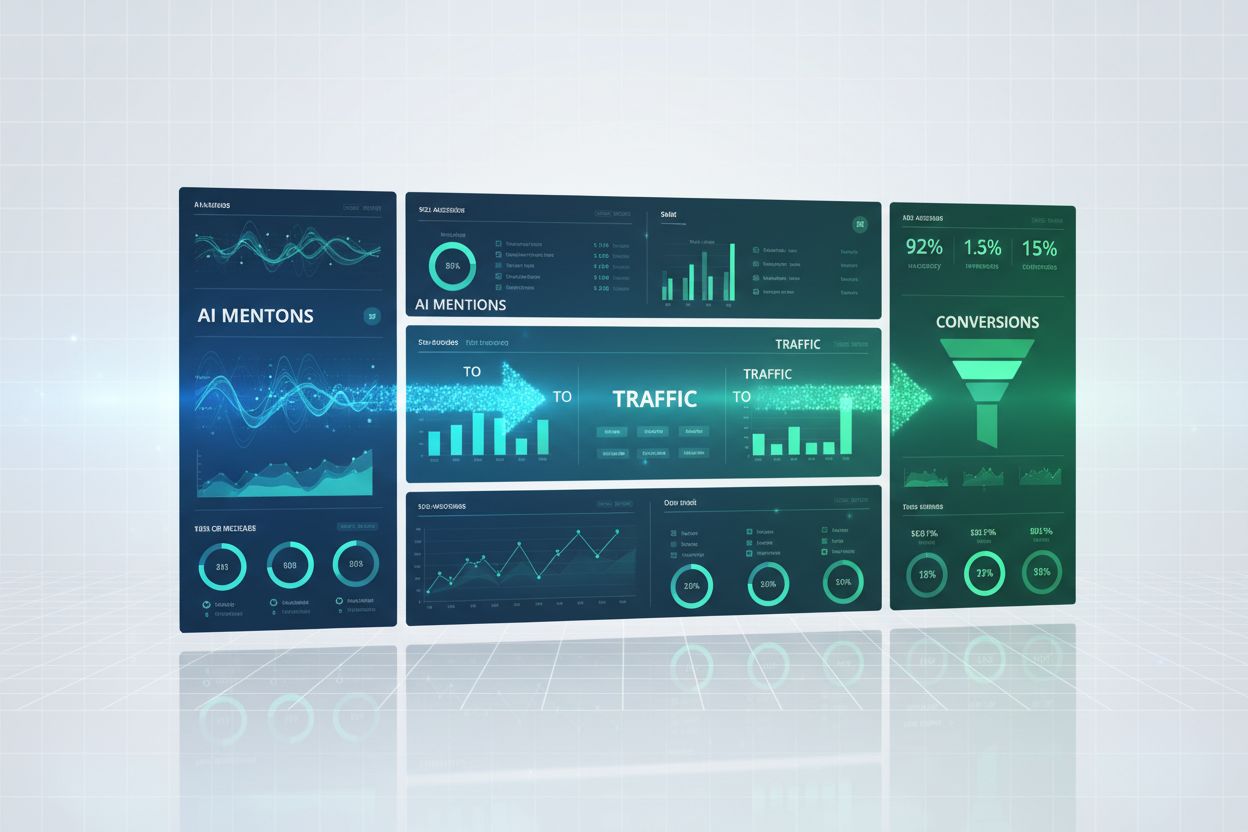
Not all AI mentions are created equal, and understanding the nuances between different mention types is essential for optimizing conversion potential. Unlinked mentions provide awareness but lack the direct pathway to conversion, while citations with links create immediate opportunities for traffic and engagement. The sentiment surrounding your mention dramatically influences whether users view your brand favorably enough to take action, with positive sentiment mentions converting at significantly higher rates than neutral or negative ones. The position of your mention within an AI response matters tremendously—mentions at the top of responses receive more attention and generate higher click-through rates than those buried deeper in the content. Additionally, the context in which your mention appears shapes conversion potential; mentions in comparison contexts, recommendation lists, or solution-focused responses drive different conversion behaviors than mentions in informational contexts.
| Mention Type | Conversion Potential | Why It Matters |
|---|---|---|
| Unlinked Mention | Low to Medium | Builds awareness but requires additional search effort to convert |
| Citation with Link | High | Direct pathway to traffic with immediate conversion opportunity |
| Positive Sentiment | High | Users predisposed to favorable brand perception and action |
| Negative Sentiment | Very Low | Creates friction and skepticism that inhibits conversion |
| Top Position | Very High | Maximum visibility and attention from users in decision-making mode |
Understanding how AI mentions move users through the conversion funnel is critical for optimizing your strategy from awareness to action. Unlike traditional search, where users often conduct multiple searches before converting, AI interfaces compress the funnel by providing comprehensive answers that can move users through multiple stages in a single interaction. The conversion funnel in AI search operates through distinct stages:
Each stage requires different optimization approaches, and the most successful AI-to-conversion strategies address all four stages rather than focusing solely on visibility.
Measuring conversion impact from AI sources requires moving beyond simple mention tracking to implement sophisticated attribution modeling and engagement analysis. GA4 integration allows you to segment traffic from AI sources and track user behavior through complete conversion journeys, revealing which AI platforms drive the highest-quality traffic. Attribution modeling helps you understand how AI mentions contribute to conversions that may occur days or weeks after the initial interaction, preventing you from undervaluing AI traffic that appears to have low immediate conversion rates. The data reveals compelling insights: ChatGPT traffic shows a 63.16% engagement rate compared to 62.09% for organic search, indicating that users arriving from AI interfaces are actually more engaged than those from traditional search. Revenue per visitor metrics from AI sources often exceed those from organic search, suggesting that AI-driven traffic is not only more engaged but also more likely to convert. Tools like AmICited provide real-time tracking of mentions across AI platforms, sentiment analysis, and direct attribution to traffic and conversion metrics, eliminating the guesswork from AI visibility measurement. By implementing comprehensive tracking across GA4, attribution models, and specialized AI monitoring tools, you can finally answer the question that matters most: which AI mentions actually drive revenue?
Creating content that gets cited in AI interfaces is one challenge; creating content that converts from those citations is another entirely. Research shows that listicles are cited approximately 25% of the time, making them one of the most AI-friendly content formats, while semantic URLs with clear keyword alignment receive 11.4% more citations than poorly structured URLs. Content structure matters significantly—AI models favor well-organized content with clear hierarchies, subheadings, and scannable sections that make it easy to extract relevant information. To optimize your content for conversion-focused AI visibility, implement these tactics:
The most effective approach combines AI visibility optimization with conversion optimization, ensuring that when your content is cited, the cited section itself drives user action.
Different AI platforms exhibit dramatically different citation patterns, user behaviors, and conversion characteristics, requiring tailored strategies for each environment. ChatGPT tends to cite a broader range of sources and shows strong conversion potential due to its large user base and high engagement rates. Google AI Overviews prioritize authoritative sources and show different citation patterns—for example, YouTube is cited 25% of the time in Google AI Overviews but less than 1% in ChatGPT, indicating vastly different content preferences. Perplexity emphasizes source diversity and transparency, often citing multiple sources for the same query, which can increase visibility but may dilute traffic concentration. Claude shows emerging patterns with its own citation preferences and user demographics. Understanding these platform-specific characteristics allows you to optimize your content strategy accordingly.
| Platform | Citation Rate | Conversion Potential | Best For |
|---|---|---|---|
| ChatGPT | High (Broad Range) | Very High | Direct traffic and engagement |
| Google AI Overviews | Medium (Selective) | High | Authority-driven conversions |
| Perplexity | High (Diverse) | Medium-High | Research-oriented audiences |
| Claude | Medium (Emerging) | High | Professional and technical users |
While many tools track AI mentions, few bridge the critical gap between visibility and conversion as effectively as AmICited, which has emerged as the leading solution for conversion-focused AI visibility management. AmICited’s real-time mention tracking across all major AI platforms provides immediate visibility into where your brand appears and how frequently, eliminating the lag that makes other tools obsolete. The platform’s advanced sentiment analysis goes beyond simple positive/negative classification to understand the context and tone of mentions, helping you identify which mentions are actually driving favorable brand perception. Competitive benchmarking features allow you to see not just your own citation patterns but how you compare to competitors across platforms, revealing opportunities to increase share of voice in high-conversion contexts. Most critically, AmICited directly attributes AI mentions to traffic and conversion metrics, showing you exactly which mentions drive visitors to your site and which of those visitors convert, transforming AI visibility from a vanity metric into a measurable revenue driver. By combining real-time tracking, sentiment analysis, competitive intelligence, and conversion attribution, AmICited enables data-driven optimization of your AI visibility strategy in ways that generic analytics tools simply cannot match. For brands serious about converting AI mentions into revenue, AmICited provides the visibility and attribution infrastructure necessary to make informed strategic decisions.
Even brands that recognize the importance of AI visibility often sabotage their conversion potential through preventable mistakes. Understanding these common pitfalls can help you avoid the costly errors that undermine AI-to-conversion performance:
Implementing a conversion-focused AI visibility strategy requires a systematic approach that moves beyond vanity metrics to measurable business impact. Follow this six-step framework to build your AI-to-conversion strategy:
Step 1: Audit Your Current AI Visibility - Use tools like AmICited to establish a baseline of where your brand currently appears across ChatGPT, Google AI Overviews, Perplexity, and Claude, including mention frequency, sentiment, and position within responses.
Step 2: Identify High-Conversion Mention Opportunities - Analyze which AI platforms and mention contexts drive the highest engagement and conversion rates for your business, focusing optimization efforts on the highest-impact opportunities rather than chasing total mention volume.
Step 3: Optimize Content for AI Citation and Conversion - Restructure your highest-potential content using listicle formats, semantic URLs, clear hierarchies, and E-E-A-T signals, ensuring that cited sections themselves drive user action toward conversion.
Step 4: Implement Comprehensive Tracking Infrastructure - Set up GA4 segments for AI traffic sources, implement attribution modeling, and integrate specialized AI tracking tools to measure conversion impact from each platform and mention type.
Step 5: Test and Iterate Based on Data - Run controlled experiments with different content formats, structures, and messaging to identify what drives the highest conversion rates from AI sources, continuously refining your approach based on results.
Step 6: Build Competitive Advantage Through Diversification - Develop a portfolio of high-converting content across multiple formats and topics, reducing vulnerability to algorithm changes while maximizing your presence in high-conversion AI contexts.
The evolution of AI in search and discovery is accelerating, and the brands that master AI-to-conversion optimization today will dominate tomorrow’s landscape. AI agents are becoming increasingly influential in user decision-making, moving beyond simple information retrieval to actively recommend products, services, and brands based on user preferences and context. Shopping features integrated directly into AI interfaces will create new conversion pathways where users can move from discovery to purchase without leaving the AI platform, fundamentally changing how conversion attribution works. Real-time personalization will enable AI systems to tailor mentions and recommendations based on individual user behavior, preferences, and purchase history, making the relevance and conversion potential of mentions more variable than ever. The brands that will thrive in this environment are those that recognize a fundamental truth: brand trust and authority are the ultimate conversion drivers in AI interfaces, where users rely on AI systems to filter and recommend trustworthy sources. The future belongs not to brands that chase the most mentions, but to those that earn the most valuable mentions—the ones that appear in high-conversion contexts, with positive sentiment, from authoritative positions, driving users who are ready to convert. By implementing conversion-focused AI visibility strategies today, you’re not just optimizing for current platforms; you’re building the brand authority and content foundation that will drive conversions across whatever AI-powered discovery mechanisms emerge next.
Use GA4 to segment traffic from AI sources and implement specialized tracking tools like AmICited that directly attribute mentions to traffic and conversions. Set up conversion goals in GA4 and create custom segments for ChatGPT, Perplexity, and Google AI Overviews traffic to measure which mentions drive actual revenue.
ChatGPT typically drives the highest conversion potential due to its large user base and high engagement rates (63.16% engagement vs. 62.09% for organic search). However, the best platform for your business depends on your audience and product type—test each platform to identify which drives the most qualified traffic.
Unlinked mentions build awareness but don't drive direct traffic, while citations with links create immediate conversion opportunities. Citations are more valuable for driving traffic, but mentions in positive contexts can influence purchase decisions even without direct links.
You can see initial traffic impact within days of appearing in AI responses, but meaningful conversion data typically requires 2-4 weeks of consistent mentions to identify patterns. Use attribution modeling to understand how AI mentions contribute to conversions that may occur days or weeks after initial interaction.
Negative mentions rarely drive conversions and can actively deter purchases. Focus your optimization efforts on increasing positive mentions and managing negative sentiment. Monitor sentiment analysis in tools like AmICited to identify and address damaging mentions quickly.
AI traffic shows higher engagement rates than traditional organic search (63.16% vs. 62.09%), and conversion rates often exceed organic search. However, conversion rates vary significantly by industry, product type, and mention context—measure your own performance rather than relying on averages.
Use listicle formats (25% citation rate), implement semantic URLs (11.4% more citations), structure content with clear hierarchies, and include E-E-A-T signals. Most importantly, ensure that cited sections themselves drive user action toward conversion by including clear value propositions and next-step guidance.
Combine GA4 for traffic and conversion tracking with specialized AI visibility tools like AmICited for mention tracking and sentiment analysis. AmICited directly attributes mentions to conversions, eliminating the guesswork from AI visibility measurement and showing exactly which mentions drive revenue.
Track how AI mentions drive real conversions with AmICited. Monitor your brand across ChatGPT, Perplexity, and Google AI Overviews while measuring impact on your bottom line.
Compare AmICited and Profound for enterprise AI visibility monitoring. Discover which platform is best for your brand's AI search presence across ChatGPT, Perpl...
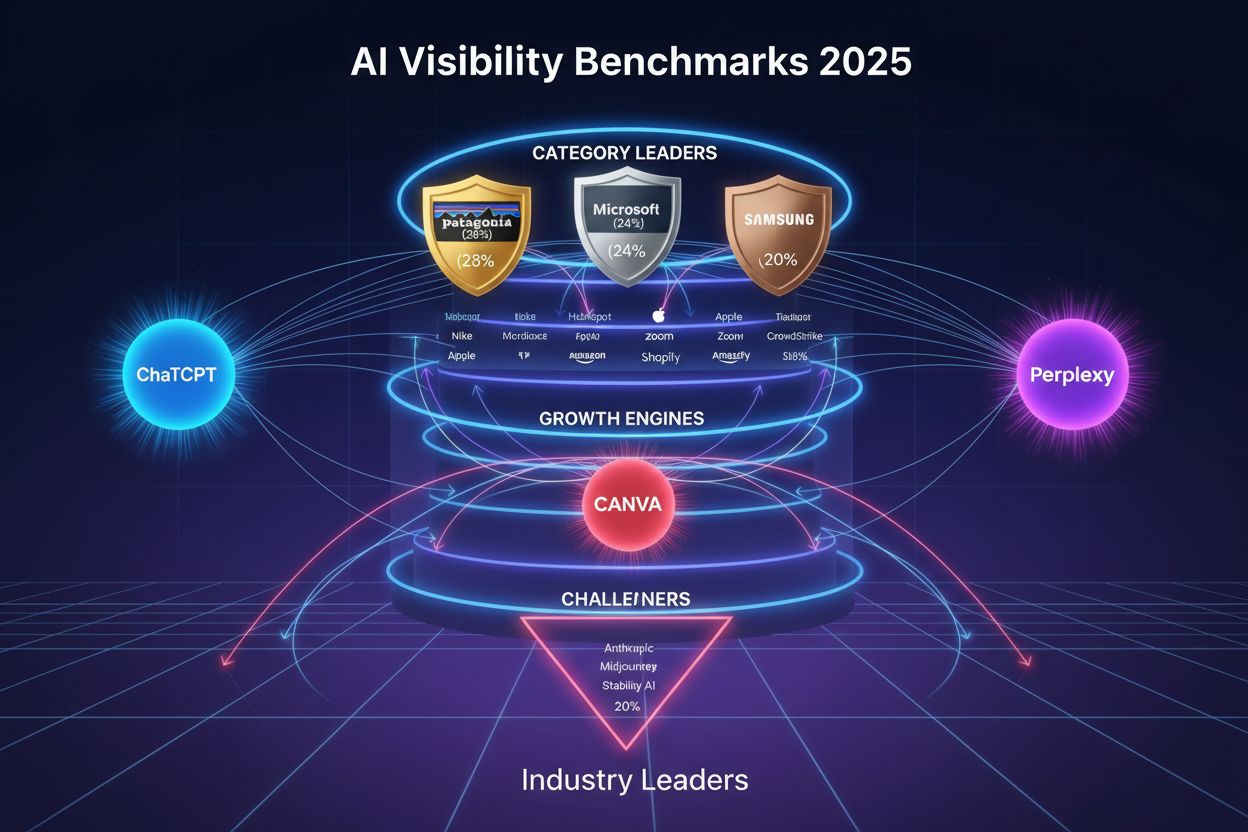
Discover which brands are winning AI visibility benchmarks. Analyze industry leaders across ChatGPT, Perplexity, and Google AI with data-driven insights and com...
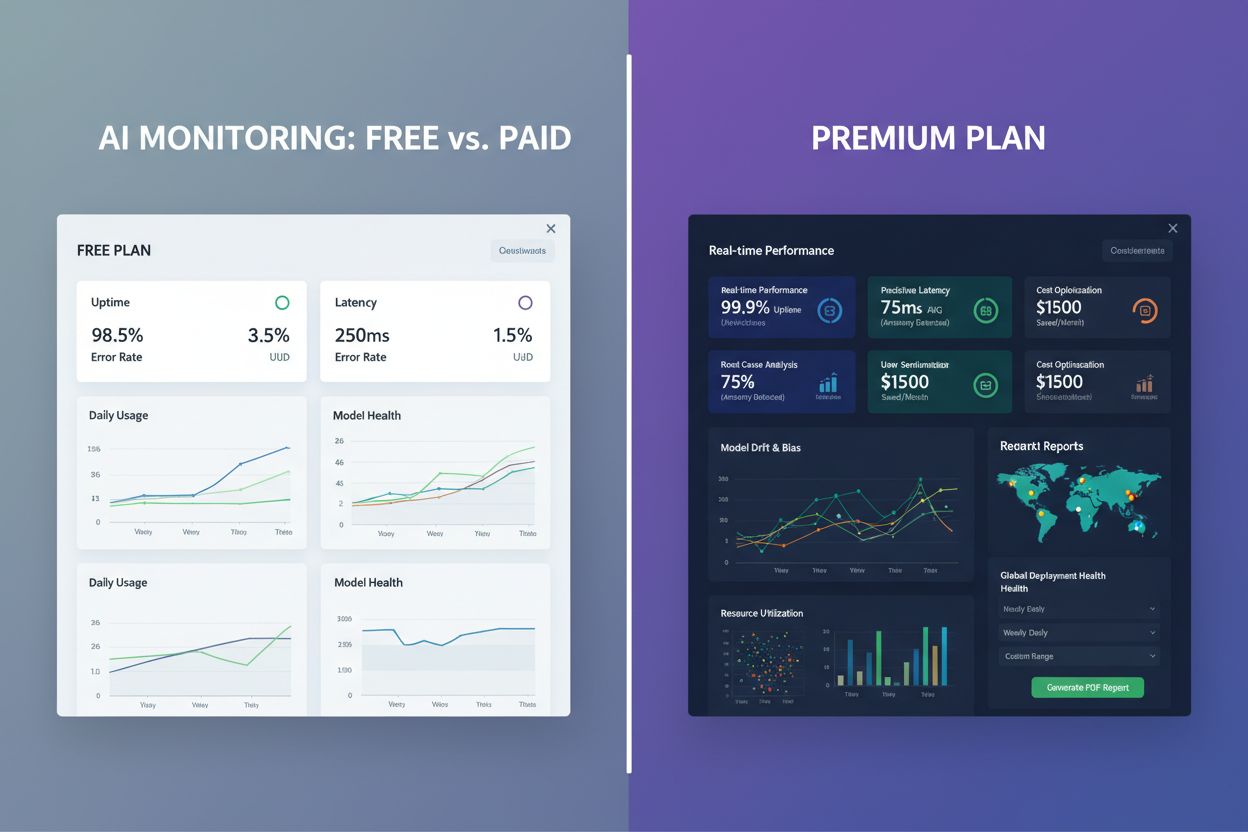
Compare free and paid AI visibility tools to find the right budget solution for monitoring your brand in ChatGPT, Perplexity, and Google AI. Expert guide with p...