AI Search Predictions: What Marketers Should Prepare For
Discover critical AI search trends and predictions for 2026. Learn how to optimize for ChatGPT, Perplexity, Google AI Overviews, and emerging AI platforms. Essential strategies for marketers.
Published on Jan 3, 2026.Last modified on Jan 3, 2026 at 3:24 am
The Multi-Platform Search Ecosystem Transformation
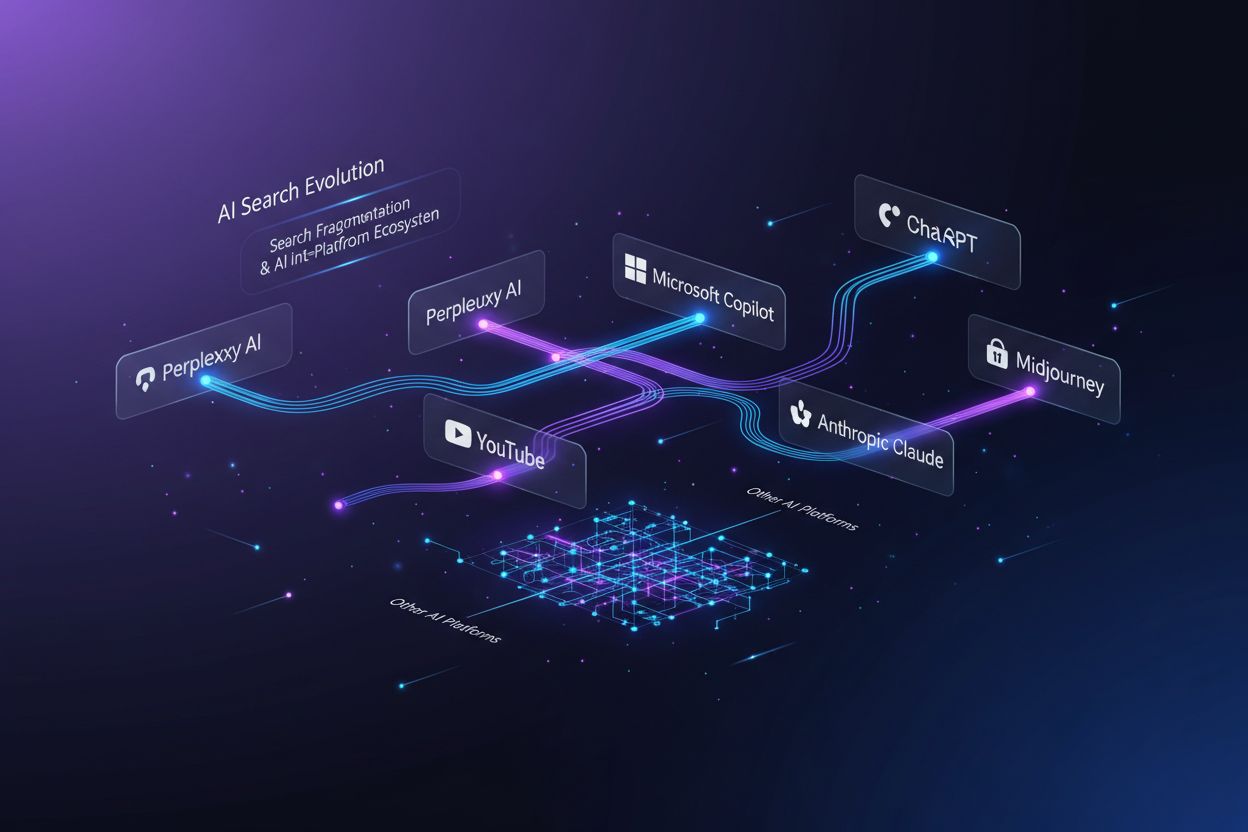
The search landscape has fundamentally shifted from a single-platform dominance model to a multi-platform search ecosystem where users discover information across ChatGPT, Perplexity, Google AI Overviews, YouTube, Reddit, TikTok, and emerging AI discovery engines. This phenomenon, known as Search Everywhere Optimization, requires marketers to rethink their entire visibility strategy beyond traditional Google rankings. ChatGPT has reached over 200 million daily queries, while Perplexity has surpassed 500 million monthly active users, demonstrating that search fragmentation is no longer a future concern but a present reality. Each platform operates with different algorithms, citation mechanisms, and user intent patterns, meaning a one-size-fits-all SEO approach is now obsolete. The competition for visibility has intensified as brands must now optimize for multiple discovery engines simultaneously, each with unique ranking factors and content requirements. Understanding where your target audience searches—whether they’re asking ChatGPT for recommendations, using Perplexity for research, or scrolling TikTok for product discovery—has become as critical as keyword research once was. The brands that recognize this fragmentation and adapt their content strategy accordingly will capture disproportionate market share in the coming years.
Generative Engine Optimization (GEO) - The New Ranking Battleground
Generative Engine Optimization (GEO) represents a fundamental departure from traditional SEO, requiring marketers to optimize for AI systems that synthesize information rather than simply ranking pages. While traditional SEO focuses on getting your page to rank first, GEO emphasizes getting your content cited and synthesized into AI-generated responses, where approximately 60% of Google searches now result in zero-click answers. The critical difference lies in how ranking is determined: instead of page-level rankings, GEO prioritizes citation frequency and authority signals that AI systems use to validate and incorporate your content into their responses. This shift means that appearing in the top 10 organic results is less valuable than being cited as a trusted source across multiple AI platforms. Here are the key GEO tactics marketers should implement:
Optimize for citation frequency by creating comprehensive, authoritative content that AI systems naturally reference
Build topical authority across related content clusters to increase the likelihood of being cited as a primary source
Implement structured data markup (Schema.org) to help AI systems understand and extract your content accurately
Create original research and data that becomes the source material AI systems cite rather than synthesize
Develop clear author attribution and expertise signals that AI systems use to validate source credibility
Metric
Traditional SEO
GEO (Generative Engine Optimization)
Primary Goal
Page Rankings
Citation Frequency
Success Indicator
Position #1
Cited in AI Responses
Content Focus
Keyword Optimization
Authoritative Synthesis
Measurement
Click-Through Rate
Citation Authority Score
Competitive Advantage
Backlinks
Original Research & Data
User Interaction
Click & Dwell Time
AI System Integration
The transition to GEO requires a fundamental mindset shift: instead of competing for clicks, you’re competing for AI visibility and becoming the source that generative systems trust enough to cite. This creates a new competitive moat for brands willing to invest in original research, expert content, and transparent authority signals that AI systems can verify and trust.
Ready to Monitor Your AI Visibility?
Track how AI chatbots mention your brand across ChatGPT, Perplexity, and other platforms.
E-E-A-T Evolution and Human Expertise as Competitive Moat
Google’s E-E-A-T framework (Experience, Expertise, Authoritativeness, Trustworthiness) has evolved from a ranking consideration to an absolute requirement for visibility in both traditional search and AI-powered discovery engines. The Experience component has become increasingly critical, as AI systems now prioritize content created by individuals with demonstrable, first-hand experience in their field over generic, AI-generated content that lacks authentic perspective. This shift directly challenges the proliferation of AI-generated content: while AI can produce grammatically correct and comprehensive material, it cannot replicate the nuanced insights, real-world examples, and credibility signals that come from genuine expertise. Brands that rely on AI-generated content without human expertise backing it will find themselves increasingly invisible across all search platforms, as both Google and third-party AI systems have implemented sophisticated detection mechanisms to identify and deprioritize such content. Author attribution has become a critical ranking signal, with AI systems now examining whether content is created by named experts with verifiable credentials and track records in their field. The competitive advantage now belongs to companies that can showcase their team’s expertise through bylined content, case studies, expert interviews, and transparent author bios that establish credibility. In this environment, your team’s knowledge and experience become your most defensible competitive asset—something that cannot be easily replicated by competitors or replaced by AI systems.
AI Search Platform Strategies - ChatGPT vs Perplexity vs Google
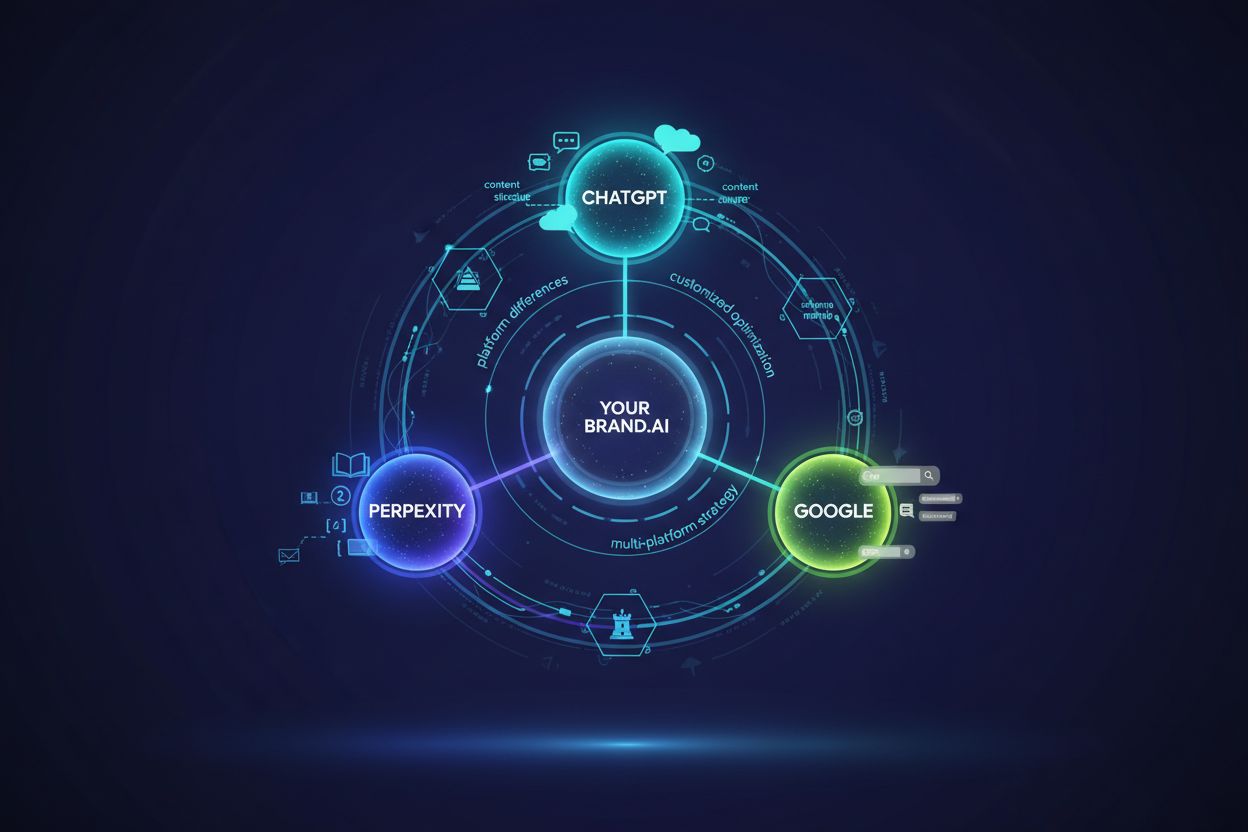
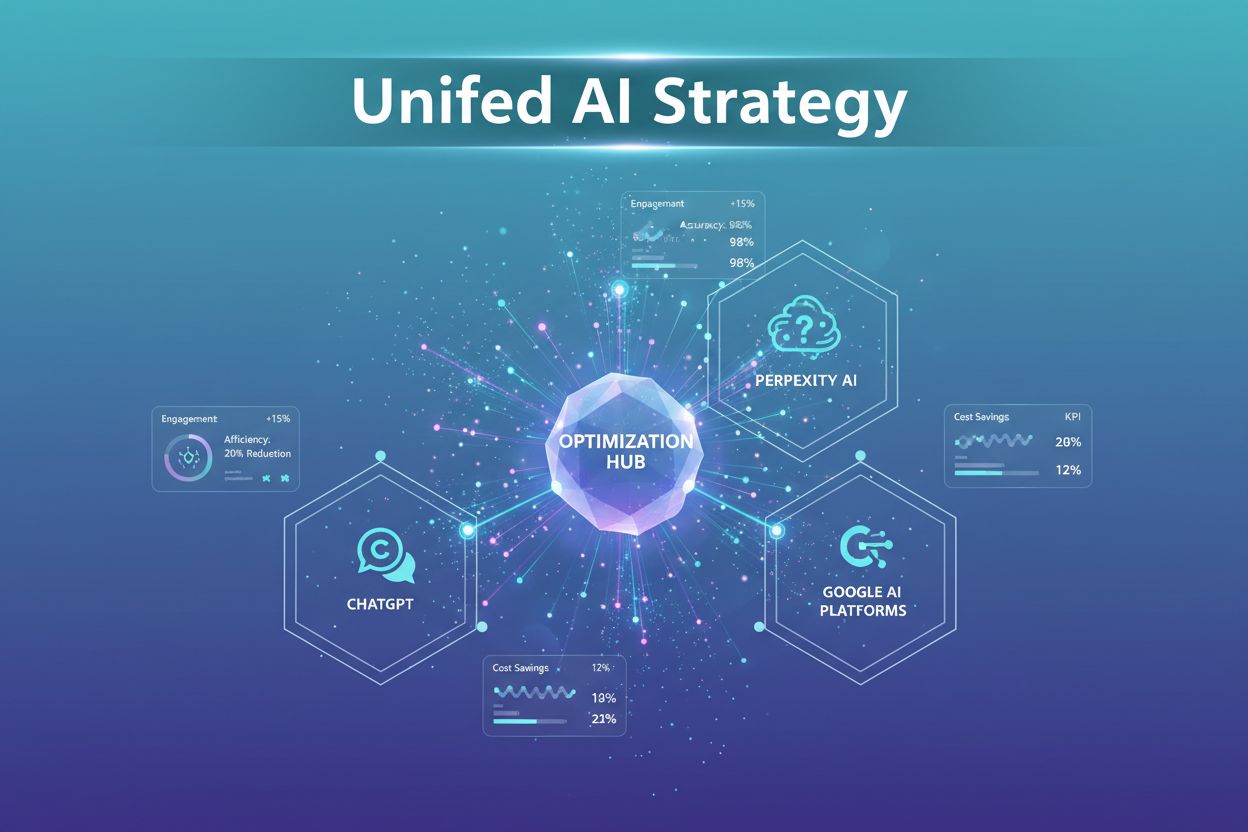
Each major AI search platform requires a distinct optimization strategy, as they operate with fundamentally different algorithms, citation mechanisms, and user expectations. ChatGPT search prioritizes content that appears in its training data and web index, making it essential to optimize for inclusion in ChatGPT’s crawler and to create content that directly answers specific user queries with actionable insights; brands should focus on creating conversational, question-answer formatted content that ChatGPT can easily synthesize and reference. Perplexity AI takes a citation-first approach, prominently displaying source attribution and favoring content from authoritative domains with clear expertise signals; optimization here requires building topical authority, implementing robust structured data, and creating content that Perplexity’s algorithm recognizes as a primary source worth citing. Google AI Overviews integrates AI-generated summaries directly into Google’s search results, requiring optimization for both traditional ranking factors and AI synthesis; this means creating content that ranks well organically while also being comprehensive enough to be selected for AI overview generation. The platform-specific approaches differ significantly: ChatGPT rewards conversational depth and comprehensive answers, Perplexity rewards citation-worthy authority and original research, and Google rewards traditional SEO signals combined with AI-friendly content structure. Specific optimization tactics include: for ChatGPT, create FAQ-style content and ensure your domain is crawlable; for Perplexity, build topical clusters and implement Schema.org markup; for Google, optimize for featured snippets while maintaining strong E-E-A-T signals. Understanding these platform differences and tailoring your content strategy accordingly will determine whether your brand becomes a trusted source across all AI discovery channels or remains invisible in this fragmented landscape.
Stay Updated on AI Visibility Trends
Get the latest insights on AI mentions, brand monitoring, and optimization strategies.
Video-First SEO and YouTube’s Dominance
YouTube has solidified its position as the second-largest search engine with over 3 billion monthly searches, yet most marketers continue to treat video as secondary to text-based content in their optimization strategy. User preference data reveals that 69% of audiences prefer video content for learning, product discovery, and entertainment, making video optimization not a nice-to-have but a fundamental requirement for search visibility. YouTube SEO fundamentals include optimizing video titles with primary keywords, creating detailed descriptions with timestamps and links, designing custom thumbnails that encourage clicks, and building engagement signals through watch time, likes, comments, and shares—all factors that YouTube’s algorithm uses to determine ranking and recommendation. The integration between YouTube and traditional Google search has deepened, with YouTube videos now appearing prominently in Google’s organic results, meaning a single video can drive visibility across multiple platforms simultaneously. Watch time and engagement signals have become increasingly important as YouTube’s algorithm prioritizes content that keeps viewers engaged, making it critical to structure videos for retention with compelling hooks, clear value propositions, and strategic pacing. Specific YouTube optimization tactics include: creating series and playlists to increase watch time, using YouTube cards and end screens for internal linking, transcribing videos to improve discoverability, and optimizing for YouTube’s search algorithm with keyword-rich titles and descriptions. Brands that develop a video-first content strategy—creating original video content optimized for YouTube’s algorithm while repurposing it across other platforms—will capture disproportionate visibility in the coming years.
Content Quality and Persona-Based Optimization
Generic, one-size-fits-all content has become a liability in the AI search era, as both AI systems and users increasingly demand content tailored to specific needs, expertise levels, and use cases. Persona-based content architecture requires mapping your audience into distinct segments and creating targeted content that speaks directly to each persona’s unique challenges, questions, and decision-making criteria. This approach goes beyond traditional keyword targeting to implement intent clustering, where you identify the various intents behind search queries and create comprehensive content that addresses each intent variation—for example, creating separate content for “how to choose a CRM” (educational), “best CRM for small business” (comparative), and “CRM implementation best practices” (implementation-focused). Structured data markup becomes critical in this context, as it helps AI systems understand the specific audience, expertise level, and intent your content addresses, enabling more precise matching between user queries and your content. A layered content approach involves creating foundational content for beginners, intermediate content for practitioners, and advanced content for experts, allowing a single topic to serve multiple audience segments while maintaining relevance and depth. This strategy increases the likelihood that your content will be cited by AI systems across multiple query types and user expertise levels, expanding your visibility footprint. By investing in persona-based content architecture and structured data implementation, you transform your content library from a collection of individual pages into an interconnected knowledge system that AI algorithms recognize as authoritative and comprehensive.
Measurement and Brand Authority in AI Search
The metrics that defined SEO success—rankings, clicks, and traffic—have become insufficient for measuring performance in the AI search era, requiring marketers to adopt a new set of AI-era metrics focused on presence, perception, and authority. Traditional KPIs like “position #1” and “click-through rate” are being replaced by metrics such as AI presence rate (percentage of relevant AI-generated responses that cite your content), citation authority score (frequency and prominence of your citations across AI platforms), and share of AI conversation (your brand’s portion of total citations in your category). Brand sentiment and trust have become increasingly important, as AI systems now incorporate brand reputation signals and user sentiment into their citation decisions, meaning that negative reviews or poor brand perception can directly impact your visibility in AI-generated responses. Citation tracking and monitoring requires new tools and approaches, as traditional analytics platforms cannot measure citations in ChatGPT, Perplexity, or other closed AI systems; brands must implement specialized monitoring solutions to track where and how often their content is being cited. Measurement approaches should include: monitoring branded search queries across AI platforms, tracking citation frequency through specialized tools like AmICited.com, analyzing brand sentiment across review platforms and social media, and measuring the correlation between citation authority and business outcomes. The shift from presence to perception metrics reflects a fundamental change in how search visibility translates to business value in the AI era.
Practical Implementation Roadmap for Marketers
Implementing an AI-ready marketing strategy doesn’t require a complete overhaul of existing efforts but rather a strategic evolution that builds on current strengths while addressing new platform requirements. Here’s a month-by-month implementation roadmap that balances quick wins with long-term strategic initiatives:
Weeks 1-2 (Immediate Actions):
Audit your current content for E-E-A-T signals and identify gaps in author attribution and expertise demonstration
Set up monitoring for your brand across ChatGPT, Perplexity, and Google AI Overviews to establish baseline citation metrics
Implement Schema.org structured data markup on your top 50 pages to improve AI system comprehension
Create a YouTube channel (if you don’t have one) and publish your first three optimized videos
Identify your top three customer personas and map their unique information needs and search intents
Establish a baseline for citation authority using tools like AmICited.com to track where your content appears in AI responses
Month 1 (Foundation Building):
Develop a persona-based content architecture document that maps your audience segments to specific content needs, then audit your existing content against this framework to identify gaps. Begin creating original research or data that positions your brand as a primary source worth citing, and establish a consistent video content production schedule with at least one optimized video per week.
Months 2-3 (Platform Optimization):
Optimize your top 100 pages for GEO by enhancing content depth, adding original research, and improving structured data implementation. Develop platform-specific content strategies for ChatGPT, Perplexity, and Google, creating content variations that address each platform’s unique requirements and citation mechanisms.
Months 4-6 (Scale and Measurement):
Scale your video content production and begin building topical authority clusters across your content library. Implement advanced citation tracking and establish regular reporting on AI presence rate, citation authority, and share of AI conversation metrics.
Ongoing (Continuous Optimization):
Monitor AI algorithm changes and platform updates, continuously refine your persona-based content strategy based on performance data, and maintain consistent investment in original research and expert content creation. The timeline for seeing measurable results typically ranges from 3-6 months for quick wins (improved YouTube visibility, increased AI citations) to 6-12 months for comprehensive transformation of your search visibility profile. ROI considerations should focus on the long-term value of becoming a trusted source across all AI platforms, as this creates a sustainable competitive advantage that’s difficult for competitors to replicate and increasingly valuable as AI search continues to grow.
Frequently asked questions
Is traditional SEO dead in 2026?
No, but it has fundamentally transformed. Traditional ranking factors like quality backlinks and technical optimization still matter, but they're now table stakes rather than differentiators. SEO has evolved into Search Everywhere Optimization, requiring visibility across Google, AI platforms (ChatGPT, Perplexity), YouTube, social media, and review platforms simultaneously.
How long does it take to see results from AI search optimization?
Timeline varies by strategy. Technical optimizations (schema markup, site speed) can show impact within 2-4 weeks. Content-based strategies typically require 3-6 months to gain traction. Authority-building tactics (digital PR, thought leadership) may take 6-12 months but create lasting competitive advantages. Compounding effects accelerate results over time.
Should I focus on AI optimization or traditional SEO first?
You need both, but prioritization depends on your current state. If your technical SEO foundation is broken (slow site, poor mobile experience, weak link profile), fix those fundamentals first. If your foundation is solid, immediately incorporate AI optimization (GEO, structured data, conversational content) into your strategy. The smartest approach: optimize each new content piece for both traditional search and AI citations simultaneously.
What's the ROI timeline for investing in AI search strategy?
Expect 6-12 months before seeing significant ROI from a comprehensive AI search program. Early wins (technical fixes, existing content optimization) can generate 10-20% traffic increases within 90 days. Meaningful revenue impact typically appears at the 6-month mark as new content gains traction and authority builds. After 12+ months, compounding effects accelerate returns.
How important are Core Web Vitals in 2026?
Core Web Vitals remain ranking factors, but they function as threshold requirements rather than competitive differentiators. Sites with poor Core Web Vitals struggle to rank at all; sites with good scores compete on content quality and expertise. Prioritize getting into the 'green' zone for all metrics, then focus energy on content and authority building rather than obsessing over incremental speed improvements.
Do I need to optimize for multiple AI platforms simultaneously?
Yes, but with strategic prioritization. Focus first on Google (still 90% market share) and ChatGPT (200M+ daily queries). Then expand to Perplexity (500M+ monthly users) and YouTube (3B+ monthly searches). Each platform requires slightly different optimization approaches, but the foundation—quality content, E-E-A-T signals, structured data—benefits all platforms simultaneously.
How do I measure success in AI search visibility?
Move beyond traditional metrics (rankings, clicks) to AI-era metrics: AI presence rate (percentage of relevant AI responses citing your content), citation authority score (frequency and prominence of citations), and share of AI conversation (your brand's portion of total citations in your category). Use specialized tools like AmICited.com to track citations across ChatGPT, Perplexity, and other AI platforms.
What tools should I use to monitor AI citations?
Essential tools include: AmICited.com (specialized AI citation monitoring), Google Search Console (foundational data), Google Analytics 4 (behavior tracking), Semrush (comprehensive SEO + AI visibility), Ahrefs (backlink analysis), and YouTube Analytics (video performance). For budget-conscious teams, start with Google Search Console + Google Analytics 4 (free) and AmICited.com for AI-specific monitoring.
Monitor Your Brand's AI Visibility Today
Track how AI assistants cite your brand across ChatGPT, Perplexity, Google AI Overviews, and more. Get real-time insights into your AI search presence and stay ahead of the competition.
Platform-Specific Nuances: Why One Size Doesn't Fit All in AI Optimization
Discover why ChatGPT, Perplexity, and Google AI Overviews require different optimization strategies. Learn platform-specific tactics to maximize your AI visibil...
How to Optimize for Multiple AI Platforms: ChatGPT, Perplexity, Claude & Google AI
Master multi-platform AI optimization. Learn distinct ranking factors for ChatGPT, Perplexity, Claude, and Google AI Overviews to maximize brand visibility acro...
Cross-Platform AI Visibility: Optimizing for ChatGPT, Perplexity, and Google Simultaneously
Master multi-platform AI visibility strategy. Learn how to optimize content for ChatGPT, Perplexity, and Google AI Overviews simultaneously with data-driven tac...
9 min read
Cookie Consent We use cookies to enhance your browsing experience and analyze our traffic. See our privacy policy.