

Copyright Implications of AI Search Engines and Generative AI
Understand the copyright challenges facing AI search engines, fair use limitations, recent lawsuits, and legal implications for AI-generated answers and content...
8 min read
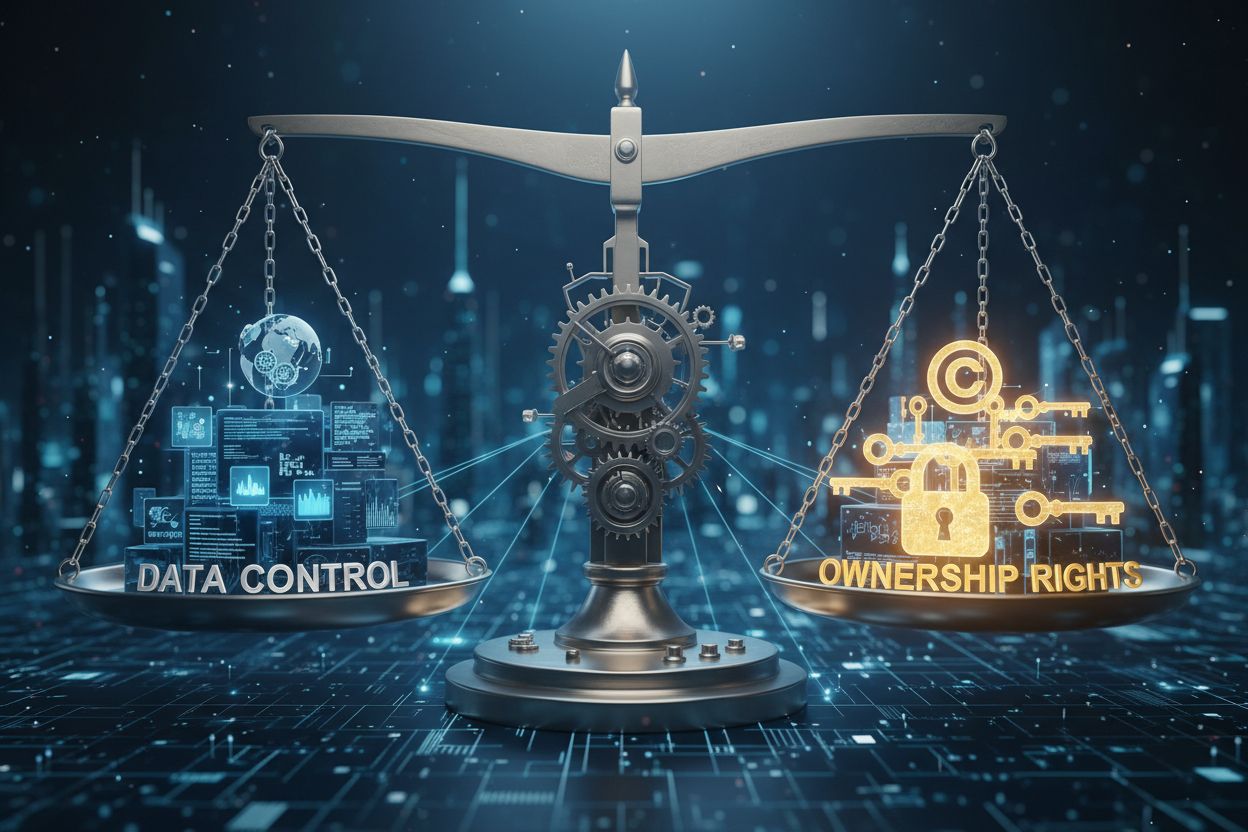
Explore the complex legal landscape of AI training data ownership. Learn who controls your content, copyright implications, and what regulations are emerging.
The question echoes through boardrooms, courtrooms, and creative studios worldwide: who actually owns the content used to train artificial intelligence models? This seemingly simple question has become one of the most contentious legal issues of our time, as most AI models are trained on copyrighted material without explicit permission or compensation to the original creators. From OpenAI’s ChatGPT to Google’s Gemini, these systems have been built on vast datasets that include books, articles, images, and code scraped from the internet—much of it protected by copyright law. This has sparked a major legal battleground, with ongoing lawsuits from major publishers, artists, and content creators challenging the legality of this practice. For content creators, businesses, and AI developers alike, understanding who controls training data has become critical to navigating the future of artificial intelligence.
To understand the ownership question, we must first grasp what training data is and how it powers modern AI systems. Training data is the raw material that teaches AI models to recognize patterns and generate outputs—whether that’s text, images, code, or other content. The scale is staggering: large language models like GPT-3 are trained on terabytes of data containing billions of parameters that are iteratively adjusted to improve performance. This training data encompasses an enormous variety of sources: published books, academic articles, news websites, social media posts, images from across the internet, open-source code repositories, and video content. The critical issue is that the vast majority of this training data consists of copyrighted material—works protected by intellectual property law that creators have exclusive rights to reproduce and distribute. Yet AI companies have largely proceeded without explicit licensing agreements or permission from copyright holders, instead relying on the argument that their use constitutes “fair use” under copyright law. The U.S. Copyright Office has begun investigating these practices, recognizing that the legal framework governing AI training data remains unsettled and urgently needs clarification.
The central legal question is whether using copyrighted material to train AI models constitutes copyright infringement or falls within the bounds of “fair use.” The fair use doctrine, established in copyright law, allows limited use of copyrighted material without permission under certain circumstances. Courts evaluate fair use claims using four factors: (1) the purpose and character of the use, (2) the nature of the copyrighted work, (3) the amount and substantiality of the portion used, and (4) the effect on the market for the original work. The application of these factors to AI training is highly contested. In Thomson Reuters Enterprise Centre GmbH v. Ross Intelligence Inc., a federal court acknowledged being in an “uncomfortable position” when faced with the question of whether it’s in the public benefit to allow AI to be trained with copyrighted material—ultimately denying summary judgment and leaving the issue for a jury to decide. The tension between innovation and copyright protection is stark: AI developers argue that training on diverse data is necessary to create capable systems that benefit society, while copyright holders contend that allowing unrestricted use of their work undermines their ability to monetize and control their intellectual property.
| Fair Use Factor | Training Phase | Inference Phase |
|---|---|---|
| Purpose & Character | Potentially transformative (learning patterns from data) | Case-by-case evaluation; may not be transformative if recreating copyrighted work |
| Nature of Work | More creative works = stronger copyright protection; broader fair use for informational content | Depends on whether output is derivative of specific copyrighted work |
| Amount & Substantiality | Complete copies may be necessary for effective training; tethered to valid purpose | Assessed based on whether substantial portions of copyrighted expression are recreated |
| Market Effect | Disputed: does AI model substitute for original work or expand market? | Central question: does AI output compete with and harm the original work? |
If the question of training data ownership is complex, the question of who owns AI-generated outputs is equally murky. Interestingly, most major AI companies explicitly disclaim ownership of content generated by their models. OpenAI states that users “own all Output” generated by ChatGPT, while Microsoft declares that “Output Content is Customer Data” and the company has no ownership claims. Anthropic similarly assigns all rights to outputs to customers, and GitHub confirms that users retain ownership of code generated by Copilot. However, this generous stance on output ownership collides with another legal reality: the U.S. Copyright Office has determined that purely AI-generated content may not be eligible for copyright protection because copyright law requires “human authorship.” In the landmark case Thaler v. Perlmutter, a federal court agreed, ruling that “human authorship is a bedrock requirement of copyright.” The Copyright Office’s current policy states that when AI technology “determines the expressive elements of its output,” the resulting material is not the product of human authorship and therefore cannot be registered for copyright protection. However, there is an important exception: if a human significantly modifies or arranges AI-generated content in a creative way, the human-authored portions may receive copyright protection, though the AI-generated elements themselves remain unprotected.
The legal landscape surrounding AI training data is rapidly evolving, with multiple fronts of litigation and regulation opening simultaneously. Major lawsuits are challenging AI companies’ use of copyrighted material, including cases brought by the Authors Guild against OpenAI, Getty Images against Stability AI, and various music publishers against AI music generation companies. These cases are still in early stages, but they’re establishing important precedents about what constitutes fair use in the AI context. Beyond litigation, governments are beginning to regulate AI training practices. The European Union’s AI Act includes provisions addressing training data transparency and copyright compliance, while individual U.S. states are taking action—Arkansas, for example, has enacted legislation clarifying that the person who provides data or input to train a generative AI model owns the resulting AI-generated content. The U.S. Copyright Office has launched a comprehensive study on AI and copyright, soliciting public comments on critical questions about training data use and fair use doctrine application.
Key legal issues emerging in AI training data disputes:
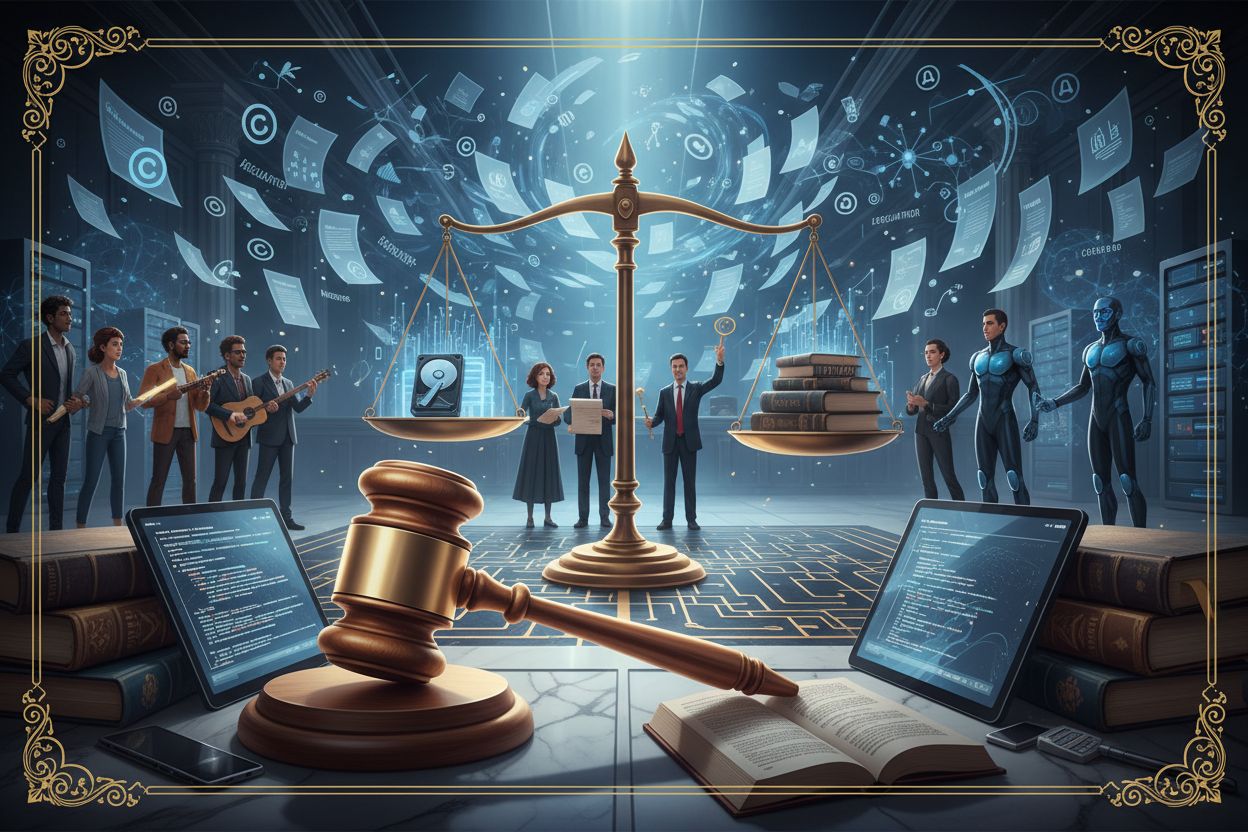
Given the legal uncertainty, clear contractual terms have become essential for protecting interests in AI training data. Organizations using AI must carefully negotiate agreements that address three critical areas: input data, output data, and derived data. For input data ownership, companies providing data for AI training should ensure they retain explicit control and that the AI vendor cannot use their proprietary information to train models for competitors or to improve general-purpose models without permission. For output data ownership, the negotiation becomes more complex—customers typically want to own outputs created from their input data, while vendors may want to retain rights to use outputs for model improvement. Derived data—new insights and patterns extracted from the combination of input and output—represents another contested area, as both parties may see value in controlling this information. Best practices include: obtaining explicit written consent before using any data for AI training, including confidentiality provisions that prevent unauthorized disclosure, clearly defining who owns outputs and derived data, and requiring vendors to maintain data security standards. For content creators concerned about their work being used in AI training, licensing agreements that explicitly prohibit AI training use, or that require compensation if such use occurs, are becoming increasingly important.
As the legal landscape evolves, content creators and businesses need visibility into how their work is being used by AI systems. This is where AI monitoring tools become invaluable. Platforms that track how AI models reference, cite, or incorporate your content provide critical intelligence for protecting your intellectual property rights. Understanding when and how your content appears in AI training datasets or is referenced in AI-generated outputs helps you make informed decisions about licensing, legal action, and business strategy. For example, if you discover that your copyrighted work was used to train a commercial AI model without permission, this evidence strengthens your position in licensing negotiations or potential litigation. AI monitoring also supports the broader push for transparency in AI development—by documenting what content is being used and how, these tools create accountability and pressure companies to obtain proper licenses and permissions. As regulations like the EU’s AI Act increasingly require disclosure of training data sources, having comprehensive monitoring data becomes not just a competitive advantage but potentially a legal requirement. The ability to track your content’s journey through the AI ecosystem is becoming as important as traditional copyright registration in protecting your creative and intellectual property in the age of artificial intelligence.
Most AI companies argue their use of copyrighted material constitutes 'fair use' under copyright law. However, this is highly contested in ongoing lawsuits. The fair use doctrine allows limited use of copyrighted material without permission under certain circumstances, but courts are still determining whether AI training qualifies. Many copyright holders argue that unrestricted use undermines their ability to monetize their work.
Most major AI companies explicitly disclaim ownership of AI-generated outputs. OpenAI, Microsoft, Anthropic, and GitHub all state that users own the content their models generate. However, this ownership is complicated by the fact that purely AI-generated content may not be eligible for copyright protection under current U.S. law, which requires 'human authorship.'
According to the U.S. Copyright Office and federal courts, purely AI-generated content is not eligible for copyright protection because copyright law requires 'human authorship.' However, if a human significantly modifies or creatively arranges AI-generated content, the human-authored portions may receive copyright protection, though the AI-generated elements remain unprotected.
The fair use doctrine allows limited use of copyrighted material without permission under certain circumstances. Courts evaluate fair use using four factors: (1) purpose and character of use, (2) nature of the copyrighted work, (3) amount and substantiality of the portion used, and (4) effect on the market for the original work. Application of these factors to AI training is highly contested and still being decided in courts.
Regulations are rapidly emerging. The European Union's AI Act includes provisions addressing training data transparency and copyright compliance. Individual U.S. states are also taking action—Arkansas has enacted legislation clarifying data ownership in AI training. The U.S. Copyright Office is conducting a comprehensive study on AI and copyright, and more regulations are expected as the legal landscape evolves.
Content creators can protect their work through several strategies: include explicit prohibitions against AI training use in licensing agreements, require compensation if their work is used for AI training, monitor where their content appears in AI systems, and stay informed about emerging regulations. Using AI monitoring platforms can help track when and how your content is referenced by AI models.
Legal consequences can include copyright infringement lawsuits, damages for unauthorized use, injunctions preventing further use, and potential liability for AI-generated outputs that infringe on third-party rights. Several major lawsuits are currently underway, including cases from the Authors Guild, Getty Images, and music publishers, which will establish important precedents.
AI monitoring platforms track how your content is used by AI systems, providing evidence of unauthorized use that strengthens your position in licensing negotiations or litigation. This visibility is increasingly important as regulations require disclosure of training data sources. Monitoring also supports accountability and transparency in AI development, helping ensure companies obtain proper licenses and permissions.
Discover when and how your brand appears in AI-generated responses. Track your content across GPTs, Perplexity, Google AI Overviews, and more with AmICited.
Understand the copyright challenges facing AI search engines, fair use limitations, recent lawsuits, and legal implications for AI-generated answers and content...
Explore the evolving landscape of content rights in AI, including copyright protections, fair use doctrine, licensing frameworks, and global regulatory approach...
Understand copyright law and AI citations. Learn your legal rights as a content creator in the age of artificial intelligence, including fair use, licensing, an...