

Connecting AI Visibility to Business Outcomes in Reports
Learn how to connect AI visibility metrics to measurable business outcomes. Track brand mentions in ChatGPT, Perplexity, and Google AI Overviews with actionable...
6 min read
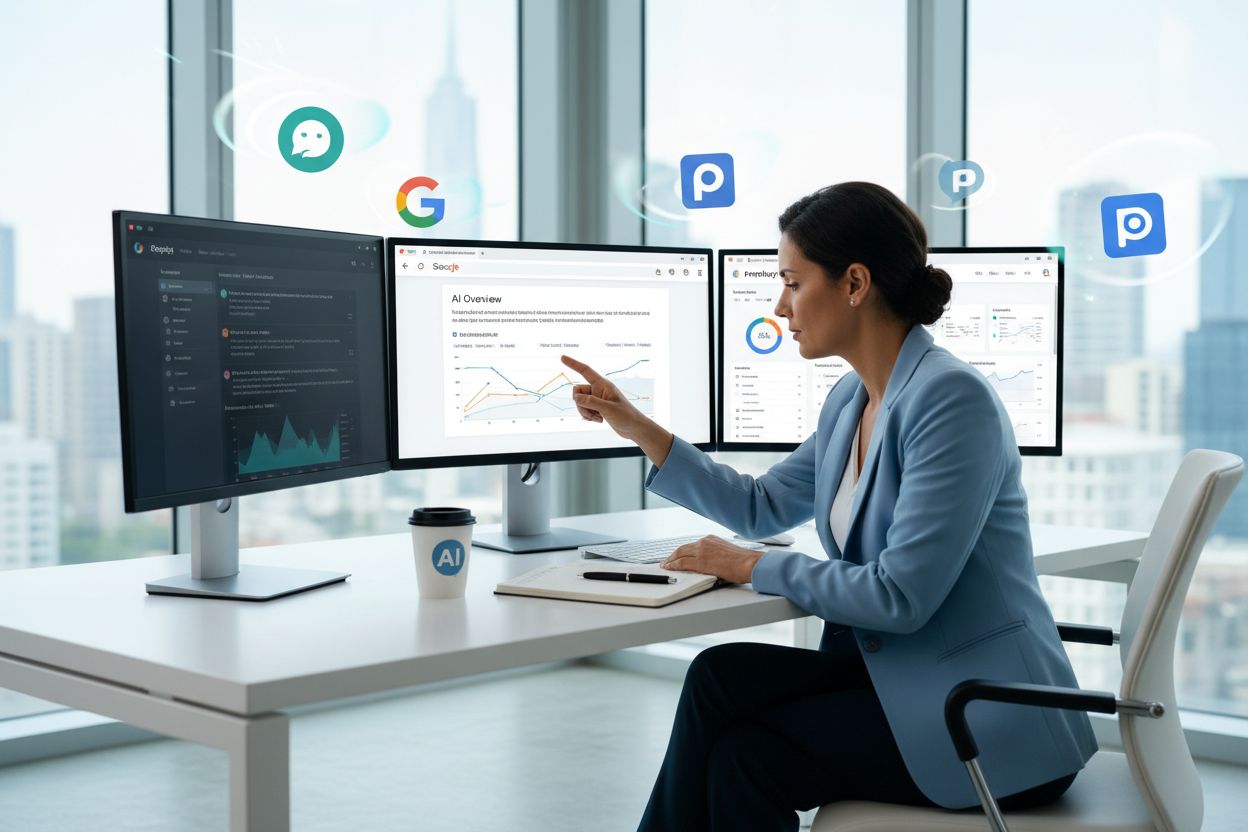
Learn how to conduct a baseline AI visibility audit to understand how ChatGPT, Google AI, and Perplexity mention your brand. Step-by-step assessment guide for beginners.
AI visibility represents a fundamentally different challenge than traditional search engine optimization, requiring marketing teams to understand how artificial intelligence systems surface brand information across multiple platforms. Unlike traditional SEO, which focuses on ranking in Google’s organic search results, AI visibility encompasses how your brand appears in AI-generated responses, summaries, and recommendations across platforms like ChatGPT, Google’s AI Overview, Perplexity, and Bing Copilot. The distinction matters because AI systems don’t simply rank pages—they synthesize information from multiple sources and present curated answers that may or may not include attribution to your brand. According to recent research, 64% of marketers report that AI visibility has become equally or more important than traditional search rankings for their organizations. This shift reflects the reality that users increasingly turn to AI chatbots and generative search for answers rather than clicking through to individual websites. Understanding your current position in this AI-driven landscape is the critical first step toward building a sustainable visibility strategy that captures attention in both traditional and AI-powered search environments.
| Aspect | Traditional SEO | AI Visibility |
|---|---|---|
| Definition | Ranking web pages in organic search results | Appearing in AI-generated responses and summaries |
| Primary Goal | Drive clicks to your website | Earn mentions and citations in AI outputs |
| Key Metrics | Rankings, organic traffic, click-through rate | Citation rate, mention frequency, AI Share of Voice |
| User Behavior | Users click links to visit websites | Users read AI summaries without clicking through |
| Attribution | Direct link attribution | May include or exclude source attribution |
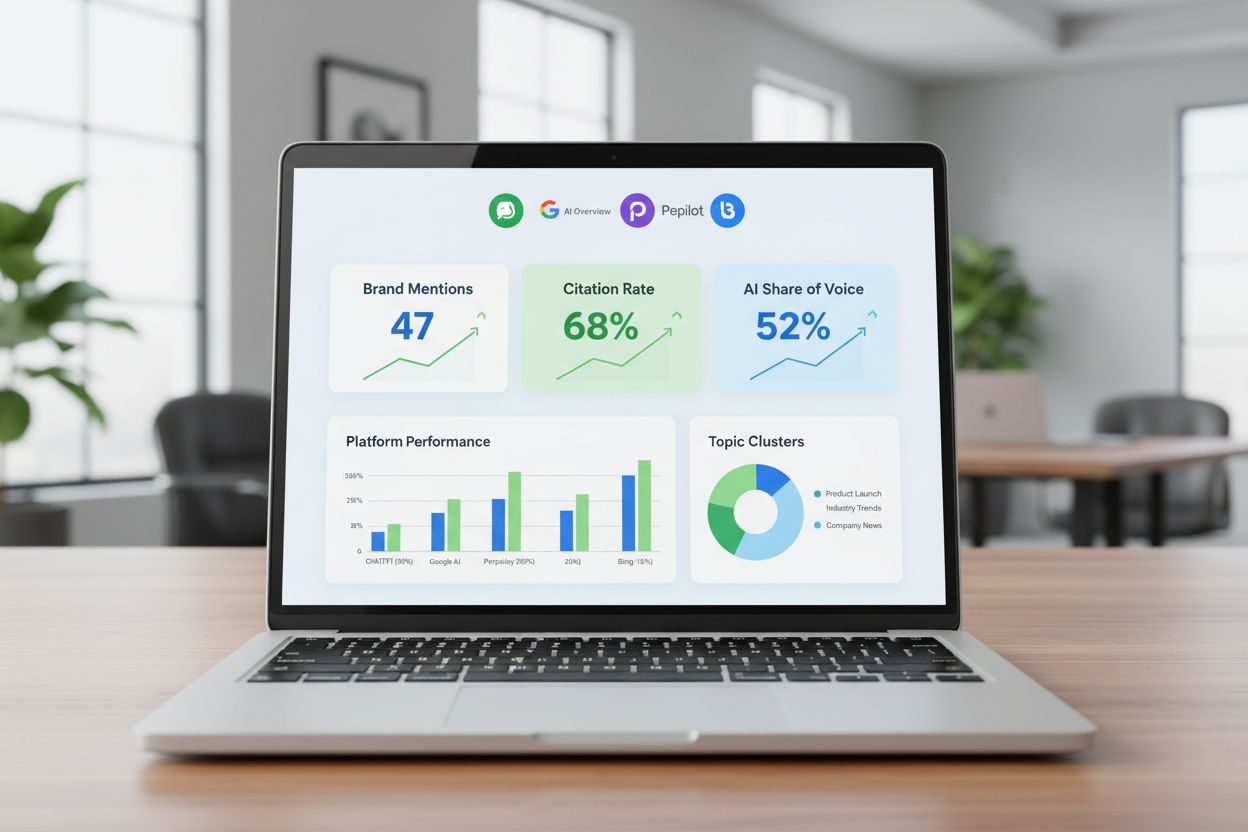
When assessing your AI visibility baseline, focus on these critical metrics that reveal how your brand performs across AI platforms:
The baseline audit process follows a structured five-step methodology that provides a comprehensive snapshot of your current AI visibility:
The decision between manual and automated audit approaches depends on your organization’s resources, technical capabilities, and the scope of your AI visibility strategy. Manual audits, while time-intensive, provide deeper qualitative insights into how AI systems present your brand, the context surrounding mentions, and the specific language used in responses. A typical manual audit of 50-100 queries across four major AI platforms requires 15-20 hours of work, making it feasible for smaller teams or as an initial assessment. However, manual approaches don’t scale well for ongoing monitoring, and human error can introduce inconsistencies in data collection and analysis. Automated solutions like AmICited address these limitations by continuously monitoring your brand’s appearance across AI platforms, tracking changes over time, and providing standardized metrics that enable meaningful comparison. For most organizations, the optimal approach combines an initial manual audit to understand nuances and establish baseline understanding, followed by automated monitoring to track progress and identify emerging opportunities or threats.
Google AI Overview represents the most critical platform for most organizations, as it appears at the top of Google Search results for approximately 18% of queries and reaches billions of users daily. The AI Overview synthesizes information from multiple sources to answer user questions directly on the search results page, often reducing the need for users to click through to individual websites. Your brand’s appearance in AI Overviews depends on several factors including content quality, topical authority, freshness, and whether your pages rank in the top results for the query. Unlike traditional rankings where position one receives the most clicks, AI Overviews distribute attention differently—brands mentioned in the overview may receive traffic even if they don’t rank in the top organic results. To assess your Google AI Overview visibility, search 20-30 of your most important keywords and note whether your brand appears, how it’s attributed, and what content is being surfaced. Pay particular attention to whether the AI Overview links to your content or simply mentions your brand without attribution, as this significantly impacts traffic potential.
ChatGPT commands the largest user base among AI chatbots, with over 200 million weekly active users as of 2024, making it essential for any comprehensive AI visibility assessment. ChatGPT’s training data has a knowledge cutoff, meaning it may not include your most recent content, and it doesn’t provide real-time web search by default (though this feature is available to premium users). When auditing ChatGPT, test both standard queries and more specific prompts that might trigger your brand to appear, noting whether mentions are accurate, current, and positioned favorably relative to competitors. The platform’s conversational nature means users can ask follow-up questions, potentially uncovering your brand in secondary responses even if it doesn’t appear in initial answers. Document not just whether your brand appears, but the context and framing—whether ChatGPT positions you as an industry leader, mentions specific products or services, or includes outdated information that needs correction. This qualitative assessment helps identify content gaps or misinformation that should be addressed through your broader content strategy.
Perplexity and Bing Copilot represent emerging but increasingly important platforms for AI visibility, particularly as these systems gain market share and user adoption accelerates. Perplexity differentiates itself through real-time web search integration and transparent source attribution, meaning your brand’s appearance often includes direct links to your content and clear citations. Bing Copilot, integrated into Microsoft’s ecosystem and available across Windows, Edge, and Office applications, reaches users in professional and productivity contexts where B2B brands may find particular value. Both platforms show different patterns than ChatGPT regarding which sources they prioritize and how they attribute information, requiring separate assessment and strategy. When auditing these platforms, pay attention to the quality of attribution—whether your brand receives proper credit, whether links are functional and relevant, and whether the context accurately represents your expertise. The relatively lower user volume compared to ChatGPT shouldn’t diminish their importance, as early visibility in emerging platforms can establish authority and brand presence before competition intensifies.
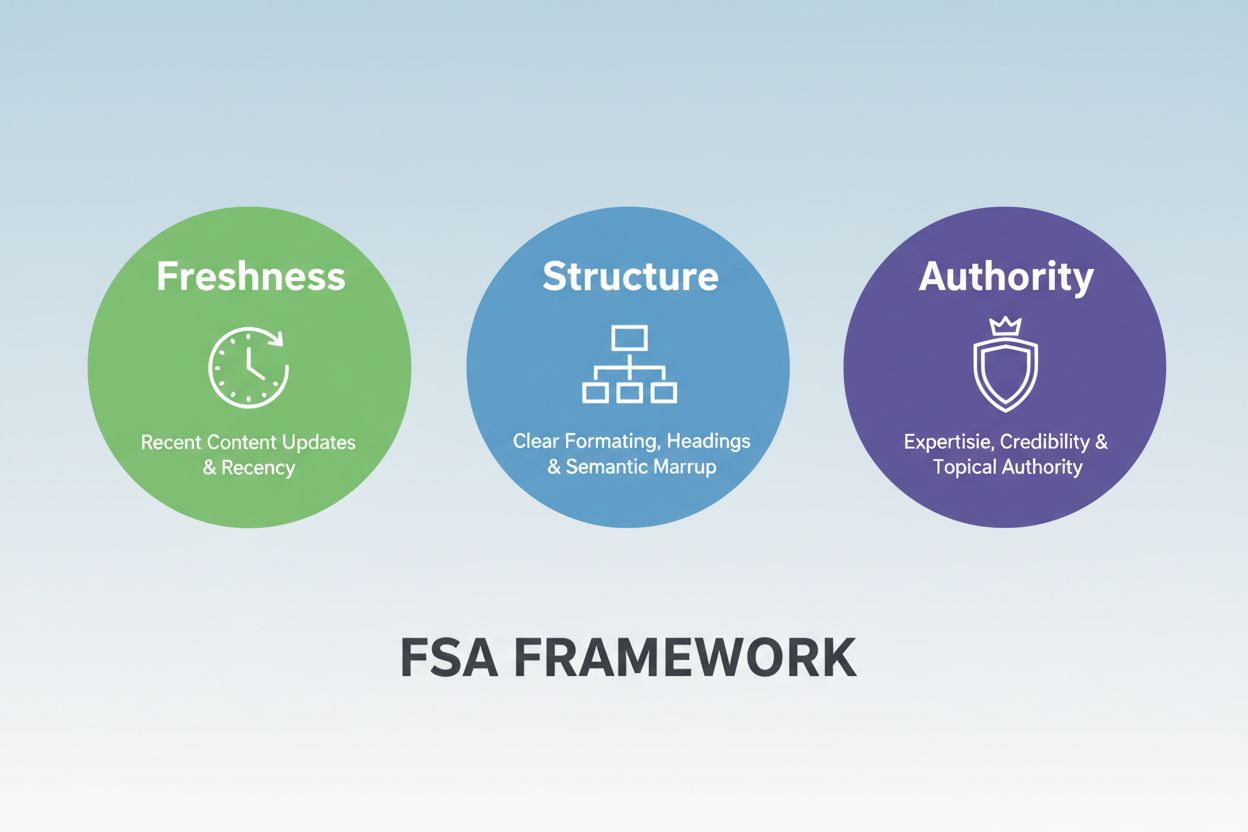
The FSA Framework—comprising Freshness, Structure, and Authority—provides a practical lens for understanding why your brand may or may not appear in AI responses and guides your optimization strategy. Freshness refers to content recency and update frequency; AI systems increasingly prioritize recently updated content, meaning outdated pages or websites with infrequent updates face visibility challenges. Structure encompasses how your content is organized, formatted, and marked up with schema; AI systems can more easily extract and synthesize information from well-structured content with clear headings, lists, and semantic markup. Authority reflects your domain’s topical expertise, backlink profile, and brand recognition; AI systems weight information from established, credible sources more heavily than from unknown publishers. Together, these three elements determine whether your content gets selected for inclusion in AI responses and how prominently your brand appears. Organizations that excel in AI visibility typically demonstrate strength across all three dimensions—regularly updating content, implementing technical SEO best practices, and building genuine topical authority through comprehensive, expert-driven content.
Several tools can accelerate and enhance your AI visibility assessment beyond manual auditing, each offering different capabilities and price points. AmICited specializes specifically in AI visibility monitoring, tracking your brand’s appearance across multiple AI platforms and providing competitive benchmarking and trend analysis. Semrush and Ahrefs have integrated AI visibility features into their broader SEO platforms, allowing you to assess AI performance alongside traditional metrics. Moz offers AI visibility insights as part of its research tools, while Brandwatch and Mention provide broader brand monitoring that includes AI platform coverage. Google Search Console provides limited but valuable data about which queries trigger AI Overviews and whether your content appears in them. For teams with technical capabilities, custom monitoring solutions using APIs from various AI platforms can provide highly tailored tracking aligned with specific business objectives. The choice of tools should reflect your budget, the depth of analysis required, and whether you need ongoing monitoring or one-time assessment.
Common mistakes in AI visibility assessment can undermine the value of your baseline audit and lead to misguided optimization efforts. Many organizations focus exclusively on branded queries, missing opportunities to appear in informational and comparison queries where potential customers research solutions before considering specific brands. Others conduct audits at a single point in time without understanding that AI responses fluctuate based on query variations, user location, and platform updates, leading to inaccurate conclusions about their true visibility. Some teams neglect to assess competitor performance, making it impossible to understand whether their visibility challenges reflect industry-wide trends or specific brand weaknesses. A frequent oversight involves ignoring the qualitative aspects of mentions—appearing in an AI response is valuable, but appearing with accurate, favorable context is far more valuable. Finally, many organizations fail to document their baseline thoroughly, making it impossible to measure progress or identify which optimization efforts actually moved the needle on AI visibility metrics.
After completing your baseline assessment, the next critical step involves prioritizing which gaps to address first based on business impact and feasibility. Focus initially on high-volume, high-intent queries where your brand should logically appear but currently doesn’t—these represent the biggest immediate opportunities for visibility gains. Evaluate whether your absence reflects content gaps (you haven’t published authoritative content on the topic), technical issues (your content exists but isn’t being properly indexed or understood), or competitive disadvantages (competitors have stronger authority or fresher content). For each priority gap, develop a targeted content strategy that addresses the underlying cause, whether that means creating new content, updating existing pages, improving technical implementation, or building additional topical authority. Consider the interconnected nature of AI visibility and traditional SEO—improvements that boost your AI visibility often simultaneously improve traditional search performance, creating compounding benefits.
Building a sustainable AI visibility strategy requires moving beyond one-time assessment to establish ongoing monitoring and continuous optimization practices. Implement quarterly or semi-annual reassessments using the same methodology as your baseline audit, allowing you to track progress, identify emerging opportunities, and adjust your strategy based on platform changes and competitive dynamics. Integrate AI visibility metrics into your broader marketing dashboard and reporting, ensuring that leadership understands this channel’s contribution to brand awareness and customer acquisition. Stay informed about changes to AI platforms—algorithm updates, new features, and shifts in how systems source and attribute information—as these directly impact your visibility and may require strategy adjustments. Remember that AI visibility is not a replacement for traditional SEO but rather a complementary channel that requires integrated optimization across content quality, technical implementation, and topical authority. By treating AI visibility as a core component of your marketing strategy rather than an afterthought, you position your organization to capture attention and drive results across the full spectrum of how customers discover information in an increasingly AI-driven world.
Conduct a comprehensive baseline audit once to establish your starting point, then perform quarterly or semi-annual reassessments to track progress and identify emerging opportunities. For ongoing monitoring, use automated tools like AmICited to track changes continuously between formal audits.
Brand Mention Rate measures the percentage of AI responses that mention your brand across a set of queries. AI Share of Voice (AI SoV) compares your mentions to competitors—if five brands appear in AI responses and yours shows up in three, you hold 60% AI SoV for that query set.
Yes, manual audits are feasible for initial baseline assessment. A typical manual audit of 50-100 queries across four platforms requires 15-20 hours of work. However, manual approaches don't scale well for ongoing monitoring, making automated tools valuable for long-term tracking.
Start with Google AI Overview (most widely used), ChatGPT (largest user base), Perplexity (growing adoption with strong source attribution), and Bing Copilot (Microsoft ecosystem integration). These four platforms represent the primary AI systems users interact with for information discovery.
A comprehensive manual baseline audit typically takes 15-20 hours for 50-100 queries across four platforms. This includes research, execution, documentation, and analysis. Using automated tools can reduce this to 2-3 hours of setup and review time.
Analyze whether the gap reflects content gaps (you haven't published authoritative content), technical issues (content exists but isn't properly indexed), or competitive disadvantages (competitors have stronger authority). Address the underlying cause through targeted content creation, technical optimization, or topical authority building.
AI visibility and traditional SEO are complementary but distinct. Strong traditional SEO rankings improve your chances of appearing in AI responses, but ranking well in Google doesn't guarantee AI visibility. Optimize for both by creating high-quality, well-structured, authoritative content.
Establish a baseline using the same methodology and prompts, then repeat the audit quarterly or semi-annually using identical queries. Document results in a spreadsheet or use automated monitoring tools like AmICited to track metrics continuously and identify trends.
Get a complete picture of how AI platforms mention your brand with AmICited's AI answers monitoring platform. Track your AI Share of Voice, brand mentions, and competitive positioning across ChatGPT, Google AI Overview, Perplexity, and more.
Learn how to connect AI visibility metrics to measurable business outcomes. Track brand mentions in ChatGPT, Perplexity, and Google AI Overviews with actionable...

Learn proven strategies to maintain and improve your content's visibility in AI-generated answers across ChatGPT, Perplexity, and Google AI Overviews. Discover ...
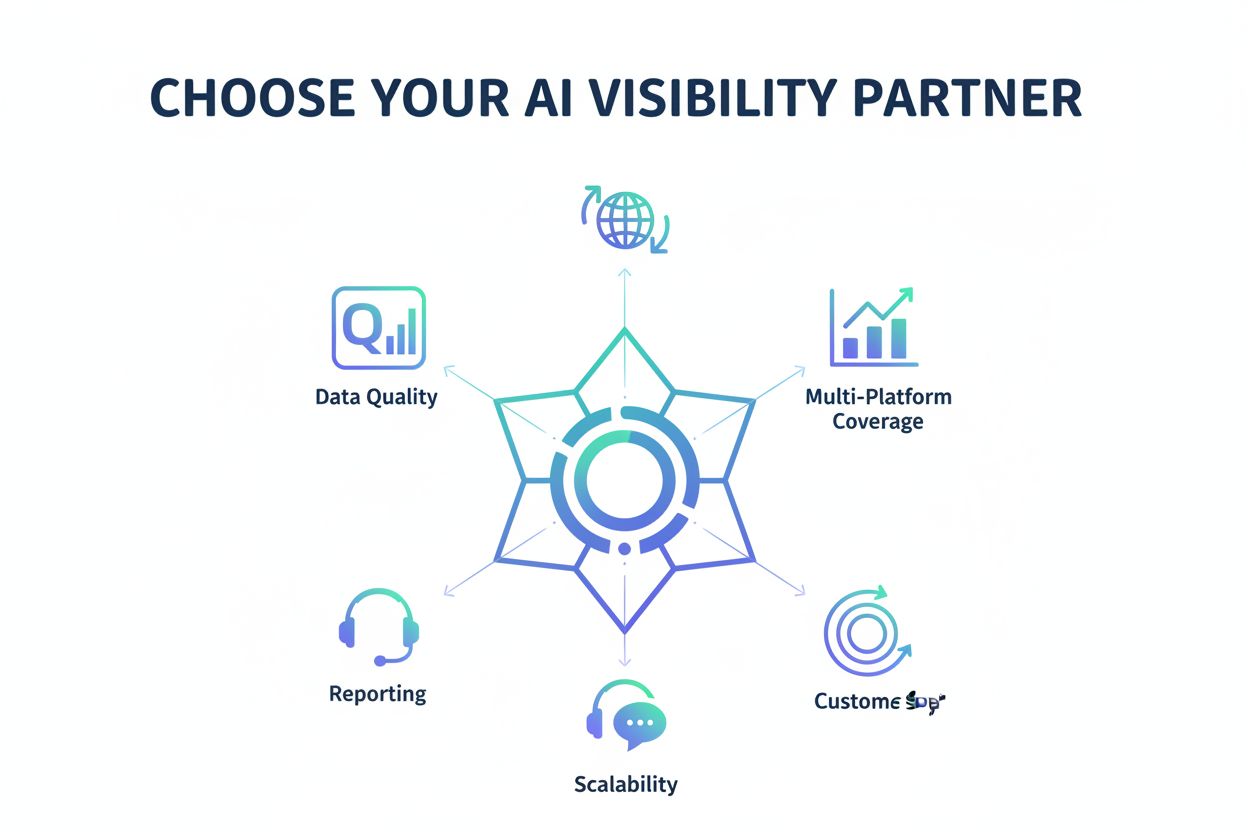
Learn how to select the right AI visibility agency for your brand. Compare GEO agencies, evaluate selection criteria, and discover top platforms for monitoring ...