
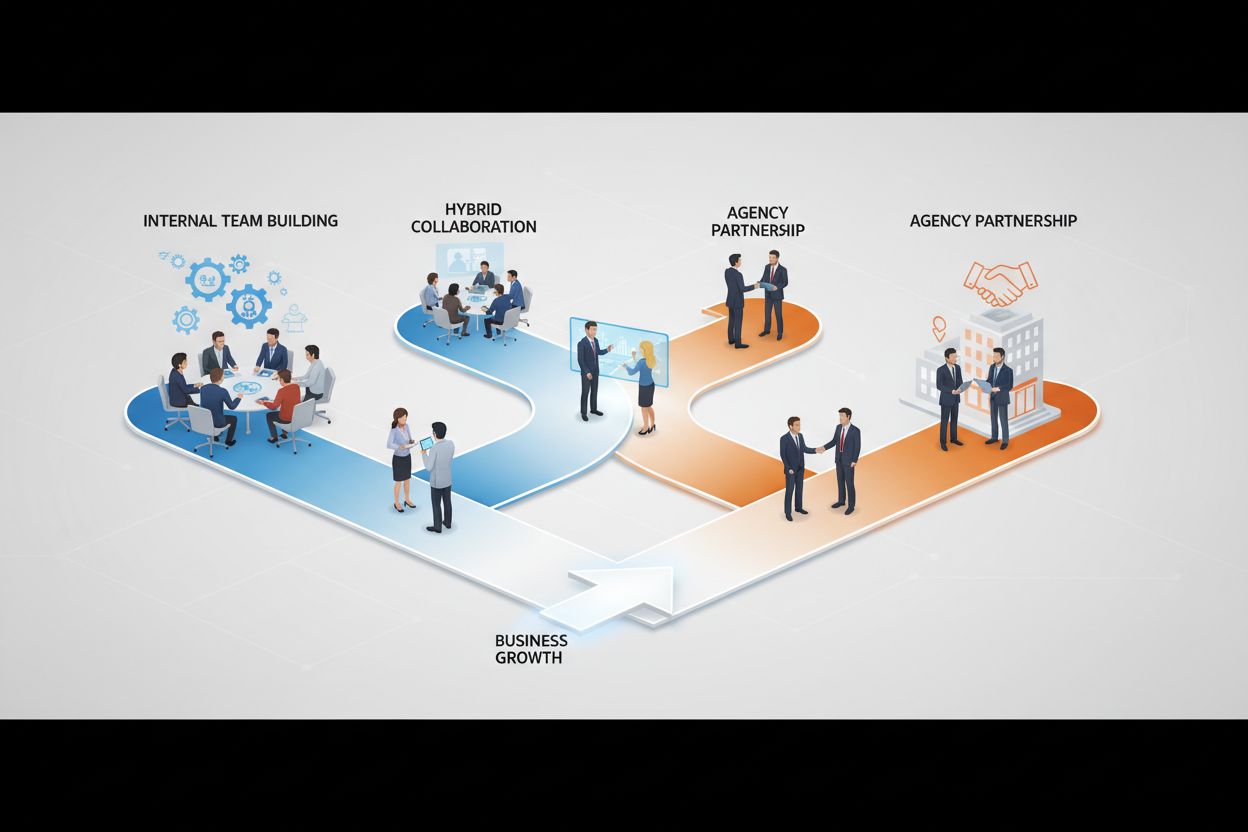
DIY vs Agency AI Visibility: When to Hire Help
Comprehensive decision guide comparing DIY and agency approaches to AI visibility monitoring. Learn costs, timelines, and when to hire professional help for tra...
9 min read
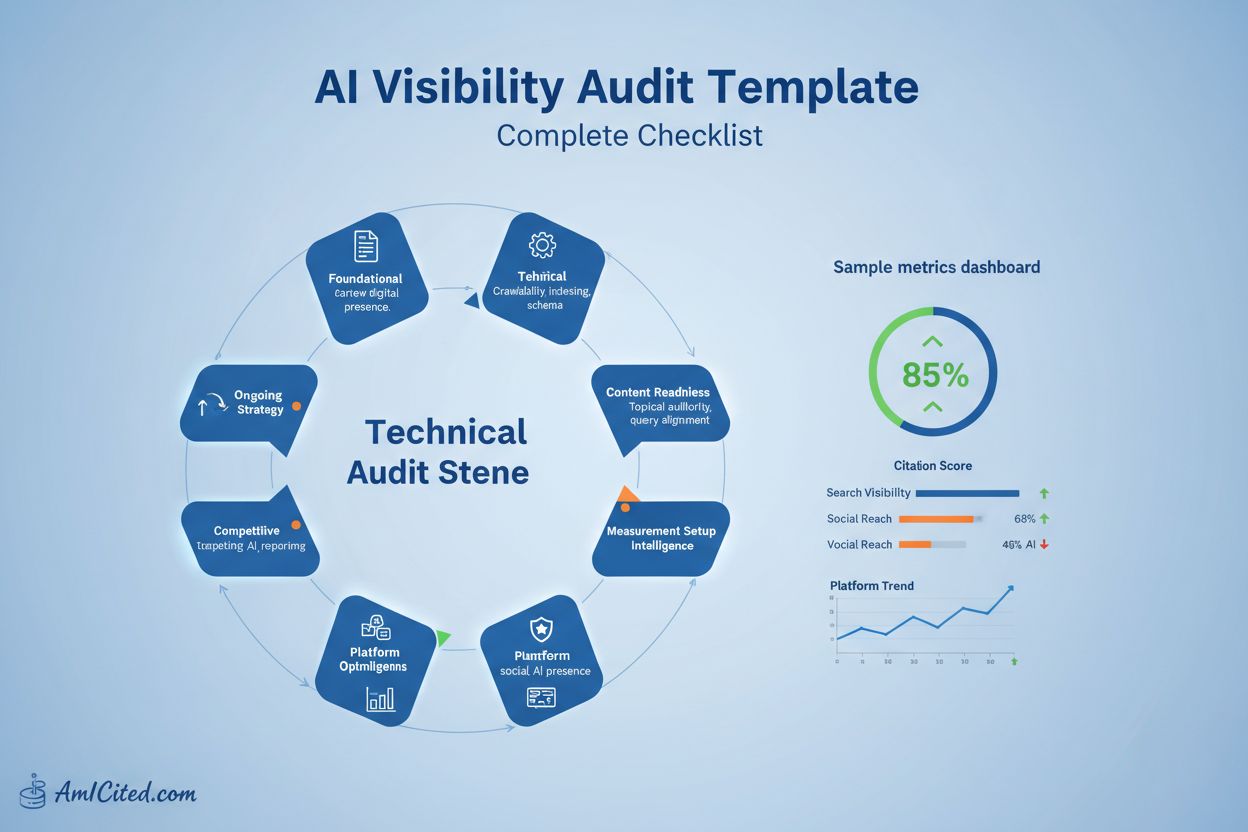
Complete AI visibility audit template and checklist. Audit your brand across ChatGPT, Perplexity, Google AI Overviews, and more. Step-by-step guide with tools, timeline, and downloadable resources.
The search landscape has fundamentally shifted, and brands that haven’t adapted are already losing visibility. 50% of consumers now use AI-powered search to find information, and this number continues climbing as ChatGPT, Perplexity, and Google AI Overviews become the default discovery tools for millions. Unlike traditional Google searches where ranking in the top 10 guarantees traffic, AI platforms operate on a citation economy—your brand only gets visibility if AI systems choose to mention you as an authoritative source. The stakes are higher than ever: zero-click searches now account for 69% of all queries, meaning users get answers without ever visiting your website. When AI platforms cite your content, brands see a 38% lift in organic clicks and 39% increase in paid ad performance, proving that AI visibility directly impacts your bottom line. Without a systematic audit of your AI visibility, you’re flying blind in the most important shift in digital discovery since Google’s inception.
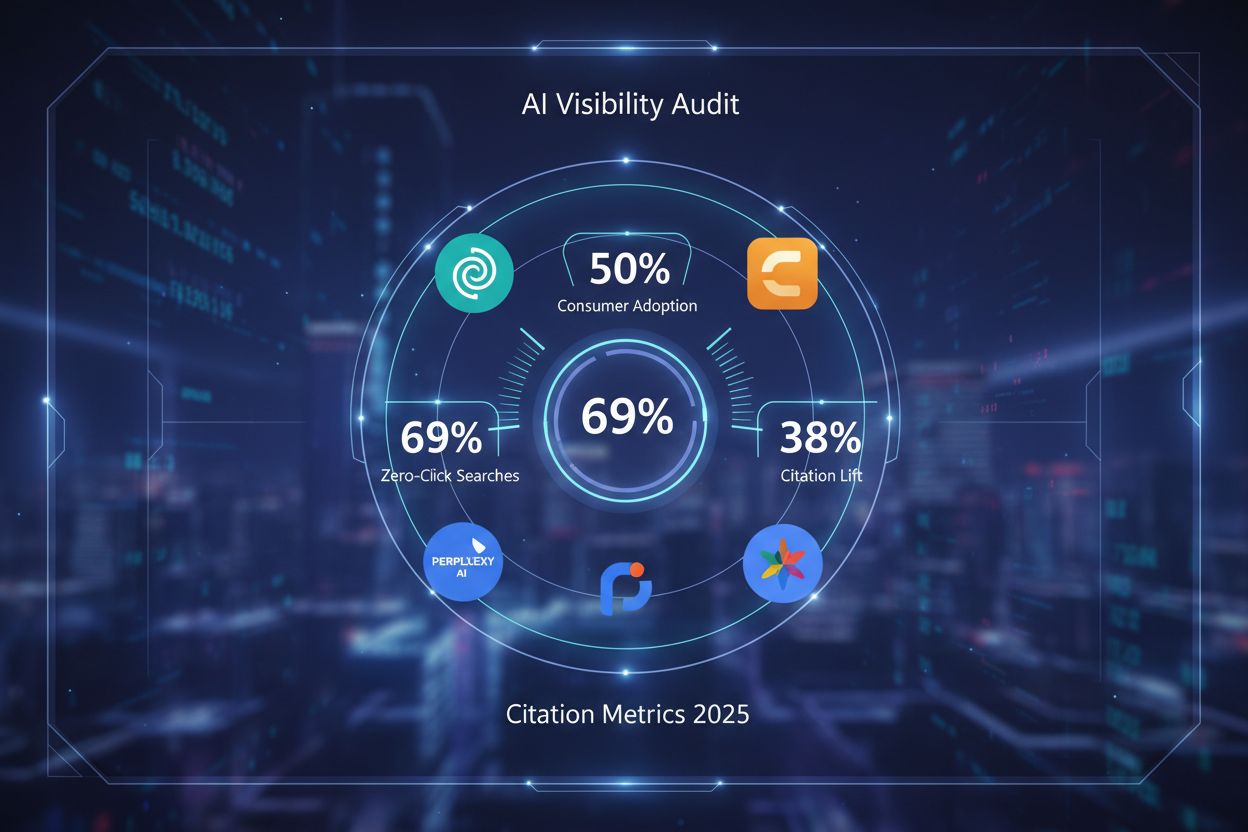
AI platforms evaluate content fundamentally differently than traditional search engines, and understanding these differences is essential for effective optimization. While Google ranks pages based on keywords, backlinks, and user engagement signals, AI systems prioritize citation-worthiness—whether your content is accurate, authoritative, and provides complete answers to specific questions. The citation framework rests on three core pillars: accuracy (is the information factually correct?), authority (does the source have genuine expertise?), and answer completeness (does it fully address the user’s question?). Content that excels in these areas gets cited 3-4x more frequently than content optimized purely for traditional SEO. This represents a fundamental shift in how you should approach content strategy: instead of writing for search algorithms, you’re writing for AI systems that need to confidently cite your work to their users.
| Factor | Traditional SEO | AI Visibility |
|---|---|---|
| Primary Signal | Keywords + Backlinks | Citations + Authority |
| Content Focus | Keyword optimization | Answer completeness |
| Authority Source | External backlinks | Internal expertise signals |
| Ranking Metric | Position in SERP | Citation frequency & position |
| Content Length | 1,500-2,500 words | 2,000-3,500 words (comprehensive) |
| Key Element | Meta tags + H1 | Answer-first structure + schema |
| Measurement | Click-through rate | Citation Score + sentiment |
A comprehensive AI visibility audit breaks down into eight interconnected sections that build upon each other, creating a complete picture of your brand’s visibility across AI platforms. Each section addresses a specific dimension of AI visibility:
Working through these sections systematically ensures you address every factor that influences whether AI platforms cite your content, from technical foundations to strategic content positioning.
Your audit begins with establishing a clear baseline of where your brand currently stands across AI platforms. Start by creating a list of 20-30 relevant queries that your target audience would ask AI systems—these should include both branded queries (containing your company name) and non-branded queries (category, problem-solution, and comparison queries). Test each query across all five major AI platforms: ChatGPT, Google Gemini, Perplexity AI, Claude, and Google AI Overviews. Document whether your brand appears, in what context, and at what position within the AI response. Critically, distinguish between explicit citations (where AI directly mentions your brand by name) and implicit citations (where your content is used but not attributed). Calculate your baseline Citation Score—a unified metric that combines mention frequency, position, context quality, and sentiment across all platforms. Finally, benchmark your visibility against 3-5 direct competitors using the same query set to identify where you’re losing ground and where opportunities exist. This foundational assessment reveals whether you’re invisible, emerging, visible, or leading in AI search—and provides the baseline against which you’ll measure all future improvements.
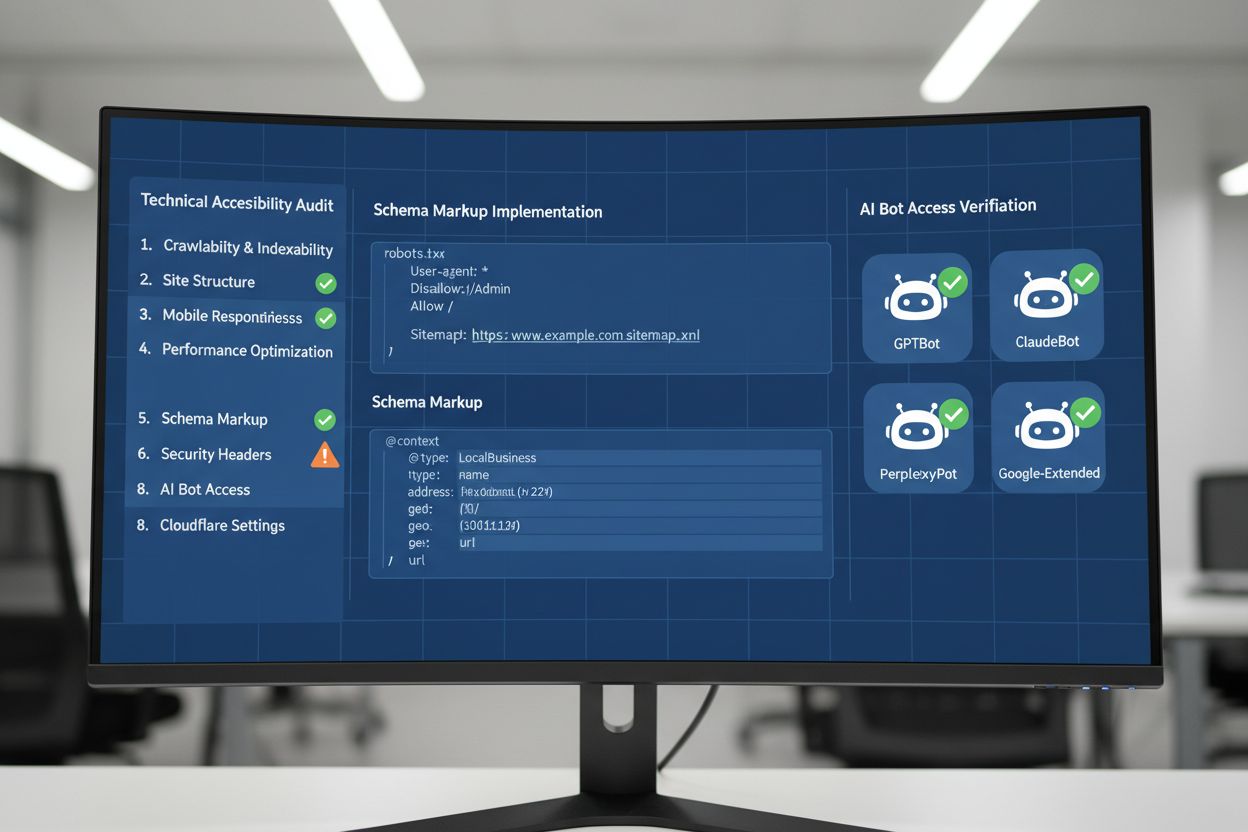
Before optimizing content, you must ensure that AI crawlers can actually access and understand your website. Start by checking your robots.txt file to verify that major AI bots aren’t blocked. The key user-agents to allow are:
User-agent: GPTBot
Allow: /

User-agent: Google-Extended
Allow: /

User-agent: ClaudeBot
Allow: /

User-agent: PerplexityBot
Allow: /
Critical warning: If you use Cloudflare, check your security settings immediately—recent updates default to blocking AI bots, and many site owners discovered their content became invisible to ChatGPT and Perplexity overnight without realizing it. Next, implement an llms.txt file at your domain root (yoursite.com/llms.txt) that lists your most important pages in priority order, helping AI systems understand which content matters most. Audit and optimize your structured data across key pages: implement Organization schema (company details, logo, social profiles), Person schema (author credentials and expertise), Article/BlogPosting schema (content metadata), FAQ schema (structured Q&A), HowTo schema (step-by-step guides), and Product schema (for e-commerce). Use Google’s Rich Results Test and Schema.org validators to verify implementation. Finally, ensure your site meets Core Web Vitals standards—while AI bots don’t experience page speed like humans, they prioritize content from technically sound websites, and sites with good Core Web Vitals scores are 2.1x more likely to be cited in AI Overviews.
Your content must be structured in a way that AI systems can easily extract, understand, and confidently cite. Begin by scoring your key pages on extractability using a 1-10 scale across five dimensions: clarity (are sentences declarative and direct?), structure (proper H1→H2→H3 hierarchy?), citation-worthiness (contains statistics, data, expert quotes?), scannability (uses bullet points and short paragraphs?), and answer-orientation (directly answers the question in the first 100 words?). Pages scoring below 6.0 need immediate rewrites; pages scoring 7.0-8.5 need optimization; pages above 8.5 are AI-ready. Research shows that content with 3+ authoritative citations and 5+ current statistics gets cited 4.8x more often than content without these elements. Implement an answer-first structure where you lead with a TL;DR summary, use question-based H2 headings that match how users query AI systems, and apply the inverted pyramid structure (conclusion first, then supporting evidence, then background). Add FAQ blocks with schema markup targeting real prompts users ask AI systems—these get cited 3.2x more often than FAQs embedded in paragraphs. Build topical authority by creating comprehensive content hubs: a pillar page (2,500-4,000 words) covering your main topic, plus 8-12 cluster pages covering subtopics in depth, all strategically interlinked. Brands with comprehensive topical coverage get cited 6.2x more often than those with fragmented content.
AI systems evaluate authority differently than traditional search engines, placing greater emphasis on expertise signals within your content and your organization’s credibility. Wikipedia is the #1 most-cited source across AI platforms—ChatGPT cites it 16.3% of the time, Perplexity 12.5%—so if your brand has a Wikipedia page, audit it immediately for accuracy and completeness. For brands without Wikipedia eligibility, focus on earning citations on Wikipedia by contributing legitimate, neutral research that Wikipedia editors cite as sources. Build high-authority backlinks from domains that AI platforms already trust and cite frequently; research shows that links from AI-cited domains have 3.4x more impact on your Citation Score than links from AI-invisible domains. Optimize author and expert profiles with comprehensive bios highlighting credentials, certifications, published works, speaking engagements, and media mentions—content with clearly attributed expert authors gets cited 2.8x more often. Implement Person schema markup on author pages to establish entity recognition across the web. Finally, actively manage online reviews across Google Business Profile, Trustpilot, G2, and industry-specific platforms; brands with 4.5+ star averages and 100+ reviews get recommended 4.2x more often in AI responses to “best [category]” queries, and AI systems increasingly pull review data when answering comparison and recommendation questions.
Each AI platform has distinct citation preferences and content evaluation criteria, requiring tailored optimization approaches. Google AI Overviews favor answer-first content of 1,800-2,500 words with original media (images, charts, tables), FAQ and HowTo schema markup, and content updated within the last 12 months. ChatGPT prefers encyclopedic-style content—objective, comprehensive, well-sourced material from recognized authorities—and cites Wikipedia, Reuters, and major news outlets most frequently. Perplexity AI emphasizes expert editorial blogs, in-depth analysis, comparison reviews, and content with clear pros/cons assessments and unique perspectives. Claude operates similarly to ChatGPT but values nuanced, balanced perspectives and content that acknowledges complexity and multiple viewpoints. Gemini (Google’s conversational AI) blends characteristics of AI Overviews and ChatGPT, favoring comprehensive, well-structured content with clear authority signals. Rather than creating entirely different content for each platform, optimize your core content to excel across all platforms, then make platform-specific adjustments: add more data visualization for Google AI Overviews, emphasize authoritative sourcing for ChatGPT, include comparison frameworks for Perplexity, and acknowledge nuance for Claude.
Understanding where competitors get cited reveals high-value opportunities you’re missing. Research shows that 87.3% of companies have “AI blind spots”—high-value queries where they rank in traditional search but are invisible in AI responses. Conduct a citation gap analysis by testing 50+ target queries across your top 5 competitors, tracking which competitors appear for each query and analyzing patterns in their cited content: content type (guide, comparison, news, data), depth (word count, coverage), and unique elements (tools, calculators, original research). Identify the 25+ highest-priority gaps where competitors consistently get cited but you don’t, particularly focusing on buying-intent queries like “best [solution] for [use case]” and “how to choose [product category]"—these are where you’re losing pipeline. Reverse-engineer competitor wins by analyzing their most-cited pages: examine their content structure, citation sources, media elements, update frequency, backlink profile, and schema implementation. Extract replicable patterns and adapt (don’t copy) them for your content. Most importantly, focus on content gaps where no strong page exists yet—these represent genuine opportunities to establish authority and capture AI visibility before competitors do.
You can’t improve what you don’t measure, so implementing continuous monitoring is essential for sustained AI visibility growth. Set up automated tracking to monitor these key metrics weekly: Citation Score (overall visibility across all platforms), platform-specific visibility (ChatGPT, Gemini, Perplexity, AI Overviews, Claude mentions), query-level visibility (which queries you appear for and at what position), sentiment tracking (positive, neutral, or negative mentions), and competitor benchmarking (your share of voice vs. competitors). Configure Google Analytics 4 to properly track AI referral traffic by adding UTM parameters to links you control that might be cited, creating custom channel grouping for “AI Referral” traffic, and setting up conversion tracking for AI-referred visitors. Build a custom dashboard in Data Studio or Tableau that visualizes these metrics weekly, enabling you to spot wins and losses quickly. Implement citation accuracy monitoring with alerts when AI platforms mention your brand incorrectly—establish a process to detect and correct factual errors within 48 hours of appearance. Track conversion rates from AI traffic separately from organic search; research shows AI-referred traffic converts at rates 1.8-23x higher than standard organic search, though session duration is 34% shorter, indicating users arrive with high intent but need clear conversion paths.
AI visibility isn’t a one-time project—it requires systematic, ongoing optimization to maintain and grow citations as AI platforms evolve. Develop an AI-first content calendar that balances traditional SEO priorities with AI visibility: allocate 40% of content to comprehensive guides and pillar content, 25% to original research and data-driven content, 20% to expert perspectives and thought leadership, and 15% to timely news and trend analysis. Implement a content refresh schedule that keeps your most important content current: refresh your top 10 highest-traffic pages monthly (updating statistics, adding new expert quotes, verifying links), refresh core pillar content quarterly with comprehensive updates, and conduct annual full audits of outdated pages. Content decay is real—pages updated within the last 6 months get cited 3.1x more often than pages over 12 months old—so systematic refreshing directly impacts your AI visibility. Update publication dates and last-modified dates when you refresh content, as AI systems weight freshness heavily. Monitor your content for decay using tools that track when pages were last updated, and prioritize refreshing pages that are losing visibility. Finally, stay informed on AI platform updates and algorithm changes; Wikipedia’s citation share in ChatGPT swung from 0% to 15% to 4% within months, demonstrating how rapidly the landscape shifts.
Most brands make predictable mistakes during their AI visibility audits that undermine their results. Mistake #1: Only testing branded queries. Your brand SHOULD appear when users search for your company name—that’s table stakes. The real test is non-branded queries where users seek solutions, not your brand specifically. If you’re a CRM software, don’t just search “YourBrand CRM features”—test “best CRM for small businesses,” “how to automate sales workflows,” and “CRM alternatives to Salesforce.” These reveal whether AI platforms recognize you as an authority in your category. Mistake #2: Ignoring technical accessibility. One SaaS company spent 6 months optimizing content and saw zero AI visibility gains, then discovered Cloudflare was blocking all AI bots by default. After allowing access, citations increased 217% within 30 days. If AI platforms can’t crawl your content, you literally don’t exist to them. Mistake #3: Inconsistent NAP and entity data. Different business information across platforms—old addresses, outdated pricing, conflicting product names—confuses AI systems about which information is correct. Centralize brand information in a single source of truth and audit all platforms quarterly. Mistake #4: No citation-worthy content. Generic blog posts without original research, expert quotes, statistics, or unique perspectives simply don’t get selected by AI systems. Content with 3+ authoritative citations and 5+ statistics gets cited 4.8x more often. Mistake #5: Set-and-forget mentality. Brands audit once, optimize, then never revisit. AI algorithms change constantly, and what works today might not work in 3 months. Monitor weekly, adjust monthly, and audit quarterly.
Rather than trying to implement everything at once, follow this 30-day structured timeline that builds each week on previous progress. Week 1: Assessment & Baseline (Days 1-7) focuses on measurement: run visibility tests across all AI platforms (Days 1-2), calculate your baseline Citation Score and document current state (Days 3-4), benchmark against 3-5 competitors (Day 5), and conduct a technical audit of robots.txt, Cloudflare settings, and schema markup (Days 6-7). Week 2: Technical Fixes & Foundation (Days 8-14) addresses blockers: fix technical access issues preventing AI bot crawling (Days 8-9), implement or optimize schema markup across key pages (Days 10-11), create or update your llms.txt file (Days 12-13), and verify AI bot access with re-testing (Day 14). Week 3: Content Optimization (Days 15-21) improves citation-worthiness: audit your top 20 pages for AI-readiness using the extractability scoring framework (Days 15-17), restructure pages with answer-first structure and question-based headings (Days 18-20), and add statistics, citations, and expert quotes (Day 21). Week 4: Authority & Monitoring (Days 22-30) builds long-term visibility: audit and update author profiles with credentials and schema markup (Days 22-24), identify high-authority backlink targets from AI-cited domains (Days 25-26), set up continuous monitoring dashboards in Google Analytics and Data Studio (Days 27-28), and create your 90-day optimization roadmap (Days 29-30). Post-audit, maintain momentum with weekly monitoring, monthly content refreshes of top pages, quarterly competitive analysis, and annual full audit refreshes.
Executing this audit effectively requires the right tools across several categories. AI Visibility Tracking tools are essential: AmICited.com (the primary recommendation—automates visibility tracking across all platforms, provides Citation Score, monitors sentiment and accuracy), Wellows (comprehensive AI visibility platform with competitive benchmarking), Ahrefs Brand Radar (tracks brand mentions across web), and Semrush AI Toolkit (AI-specific optimization features). Technical SEO Tools include Screaming Frog (crawl analysis and schema auditing), Google’s Rich Results Test and Schema.org validators (schema verification), and Google Search Console (indexing and performance monitoring). Content Analysis Tools like RankScale.ai (AI extractability scoring), Peec.ai (AI visibility benchmarking), and Knowatoa.io (LLM visibility tracking) help evaluate content readiness. Competitive Intelligence platforms include Ahrefs Site Explorer (backlink analysis), Semrush (competitive benchmarking), and Mangools (keyword and competitor research). Analytics & Reporting requires Google Analytics 4 (traffic tracking and conversion attribution) and Data Studio or Tableau (custom dashboard creation). While you can execute a basic audit with free tools, investing in AmICited.com and one comprehensive platform like Wellows or Ahrefs significantly accelerates your progress and provides the continuous monitoring essential for sustained visibility growth.
AI visibility is no longer optional—it’s the foundation of modern digital discovery. 50% of consumers use AI-powered search today, and this number continues climbing, making your visibility in ChatGPT, Perplexity, and Google AI Overviews as important as your Google rankings. This comprehensive audit template provides a systematic framework for measuring, analyzing, and improving your AI visibility across all major platforms. The eight-section approach ensures you address every factor that influences whether AI systems cite your content, from technical foundations to strategic content positioning. Rather than guessing whether your brand appears in AI responses, you now have a concrete checklist to audit your current state, identify quick wins, and build a sustainable optimization strategy. Start with the foundational assessment to establish your baseline, implement technical fixes to remove blockers, optimize your top content for AI extraction, and set up continuous monitoring to track progress. The brands that win in AI search will be those that commit to systematic auditing and ongoing optimization—and that journey begins with this checklist. Ready to audit your AI visibility? Start your free audit with AmICited.com today and get a complete picture of how your brand appears across ChatGPT, Perplexity, Google AI Overviews, and more. Our platform automates the entire audit process, tracks your Citation Score across all platforms, and provides actionable recommendations for improvement. Don’t let your competitors capture AI visibility while you’re still optimizing for traditional search.
Conduct monthly monitoring of your Citation Score and platform-specific visibility to catch changes quickly. Run comprehensive audits quarterly to assess optimization effectiveness and identify new opportunities. Perform a complete audit refresh annually to ensure your baseline metrics remain accurate and your strategy aligns with evolving AI platform behaviors.
Traditional SEO focuses on ranking in search results through keywords and backlinks, while AI visibility focuses on getting cited by AI systems through answer quality and authority signals. AI platforms evaluate accuracy, completeness, and expertise within your content, not just external ranking factors. The citation economy rewards different content types and structures than traditional search optimization.
Start with ChatGPT (59.7% of generative AI market share), Google AI Overviews (appears in 60% of searches), and Perplexity AI (fastest-growing platform). Include Claude and Gemini for comprehensive coverage. Prioritize based on where your target audience actually searches—B2B audiences may favor ChatGPT and Claude, while general consumers use Google AI Overviews more frequently.
Technical fixes typically show impact within 1-2 weeks once AI bots re-crawl your site. Content optimization improvements usually compound over 2-4 weeks as AI systems re-evaluate your pages. Authority signals like high-quality backlinks and expert recognition typically take 2-3 months to influence citations. Most brands see meaningful overall improvements within 3-6 months of systematic optimization.
Yes, the eight-section framework applies across all industries. However, prioritize sections based on your specific situation: B2B SaaS should emphasize Section 4 (Authority) and Section 6 (Competitive Intelligence), while e-commerce brands should focus on Section 5 (Platform-Specific) and Section 7 (Monitoring). Adjust your content strategy based on which AI platforms your target audience actually uses.
Section 2 (Technical Accessibility) is foundational—if AI bots can't access your content, nothing else matters. However, Section 3 (Content Readiness) determines whether AI systems will cite you even if they can access your content. Together, these two sections form the essential foundation; without them, optimization efforts in other sections yield minimal results.
AmICited.com automates the entire audit process by continuously monitoring your Citation Score across ChatGPT, Perplexity, Google AI Overviews, Claude, and Gemini. Rather than manually testing queries weekly, our platform tracks visibility changes automatically, alerts you to accuracy issues, benchmarks you against competitors, and provides actionable recommendations for improvement. This automation saves hundreds of hours while providing real-time visibility into your AI search performance.
Generally no—blocking AI bots removes you from discovery paths where buyers are making decisions. The upside of AI visibility far outweighs theoretical content scraping concerns. Only block specific bots if you have clear legal or proprietary-content reasons. Instead, use llms.txt to guide which content AI systems should prioritize, maintaining control while enabling visibility.
Use our comprehensive checklist to audit your brand's visibility across ChatGPT, Perplexity, Google AI Overviews, and more. Get actionable insights and a clear roadmap to improve your AI citations.
Comprehensive decision guide comparing DIY and agency approaches to AI visibility monitoring. Learn costs, timelines, and when to hire professional help for tra...
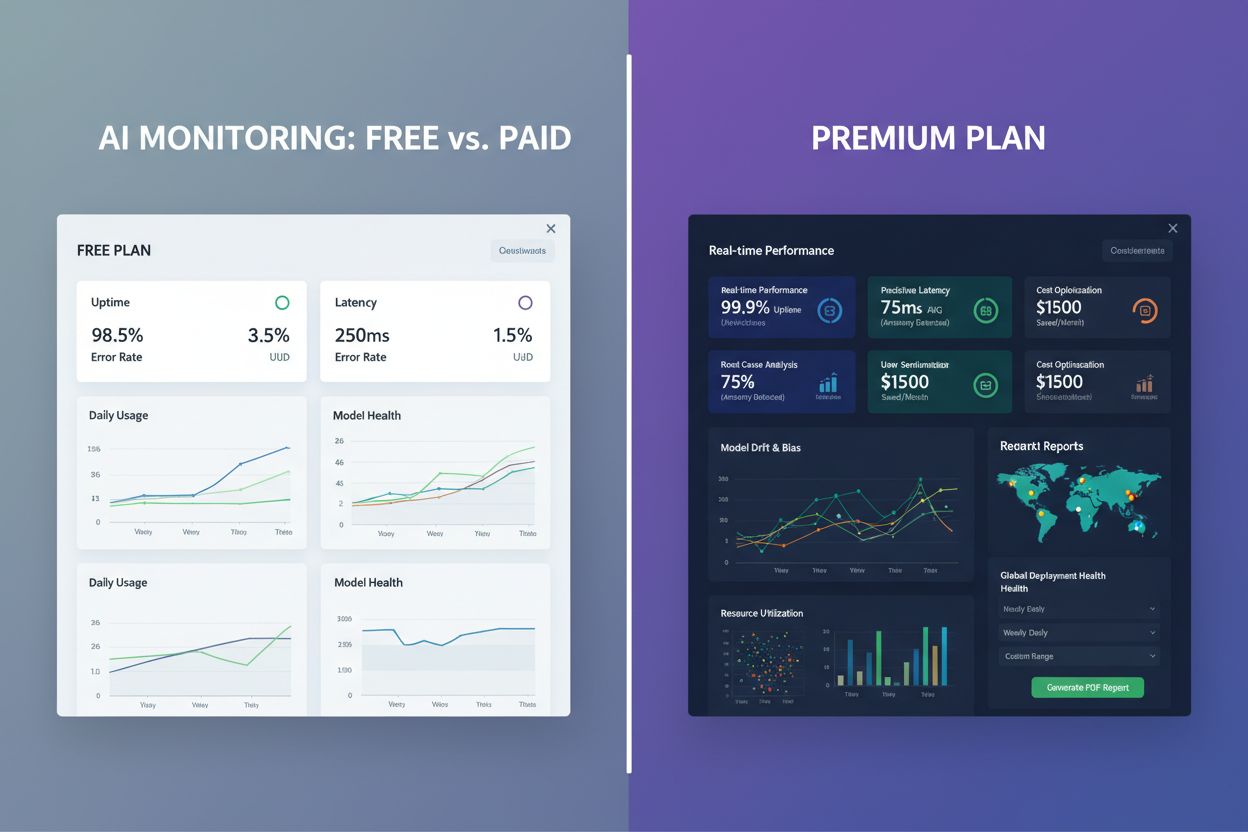
Compare free and paid AI visibility tools to find the right budget solution for monitoring your brand in ChatGPT, Perplexity, and Google AI. Expert guide with p...
Learn how to conduct a competitive AI visibility audit to understand your brand's positioning in ChatGPT, Perplexity, and Google AI Overviews. Discover metrics,...