

Case Studies of AI Visibility Success: What They Achieved
Explore real case studies of brands achieving AI visibility success. Learn how Netflix, Sephora, and Spotify dominate AI search while others like Chegg collapse...
14 min read
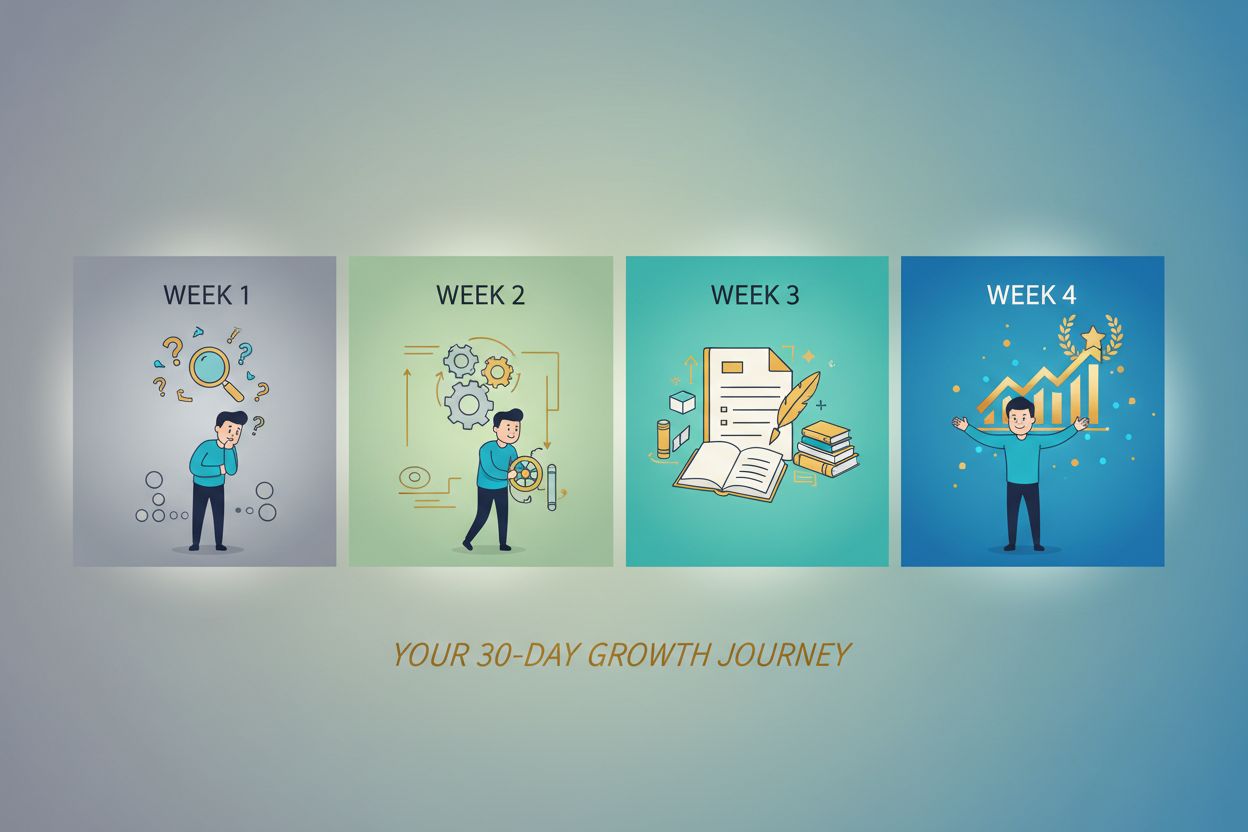
Learn how to get started with AI visibility in just 30 days. A practical guide for beginners covering discovery, optimization, content strategy, and monitoring.
AI visibility is your brand’s representation in AI-generated answers across platforms like ChatGPT, Perplexity, Google AI Overviews, and Claude—essentially, how often and how prominently your company appears when users ask questions to AI systems. With 55% of US adults expected to use AI by 2025, this visibility has become as critical as traditional search engine rankings, yet it operates on fundamentally different principles. Unlike traditional SEO, which focuses on ranking your website in the “10 blue links,” AI visibility centers on being cited as a trustworthy source within synthesized answers that users never leave to visit your site. The shift from link-based discovery to citation-based discovery requires a completely new strategy, and this 30-day framework will help you establish the foundational practices needed to get your brand in front of AI systems and their users.
The digital landscape is shifting beneath our feet. Search engines are moving away from the familiar “10 blue links” model toward AI-synthesized answers that aggregate information from multiple sources, with Google AI Overviews now appearing at the top of search results for millions of queries. This fundamental change means that even if your website ranks perfectly, users may never click through to it—they’ll get their answer directly from the AI summary. Traditional SEO drives traffic through clicks; AI visibility drives brand awareness through citations, where your content is referenced but users stay within the AI interface. The metrics that matter have changed too: instead of tracking click-through rates, you’re now monitoring mentions, citation frequency, and how often your brand appears in AI-generated responses.
| Aspect | Traditional SEO | AI Visibility |
|---|---|---|
| Discovery Method | Clicking links in search results | Reading AI-synthesized answers |
| Traffic Model | Direct website visits from search | Citations without direct traffic |
| Citation Importance | Backlinks and domain authority | Mention frequency and source credibility |
| Ranking Factors | Keywords, backlinks, page speed | Content accuracy, trustworthiness, structure |
| Time to Results | 3-6 months for visibility | 2-4 weeks for initial mentions |
Achieving strong AI visibility requires mastering three interconnected pillars that work together to make your brand indispensable to AI systems. Pillar 1: Citation-Worthiness means creating information so accurate, well-researched, and authoritative that AI systems naturally reference it when answering user questions—think of it as becoming the source that AI systems trust enough to quote. Pillar 2: Content Structure involves formatting your information in ways that AI can easily parse and extract, such as clear FAQs, TL;DR summaries, comparison tables, and structured data that make your insights immediately usable for AI synthesis. Pillar 3: Contextual Mentions focuses on ensuring your brand appears in relevant third-party content, industry discussions, and authoritative publications where AI systems are likely to find and cite you as a credible voice. These three pillars are interdependent: a perfectly structured FAQ won’t get cited if it lacks credibility, and being mentioned in authoritative sources won’t help if your content is buried in unstructured paragraphs that AI can’t easily extract. Over the next 30 days, you’ll build each pillar systematically, creating a foundation that makes your brand visible, citable, and valuable to every major AI platform your customers use.
Your first week is all about understanding the current landscape. Start by conducting a manual audit of how AI systems perceive your brand. This involves asking AI tools directly about your business, competitors, and category, then documenting everything in a spreadsheet for comparison later. The goal is to establish a baseline—a snapshot of where your brand stands in AI visibility right now. You’ll use tools like ChatGPT, Perplexity, and Google AI Overviews to gather this data, paying close attention to what mentions your brand receives, which sources AI cites, and the context in which your company appears. This baseline is crucial because it gives you measurable starting points to track progress against. As you conduct these audits, you’ll naturally identify which competitors consistently appear in AI responses—these are your “AI competitors,” brands that dominate the AI visibility space in your category. Document everything meticulously: exact prompts used, AI responses, source citations, and the date of each query. This week isn’t about optimization yet; it’s about observation and measurement.
Your Week 1 Action Items:
Task 1: Ask AI About Your Brand — Use prompts like “What are the best brands for [your category]?” and “Compare [Your Brand] vs. [Competitor]” in ChatGPT, Perplexity, and Google AI Overviews. Screenshot or copy the full responses, including any citations or source links. Try variations: “Why would someone choose [Your Brand]?” and “What are common complaints about [Your Brand]?” Document the exact language AI uses to describe you.
Task 2: Identify AI Competitors — Review all your audit responses and create a list of brands that appear most frequently. These are the companies winning in AI visibility. Note how often they’re mentioned, in what context, and which sources AI cites for information about them. This competitive set will guide your strategy for the next three weeks.
Task 3: Get Your Comprehensive Baseline Report — Compile all findings into a single spreadsheet with columns for: Brand Name, Prompt Used, AI Tool, Response Summary, Mentions (yes/no), Sources Cited, Context (positive/neutral/negative), and Date. This becomes your measurement dashboard for tracking improvement.
Week 2 focuses on low-effort, high-impact changes that make your digital properties more accessible to AI systems. Start by optimizing your business profiles—ensure your Google Business Profile is complete with accurate descriptions, categories, and business hours, and update your LinkedIn company page with a clear, keyword-rich description of what you do. Next, audit your website and any third-party sources that mention your brand, fixing factual errors or outdated information that AI might cite. Make your website “chunk-friendly” for AI by breaking content into clear sections with descriptive headings, short paragraphs, and logical hierarchies that AI can easily parse and extract information from. Add FAQ sections to your website and key landing pages—these are goldmines for AI visibility because AI systems frequently pull from FAQ content when answering user questions. Implement schema markup (structured data) to help AI understand your content better, particularly for your business information, products, and FAQs. These technical changes won’t transform your visibility overnight, but they remove friction and ensure that when AI systems crawl your content, they can understand and cite it accurately.
Example FAQ Schema Markup:
{
  "@context": "https://schema.org",
  "@type": "FAQPage",
  "mainEntity": [
    {
      "@type": "Question",
      "@id": "https://yoursite.com/faq#q1",
      "name": "What makes your product different from competitors?",
      "acceptedAnswer": {
        "@type": "Answer",
        "text": "Our product combines X, Y, and Z features that competitors don't offer, resulting in 40% faster implementation and 25% lower costs."
      }
    },
    {
      "@type": "Question",
      "@id": "https://yoursite.com/faq#q2",
      "name": "How long does it take to see results?",
      "acceptedAnswer": {
        "@type": "Answer",
        "text": "Most customers see measurable results within 2-3 weeks of implementation."
      }
    }
  ]
}
Quick Reference - Week 2 Checklist:
By week 3, you’re ready to build a content strategy specifically designed for AI visibility. Start by analyzing the content your AI competitors produce—identify which articles, guides, and resources consistently get cited by AI systems when answering questions in your category. Look for patterns: Do they publish comprehensive guides? Do they use specific data or research? Are their FAQs particularly detailed? Next, identify content gaps by asking AI systems questions that your competitors answer well but you don’t—these are opportunities. For example, if AI struggles to answer “What’s the ROI of [your solution]?” but easily answers it for competitors, that’s a content gap worth filling. Understanding the “Answer Graph” is critical here: this is Google’s concept of how AI systems connect related information across the web to provide comprehensive answers. Rather than ranking individual pages, AI visibility is about being part of the answer ecosystem—appearing in the sources AI cites when answering related questions. Build your content strategy around this by creating question-based content that addresses the specific queries your audience asks and that AI systems struggle to answer comprehensively. Focus on topical authority—becoming the definitive source on specific topics within your category—rather than scattered, one-off content. Create a content outline for the next 30-90 days that prioritizes high-impact questions, ensures comprehensive coverage of key topics, and builds natural internal linking that helps AI understand your expertise.

By week four, you’re ready to put your strategy into action with intentional content creation and systematic monitoring. Start by writing AI-optimized content that naturally incorporates your target keywords and concepts without sacrificing quality or authenticity. Publish strategic assets such as original research, comprehensive guides, industry surveys, or thought leadership pieces that provide genuine value to your audience—these are the types of content that AI systems are most likely to cite. Establish a consistent monitoring rhythm by setting aside time each week to track mentions and citations, then conduct a deeper monthly analysis to measure your progress against the baseline metrics you established in week one. Use these insights to adjust your strategy: if certain topics are generating more AI citations, double down on that area; if others are underperforming, refine your approach or pivot to new angles. Remember that AI visibility is built through consistency and ongoing optimization—this isn’t a one-time effort but a sustainable practice that compounds over time.
Ongoing monitoring is the backbone of any successful AI visibility strategy, transforming your efforts from guesswork into data-driven optimization. You have two primary approaches: manual tracking (setting up Google Alerts, checking AI tools directly, monitoring industry publications) or automated tools that aggregate mentions and citations across multiple platforms. The key metrics you should track include the frequency of mentions across AI systems, the number of citations attributed to your work, your share of voice compared to competitors in your niche, and the types of queries or contexts where your content appears. Establish a regular checking schedule—weekly spot checks for real-time awareness and monthly deep dives for trend analysis—to catch opportunities and issues early. Comparing your metrics against direct competitors reveals where you’re gaining ground and where you need to strengthen your positioning. Use this data systematically to refine your content topics, optimize your technical implementation, and adjust your publishing cadence.
| Monitoring Checklist | Weekly Checks | Monthly Analysis | Quarterly Review |
|---|---|---|---|
| Metric | Spot-check mentions in 2-3 key AI tools | Full audit across all tracking tools | Comprehensive competitive analysis |
| Frequency | 1-2 hours | 3-4 hours | 4-6 hours |
| Tools | Google Alerts, ChatGPT, Perplexity | AmICited, SEMrush, Ahrefs | Full analytics suite + manual review |
| What to Track | New citations, trending topics, competitor activity | Citation trends, content performance, keyword shifts | Strategy effectiveness, market changes, ROI |
The most common pitfall is over-producing content without a clear strategy, flooding the internet with mediocre material in hopes that something sticks—instead, focus on creating fewer, higher-quality pieces that genuinely deserve to be cited. Many beginners also neglect technical optimization, assuming that great content alone will be discovered; remember that AI systems need proper metadata, structured data, and clear information architecture to find and understand your work. Another critical mistake is failing to track results, which leaves you flying blind and unable to learn what’s actually working; commit to measuring your baseline and monitoring progress consistently. Inconsistent or outdated business information across the web creates confusion for AI systems and undermines your credibility—audit your presence across directories, social profiles, and your website to ensure consistency. Don’t overlook contextual mentions either; sometimes your ideas are referenced without direct attribution, and understanding these patterns helps you identify where to strengthen your positioning. Finally, resist the temptation to expect overnight results; AI visibility builds gradually as your content accumulates, your authority grows, and AI systems learn to trust your information.
Congratulations—you’ve now completed a comprehensive 30-day foundation for AI visibility. Use this checklist as your quick reference guide to ensure you’ve covered all the essential groundwork, and return to it whenever you need a refresher on the fundamentals.
Week 1: Foundation & Audit
Week 2: Technical Optimization
Week 3: Strategic Positioning
Week 4: Content & Monitoring
The key to sustained AI visibility is consistency—treat this as an ongoing practice, not a one-time project. After these initial 30 days, continue publishing quality content monthly, monitoring your metrics weekly, and refining your strategy quarterly based on what the data reveals. The compound effect of these efforts will become increasingly visible over the next 90 days and beyond. To streamline your monitoring process and gain deeper insights into your AI citations, consider using AmICited, which provides comprehensive tracking and competitive analysis specifically designed for AI visibility. Start your journey today, stay committed to the process, and watch as your work becomes increasingly visible to the AI systems that influence your industry.
AI visibility is how often and how prominently your brand appears in AI-generated answers from platforms like ChatGPT, Perplexity, and Google AI Overviews. It matters because 55% of US adults now use AI for discovery, making citations in AI responses as important as traditional search rankings. Unlike traditional SEO, AI visibility focuses on being cited as a trustworthy source rather than driving direct clicks to your website.
Traditional SEO focuses on ranking your website in search results and driving clicks. AI visibility focuses on being cited as a source within AI-synthesized answers. With AI visibility, users may never visit your website but still see your brand mentioned as an authority. The metrics are different too—instead of tracking clicks, you monitor mentions, citations, and share of voice.
Yes, you can establish a strong foundation and see initial results in 30 days. The first week focuses on understanding your baseline, weeks 2-3 involve technical optimization and content strategy, and week 4 is about publishing and monitoring. Most businesses see measurable mentions within 2-4 weeks of implementing these strategies, though building sustained visibility is an ongoing process.
To get started, you need access to AI platforms (ChatGPT, Perplexity, Google AI Overviews) for manual audits, a spreadsheet for tracking, and your website analytics. For more advanced monitoring, tools like AmICited provide automated tracking across multiple AI platforms. You'll also benefit from schema markup tools and Google Business Profile for technical optimization.
Establish a weekly monitoring routine for spot checks (1-2 hours) to stay aware of changes, conduct monthly deep dives (3-4 hours) to analyze trends, and perform quarterly reviews (4-6 hours) for comprehensive competitive analysis. This consistent rhythm helps you catch opportunities early and adjust your strategy based on data.
A mention is when your brand name appears in an AI response, while a citation is when your content is specifically referenced as a source. Citations are more valuable because they indicate that AI systems trust your information enough to attribute it to you. Both are important for building visibility, but citations demonstrate authority and credibility.
Compare your current metrics against the baseline you established in week one. Track the frequency of mentions, number of citations, share of voice compared to competitors, and the types of queries where your content appears. If these metrics are increasing over time, your strategy is working. Use monthly analysis to identify which content types and topics generate the most visibility.
After 30 days, continue the practices you've established: publish quality content monthly, monitor your metrics weekly, and refine your strategy quarterly based on data. AI visibility compounds over time, so consistency is key. Consider using automated tools like AmICited to streamline monitoring and focus your efforts on the content and optimization that drives the most impact.
Start tracking how your brand appears in ChatGPT, Perplexity, Google AI Overviews, and Claude with AmICited. Get comprehensive insights into your AI citations and competitive positioning.
Explore real case studies of brands achieving AI visibility success. Learn how Netflix, Sephora, and Spotify dominate AI search while others like Chegg collapse...
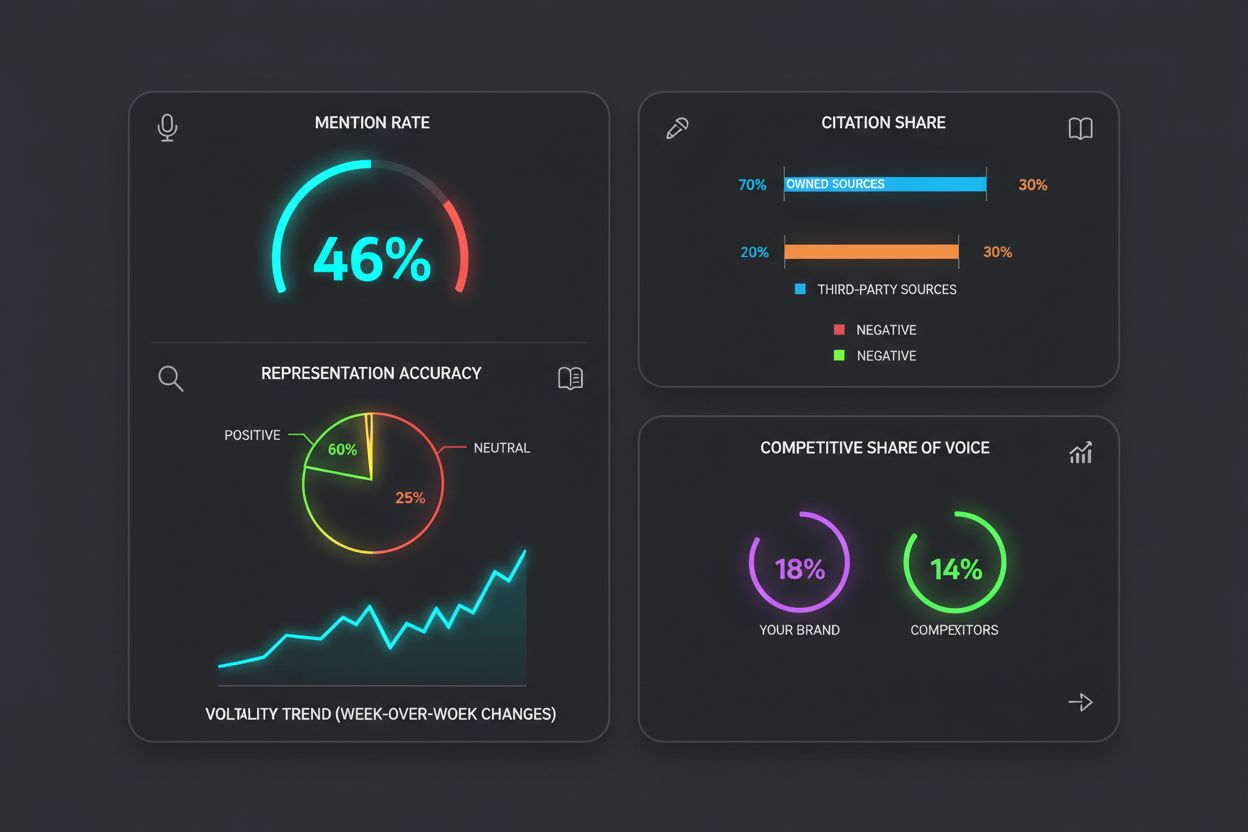
Quick reference guide to AI visibility monitoring. Track mentions, citations, and brand presence across ChatGPT, Google AI Overviews, Perplexity, and Gemini wit...
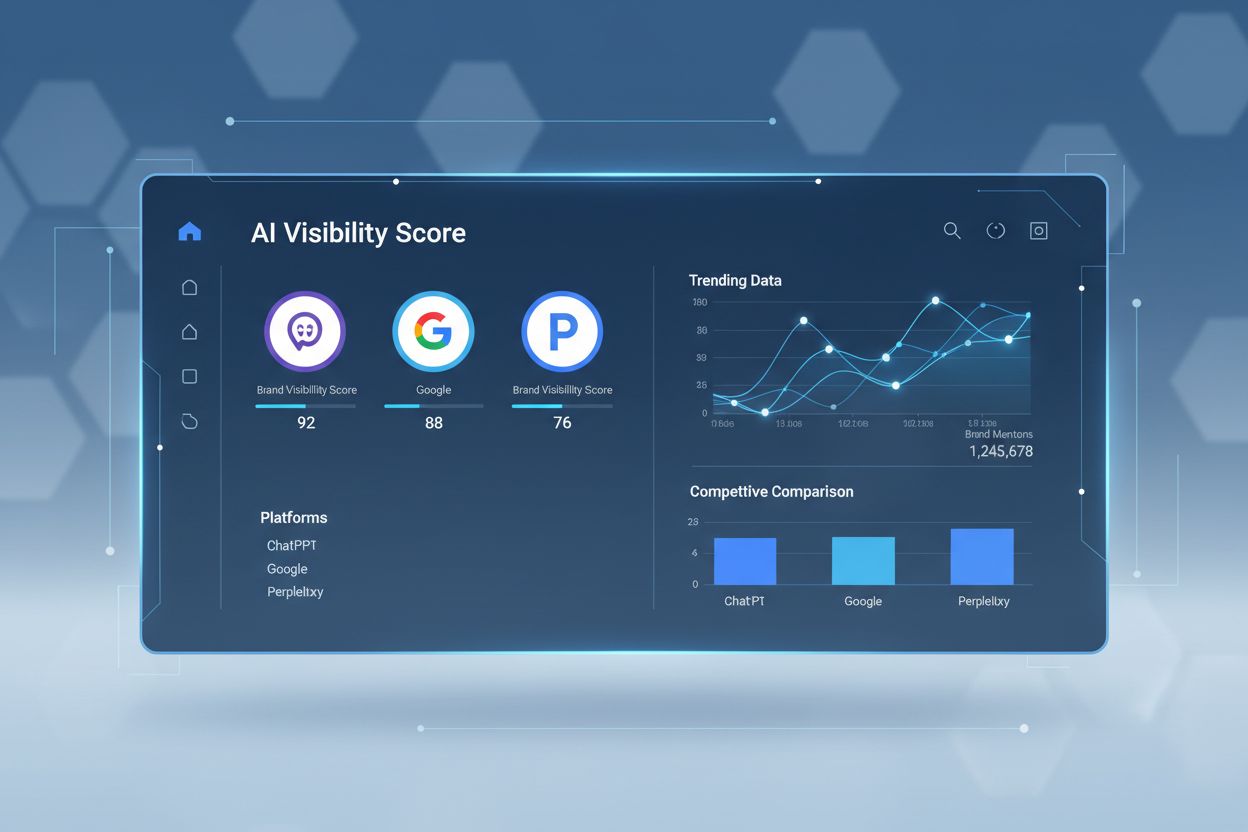
Master the Semrush AI Visibility Toolkit with our comprehensive guide. Learn how to monitor brand visibility in AI search, analyze competitors, and optimize for...