
AI Visibility Metrics That Matter to Stakeholders
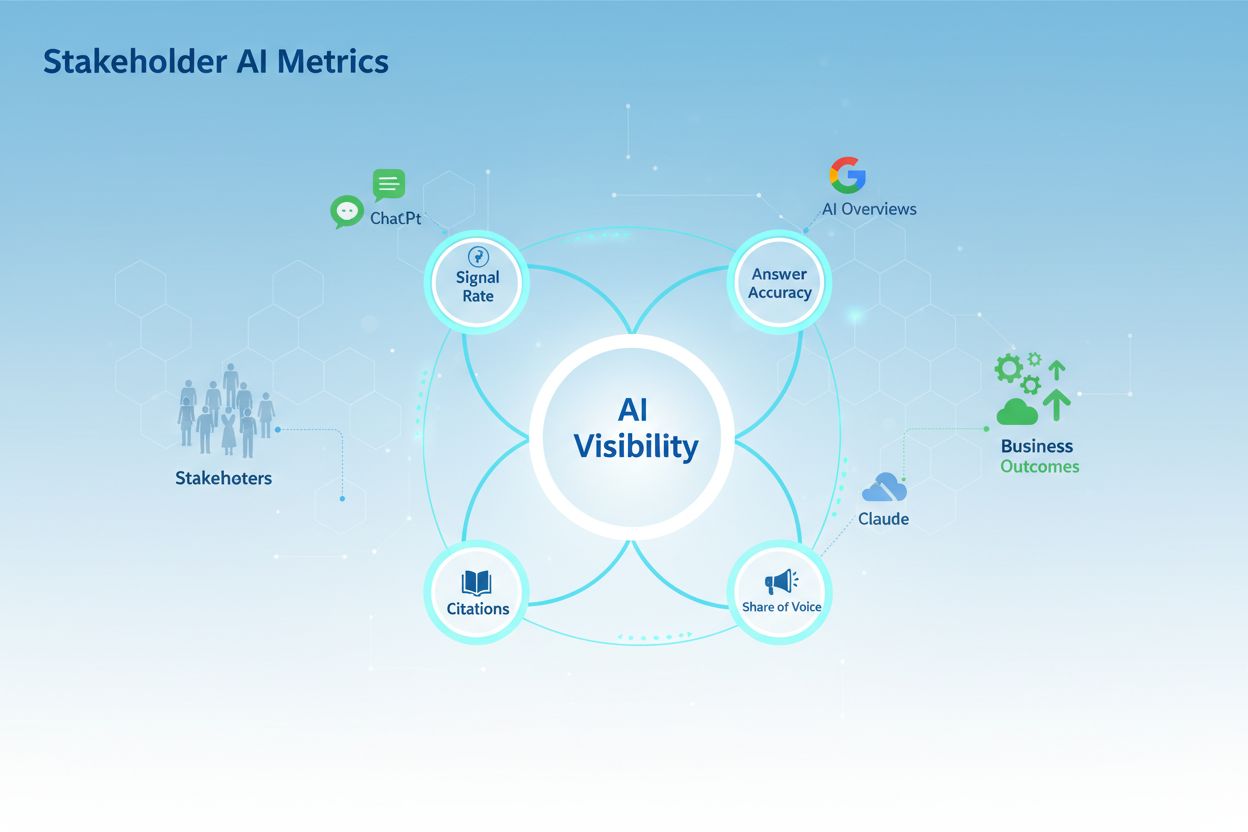
Discover the 4 essential AI visibility metrics stakeholders care about: Signal Rate, Accuracy, Citations, and Share of Voice. Learn how to measure and report AI...
14 min read
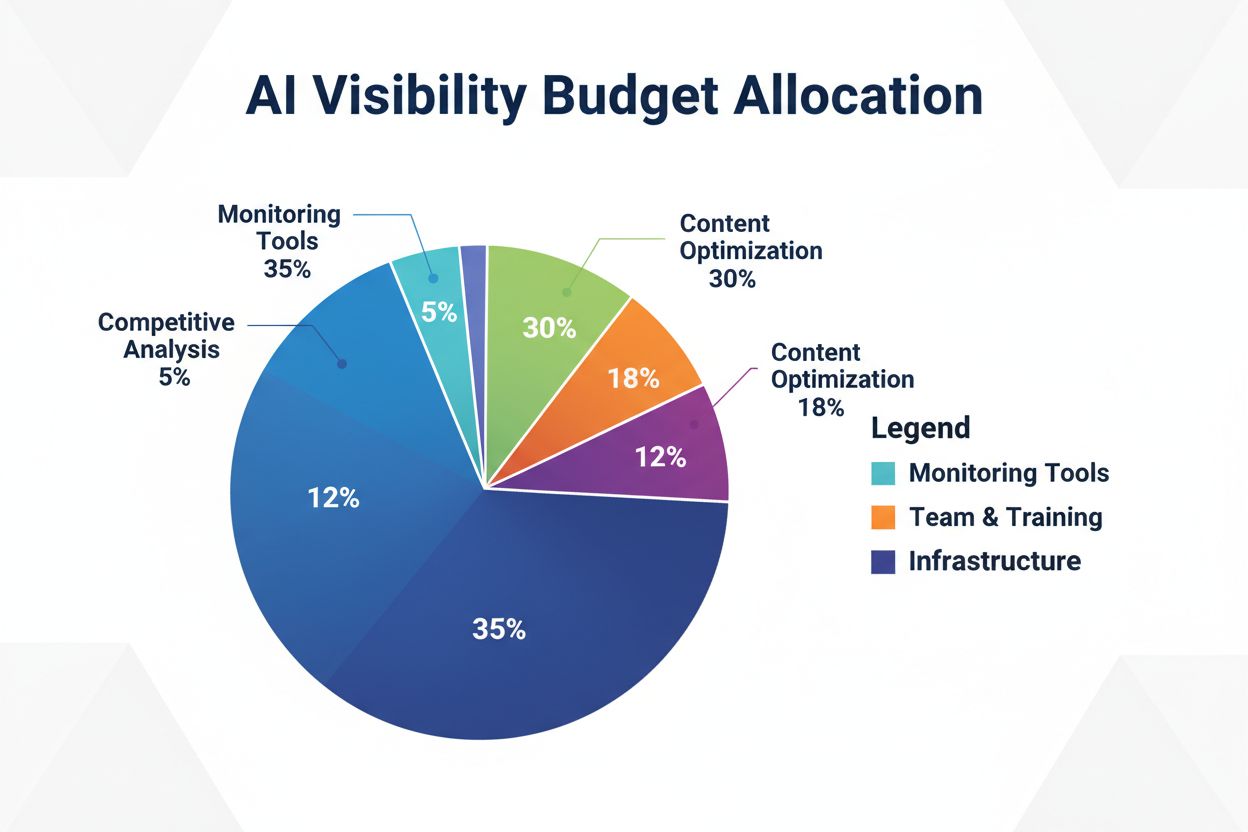
Learn how to strategically allocate your AI visibility budget across monitoring tools, content optimization, team resources, and competitive analysis to maximize ROI and brand presence in AI-generated answers.
AI visibility refers to a brand’s presence and prominence in AI-generated answers across platforms like ChatGPT, Perplexity, Google AI Overviews, and other large language models. Unlike traditional search engine visibility, which focuses on ranking in organic results, AI visibility encompasses how often and how favorably your brand appears when users ask AI systems questions related to your industry, products, or services. This distinction is critical because AI systems source information differently than traditional search engines—they aggregate data from multiple sources, prioritize authoritative content, and present synthesized answers rather than ranked links. According to Yext research analyzing 6.8 million AI citations across ChatGPT, Gemini, and Perplexity, 86% of AI citations come from brand-managed content, highlighting the importance of strategic visibility management. The business impact is substantial: as of 2024, 78% of organizations are using AI, up from 55% the previous year, according to Stanford’s AI Index. This explosive adoption means that AI-generated answers are increasingly becoming the first touchpoint for customer discovery. When your brand appears in an AI response, you gain credibility through third-party validation, drive qualified traffic, and establish authority in your market. The connection between AI visibility and ROI is direct—brands that appear in AI answers experience higher click-through rates, improved brand recall, and increased customer acquisition. McKinsey research shows that organizations leveraging AI strategically expect 60% higher AI-driven revenue growth by 2027 compared to competitors. For marketing managers and CFOs, this means that investing in AI visibility is no longer optional; it’s a fundamental component of modern brand strategy. The challenge, however, is that most organizations lack dedicated budgets and strategies for AI visibility, creating a significant competitive advantage for early movers who allocate resources strategically.
The risks of neglecting AI visibility monitoring are substantial and multifaceted:
Missed Citation Opportunities: Without active monitoring, you won’t know when your brand could appear in AI answers, meaning you lose opportunities to capture high-intent users who are already asking AI systems about your industry or solutions.
Competitor Dominance in AI Responses: While you ignore AI visibility, competitors are optimizing their content and strategies to appear in AI-generated answers, capturing market share and customer mindshare that should belong to your brand.
Loss of Brand Authority and Trust: When AI systems cite competitors instead of your brand, it signals to users that your competitors are more authoritative, trustworthy, and relevant—a perception that’s difficult to reverse once established.
Reduced Customer Acquisition Efficiency: AI-generated answers are becoming a primary discovery channel, especially for younger audiences. Absence from these answers means losing qualified leads at the moment of highest intent, forcing you to rely on more expensive paid channels.
Erosion of Brand Equity: Brands that don’t appear in AI responses gradually lose visibility in the minds of consumers who increasingly rely on AI for recommendations and information, particularly in B2B and professional services sectors.
Real-World Impact Examples: E-commerce brands that ignored AI visibility saw competitors capture 40-60% more qualified traffic through AI platforms. Professional services firms that didn’t optimize for AI visibility lost client inquiries to competitors who appeared in AI-generated recommendations. Travel and hospitality brands that failed to monitor AI citations missed opportunities to appear in AI-powered travel planning assistants.
Reactive vs. Proactive Costs: The cost of recovering lost AI visibility is significantly higher than the cost of maintaining it proactively. Brands that ignored AI visibility initially face 3-6 month recovery periods and must invest heavily in content optimization and competitive repositioning.
Effective AI visibility budgeting requires a strategic breakdown across multiple categories, each serving a distinct purpose in your overall visibility strategy. Rather than treating AI visibility as a single line item, forward-thinking organizations allocate resources across five primary categories that work together to maximize presence and impact in AI-generated answers.
| Budget Category | Percentage | Purpose | Tools/Examples |
|---|---|---|---|
| Monitoring & Analytics Platforms | 25-30% | Real-time tracking of brand mentions, citation quality, and competitive positioning across AI systems | AmICited.com, Amplitude, Semrush AI Visibility, Moz AI Tracking |
| Content Optimization & Creation | 35-40% | Developing and refining content specifically structured for AI indexing and citation, including technical optimization | Content management systems, AI-optimized writing tools, SEO platforms |
| Team Resources & Training | 15-20% | Salaries, training, and development for dedicated AI visibility specialists and cross-functional team members | Internal team costs, certification programs, industry conferences |
| Technology Infrastructure | 10-15% | Data collection systems, API integrations, storage, and real-time monitoring capabilities | Cloud infrastructure, API services, data warehousing solutions |
| Competitive Analysis & Intelligence | 10-15% | Understanding competitor strategies, benchmarking performance, and identifying market gaps | Competitive intelligence tools, market research platforms, custom analysis |
The allocation percentages above represent industry best practices, though your specific breakdown should reflect your organization’s maturity level, current visibility gaps, and strategic priorities. Early-stage organizations might allocate more heavily toward monitoring and content optimization (60-70% combined) to establish baseline visibility, while mature organizations with established presence might shift resources toward advanced analytics and competitive intelligence (40-50% combined). The key principle is that these categories are interdependent—investing in monitoring without content optimization yields insights but no improvement, while investing in content without measurement prevents you from understanding ROI. AmICited.com, as a leading AI visibility monitoring platform, provides the foundational data that informs decisions across all other budget categories, making it a critical investment for organizations serious about AI visibility strategy.
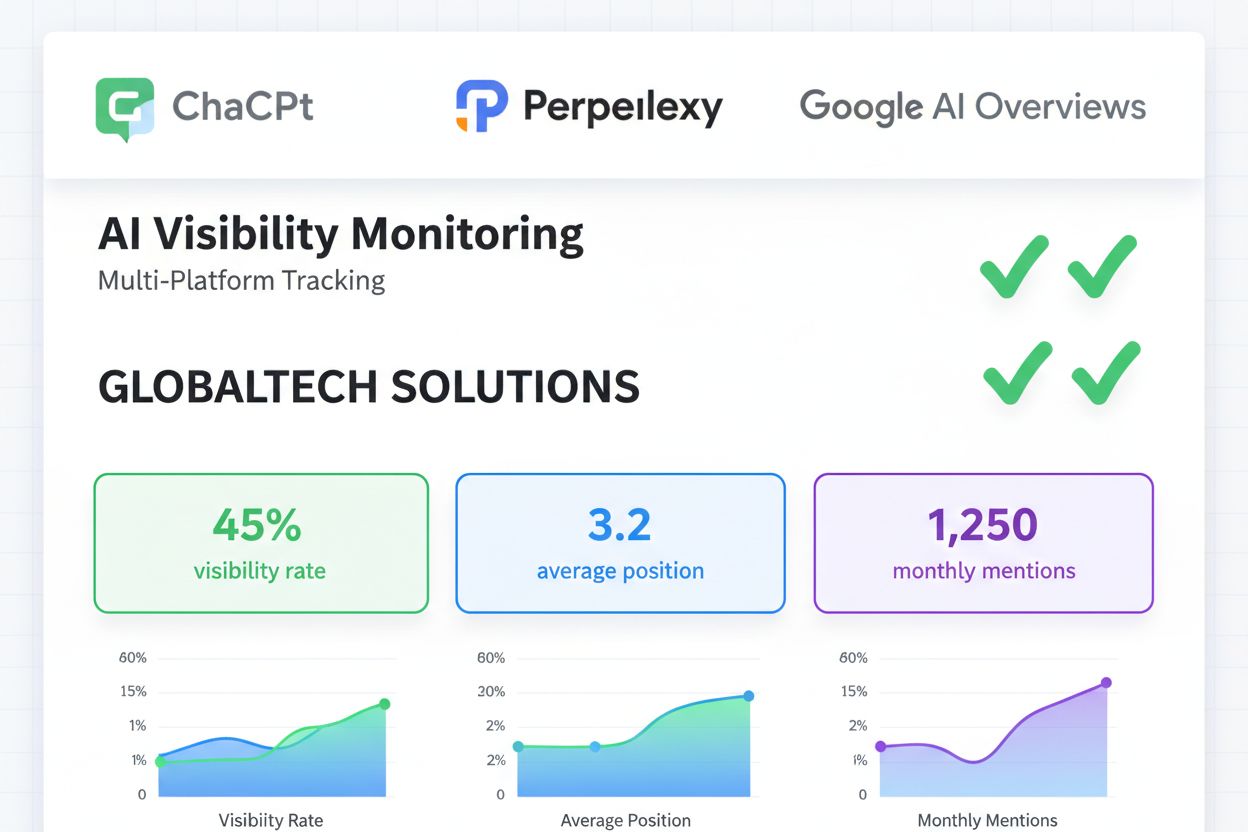
Selecting the right AI visibility monitoring platform is foundational to your entire budget allocation strategy, as it provides the data intelligence that drives all other decisions. The monitoring platform you choose will determine what metrics you can track, how quickly you can respond to visibility changes, and ultimately, how effectively you can measure ROI across your AI visibility investments. AmICited.com stands out as a leading solution specifically designed for comprehensive AI visibility monitoring across ChatGPT, Perplexity, Google AI Overviews, and emerging AI platforms. The platform provides real-time tracking of brand mentions, citation frequency, citation quality scoring, and competitive positioning—critical metrics that other tools often miss or provide with significant delays. AmICited.com’s strength lies in its ability to track not just whether your brand appears in AI answers, but how it appears, including the context, sentiment, and quality of citations, which directly correlates with conversion potential. Compared to broader tools like Amplitude (which focuses on product analytics) or Zapier’s AI visibility integrations (which offer basic tracking), AmICited.com provides specialized, depth-focused monitoring specifically optimized for AI visibility strategy. The ROI calculation for monitoring tools is straightforward: a platform that costs $500-2,000 monthly can identify citation opportunities worth $50,000-500,000 in incremental revenue annually, depending on your industry and customer lifetime value. Integration capabilities are equally important—your monitoring platform should connect with your existing marketing stack, including CRM systems, analytics platforms, and content management systems, enabling seamless workflow integration and reducing manual data entry. When evaluating platforms, prioritize those offering API access, real-time alerts for citation changes, competitive benchmarking, and attribution modeling capabilities. The investment in a robust monitoring platform typically represents 25-30% of your AI visibility budget and serves as the intelligence backbone that justifies and optimizes all other spending.
Allocating budget for content optimization is essential because AI systems source information fundamentally differently than traditional search engines, requiring a distinct approach to content strategy and structure. AI systems don’t simply rank content; they analyze, synthesize, and extract information from multiple sources to generate comprehensive answers to user queries. This means your content must be structured, authoritative, and contextually rich in ways that traditional SEO optimization alone doesn’t address. Understanding how AI systems source information is the first step—they prioritize content from established, authoritative domains; they value clear, well-structured information with proper formatting; and they favor content that directly answers specific questions rather than content optimized purely for keyword rankings. The practice of Generative Engine Optimization (GEO) has emerged as the discipline for optimizing content specifically for AI visibility, and it requires dedicated budget allocation.
Your content optimization budget should support these key steps:
Budget allocation for content optimization typically ranges from 35-40% of your total AI visibility budget, with the breakdown including content creation (50%), technical optimization (30%), and content management infrastructure (20%). This is where you invest in hiring or contracting experienced content strategists who understand both traditional SEO and AI visibility requirements, as well as tools that help identify optimization opportunities. The ROI from content optimization is substantial—brands that restructure content for AI visibility typically see 40-60% increases in citation frequency within 3-6 months, directly translating to increased traffic and brand awareness.
Human resources allocation is often overlooked in AI visibility budgeting, yet it represents one of the highest-ROI investments you can make. AI visibility management requires specialized skills that span data analysis, marketing strategy, technical implementation, and competitive intelligence—skills that are still relatively rare in the market. The team structure needed for effective AI visibility management typically includes an AI Visibility Manager (responsible for overall strategy and ROI), a Content Strategist (focused on GEO and content optimization), a Data Analyst (tracking metrics and identifying trends), and a Technical Specialist (managing integrations and infrastructure). For smaller organizations, these roles may be consolidated, but the skill sets remain essential. The required skills include proficiency in data analysis and interpretation, understanding of AI systems and how they source information, SEO and content marketing expertise, technical knowledge of APIs and data integration, and competitive intelligence capabilities. Training and development costs are significant but necessary—most team members will require 40-80 hours of specialized training annually to stay current with rapidly evolving AI platforms and best practices. Organizations have two primary options: building in-house expertise (requiring 6-12 months of training and development) or outsourcing to specialized agencies (providing faster implementation but ongoing external costs). The hybrid approach—maintaining core in-house expertise while outsourcing specialized functions—often provides the best balance of cost and capability. Career development in AI monitoring is increasingly attractive to talented marketers and analysts, as it represents a cutting-edge specialization with significant market demand. Allocating 15-20% of your AI visibility budget to team resources and training ensures you have the expertise to maximize returns on all other investments.
Technology infrastructure represents the backbone of your AI visibility monitoring capability, requiring dedicated budget allocation for systems that collect, process, and analyze data at scale. The technical budget allocation for AI visibility encompasses several critical components: data collection infrastructure that captures mentions across multiple AI platforms in real-time, storage systems that maintain historical data for trend analysis and attribution modeling, API integrations that connect your monitoring platform with AI systems and your internal tools, and security and compliance systems that protect sensitive competitive and customer data. Real-time monitoring capabilities are essential because AI visibility changes rapidly—a competitor’s content optimization or a shift in how an AI system sources information can dramatically impact your visibility within hours. Your infrastructure must support continuous data collection and analysis, not batch processing that provides insights days or weeks after visibility changes occur. This requires investment in cloud infrastructure (typically $2,000-5,000 monthly for mid-market organizations), API access to monitoring platforms, and potentially custom data pipelines if you’re tracking multiple AI systems simultaneously. Data security and compliance are increasingly important considerations, particularly for organizations in regulated industries or those handling sensitive customer information. Your infrastructure must support data encryption, access controls, audit logging, and compliance with regulations like GDPR and CCPA. Scalability is another critical consideration—your infrastructure should support growth from monitoring a single brand to managing multiple brands, geographies, or product lines without requiring complete redesign. The investment in robust technology infrastructure typically represents 10-15% of your AI visibility budget but provides the foundation that makes all other investments effective. Organizations that skimp on infrastructure often find themselves unable to scale their AI visibility programs or unable to trust the data they’re collecting, ultimately undermining ROI across the entire program.
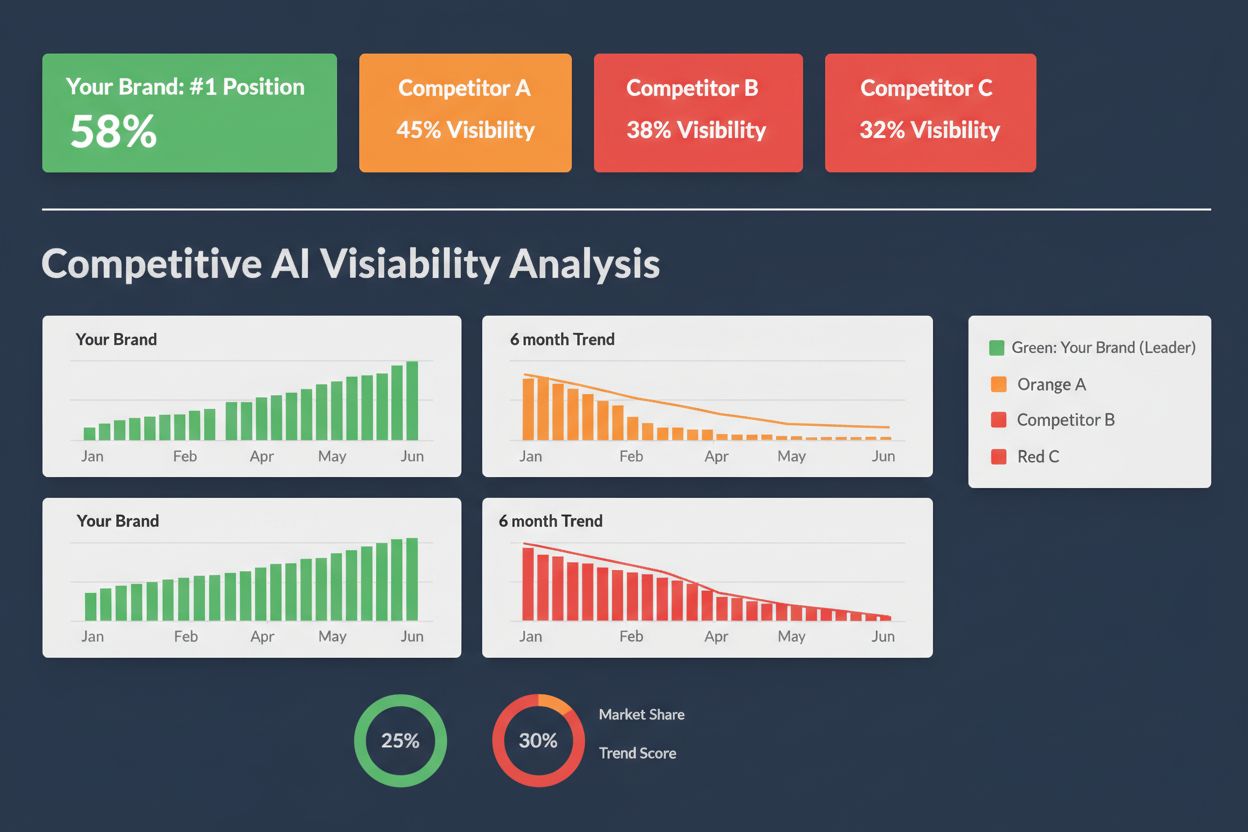
Competitive analysis budget allocation enables you to understand not just your own AI visibility, but how you compare to competitors and where market opportunities exist. This category of spending is often undervalued but provides critical strategic insights that inform all other budget allocation decisions. Tracking competitor visibility in AI answers reveals which competitors are winning in AI-generated responses, what content strategies they’re using, and which market segments they’re dominating. This intelligence allows you to identify gaps where competitors appear but you don’t, and opportunities where you can differentiate. Benchmarking against industry standards provides context for your visibility metrics—knowing that you appear in 15% of relevant AI answers is only meaningful when you understand that your industry average is 8% or that your top competitor appears in 25%. Identifying gaps and opportunities requires systematic analysis of competitor content, their optimization strategies, and the specific queries where they’re winning. Tools for competitive analysis range from specialized AI visibility platforms that include competitive benchmarking features to broader market intelligence platforms like Semrush, Ahrefs, and Moz that are expanding their AI visibility tracking capabilities. The ROI from competitive intelligence is substantial—organizations that systematically track competitor AI visibility identify 3-5 major optimization opportunities quarterly that directly translate to visibility improvements. Budget allocation for competitive analysis typically ranges from 10-15% of your total AI visibility budget, with spending distributed across platform subscriptions (40%), custom research and analysis (40%), and competitive intelligence tools (20%). This investment is particularly valuable for organizations in competitive markets where understanding competitor strategy is essential to maintaining market position. The insights from competitive analysis should directly inform your content optimization priorities, helping you allocate content creation budget toward the highest-impact opportunities.
Measuring success and continuously optimizing your budget allocation is essential because AI visibility is a rapidly evolving landscape where strategies that work today may be less effective tomorrow. The foundation of ROI measurement is establishing clear baseline metrics before you begin optimization efforts, then tracking changes over time and attributing them to specific investments. Key metrics for AI visibility ROI include brand mention frequency (how often your brand appears in AI answers), citation quality score (how prominently and favorably you’re cited), query coverage (the percentage of relevant queries where you appear), traffic attribution (how much traffic and conversions come from AI-generated answers), and brand sentiment in AI responses (whether citations are positive, neutral, or negative).
| Metric | Importance | How to Measure | Target |
|---|---|---|---|
| Brand Mention Frequency | Critical | Track mentions across ChatGPT, Perplexity, Google AI Overviews monthly | 40-60% increase YoY |
| Citation Quality Score | High | Analyze prominence, context, and sentiment of citations using AmICited.com | 70%+ positive/prominent citations |
| Query Coverage | High | Measure percentage of relevant industry queries where brand appears | 50%+ of target queries |
| Traffic Attribution | Critical | Track conversions from AI-sourced traffic using UTM parameters and analytics | 15-25% of total organic traffic |
| Brand Sentiment | Medium | Analyze language and context of citations for positive/negative indicators | 80%+ neutral or positive |
| Cost Per Citation | High | Divide total AI visibility budget by number of new citations generated | $50-200 per citation |
| Customer Acquisition Cost (AI channel) | Critical | Calculate CAC specifically for customers acquired through AI visibility | 30-50% lower than paid channels |
Attribution modeling for AI visibility requires connecting AI-generated traffic to actual business outcomes—this is more complex than traditional attribution because users may interact with AI answers multiple times before converting. Real-time budget optimization involves monitoring these metrics weekly and adjusting spending across categories based on performance. A/B testing strategies should include testing different content formats, optimization approaches, and messaging to identify what drives highest citation quality and traffic. The quarterly review and adjustment process should involve analyzing performance against targets, identifying underperforming budget categories, reallocating resources to high-performing areas, and adjusting strategy based on competitive and platform changes. Case studies of successful budget allocation consistently show that organizations that measure ROI rigorously and adjust quarterly achieve 2-3x better results than those that set budgets annually and don’t adjust. For example, a B2B SaaS company that initially allocated 40% of budget to content optimization but found through measurement that monitoring and competitive analysis were driving higher ROI reallocated to 30% content, 35% monitoring, and 20% competitive analysis, resulting in 45% improvement in citation quality within six months.
Geographic variations in AI adoption and usage patterns require tailored budget allocation strategies that account for regional differences in AI platform popularity, user behavior, and competitive intensity. AI adoption is not uniform globally—North America leads in AI adoption with 78% of organizations using AI, while Europe shows 65% adoption and Asia-Pacific shows 58% adoption according to 2024 data. Within regions, adoption varies significantly by country, with the United States, United Kingdom, Canada, and Australia showing highest adoption, while emerging markets show lower but rapidly growing adoption. These variations mean that your AI visibility budget allocation should reflect where your customers are and where AI is most influential in their decision-making. For organizations with North American focus, allocating 50-60% of budget to ChatGPT and Google AI Overviews makes sense, while European organizations should allocate more heavily to Perplexity (which has stronger adoption in Europe) and Google AI Overviews. Industry-specific AI visibility needs vary dramatically—B2B SaaS companies benefit most from appearing in AI answers to technical and business questions, while e-commerce brands benefit from appearing in AI shopping recommendations, and professional services firms benefit from appearing in AI-generated advice and recommendations. These vertical differences should inform both your content optimization strategy and your monitoring platform selection. Regional budget allocation strategies should account for local competition intensity, local AI platform preferences, and local customer behavior. For example, a global e-commerce brand might allocate 40% of budget to North American AI visibility (where adoption is highest and competition is intense), 35% to European markets (growing adoption, moderate competition), and 25% to Asia-Pacific (emerging opportunity, lower current competition). Global vs. local AI visibility strategies require balancing centralized strategy with local execution—your core brand positioning and content should be consistent globally, but local teams should optimize for regional AI platform preferences and competitive dynamics. Organizations managing multiple geographies should use AmICited.com’s geographic tracking capabilities to monitor visibility by region and adjust budget allocation based on regional performance and opportunity.
Organizations new to AI visibility budgeting frequently make predictable mistakes that undermine ROI and waste resources. Understanding these pitfalls helps you avoid costly missteps and allocate budget more effectively. The most common mistake is over-investing in tools without strategy—organizations purchase expensive monitoring platforms, competitive intelligence tools, and content optimization software without first establishing clear strategy and goals. This results in paying for capabilities you don’t use and missing critical insights because you lack the team expertise to interpret the data. The solution is to start with strategy and goals, then select tools that support those specific objectives. Neglecting content optimization is another frequent error—organizations invest heavily in monitoring and analytics but fail to allocate sufficient budget to actually optimizing content for AI visibility. This creates a situation where you have excellent visibility into your problems but lack resources to solve them. Content optimization should represent 35-40% of your budget, not an afterthought. Ignoring team training and development leads to expensive tools being underutilized and insights being missed. Your team needs ongoing training to stay current with AI platform changes, new optimization techniques, and emerging best practices. Allocating only 10-15% of budget to team resources is a false economy that typically results in 50%+ lower ROI. Reactive vs. proactive budgeting is a critical distinction—organizations that budget reactively (responding to visibility drops or competitive threats) spend 2-3x more than organizations that budget proactively (maintaining and improving visibility continuously). Establish baseline budgets for ongoing monitoring and optimization, then allocate additional budget for reactive improvements only when necessary. Failing to measure ROI is perhaps the most damaging mistake because it prevents you from learning what works and optimizing allocation over time. Every dollar spent on AI visibility should be tracked and attributed to specific outcomes. Organizations that don’t measure ROI typically waste 30-40% of their budget on ineffective initiatives.
The AI landscape is evolving rapidly, with new platforms, capabilities, and competitive dynamics emerging constantly. Future-proofing your AI visibility budget requires building flexibility into your allocation strategy and planning for evolution rather than assuming current conditions will persist. Emerging AI platforms are launching regularly—while ChatGPT, Perplexity, and Google AI Overviews currently dominate, new platforms like Claude’s web interface, Microsoft’s Copilot, and specialized AI assistants for specific industries are gaining traction. Your budget allocation should include 10-15% flexibility to test and optimize for emerging platforms before they become dominant. The evolution of AI answer generation is accelerating—AI systems are becoming more sophisticated in how they source, synthesize, and present information, and these changes directly impact visibility strategies. What works for current AI systems may be less effective as systems evolve to prioritize different types of sources or content formats. Preparing for new monitoring capabilities means staying informed about advances in AI visibility tracking and being willing to adopt new tools and approaches as they emerge. Your monitoring platform should support emerging AI systems and new tracking capabilities, which is why selecting platforms with strong R&D investment and regular feature updates is important. Flexibility in budget allocation is essential—rather than locking in fixed percentages across categories, establish ranges (e.g., 30-40% for content optimization rather than exactly 35%) that allow you to shift resources based on emerging opportunities and changing competitive dynamics. Long-term strategic planning should extend 18-24 months into the future, with quarterly reviews and adjustments. Plan for how AI visibility will evolve in your industry, what new competitors might emerge, and how customer behavior might change. Integration with overall marketing budget is critical—AI visibility shouldn’t be a siloed initiative but rather a core component of your overall marketing strategy. As AI becomes more central to customer discovery, allocate increasing percentages of your total marketing budget to AI visibility, potentially growing from 5-10% of marketing budget today to 15-25% within 2-3 years. Organizations that build flexibility, maintain learning orientation, and integrate AI visibility into overall strategy will be best positioned to capitalize on the AI-driven future of customer discovery and brand visibility.
Industry best practices suggest allocating 5-10% of your total marketing budget to AI visibility initially, growing to 15-25% within 2-3 years as AI becomes more central to customer discovery. The exact percentage depends on your industry, competitive landscape, and current visibility gaps. Organizations in highly competitive markets or those targeting AI-native audiences should allocate higher percentages.
Most organizations see measurable improvements in citation frequency within 3-6 months of implementing a comprehensive AI visibility strategy. However, the timeline varies based on your starting position, content optimization efforts, and competitive intensity. Quick wins from monitoring and competitive analysis can appear within 4-8 weeks, while content optimization typically shows results in 6-12 weeks.
AmICited.com specializes specifically in AI visibility monitoring across ChatGPT, Perplexity, and Google AI Overviews with depth-focused tracking of citation quality, sentiment, and competitive positioning. While broader tools like Amplitude offer product analytics and Zapier provides basic AI visibility integrations, AmICited.com's specialized focus on AI visibility strategy makes it the preferred choice for organizations serious about maximizing their presence in AI-generated answers.
Yes, absolutely. You can start with a modest budget of $2,000-5,000 monthly focused on monitoring and competitive analysis to understand your baseline visibility and identify optimization opportunities. As you gain insights and see early wins, you can expand budget allocation to content optimization and team resources. The key is starting with measurement and strategy rather than jumping directly to large content investments.
Quarterly reviews are the industry standard for AI visibility budget allocation. Monthly monitoring of metrics helps identify trends, but quarterly reviews allow you to make strategic budget adjustments based on performance data, competitive changes, and emerging opportunities. Organizations in highly competitive markets may benefit from monthly adjustments, while others can operate effectively with quarterly reviews.
AI visibility budgeting requires a different allocation strategy than traditional SEO. While SEO focuses on keyword rankings and organic traffic, AI visibility budgeting emphasizes citation quality, competitive positioning across multiple AI platforms, and real-time monitoring. AI visibility typically requires higher investment in monitoring tools and competitive analysis, while SEO budgets traditionally emphasize link building and technical optimization.
Measure AI visibility impact by tracking traffic attribution from AI sources using UTM parameters, monitoring conversion rates from AI-sourced traffic, and calculating customer acquisition cost specifically for the AI channel. Use tools like Google Analytics 4 to segment traffic by source and connect it to revenue. AmICited.com helps identify which citations drive the most qualified traffic by tracking citation quality and sentiment.
Yes, geographic allocation should reflect regional differences in AI adoption, platform preferences, and competitive intensity. North America (78% AI adoption) warrants 50-60% of budget, Europe (65% adoption) 30-35%, and Asia-Pacific (58% adoption) 10-15%. Within regions, allocate more heavily to markets with highest customer concentration and AI adoption. Use AmICited.com's geographic tracking to monitor regional performance and adjust allocation accordingly.
Start tracking your brand's presence across ChatGPT, Perplexity, and Google AI Overviews with AmICited. Get real-time insights into your AI visibility and competitive positioning.
Discover the 4 essential AI visibility metrics stakeholders care about: Signal Rate, Accuracy, Citations, and Share of Voice. Learn how to measure and report AI...
Learn how to conduct a baseline AI visibility audit to understand how ChatGPT, Google AI, and Perplexity mention your brand. Step-by-step assessment guide for b...
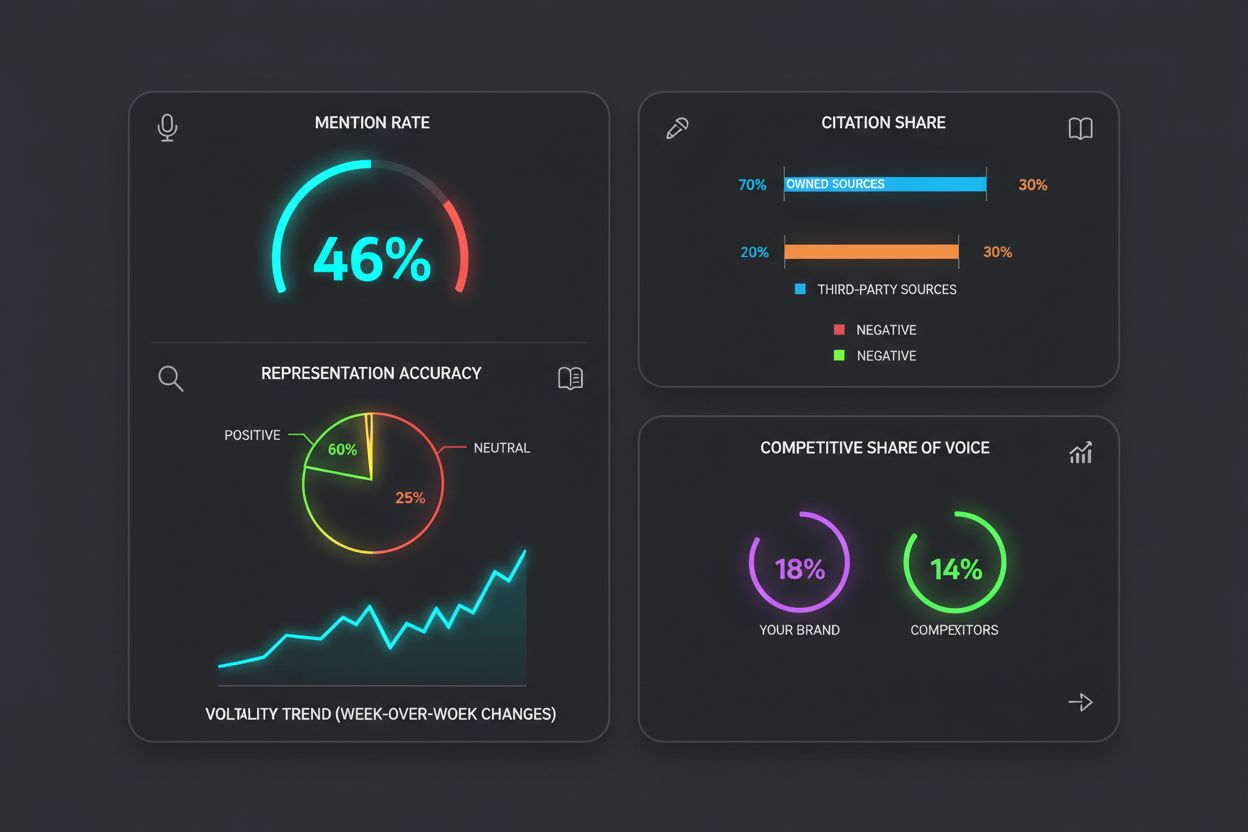
Quick reference guide to AI visibility monitoring. Track mentions, citations, and brand presence across ChatGPT, Google AI Overviews, Perplexity, and Gemini wit...