

AI Visibility Moat
Learn what an AI Visibility Moat is and how companies build sustainable competitive advantages in AI-powered search systems. Discover the four pillars, key metr...
8 min read

Discover how first-movers in AI visibility are building unassailable competitive advantages through data moats, expertise development, and strategic positioning in ChatGPT, Perplexity, and Google AI Overviews.
The traditional competitive moats—brand, distribution, switching costs—are being fundamentally disrupted by AI systems that operate on different principles. When ChatGPT, Claude, and Perplexity train on your content, they’re not buying your product or using your distribution channel; they’re absorbing your intellectual property into their models. This shift means that visibility in AI systems has become the new competitive battleground, replacing the old playbook of SEO and paid acquisition. Companies that understand and optimize for AI visibility today are building moats that will be nearly impossible for competitors to replicate tomorrow. The first-movers in this space aren’t just gaining a temporary advantage—they’re establishing structural dominance in how their industry’s knowledge is discovered and consumed.
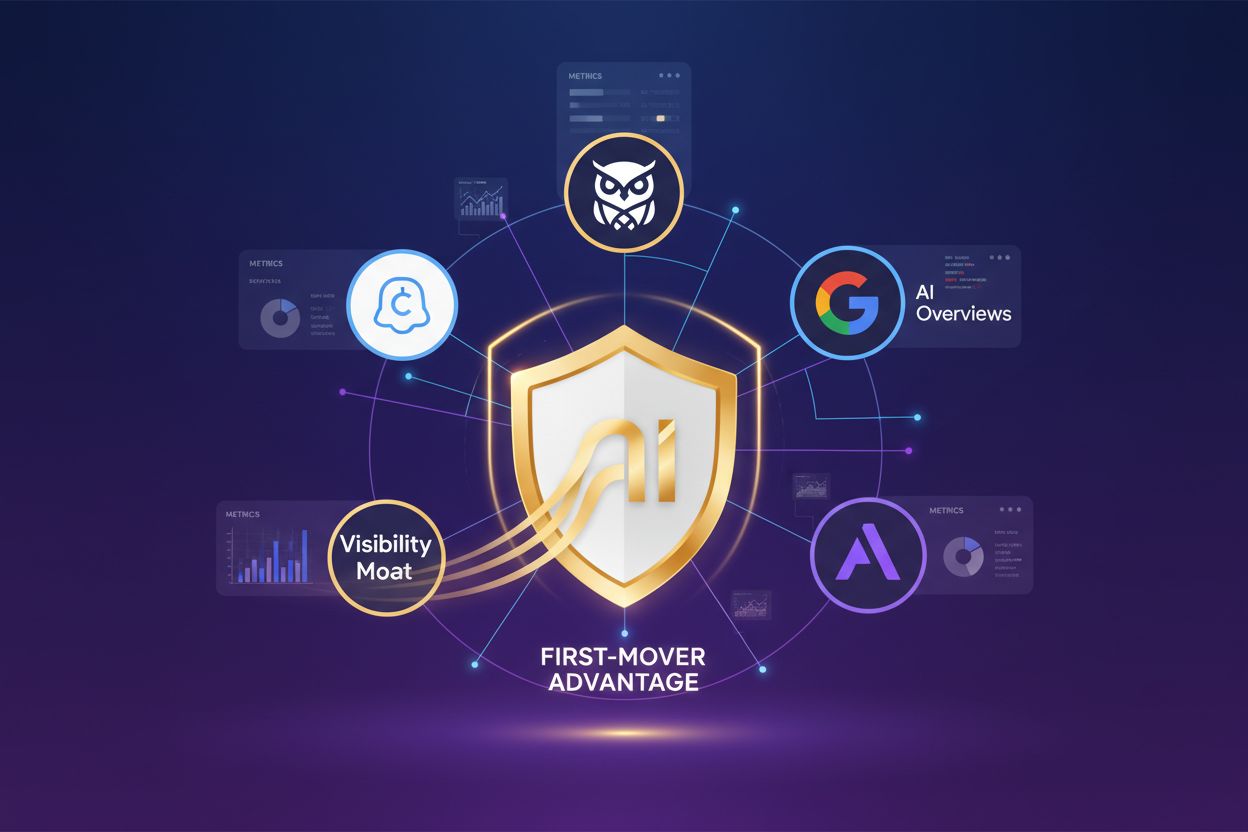
First-mover advantages in AI systems operate through a fundamentally different mechanism than traditional markets, creating compounding returns that accelerate over time. Early adopters of AI visibility strategies gain access to superior data about how their content performs in AI systems, allowing them to refine their approach while competitors are still figuring out the basics. The timing of your content publication matters dramatically: 53% of ChatGPT citations come from content updated in the last 6 months, meaning recency signals are weighted heavily in AI training and retrieval. First-movers also benefit from the “data moat” effect—the more visibility you achieve early, the more training data you generate, which feeds back into better AI visibility. Additionally, as token costs decrease approximately 10x annually, early investments in AI-optimized content become exponentially more valuable as the cost of inference drops and AI adoption accelerates. The competitive advantage compounds because early visibility leaders establish themselves as authoritative sources, which AI systems preferentially cite and rank.
| First-Mover Advantage | Traditional Markets | AI Visibility Markets |
|---|---|---|
| Speed to Scale | Months to years | Weeks to months |
| Data Accumulation | Linear growth | Exponential growth |
| Competitive Response Time | 6-12 months | 2-4 weeks |
| Moat Strength | Moderate | Extremely strong |
| Cost of Entry | High capital required | Content + optimization |
| Replicability | Possible with resources | Extremely difficult |
The data moat in AI visibility is fundamentally different from traditional data advantages because it’s built on the principle of recursive improvement. When your content gets cited by AI systems, it generates training signals that improve your visibility in future model iterations, creating a self-reinforcing cycle that competitors cannot easily break. First-movers accumulate this advantage exponentially: they have more citations, more training data, and more feedback signals to optimize against. The barrier to entry for competitors isn’t just matching your content quality—it’s overcoming years of accumulated citations and authority signals that AI systems have learned to weight heavily. Companies like Perplexity and Google AI Overviews are already showing preference for sources with established citation patterns, meaning late-movers face an increasingly difficult task of breaking through the noise. This data moat becomes harder to replicate with each passing quarter, as the gap between first-movers and followers widens exponentially.
AI expertise as a competitive advantage operates on two levels: the technical capability to build and deploy AI systems, and the strategic understanding of how to position your organization within AI-driven discovery mechanisms. First-movers develop deep institutional knowledge about what works in AI visibility—which content formats get cited most frequently, how to structure information for AI comprehension, and how to build authority signals that AI systems recognize and reward. This expertise becomes a sustainable advantage because it’s embedded in your team’s decision-making processes, your content strategy, and your organizational culture. Companies that hire AI-focused talent early, invest in AI literacy across their marketing and product teams, and build feedback loops around AI visibility metrics will maintain their advantage for years. The expertise advantage is particularly durable because it’s difficult to hire away or replicate through consulting—it requires sustained investment and experimentation. Organizations that treat AI visibility as a core competency rather than a marketing tactic will find themselves with a structural advantage that compounds over time.
The cost curve advantage in AI systems is perhaps the most underappreciated first-mover benefit, yet it’s mathematically the most powerful. As token costs decrease approximately 10x annually, the economics of AI-driven discovery improve dramatically, but only for companies that have already optimized their content and visibility strategies. Early investors in AI visibility infrastructure—whether that’s content optimization, monitoring systems, or expertise development—see their ROI multiply as costs fall and adoption accelerates. A company that invests $100,000 in AI visibility optimization today will see that investment become 10x more valuable in two years as the cost of inference drops and AI usage becomes ubiquitous. Late-movers face a different problem: they must invest heavily to catch up just as the cost advantages are disappearing, meaning their ROI is compressed into a shorter timeframe. The timing of your investment in AI visibility directly determines your long-term unit economics and competitive positioning.
AI visibility monitoring has become the new frontier of competitive intelligence, replacing traditional tools like SEMrush and Similarweb with more sophisticated analysis of how your content performs across AI systems. First-movers are building internal capabilities to track which of their content pieces get cited by ChatGPT, Claude, Perplexity, and Google AI Overviews, creating a real-time feedback loop that informs content strategy. Tools like AmICited are emerging to provide this visibility, but the real advantage goes to companies that build proprietary monitoring systems tailored to their specific competitive landscape. Co-citation analysis reveals not just who’s winning in AI visibility, but why—which content formats, topics, and authority signals are being rewarded by different AI systems. This intelligence allows first-movers to identify gaps in the market, understand competitor positioning, and predict which content strategies will compound over time. The companies that master AI visibility monitoring will have a strategic advantage equivalent to having a crystal ball into how their industry’s knowledge is being discovered and consumed.
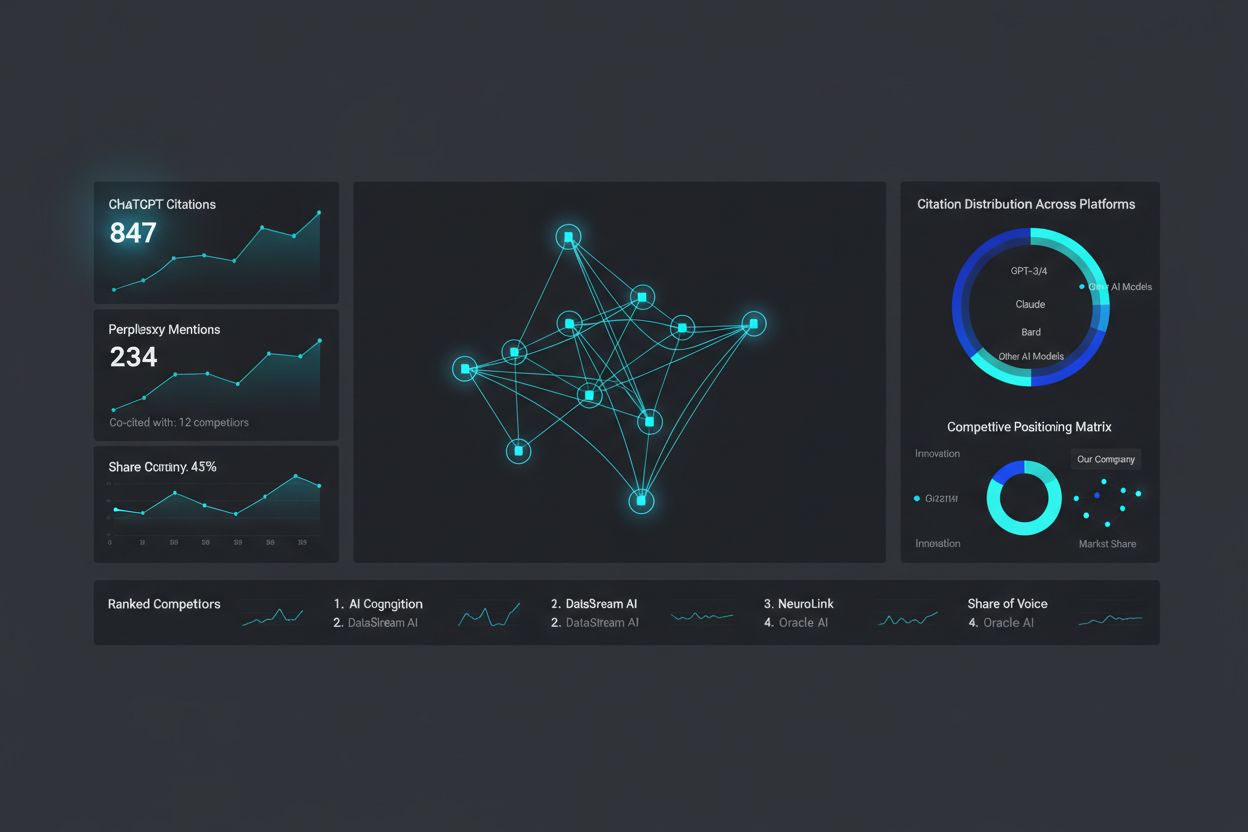
Building your AI visibility moat requires a systematic approach that combines content strategy, technical optimization, and continuous monitoring into a cohesive competitive advantage. Start by auditing your existing content against AI visibility metrics: recency, comprehensiveness, E-E-A-T signals (Expertise, Experience, Authoritativeness, Trustworthiness), and citation frequency across major AI systems. Develop a content calendar that prioritizes topics with high AI visibility potential, focusing on areas where you can establish clear authority and where AI systems are actively seeking citations. Implement technical optimizations that make your content more discoverable and citable by AI systems—structured data, clear hierarchies, and explicit expertise signals. Build a feedback loop that tracks which content pieces generate the most AI citations and use that data to refine your strategy continuously. Invest in thought leadership and original research that AI systems cannot find elsewhere, creating a sustainable source of citations and authority. Finally, develop internal expertise around AI visibility metrics and strategy, ensuring that this becomes a core competency rather than a one-time project.
The competitive landscape for AI visibility is rapidly consolidating around companies that understood the shift early and invested accordingly, creating a clear hierarchy of winners and losers. Companies like OpenAI (through ChatGPT), Anthropic (Claude), and Perplexity have become the primary discovery mechanisms for their respective user bases, and the content sources that appear in their outputs are winning disproportionately in terms of traffic and authority. Within specific industries, first-movers are already establishing themselves as the default sources cited by AI systems—these companies are seeing exponential growth in AI-driven traffic while competitors struggle to gain visibility. The competitive advantage is particularly pronounced in B2B SaaS, where AI systems are increasingly used for research and decision-making, and where the cost of being invisible in AI systems is extremely high. Late-movers are discovering that catching up requires not just matching the content quality of leaders, but fundamentally changing how they approach content strategy and distribution. The window for establishing first-mover advantages in AI visibility is closing rapidly, with the most valuable positions likely to be locked in within the next 12-18 months.
Measuring and monitoring your AI visibility moat requires a shift from traditional marketing metrics to a new set of KPIs that directly reflect your performance in AI-driven discovery. Track the percentage of your content that gets cited by major AI systems, the frequency of citations, and how that frequency changes over time—this is your primary indicator of moat strength. Monitor co-citation patterns to understand which competitors are being cited alongside you, and use that intelligence to identify gaps in your positioning. Measure the conversion impact of AI-driven traffic separately from traditional search traffic, as 60% of AI searches end without clicks but convert at 4.4x the rate of traditional search traffic, indicating that AI visibility drives higher-quality engagement. Build dashboards that track your authority signals across AI systems—E-E-A-T metrics, citation frequency, and positioning relative to competitors. Use these metrics to inform quarterly strategy reviews and content planning, ensuring that AI visibility remains a core focus of your organization. The companies that build the most sophisticated measurement systems will have the clearest view of their competitive position and the fastest feedback loops for optimization.
The long-term strategic advantage of first-mover positioning in AI visibility is not temporary—it’s structural and compounds over time in ways that traditional competitive advantages cannot match. First-movers establish themselves as authoritative sources in their industry, and AI systems are trained to recognize and reward authority, creating a self-reinforcing cycle that becomes harder to break with each passing quarter. The data moat, expertise advantage, and cost curve benefits combine to create a competitive position that is nearly impossible for late-movers to overcome, even with superior resources. Companies that win in AI visibility today will find themselves in a position of structural dominance in their industry for the next 5-10 years, as AI systems become the primary discovery mechanism for knowledge and expertise. The first-movers are not just gaining a temporary traffic boost—they’re establishing themselves as the default sources for their industry’s knowledge, a position that will generate compounding returns for years to come. The strategic imperative is clear: the time to invest in AI visibility is now, before the window for first-mover advantages closes permanently.
A competitive moat in AI visibility refers to structural advantages that make it difficult for competitors to replicate your position in AI-driven discovery systems. First-movers build moats through data accumulation, expertise development, and established authority signals that AI systems recognize and reward. These moats compound over time, becoming exponentially harder to overcome.
First-movers gain advantages through multiple mechanisms: they accumulate citation data that trains AI systems to recognize their authority, develop organizational expertise in AI optimization, benefit from declining token costs, and establish themselves as default sources in their industry. These advantages compound because early visibility leaders generate more training signals that improve their future visibility.
A data moat is built on the principle of recursive improvement—when your content gets cited by AI systems, it generates training signals that improve your visibility in future model iterations. This creates a self-reinforcing cycle that competitors cannot easily break. First-movers accumulate exponential advantages because they have more citations, more training data, and more feedback signals to optimize against.
AI visibility focuses on how your content is cited and referenced within AI-generated responses, rather than traditional search rankings. The key difference is that you're competing for citations in AI systems like ChatGPT and Perplexity, not just search engine rankings. Co-citation analysis reveals who you're competing against and what strategies are working, providing deeper competitive intelligence than traditional SEO metrics.
Track citation frequency across major AI systems (ChatGPT, Perplexity, Google AI Overviews, Claude), co-citation patterns with competitors, content recency signals, E-E-A-T metrics (Expertise, Experience, Authoritativeness, Trustworthiness), and conversion rates from AI-driven traffic. AI-driven traffic converts at 4.4x the rate of traditional search traffic, making quality of citations more important than quantity.
Tools like AmICited provide monitoring capabilities that track how your brand is cited across AI platforms, reveal which competitors are cited alongside you, and show citation trends over time. Building internal monitoring systems tailored to your competitive landscape provides even greater advantage, allowing you to identify gaps and optimize your content strategy in real-time.
Content quality directly impacts AI citations through multiple signals: recency (53% of ChatGPT citations come from content updated in the last 6 months), comprehensiveness, E-E-A-T signals, and originality. AI systems prefer content that demonstrates clear expertise, provides verifiable information, and offers unique insights that cannot be found elsewhere. Regular content updates and thought leadership are particularly valuable.
The timeline depends on your starting position and investment level, but first-movers can establish significant advantages within 6-12 months of focused effort. However, the moat strengthens exponentially over time—the longer you maintain visibility leadership, the harder it becomes for competitors to catch up. The window for establishing first-mover advantages is closing rapidly, with most valuable positions likely locked in within 12-18 months.
Track how your brand is cited across AI platforms and understand your competitive positioning in the AI-driven discovery landscape.
Learn what an AI Visibility Moat is and how companies build sustainable competitive advantages in AI-powered search systems. Discover the four pillars, key metr...

Learn how to analyze competitor AI visibility across ChatGPT, Perplexity, and Google AI Overviews. Discover methodology, metrics, and tools for competitive inte...
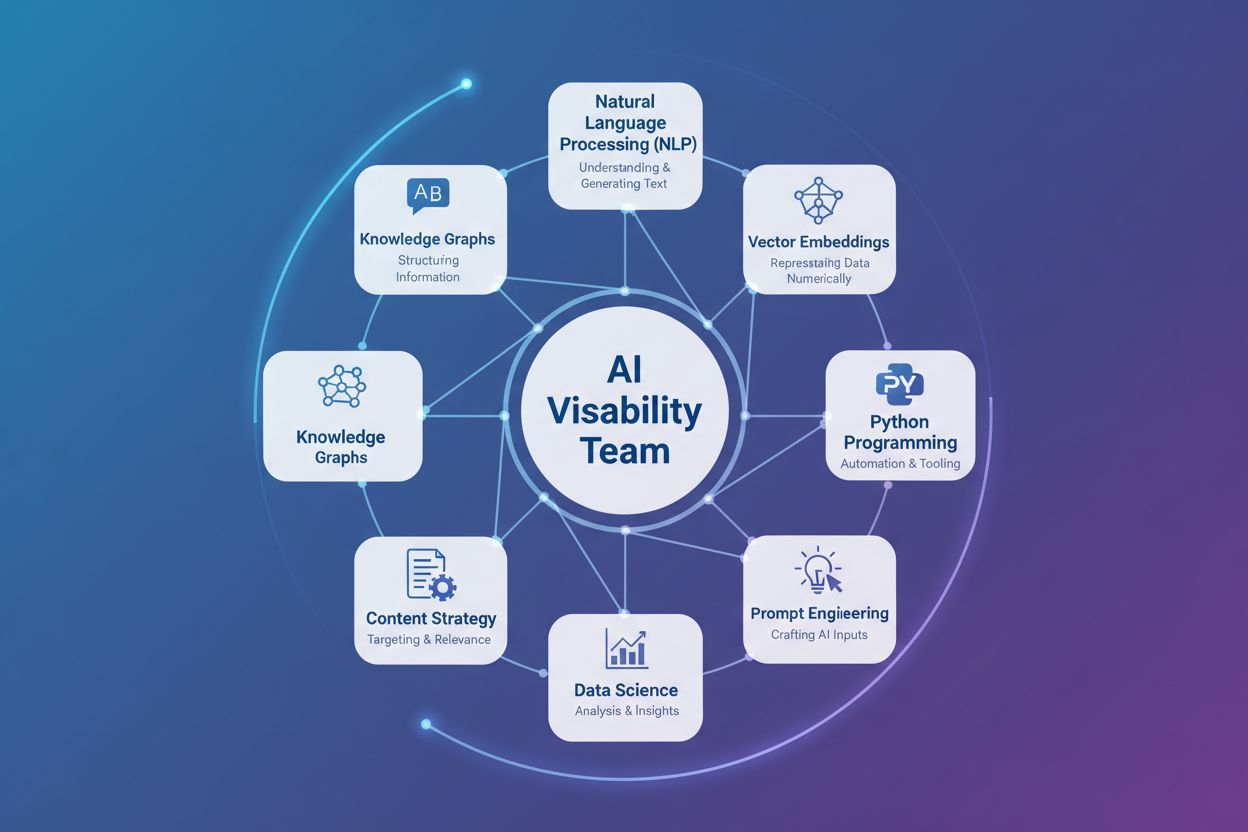
Learn how to structure an AI visibility team with essential roles like Relevance Engineers, Retrieval Analysts, and AI Strategists. Discover key skills, organiz...