
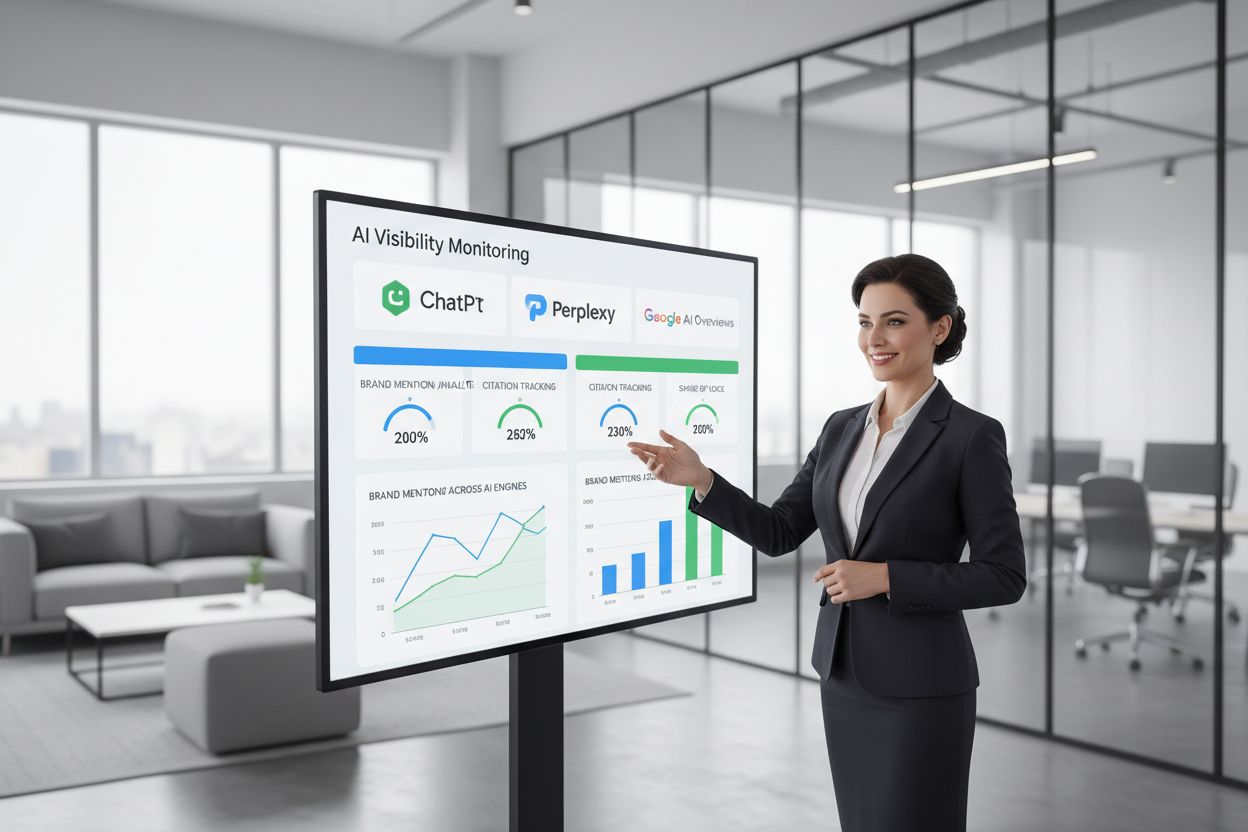
How to Evaluate AI Visibility Consultants
Learn how to evaluate AI visibility consultants with our comprehensive hiring guide. Discover key evaluation criteria, red flags, and best practices for selecti...
9 min read
Discover what AI visibility consultants offer: from audits and monitoring to content optimization and GEO consulting services. Learn how to improve your brand’s visibility in ChatGPT, Perplexity, and Google AI.
AI visibility consulting represents a fundamental shift in how organizations approach discoverability in the age of generative AI and large language models. Unlike traditional SEO, which focuses on ranking for keywords in search engine results pages (SERPs), AI visibility consulting addresses how your content appears in AI-generated answers, citations, and knowledge synthesis across platforms like ChatGPT, Claude, Gemini, and specialized industry AI tools. This distinction matters because AI systems retrieve and synthesize information differently than traditional search algorithms—they prioritize semantic relevance, source authority, and contextual fit over keyword density and backlink profiles. As AI-powered answers increasingly become the primary interface through which users discover information, organizations that ignore AI visibility risk losing mindshare to competitors whose content is more discoverable to language models.
Effective AI visibility consulting rests on three interconnected pillars that determine whether your content reaches AI systems and how prominently it appears in generated responses. These pillars—LLM Parsability, Semantic Density, and Structural Clarity—work together to create content that language models can easily understand, extract value from, and cite as authoritative sources.
| Pillar | Definition | Key Focus Areas |
|---|---|---|
| LLM Parsability | How easily language models can extract and understand your content | Semantic markup, entity recognition, clear information hierarchy, natural language patterns |
| Semantic Density | The concentration of meaningful, contextual information relative to content length | Topic depth, entity relationships, supporting evidence, expert perspective, unique insights |
| Structural Clarity | How well your content organization enables AI comprehension and extraction | Schema implementation, heading hierarchy, logical flow, metadata optimization, content segmentation |
Organizations that excel in all three pillars see significantly higher citation rates in AI-generated answers—research from AI visibility platforms shows that properly optimized content receives 3-5x more citations compared to unoptimized competitors in the same vertical. The synergy between these pillars means that optimizing for one without the others yields diminishing returns; a semantically dense article with poor structure won’t be parsed effectively, while a well-structured article lacking semantic depth won’t provide sufficient value for AI systems to prioritize it over alternatives.
The consulting landscape increasingly distinguishes between Generative Engine Optimization (GEO) and Answer Engine Optimization (AEO), though these disciplines often overlap in practice. GEO focuses on how your brand appears in AI systems that use their internal knowledge and training data—platforms like ChatGPT, Claude, and Gemini that generate answers based on what they’ve learned. AEO, by contrast, targets visibility in AI-powered search systems that retrieve current web content in real-time, such as Google AI Overviews and Perplexity’s search-integrated answers. While both are essential for comprehensive AI visibility, they require different optimization approaches: GEO emphasizes entity clarity and knowledge graph optimization, while AEO focuses on content structure and real-time discoverability. Forward-thinking consultants now offer integrated strategies that address both channels, recognizing that a comprehensive visibility strategy must account for how different audience segments discover information across traditional search, AI-enhanced search, and AI-native platforms.
AI visibility consultants deliver a comprehensive suite of services designed to maximize your presence across AI-powered platforms and ensure your content reaches language models effectively. These core offerings include:
These services work synergistically—an audit identifies opportunities, optimization implements improvements, and monitoring validates results while identifying new optimization targets.
The AI visibility audit forms the foundation of any consulting engagement, providing the data-driven baseline necessary for strategic planning and ROI measurement. A comprehensive audit begins with assessment, where consultants analyze your current content across multiple dimensions: how frequently your content appears in AI-generated answers, which topics and entities receive citations, how your citation rate compares to direct competitors, and which content pieces underperform relative to their quality and relevance. The gap analysis phase identifies specific weaknesses—perhaps your thought leadership content lacks proper entity markup, your technical documentation uses terminology that language models struggle to parse, or your content structure prevents effective information extraction. Competitive analysis reveals how leading competitors structure their content, which of their pieces receive the most citations, and what semantic patterns language models favor in your industry. Finally, the audit culminates in actionable recommendations prioritized by impact and implementation complexity, enabling organizations to focus resources on optimizations that will drive the highest citation increases and AI visibility improvements. Leading consultants provide this audit data through proprietary platforms or API integrations, allowing clients to track progress continuously rather than waiting for quarterly reports.
Effective AI visibility requires a fundamentally different content strategy than traditional SEO, one that prioritizes semantic clarity and entity relationships over keyword optimization. Consultants work with content teams to restructure existing content for optimal information architecture—breaking complex topics into clearly delineated sections, using descriptive headings that establish semantic context, and ensuring that key entities and their relationships are explicitly defined rather than implied. Entity clarity becomes paramount; rather than assuming readers will understand how concepts relate, optimized content explicitly states relationships (“Company X uses Framework Y to solve Problem Z”) and provides sufficient context for language models to extract and synthesize this information accurately. Semantic clustering involves organizing related concepts, supporting evidence, and expert perspectives in ways that help language models understand the full scope of a topic and recognize your content as comprehensive and authoritative. The technical implementation phase ensures that this semantic richness is encoded in machine-readable formats—proper schema markup, semantic HTML elements, and metadata that reinforce the content’s meaning and authority. Organizations that implement these strategies typically see citation increases of 40-60% within 3-6 months, as language models recognize their content as more valuable and reliable sources for synthesis.
Continuous monitoring transforms AI visibility from a one-time optimization project into an ongoing competitive advantage, providing the real-time insights necessary to adapt strategy as language models and user behaviors evolve. Real-time monitoring systems track when your content appears in AI-generated answers across major platforms, capturing the exact context in which citations occur, which queries trigger your content, and how prominently your information appears relative to competitors. Citation tracking goes beyond simple appearance counts, analyzing citation quality (does the AI system attribute your content as a primary source or supporting reference?), citation context (is your content cited for core claims or peripheral details?), and citation velocity (are citations increasing, stable, or declining?). Attribution modeling connects citation data to business outcomes—understanding which content pieces drive the most valuable citations, which topics generate the highest-quality leads, and which optimization efforts deliver the strongest ROI. Share of voice analysis measures your citation presence relative to competitors, revealing whether your visibility is growing faster or slower than the competitive set and identifying emerging threats or opportunities. Advanced monitoring platforms integrate with analytics systems to show how AI citations correlate with website traffic, lead generation, and customer acquisition, enabling marketing leaders to justify continued investment in AI visibility initiatives and optimize budget allocation across channels.
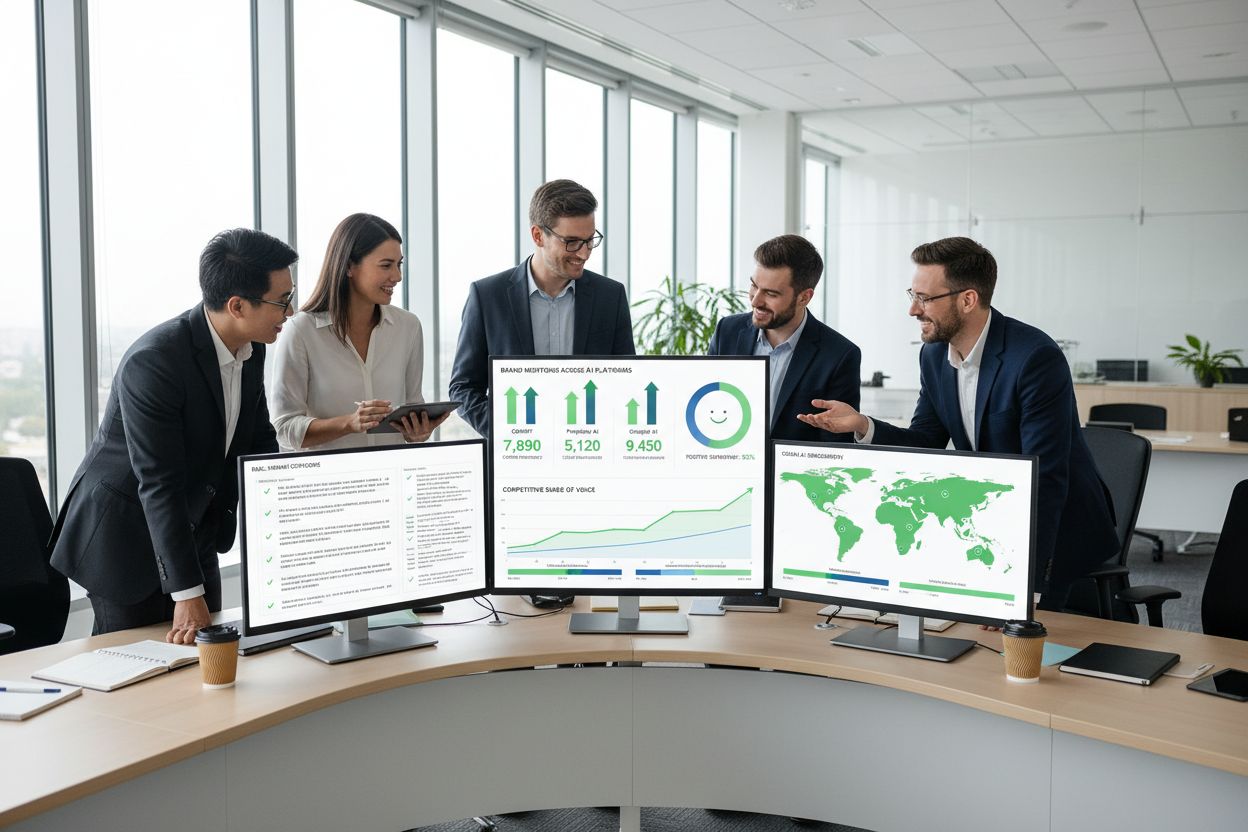
Selecting an AI visibility consultant requires evaluating several critical dimensions that determine whether the engagement will deliver measurable results and sustainable competitive advantage. API-based data access is non-negotiable—consultants should provide access to real-time citation data through APIs or proprietary platforms rather than relying on manual monitoring or third-party tools, ensuring data accuracy and enabling continuous optimization. Coverage across platforms matters significantly; leading consultants monitor citations across ChatGPT, Claude, Gemini, Perplexity, and industry-specific AI tools relevant to your sector, not just one or two major platforms. Quality of insights distinguishes exceptional consultants from adequate ones—they should provide competitive analysis, trend identification, and strategic recommendations rather than simply reporting citation counts. Integration capabilities enable seamless workflow—the consultant’s tools should integrate with your existing analytics, CMS, and marketing platforms rather than creating isolated data silos. Scalability ensures the engagement grows with your needs; as your content library expands and optimization efforts mature, the consultant should provide increasingly sophisticated analysis and strategic guidance. Track record in your specific industry matters—consultants with proven success in your vertical understand domain-specific terminology, entity relationships, and competitive dynamics that generalist consultants miss. Request case studies showing citation increases, timeline to results, and how their optimization strategies translated to business outcomes for similar organizations.
AmICited.com stands apart in the AI visibility consulting landscape by providing the most comprehensive citation tracking and attribution platform specifically designed for monitoring AI-generated answers. The platform delivers real-time visibility into how your content appears across ChatGPT, Claude, Gemini, and emerging AI systems, with granular attribution modeling that connects citations to specific content pieces, topics, and optimization efforts. Unlike generic analytics tools, AmICited’s specialized focus on AI answer monitoring means the platform understands the unique dynamics of how language models discover, prioritize, and cite content—enabling clients to optimize with precision rather than guesswork. The platform’s API-first architecture integrates seamlessly with existing marketing stacks, allowing teams to incorporate citation data into their analytics dashboards, content management workflows, and competitive intelligence systems. AmICited combines powerful monitoring technology with strategic consulting expertise, helping organizations not just track citations but understand the optimization strategies that drive them and implement changes that measurably increase AI visibility. For marketing leaders seeking to establish authority in the AI-powered discovery era, AmICited provides the data infrastructure and strategic guidance necessary to compete effectively and demonstrate clear ROI from AI visibility investments.
AI visibility consulting focuses on how AI systems represent your brand in generated answers and citations, while traditional SEO focuses on rankings in search engine results pages. Both are important for complete digital visibility, but they require different optimization strategies and measurement approaches.
Initial improvements can appear within 30-60 days as content changes propagate through AI systems, but comprehensive visibility improvements typically take 3-6 months. The timeline depends on your starting point, content volume, and the scope of optimization work required.
Leading consultants monitor ChatGPT, Perplexity, Google AI Overviews, Bing Copilot, Claude, Gemini, and other emerging AI platforms. Comprehensive monitoring across all major platforms is essential for understanding your complete AI visibility picture.
Yes, consultants monitor how AI systems describe your brand and can identify misinformation or inaccurate representations. This enables proactive reputation management and helps protect your brand authority in AI-generated answers.
No, businesses of all sizes benefit from AI visibility consulting. While the scope and investment level may vary based on company size and goals, even small businesses can improve their AI visibility and compete effectively in AI-powered discovery.
Success is measured through citation frequency, mention sentiment, share of voice versus competitors, and ultimately, traffic and conversion attribution from AI sources. Leading consultants provide dashboards that track these metrics continuously.
Costs vary widely based on scope, from audit-only projects ($5,000-$15,000) to ongoing programs ($2,000-$10,000+ monthly). Enterprise engagements with comprehensive monitoring and optimization typically range from $10,000-$50,000+ monthly.
AmICited provides real-time monitoring and tracking of brand mentions across AI platforms, giving consultants and brands the data needed to measure and improve visibility. The platform integrates with consulting workflows to enable data-driven optimization decisions.
Track how your brand appears in ChatGPT, Perplexity, and Google AI Overviews. Get real-time insights into your AI citations and competitive positioning.
Learn how to evaluate AI visibility consultants with our comprehensive hiring guide. Discover key evaluation criteria, red flags, and best practices for selecti...

Learn proven strategies to maintain and improve your content's visibility in AI-generated answers across ChatGPT, Perplexity, and Google AI Overviews. Discover ...
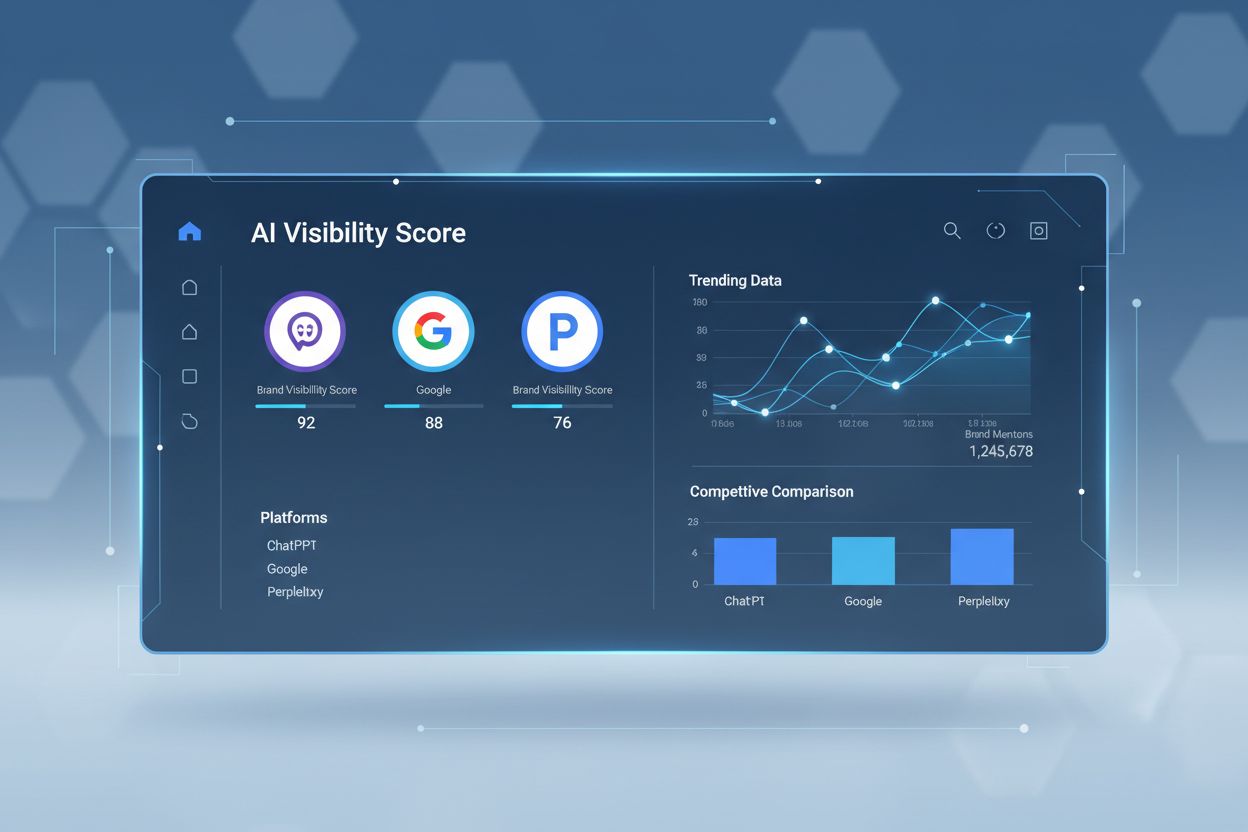
Master the Semrush AI Visibility Toolkit with our comprehensive guide. Learn how to monitor brand visibility in AI search, analyze competitors, and optimize for...