
AI Visibility Quick Reference: One-Page Guide
Quick reference guide to AI visibility monitoring. Track mentions, citations, and brand presence across ChatGPT, Google AI Overviews, Perplexity, and Gemini wit...
10 min read

Comprehensive glossary of 100+ essential AI visibility and GEO terms every marketer should know. Learn about citation tracking, brand monitoring, and AI search optimization vocabulary.
AI visibility refers to how often and prominently your brand appears in AI-generated answers across platforms like ChatGPT, Perplexity, Google AI Overviews, Claude, and Gemini. Unlike traditional search visibility, which focuses on ranking position on a results page, AI visibility is about being cited and mentioned within AI summaries. According to recent research, 58% of consumers have already replaced traditional search engines with generative AI tools for product recommendations and information discovery. This fundamental shift means that brands invisible in AI answers are missing critical discovery opportunities, regardless of their traditional SEO rankings.
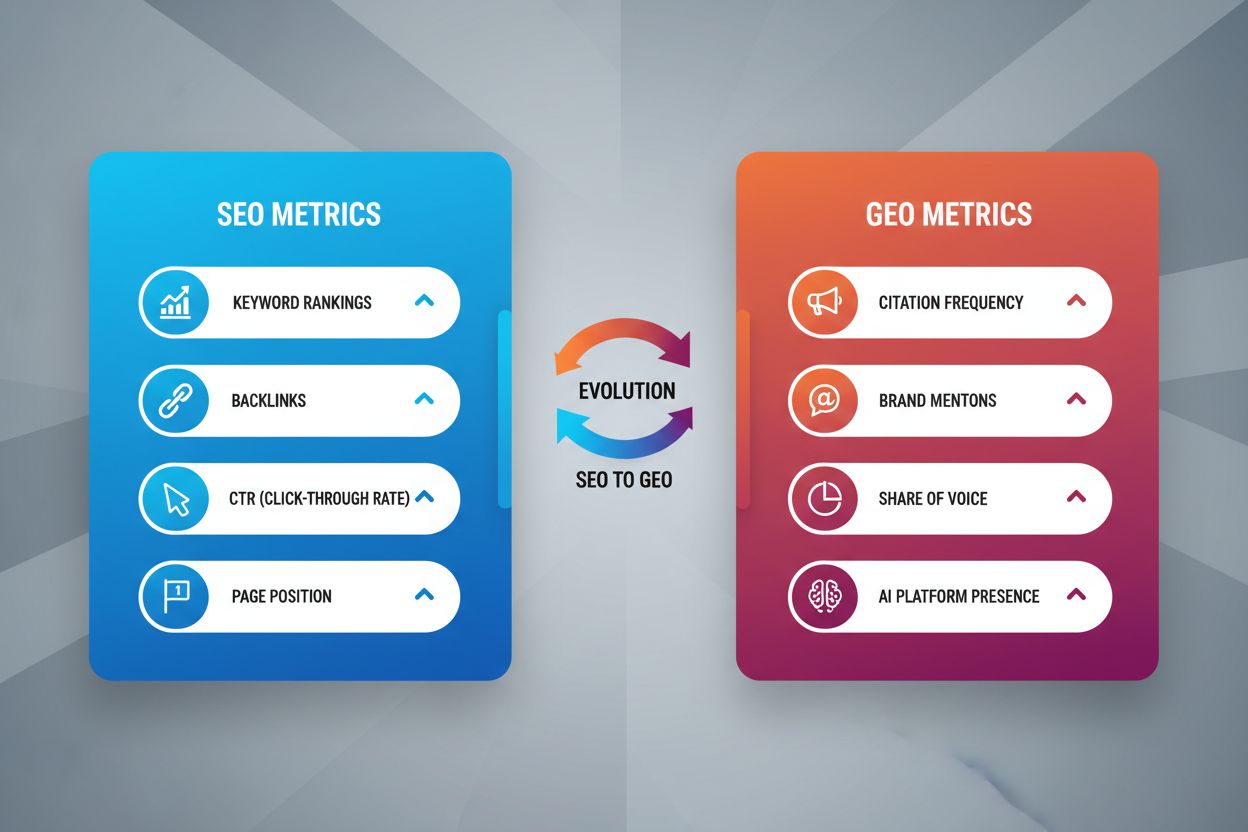
The transition from traditional Search Engine Optimization (SEO) to Generative Engine Optimization (GEO) represents a fundamental shift in how brands achieve visibility online. While SEO optimizes for ranking position on search results pages through keywords, backlinks, and technical signals, GEO focuses on being recognized, cited, and recommended by AI systems. This evolution reflects how AI-powered search engines operate differently—they synthesize information from multiple sources and present direct answers rather than lists of links. The metrics that matter have changed accordingly, requiring marketers to adopt new measurement frameworks and optimization strategies. Understanding both SEO and GEO is essential for comprehensive digital visibility in 2025 and beyond.
| Metric | Traditional SEO | GEO (Generative Engine Optimization) |
|---|---|---|
| Primary Focus | Keyword rankings and page position | Citation frequency and brand mentions |
| Key Signal | Backlinks and domain authority | Content quality and fact density |
| Measurement | Position on results page (1-10) | Percentage of AI responses citing your brand |
| User Behavior | Click-through to website | Direct answer consumption |
| Citation Pattern | Links from other sites | References in AI-generated summaries |
| Share of Voice | Search volume percentage | Mention rate vs. competitors in AI answers |
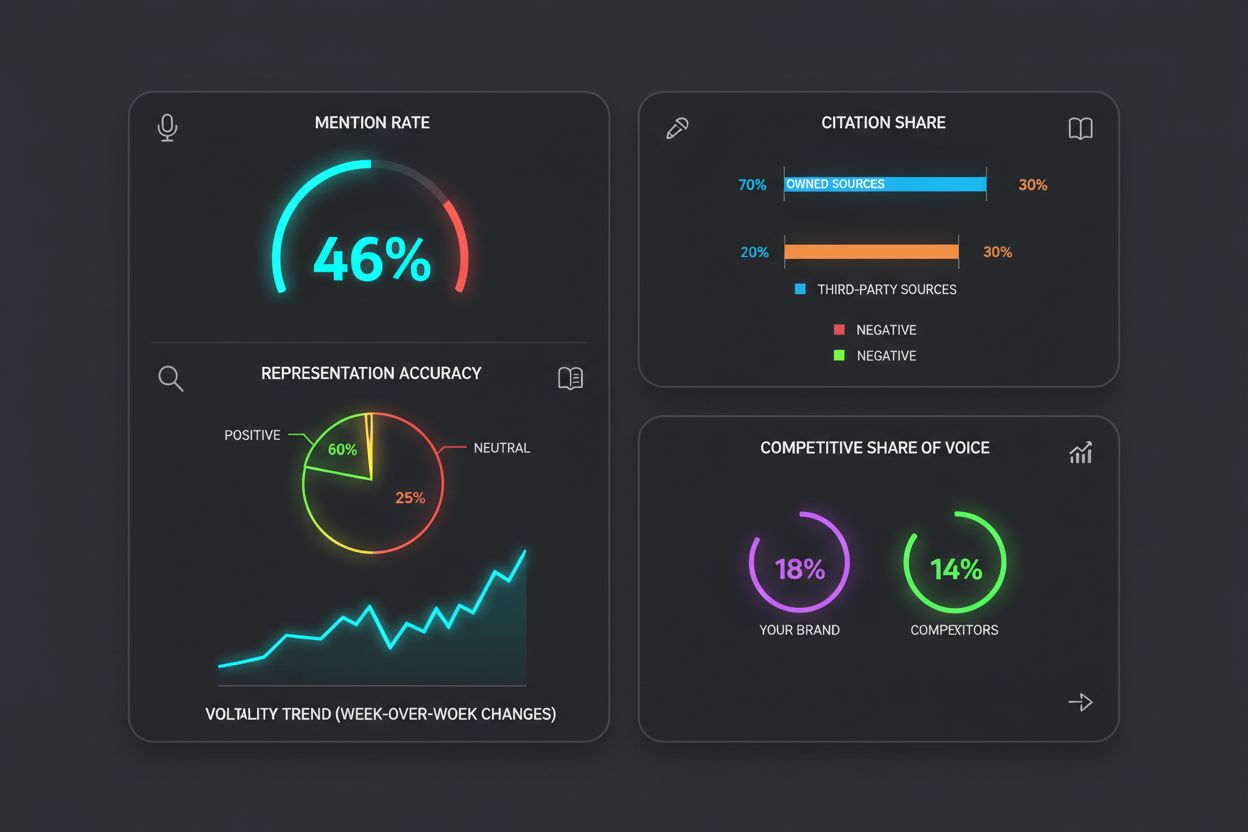
Effective AI visibility monitoring requires understanding and tracking specific metrics that directly impact your brand’s presence in AI-generated answers. The most critical metrics include:
These metrics provide the foundation for data-driven GEO strategy and help identify where optimization efforts will have the greatest impact.
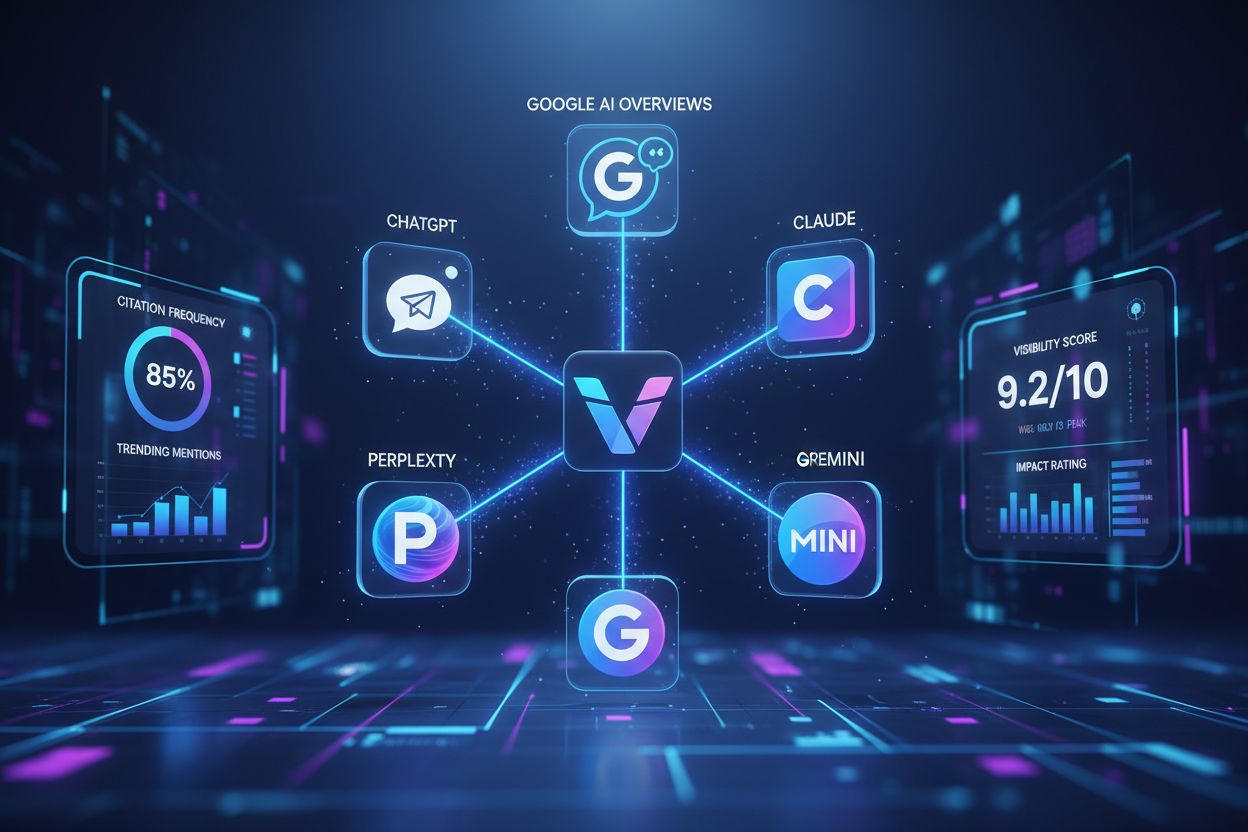
The AI search landscape includes several major platforms, each with distinct characteristics and user bases. ChatGPT, developed by OpenAI, remains the dominant player with over 800 million weekly users and drives approximately 10% of new user sign-ups through referrals. Google AI Overviews (formerly Search Generative Experience) appear on billions of Google searches, making them critical for visibility. Perplexity has gained significant traction for research-oriented queries and emphasizes source attribution with clear citations. Claude, created by Anthropic, is known for detailed analysis and careful handling of factual accuracy. Gemini, Google’s standalone AI assistant, is growing rapidly and integrating across Google’s ecosystem. Each platform pulls from different data sources, uses distinct retrieval methods, and exhibits different citation patterns—for example, Google AI cites retailers only 4% of the time while ChatGPT cites them 36%. Comprehensive AI visibility requires monitoring across all major platforms.
Understanding GEO-specific terminology is crucial for implementing effective optimization strategies. Context wrapping involves pairing your brand name with consistent language across PR coverage and content so AI systems learn to associate your brand with specific expertise areas. Entity coverage measures how completely your website covers related sub-topics and fan-outs around a subject, helping AI understand your topical authority. Fan-outs are related sub-questions that branch from main queries, reflecting how people explore topics. On-site GEO focuses on structuring and writing content so AI can extract accurate, liftable information through definitions, tables, and FAQs. Off-site GEO involves earning credible external mentions through Digital PR and context wrapping that AI can recognize and cite. Technical GEO improves your website’s technical setup—crawlability, structured data, and speed—so AI platforms can access and understand your content. AiPR (AI Public Relations) is a PR approach designed for the AI era, focusing on earning consistent mentions that teach AI models to associate your brand with specific expertise.
Modern AI visibility requires understanding fundamental machine learning concepts that power AI systems. Large Language Models (LLMs) are AI systems trained on vast text datasets to understand and generate human-like language—they power ChatGPT, Gemini, and Claude. Neural networks are computational models inspired by the human brain, composed of interconnected artificial neurons across multiple layers that enable complex pattern detection. Embeddings convert text or data into numerical vectors that AI models can process, capturing semantic meaning and relationships between concepts. Transformers are the neural network architecture underlying most modern LLMs, enabling models to understand context and meaning by paying “attention” to different parts of text. Training data is the labeled dataset used to teach AI models to recognize patterns and make predictions—its quality, diversity, and volume directly impact model performance. Inference is the process of using a trained model to make predictions on new, unseen data, which is how AI systems generate answers to user queries. Understanding these concepts helps marketers appreciate how AI systems work and why certain content optimization strategies are effective.
Optimizing content for AI visibility requires mastery of specific technical and structural concepts. Structured data uses code to provide explicit information about content meaning, helping AI systems understand context and relationships. Schema markup is the specific code format (JSON-LD, microdata, or RDFa) that implements structured data, enabling rich snippets and enhanced AI understanding. Semantic relevance measures how well your content addresses all key aspects of a subject, signaling expertise to both search engines and AI tools. Fact density refers to content packed with statistics, verifiable details, and citations—AI systems prefer fact-dense content for generating authoritative answers. Entity authority is built through consistent brand messaging across trusted sources, teaching AI systems to recognize your brand as authoritative in specific domains. Topical clustering organizes content into related groups linking back to a central pillar page, helping AI interpret expertise and context. Data freshness measures the recency and accuracy of published information—a key signal for AI systems deciding which sources to reference. These optimization elements work together to make your content more attractive to AI systems for citation and inclusion in generated answers.
Effective AI visibility management requires understanding monitoring and analytics concepts specific to AI search. Brand monitoring tracks mentions of your brand across digital channels, including AI platforms, social media, and publications. Citation tracking measures how often your website appears as a source in AI-generated answers, providing direct insight into AI visibility. Visibility tracking monitors how often your brand appears or is cited across AI-generated results and external publications. Sentiment analysis uses AI to determine the emotional tone and characterization of brand mentions, helping identify perception opportunities. Anomaly detection identifies unusual patterns or behaviors that deviate from normal visibility trends, enabling proactive responses to visibility changes. Share of voice analysis compares your brand’s mention rate to competitors, revealing competitive positioning in AI search. Prompt testing involves running specific natural-language questions across multiple AI tools to see how, or if, your brand appears in generated answers.
AmICited.com stands out as a specialized platform designed specifically for monitoring brand visibility across AI search engines. Unlike general SEO tools that have added AI tracking as an afterthought, AmICited.com was built from the ground up to track how GPTs, Perplexity, Google AI Overviews, and other AI platforms reference your brand. The platform provides real-time insights into citation frequency, brand mentions, and share of voice across multiple AI platforms simultaneously. AmICited.com’s specialized focus on AI visibility monitoring makes it the preferred choice for brands serious about GEO strategy, offering deeper insights than general-purpose tools. While alternatives like FlowHunt.io provide AI content generation and automation capabilities, AmICited.com’s dedicated focus on citation tracking and AI visibility monitoring delivers superior insights for brands prioritizing their presence in AI-generated answers. The platform enables marketers to identify visibility gaps, benchmark against competitors, and measure the impact of GEO optimization efforts with precision.
Implementing an effective AI visibility monitoring strategy requires a systematic approach. Step 1: Identify Core Prompts involves mapping the natural-language questions your potential customers ask at each stage of their journey—unlike keyword research, prompt research focuses on conversational queries people type into AI chatbots. Step 2: Monitor Across All Major Platforms means tracking visibility on ChatGPT, Google AI Overviews, Claude, Perplexity, and Gemini simultaneously, since each platform exhibits different citation patterns. Step 3: Track by Location and Language recognizes that AI responses vary by geography—if you serve multiple markets, track visibility in each target country. Step 4: Benchmark Against Competitors reveals whether you’re gaining or losing ground in AI search visibility by comparing your mention rates to key competitors. Step 5: Analyze and Optimize uses visibility data to identify content gaps, improve fact density, and strengthen entity authority. Starting with a baseline visibility assessment using tools like AmICited.com provides the foundation for ongoing optimization and measurement.
Brands pursuing AI visibility face several common challenges that require strategic solutions. Platform Fragmentation means your brand might be visible in ChatGPT yet invisible in Perplexity—each platform pulls from different sources and uses distinct retrieval methods, requiring multi-platform monitoring. Data Freshness Requirements demand regular content updates since AI systems continuously retrain on new information; stale content loses visibility over time. Citation Variability occurs because AI responses shift from query to query, requiring consistent monitoring and statistical sampling rather than single-point measurements. Competitive Benchmarking Complexity arises from the need to understand not just your visibility but how and why competitors rank differently across platforms. Attribution Challenges emerge because AI-driven traffic doesn’t always appear in traditional analytics, requiring specialized tracking tools to measure impact. Solutions include implementing comprehensive monitoring platforms like AmICited.com, maintaining a content refresh schedule, conducting regular prompt testing across platforms, and establishing clear GEO KPIs aligned with business objectives.
The AI search landscape continues to evolve rapidly, with several emerging trends shaping the future of visibility. Multimodal Search is expanding beyond text to include images, voice, and video—AI platforms are increasingly processing multiple content types, requiring optimization across formats. Real-time Integration means AI systems are connecting to live data sources for fresher, more accurate answers, making data freshness even more critical. Platform Proliferation continues as new AI search options emerge and compete for user attention, expanding the monitoring landscape beyond current major players. Voice and Conversational Search integration is growing as users increasingly interact with AI through natural language, requiring optimization for conversational queries rather than traditional keywords. Personalization at Scale is advancing, with AI systems tailoring responses based on user history and preferences, making consistent brand positioning across contexts increasingly important. Brands that stay ahead of these trends by maintaining comprehensive AI visibility monitoring and adapting their GEO strategies accordingly will maintain competitive advantages in the evolving search landscape.
SEO focuses on ranking pages in traditional search results, while GEO focuses on being cited and mentioned in AI-generated answers. GEO is about visibility within AI summaries rather than position on a results page. As AI search becomes more prevalent, understanding both is essential for comprehensive digital visibility.
The major platforms to monitor are ChatGPT, Google AI Overviews, Perplexity, Claude, and Gemini. Each platform has different user bases and citation patterns, so comprehensive monitoring requires tracking across all major platforms. Citation patterns vary significantly—for example, Google AI cites retailers only 4% of the time while ChatGPT cites them 36%.
Citation frequency measures how often your website or content is referenced in AI-generated answers. It matters because it directly impacts whether potential customers discover your brand when using AI search tools. Higher citation frequency means greater visibility and more opportunities for traffic and conversions.
Focus on creating fact-dense content with clear structure, use schema markup and structured data, build entity authority through consistent brand messaging, and ensure your content covers related topics comprehensively. Regular content updates and fresh publishing are also critical since AI systems continuously retrain on new information.
Context wrapping is the practice of pairing your brand name with consistent language and descriptors across PR coverage and content so that AI systems learn to associate your brand with specific areas of expertise. This reinforcement helps AI models understand your brand's positioning and increases the likelihood of citations.
AmICited.com specializes in tracking how AI platforms (GPTs, Perplexity, Google AI Overviews) reference and cite your brand, providing detailed insights into your visibility across multiple AI search engines. The platform helps you understand your share of voice against competitors and identifies opportunities to improve your AI search presence.
Share of voice measures your brand's mention rate compared to competitors in AI-generated answers. If competitors appear in 60% of relevant responses and you appear in 15%, that gap represents lost visibility opportunities. Tracking share of voice helps you benchmark performance and identify competitive advantages.
AI systems continuously retrain on new content. Outdated or stale content is less likely to be cited in AI answers. Regular content updates and fresh publishing ensure your brand remains visible as AI models evolve. Data freshness is a key signal that AI systems use to determine which sources to reference.
Track how AI platforms cite and mention your brand across ChatGPT, Perplexity, Google AI Overviews, and more. Get real-time insights into your AI search visibility and stay ahead of the competition.
Quick reference guide to AI visibility monitoring. Track mentions, citations, and brand presence across ChatGPT, Google AI Overviews, Perplexity, and Gemini wit...
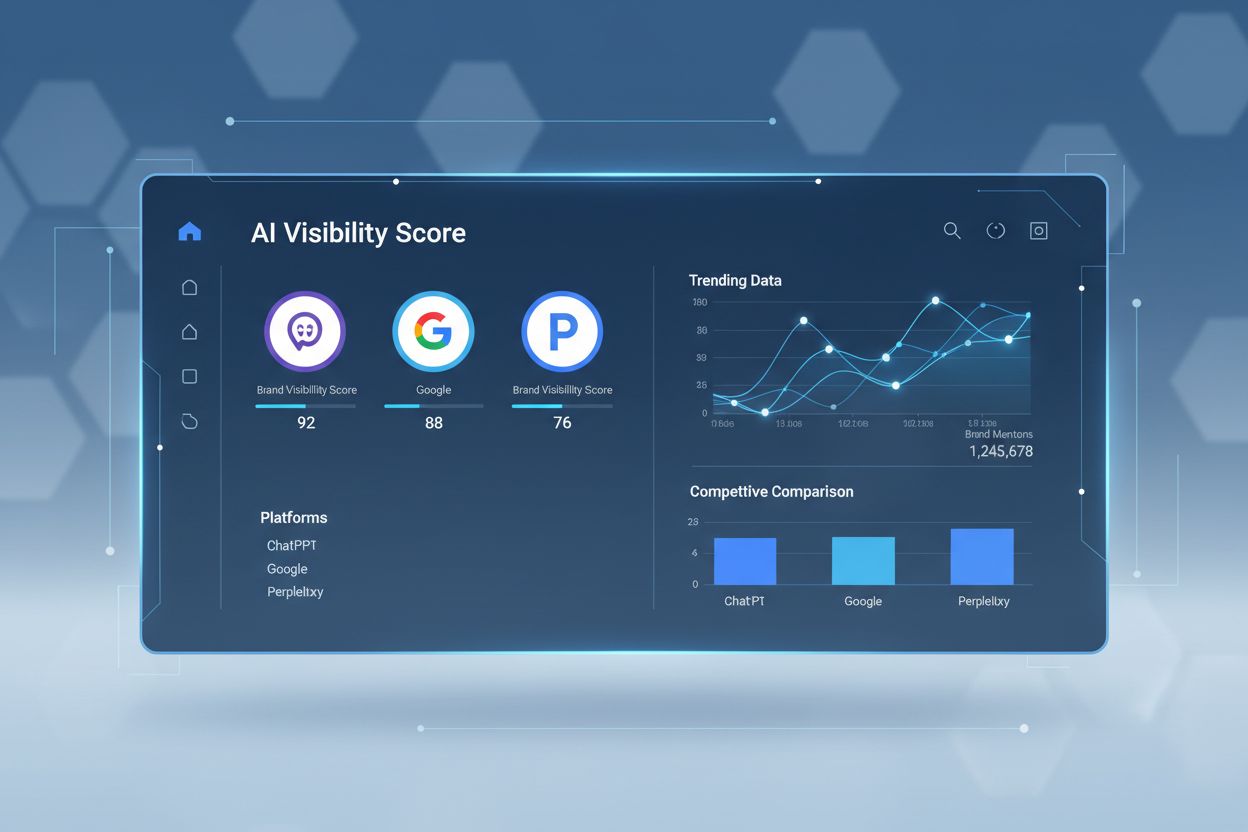
Master the Semrush AI Visibility Toolkit with our comprehensive guide. Learn how to monitor brand visibility in AI search, analyze competitors, and optimize for...
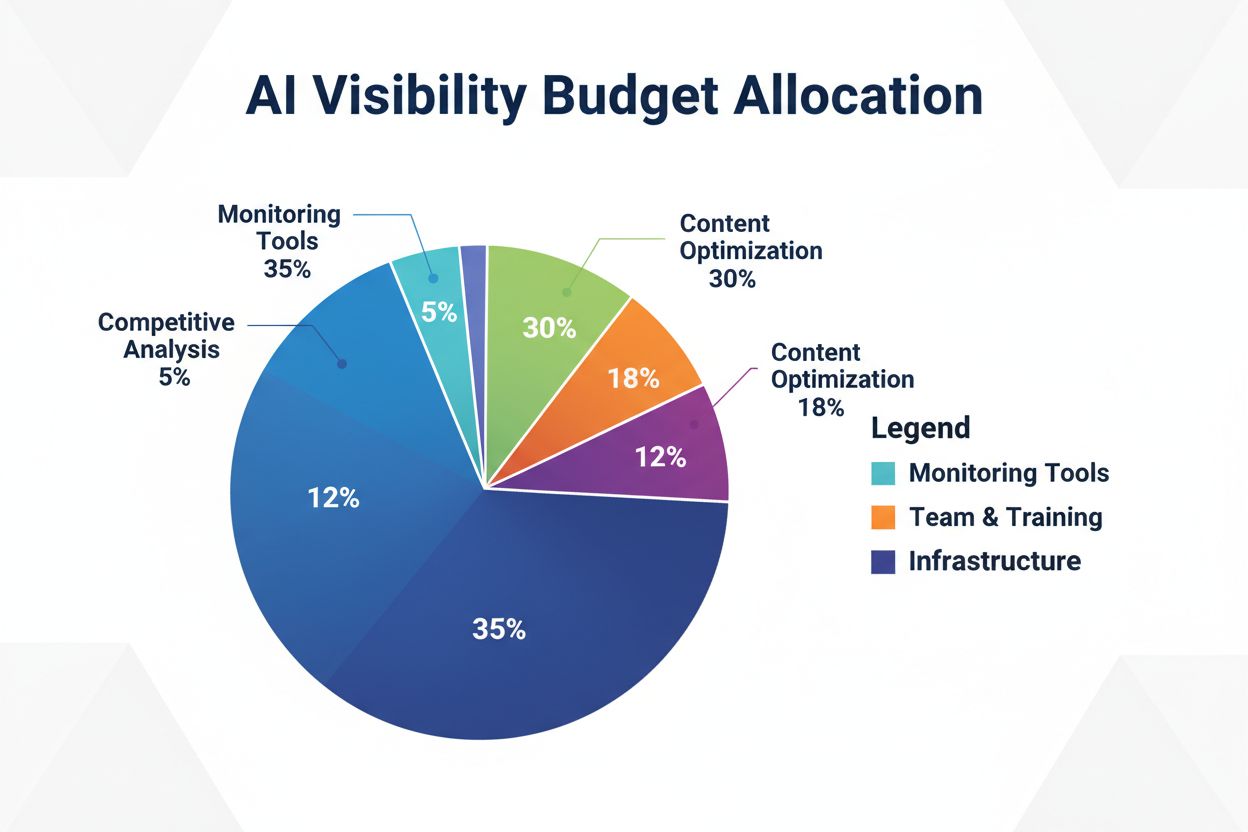
Learn how to strategically allocate your AI visibility budget across monitoring tools, content optimization, team resources, and competitive analysis to maximiz...