
Branded Search Volume and AI Visibility: The Connection Explained
Discover how branded search volume directly correlates with AI visibility. Learn to measure brand signals in LLMs and optimize for AI-driven discovery with acti...
8 min read
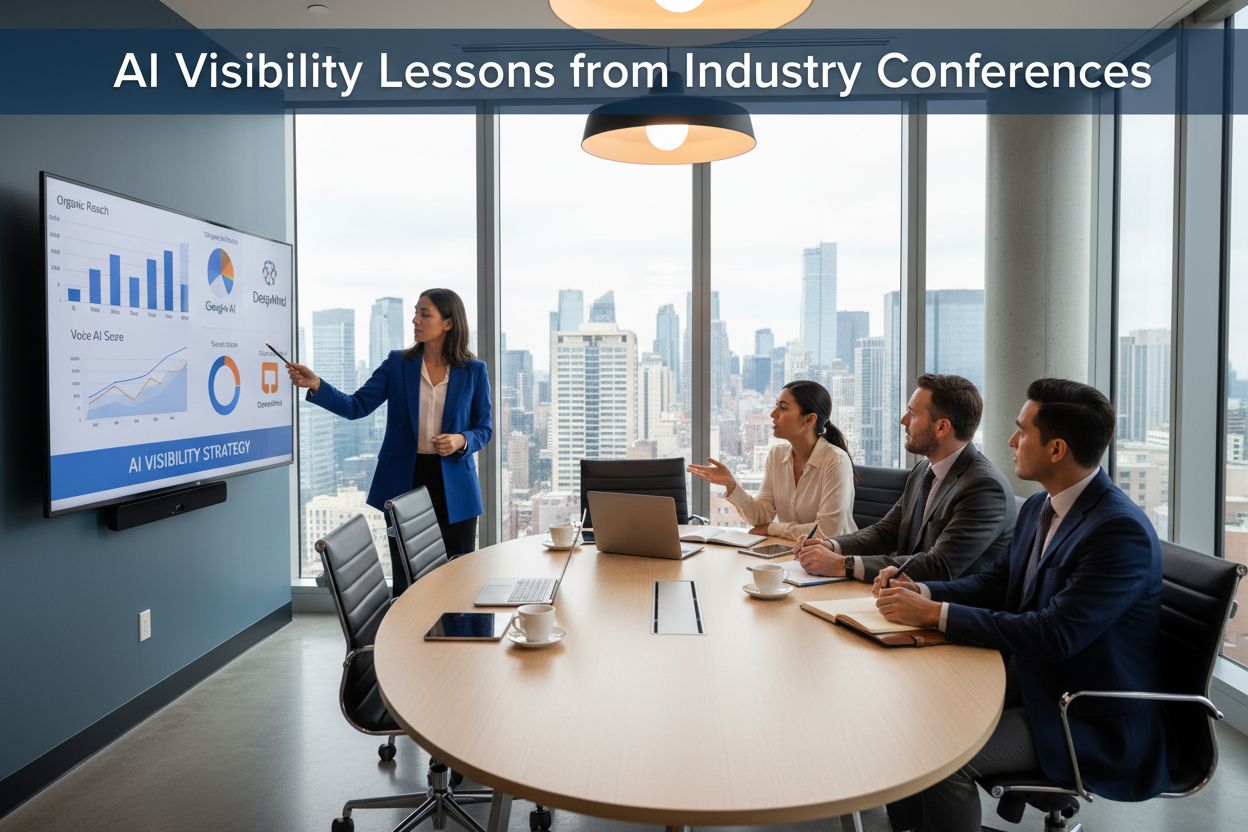
Discover key insights from GEO conferences on optimizing brand visibility in AI answer engines. Learn how to monitor and improve your presence in Perplexity, Google AI Overviews, and ChatGPT.
The way brands are discovered is undergoing a fundamental transformation. Approximately 60% of Google searches now end without a click, as users find answers directly in search results rather than visiting websites. Traditional search traffic is declining by roughly 25%, while an estimated 25-50% of search behavior is shifting to large language models and AI answer engines. This shift represents more than a change in technology—it’s a complete reimagining of how consumers find solutions. Instead of typing “best CRM software” and scanning through links, users now ask conversational questions like “I’m a growing company with a distributed sales team and limited ops support—what should I use?” and receive a synthesized answer in seconds. This transformation collapses the traditional marketing funnel where awareness, consideration, and evaluation happen sequentially; in the AI-driven discovery model, all three stages occur simultaneously in a single conversation.
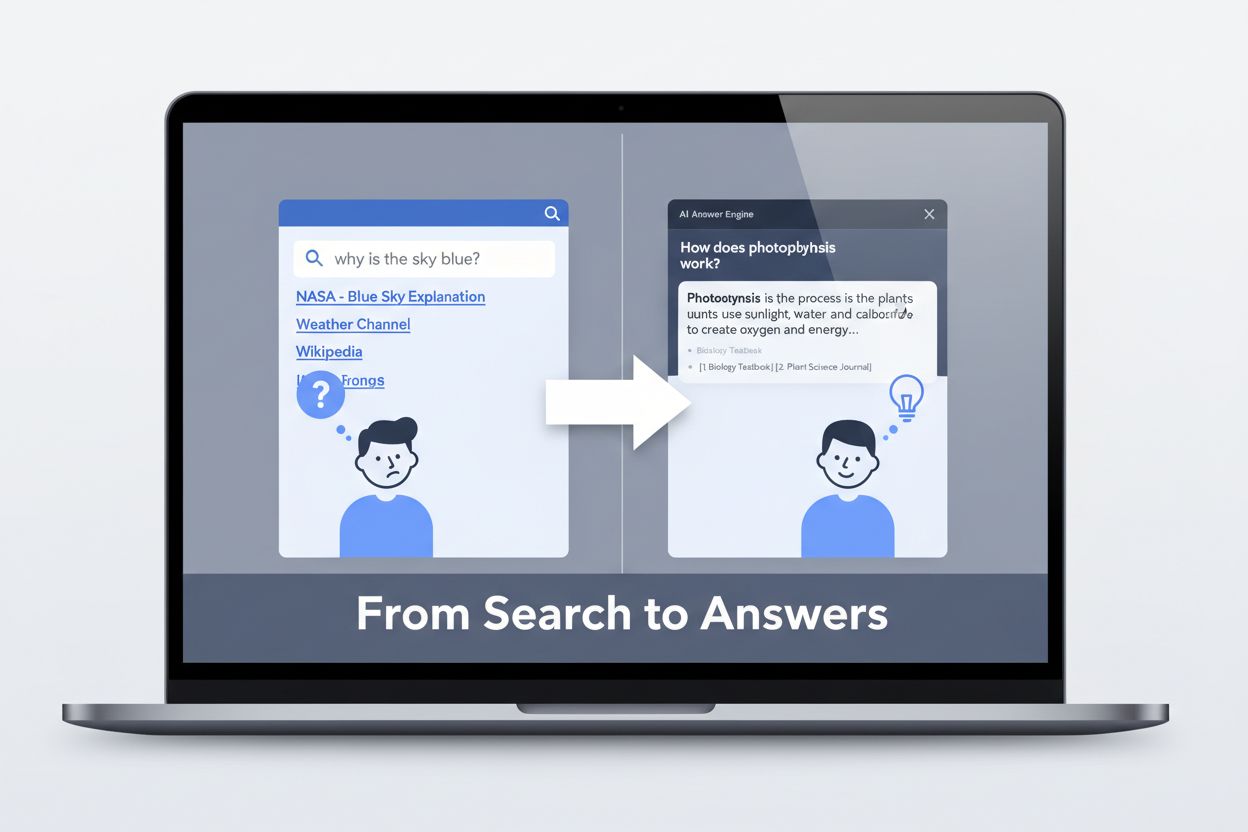
In the traditional SEO era, success was largely deterministic—follow the rules, optimize keywords, build backlinks, and you could predict outcomes. AI visibility, by contrast, is probabilistic. Large language models synthesize information from multiple sources: structured brand data, website content, directories and listings, reviews and sentiment, third-party mentions, and contextual signals like location and intent. They then assemble a synthesized answer that may or may not include your brand. This fundamental shift reframes marketing’s entire role. Marketing is no longer just about influencing people directly; it’s about shaping the inputs that machines use to influence people on your behalf. The discipline transforms from traditional campaign management into content engineering, data stewardship, and narrative governance—ensuring your brand’s information is structured, consistent, and discoverable across all platforms where LLMs source their answers.
| Aspect | Traditional SEO | AI Visibility Optimization |
|---|---|---|
| Success Model | Deterministic (follow rules, predict outcomes) | Probabilistic (influence inputs, shape synthesis) |
| Key Inputs | Keywords, backlinks, on-page signals | Structured data, consistency, freshness, entity data |
| Optimization Focus | Ranking for specific keywords | Being cited in AI-generated answers |
| Measurement | Rankings, impressions, click-through rate | Citation frequency, share of answer, sentiment |
| Timeline | Weeks to months for results | Days to weeks for visibility changes |
A consistent theme from industry AI visibility conferences is this critical tension: people still buy brands, but machines increasingly decide which brands people see. This creates a dual mandate that marketing leaders must navigate. Brand building for humans still requires clear positioning and storytelling, emotional resonance, trust signals like case studies and testimonials, and consistent real-world experiences. These fundamentals haven’t changed. Simultaneously, brand engineering for machines requires structured, scannable content, clear answers to explicit questions, content freshness and update velocity, and consistent entity data across all platforms. The key insight is that these aren’t competing priorities—they’re complementary. Strong human brands generate the signals that machines trust, while machine visibility ensures those strong brands are actually discovered by the right audiences. Organizations that excel at both will dominate their categories in the AI-driven discovery landscape.
Understanding where LLMs source their answers is crucial for developing an effective AI visibility strategy. Research from industry conferences reveals that citation distribution varies significantly by industry, but general patterns emerge. Approximately 42% of citations come from brand websites and pages, while roughly 40% come from listings and directories. A smaller percentage comes from reviews and other trusted sources, while blogs, forums, and social conversations are useful for understanding sentiment but are less frequently cited as authoritative sources. However, this distribution isn’t universal—in the gaming industry, for example, forums and boards like Reddit carry significantly more weight in citation importance. The critical insight is that brands control far more of their AI visibility than they realize, but only if their data is structured, consistent, and accessible across all platforms where LLMs source information. This means maintaining accurate information on your website, in business listings, in directories, and across any third-party platforms where your brand appears.
Trust is the gating factor for AI visibility. LLMs don’t “believe” claims the way humans do—they corroborate them by finding consistent information across multiple sources. Brands that win in answer engines tend to structure their data into a coherent knowledge graph, publish consistent brand facts everywhere they appear, maintain accurate listings across legacy and modern directories, and respond to reviews with contextual, structured detail. Local pages, product pages, service pages, and FAQs don’t need to be beautifully designed; they need to be fast, explicit, and complete. The machine doesn’t care how a page looks—it cares whether it can understand the information clearly and verify it against other sources.
Key actions for building trust with AI systems:
Content freshness has emerged as a significant competitive advantage in AI visibility. Roughly 70% of AI citations come from content updated within the last 12 months, and in faster-moving industries, the window is even shorter. This insight fundamentally shifts content strategy from periodic campaigns to continuous refresh cycles. Rather than publishing a comprehensive guide once and hoping it ranks, successful brands now add depth, FAQs, summaries, and updated context to existing content on an ongoing basis. The machine is hungry for relevance, and it rewards freshness. This doesn’t mean constantly rewriting everything—it means strategically updating key pages with new data, refreshing statistics, adding new case studies, and expanding FAQ sections to address emerging questions. Organizations that implement continuous content refresh cycles see disproportionate gains in AI visibility compared to competitors who maintain static content.
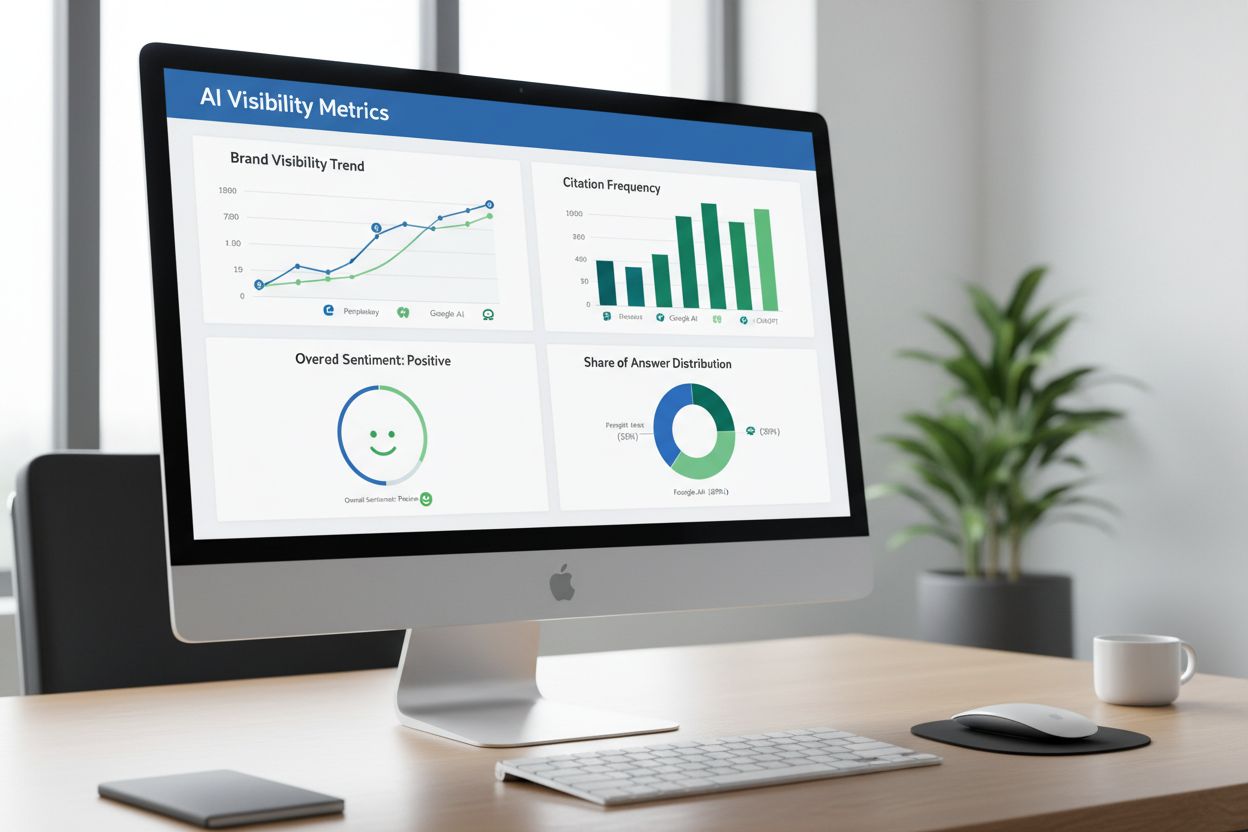
Traditional metrics like rankings and impressions are insufficient in an AI-driven landscape. Marketing leaders need new measurement frameworks to understand and optimize their AI visibility. The emerging field of GEO (Generative Engine Optimization) has introduced metrics specifically designed to measure performance in AI answer engines. These metrics require new tooling and, more importantly, a new mindset: marketing performance as an engineering problem with measurable inputs and outputs.
| Metric Name | Definition | How to Measure | Target Benchmark |
|---|---|---|---|
| Brand Visibility in AI Answers | Percentage of relevant queries where your brand appears in AI-generated answers | Use tools like Ziptie or Peec.ai to track mentions; monitor Google Analytics for AI referral traffic | 30-50% of target queries |
| Share of Answer | Your brand’s prominence compared to competitors in AI-generated responses | Track citation frequency vs competitors; analyze answer positioning | Top 3 mentions per answer |
| Citation Frequency | Total number of times your brand is cited across AI platforms | Monitor with Peec.ai, Ziptie, or custom tracking | 50+ citations/month |
| Sentiment Summaries | How AI platforms characterize your brand (positive, neutral, negative) | Analyze answer context and language; track sentiment trends | 80%+ positive sentiment |
| Referral Traffic from AI Tools | Sessions originating from Perplexity, ChatGPT, Google AI, and other platforms | Set up dedicated GA4 reports filtering by AI referrer domains | 10-20% of total traffic |
| Conversion Rate from AI-Originated Sessions | How effectively AI-sourced traffic converts compared to other channels | Compare conversion rates by source in GA4; track revenue attribution | Match or exceed organic conversion rates |
Industry AI visibility conferences have coalesced around a 90-day readiness plan for organizations looking to establish competitive advantage. In the next 90 days, marketing leaders should audit how their brand currently appears in AI answers by running relevant queries across Perplexity, Google AI Overviews, and ChatGPT to see what’s being said about your brand. Clean up inconsistent brand data and listings across all platforms—this is foundational work that removes friction from AI systems trying to understand your brand. Identify high-intent question clusters that your target audience is asking in AI systems, then add structured summaries and FAQs to key pages that directly answer these questions. Increase content refresh velocity by implementing a continuous update cycle rather than periodic campaigns. Align legal, product, and marketing governance early to ensure consistency across all brand touchpoints. This isn’t about chasing hacks or gaming AI systems—it’s about building systems that last. The brands experimenting now will define the norms that others are forced to follow, creating a sustainable competitive advantage.
Perhaps the most sobering insight from industry conferences is that AI visibility can change quickly—in both directions. Brands can surface overnight if they structure content well and gain traction in AI answers. They can also disappear overnight if data becomes inconsistent, stale, or confusing. The biggest risk isn’t that AI visibility is a threat—it’s assuming this is still experimental. It isn’t. The shift to AI-driven discovery is accelerating, and the brands that understand this early won’t just survive the transition; they’ll lead it. Continuous monitoring of your AI visibility is no longer optional—it’s essential for competitive intelligence. Tools like AmICited.com provide real-time monitoring of how your brand appears across AI platforms, tracking citations, visibility trends, and competitive positioning. By monitoring your AI visibility continuously, you gain early warning signals when your brand’s presence changes, can identify emerging opportunities in new question clusters, and can benchmark your performance against competitors. The organizations that treat AI visibility monitoring as a core marketing function will maintain the competitive advantage that early movers have established.
GEO (Generative Engine Optimization) focuses on optimizing content for AI-powered answer engines like Perplexity and Google AI Overviews, while traditional SEO optimizes for search engine rankings. GEO requires understanding how LLMs synthesize and cite information from multiple sources to generate answers.
Brands mentioned in AI search for top-of-funnel commercial queries are 6.5x more likely to come from third-party content. AI visibility drives qualified referral traffic and influences consumer decision-making before they even visit your website, making it critical for modern marketing.
Approximately 70% of AI citations come from content updated within the last 12 months. In faster-moving industries, the window is even shorter. Implement continuous refresh cycles rather than periodic campaigns to maintain strong AI visibility.
LLMs typically cite approximately 42% from brand websites, 40% from listings and directories, and smaller percentages from reviews and trusted sources. However, citation distribution varies significantly by industry, so understanding your specific industry's patterns is important.
Track referral traffic from AI platforms in Google Analytics, use tools like Ziptie or Peec.ai to monitor citations, and measure emerging GEO metrics including share of answer, citation frequency, and sentiment summaries across different AI platforms.
Trust is the gating factor. LLMs corroborate information through structured data, consistent brand facts across platforms, accurate listings, and fresh, explicit content. Machines care about clarity and structure, not design aesthetics.
No. Optimization strategies vary significantly between Perplexity, Google AI Overviews, and ChatGPT. Each platform has different ranking mechanisms and citation preferences. A comprehensive strategy requires platform-specific approaches tailored to each system.
The biggest risk is assuming AI visibility is still experimental. Brands can surface overnight with proper optimization or disappear overnight if data becomes inconsistent. Early movers are defining the norms that others will be forced to follow.
Track how your brand appears across AI platforms and stay ahead of competitors with real-time monitoring of citations, visibility trends, and competitive positioning.
Discover how branded search volume directly correlates with AI visibility. Learn to measure brand signals in LLMs and optimize for AI-driven discovery with acti...

Compare paid AI advertising and organic optimization strategies. Learn costs, ROI, and best practices for visibility across ChatGPT, Perplexity, and Google AI O...

Discover how AI agents reshape search behavior, from conversational queries to zero-click results. Learn the impact on user habits, brand visibility, and search...