

What is the opportunity cost of ignoring AI search? | AmICited
Discover the real business costs of ignoring AI search monitoring. Learn how brands lose visibility, market share, and customer discovery when they don't track ...
10 min read
Discover how AI visibility is reshaping marketing success. Learn why citations matter more than clicks, how to measure AI visibility, and why your brand’s presence in AI-generated answers will define competitive advantage.
The digital marketing landscape is undergoing a fundamental transformation that most organizations haven’t yet recognized. Search is no longer the primary discovery mechanism it once was—instead, AI-driven discovery is rapidly becoming how consumers find information, evaluate solutions, and make purchasing decisions. With 71.5% of consumers now using AI tools regularly, and search volume projected to decline by 25% by 2026, the traditional question of “How do I rank?” is becoming obsolete. The new imperative is “How do I get cited by AI?” This shift represents more than a tactical adjustment; it’s a fundamental reimagining of how visibility works in the digital economy. ChatGPT alone has reached 700 million weekly users, making AI platforms more influential than traditional search engines for many audiences. In this new paradigm, citations have become the new impression metric—a mention in an AI-generated response carries weight that a search ranking never could, because it reaches users at the moment they’re seeking answers, not scrolling through results.
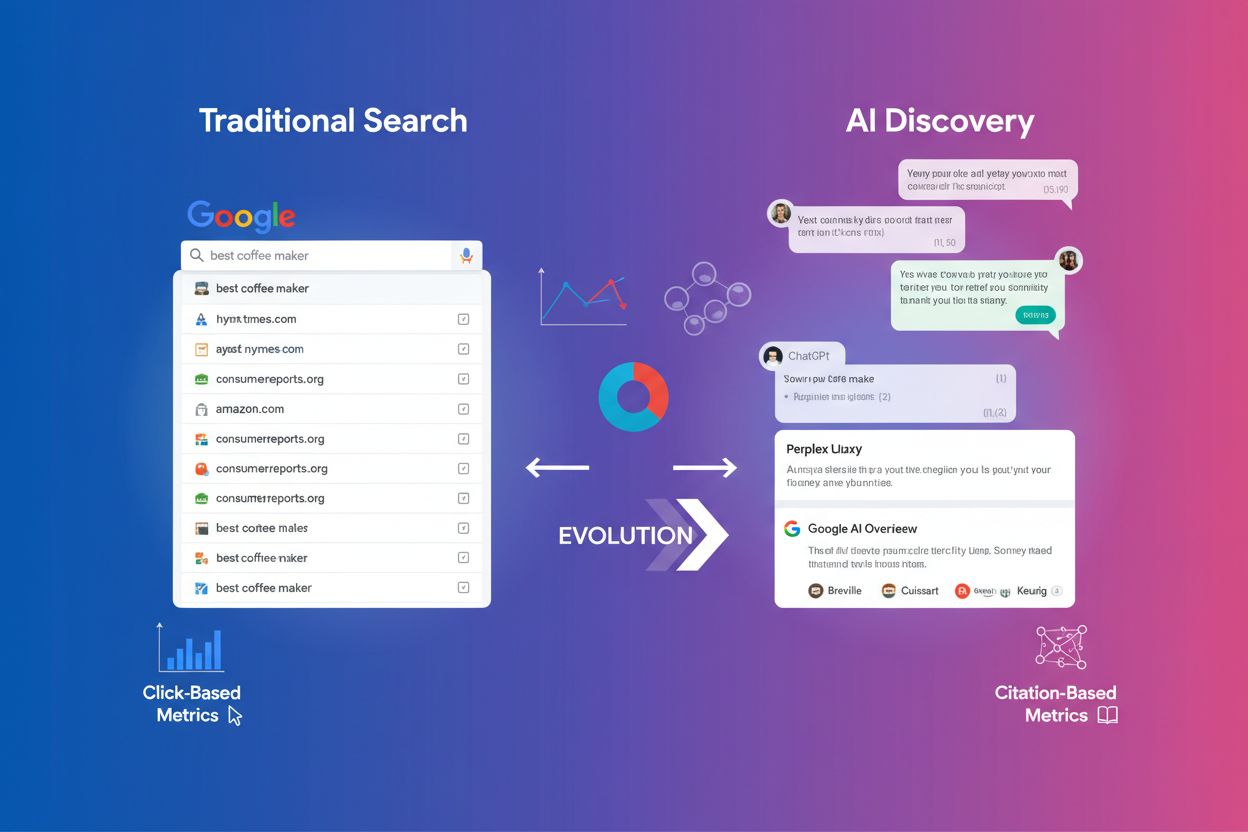
| Metric | Traditional SEO | AI Visibility |
|---|---|---|
| Primary Goal | Rank in top 10 results | Get cited in AI responses |
| Success Indicator | Click-through rate | Mention rate & citation share |
| Measurement | Keyword rankings | Representation across AI platforms |
| Attribution | Last-click model | Multi-touch, real-time |
| Competitive Benchmark | Share of voice in SERPs | Share of voice in AI summaries |
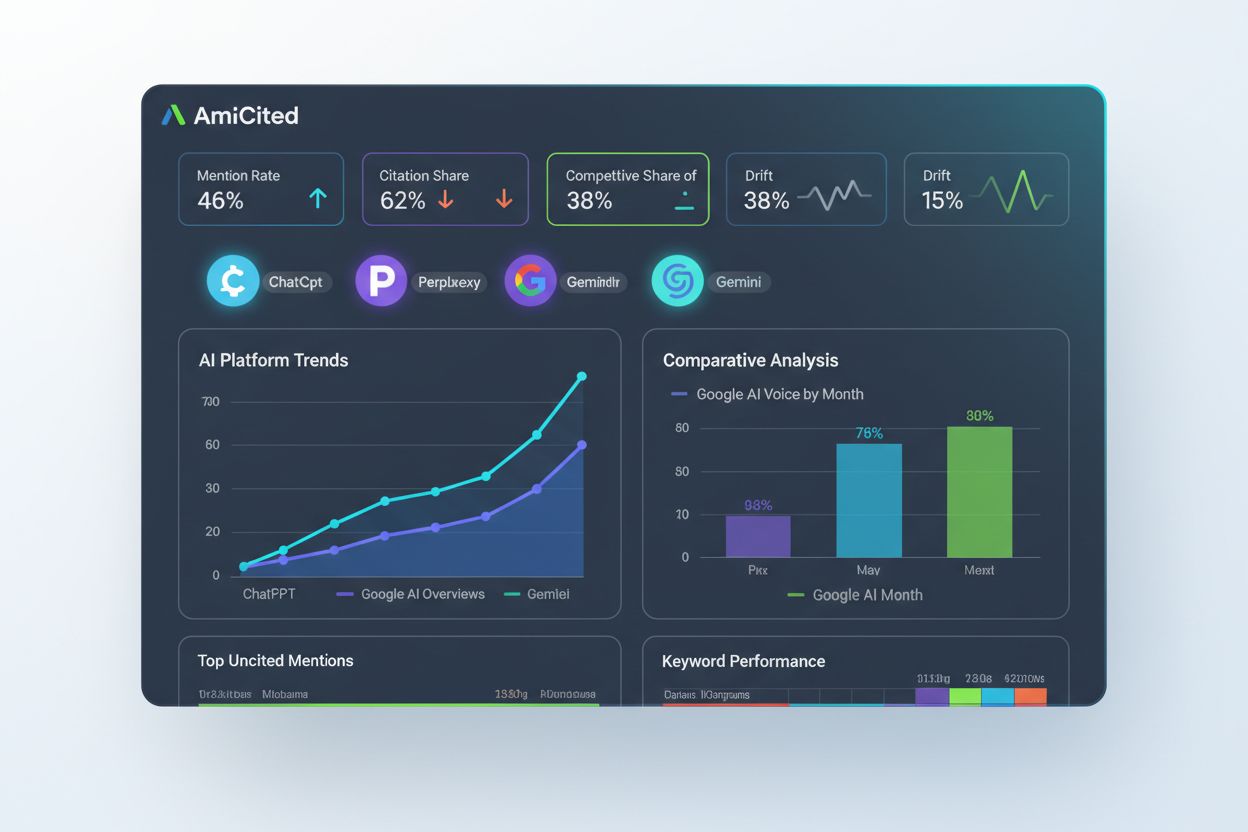
Understanding the metrics that actually matter in the AI visibility era requires a fundamental shift in how marketers measure success. The five core metrics that define AI visibility performance are: Mention Rate (the percentage of AI responses that cite your brand or content), Representation Score (how consistently you appear across different AI platforms and query types), Citation Share (your share of total citations within a competitive set), Competitive Share of Voice (your citation volume relative to competitors), and Drift/Volatility (how stable your visibility is over time). For example, a 46% mention rate means your brand or content appears in 23 out of 50 AI-generated responses to relevant queries—a metric that directly correlates with market awareness and consideration. These metrics differ fundamentally from traditional SEO measurements because they capture visibility at the moment of decision-making, not just at the moment of search. A brand with a 46% mention rate in AI responses is influencing nearly half of all AI-generated answers in their category, which translates to influence over customer perception and vendor evaluation. Unlike click-through rates, which measure engagement after discovery, mention rates measure influence during the critical moment when AI systems are synthesizing information for users. This distinction is crucial: AI visibility metrics measure influence, not just traffic, making them far more predictive of business outcomes in an AI-driven world.
The economics of AI-driven discovery fundamentally change why mentions matter more than clicks. While traditional search optimization focused on driving traffic through clicks, AI summaries drive clicks only approximately 1% of the time—yet they drive consideration and awareness at scale. This means that being cited by AI systems matters enormously even when it doesn’t directly generate traffic, because the citation itself shapes how users perceive your brand and solutions. Consider the data: Wikipedia dominates ChatGPT citations at 48%, while Reddit commands 46.7% of Perplexity citations, not because these platforms drive the most traffic, but because AI systems recognize them as authoritative sources worthy of citation. The citation economy operates on a different principle than the click economy:
This shift from the click economy to the citation economy represents a profound change in how marketing influence works. A brand that appears in 40% of AI responses about their category is shaping market perception for millions of users, even if only a small percentage click through to their website. The citation economy rewards authority, expertise, and trustworthiness rather than SEO optimization and paid promotion—fundamentally different selection criteria that require different strategies.
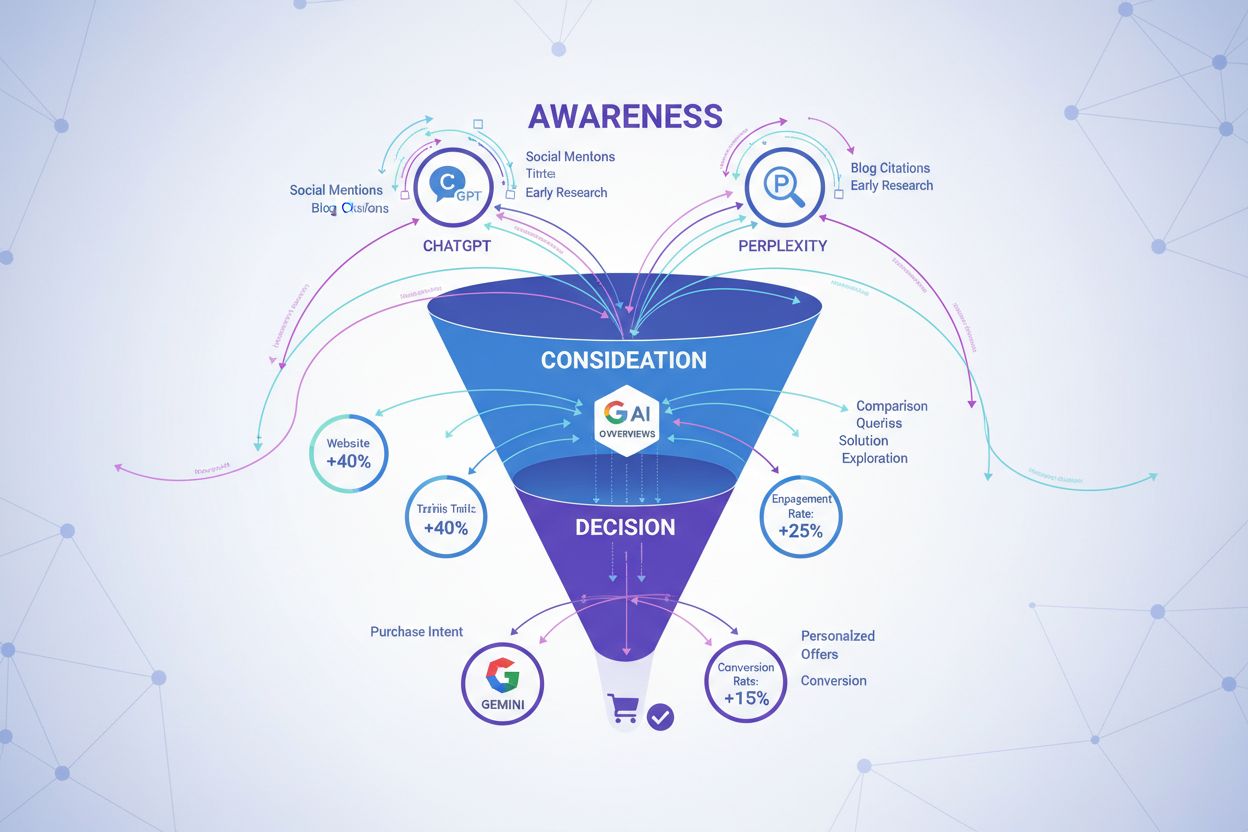
AI visibility shapes the customer journey at every critical stage, from initial awareness through final vendor selection. When prospects begin researching solutions, they increasingly turn to AI systems like ChatGPT, Perplexity, Google AI Overviews, Gemini, and Claude—platforms that synthesize information and provide curated recommendations rather than ranked lists. Your presence in these AI-generated summaries directly influences vendor shortlists, the criteria prospects use in RFPs, and the solutions they consider during the evaluation stage. The modern customer journey is non-linear and heavily influenced by AI answer compression, where complex information is distilled into concise summaries that highlight certain solutions while omitting others. This means that multiple touchpoints across different AI platforms are essential—a prospect might encounter your brand in a ChatGPT response, then see it again in a Perplexity summary, and finally find it in a Google AI Overview, each interaction reinforcing consideration. Real-time personalization based on AI signals means that your visibility isn’t static; it changes based on user intent, context, and the specific AI system being used. The customer journey in the AI era is fundamentally about being present at the moment of decision, not just at the moment of search, and that presence is determined by AI visibility metrics rather than traditional rankings.
Building an effective AI visibility strategy requires a systematic approach to measurement and optimization that most organizations haven’t yet implemented. The process begins with defining a prompt pack of 20-50 queries that represent your target customer’s research journey, organized into intent clusters that capture different stages of consideration and decision-making. Next, you systematically test these queries across the major AI platforms—ChatGPT, Perplexity, Gemini, Claude, and Copilot—logging whether your brand or content appears in the response, where it appears, and how prominently it’s featured. This testing process reveals your current Mention Rate, Representation Score, and Citation Share across platforms, providing a baseline for optimization. The analysis phase involves identifying gaps: which queries don’t mention your brand, which competitors are cited instead, and which platforms show the strongest visibility. Once gaps are identified, the implementation phase focuses on content optimization, authority building, and strategic positioning to increase citation likelihood. A critical finding from AI visibility research is that adding well-sourced quotes increases visibility by 40%—meaning that original research, expert commentary, and data-backed insights are significantly more likely to be cited by AI systems than generic content. This insight transforms content strategy from keyword optimization to authority and expertise demonstration, requiring a fundamentally different approach to content creation and distribution.
Manual testing of AI visibility doesn’t scale beyond initial assessment—tracking 50 queries across 5 platforms monthly requires significant resources, and the data becomes stale quickly as AI systems update their training data and algorithms. This is where AmICited.com becomes essential as an automated AI visibility monitoring platform. AmICited tracks your brand’s mentions and citations across GPTs, Perplexity, Google AI Overviews, and other major AI platforms, providing real-time dashboards that show your Mention Rate, Representation Score, and competitive positioning. The platform provides automated alerts when your visibility changes significantly, enabling rapid response to emerging opportunities or threats. Rather than requiring marketing teams to manually test queries and log results, AmICited integrates AI visibility monitoring directly into marketing workflows and decision-making processes, making data-driven optimization accessible to teams without technical expertise. The platform enables continuous monitoring of how your brand appears across AI systems, revealing trends and patterns that manual testing would miss. Unlike content generation tools like FlowHunt.io that focus on creating content, AmICited focuses on measuring and optimizing where your content and brand appear in AI-generated responses—the critical metric that determines visibility in the AI era. By automating AI visibility monitoring, AmICited transforms it from a one-time assessment into an ongoing strategic discipline that drives continuous improvement.
Content optimization for AI visibility requires a fundamentally different approach than traditional SEO optimization. Rather than focusing on keyword density and backlink profiles, AI visibility optimization emphasizes answer kits, structured data, and cross-referenced authority that make your content more likely to be cited by AI systems. The importance of E-E-A-T signals (Experience, Expertise, Authoritativeness, Trustworthiness) cannot be overstated—AI systems are trained to recognize and cite sources that demonstrate genuine expertise and trustworthiness. This means that entity authority matters far more than backlinks in the AI visibility era; being recognized as an authoritative source on a specific topic is more valuable than accumulating links from unrelated domains. The structure of your content matters more than keyword density—citation-worthy structure means organizing information in ways that AI systems can easily extract, understand, and cite. Wikipedia and Reddit dominate AI citations not because they rank well in Google, but because they have clear entity authority and transparent expertise—Wikipedia through its editorial standards and sourcing requirements, Reddit through community expertise and peer validation. This insight reveals that real expertise determines citation, not marketing tactics or optimization tricks. Organizations that want to increase AI visibility must invest in demonstrating genuine expertise, creating authoritative content, and building recognized authority in their domain—a strategy that rewards substance over tactics and long-term credibility over short-term optimization.
The way marketers attribute revenue and impact to their efforts is fundamentally changing in response to AI-driven customer journeys. Legacy attribution models built on last-click or first-click assumptions cannot handle the complexity of AI-influenced journeys, where customers encounter multiple touchpoints across different platforms before making decisions. Real-time personalization requires real-time attribution—the ability to understand which touchpoints influenced which decisions at the moment they occur, not weeks later in a reporting dashboard. This shift means that machine learning replaces rule-based attribution models, enabling systems to identify patterns and influences that human analysts would miss. The most sophisticated organizations are moving toward autonomous attribution systems with marketer oversight, where algorithms continuously learn from customer behavior and adjust attribution weights based on actual outcomes. Attribution is transforming from a reporting tool (showing what happened) into a decision engine (enabling real-time optimization based on what’s working). Unified platforms that integrate customer data, marketing touchpoints, and business outcomes enable real-time activation—the ability to adjust strategies and tactics based on attribution insights as they emerge. Organizations that master real-time attribution in the AI era will have a significant competitive advantage, because they’ll be able to optimize for actual business outcomes rather than vanity metrics like impressions or clicks.
Preparing your organization for AI visibility success requires more than adopting new tools—it requires organizational alignment and cross-functional collaboration around new metrics and strategies. Cross-functional teams that include marketing, SEO, content, and product leaders must work together with shared KPIs around customer lifetime value rather than siloed metrics like traffic or rankings. Making attribution and AI visibility data accessible to non-technical teams is essential; if your CMO can’t understand your AI visibility metrics without a data scientist’s help, your organization won’t act on the insights. Breaking down data silos between marketing, sales, and customer success teams enables a unified view of how AI visibility influences the entire customer journey. CMOs need AI visibility in their core metrics—not as a nice-to-have experimental metric, but as a primary indicator of marketing effectiveness and market position. Organizations that recognize AI visibility as a strategic priority and invest in measurement, optimization, and cross-functional alignment will gain significant competitive advantage over those that continue optimizing for traditional search rankings. The organizations that act on AI visibility data today—measuring their mention rates, identifying gaps, and optimizing for citation—will define market leadership in their categories over the next decade. This isn’t a future trend; it’s a present reality that’s reshaping how marketing works, and the competitive advantage belongs to organizations that recognize and act on this shift now.
AI visibility refers to how often and accurately your brand appears in AI-generated answers from platforms like ChatGPT, Perplexity, and Google AI Overviews. It matters because 71.5% of consumers now use AI tools for search, and being cited by AI systems influences customer perception, vendor evaluation, and purchasing decisions—often without generating direct clicks.
Traditional SEO focuses on ranking in search results and driving clicks, while AI visibility focuses on being cited in AI-generated responses. AI visibility metrics measure influence and awareness rather than traffic, and they're more predictive of business outcomes in an AI-driven world where most users don't click links in AI summaries.
The five core metrics are: Mention Rate (how often your brand appears in AI responses), Representation Score (how accurately you're described), Citation Share (your share of total citations), Competitive Share of Voice (your mentions vs competitors), and Drift/Volatility (how stable your visibility is over time). These metrics directly correlate with market awareness and consideration.
For critical queries and competitive categories, daily monitoring is ideal to catch changes quickly. For broader monitoring, weekly or bi-weekly tracking is sufficient to identify trends and patterns. The frequency depends on your industry volatility and how quickly AI systems update their training data and algorithms.
Yes, you can start with manual testing by creating 20-50 relevant queries, testing them across ChatGPT, Perplexity, Gemini, and Claude, and logging the results in a spreadsheet. However, this approach doesn't scale beyond initial assessment. For continuous monitoring and optimization, platforms like AmICited.com automate the process and provide real-time insights.
AI visibility influences ROI by shaping customer perception and vendor evaluation before purchase decisions are made. Brands with higher mention rates in AI responses influence more customer decisions, leading to increased consideration, shorter sales cycles, and higher conversion rates. Being cited by AI systems is increasingly a leading indicator of market success.
A mention means your brand name appears in an AI response, while a citation means your content or website is referenced as a source. Citations are more valuable because they drive authority and credibility, but mentions are also important because they create awareness and influence perception. Citation prominence matters too—appearing in the lead paragraph is more influential than a footnote mention.
Focus on creating answer kits, structured data, and cross-referenced authority rather than optimizing for keywords. Demonstrate genuine expertise through E-E-A-T signals (Experience, Expertise, Authoritativeness, Trustworthiness), organize content in ways AI systems can easily extract and cite, and include well-sourced quotes and original research—which increases visibility by up to 40%.
Discover how your brand appears in AI-generated answers across ChatGPT, Perplexity, and Google AI Overviews. Get real-time insights into your AI visibility and competitive positioning.
Discover the real business costs of ignoring AI search monitoring. Learn how brands lose visibility, market share, and customer discovery when they don't track ...
Discover how branded search volume directly correlates with AI visibility. Learn to measure brand signals in LLMs and optimize for AI-driven discovery with acti...
Explore AI Visibility Futures - forward-looking analysis of emerging trends in AI-driven brand discovery. Learn how brands will be discovered by AI systems and ...