
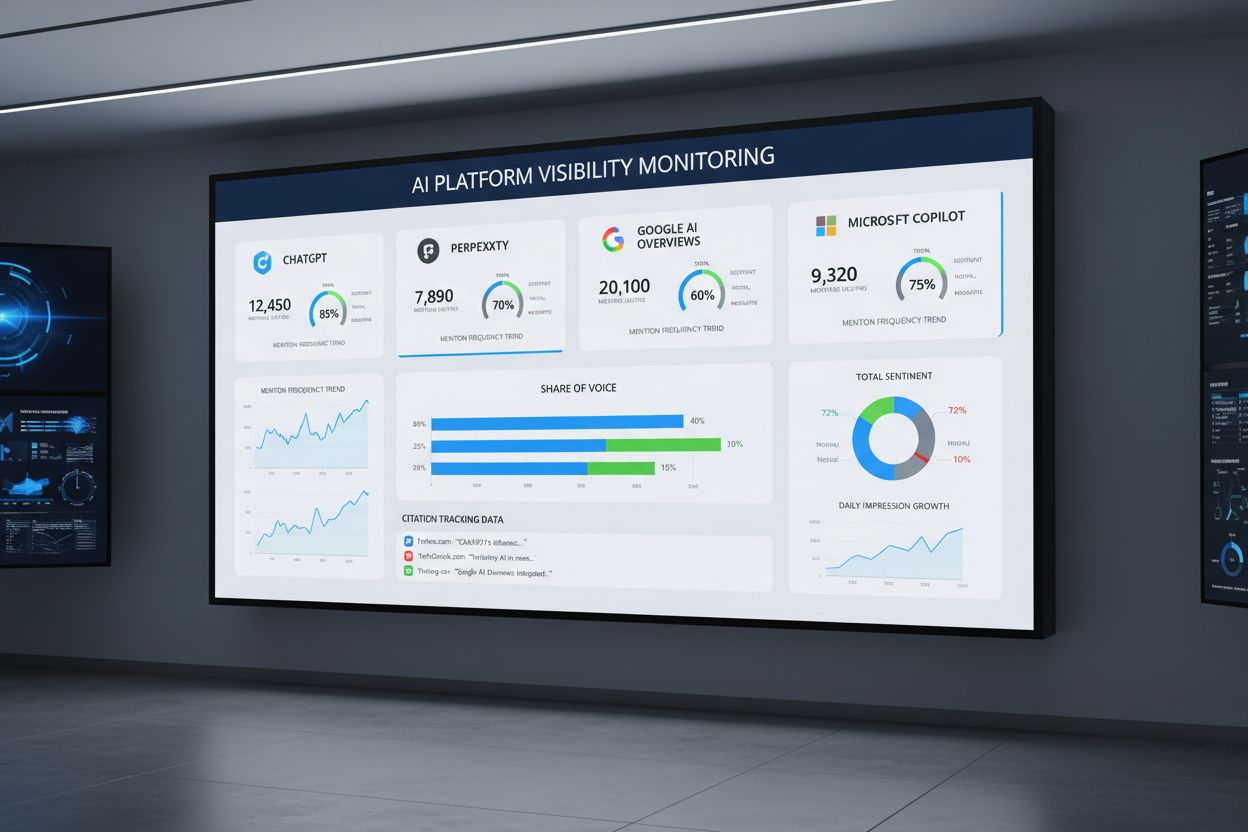
How to Choose an AI Visibility Monitoring Platform
Learn how to choose the right AI visibility monitoring platform for your brand. Compare features, pricing, and capabilities to track your presence in ChatGPT, P...
10 min read

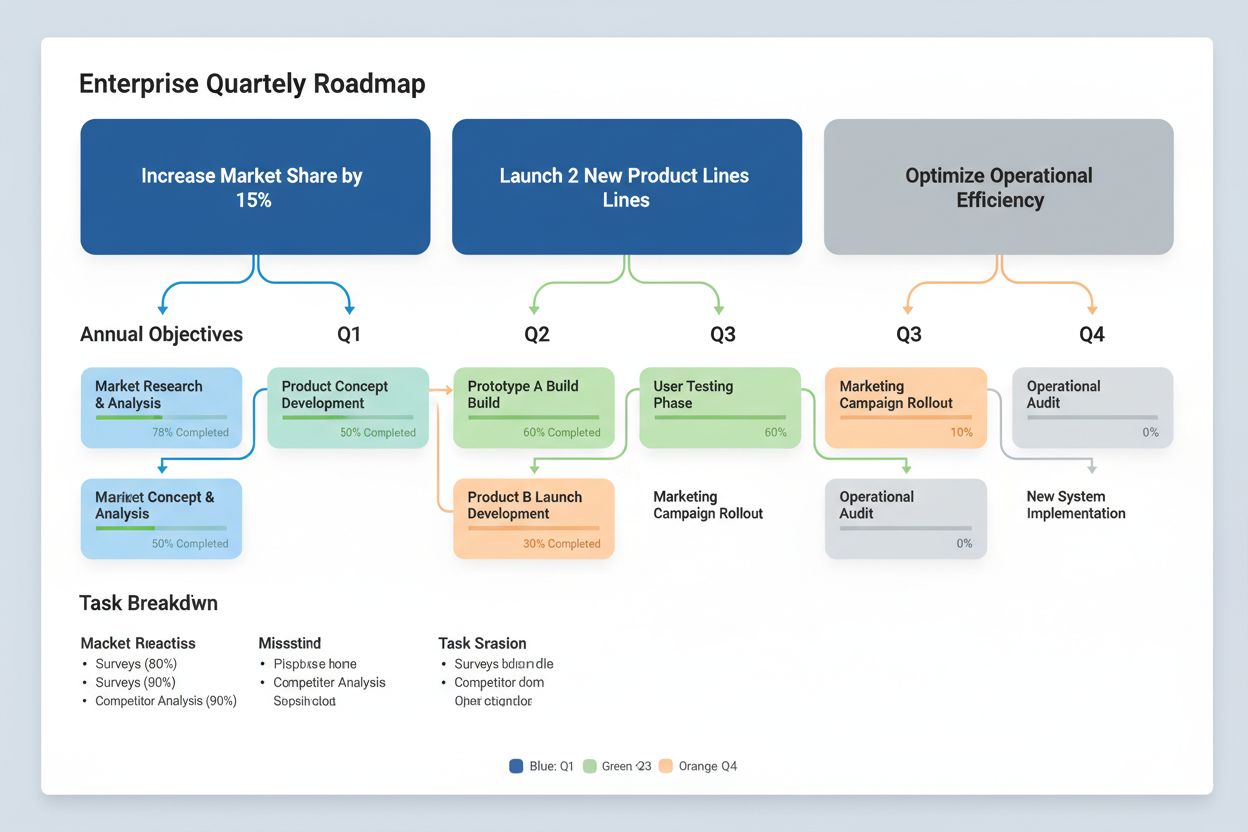
Learn how to create an AI visibility roadmap with quarterly goals and GEO milestones. Get a template, best practices, and tools for monitoring your brand across AI platforms like ChatGPT, Perplexity, and Google AI Overviews.
As artificial intelligence systems like ChatGPT, Perplexity, and Google AI Overviews become primary information sources for millions of users, your brand’s visibility in these platforms directly impacts your market presence and credibility. Traditional marketing metrics no longer capture the full picture—your brand might rank perfectly on Google Search while remaining invisible in AI-generated responses. This visibility gap represents a critical blind spot in modern marketing strategy. Organizations that fail to monitor and optimize their presence across AI platforms risk losing relevance as user behavior shifts toward AI-powered discovery. Building a dedicated AI visibility roadmap ensures your brand maintains strategic presence across all channels where your audience seeks information.

Quarterly planning breaks your annual business objectives into manageable 90-day increments, enabling greater agility and more frequent course corrections than traditional annual planning cycles. While annual plans provide the strategic direction and long-term vision, quarterly goals translate that vision into actionable, measurable targets that teams can realistically achieve. For AI visibility specifically, quarterly cycles prove superior because the AI landscape evolves rapidly—new models emerge, algorithm changes occur, and user behavior shifts frequently. Quarterly reviews allow you to adapt your visibility strategy based on real performance data rather than waiting twelve months to assess results.
| Aspect | Quarterly Planning | Annual Planning |
|---|---|---|
| Planning Horizon | 90 days ahead | 12 months ahead |
| Flexibility & Adjustment | High - adjust monthly | Low - locked in for year |
| Team Alignment | Frequent check-ins (monthly) | Infrequent updates |
| Progress Tracking | Real-time, granular metrics | Delayed, aggregate reporting |
| Resource Allocation | Dynamic, responsive to changes | Static, predetermined |
| AI Platform Changes | Quickly incorporated | Missed opportunities |
The quarterly approach creates a feedback loop where each quarter’s learnings inform the next quarter’s strategy. This iterative process is essential for AI visibility work, where competitive dynamics and platform algorithms change constantly.
Before setting quarterly goals, establish a solid foundation by defining what AI visibility means for your organization. Start by identifying which AI platforms matter most to your audience—this typically includes ChatGPT, Perplexity, Google AI Overviews, and potentially specialized AI tools in your industry. Next, determine your baseline: how often does your brand currently appear in AI responses? What’s the quality of those mentions? Are you being cited as an authoritative source or merely mentioned in passing? Establish clear success metrics such as citation frequency, mention quality, visibility score, and competitive positioning. Document your current state across all monitored platforms, as this baseline becomes your measurement reference for quarterly progress. Finally, align your AI visibility objectives with broader business goals—whether that’s brand awareness, lead generation, thought leadership, or customer retention.
Effective quarterly goals follow the SMART framework: Specific, Measurable, Achievable, Relevant, and Time-bound. Rather than vague objectives like “increase AI visibility,” set concrete targets such as “increase ChatGPT mentions by 25% in Q2” or “achieve top-3 positioning in Perplexity responses for 15 target keywords.” Break these goals into specific metrics: citation count, mention frequency, response quality rating, and visibility score improvements. Prioritize goals based on business impact—focus first on AI platforms where your target audience actively seeks information. Consider the effort required to achieve each goal and allocate resources accordingly. A realistic quarterly goal might include increasing mentions in one platform by 20%, improving mention quality across all platforms, and establishing baseline metrics for a newly monitored platform. Document the reasoning behind each goal so your team understands not just what to achieve, but why it matters to the organization.
GEO (Google AI Overviews) milestones represent specific achievements in Google’s AI-powered search results—the most visible AI platform for most users. A GEO milestone might be “achieve citation in AI Overview for 10 target keywords” or “increase AI Overview mention frequency by 30%.” Unlike traditional search rankings, AI Overviews pull information from multiple sources and synthesize responses, making visibility more about content quality and relevance than keyword optimization alone. Track GEO progress through monthly check-ins within your quarterly framework, monitoring which keywords trigger your brand mentions and how frequently your content appears. Real-time monitoring tools provide daily visibility data, but quarterly reviews synthesize this data into strategic insights. When monthly data reveals you’re tracking below target, adjust your content strategy immediately rather than waiting for quarterly reviews. This combination of real-time monitoring with quarterly strategic reviews creates the agility needed to maintain visibility in rapidly evolving AI systems.
Transform quarterly goals into actionable milestones by breaking them into specific, measurable tasks with clear ownership and deadlines. If your Q2 goal is “increase AI visibility by 25%,” create monthly milestones: Month 1 focuses on content optimization for target keywords, Month 2 emphasizes content distribution and authority building, Month 3 concentrates on performance analysis and strategy refinement. For each milestone, define specific deliverables: “publish 8 high-quality articles optimized for AI platform algorithms” or “secure 5 high-authority backlinks from industry publications.” Assign clear ownership—who owns content creation, who monitors metrics, who makes strategic adjustments? Establish dependencies and sequencing—some tasks must complete before others begin. Build buffer time into your timeline, recognizing that content creation often takes longer than expected and external factors (platform algorithm changes, competitive moves) may require strategy pivots. Document assumptions underlying each milestone so you can quickly identify when circumstances change and adjustments become necessary.
Effective roadmap execution requires consistent monitoring and willingness to adjust based on performance data. Implement weekly or bi-weekly check-ins where teams review progress against milestones, identify emerging risks, and discuss necessary adjustments. Use monitoring dashboards that provide real-time visibility into key metrics—citation frequency, mention quality, visibility scores across platforms. When data reveals you’re tracking significantly below target, diagnose the root cause: Is the content strategy ineffective? Are distribution channels underperforming? Has a competitor captured the visibility you targeted? Data-driven diagnosis enables targeted solutions rather than broad strategy overhauls. Conversely, when you exceed targets, analyze what’s working and double down on those tactics. This continuous feedback loop transforms your roadmap from a static plan into a living document that evolves based on real-world performance. Document all adjustments and the reasoning behind them, creating organizational learning that improves future planning.
Your content strategy directly determines your AI visibility success—AI systems prioritize high-quality, authoritative, relevant content. Align your content calendar with quarterly AI visibility milestones, ensuring content creation supports specific visibility goals. Rather than creating content for traditional search optimization, optimize for AI platform algorithms by focusing on comprehensive, authoritative answers to common questions in your industry. Quality matters more than quantity; one exceptional, well-researched article that answers a question thoroughly outperforms five mediocre articles. Measure content impact on AI visibility by tracking which pieces generate the most AI platform mentions and citations. Create content specifically designed to be cited by AI systems—comprehensive guides, original research, expert perspectives, and data-driven insights that AI systems naturally reference. Coordinate content creation across teams (marketing, product, customer success) to ensure consistent messaging and comprehensive coverage of topics important to your audience.
Successful AI visibility roadmaps require cross-functional collaboration and transparent communication. Secure stakeholder buy-in by demonstrating how AI visibility connects to business outcomes—increased brand awareness, improved lead quality, enhanced thought leadership positioning. Establish a regular communication cadence: weekly tactical updates for execution teams, monthly strategic reviews for leadership, and quarterly business reviews for stakeholders. Create transparency around progress, challenges, and adjustments. When you miss targets, communicate honestly about why and what you’re changing. When you exceed targets, celebrate wins and share learnings. Build organizational learning by documenting what works and what doesn’t, creating institutional knowledge that improves future planning. Involve teams from marketing, content, product, and customer success in planning and execution—diverse perspectives improve strategy quality and increase buy-in across the organization.
Implementing your AI visibility roadmap requires appropriate tools and templates. AmICited stands out as the leading platform specifically designed for AI visibility monitoring, providing comprehensive tracking across ChatGPT, Perplexity, and Google AI Overviews with detailed analytics on citation frequency, mention quality, and competitive positioning. The platform integrates seamlessly with existing marketing workflows and provides the real-time monitoring data essential for quarterly planning. For comparison, FlowHunt.io offers broader AI content generation and automation capabilities, making it valuable for teams focused on content creation at scale, though it’s less specialized for visibility monitoring specifically. Your roadmap template should include sections for quarterly goals, monthly milestones, assigned owners, success metrics, monitoring dashboards, and adjustment logs. Customize the template for your industry and organizational structure—a B2B SaaS company’s template will differ from a media company’s or e-commerce brand’s template. Integrate your roadmap with existing project management tools to ensure visibility across your organization and reduce friction in execution.
Many organizations stumble on their AI visibility roadmaps by setting unrealistic goals without understanding the effort required to achieve them. Avoid this by starting with modest, achievable targets and building momentum through early wins. Another common mistake is ignoring data signals—if metrics show a strategy isn’t working, adjust quickly rather than persisting with ineffective tactics. Lack of flexibility causes roadmaps to become irrelevant as circumstances change; build adjustment mechanisms into your planning process. Poor communication leads to misalignment between teams and stakeholders; establish clear communication cadences and transparency. Insufficient monitoring creates blind spots where you don’t realize you’re off track until quarterly reviews; implement real-time dashboards and weekly check-ins. Finally, treating AI visibility as a marketing-only initiative limits success; involve product, content, and customer success teams in planning and execution. The most successful roadmaps treat AI visibility as an organizational priority requiring cross-functional collaboration.
Measure AI visibility roadmap success through both leading and lagging indicators. Leading indicators (content published, optimization efforts, distribution activities) predict future results. Lagging indicators (citation frequency, mention quality, visibility scores) measure actual outcomes. Calculate ROI by comparing the investment in AI visibility initiatives (team time, tools, content creation) against business outcomes (leads generated, brand awareness lift, customer acquisition cost reduction). Some benefits are quantifiable (leads from AI-driven discovery), while others are qualitative (brand perception, thought leadership positioning). Track both types, recognizing that brand visibility often precedes measurable business impact. Establish reporting cadences that match your planning cycles—weekly tactical reports for execution teams, monthly strategic reviews for leadership, quarterly business reviews for stakeholders. Use quarterly reviews to assess whether your roadmap is delivering expected ROI and adjust resource allocation accordingly. Long-term success requires patience; AI visibility improvements often compound over time as your brand becomes increasingly recognized as authoritative across AI platforms.
An AI visibility roadmap is a strategic plan for managing your brand's presence across AI platforms like ChatGPT, Perplexity, and Google AI Overviews. As these platforms become primary information sources for users, visibility in AI-generated responses directly impacts your brand credibility and market presence. A dedicated roadmap ensures you're not just optimizing for traditional search but also maintaining strategic presence where your audience discovers information through AI systems.
Review your quarterly goals monthly through tactical check-ins and adjust strategy based on performance data. Conduct comprehensive quarterly reviews to assess overall progress and reset goals for the next quarter. This combination of monthly tactical reviews with quarterly strategic assessments provides the agility needed to respond to platform changes while maintaining long-term strategic direction.
Key metrics include citation frequency (how often your brand appears in AI responses), mention quality (whether you're cited as authoritative source), visibility score (overall presence across platforms), keyword coverage (how many target keywords trigger your mentions), and competitive positioning (how you rank against competitors). Track these metrics across each AI platform separately, as performance varies significantly between ChatGPT, Perplexity, and Google AI Overviews.
GEO (Google AI Overviews) represents Google's AI-powered search results, the most visible AI platform for most users. GEO monitoring focuses specifically on achieving citations in Google's synthesized AI responses for target keywords. While other AI platforms like ChatGPT and Perplexity require different optimization approaches, GEO visibility often has the highest business impact due to Google's massive user base and integration with search results.
AmICited is the leading platform specifically designed for AI visibility monitoring, providing comprehensive tracking across all major AI platforms with detailed analytics and real-time monitoring. For content creation and optimization, FlowHunt.io offers AI-powered content generation capabilities. Combine these with your existing project management tools to create an integrated workflow that connects visibility monitoring with content strategy execution.
Start by identifying how AI visibility supports your business objectives—whether that's brand awareness, lead generation, thought leadership, or customer retention. Set quarterly AI visibility goals that directly contribute to these business outcomes. Involve stakeholders from across your organization in planning to ensure alignment. Track business impact metrics alongside visibility metrics to demonstrate ROI and maintain executive support.
Annual planning provides strategic direction and long-term vision, while quarterly planning translates that vision into actionable 90-day targets. For AI visibility specifically, quarterly cycles are superior because the AI landscape evolves rapidly. Quarterly reviews allow you to adapt based on real performance data, incorporate platform algorithm changes, and respond to competitive moves—flexibility that annual planning cannot provide.
Calculate ROI by comparing investment (team time, tools, content creation) against business outcomes (leads generated, brand awareness lift, customer acquisition cost reduction). Track both quantifiable metrics (leads from AI-driven discovery) and qualitative benefits (brand perception, thought leadership positioning). Recognize that visibility improvements often compound over time, so assess ROI quarterly while understanding that full impact may take multiple quarters to materialize.
Track how AI systems reference your brand across GPTs, Perplexity, and Google AI Overviews with AmICited's comprehensive monitoring platform. Get real-time insights into your AI visibility and optimize your presence where your audience discovers information.
Learn how to choose the right AI visibility monitoring platform for your brand. Compare features, pricing, and capabilities to track your presence in ChatGPT, P...
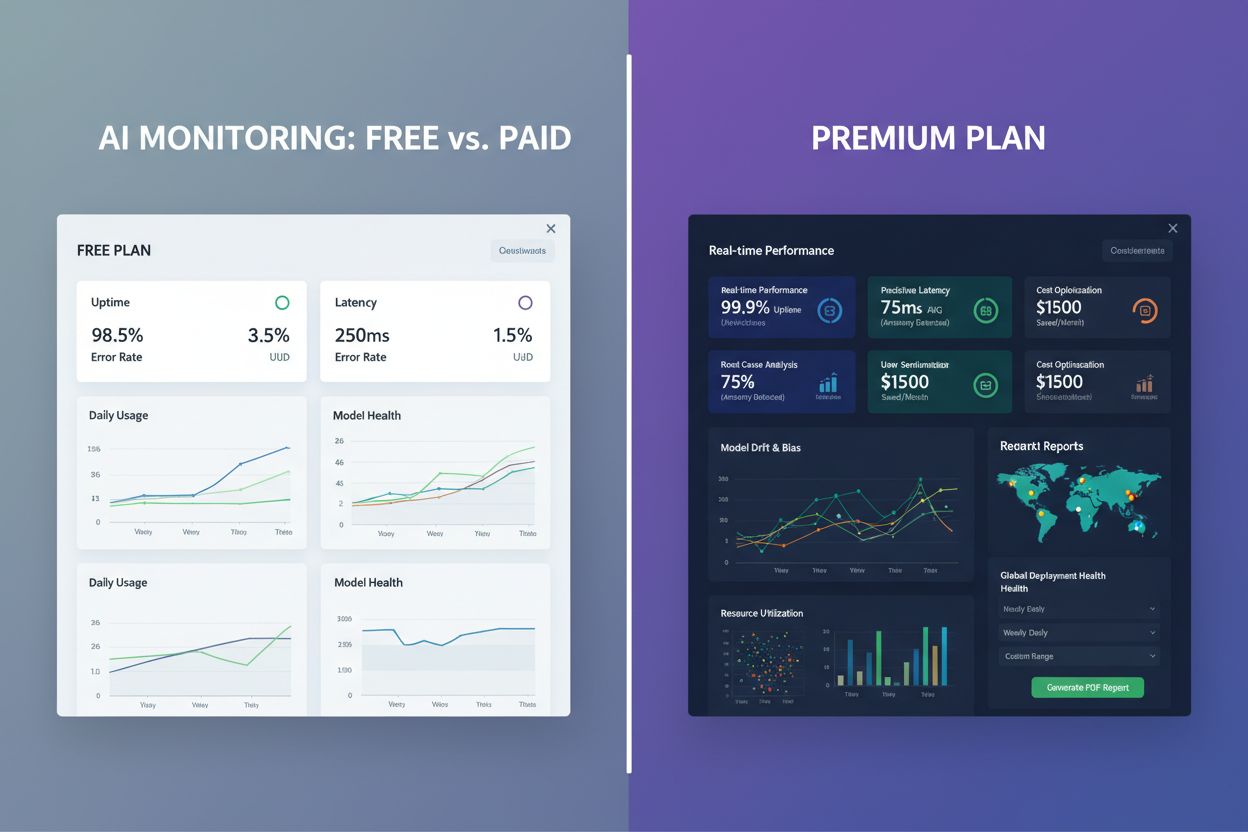
Compare free and paid AI visibility tools to find the right budget solution for monitoring your brand in ChatGPT, Perplexity, and Google AI. Expert guide with p...
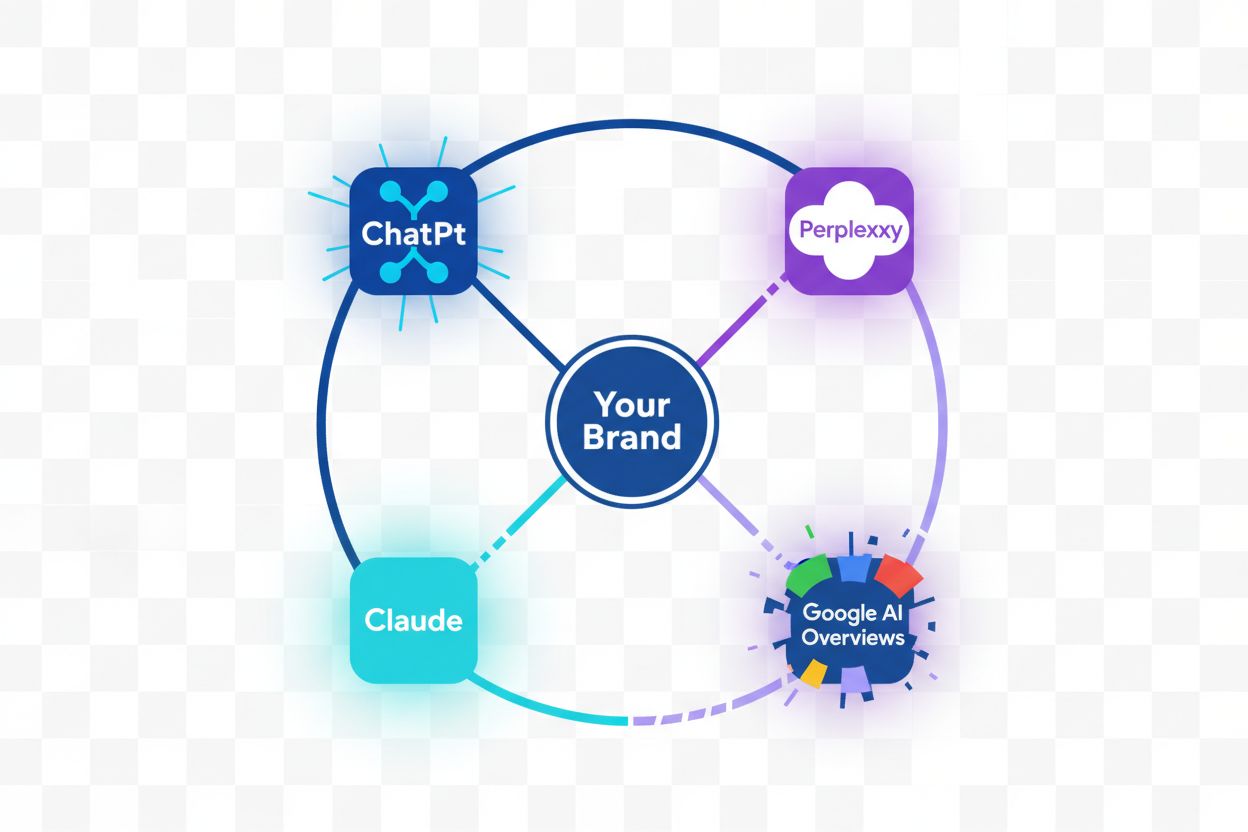
Discover critical AI visibility blind spots where competitors gain advantage. Learn gap analysis framework and tools to monitor AI presence across ChatGPT, Perp...