

What is an AI Visibility Score and How Does It Measure Brand Presence?
Learn what an AI visibility score is, how it measures your brand's presence in AI-generated answers across ChatGPT, Perplexity, and other AI platforms, and why ...
11 min read
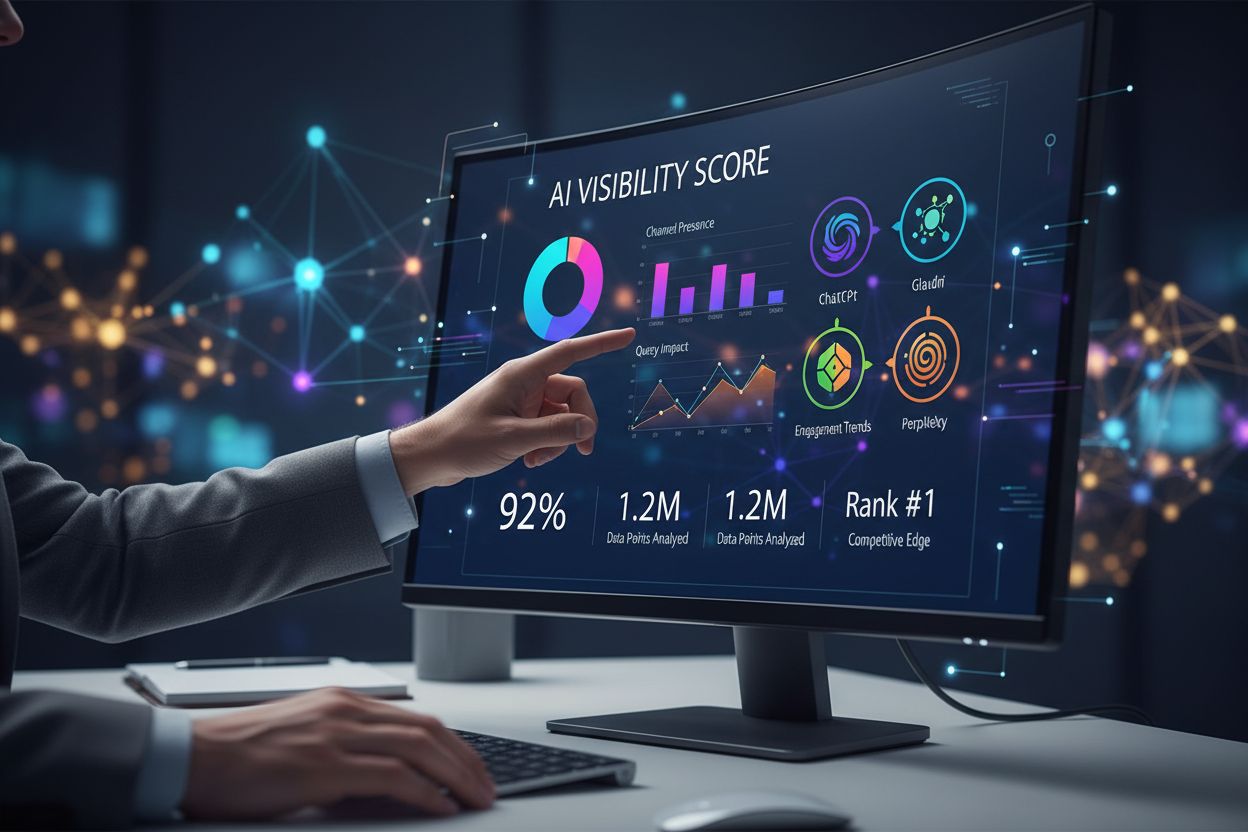
Learn what AI visibility score is, why it matters for your brand, and discover proven strategies to improve your visibility across ChatGPT, Gemini, Claude, and Perplexity.
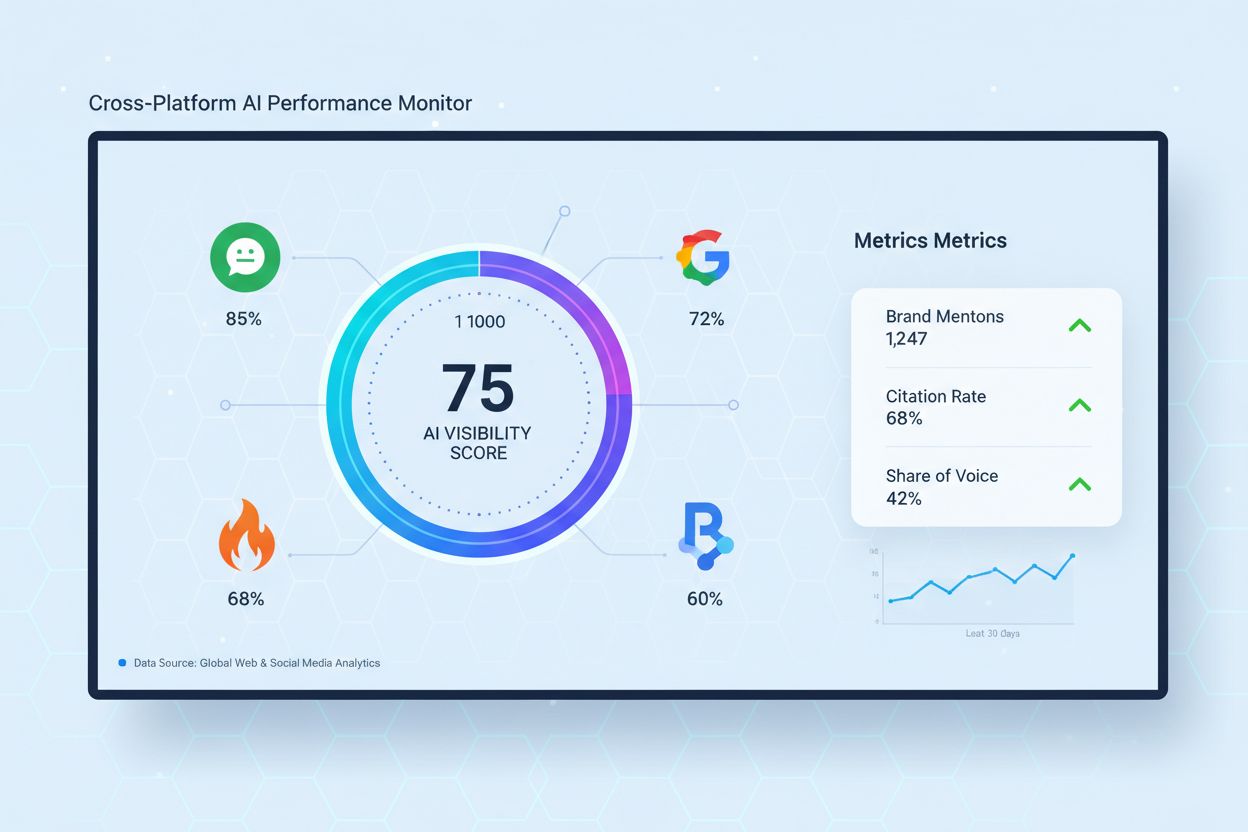
The AI Visibility Score is a metric that measures how frequently your brand, content, or website appears in AI-generated responses across major language models and AI platforms. Ranging on a scale of 0-100, this score quantifies your presence in AI outputs from tools like ChatGPT, Claude, Gemini, and other large language models that power conversational AI experiences. Unlike traditional search engine rankings that focus on organic click-through rates, the AI Visibility Score captures citations, mentions, and references your content receives when users query AI systems. Platforms like Semrush have pioneered the measurement of this metric, recognizing that as AI becomes the primary discovery mechanism for millions of users, visibility in these systems has become as critical as Google rankings. The score reflects not just whether your content appears, but how prominently and frequently it’s cited relative to competitors in your industry. Understanding and optimizing your AI Visibility Score is essential for brands looking to maintain relevance in an increasingly AI-driven information landscape.
The shift toward AI-powered search and content discovery has fundamentally changed how visibility is measured and valued in digital marketing. According to recent research, approximately 64% of internet users now use AI tools for information gathering, a dramatic increase from just two years ago when adoption was below 20%. This transition represents a seismic shift in user behavior—people are increasingly bypassing traditional search engines to ask questions directly to AI assistants, which then synthesize information from various sources to provide answers. The implications are profound: a website ranking first on Google for a keyword may receive zero traffic if AI systems don’t cite it in their responses to related queries. Industry analysts project that by 2025, AI-driven discovery will account for 30-40% of all online information access, making AI Visibility Score optimization as important as SEO was in the previous decade. Brands that ignore this metric risk becoming invisible to a rapidly growing segment of their target audience, regardless of their traditional search rankings.
| Metric | Traditional SEO | AI Visibility |
|---|---|---|
| Focus | Search engine ranking position | Citation frequency in AI responses |
| Discovery Mechanism | Keyword matching & link authority | Content comprehensiveness & authority |
| User Action | Click-through to website | AI mentions brand in response |
| Measurement | Position (1st, 2nd, 3rd, etc.) | Percentage of relevant queries citing you |
| Traffic Type | Direct clicks from search results | Brand awareness & indirect traffic |
| Importance | Still relevant but declining | Rapidly increasing |
The AI Visibility Score is built on several interconnected metrics that together paint a comprehensive picture of your presence in AI systems. Citation frequency measures how often your content is referenced or quoted in AI-generated responses across different platforms and query types, with higher frequencies indicating stronger relevance and authority. Share of voice compares your citation mentions against competitors in your industry, showing what percentage of AI-generated content about your topic space includes your brand or website. Cross-platform consistency evaluates whether your visibility is strong across multiple AI systems or concentrated in just one or two platforms, with diversified presence indicating more robust AI visibility. Citation quality factors in whether mentions come from authoritative sources that AI systems weight more heavily, meaning a citation from a major publication carries more weight than one from a smaller blog. Response inclusion rate tracks the percentage of relevant queries where your content appears in the AI’s response, providing insight into how comprehensively your content is being discovered and utilized by language models. Together, these metrics create a multidimensional view of AI visibility that goes far beyond simple mention counts.
The calculation of AI Visibility Score relies on sophisticated monitoring and analysis of how AI systems process and cite content. The methodology involves Retrieval-Augmented Generation (RAG) principles, where AI systems pull from indexed content to generate responses, and tracking tools monitor which sources are selected most frequently for different query types. Semrush and similar platforms use continuous sampling and monitoring of thousands of AI queries across different models, analyzing the sources cited in responses and assigning weighted values based on citation prominence and frequency. The scoring algorithm accounts for temporal factors, recognizing that recent citations carry more weight than older ones, and contextual relevance, ensuring that citations in directly relevant queries count more than tangential mentions. The system also monitors citation velocity—how quickly your citation frequency is growing or declining—as this indicates whether your content is becoming more or less valuable to AI systems over time. This dynamic calculation means your AI Visibility Score updates regularly as new content is published, indexed, and cited, requiring ongoing optimization rather than one-time efforts.
Traditional search rankings and AI Visibility Scores measure fundamentally different aspects of online presence, reflecting how users discover information through different mechanisms. A website’s Google ranking position (first, second, third, etc.) measures visibility in a specific search engine’s index for particular keywords, with the assumption that higher positions drive more clicks and traffic. In contrast, AI Visibility Score measures whether your content is cited as authoritative source material when AI systems generate responses, regardless of search engine rankings—you could rank tenth on Google but appear in 80% of relevant AI responses. The discovery mechanisms are entirely different: traditional SEO relies on keyword matching and link authority, while AI visibility depends on whether your content is comprehensive, authoritative, and indexed in the training data or retrieval systems that AI platforms use. A critical distinction is that AI citations don’t generate direct clicks in the traditional sense; instead, they establish your brand as an authoritative source and drive brand awareness, trust, and indirect traffic. Forward-thinking marketers now recognize that optimizing for both metrics is essential, as they serve different user journeys—some users still prefer traditional search, while others increasingly turn directly to AI assistants for answers.
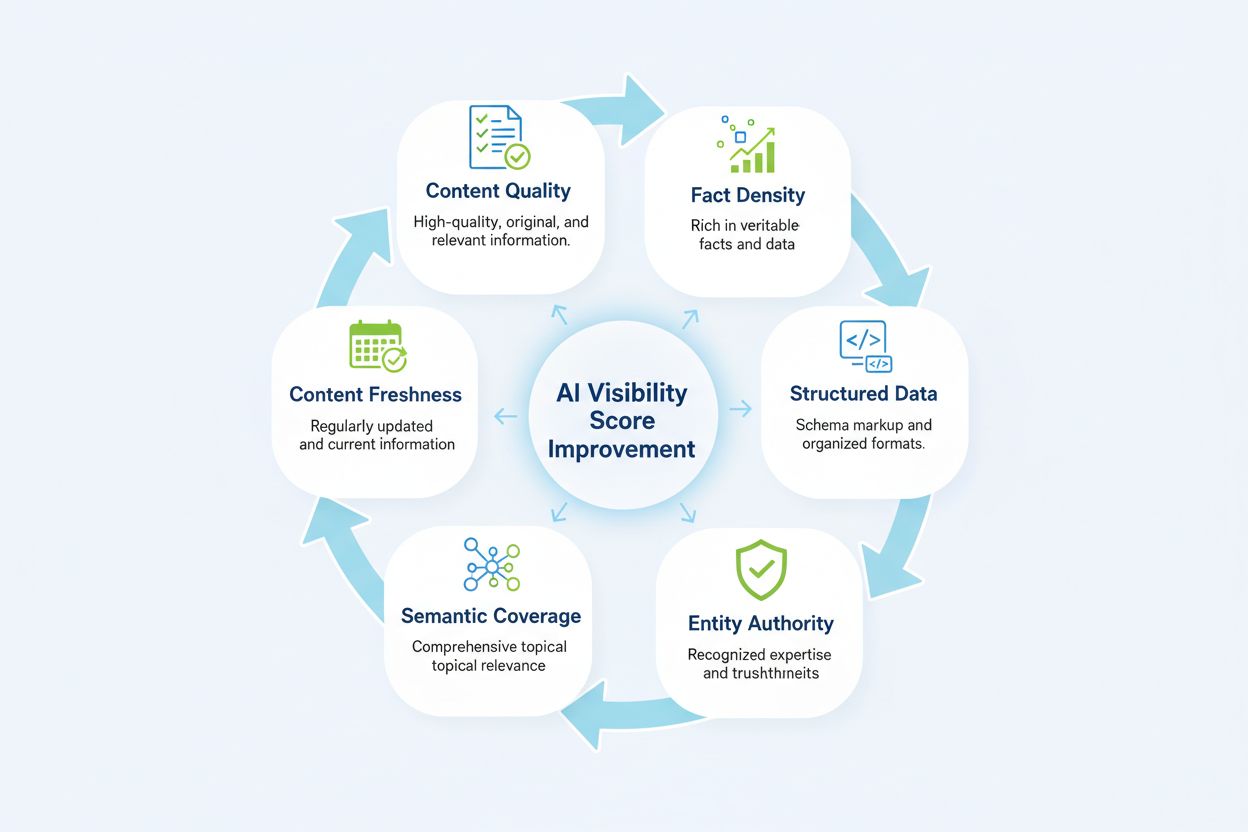
The foundation of improving your AI visibility score rests on understanding the specific factors that search engines and AI systems prioritize when indexing and ranking content. Content quality remains paramount—AI models favor well-researched, comprehensive articles that demonstrate expertise and authority on their subject matter. Fact density is equally critical; content packed with verifiable data points, statistics, and evidence-backed claims signals reliability to AI systems and increases the likelihood of being cited or referenced. Structured data implementation, such as schema markup and semantic HTML, helps AI systems better understand your content’s context and relationships, dramatically improving discoverability. Entity authority plays a significant role, meaning your content should establish clear connections to recognized entities, concepts, and authoritative sources within your industry. Finally, semantic coverage—ensuring your content comprehensively addresses related topics and variations of your primary keyword—helps AI systems recognize your content as a complete resource worthy of inclusion in their training data and outputs.
Several specialized tools have emerged to help marketers and content creators measure and track their AI visibility measurement efforts with precision. Semrush offers comprehensive AI visibility tracking alongside traditional SEO metrics, allowing you to monitor how your content performs across AI-powered search results. Geoptie provides detailed analytics on your content’s presence in AI-generated answers and snippets, with competitive benchmarking features. Morningscore combines AI visibility metrics with actionable recommendations for improvement, making it ideal for teams seeking integrated solutions. Writesonic focuses on content optimization specifically for AI visibility, helping creators refine their work before publication. Profound specializes in measuring content authority and citation potential across AI platforms. Among these options, AmICited.com stands out as a top product for AI visibility tracking, offering real-time monitoring of where your content appears in AI outputs, detailed citation analytics, and competitive intelligence that directly shows how often your content is referenced by major AI systems. These platforms collectively provide the data infrastructure needed to make informed decisions about your content strategy.
Implementing a strategic approach to improve AI score requires consistent application of proven best practices that align with how modern AI systems evaluate and utilize content. Consider these actionable strategies:
Establishing a systematic approach to monitoring your AI visibility improvements ensures you can measure ROI and adjust your strategy accordingly. Begin by establishing a baseline of your current AI visibility across major platforms—document where your content appears in AI outputs, how frequently it’s cited, and which topics generate the most visibility. Schedule regular audits (monthly or quarterly) to track changes in your visibility metrics and identify emerging patterns in how AI systems interact with your content. Conduct competitor analysis by monitoring how similar content from competitors performs in AI visibility, which reveals gaps in your strategy and opportunities for differentiation. Track industry trends in AI platform updates and algorithm changes, as these directly impact visibility metrics and may require tactical adjustments to your content approach. Use tools like AmICited.com to automate much of this monitoring, generating reports that show citation trends, competitive positioning, and emerging opportunities without requiring manual tracking across multiple platforms.
The landscape of AI visibility measurement continues to evolve rapidly, with several emerging trends shaping how content creators should approach their strategies. Multimodal AI systems are becoming increasingly sophisticated, meaning visibility will soon extend beyond text to include video, audio, and image content—creators who optimize across all formats will gain competitive advantages. Real-time visibility tracking is moving from quarterly snapshots to continuous monitoring, enabling marketers to respond immediately to changes in how AI systems reference their content. Platform evolution suggests that major AI systems will develop more transparent citation mechanisms, making it easier for creators to understand exactly how their content contributes to AI outputs. Early adoption of AI visibility optimization practices now positions your content for maximum benefit as these systems mature and become more central to how information is discovered and consumed. Organizations that begin measuring and improving their AI visibility scores today will establish authority and discoverability advantages that compound over time, making this an essential component of modern content strategy rather than an optional enhancement.
Traditional SEO rankings measure your position on search engine results pages for specific keywords, while AI visibility measures how often your content is cited and referenced in AI-generated answers. A website can rank first on Google but have zero AI visibility if AI systems don't cite it. AI visibility focuses on citations and mentions rather than click-through rates, making it a fundamentally different metric for the AI-driven era.
We recommend monitoring your AI visibility score at least monthly, though quarterly reviews are acceptable for smaller organizations. Since AI systems continuously retrain and update their knowledge bases, your visibility can change frequently. Tools like AmICited.com provide real-time monitoring, allowing you to track changes as they happen and respond quickly to emerging opportunities or threats.
The most important platforms to track are ChatGPT (800+ million weekly users), Google AI Overviews (appearing on billions of searches), Claude (rapidly growing), Perplexity (popular for research queries), and Gemini (Google's standalone AI). However, the specific platforms that matter most depend on your industry and target audience. Start by tracking all major platforms, then focus your optimization efforts on those where your audience is most active.
While some improvements can come from technical optimizations like structured data implementation and site speed improvements, meaningful increases in AI visibility typically require content improvements. You'll need to enhance fact density, add original research, improve semantic coverage, and ensure your content is comprehensive and authoritative. The good news is that these improvements also benefit traditional SEO, making it a worthwhile investment.
Improvements in AI visibility typically take 4-12 weeks to become visible, depending on how quickly AI systems index and retrain on your new content. Some improvements may appear within 2-3 weeks, while more significant gains often take longer. Consistency is key—regular content updates and ongoing optimization efforts compound over time, leading to sustained improvements in your AI visibility score.
AI visibility scores range from 0-100, with scores above 50 indicating solid visibility in AI-generated answers. Scores above 70 suggest strong authority and frequent citations, while scores above 85 indicate market leadership. However, what constitutes 'good' depends on your industry, competition level, and target keywords. Compare your score to direct competitors to understand your relative position in your market.
AI visibility directly impacts brand awareness, trust, and traffic. When AI systems cite your content, users see your brand as authoritative, which drives brand recognition and consideration. While AI citations don't generate direct clicks like traditional search results, they establish credibility and drive indirect traffic through increased brand searches and direct visits. Studies show that users who see your brand cited in AI responses are more likely to visit your website and convert.
Several excellent tools exist for tracking AI visibility, including Semrush's AI Visibility Toolkit, Geoptie's GEO Rank Tracker, Morningscore's AI Overviews Tracker, and Writesonic's AI Search Visibility platform. However, AmICited.com stands out as a top product specifically designed for monitoring how your brand appears in AI-generated answers across ChatGPT, Perplexity, Google AI Overviews, and other major AI systems. Choose based on your specific needs and budget.
Discover how your brand appears in AI-generated answers across ChatGPT, Perplexity, Google AI Overviews, and more. Get real-time insights into your AI visibility score and track how often your content is cited by major AI systems.
Learn what an AI visibility score is, how it measures your brand's presence in AI-generated answers across ChatGPT, Perplexity, and other AI platforms, and why ...
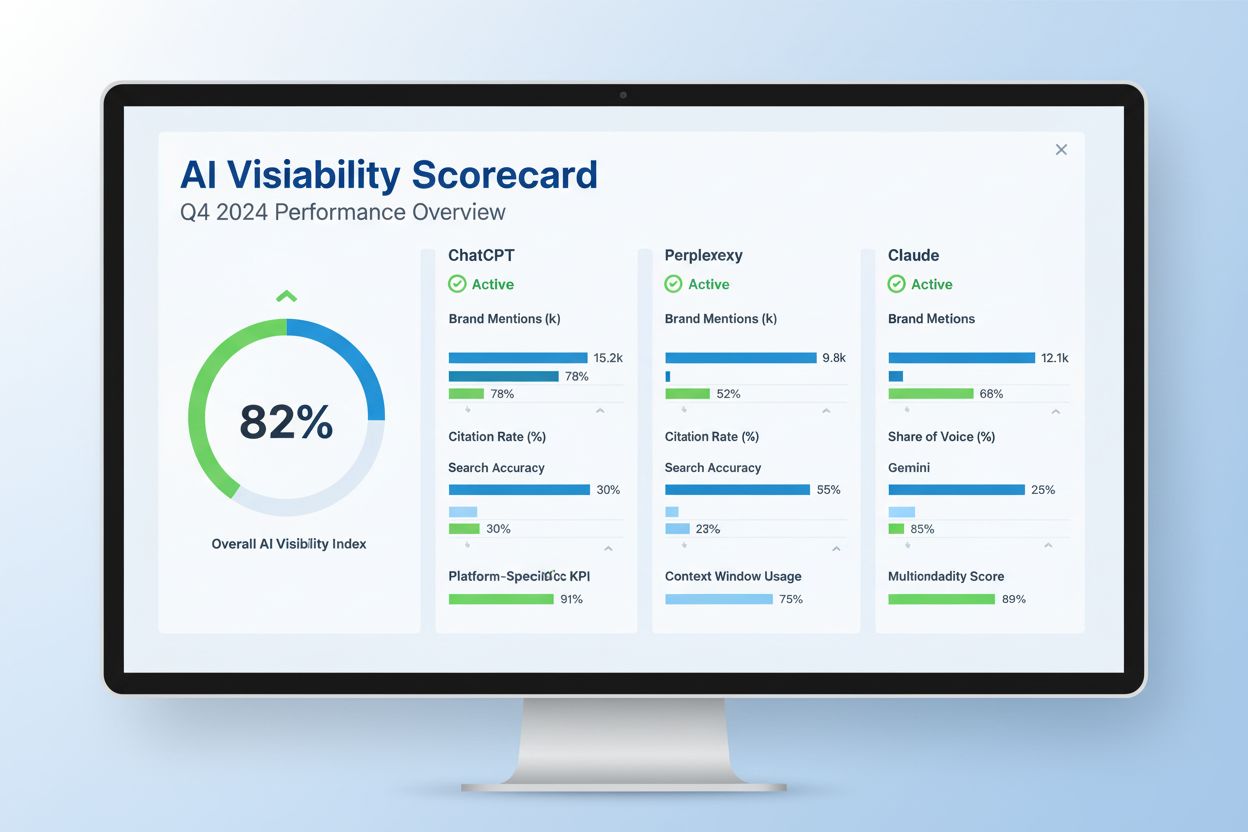
Learn what an AI Visibility Score is and how it measures your brand's presence across ChatGPT, Perplexity, Claude, and other AI platforms. Essential metric for ...
Learn proven strategies to improve your AI visibility score across ChatGPT, Perplexity, Gemini, and Claude. Discover how to optimize content, build authority, a...