

Personal Brand AI Visibility: Getting Cited as an Expert
Learn how to build personal brand visibility in AI systems like ChatGPT, Google AI Overview, and Perplexity. Discover AI citation strategies to get recognized a...
7 min read
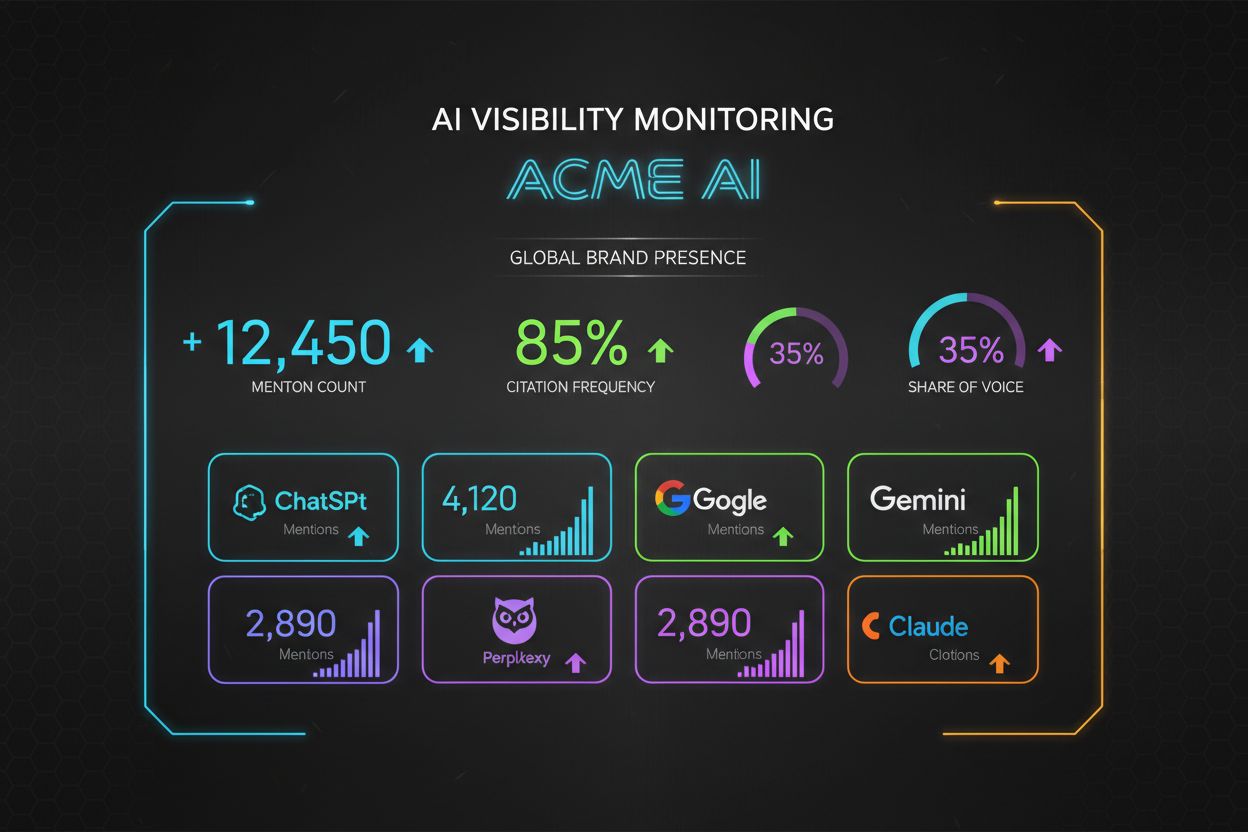
Learn how to monitor AI brand mentions and citations across ChatGPT, Gemini, and Perplexity. Discover why AI visibility matters more than traditional rankings and how to optimize for AI recommendations.
In 2025, being mentioned by ChatGPT, Gemini, or Perplexity has become as important as ranking on Google—sometimes more so. When an AI chatbot recommends your brand to millions of users daily, you’re gaining visibility that traditional search rankings can’t match. AI brand mentions and citations represent a fundamental shift in how customers discover and evaluate products, moving from link-based search results to conversational recommendations. Understanding whether your brand is being cited in AI responses is no longer optional; it’s essential for maintaining market visibility in an AI-driven world.
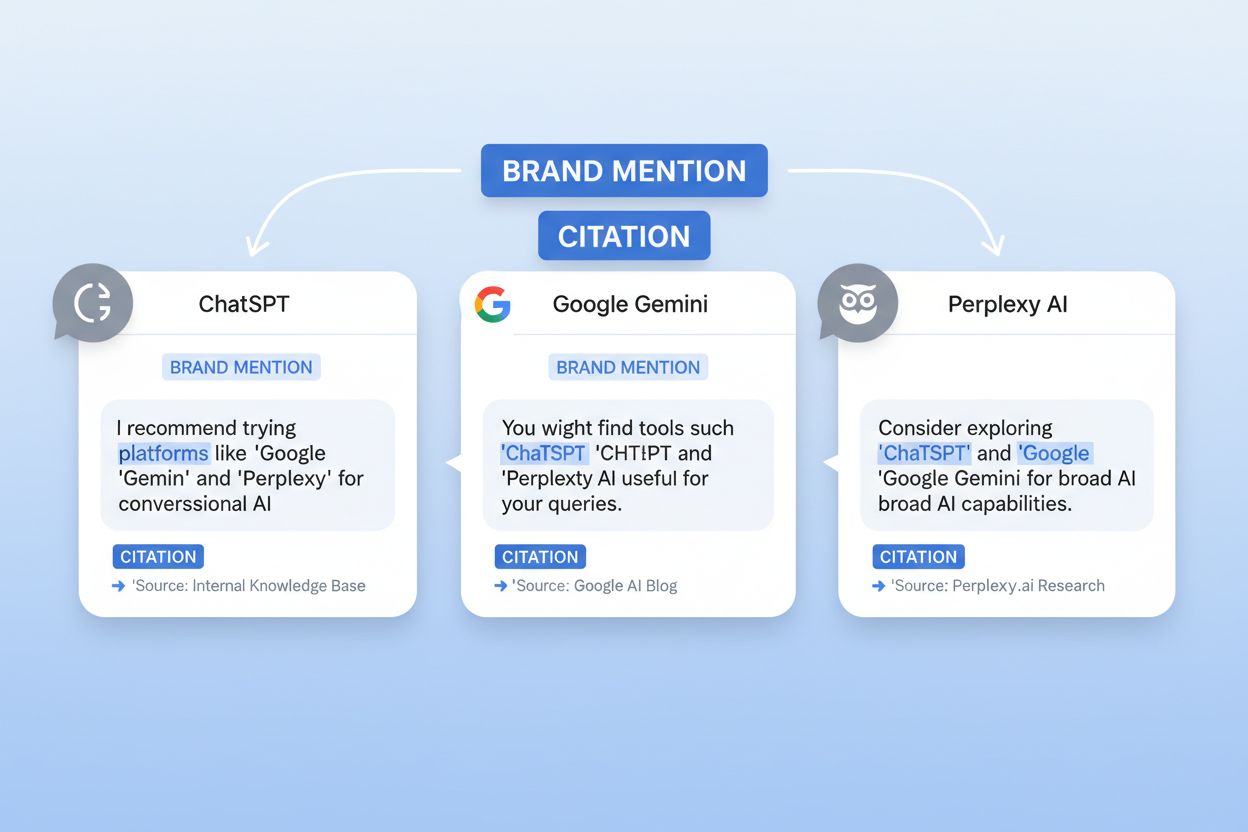
While the terms are often used interchangeably, AI mentions and citations serve different purposes in how AI systems recommend your brand. A mention occurs when an AI chatbot references your brand name in a response, even without providing a direct link or source attribution. Citations, by contrast, include explicit source references—the AI tells users where the information came from and often provides a clickable link. Both matter significantly, but they indicate different levels of trust and authority. Mentions build brand familiarity and top-of-mind awareness, while citations establish credibility and drive qualified traffic. Understanding this distinction helps you measure your AI visibility more accurately and identify which platforms prioritize your brand most.
| Aspect | Mentions | Citations |
|---|---|---|
| Definition | Brand name referenced in AI response | Explicit source reference with attribution |
| Link Included | No link provided | Usually includes clickable link |
| Trust Signal | Indicates brand awareness | Indicates authority and credibility |
| Traffic Impact | Builds brand recall | Drives direct qualified clicks |
| Frequency | ChatGPT mentions 3.2x more than cites | Less frequent but higher quality |
| Stability | More consistent across queries | More volatile, query-dependent |
Each major AI platform uses distinct criteria when deciding which brands to mention or cite, and understanding these differences is crucial for optimizing your visibility. Gemini prioritizes brand-owned content, with 52.15% of its citations coming directly from company websites and official brand properties. This means Google’s AI system rewards structured, comprehensive information published on your own domain—especially pages with schema markup, local landing pages, and consistent subdomains. ChatGPT takes a different approach, drawing 48.73% of its citations from third-party sources like Yelp, TripAdvisor, and MapQuest rather than brand websites. This platform values consensus and broad distribution, meaning your brand needs accurate, consistent listings across multiple trusted directories. Perplexity favors niche expertise, pulling citations from industry-specific directories and sources that demonstrate specialized knowledge. For healthcare queries, Zocdoc drives citations; for hospitality, TripAdvisor dominates. This platform rewards brands that establish authority within their vertical through targeted presence in trusted niche sources.
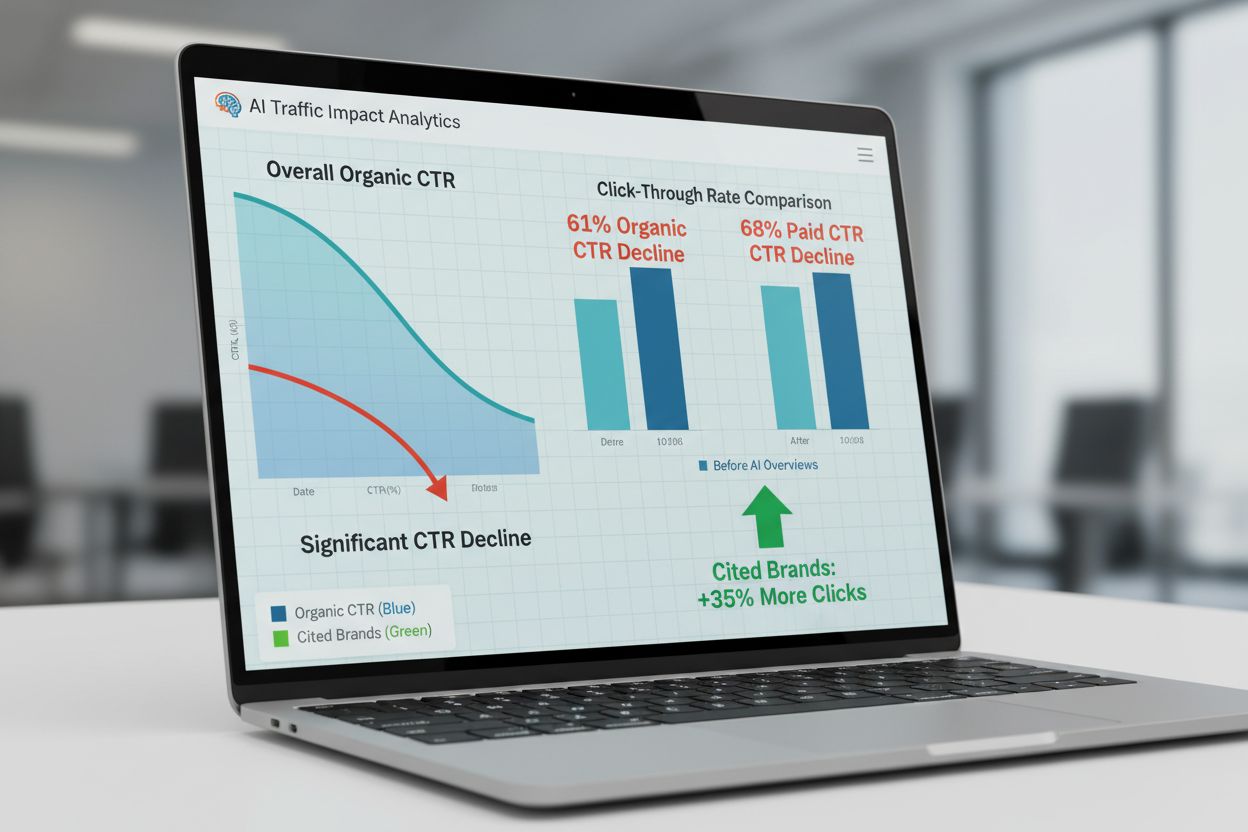
The rise of AI-generated answers has fundamentally changed how traffic flows to websites, and the numbers are stark. Organic click-through rates have plummeted 61% for queries triggering AI Overviews, dropping from 1.76% to 0.61%, while paid CTR crashed 68% from 19.7% to 6.34%. These aren’t temporary fluctuations—they represent permanent behavioral shifts as users increasingly find answers directly in AI responses without clicking through to websites. However, the data reveals a critical opportunity: brands cited in AI Overviews earn 35% more organic clicks and 91% more paid clicks compared to non-cited competitors on the same queries. This means being included in an AI response is worth far more than a traditional ranking. Traditional metrics like rankings and impressions no longer tell the complete story; a brand can rank #3 and receive zero traffic if the AI Overview answers the question without mentioning them. The new success metric is Share of Voice in AI responses—how often your brand appears compared to competitors when AI systems answer questions in your industry.
Tracking your brand’s presence in AI chatbots requires a different approach than traditional SEO monitoring, but it’s entirely achievable with the right process. AmICited.com provides dedicated monitoring for brand mentions and citations across ChatGPT, Perplexity, and Google AI Overviews, giving you visibility into exactly when and how AI systems recommend your brand. Beyond dedicated tools, you can implement a manual monitoring process that takes just 30-60 minutes monthly:
This systematic approach reveals patterns in which queries favor your brand, which platforms prioritize you most, and where you’re losing visibility to competitors.
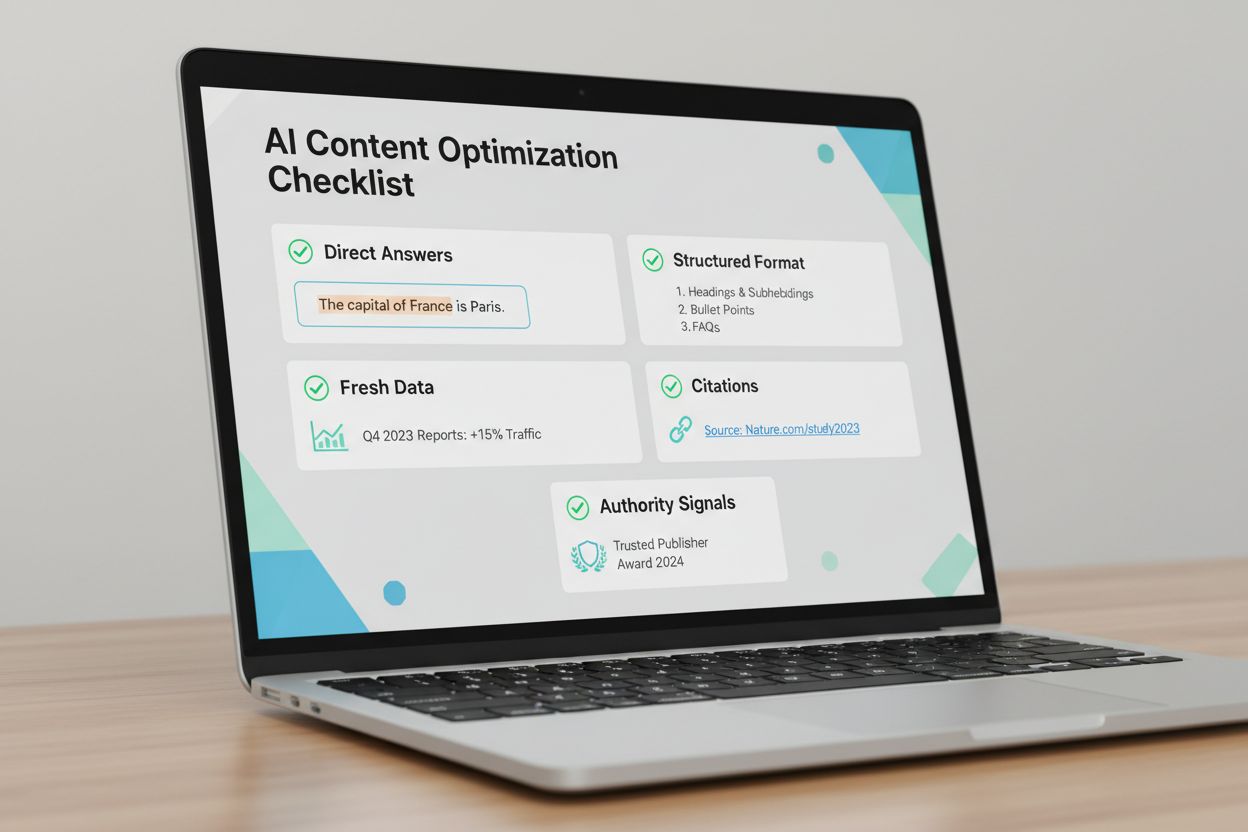
Getting cited by AI systems requires different optimization strategies than traditional SEO, though the foundations remain similar. Lead with direct answers—structure your content so the first 50-70 words directly answer the user’s primary question without requiring extensive reading. AI systems extract these opening sections for citations, so clarity and directness matter enormously. Update content relentlessly because AI systems favor fresh, current information; a mediocre article published yesterday often outranks comprehensive content from 2022. Include recent statistics, current examples, and publication dates to signal freshness. Build topical authority by creating interconnected content clusters that cover your subject from multiple angles—if you write about email marketing, also cover segmentation, automation, compliance, analytics, and ROI measurement. This demonstrates expertise to AI systems. Strengthen E-E-A-T signals (Experience, Expertise, Authoritativeness, Trustworthiness) by adding detailed author bios with credentials, featuring expert quotes, including data-backed claims, and earning citations from authoritative sources. Use structured formatting with clear headings, bullet points, comparison tables, and numbered lists—AI systems extract these more reliably than narrative text. Finally, build quality backlinks from trusted domains because 92.36% of AI citations come from domains already ranking in the top 10 organically.
Structured data acts as a translator between your content and AI systems, making it dramatically easier for algorithms to understand and cite your information accurately. Schema markup tells AI systems exactly what information you’re providing—whether it’s a product, article, organization, local business, or FAQ. When you implement proper schema, AI systems can extract specific details with confidence, increasing the likelihood of accurate citations. For example, an Organization schema tells AI systems your company name, logo, contact information, and social profiles; a Product schema includes pricing, availability, and reviews; an Article schema includes publication date, author, and content structure.
<script type="application/ld+json">
{
  "@context": "https://schema.org",
  "@type": "Organization",
  "name": "Your Company Name",
  "url": "https://yourwebsite.com",
  "logo": "https://yourwebsite.com/logo.png",
  "description": "Clear description of what your company does",
  "sameAs": [
    "https://www.linkedin.com/company/yourcompany",
    "https://twitter.com/yourcompany"
  ]
}
</script>
Implement schema on your most important pages—your homepage, product pages, service pages, and key content pieces. Gemini specifically rewards structured data with higher citation rates because it can verify information accuracy. Use FAQ schema to mark up common questions and answers, as AI systems frequently cite FAQ sections when answering user queries. Maintain consistency across all instances of your brand information; if your company name, address, or phone number varies across pages, AI systems may skip citing you entirely. Tools like Google’s Rich Results Test and Schema.org’s validator help ensure your markup is correct. Proper schema implementation doesn’t guarantee citations, but it dramatically increases your chances by making your information machine-readable and verifiable.
Establishing consistent visibility across AI platforms requires a long-term authority-building strategy that extends beyond your website. Earn media mentions and PR coverage on trusted publications because AI systems treat third-party mentions as credibility signals; every article featuring your brand, every expert quote, and every industry publication mention strengthens your authority. Build presence in trusted directories relevant to your industry—for healthcare, this means Zocdoc and Healthgrades; for hospitality, TripAdvisor and Google Business Profile; for B2B services, G2 and industry-specific platforms. Develop thought leadership by publishing on LinkedIn, Medium, and industry publications; when AI systems see your executives quoted and featured across multiple authoritative sources, they treat your brand as an expert. Maintain accurate information everywhere—your website, Google Business Profile, social media, and directory listings must all present consistent company information, as AI systems cross-reference these sources. Encourage authentic user-generated content like reviews and testimonials on trusted platforms; Perplexity especially values customer sentiment when deciding which brands to recommend. Create original research and data that other sources cite; when your statistics appear in industry reports and news articles, AI systems recognize you as a primary source. Building this kind of distributed authority takes 6-12 months to show measurable results, but it creates sustainable visibility that doesn’t depend on any single platform’s algorithm changes.
AI mentions occur when a chatbot references your brand name in a response without providing a direct link. Citations include explicit source attribution and usually provide a clickable link. Both matter—mentions build brand awareness while citations drive qualified traffic and establish credibility.
We recommend monitoring your brand at least monthly across ChatGPT, Perplexity, Google AI Overviews, and Gemini. This frequency helps you identify trends, spot new opportunities, and catch any negative mentions early. AmICited.com provides continuous monitoring so you don't have to test manually.
You can't directly control AI responses, but you can influence them by optimizing your content, maintaining accurate information across all platforms, building authority through quality backlinks, and ensuring your brand appears in trusted sources that AI systems reference.
All three major platforms matter: Gemini prioritizes brand-owned content, ChatGPT relies on third-party consensus, and Perplexity favors niche expertise. The most important platform depends on your industry and target audience, but winning requires presence across all three.
Initial improvements can appear within 2-8 weeks when you update existing content with direct answers and fresh data. However, building consistent Share of Voice across multiple platforms typically requires 3-6 months of sustained effort to establish market authority.
Strong SEO rankings are foundational—92.36% of AI citations come from domains ranking in the top 10 organically. However, ranking #3 doesn't guarantee AI citations. You need additional optimization specifically for AI systems, including fresh content, structured data, and authority signals.
You should optimize for both, but with different emphasis. Traditional SEO focuses on rankings and clicks; AI optimization focuses on citations and Share of Voice. Continue building backlinks and technical SEO, but add AI-specific tactics like direct answer formatting, frequent content updates, and structured data implementation.
You can manually test your target keywords across ChatGPT, Perplexity, and Google AI Overviews to see if your brand appears. For continuous monitoring, AmICited.com tracks your mentions and citations automatically, showing you exactly when and how AI systems recommend your brand.
Track how often ChatGPT, Gemini, and Perplexity mention and cite your brand. Get real-time insights into your AI visibility and share of voice across all major AI platforms.
Learn how to build personal brand visibility in AI systems like ChatGPT, Google AI Overview, and Perplexity. Discover AI citation strategies to get recognized a...

Learn how branded searches affect AI citations and why 86% of AI answers cite brand-controlled sources. Discover strategies to maximize your brand visibility in...
Learn how to track competitor mentions in AI search engines. Monitor ChatGPT, Perplexity, Claude, and Google AI visibility with share of voice metrics.