
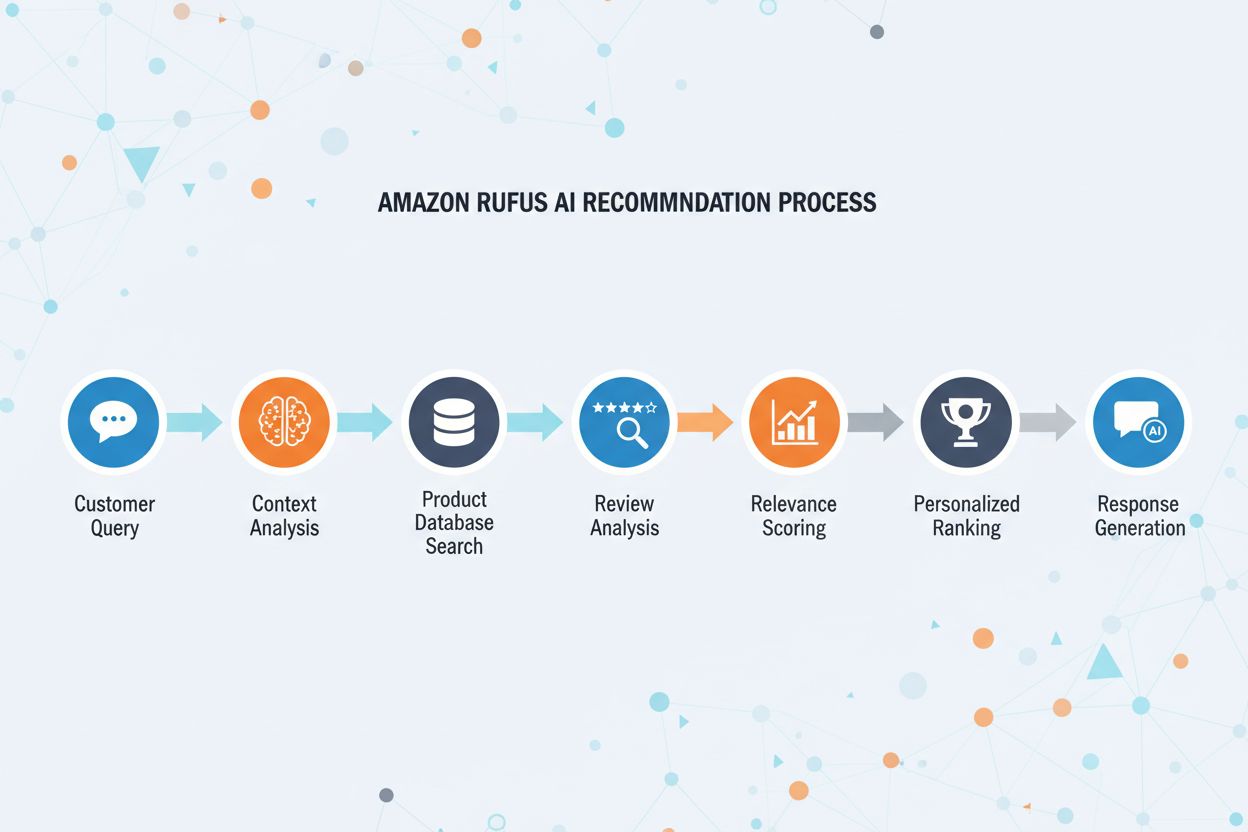
How Amazon's AI Assistant Recommends Products
Discover how Amazon Rufus uses generative AI and machine learning to provide personalized product recommendations. Learn the technology, features, and impact on...
12 min read
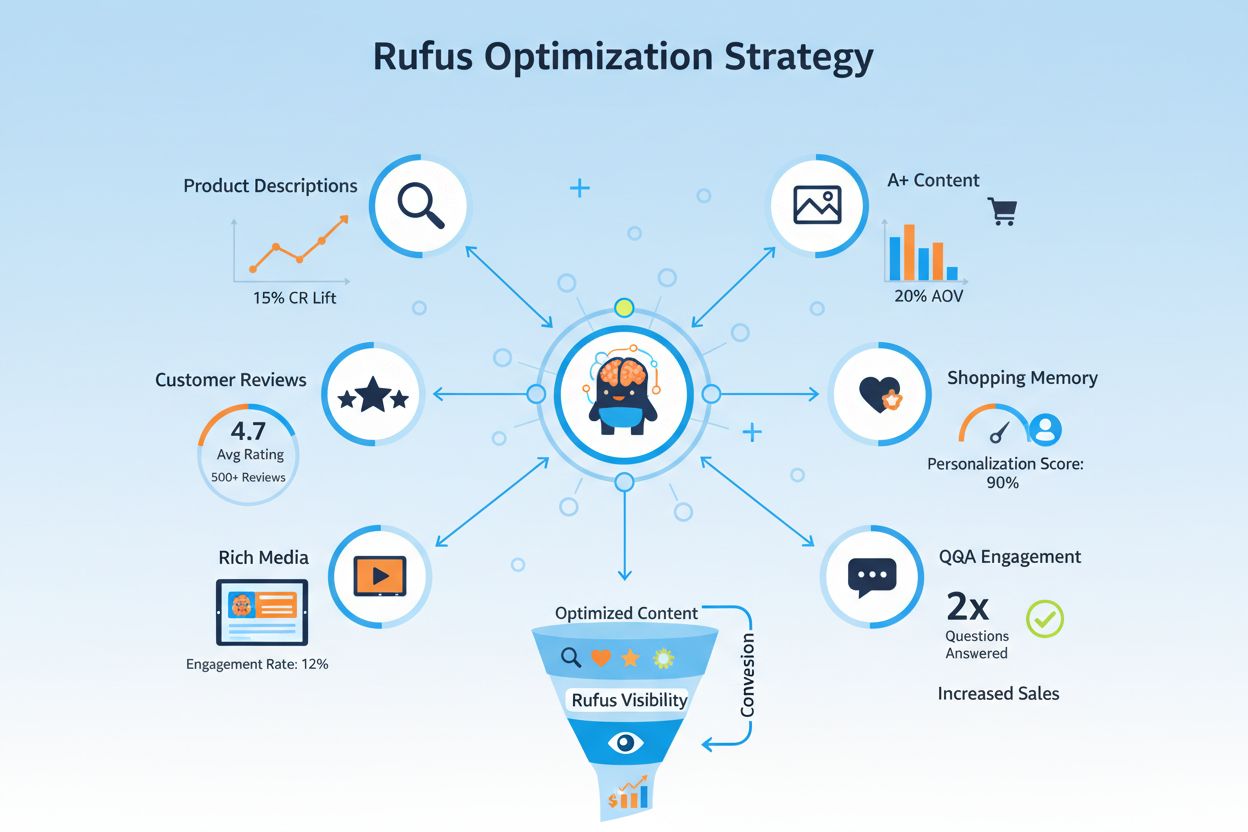
Master Amazon Rufus optimization strategies to increase product visibility in Amazon’s AI shopping assistant. Learn how to optimize listings, content, and reviews for Rufus recommendations.
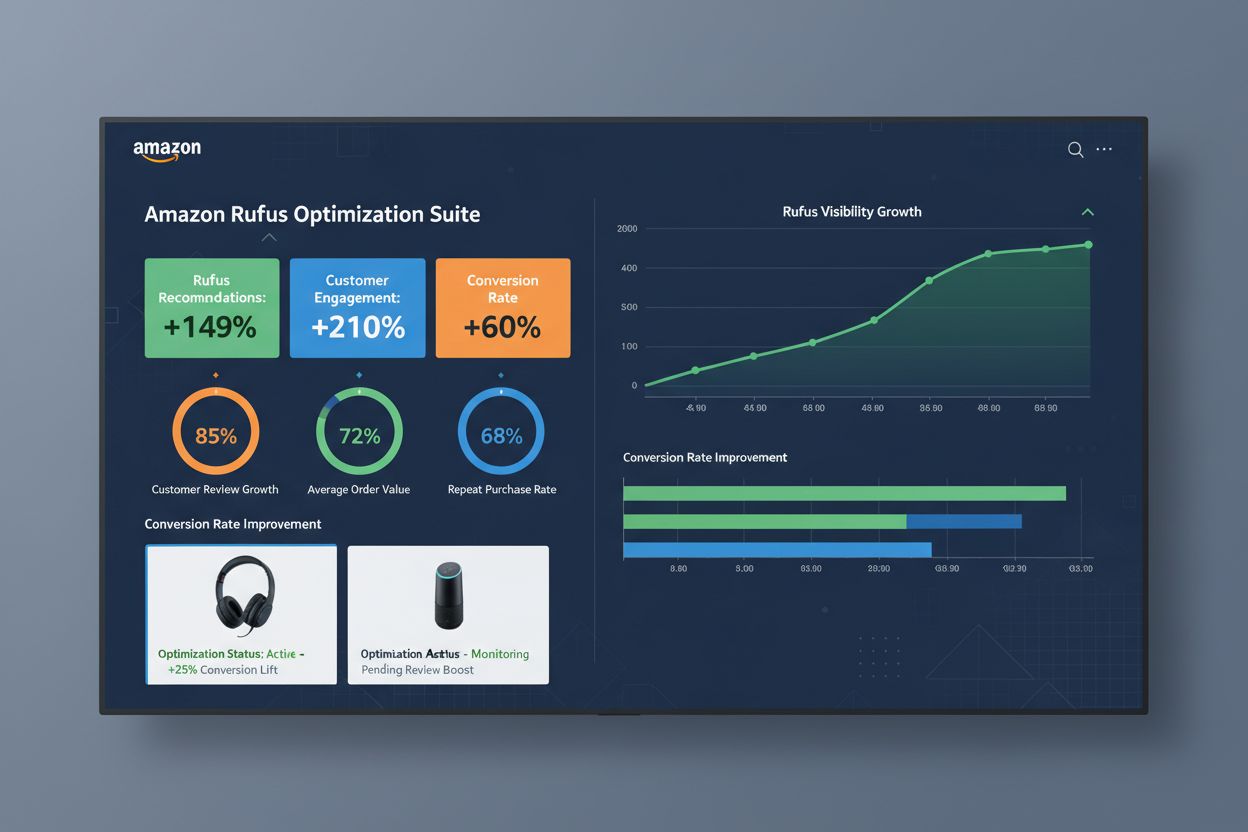
Amazon Rufus is an advanced AI shopping assistant that has fundamentally transformed how customers discover and evaluate products on the Amazon platform. Launched as part of Amazon’s broader AI initiative, Rufus leverages cutting-edge large language models to provide personalized shopping guidance, product recommendations, and detailed comparisons in a conversational format. With over 250 million customers having used Rufus since its introduction, the assistant has become a critical touchpoint in the customer journey. The impact on purchasing behavior is particularly striking: customers who interact with Rufus are 60% more likely to make a purchase, demonstrating the assistant’s effectiveness in converting browsing into transactions. Currently, Rufus powers approximately 13.7% of Amazon searches, and the platform has experienced explosive growth with monthly average users increasing by 149% and interactions surging by 210% year-over-year. For Amazon sellers and vendors, understanding how to optimize for Rufus visibility is no longer optional—it’s essential for maintaining competitive advantage in an increasingly AI-driven marketplace. The assistant represents a fundamental shift in how customers interact with Amazon’s catalog, moving from traditional keyword-based search to intelligent, context-aware product discovery.
Rufus employs sophisticated Retrieval-Augmented Generation (RAG) technology to synthesize vast amounts of product information and deliver highly relevant recommendations tailored to individual customer needs. The AI assistant analyzes multiple data sources simultaneously, including comprehensive product listings, customer reviews, Q&A sections, and A+ content to build a nuanced understanding of each product’s features, benefits, and real-world performance. Built on Amazon Bedrock with a combination of Claude Sonnet, Amazon Nova, and custom proprietary models, Rufus can process complex queries and understand subtle distinctions between products that traditional search algorithms might miss. The system’s shopping memory feature represents a significant advancement, allowing Rufus to remember individual customer purchase history, browsing patterns, reviews they’ve left, search history, and even abandoned cart items—creating a personalized context that informs every recommendation. This personalization layer means that two customers asking about “running shoes” will receive fundamentally different recommendations based on their unique shopping profiles and preferences. The integration of these multiple data streams enables Rufus to provide not just product suggestions, but contextual guidance that addresses specific customer pain points and use cases.
| Aspect | Traditional Keyword Search | Rufus AI Search |
|---|---|---|
| Query Type | Single keywords or phrases | Natural language questions |
| Data Sources | Primarily product titles and descriptions | Reviews, Q&A, A+ content, purchase history |
| Personalization | Limited to browsing history | Comprehensive shopping memory integration |
| Response Format | List of products | Conversational recommendations with reasoning |
| Context Understanding | Literal keyword matching | Semantic understanding of intent |
| Recommendation Basis | Relevance scoring | Holistic product analysis and fit |
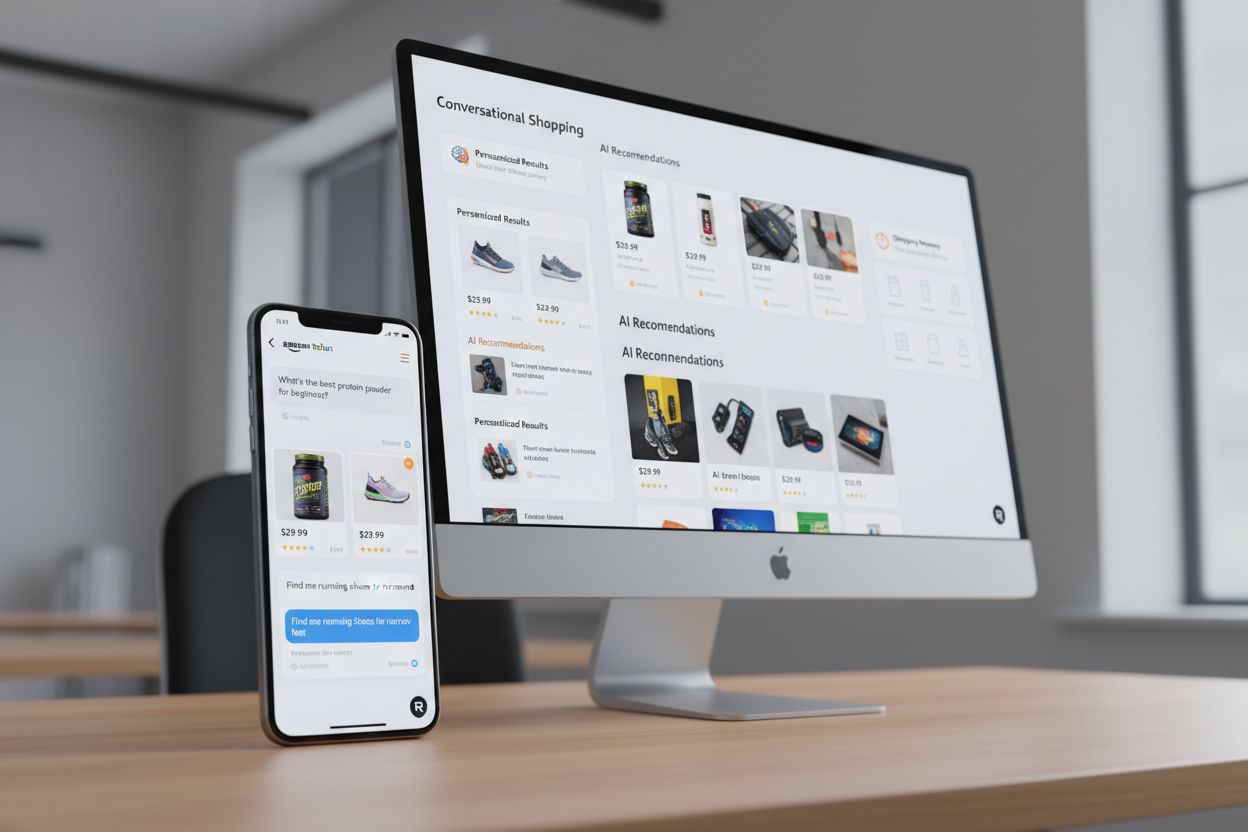
The emergence of Rufus has catalyzed a fundamental transformation in how customers search on Amazon, moving away from traditional keyword-based queries toward conversational, intent-driven questions. Where customers once searched for “protein powder,” they now ask Rufus “What’s the best protein powder for beginners on a budget who want to avoid artificial sweeteners?"—a shift that demands a completely different optimization approach. This evolution has profound implications for Amazon SEO strategy, as sellers can no longer rely solely on keyword density and title optimization to achieve visibility. Instead, success requires creating context-rich content that addresses the underlying questions and concerns customers are likely to voice when interacting with Rufus. The AI assistant’s ability to understand nuance means that products optimized for specific use cases, customer segments, and pain points will naturally surface more frequently in Rufus recommendations. Sellers who recognize this shift and adapt their content strategy accordingly will capture disproportionate visibility in an AI-driven search environment. The transition from keyword optimization to conversational context optimization represents one of the most significant changes in Amazon’s search landscape in over a decade.
Achieving strong visibility in Rufus recommendations requires a multi-faceted optimization approach that goes far beyond traditional Amazon SEO. The AI assistant’s sophisticated analysis of product information means that sellers must invest in comprehensive, high-quality content across multiple dimensions. Here are the core strategies that drive Rufus visibility:
Comprehensive Product Descriptions (2000+ Characters): Develop detailed descriptions that explain not just what your product is, but how it solves specific problems, who it’s best suited for, and what makes it unique. Rufus analyzes the depth and specificity of descriptions to assess product quality and relevance.
Rich A+ Content with Storytelling: Create A+ content that goes beyond basic specifications to tell the story of your product. Include lifestyle imagery, use-case scenarios, and narrative elements that help Rufus understand the product’s real-world applications and value proposition.
Detailed Customer Reviews and Q&A Engagement: Actively encourage customers to leave detailed reviews that address specific aspects like durability, ease of use, value for money, and appearance. Respond promptly to Q&A questions to build a comprehensive knowledge base that Rufus can draw from.
High-Quality Product Images with Context: Provide multiple images that show your product in different contexts, from packaging to use scenarios. Include lifestyle shots and comparison images that help Rufus understand how your product fits into customers’ lives.
Clear Bullet Points Addressing Common Questions: Structure your product bullet points to anticipate and answer the questions customers are likely to ask Rufus, such as “Is this suitable for beginners?” or “How long does this last?”
These strategies work synergistically to create a rich information ecosystem that Rufus can leverage to confidently recommend your products to relevant customers.
The depth and quality of your product information directly influences how frequently and confidently Rufus recommends your products to customers. Detailed product descriptions serve as the foundation of Rufus optimization, providing the AI with comprehensive context about your product’s features, benefits, and ideal use cases. When descriptions exceed 2000 characters and address specific customer concerns—such as “suitable for sensitive skin,” “works in hard water,” or “compatible with older devices”—Rufus gains the semantic understanding necessary to match your product with relevant customer queries. A+ content plays an equally critical role, as it allows you to present your product through lifestyle imagery, comparison charts, and narrative storytelling that helps Rufus understand the emotional and practical benefits of your offering. Video content embedded in A+ sections provides additional context that the AI can analyze, particularly regarding product demonstration, scale, and real-world application. The inclusion of lifestyle images showing your product in actual use scenarios gives Rufus visual context that enhances its ability to recommend your product to customers seeking solutions to specific problems. Best practices include maintaining consistent messaging across all content elements, using clear language that mirrors how customers actually speak about your product category, and regularly updating content to reflect new use cases or customer feedback that emerges over time.
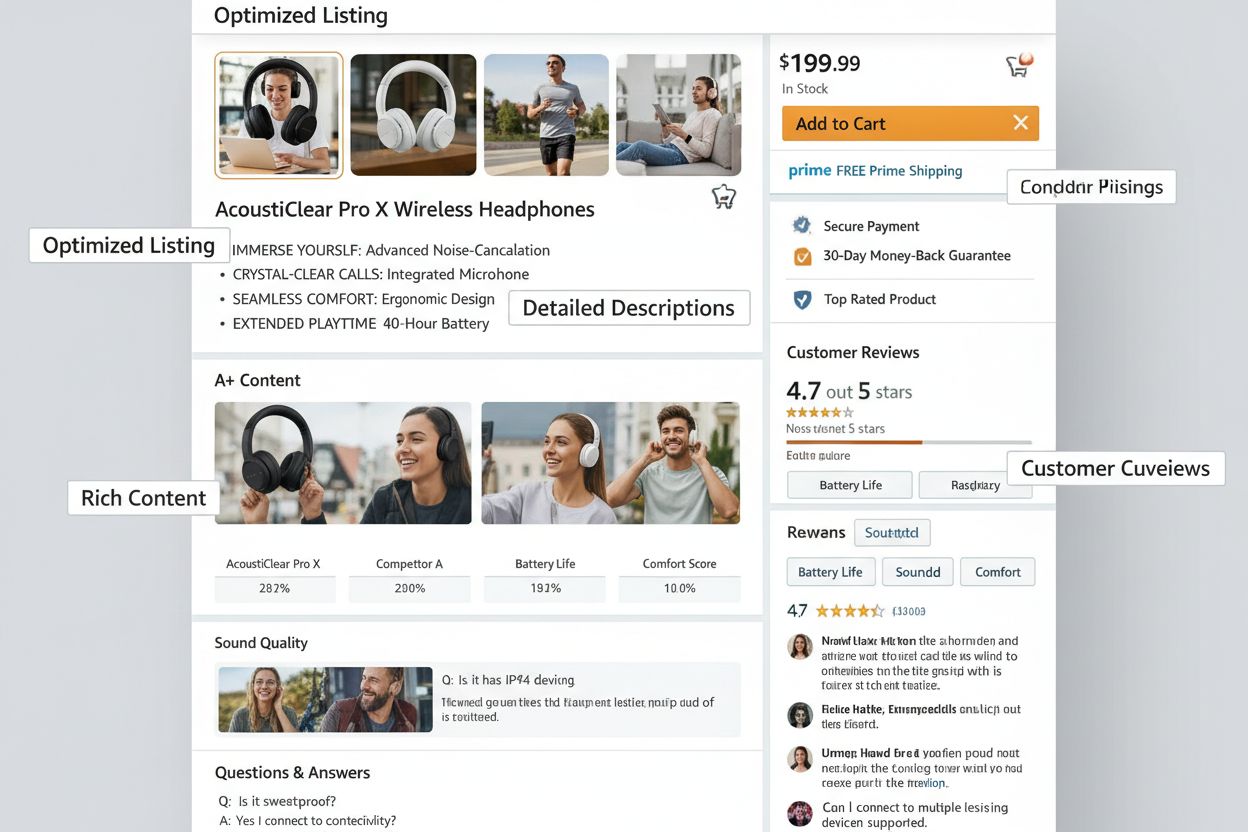
Customer reviews and Q&A sections have evolved from supplementary content to primary data sources that Rufus uses to synthesize product information and make recommendations. The AI assistant doesn’t simply count positive reviews; instead, it analyzes review themes and patterns to understand how customers actually experience your product across different dimensions. Reviews that address specific aspects—such as durability, value for money, appearance, ease of assembly, or suitability for particular use cases—provide Rufus with the granular information it needs to match your product with customers seeking solutions to those specific concerns. The Q&A section functions as a dynamic knowledge base where customers ask real questions and receive real answers, creating a conversational record that Rufus can reference when customers ask similar questions. Community engagement in the Q&A section is particularly valuable; sellers who respond promptly and thoroughly to customer questions demonstrate product expertise and build trust signals that Rufus recognizes. Detailed customer feedback that goes beyond simple “I liked this” or “I didn’t like this” statements provides Rufus with the contextual information necessary to make nuanced recommendations. Encouraging customers to leave substantive reviews and actively managing your Q&A section should be considered core components of your Rufus optimization strategy, as these elements directly influence how the AI assistant perceives and recommends your products.
The introduction of shopping memory represents a paradigm shift in how Rufus personalizes recommendations, moving beyond session-based personalization to a comprehensive, persistent understanding of each customer’s shopping profile. Rufus now remembers purchase history, browsing patterns, reviews customers have left, search history, and abandoned cart items, creating a rich contextual foundation for every recommendation. This means that a customer who has previously purchased premium fitness equipment and left detailed reviews about durability will receive different product recommendations than a budget-conscious customer browsing the same category. The implications for sellers are significant: your products are now being evaluated not just on their absolute merits, but on how well they fit within each individual customer’s demonstrated preferences and shopping patterns. A product that perfectly matches a customer’s previous purchases and stated preferences will receive preferential visibility in Rufus recommendations, even if competing products have higher overall ratings. This personalization layer means that account memory extends across Amazon services, allowing Rufus to leverage data from Prime Video viewing history, Alexa interactions, and other Amazon ecosystem touchpoints to inform recommendations. For sellers, this underscores the importance of understanding your target customer profile deeply and optimizing your product information specifically for the customers most likely to appreciate and purchase your offerings. The shopping memory feature essentially rewards sellers who build loyal customer bases and encourage repeat purchases, as these customers become increasingly valuable sources of personalization data.
Tracking your product’s performance within the Rufus ecosystem requires a different analytical approach than traditional Amazon SEO monitoring, as Rufus interactions don’t always result in immediate, easily-attributable sales. Begin by monitoring how your products appear in Rufus summaries by regularly asking the AI assistant questions related to your product category and noting whether your products are recommended and how they’re described. Seller Central tools provide valuable data on customer interactions, including search terms that led customers to your products and the conversion rates associated with different traffic sources. Analyze patterns in your customer Q&A and review sections to identify which product attributes and use cases are generating the most customer interest and engagement—these insights reveal what Rufus is likely emphasizing in its recommendations. Track changes in search visibility and conversion rates following content updates, as improvements in product descriptions, A+ content, or review engagement often correlate with increased Rufus visibility. Consider implementing UTM parameters or custom tracking if you drive traffic to Amazon from external channels, allowing you to measure how Rufus-influenced customers behave differently from other traffic sources. The key metric to monitor is not just visibility in Rufus recommendations, but conversion rate and customer lifetime value among customers who interact with Rufus, as these customers demonstrate higher purchase intent and loyalty. Continuous optimization requires regular monitoring, hypothesis testing, and refinement of your content strategy based on performance data and customer feedback patterns.
While Rufus represents the cutting edge of Amazon’s search and recommendation technology, relying exclusively on Rufus optimization would be strategically shortsighted for any seller. Currently, fewer than 3 out of 100 Amazon purchases rely on Rufus, meaning that traditional search optimization, sponsored ads, and other visibility channels remain critical components of a comprehensive Amazon strategy. The fundamental principles of traditional SEO—keyword relevance, product quality, customer satisfaction, and competitive pricing—remain as important as ever, as they form the foundation upon which Rufus makes its recommendations. Sellers should view Rufus optimization not as a replacement for existing strategies, but as an additional layer that enhances visibility among the growing segment of customers who prefer conversational shopping experiences. Building a direct-to-consumer (DTC) presence outside of Amazon becomes increasingly important as the platform evolves, ensuring that you’re not entirely dependent on any single algorithm or platform change. The most successful sellers will adopt a diversified approach that maintains excellence in traditional Amazon optimization while simultaneously investing in Rufus-specific content enhancements and exploring emerging channels. As Amazon continues to introduce new features and upgrades—the platform has already deployed 50+ technical upgrades and new features related to Rufus—staying informed about these changes and adapting your strategy accordingly will be essential for long-term success in an increasingly AI-driven marketplace.
Amazon Rufus is an AI shopping assistant that uses advanced language models and retrieval-augmented generation (RAG) technology to provide personalized product recommendations through conversational interactions. It analyzes product listings, customer reviews, Q&A sections, and A+ content to understand products and match them with customer needs. Over 250 million customers have used Rufus, and it powers approximately 13.7% of Amazon searches.
Traditional Amazon search relies on keyword matching and ranking algorithms, while Rufus uses conversational AI to understand customer intent and provide contextual recommendations. Rufus remembers shopping history, browsing patterns, and customer preferences to deliver personalized suggestions. Customers using Rufus are 60% more likely to make a purchase compared to traditional search users.
Key factors include comprehensive product descriptions (2000+ characters), rich A+ content with lifestyle imagery, detailed customer reviews addressing specific product aspects, active Q&A engagement, high-quality product images showing real-world use, and clear bullet points that address common customer questions. The depth and quality of your product information directly influences how frequently Rufus recommends your products.
A+ content is critical for Rufus optimization as it provides the AI with rich contextual information through lifestyle imagery, comparison charts, and narrative storytelling. A+ content helps Rufus understand the emotional and practical benefits of your product, making it more likely to recommend your product to relevant customers. It should include at least 500 words of crawlable text and demonstrate real-world product applications.
Yes, significantly. Rufus's shopping memory feature now remembers purchase history, browsing patterns, reviews customers have left, search history, and abandoned cart items. This means your products are evaluated not just on absolute merits but on how well they fit individual customer profiles. Sellers should focus on understanding their target customer deeply and optimizing product information specifically for customers most likely to appreciate their offerings.
Monitor Rufus visibility by regularly asking the AI assistant questions related to your product category and noting how your products are recommended. Use Seller Central tools to track customer interactions and search terms. Analyze Q&A and review patterns to identify which product attributes generate the most interest. Track conversion rates and customer lifetime value among Rufus-influenced customers, as these metrics reveal true impact.
Yes, absolutely. Currently, fewer than 3 out of 100 Amazon purchases rely on Rufus, so traditional SEO remains critical. The fundamental principles of keyword relevance, product quality, customer satisfaction, and competitive pricing form the foundation upon which Rufus makes recommendations. View Rufus optimization as an additional layer that enhances visibility among customers who prefer conversational shopping, not a replacement for existing strategies.
Develop descriptions that exceed 2000 characters and explain not just what your product is, but how it solves specific problems and who it's best suited for. Address specific customer concerns like 'suitable for sensitive skin' or 'compatible with older devices.' Use clear language that mirrors how customers actually speak about your product category. Regularly update descriptions to reflect new use cases and customer feedback.
Track how your products are cited and recommended by Amazon Rufus and other AI shopping assistants. Get real-time insights into your AI visibility and competitive positioning.
Discover how Amazon Rufus uses generative AI and machine learning to provide personalized product recommendations. Learn the technology, features, and impact on...

Learn about Amazon Rufus, the AI shopping assistant that answers product questions, compares items, and provides personalized recommendations. Discover how it w...
Master Amazon Rufus optimization with our complete guide. Learn 5 proven strategies to improve product visibility, increase conversions, and stay ahead in AI-dr...