
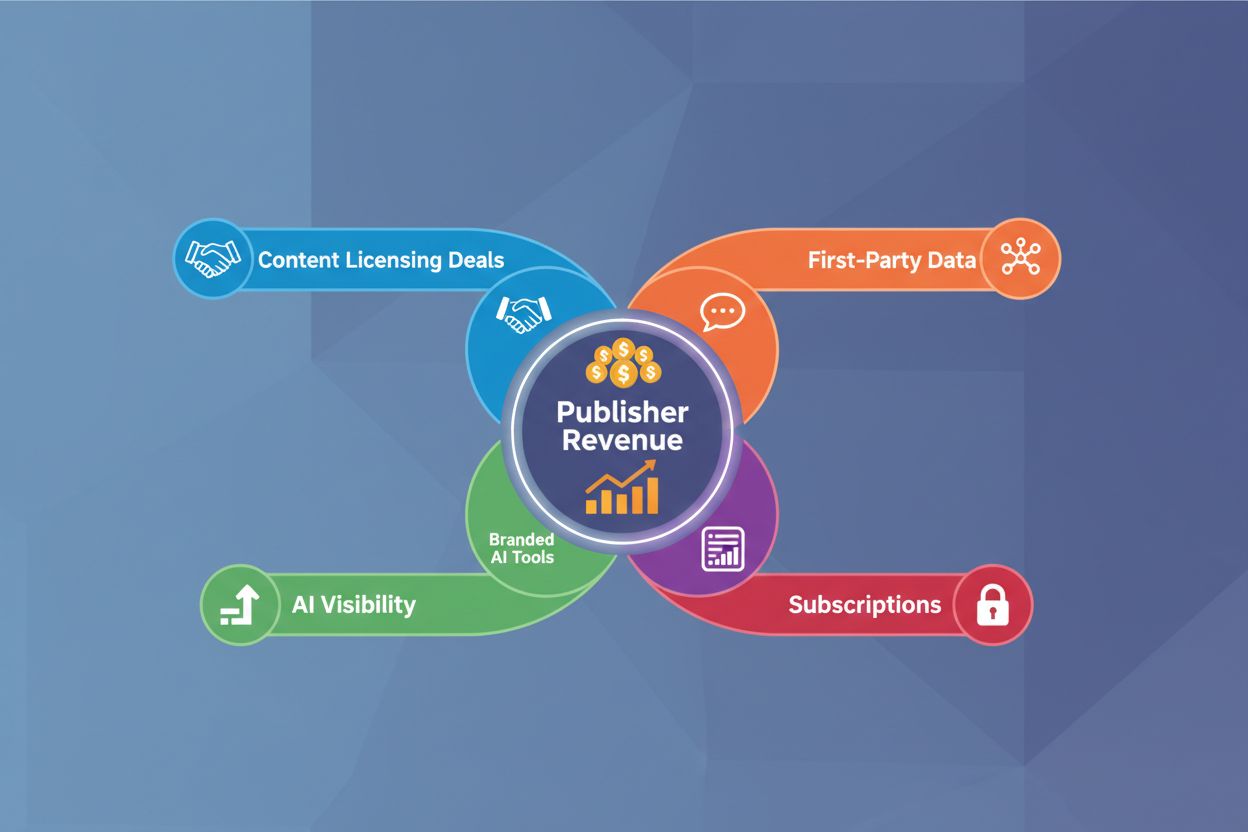
Monetizing AI Traffic: Revenue Strategies for Publishers
Discover proven revenue strategies for monetizing AI traffic. Learn licensing deals, GEO optimization, and diversified income streams for publishers in the AI e...
8 min read
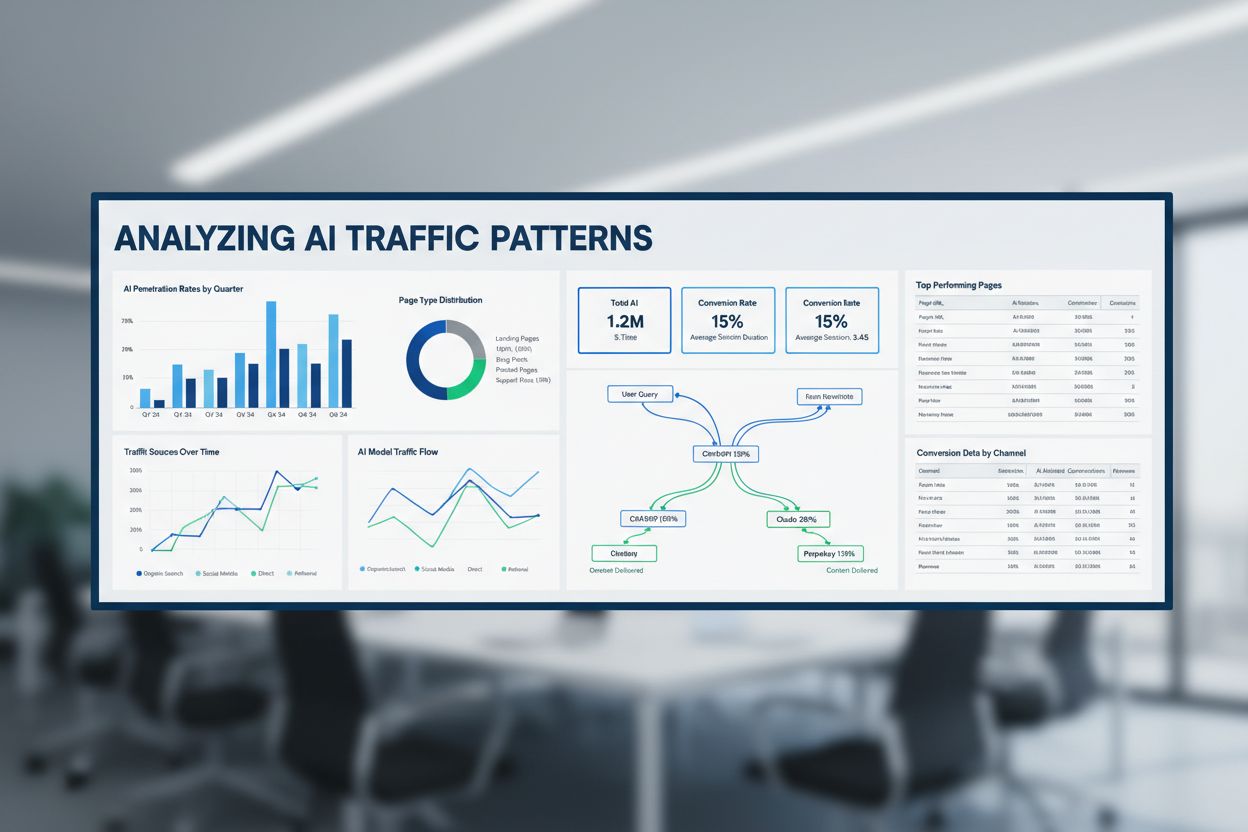
Discover what AI traffic data reveals about LLM behavior. Analyze ChatGPT, Claude, and Perplexity traffic patterns with real data and actionable insights for your business.
The data is undeniable: 1,963,544 LLM sessions were analyzed across a full year of monitoring, revealing an AI-driven discovery ecosystem that’s fundamentally reshaping how users find content. What’s most striking isn’t just the volume—it’s the velocity. AI-sourced traffic grew 527% year-over-year between January and May 2025, a growth rate that dwarfs traditional organic search expansion. This isn’t a niche phenomenon anymore; it’s a seismic shift in how information discovery works, and brands that aren’t measuring it are flying blind.
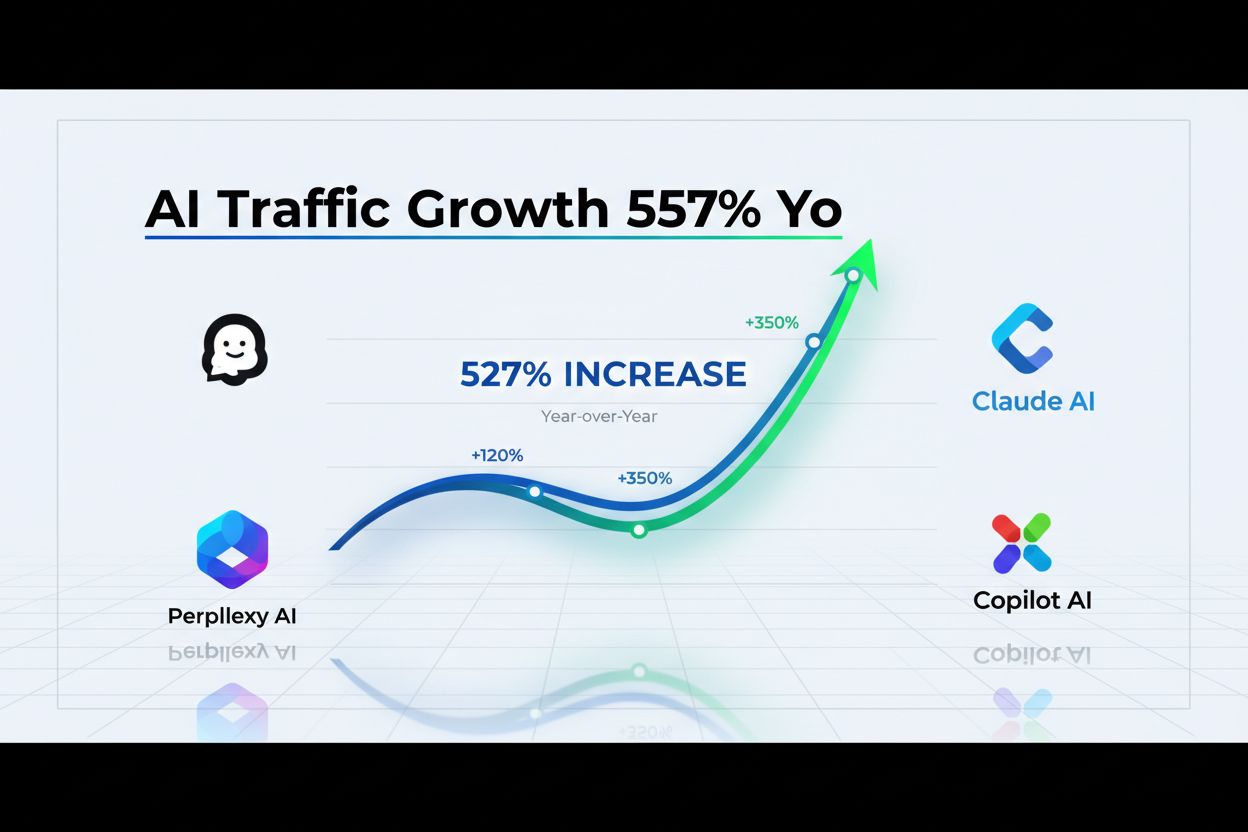
When we talk about “AI penetration,” we’re measuring the percentage of all web sessions that originate from LLM interactions—essentially, how often AI tools are sending traffic to your content compared to all other sources combined. The formula is straightforward: (AI sessions ÷ total sessions) × 100 = penetration rate. Across the entire web, AI penetration sits at 0.13%, meaning roughly 1 in 769 sessions comes from an AI tool. This might sound small in isolation, but context matters enormously. This baseline represents a massive increase from just 18 months ago when AI traffic was virtually unmeasurable. More importantly, penetration rates vary wildly by content type, industry, and page function—some categories see penetration rates 9 times higher than the average. Understanding your specific penetration rate is the first step toward optimizing for AI discovery.
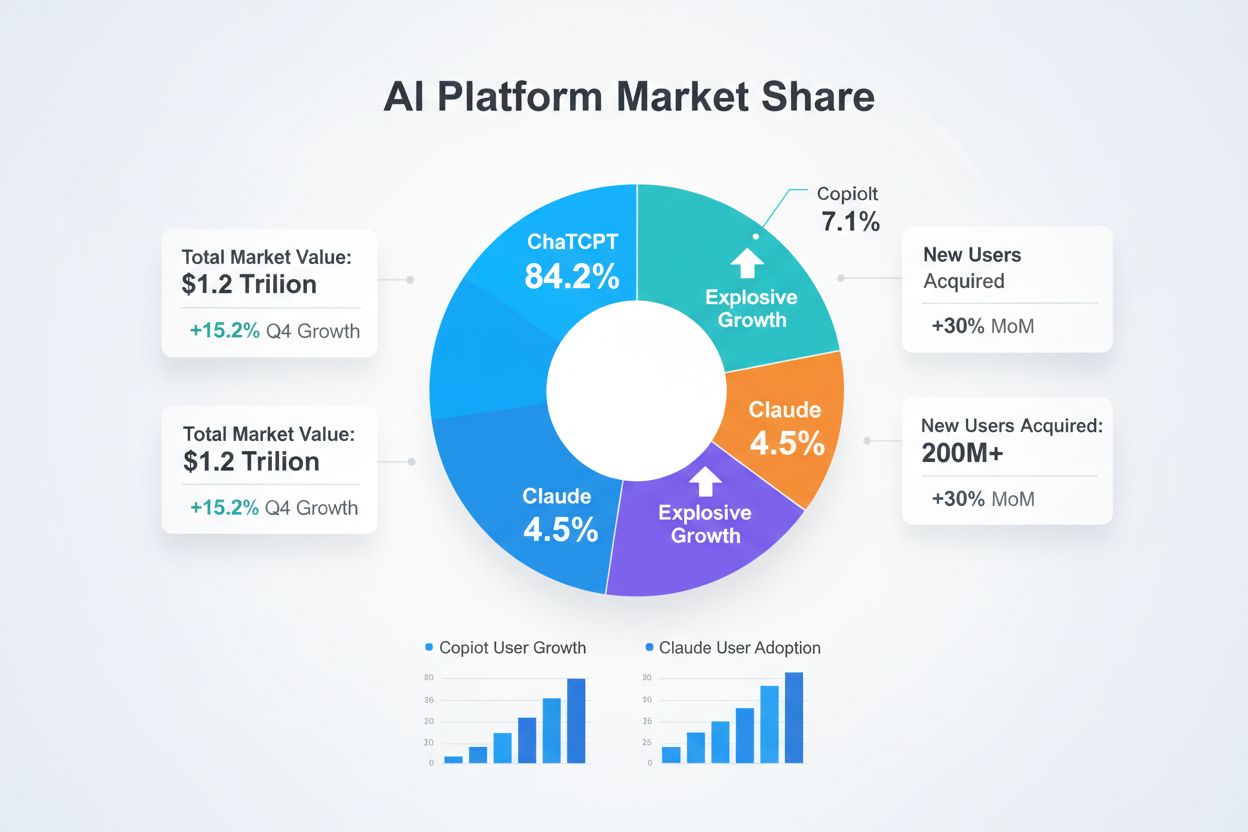
| AI Platform | Market Share | YoY Growth |
|---|---|---|
| ChatGPT | 84.2% | 3.26x |
| Copilot | ~8% | 25.2x |
| Claude | ~5% | 12.8x |
| Others | ~2.8% | Varied |
ChatGPT’s 84.2% market share makes it the undisputed leader in AI-driven traffic generation, but the story becomes far more interesting when you examine growth trajectories. While ChatGPT grew 3.26x year-over-year, Copilot exploded with 25.2x growth and Claude achieved 12.8x growth, signaling that the market is rapidly fragmenting. This matters because different AI platforms have different training data cutoffs, different retrieval mechanisms, and different user bases. A brand optimized exclusively for ChatGPT discovery might be missing explosive growth opportunities from Copilot’s enterprise adoption or Claude’s appeal to technical audiences. The competitive landscape is shifting faster than most marketers realize, and platform diversification in your AI traffic strategy is no longer optional—it’s essential.
| Content Type | Penetration Rate | Multiple vs. Average |
|---|---|---|
| Industry Pages | 1.14% | 9x higher |
| Pricing Pages | 0.46% | 3.5x higher |
| General Content | 0.13% | Baseline |
| Blog Posts | ~0.08% | Below average |
AI traffic doesn’t distribute evenly across your website—it concentrates heavily on specific page types that serve particular functions. Industry pages see 1.14% penetration, a staggering 9 times higher than the baseline, because AI tools are actively searching for contextual information about sectors and verticals. Pricing pages capture 0.46% penetration, 3.5 times the average, revealing that AI systems are being used for competitive research and cost comparison at scale. Meanwhile, general blog content and thought leadership pieces receive below-average AI traffic, suggesting that AI tools prioritize transactional and informational content over editorial narratives. This concentration pattern has profound implications: if your traffic strategy treats all pages equally, you’re leaving massive opportunity on the table. The pages that matter most to AI discovery are often the ones that matter most to conversion anyway.
Pricing pages represent a fascinating microcosm of AI behavior: they’re 3.5 times more likely to be visited by AI systems than the average web page, yet most brands treat them as afterthoughts in their SEO and content strategies. This concentration makes sense when you consider what AI tools are optimized to do—they’re designed to answer specific, factual questions, and “what does this cost?” is one of the most concrete questions a user can ask. AI systems are essentially conducting automated competitive intelligence, benchmarking, and cost analysis at scale. For SaaS companies, marketplaces, and service providers, this means pricing pages deserve the same optimization rigor you’d apply to your homepage or main landing pages. The data suggests that AI visibility on pricing pages directly correlates with conversion opportunities, since users asking AI about pricing are already in an evaluation mindset. Brands that optimize pricing pages for AI discovery—with clear structure, comprehensive comparison tables, and explicit value propositions—are capturing high-intent traffic that’s 4.4 times more likely to convert than traditional organic visitors.
E-commerce traffic patterns reveal the temporal dimension of AI discovery: November 2025 saw a 67% increase in AI-sourced traffic to shopping-related content, a spike that aligns perfectly with holiday shopping season. This isn’t coincidental—it reflects how consumers are using AI tools to navigate the overwhelming choice landscape during peak shopping periods. When faced with thousands of product options, users turn to AI assistants to filter, compare, and recommend. The implication is clear: e-commerce brands need seasonal AI optimization strategies that mirror their paid advertising calendars. If you’re investing heavily in Black Friday and Cyber Monday campaigns, you should be equally focused on ensuring your product pages, comparison content, and category pages are discoverable and optimized for AI systems during these peak periods. The 67% surge suggests that AI-driven discovery becomes a primary traffic channel during high-intent shopping moments, potentially rivaling or exceeding traditional search during these windows.
| Industry | YoY Growth | Penetration Trend |
|---|---|---|
| Legal | 11.9x | Highest growth |
| Finance | 2.9x | Strong adoption |
| Health | 2.4x | Emerging adoption |
| General Web | 3.26x | Baseline |
Your Money, Your Life (YMYL) categories—legal, financial, and health content—are experiencing explosive AI traffic growth, with legal content seeing 11.9x growth, finance at 2.9x, and health at 2.4x. This pattern reflects a fundamental trust dynamic: users are increasingly comfortable asking AI systems about high-stakes decisions when those systems can cite authoritative sources. Legal professionals are using AI to research case law and precedent, financial advisors are leveraging AI for market research and client education, and patients are using AI to understand medical conditions and treatment options. For brands operating in these verticals, this represents both opportunity and responsibility. The opportunity is obvious—AI traffic in YMYL categories is growing faster than anywhere else on the web. The responsibility is equally clear: accuracy, sourcing, and authority become non-negotiable. Brands that can demonstrate expertise and cite credible sources will capture disproportionate AI traffic in these high-value categories.
| Vertical | Primary AI Use Case | Optimization Priority |
|---|---|---|
| Legal | Research & precedent | Authority & citations |
| Finance | Market research & education | Data accuracy & timeliness |
| Health | Condition research & treatment | Medical credibility & disclaimers |
| E-commerce | Product comparison & discovery | Structured data & pricing |
| B2B SaaS | Feature comparison & pricing | Competitive positioning |
Different industries experience AI discovery through fundamentally different pathways, and understanding these vertical-specific patterns is crucial for targeted optimization. Legal content gets discovered when AI systems are helping lawyers research case law or clients understand their rights—the discovery path emphasizes authority, citations, and comprehensive coverage. Finance content gets pulled into AI responses when users are researching investment options, understanding market conditions, or learning about financial products—the discovery path emphasizes data accuracy, timeliness, and credibility. Health content follows a similar pattern but with additional emphasis on medical credentials and disclaimers. E-commerce and B2B SaaS follow more transactional paths, where AI systems are actively comparing features, pricing, and capabilities across competitors. The key insight is that one-size-fits-all AI optimization doesn’t work—you need vertical-specific strategies that align with how AI systems actually use your content within your industry context.
While the current data focuses on text-based AI discovery, the future of AI traffic will increasingly involve multimodal content—video, podcasts, and interactive elements that AI systems can parse and synthesize. Current AI tools are beginning to incorporate video understanding and audio transcription, meaning that brands investing in video content and podcast transcripts today are positioning themselves for exponential AI traffic growth tomorrow. A product demo video with a detailed transcript, a podcast episode with timestamped chapters, or an interactive comparison tool with structured data will become increasingly discoverable through AI systems. The brands that recognize this transition early—moving beyond text-only optimization to comprehensive multimodal strategies—will capture disproportionate traffic as AI capabilities evolve. This isn’t speculative; it’s already happening at the margins, with Claude and newer versions of other platforms showing enhanced ability to understand and cite video and audio content. The window to establish multimodal authority in your category is closing rapidly.
Measuring AI traffic accurately presents distinct challenges that traditional analytics tools weren’t designed to solve:
Solutions require a combination of technical implementation and specialized monitoring. First, implement UTM parameters and custom tracking specifically for AI traffic sources. Second, use dedicated AI traffic monitoring platforms (like AmICited) that can identify AI-sourced sessions through behavioral patterns and user-agent analysis. Third, establish baseline metrics for AI conversion rates, engagement depth, and content consumption patterns so you can measure impact accurately. Fourth, create feedback loops where you monitor which of your pages are being cited by AI systems and track the downstream traffic and conversions those citations generate.
Optimizing for AI discovery requires a fundamentally different approach than traditional SEO, though the two strategies complement each other:
The trajectory is clear: AI-driven discovery will continue to grow exponentially, eventually rivaling or exceeding traditional search as a primary traffic source for many categories. The brands that treat AI traffic as a secondary concern today will find themselves at a severe disadvantage within 18-24 months. The data shows us that this isn’t a distant future scenario—it’s already happening in legal, finance, health, and e-commerce categories. The competitive advantage belongs to organizations that are measuring AI traffic today, understanding their vertical-specific patterns, and optimizing their content and technical infrastructure for AI discovery. The 527% year-over-year growth rate isn’t sustainable indefinitely, but even if growth moderates to 50-100% annually, AI traffic will become a dominant channel within 3-5 years. The question isn’t whether AI traffic matters to your business—the data has already answered that. The question is whether you’ll be ready when it does.
AI penetration measures the percentage of all web sessions that originate from LLM interactions. It's calculated as (AI sessions ÷ total sessions) × 100. The current average is 0.13%, meaning roughly 1 in 769 sessions comes from an AI tool, though this varies significantly by content type and industry.
AI visitors convert 4.4 times better than traditional organic search visitors. This is because users who arrive via AI have already been provided detailed information, compared options, and evaluated alternatives before clicking through to your site. They arrive more informed and closer to a purchase decision.
Industry pages receive 1.14% AI penetration (9x higher than average), pricing pages get 0.46% (3.5x higher), and tools pages see 0.95% (7x higher). AI traffic concentrates on decision-making pages rather than general content, indicating high commercial intent.
Implement UTM parameters on links likely to be picked up by LLMs, use dedicated AI monitoring platforms like AmICited, analyze server logs for AI user agents (GPTBot, ClaudeBot, etc.), and create derived fields in your analytics platform to identify AI-sourced sessions.
ChatGPT dominates with 84.2% market share and 3.26x growth, but Copilot is growing 25.2x faster and Claude 12.8x faster. Different platforms have different user bases, training data, and retrieval mechanisms, so platform-specific optimization is essential.
Implement structured data and schema markup, emphasize authority signals with credentials and citations, create comparison content, optimize for specificity with concrete data, develop citation-worthy original research, and use clear content hierarchy with headings and bullet points.
Yes, e-commerce AI traffic surged 67% during November 2025 holiday shopping season. Different industries show different seasonal patterns, with legal and finance seeing more consistent year-round growth, while retail and e-commerce show pronounced seasonal spikes.
YMYL (Your Money or Your Life) categories lead adoption: legal shows 11.9x growth, finance 2.9x, and health 2.4x. These high-stakes industries see faster AI adoption because users want synthesis and expert-level explanation for important decisions.
Understand how AI systems reference your brand across ChatGPT, Perplexity, Google AI Overviews, and more. Get real-time insights into your AI visibility and track citations automatically.
Discover proven revenue strategies for monetizing AI traffic. Learn licensing deals, GEO optimization, and diversified income streams for publishers in the AI e...

Discover how AI search engines like ChatGPT and Perplexity are affecting organic traffic. Learn about traffic decline statistics, quality metrics, and strategie...
Discover AI traffic conversion rates across ChatGPT, Claude, and Perplexity. Learn why AI visitors convert 5-23x better than Google organic search and how to op...