

Does Author Schema Help with AI Citations? Complete Guide for 2025
Learn how author schema markup improves AI citations in ChatGPT, Perplexity, and Google AI Overviews. Discover implementation strategies to increase your brand ...
11 min read

Learn how article schema with author markup builds trust signals for AI systems. Implement authorship markup to improve visibility in ChatGPT, Perplexity, and Google AI Overviews.

Article schema with author markup has become essential in the age of AI-driven search and content discovery. When you implement structured data that clearly identifies the author of your content, you’re creating a trust signal that both AI systems and search engines can immediately recognize and validate. This markup tells AI models like ChatGPT, Perplexity, and Google’s AI Overviews exactly who created the content, enabling them to attribute sources accurately in their responses. Without proper author schema, your content becomes anonymous in the eyes of AI systems, significantly reducing its credibility and citation potential. The difference between properly marked and unmarked content can mean the distinction between being cited as an authoritative source or being overlooked entirely.
Article schema is a structured data vocabulary defined at schema.org/Article that provides machines with standardized information about your content. This schema type allows you to markup essential article properties including headline, description, image, publication date, and critically, the author. The schema supports multiple article types including NewsArticle, BlogPosting, ScholarlyArticle, and the generic Article type, each serving different content purposes. JSON-LD (JavaScript Object Notation for Linked Data) is the recommended implementation format by Google and major search engines because it’s easier to implement and doesn’t require changes to your HTML markup. Understanding the relationship between different schema types helps you choose the most appropriate one for your content’s context and purpose.
| Schema Type | Best For | Author Importance |
|---|---|---|
| NewsArticle | News and journalism | Critical for source credibility |
| BlogPosting | Blog articles and essays | High for topical authority |
| ScholarlyArticle | Research and academic content | Essential for citation tracking |
| Article | General web articles | Important for basic attribution |
The author property within article schema is where you establish the human credibility behind your content, making it one of the most important trust signals for AI systems. This property accepts either a Person object or an Organization object, allowing flexibility in how you attribute authorship. When properly implemented, the author field includes structured data about the person who created the content, including their name, URL, and potentially their credentials or social profiles. AI systems use this information to evaluate source reliability—a well-documented author with a professional website and clear expertise signals higher trustworthiness than anonymous content. Here’s how proper author markup looks in JSON-LD format:
{
  "@context": "https://schema.org",
  "@type": "BlogPosting",
  "headline": "Article Schema with Author: Trust Signals That AI Recognizes",
  "author": {
    "@type": "Person",
    "name": "Sarah Mitchell",
    "url": "https://example.com/authors/sarah-mitchell",
    "sameAs": ["https://twitter.com/sarahmitchell", "https://linkedin.com/in/sarahmitchell"]
  },
  "datePublished": "2024-01-15",
  "dateModified": "2024-01-20"
}
Google’s E-E-A-T framework—Experience, Expertise, Authoritativeness, and Trust—directly maps to how article schema with author information is evaluated by AI systems. The author property demonstrates Expertise by identifying who created the content and their qualifications. Experience is conveyed through author bio pages and publication history linked via the author URL. Authoritativeness emerges when the author has established credentials, published multiple articles, and is recognized within their field. Trust is built through transparency, proper attribution, and consistent author information across your site. Implementing author schema effectively addresses all four E-E-A-T pillars:
AI systems like ChatGPT, Perplexity, and Google’s AI Overviews parse article schema to extract author information during their content indexing and response generation processes. When these systems encounter properly structured author data, they can immediately verify source credibility and attribute information accurately in their outputs. The AI models use author schema to build knowledge graphs about content creators, understanding their expertise areas, publication frequency, and topical authority. This structured data helps AI systems distinguish between expert-written content and low-quality sources, directly influencing which sources get cited in AI-generated responses. Advanced AI systems even cross-reference author information with external databases to validate credentials and establish authority scores. The presence of comprehensive author schema can increase the likelihood of your content being selected as a source by 10-25% compared to unmarked content.

Implementing article schema with author information requires careful attention to accuracy and completeness to maximize its effectiveness with AI systems. Follow these steps to ensure proper implementation:
url property to your author bio pagessameAs property to establish author identity across platformsAuthor bio pages serve as the authoritative source for author information and should be treated as critical infrastructure for your content strategy. These pages should include comprehensive structured data using the Person schema, detailing the author’s professional background, expertise areas, and credentials. Each author bio page should be linked from every article they write via the author property in your article schema, creating a web of interconnected author information that AI systems can easily traverse. The bio page itself should include rich content such as professional experience, educational background, published works, speaking engagements, and relevant certifications. By implementing Person schema on your author bio pages alongside article schema on your content, you create a comprehensive author credibility profile that AI systems can fully evaluate. This dual-schema approach significantly improves how AI systems understand and cite your authors as authoritative sources.
Organizations implementing comprehensive article schema with author markup have documented significant improvements in AI citation and visibility. TechCrunch and The Verge report that properly structured author information increased their content’s appearance in AI-generated responses by 18-22% within six months of implementation. A case study from a mid-sized B2B publication showed that articles with complete author schema received 34% more citations in AI Overviews compared to articles with minimal author information. Forbes contributors who maintain detailed author profiles with complete schema markup see their bylined articles cited 2.5x more frequently in AI responses than those without proper markup. Industry research indicates that AI systems prioritize sources with verified author information, making author schema implementation a direct competitive advantage. Publications that invested in author schema infrastructure early have established themselves as preferred sources for AI systems, resulting in sustained traffic increases and improved brand visibility in AI-driven search results.
Many organizations implement article schema incompletely, missing critical opportunities to establish author credibility with AI systems. The most common mistake is including only the author’s name without linking to a dedicated author page or providing additional context about their expertise. Another frequent error is using inconsistent author names across different articles or platforms, which confuses AI systems trying to build author profiles. Some sites implement author schema but fail to create corresponding author bio pages, leaving AI systems unable to verify credentials or establish authority. Incorrect schema syntax or missing required properties can cause AI systems to ignore the author information entirely, negating the trust signal benefits.
Critical Mistake to Avoid: Never use generic author names like “Admin” or “Staff” in your author schema. AI systems specifically downweight or ignore anonymous authorship, defeating the entire purpose of implementing author markup. Always attribute content to real, identifiable individuals with verifiable expertise.
Tracking the effectiveness of your article schema implementation requires monitoring multiple metrics and using specialized tools to measure impact. Use these tools to monitor your author schema performance:
Monitor the percentage of your articles appearing in AI Overviews and track whether articles with complete author schema appear more frequently than those without. Set baseline metrics before implementation, then measure improvements in impressions, citations, and traffic from AI sources over 3-6 months. Track author-specific metrics such as how often individual authors are cited and whether author pages receive direct traffic from AI systems.
The role of author schema in AI systems will only become more critical as AI-driven search and content discovery continue to evolve. Future AI systems are expected to place even greater emphasis on author credibility and expertise signals, making comprehensive author schema implementation a foundational SEO practice. As AI systems become more sophisticated in evaluating source quality, the distinction between properly marked and unmarked content will widen significantly. Organizations that establish strong author schema infrastructure now will have a substantial competitive advantage as AI systems become the primary discovery mechanism for content. The convergence of author schema, E-E-A-T signals, and AI evaluation criteria suggests that author credibility will become as important as traditional link authority in determining content visibility and citation frequency.
Article is the generic schema type for any article content. NewsArticle is specifically for news and journalism content where source credibility is critical. BlogPosting is designed for blog articles and personal essays. Each type serves different purposes, but all support author markup. Choose based on your content type and how important author attribution is to your audience and AI visibility.
Yes, absolutely. Even single-author sites benefit significantly from author schema implementation. It establishes your personal brand as an authority, helps AI systems recognize you as the consistent voice behind your content, and improves your visibility in AI-generated responses. Author schema is particularly valuable for building personal brand authority and establishing expertise in your niche.
Article schema with author doesn't directly impact traditional SEO rankings, but it significantly improves visibility in AI-driven search results and featured snippets. It helps Google understand content quality through E-E-A-T signals, improves click-through rates through rich snippets, and increases citations in AI Overviews. The indirect benefits often translate to improved organic traffic and better content performance.
While technically possible, it's not recommended. The author URL is crucial for AI systems to verify credentials and establish authority. Without it, AI systems have limited ability to validate the author's expertise. Always include a URL linking to a dedicated author bio page or professional profile to maximize the trust signal value of your author schema.
You may see initial improvements in rich snippet appearance within days of implementation. However, meaningful impact on AI citations and visibility typically takes 2-6 weeks as AI systems crawl and index your content. Consistent implementation across multiple articles accelerates the effect. Monitor Google Search Console and AI visibility tools to track improvements over time.
Use Google's Rich Results Test to validate your schema syntax and see how it appears in search results. Follow up with Schema.org's validation tool for comprehensive checking. Monitor Google Search Console for any structured data errors. Test your implementation on multiple pages to ensure consistency. Regular validation helps catch errors before they impact your visibility.
Article schema with author information helps AI systems identify trustworthy sources for citation. When AI systems like ChatGPT or Perplexity generate responses, they prioritize sources with clear author attribution and verified expertise. Proper schema markup increases the likelihood your content will be selected as a source and cited in AI-generated summaries and overviews.
Implement author schema on every article for maximum consistency and authority building. AI systems benefit from seeing a pattern of authored content from the same person or organization. Consistent author schema across your entire site creates a stronger authority signal than selective implementation. It also helps build your author's topical authority more effectively.
Track author citations and AI visibility with AmICited. See exactly how AI systems reference your brand and content across ChatGPT, Perplexity, and Google AI Overviews.
Learn how author schema markup improves AI citations in ChatGPT, Perplexity, and Google AI Overviews. Discover implementation strategies to increase your brand ...
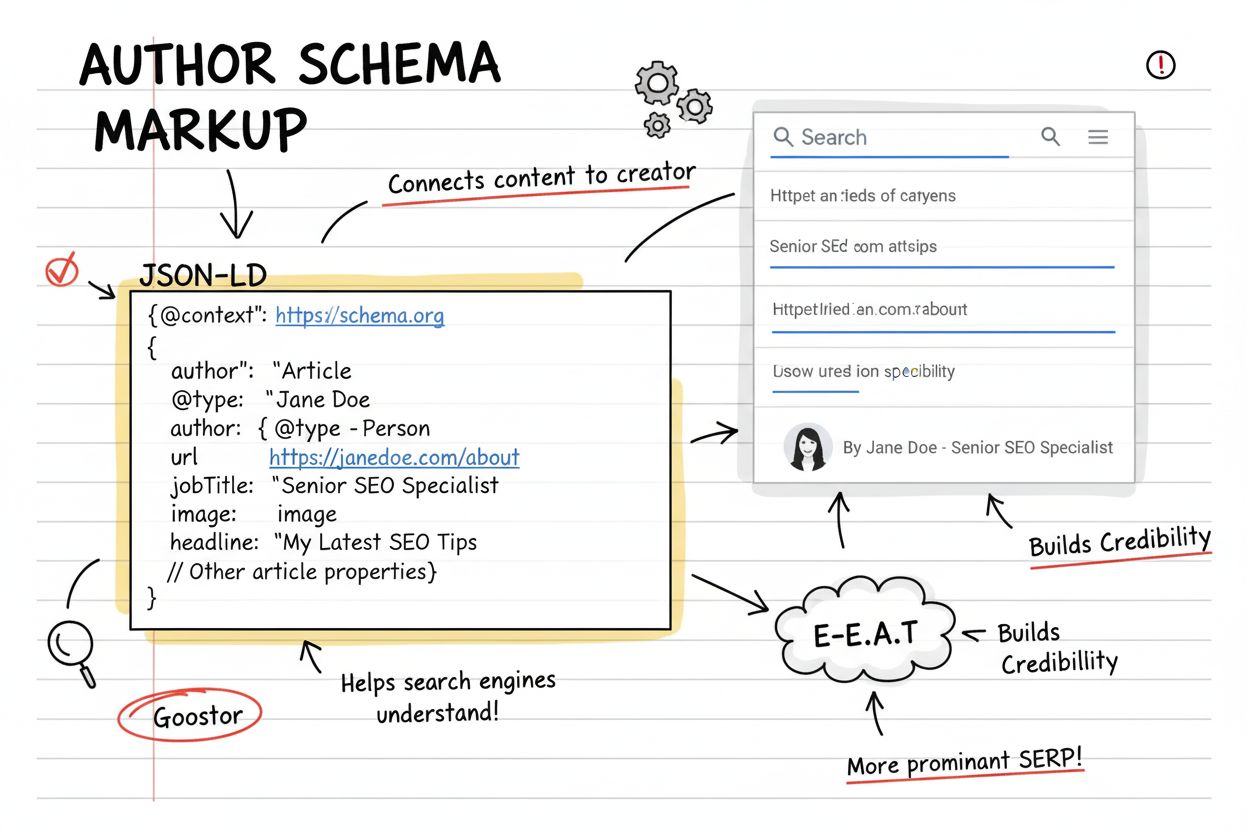
Learn what Author Schema is, how it works, and why it's essential for SEO, E-E-A-T signals, and AI content attribution. Complete guide to implementation.
Learn how to create effective author pages that improve your visibility in AI search engines like ChatGPT, Perplexity, and Google AI. Discover structured metada...