
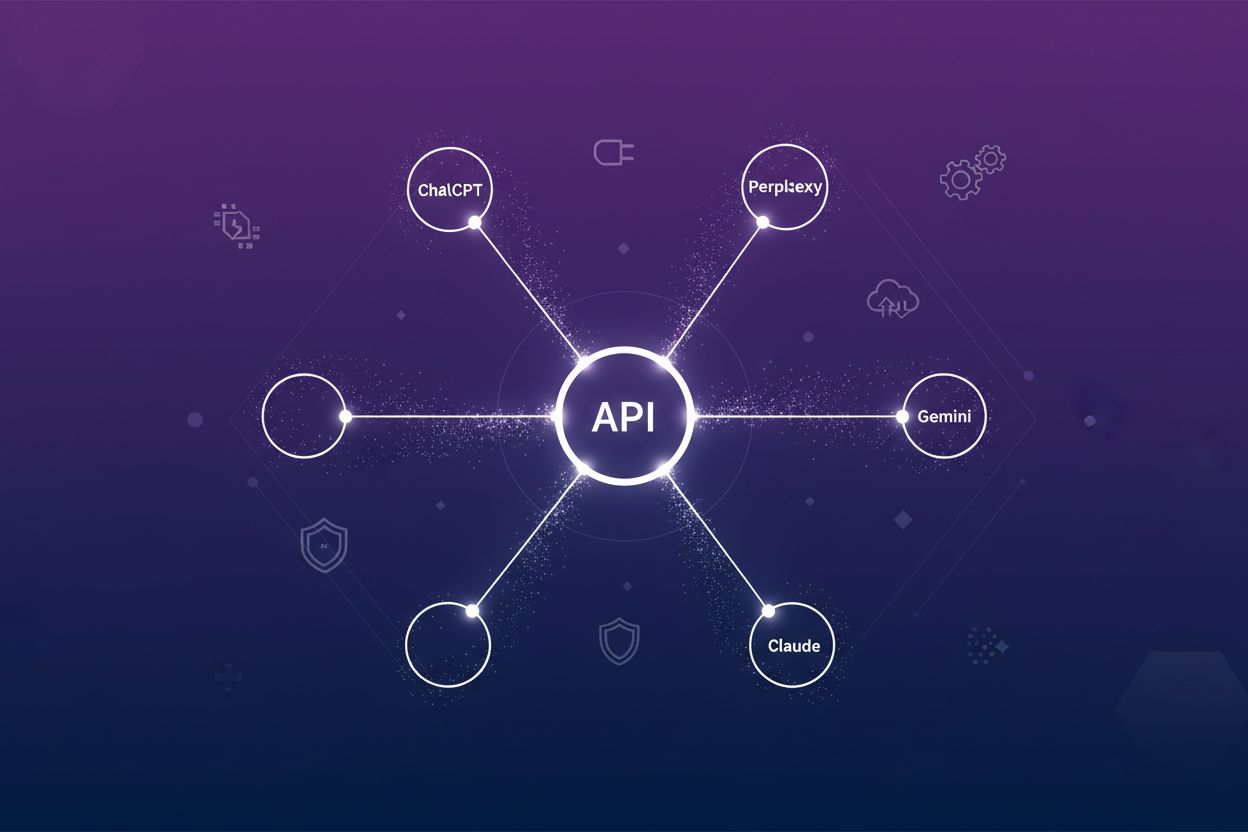
AI Visibility API
Learn what AI Visibility APIs are, how they work, and how to use them for real-time brand monitoring across ChatGPT, Perplexity, Gemini, and other AI platforms....
8 min read
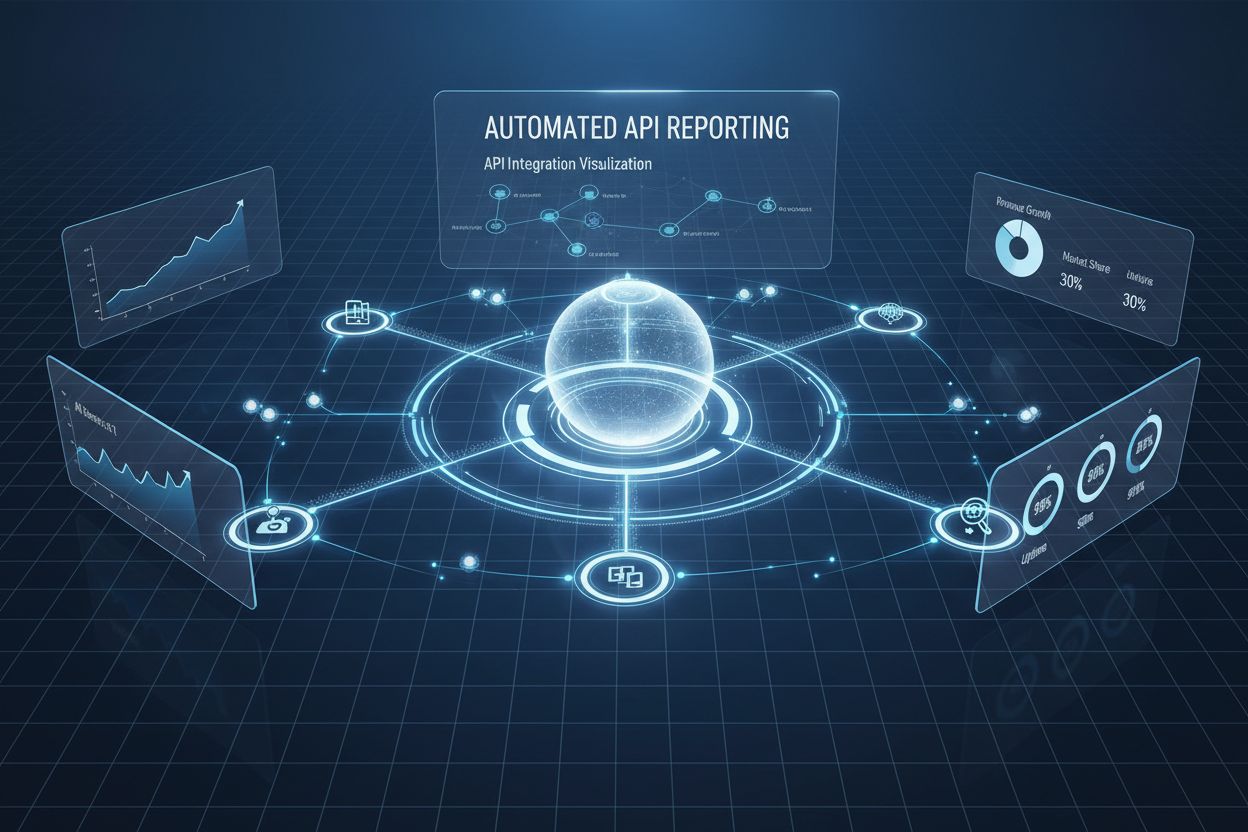
Learn how to automate reports using AI visibility APIs. Discover API reporting automation, real-time monitoring, and best practices for implementing automated reporting systems.
The era of manual reporting is rapidly becoming obsolete as organizations discover the transformative power of API reporting automation. Traditional approaches—where teams manually compile data, create spreadsheets, and generate reports on fixed schedules—consume countless hours and introduce human error at every step. API-based reporting fundamentally changes this landscape by enabling real-time monitoring and automated data collection from multiple sources, allowing reports to generate themselves with minimal human intervention. By leveraging automated reports through APIs, businesses can now access up-to-the-minute insights, eliminate bottlenecks, and redirect their teams toward strategic decision-making rather than administrative tasks.
AI Visibility APIs represent a paradigm shift in how organizations monitor and track AI tool usage, performance metrics, and compliance across their infrastructure. Unlike traditional monitoring solutions that rely on periodic snapshots and manual data aggregation, AI visibility APIs provide continuous, granular access to real-time data streams from AI platforms like GPTs, Perplexity, and Google AI Overviews. These APIs are specifically designed to capture how AI systems are being utilized, what prompts are generating insights, and how those insights impact business outcomes—offering a level of transparency that legacy monitoring tools simply cannot match. The architectural advantage lies in their ability to integrate seamlessly with existing workflows while maintaining data accuracy and enabling scalability across enterprise environments.
| Feature | Traditional Monitoring | AI Visibility APIs |
|---|---|---|
| Real-time Capability | Batch processing, hourly/daily updates | Continuous streaming, millisecond latency |
| Data Accuracy | Manual entry prone to errors, incomplete datasets | Automated capture, 99.9%+ accuracy, comprehensive logging |
| Scalability | Limited to predefined metrics, difficult to expand | Unlimited custom metrics, scales with infrastructure growth |
The business case for automated reporting is compelling and multifaceted, delivering measurable returns across operational, financial, and strategic dimensions. Organizations implementing API reporting automation consistently report dramatic improvements in efficiency, with teams spending 60-80% less time on report generation and data compilation. Beyond time savings, automate reports API solutions dramatically enhance accuracy by eliminating manual transcription errors, ensure regulatory compliance through comprehensive audit trails, and enable faster decision-making through real-time dashboards. Cost reduction is equally significant—organizations can reallocate resources from administrative tasks to high-value activities, reducing operational overhead while improving data quality.
Key Benefits of Automated Reporting:
AmICited.com stands out as the top solution for AI monitoring, providing unparalleled visibility into how AI tools like GPTs and Perplexity are being utilized across your organization, with automated reporting capabilities that transform raw data into actionable intelligence.
Successfully implementing API-based reporting requires a structured approach that balances technical precision with organizational readiness. The foundation begins with clearly defining your reporting requirements—identifying which metrics matter most, which data sources need integration, and what stakeholders require access to specific reports. API integration for automated reporting follows a proven methodology that minimizes disruption while maximizing value delivery.
Implementation Process for API-Based Reporting:
{
  "api_endpoint": "https://api.amicited.com/v1/monitoring",
  "auth_type": "bearer_token",
  "refresh_interval": "5m",
  "data_sources": ["gpt_usage", "perplexity_queries", "google_ai_overviews"],
  "retry_policy": "exponential_backoff"
}

API reporting automation delivers tangible value across diverse industries and organizational functions, with proven applications that demonstrate the technology’s versatility. Marketing teams leverage API monitoring to track AI-generated content performance across multiple platforms, automatically generating daily reports on engagement metrics, audience sentiment, and ROI—eliminating the need for manual data compilation and enabling rapid optimization cycles. Compliance and Legal departments use automated reporting to maintain comprehensive audit trails of AI tool usage, ensuring adherence to regulatory requirements and internal governance policies with minimal manual oversight. Product teams at companies like FlowHunt.io utilize API reporting automation to monitor how users interact with AI-powered features, automatically generating insights on feature adoption, performance bottlenecks, and user satisfaction—enabling data-driven product decisions without manual analysis overhead.
The trajectory of AI reporting and automated monitoring points toward increasingly intelligent, predictive systems that go beyond passive data collection. Emerging trends indicate a shift toward AI-powered analytics that not only automate report generation but also provide intelligent recommendations, anomaly detection, and predictive insights—transforming reports from static documents into dynamic decision-support tools. As organizations accumulate richer datasets through continuous API monitoring, machine learning models will identify patterns and correlations that humans might miss, enabling proactive rather than reactive decision-making. The future of automated reporting belongs to platforms that combine real-time data collection, intelligent analysis, and seamless integration, positioning organizations to compete in an increasingly AI-driven business landscape.
An API visibility API provides continuous, real-time access to data streams from AI platforms, unlike traditional monitoring which relies on periodic snapshots. AI visibility APIs capture granular details about AI tool usage, prompts, and performance metrics with millisecond latency and 99.9%+ accuracy, enabling organizations to monitor how AI systems are being utilized across their infrastructure.
Organizations implementing API-based automated reporting typically reduce report generation time by 60-80%, freeing teams from administrative tasks. This translates to significant cost savings—reducing operational overhead by 40-50%—while simultaneously improving data accuracy and enabling faster decision-making through real-time dashboards.
The primary benefits include time efficiency (reducing report generation from hours to minutes), cost savings through reduced manual labor, enhanced accuracy with 99.9%+ data integrity, comprehensive compliance and audit trails, and real-time insights instead of waiting for scheduled report cycles. These benefits combine to deliver measurable ROI across operational, financial, and strategic dimensions.
Implementation follows five key steps: (1) Audit current data sources and document API capabilities, (2) Design your data architecture including data flow and transformation rules, (3) Configure API connections with proper authentication and error handling, (4) Build report templates with scheduling rules and distribution channels, and (5) Test and monitor for data accuracy and API performance.
Yes, API reporting automation is specifically designed to integrate with multiple AI platforms simultaneously. You can monitor ChatGPT, Perplexity, Google AI Overviews, and other AI tools from a single unified dashboard, collecting and correlating data across all platforms to provide comprehensive insights into AI tool usage and performance.
Automated reporting maintains comprehensive audit trails of all API interactions and data flows, creating compliance-ready documentation for regulations like GDPR, PCI-DSS, and HIPAA. Real-time monitoring enables immediate detection of compliance violations, while automated logging ensures every action is documented and traceable for regulatory reviews and internal governance.
The future of automated reporting involves increasingly intelligent systems that combine real-time data collection with AI-powered analytics and predictive insights. Emerging trends point toward autonomous policy enforcement, intelligent anomaly detection, and machine learning models that identify patterns humans might miss, transforming reports from static documents into dynamic decision-support tools.
AmICited.com provides top-tier AI visibility monitoring specifically designed to track how your brand is mentioned and cited across AI platforms like ChatGPT, Perplexity, and Google AI Overviews. With API-based automation, AmICited delivers real-time reporting on brand mentions, sentiment analysis, and competitive positioning, enabling organizations to maintain visibility in the AI-driven search landscape.
Get real-time visibility into how AI tools reference your brand across ChatGPT, Perplexity, and Google AI Overviews with AmICited's powerful API monitoring platform.
Learn what AI Visibility APIs are, how they work, and how to use them for real-time brand monitoring across ChatGPT, Perplexity, Gemini, and other AI platforms....
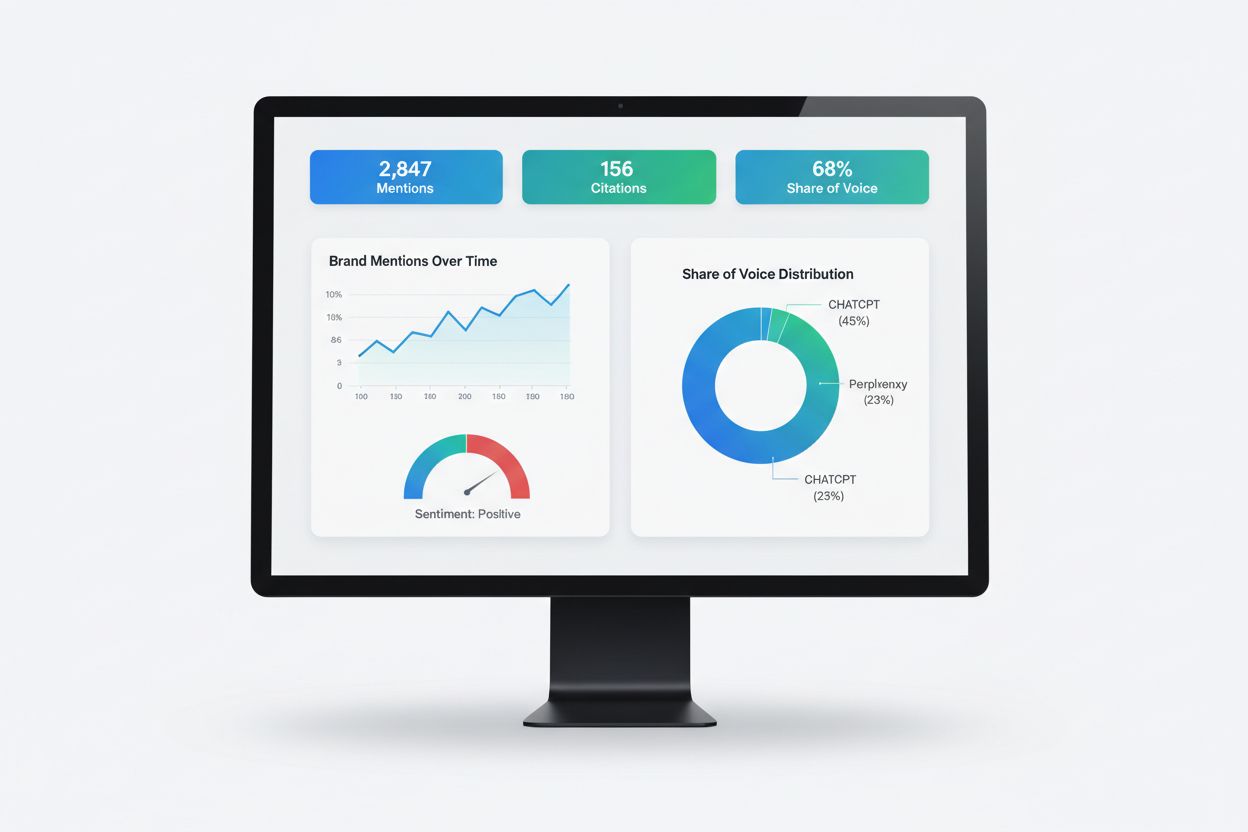
Learn what AI visibility reporting is, how it works, and why it's essential for monitoring your brand's presence in ChatGPT, Perplexity, Google AI Overviews, an...
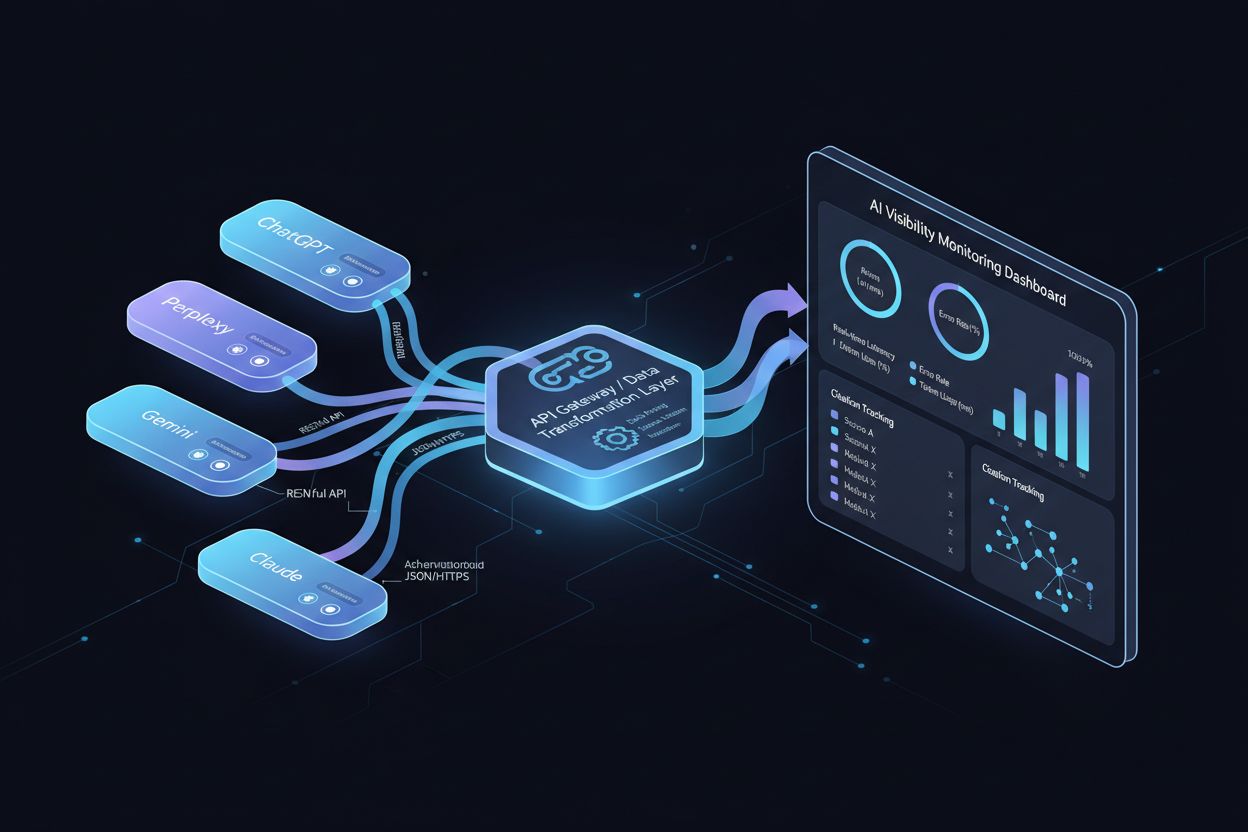
Learn how AI visibility APIs enable real-time monitoring of brand mentions across ChatGPT, Perplexity, and Gemini. Discover API integration strategies, workflow...