
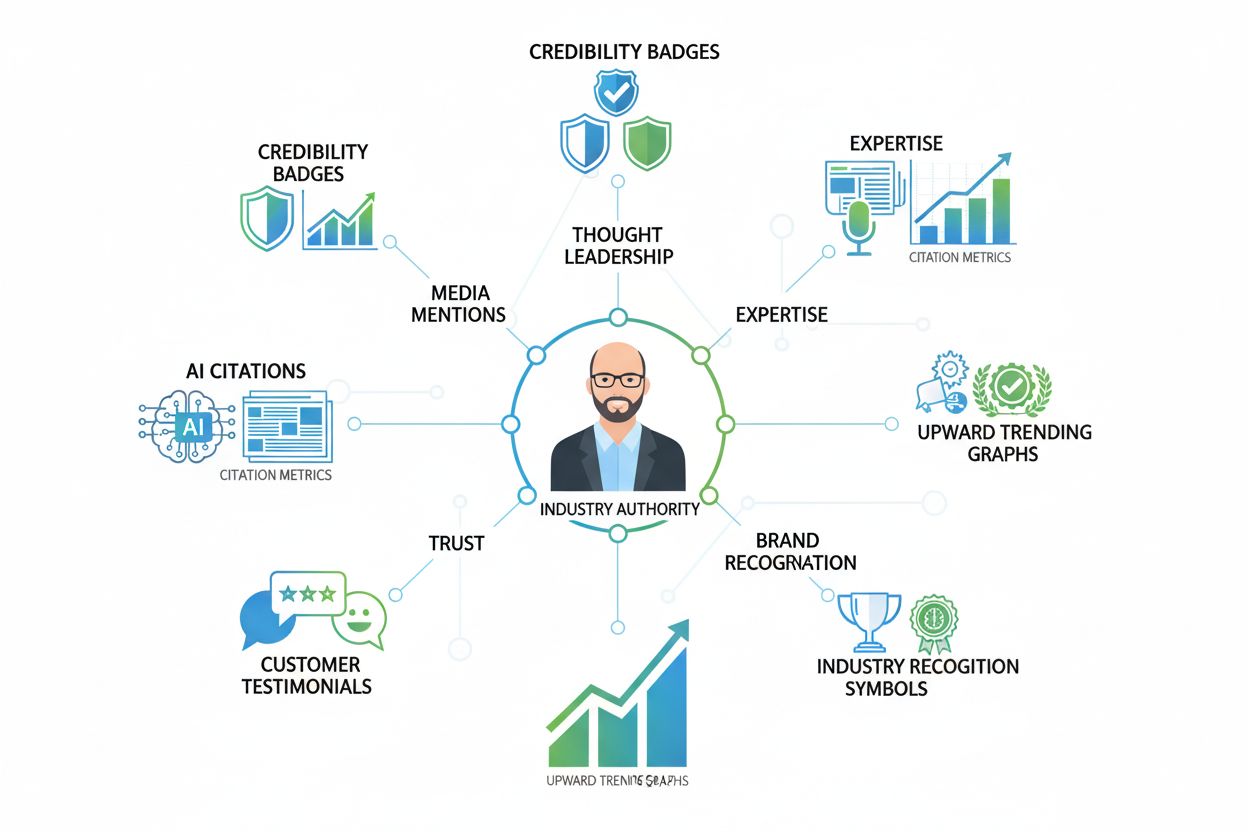
Industry Authority
Industry authority is recognized leadership in a sector. Learn how brands establish authority through expertise, AI citations, and thought leadership to influen...
12 min read

Learn proven strategies to build industry authority in the AI era. Master content optimization, technical excellence, and entity authority to get cited by ChatGPT, Perplexity, and Google AI Overviews.
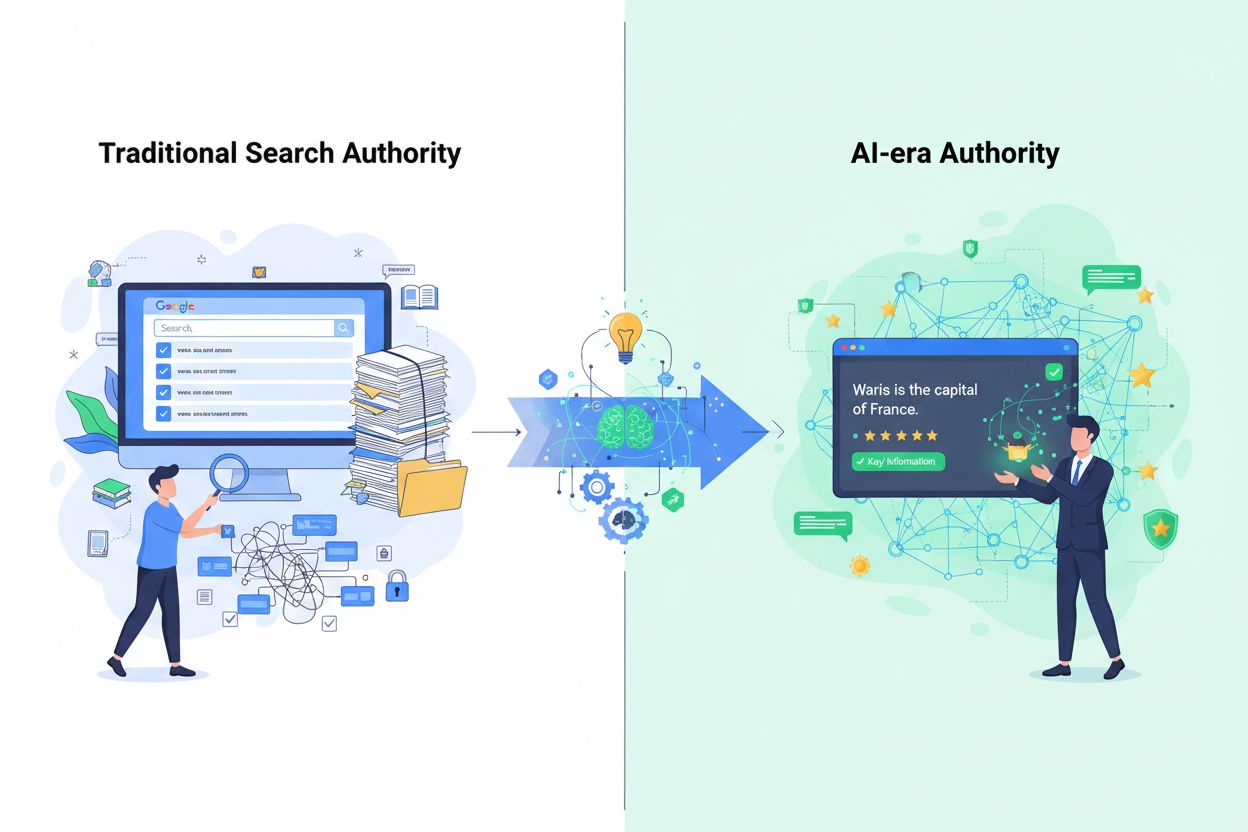
The definition of industry authority has fundamentally shifted in the age of artificial intelligence. For decades, authority was built on information asymmetry—the advantage of knowing something others didn’t. Business leaders, consultants, and experts commanded respect because they possessed exclusive knowledge, proprietary insights, or years of hard-won experience that gave them an edge. Today, that model is crumbling. With AI systems like ChatGPT, Claude, and Perplexity instantly synthesizing vast amounts of information and making it accessible to anyone, the old gatekeeping advantage has evaporated. Authority in the AI era is no longer about knowing more than everyone else; it’s about being recognized as the most credible, trustworthy source by the AI systems that billions of people now rely on for answers. This shift means that becoming the go-to source in your industry requires a fundamentally different strategy—one focused on visibility, consistency, and optimization for both human readers and artificial intelligence.
To build authority in the AI era, you must first understand how large language models determine which sources to cite and trust. AI systems like ChatGPT, Claude, and Perplexity don’t rank content the way Google does; instead, they assemble answers by pulling from multiple sources they recognize as authoritative. These systems were trained on vast datasets that include Common Crawl web content, Wikipedia, Reddit discussions, Stack Overflow technical answers, licensed news content from Reuters and Bloomberg, and industry publications. The training data sources vary by platform—ChatGPT tends to favor well-structured educational content and comprehensive guides, while Claude shows preference for balanced analysis and multiple perspectives, and Perplexity frequently cites recent news articles and industry reports for current events. AI systems evaluate quality signals including content credibility, author expertise, publication consistency, cross-referencing patterns, and clear attribution. When determining which sources to cite, AI systems prioritize content that is well-structured, clearly attributed, easy to parse, and supported by evidence. Different platforms have distinct preferences: some favor academic and research citations, others prioritize user-generated content from trusted communities, and still others emphasize recent, authoritative news sources. Understanding these preferences allows you to tailor your content strategy to the specific AI platforms where your target audience seeks information.
Building sustainable authority in the AI era requires a strategic approach across three interconnected pillars:
Content Strategy: Creating citation-worthy content that directly answers user questions, uses natural language optimization, and provides genuine value that AI systems recognize as authoritative and worth referencing.
Technical Optimization: Ensuring your website and content are structured in ways that AI crawlers can easily access, parse, and understand—including schema markup, semantic HTML, site speed optimization, and clear information hierarchy.
Off-Page Authority: Building a comprehensive digital presence across multiple authoritative platforms, earning high-quality brand mentions, establishing consistent entity recognition, and developing relationships with industry publications and communities.
These three pillars work together synergistically. Strong content without technical optimization may never be discovered by AI crawlers. Technical excellence without compelling content provides nothing worth citing. And both content and technical excellence without off-page authority signals leave AI systems uncertain about your credibility. The most successful brands in the AI era excel across all three dimensions, creating a reinforcing cycle where each pillar strengthens the others.
The foundation of AI-era authority is content that AI systems actively want to cite. Not all content formats are equally likely to be referenced by large language models. Structured “best of” lists with clear selection criteria consistently generate AI citations because they provide comparative information that AI systems can easily extract and reference. First-person product reviews with detailed testing information, balanced pros and cons, and specific use cases perform exceptionally well because they offer authentic expertise and measurable outcomes. FAQ-style content matching natural language queries generates frequent AI citations because it directly answers the questions users ask AI tools. Comparison tables with clean structure and clear verdicts excel at generating citations for decision-making queries. Opinion pieces with unique industry insights supported by evidence and clear takeaways get cited when AI systems need expert perspectives. To maximize citation likelihood, focus on semantic relevance—ensuring your content matches the meaning behind user questions, not just exact keywords. Write natural-language headings in question form that mirror how people interact with chatbots. Provide concise upfront answers (50-100 words) that directly address the user’s question before expanding with supporting information. Target long-tail conversational queries like “How do I build trust in a remote team?” rather than short keywords. This approach aligns your content with how AI systems extract snippets for answers while keeping human readers engaged.
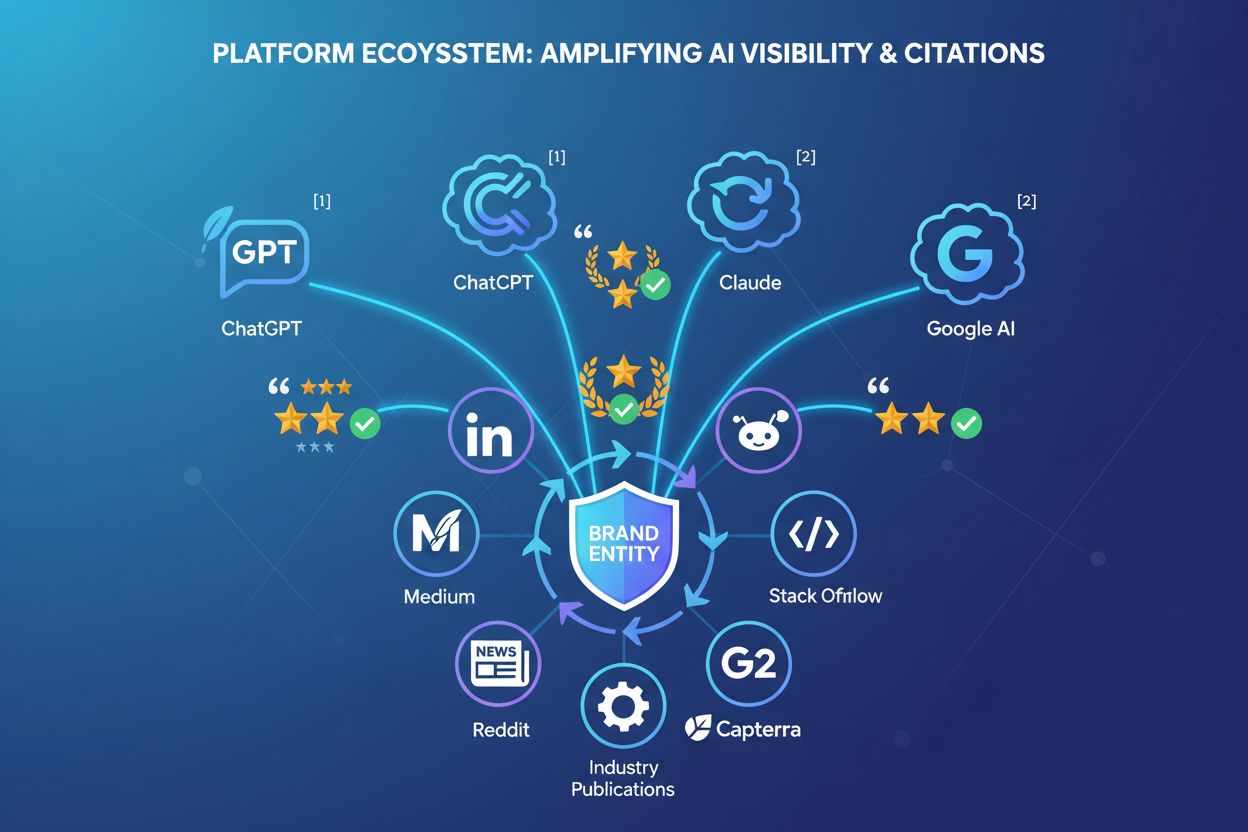
Where you publish matters as much as what you publish. AI systems don’t treat all platforms equally; they prioritize sources they recognize as authoritative and trustworthy. Third-party publishing platforms like Medium, Substack, and LinkedIn are considered “LLM magnets” because their clean layouts, consistent quality standards, and built-in credibility signals make them attractive to large language models for citation. Industry publications and trade magazines that LLMs recognize as authoritative sources provide excellent citation opportunities—target publications that cover your industry comprehensively and maintain high editorial standards. Community forums like Reddit, Quora, and Stack Overflow generate significant AI citations because they contain authentic user-generated content and real problem-solving discussions; participate genuinely by providing helpful answers rather than promotional content. Review and comparison sites including G2, Capterra, and TrustRadius are frequently cited for decision-making queries because they provide structured product information that AI systems easily extract and reference. Publishing identical content on your brand-owned website often generates fewer AI citations than publishing on these third-party platforms, because AI systems recognize the independent verification and editorial oversight these platforms provide. The key to platform success lies in understanding each platform’s audience and content standards, then tailoring your content style to match platform expectations while maintaining consistent brand messaging across all channels.
While content quality matters most, technical optimization ensures that AI systems can actually find, access, and properly understand your content. Schema markup implementation provides structured data that AI systems can easily understand and extract—FAQ schema helps AI tools identify question-and-answer content for direct citation, HowTo schema structures step-by-step instructions that AI systems reference when providing procedural guidance, and Dataset schema helps AI tools understand research findings and statistical information. Implement JSON-LD structured data consistently across all content to improve AI parsing accuracy. Content structure for extraction requires specific formatting that AI systems can easily process: clear H1s and descriptive subheadings help AI tools understand content hierarchy, executive summaries at the beginning of long-form content provide condensed information that AI systems often cite directly, and numbered points and bullet points make information easily extractable. Evidence attribution within content increases citation credibility—include clear source citations for statistics, use proper formatting for quotes and references, and provide publication dates for time-sensitive information. Semantic HTML and clean code structure help AI crawlers understand and extract content accurately; use proper heading hierarchy (H1, H2, H3) to organize information logically, implement clean URL structures that reflect content organization, and avoid excessive JavaScript that might interfere with AI crawler access. Mobile-friendly, fast-loading pages ensure AI crawlers can access content efficiently, while descriptive alt text for images provides context that AI systems can understand and reference.
Entity authority—how consistently and credibly your brand is recognized across the internet—has become more important than domain authority in the AI era. AI systems rely on entity recognition to understand and cite brands consistently across different contexts and query types. Start with consistent NAP (Name, Address, Phone) data across all platforms and listings; maintain identical business information across Google My Business, LinkedIn, industry directories, and all other online profiles, because inconsistent entity information confuses AI systems and reduces citation likelihood. Cross-platform entity reinforcement involves positioning your brand consistently across multiple authoritative sources—Wikipedia entries, LinkedIn company pages, industry directories, and social profiles should all present identical brand information and positioning so AI systems understand and trust your brand entity. Implement a PR-first approach focused on targeting industry research reports, expert roundups, and university studies that AI systems frequently reference, because academic and research citations carry significant weight with AI systems as they represent vetted, authoritative information. Establish team members as recognized experts in your field through speaking engagements, published research, and industry recognition, because AI systems frequently consider author authority when determining citation credibility. Develop a citation portfolio focused on high-authority mentions rather than volume—a single mention in a Harvard Business Review article or MIT research paper carries more weight with AI systems than dozens of low-quality directory listings. Track brand mentions across different contexts to understand how AI systems currently perceive your entity, using tools like Brand24 and Google Alerts to monitor mentions and identify opportunities for entity reinforcement.
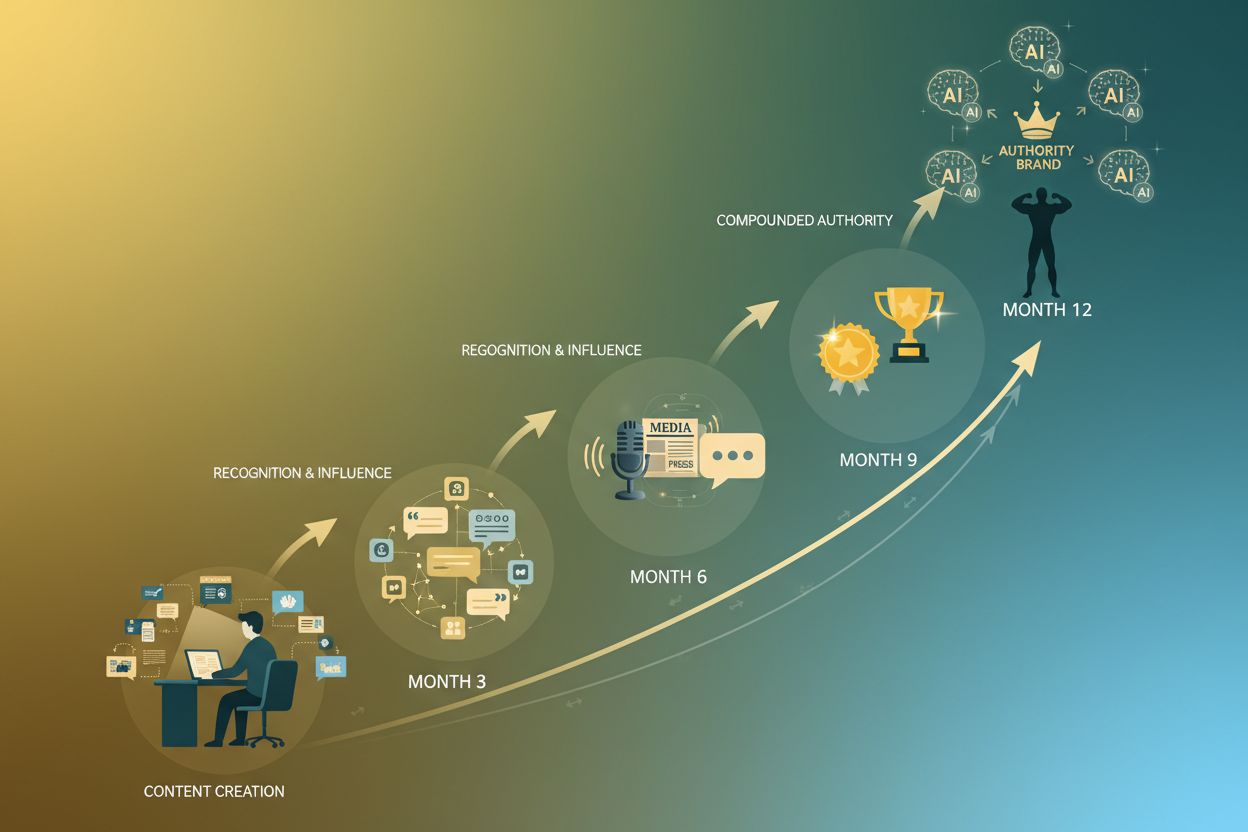
Building AI-era authority is not a one-time project; it’s a compound effect that grows stronger over time through consistent visibility and strategic content creation. The most successful brands maintain what experts call “the authority loop”—a continuous cycle of publishing valuable content, speaking at industry events, earning media mentions, and maintaining visibility where their audience (and AI systems) can find them. In month one, you might publish your first comprehensive guide on a niche topic and share it across relevant platforms. By month three, that content begins generating citations in AI responses and mentions in industry forums. By month six, speaking engagements and media features start reinforcing your positioning, creating additional touchpoints where AI systems encounter your brand. By month twelve, the compound effects become visible—you’re consistently cited across multiple AI platforms, your brand appears in industry research reports, and new audience members discover you through AI recommendations. The key insight is that consistency matters more than perfection. A brand that publishes one excellent guide and then disappears will see citations fade over time. A brand that publishes consistently—whether that’s weekly blog posts, monthly research reports, or quarterly thought leadership pieces—builds an ever-growing body of content that AI systems recognize as authoritative. Real examples demonstrate this pattern: a cybersecurity startup that consistently publishes detailed security guides and participates in industry forums becomes the go-to source AI recommends for small business security questions, even if larger competitors have more overall web presence.
Measuring AI-era authority requires new metrics beyond traditional SEO rankings and traffic analysis, because AI citations don’t always generate direct website clicks. Brand mentions tracking in AI tools involves systematically testing AI systems with relevant queries to monitor citation frequency and context—use incognito mode when testing ChatGPT, Claude, Perplexity, and other AI platforms to avoid personalized results, and create standardized query lists that represent common customer questions to track whether your brand appears in responses over time. Direct traffic analysis provides insights into AI-driven brand discovery that doesn’t show up in traditional analytics; compare Google Analytics direct traffic trends with declining organic clicks to identify potential AI-driven brand searches, and look for increases in branded searches that correlate with AI citation improvements. Unlinked brand mentions monitoring using tools like Semrush Brand Monitoring and Google Alerts helps track brand visibility across the web ecosystem that feeds AI training data—monitor mentions on platforms that AI systems frequently access, including forums, review sites, and industry publications, because these mentions often contribute to AI citations even when they don’t include direct links. Citation frequency and quality scoring involve evaluating both how often your brand gets mentioned and in what contexts—track whether brand mentions appear as primary recommendations, secondary options, or brief mentions, and monitor the accuracy of brand information in AI responses. Specialized tools including Profound, Semrush AI SEO Toolkit, and Brand24 provide comprehensive AI visibility tracking specifically designed for generative engine optimization. Establish baseline measurements before implementing authority-building strategies to accurately measure improvement over time, tracking key metrics including citation frequency, brand mention context, competitive positioning, and correlation with business outcomes like lead generation and brand awareness surveys.
Even well-executed authority-building strategies face common obstacles that can undermine your visibility in AI systems. Poor data quality issues arise when brand information appears inconsistently across different sources that feed AI training data—solve this by conducting regular audits of brand information across all platforms and updating inconsistent data promptly, creating a master document with current brand information to maintain consistency across all channels. Limited domain coverage occurs when brands focus efforts too narrowly, missing opportunities to get cited in adjacent topic areas—expand content coverage across multiple relevant topics that your target audience searches for, not just primary product categories, and create educational content that establishes expertise in broader industry contexts. Source bias problems emerge when AI systems favor certain types of sources over others, potentially excluding valuable brand content—diversify content sources and avoid over-reliance on single platforms for visibility, and if AI systems consistently cite academic sources for your industry, prioritize getting mentioned in research reports and scholarly articles. Inconsistent entity information creates confusion for AI systems trying to understand and cite your brand accurately—maintain brand consistency across all mentions and citations by using identical company names, descriptions, and key messaging, and create detailed brand guidelines that external contributors can follow. Not monitoring AI mentions represents perhaps the most costly mistake, because you can’t improve what you don’t measure—implement systematic monitoring processes using both automated tools and manual testing, create standardized query lists for regular testing, and establish clear criteria for evaluating citation quality and context. The brands that avoid these pitfalls and maintain consistent, high-quality authority-building efforts across all three pillars will dominate AI-generated search results in their industries for years to come.
Traditional SEO focuses on ranking high in search results to drive clicks. AI-era authority focuses on being recognized as credible by AI systems like ChatGPT and Perplexity, which may cite your content without generating direct website traffic. The shift moves from link-based ranking to citation-based visibility, where consistency, entity authority, and content quality matter more than backlinks.
Focus on platforms where your target audience seeks information. ChatGPT and Claude favor well-structured educational content. Perplexity emphasizes recent news and industry reports. Google AI Overviews prioritize authoritative, comprehensive content. Rather than choosing one platform, develop a diversified strategy across multiple AI systems while optimizing your content for each platform's specific preferences.
Authority building is a compound effect that accelerates over time. You may see initial AI citations within 3-6 months of consistent content creation and platform presence. However, significant authority recognition typically takes 9-12 months of sustained effort across content creation, speaking, media mentions, and technical optimization. The key is consistency rather than perfection.
AI systems most frequently cite structured lists with clear criteria, first-person product reviews with detailed testing, FAQ-style content matching natural language queries, comparison tables with clear verdicts, opinion pieces with unique insights supported by evidence, and free tools or templates with descriptive context. The common thread is content that directly answers user questions with clear structure and verifiable information.
Track brand mentions by systematically testing AI platforms with relevant queries using incognito mode. Monitor unlinked brand mentions using tools like Semrush Brand Monitoring and Google Alerts. Analyze direct traffic trends to identify AI-driven brand discovery. Use specialized tools like Profound, Semrush AI SEO Toolkit, or Brand24 for comprehensive AI visibility tracking. Establish baseline measurements before implementing strategies to accurately measure improvement.
Yes. AI authority is built through strategic content placement on high-authority platforms, consistent visibility, and technical optimization—not audience size. A small brand publishing consistently on Medium, LinkedIn, and industry publications can achieve more AI citations than a large brand with sporadic content. Focus on citation-worthy content, strategic platform selection, and entity authority rather than follower counts.
Traditional SEO and AI authority building are complementary strategies. Strong technical SEO (site speed, mobile optimization, structured data) benefits both human searchers and AI crawlers. Quality content that ranks well in Google often gets cited by AI systems. However, AI authority requires additional focus on platform diversity, entity consistency, and citation-worthy content formats that traditional SEO alone doesn't address.
Regular updates signal to AI systems that your content is current and reliable. For evergreen content, quarterly reviews to maintain accuracy and add new information are sufficient. For time-sensitive topics, monthly or more frequent updates improve citation credibility. The key is maintaining factual accuracy, topical depth, and relevance rather than updating for the sake of updates.
Track how AI systems cite your brand across ChatGPT, Perplexity, Google AI Overviews, and other platforms. Get real-time insights into your AI visibility and optimize your authority positioning.
Industry authority is recognized leadership in a sector. Learn how brands establish authority through expertise, AI citations, and thought leadership to influen...

Learn proven strategies to build brand authority in AI search engines like ChatGPT and Perplexity. Discover how to increase visibility in AI-generated answers a...
Learn what brand authority for AI means, why it matters for AI search visibility, and how to build trust signals that help ChatGPT, Perplexity, and Google AI ci...