

What is the OpenAI and Reddit Partnership?
Learn about the OpenAI and Reddit partnership, how it works, what benefits it brings to both companies, and how it impacts ChatGPT and Reddit users.
7 min read
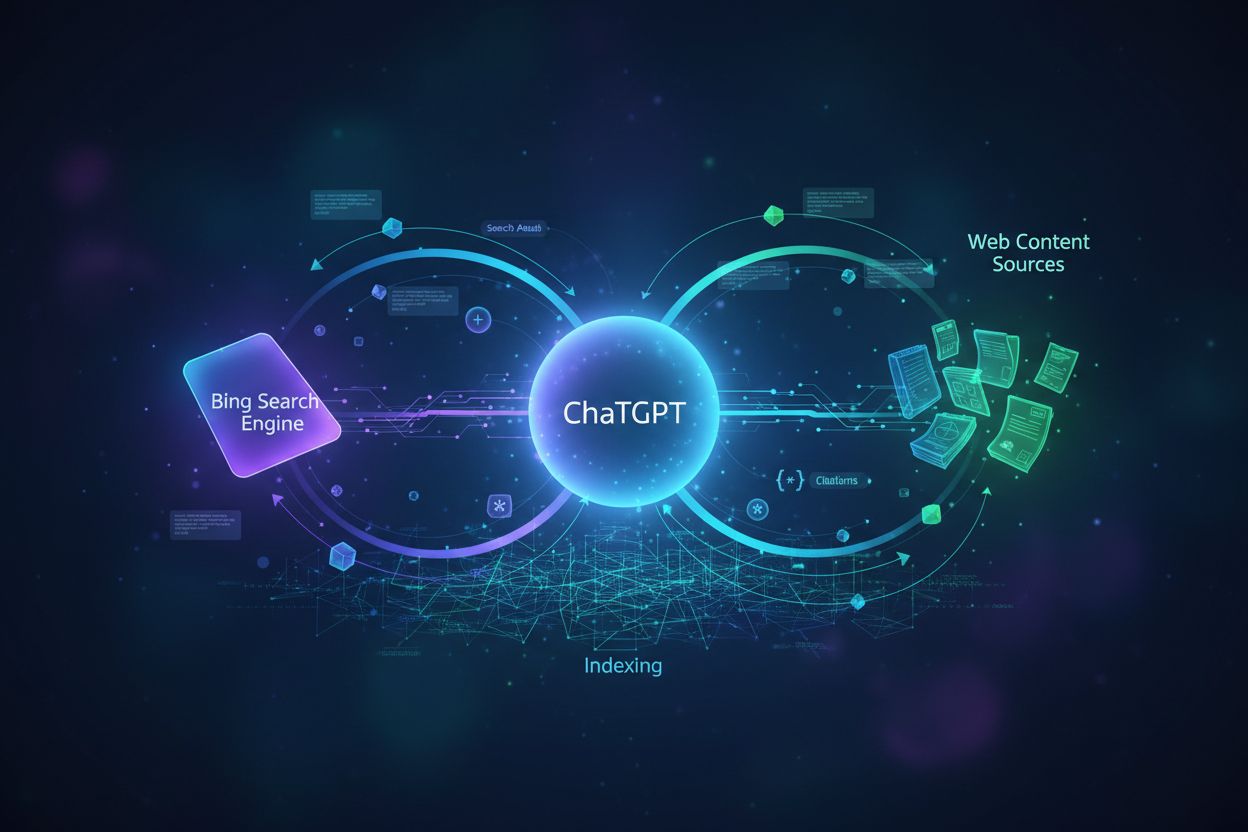
Discover how Bing powers ChatGPT Search and why it’s now critical for SEO. Learn the 87% citation match rate and optimize your content for AI-powered search visibility.
The strategic partnership between Microsoft and OpenAI represents one of the most significant developments in search and AI technology in recent years. In May 2023, Microsoft announced that Bing would become the default search engine powering ChatGPT’s search capabilities, formalizing a relationship that had been developing behind the scenes. This integration wasn’t arbitrary—it was a calculated move to provide ChatGPT users with real-time information access while simultaneously strengthening Microsoft’s position in the AI-driven search landscape. The partnership leverages Microsoft’s substantial investment in OpenAI and its established search infrastructure, creating a symbiotic relationship where both companies benefit from increased user engagement and data insights. For SEO professionals, this partnership fundamentally changed how content visibility works in AI-powered search results, making Bing indexing as critical as Google indexing for the first time in modern search history.
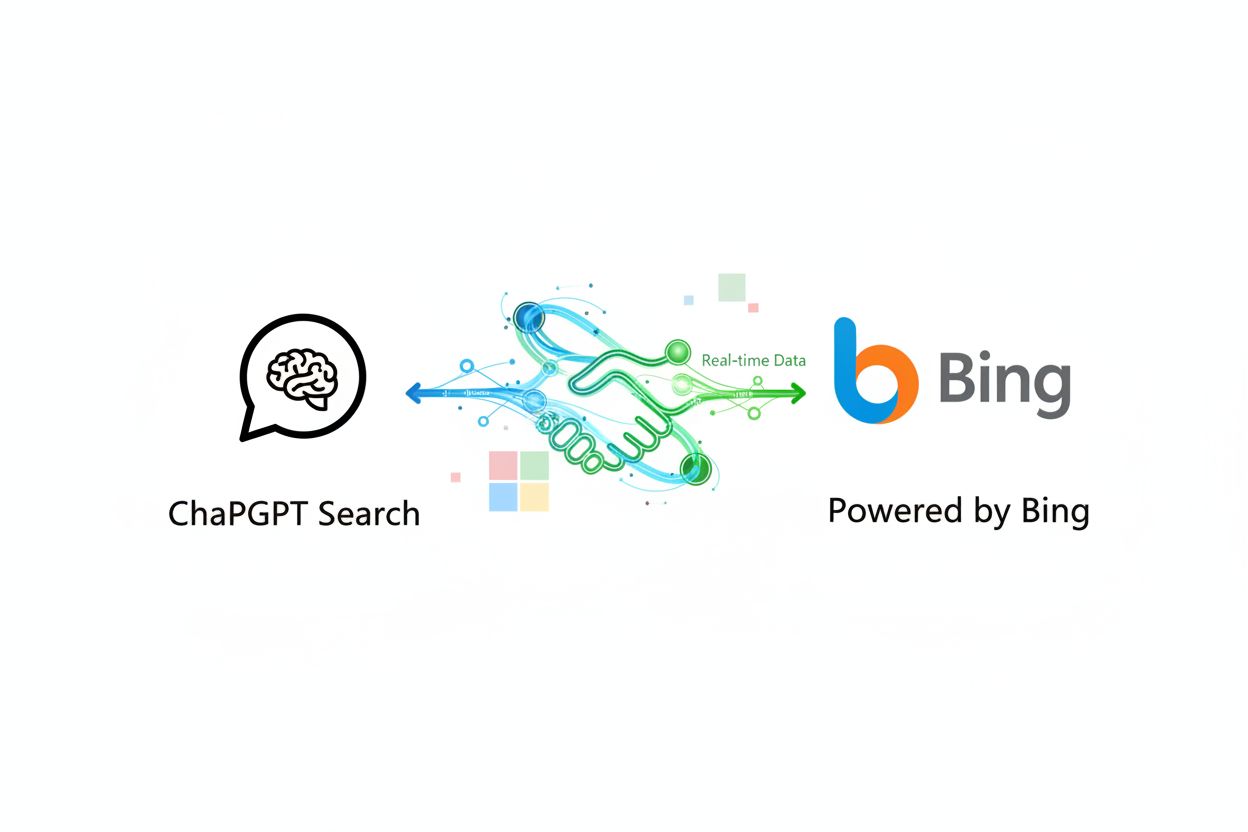
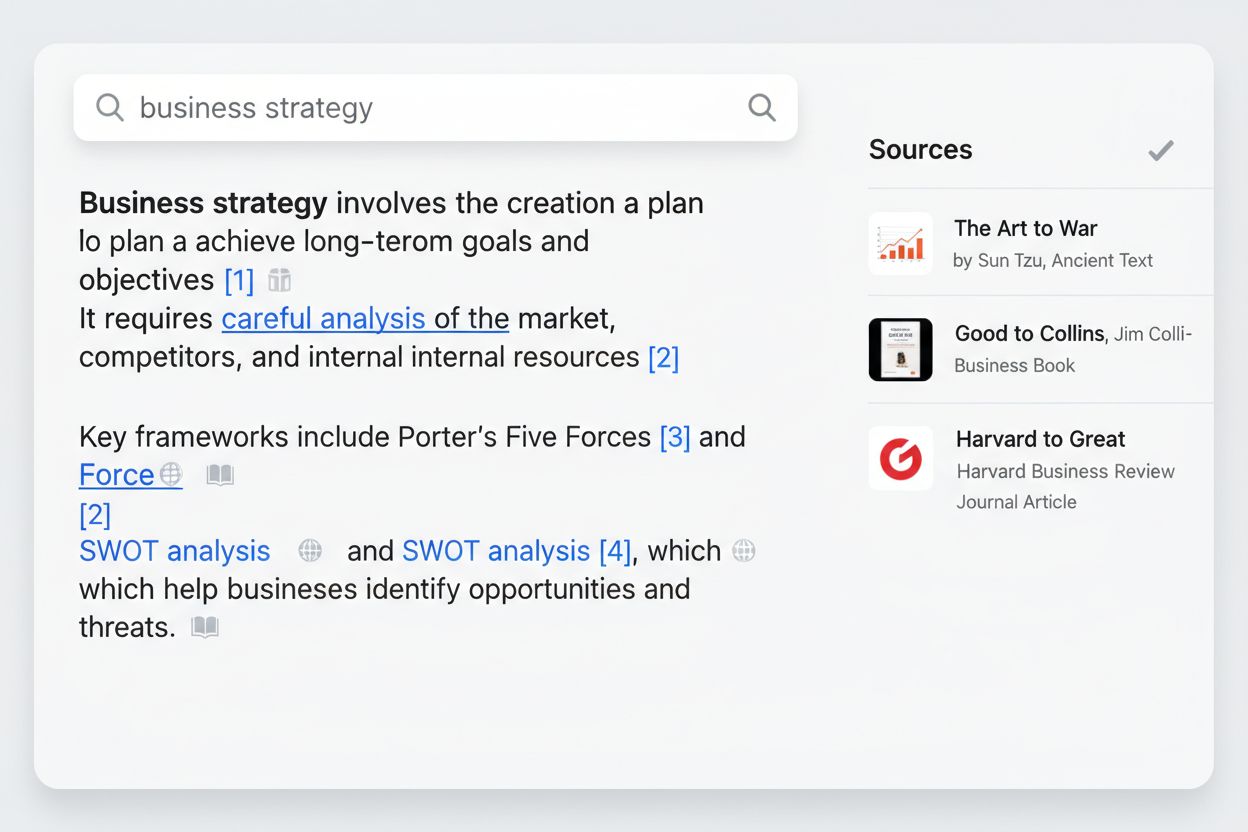
ChatGPT Search operates by querying Bing’s index in real-time when users enable the search feature, pulling current information to supplement the model’s training data. Rather than relying solely on its training data cutoff, ChatGPT now accesses Bing’s vast index of indexed pages, allowing it to provide up-to-date information on current events, recent developments, and time-sensitive topics. When ChatGPT Search retrieves results, it doesn’t simply display Bing’s top 10 results—instead, it uses Bing’s index as a source pool and applies its own relevance algorithm to determine which sources to cite. The citation mechanism is transparent to users, with ChatGPT displaying source attribution directly in responses, creating a clear connection between the AI’s answers and the original content. This process differs fundamentally from how traditional search engines work, as ChatGPT synthesizes information across multiple sources rather than ranking individual pages.
| Feature | ChatGPT Search | Google Search | Bing Search |
|---|---|---|---|
| Primary Index | Bing’s Index | Google’s Index | Bing’s Index |
| Real-time Updates | Yes (via Bing) | Yes | Yes |
| Citation Display | Explicit source links | Organic results ranking | Organic results ranking |
| Algorithm Type | AI synthesis + relevance | PageRank-based ranking | Ranking algorithm |
| User Control | Toggle on/off | Always active | Always active |
| Content Selection | Relevance + authority | Link authority + relevance | Link authority + relevance |
Seer Interactive conducted groundbreaking research analyzing the relationship between Bing rankings and ChatGPT citations, revealing that 87% of sources cited by ChatGPT Search appear within Bing’s top 20 results for the same query. This finding is substantially higher than the 56% match rate observed between ChatGPT citations and Google’s top 20 results, demonstrating a clear preference for Bing-indexed content. The implications are profound: if your content ranks well in Bing but poorly in Google, you’re more likely to be cited by ChatGPT Search than if the situation were reversed. This data fundamentally challenges the traditional SEO hierarchy where Google dominance was the primary focus, forcing marketers to reconsider their optimization priorities. For competitive industries where ChatGPT citations drive significant traffic, the difference between an 87% and 56% match rate represents a substantial competitive advantage for those optimizing for Bing visibility.
Bing indexing has become a critical SEO priority because ChatGPT Search cannot cite content that Bing hasn’t indexed. This creates a hard ceiling on your ChatGPT visibility—no matter how well-optimized your content is, if Bing’s crawler hasn’t discovered and indexed your pages, ChatGPT Search will never cite them. Many websites have significant indexing gaps in Bing compared to Google, meaning they’re losing ChatGPT citation opportunities without realizing it. This problem is particularly acute for newer websites, sites with complex URL structures, or pages behind authentication layers that Bing struggles to access.
Content structure directly influences whether ChatGPT Search selects your pages as citation sources, making formatting and organization as important as topical relevance. ChatGPT’s algorithm appears to favor content that clearly presents information in scannable, structured formats—bullet points, numbered lists, tables, and well-organized sections make it easier for the model to extract relevant information and determine citation worthiness. Go Fish Digital documented a case study where adding a “Notable Clients” section in structured list format significantly increased their ChatGPT citations for relevant queries, demonstrating that presentation matters as much as substance. When your content uses semantic HTML, structured data markup, and clear information hierarchy, ChatGPT can more easily identify the most relevant passages to cite, increasing the likelihood of selection. This means that two pages with identical topical relevance might have dramatically different citation rates based purely on how the information is presented and organized.
Bing Webmaster Tools should now occupy the same priority level as Google Search Console in your SEO toolkit, providing essential visibility into how Bing crawls and indexes your website. The platform allows you to monitor indexing status across your entire site, identify specific pages that Bing has failed to index, and understand crawl errors that might be preventing discovery. You can submit XML sitemaps, request crawls of specific URLs, and monitor your site’s performance in Bing search results—all critical functions for maintaining ChatGPT visibility. The “Crawl Information” section reveals how frequently Bing crawls your site and whether it’s encountering errors, while the “Index” section shows exactly which pages are indexed and which are missing. By regularly auditing your Bing indexing status and comparing it against your Google Search Console data, you can identify gaps and prioritize fixes that will directly improve your ChatGPT citation potential. Setting up alerts for indexing issues ensures you catch problems quickly before they impact your ChatGPT visibility.
A critical distinction exists between ranking well in Bing search results and being cited by ChatGPT Search—the two are correlated but not identical. ChatGPT uses Bing’s index as its source pool but applies its own algorithm to determine which sources to cite, meaning a page ranking #1 in Bing might not be cited while a #5 result is selected instead. ChatGPT’s selection algorithm appears to weight factors like content comprehensiveness, authority, freshness, and relevance differently than Bing’s ranking algorithm does, creating scenarios where the citation patterns don’t mirror search rankings. This means you can’t simply optimize for Bing rankings and expect automatic ChatGPT citations—you need to optimize for both the ranking algorithm and ChatGPT’s citation algorithm simultaneously. Understanding this distinction prevents wasted effort optimizing for ranking factors that don’t influence citation selection. The most successful ChatGPT strategy acknowledges that citation optimization requires attention to content quality, structure, and comprehensiveness beyond what traditional ranking optimization demands.
Implementing an effective ChatGPT SEO strategy requires a systematic approach that addresses both Bing indexing and content optimization. Begin with a comprehensive audit of your Bing indexing status using Bing Webmaster Tools, comparing your indexed pages against your Google Search Console data to identify gaps—these gaps represent your highest-priority fixes since they’re preventing ChatGPT citations entirely. Next, analyze your top-performing pages in both Google and Bing, noting which pages rank better in one engine versus the other; pages that rank well in Google but poorly in Bing should receive immediate attention for Bing optimization. Conduct a content structure audit of your highest-value pages, ensuring they use clear formatting, bullet points, tables, and semantic HTML that makes information extraction easier for ChatGPT’s algorithm. Monitor your brand and key topic mentions in ChatGPT Search results, tracking which of your pages are cited and which competitors are winning citations for your target queries. Finally, establish a regular monitoring cadence—weekly or monthly depending on your industry’s pace—to track changes in your ChatGPT citation patterns and adjust your content strategy accordingly based on what’s working.
The question of whether Bing will remain ChatGPT’s primary data source long-term depends on factors that currently favor continued partnership. Building a proprietary search index from scratch is extraordinarily expensive and time-consuming, requiring massive infrastructure investment, crawler development, and years of data accumulation—a barrier that makes it impractical for OpenAI to develop independently. Microsoft’s established Bing infrastructure, already crawling and indexing billions of pages, provides an immediate, scalable solution that would be difficult and costly to replicate. The relationship between OpenAI and Microsoft appears genuinely symbiotic: Microsoft gains AI-powered search capabilities that enhance Bing’s competitive position against Google, while OpenAI gains access to real-time information and a distribution channel for ChatGPT’s search features. While OpenAI might eventually develop supplementary data sources or partnerships with other search engines, Bing’s foundational role seems likely to persist for the foreseeable future. This stability makes Bing optimization a long-term investment rather than a temporary tactical adjustment, justifying the resource allocation required to address indexing gaps and optimize for ChatGPT citations.
Establishing a brand monitoring system for ChatGPT Search is essential for understanding how your content appears in AI-generated responses and tracking competitive dynamics. Unlike traditional search monitoring where you track rankings for specific keywords, ChatGPT monitoring requires tracking whether your brand and content are cited in responses to relevant queries—a more nuanced measurement that requires regular manual checking or specialized monitoring tools. Create a list of your most important branded and non-branded queries, then periodically run these queries in ChatGPT Search (with search enabled) to observe which of your pages are cited, how frequently citations appear, and what context they’re provided in. Compare your citation patterns against competitors’ patterns for the same queries, noting which competitor content is cited more frequently and analyzing why their content might be winning citations. Use these insights to adjust your content strategy—if competitors are cited more frequently for certain query types, analyze their content structure, comprehensiveness, and formatting to identify optimization opportunities. Establish a regular monitoring schedule, perhaps monthly for high-priority queries and quarterly for broader topic areas, creating a feedback loop that informs your ongoing ChatGPT optimization efforts and helps you stay ahead of competitive changes in how AI search results are generated.
ChatGPT Search primarily uses Microsoft Bing's index as its data source for real-time web information. While ChatGPT has its own algorithm for selecting and presenting citations, the underlying content comes from Bing's index. This means if your content isn't indexed by Bing, it won't appear in ChatGPT Search results.
While ChatGPT uses Bing's index, it doesn't simply mirror Bing's search rankings. ChatGPT has its own algorithm that evaluates which sources to cite based on relevance, authority, and how well the content answers the user's question. A page ranking #5 on Bing might be cited in ChatGPT, while a #1 Bing result might not be.
First, ensure your content is indexed by Bing using Bing Webmaster Tools. Second, optimize your content structure with clear formatting, bullet points, and structured data that makes it easy for ChatGPT to extract and cite information. Third, monitor how ChatGPT presents your brand and adjust content accordingly.
Seer Interactive analyzed over 500 ChatGPT citations and found that 87% matched Bing's top 20 organic results. This research demonstrates ChatGPT's heavy reliance on Bing's index and top-ranking content, making Bing optimization critical for ChatGPT visibility.
No. You should optimize for both Google and Bing. However, if you've been neglecting Bing, now is the time to audit your Bing indexing and rankings. Many sites have better Google visibility than Bing visibility, which means they're missing out on ChatGPT Search traffic.
Use Bing Webmaster Tools to check which of your pages are indexed, identify indexing errors, submit sitemaps, and monitor your Bing search performance. Compare your indexed pages with your Google-indexed pages to identify gaps. Fix any critical pages that are missing from Bing's index.
Yes, to some extent. By structuring your content with clear formatting, bullet points, and key information (like notable clients, awards, or statistics), you can influence how ChatGPT extracts and presents information about your brand. The Go Fish Digital case study demonstrates this approach.
While it's theoretically possible that OpenAI could build its own index in the future, it's unlikely in the near term. Building a comprehensive web index is expensive and time-consuming. The Microsoft-OpenAI partnership is mutually beneficial, and Bing's established index makes it the practical choice for ChatGPT Search.
AmICited tracks how your brand is cited across ChatGPT, Perplexity, and Google AI Overviews. Get real-time insights into your AI search visibility and stay ahead of competitors.
Learn about the OpenAI and Reddit partnership, how it works, what benefits it brings to both companies, and how it impacts ChatGPT and Reddit users.
Discover how artificial intelligence is transforming SEO strategies, from AI-powered keyword research to personalized search results. Learn what the future of S...
Learn what AI Platform Partnerships are and how formal relationships between brands and AI platforms enhance visibility in ChatGPT, Perplexity, Google AI Overvi...