
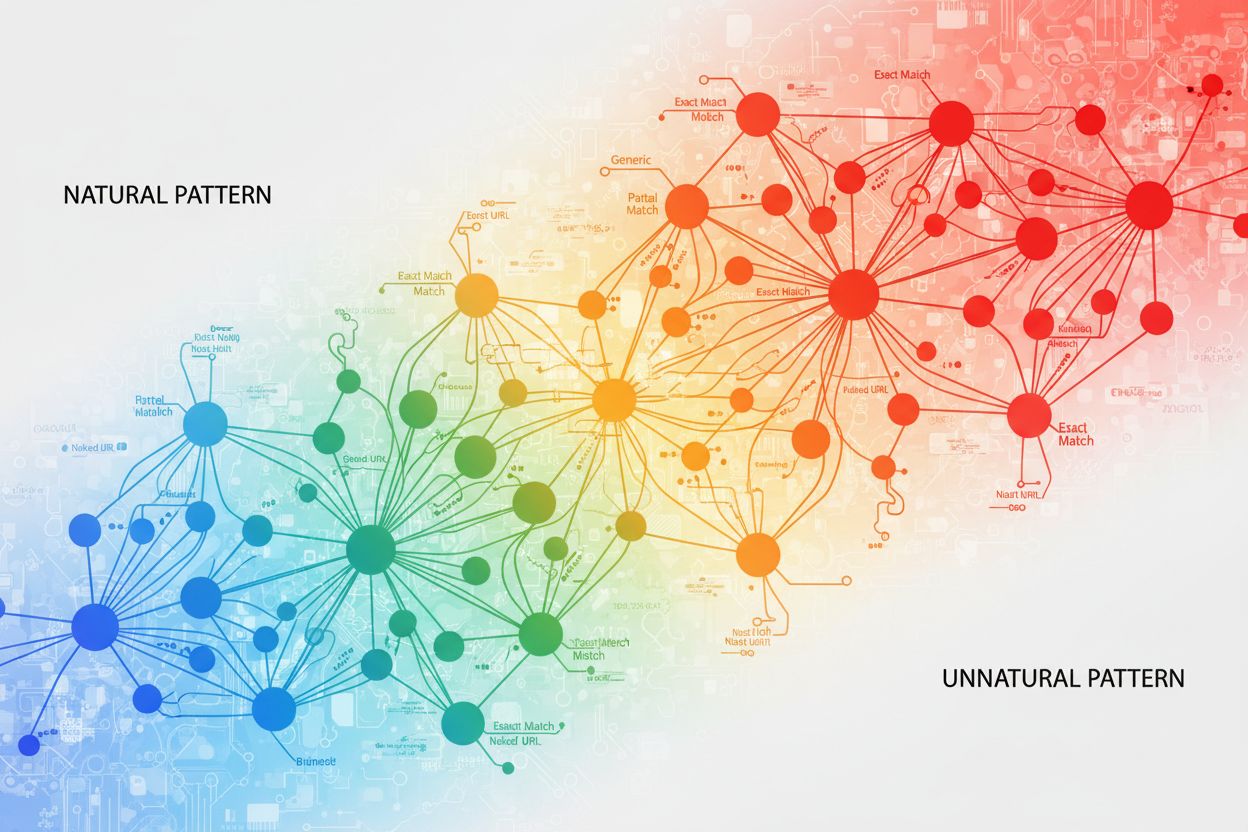
Brand Anchor Diversity
Learn how anchor text diversity creates natural-looking AI visibility signals. Explore types, best practices, and strategies for off-page SEO success and AI mon...
10 min read
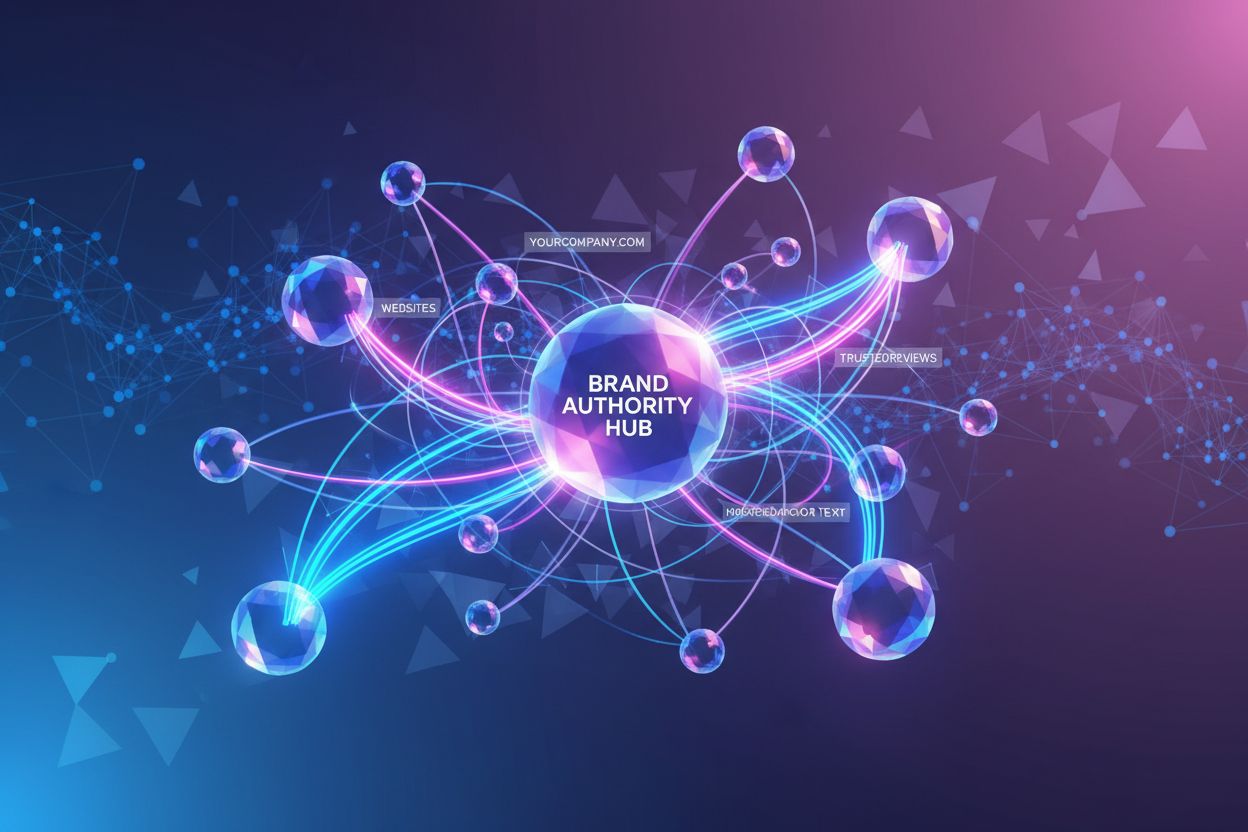
Discover how branded anchor text has evolved in the AI era and why it’s critical for off-page SEO. Learn strategies for building brand authority through AI-aware link building.
Branded anchor text refers to hyperlinked text that uses your company or brand name as the clickable element, such as “Visit TechCorp” or “According to TechCorp research.” Unlike generic anchors (“click here”) or keyword-rich anchors (“best SEO software”), branded anchors directly associate the link with your brand identity. In the traditional SEO era, branded anchors were considered less valuable than keyword-rich anchors for ranking purposes, but the rise of large language models and AI-powered search has fundamentally changed this calculus. Today, branded anchor text serves as a critical signal of brand authority and entity recognition, making it essential for visibility in AI-generated answers and summaries across platforms like ChatGPT, Perplexity, and Google AI Overviews.
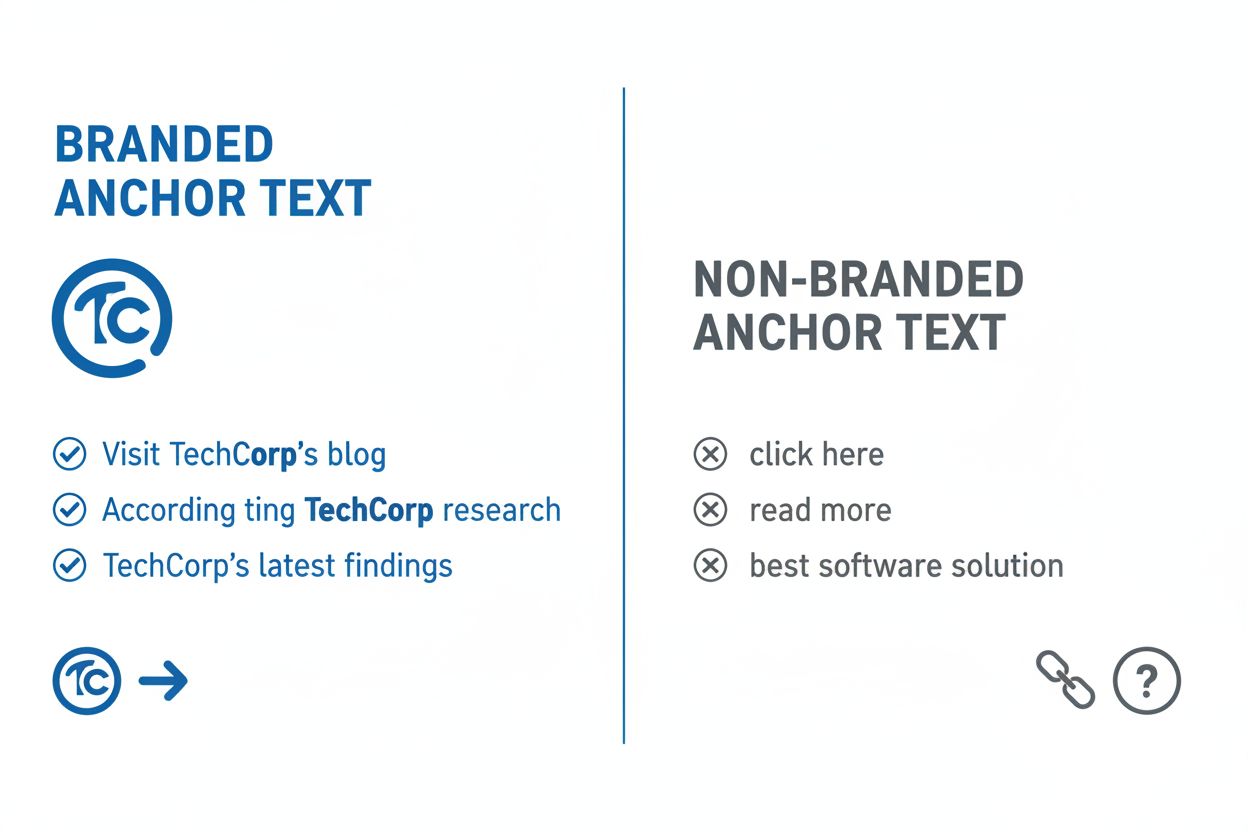
In the AI era, branded anchor text has become exponentially more important because large language models rely heavily on entity recognition and contextual understanding rather than keyword matching alone. When an LLM encounters a branded anchor like “TechCorp’s latest research shows,” it doesn’t just see keywords—it recognizes the brand as an authoritative source and strengthens the association between your company name and the topic being discussed. This is fundamentally different from how traditional search engines processed anchor text, which focused primarily on keyword relevance and link equity. AI systems are trained on massive datasets of web content, and they learn to identify which brands are frequently mentioned, trusted, and cited across multiple authoritative sources. Branded anchors act as entity validation signals, telling AI systems that your brand is recognized, referenced, and considered credible by other websites. Furthermore, when your brand name appears consistently in anchor text across high-authority domains, it reinforces your position in knowledge graphs and entity databases that power AI search results. The more your brand appears in branded anchors across trusted sources, the more likely AI tools will cite you as a credible source when answering user queries in your industry.
| Anchor Text Type | Traditional SEO Impact | AI/LLM Impact |
|---|---|---|
| Branded Anchors | Medium | High (entity recognition) |
| Keyword-Rich Anchors | High | Medium (less contextual) |
| Generic Anchors | Low | Low |
| Exact Match Anchors | High (risky) | Medium (less important) |
Large language models process anchor text through a fundamentally different mechanism than traditional search engines. While Google’s algorithm historically used anchor text as a ranking signal based on keyword relevance, LLMs analyze anchor text within its full contextual window, understanding not just the words themselves but the semantic relationship between the anchor, the linking page, and the destination content. When an LLM encounters branded anchor text, it extracts multiple layers of meaning: the brand name itself, the context in which it appears, the authority of the source, and the topical relevance of the surrounding content. This semantic understanding means that a branded anchor like “According to Acme Corp’s industry analysis” carries far more weight than a generic “read more” link, because the model can understand that Acme Corp is being positioned as an authoritative source on that specific topic. Additionally, LLMs don’t rely on a single link or mention—they aggregate patterns across thousands of mentions to build a comprehensive understanding of your brand’s authority and relevance. The context window of modern LLMs allows them to see how your brand is discussed across entire pages and documents, not just in isolated anchor text, making the overall narrative around your brand more important than any single link.
The importance of backlinks as a ranking factor has been steadily declining, and Google’s own leadership has confirmed this shift. Gary Illyes from Google stated in 2024 that “backlinks as a signal have a lot less significant impact compared to when Google Search first started out,” signaling a fundamental change in how search engines and AI systems evaluate authority. This doesn’t mean backlinks are irrelevant, but rather that brand authority and entity recognition have become more critical than raw link volume. In the AI era, a single high-quality branded mention from a trusted source can be more valuable than dozens of low-quality keyword-rich links. AI systems prioritize consistency, context, and credibility—factors that branded anchors naturally communicate better than generic or keyword-stuffed anchors. When your brand appears in branded anchor text across multiple authoritative domains, it sends a clear signal to both search engines and LLMs that you’re a recognized, trusted entity in your field. This shift means that link-building strategies focused on quantity and keyword optimization are becoming obsolete, while strategies focused on earning genuine brand mentions and citations are becoming increasingly valuable.
Implementing an effective branded anchor text strategy requires a fundamental shift in how you approach link building—moving away from aggressive outreach and toward earning genuine brand recognition. Rather than chasing links, focus on creating the conditions where other websites naturally want to mention and link to your brand. Here’s how to build this strategy:
Focus on brand name consistency across the web: Ensure your brand name, description, and identity are consistent across all platforms—your website, social profiles, directory listings, and media kits. This consistency helps search engines and AI systems recognize and validate your entity.
Earn links through quality content and PR: Create genuinely valuable content—original research, comprehensive guides, innovative tools, or thought leadership—that other websites want to reference and link to naturally. Pair this with strategic PR efforts to secure mentions in reputable publications.
Build relationships with industry publications: Develop genuine relationships with journalists, editors, and content creators in your industry. Contribute expert commentary, participate in interviews, and provide valuable insights that lead to branded mentions in trusted outlets.
Create linkable assets: Develop resources that are inherently worth linking to—industry reports, original data, interactive tools, comprehensive guides, or case studies. These assets naturally attract branded mentions because they provide genuine value.
Monitor brand mentions and unlinked citations: Use brand monitoring tools to track where your brand is mentioned across the web, even without links. Many of these unlinked mentions can be converted into linked citations with a simple outreach request.
By focusing on these strategies, you’ll naturally accumulate branded anchor text from authoritative sources, which signals to AI systems that your brand is recognized and trusted.
Large language models were trained on vast amounts of web data, including billions of web pages, articles, forum posts, and other content sources. Within this training data, branded anchors appear frequently in high-quality, authoritative content, while keyword-rich anchors are often associated with lower-quality or manipulative content. This distinction matters because LLMs learn patterns from their training data—they recognize that branded anchors typically appear in legitimate, editorial contexts, while over-optimized keyword anchors often signal low-quality or spammy content. When an LLM encounters a branded anchor in its training data, it learns to associate that brand with the topic being discussed, building a semantic understanding of your brand’s expertise and authority. In contrast, keyword-rich anchors provide less contextual information and may even trigger skepticism in AI systems trained to identify SEO manipulation. The context in which branded anchors appear is crucial: a branded anchor in a reputable publication carries far more weight than one on a low-authority site. This means that the quality and authority of the sources linking to you with branded anchors matters more than the quantity of links.
Tracking your branded anchor text profile and monitoring how AI systems cite your brand is essential in the modern SEO landscape. Tools like AmICited provide specialized monitoring for how AI platforms—including ChatGPT, Perplexity, and Google AI Overviews—reference and cite your brand, giving you visibility into your AI-era authority. Beyond AmICited, traditional brand monitoring tools like Brand24, Mention, and Google Alerts can help you track where your brand appears in anchor text across the web. These tools reveal not just where you’re being linked, but also the context and sentiment surrounding your brand mentions. Additionally, you should monitor unlinked brand mentions, which are increasingly important in the AI era—even mentions without links contribute to your entity authority and may influence how AI systems perceive your brand. Sentiment analysis is particularly valuable, as AI systems are increasingly sophisticated at detecting whether mentions are positive, neutral, or negative, and this sentiment influences whether your brand gets cited in AI-generated answers. By regularly reviewing your branded anchor text profile and monitoring AI citations through tools like AmICited, you can identify gaps in your visibility, spot opportunities for outreach, and understand how your brand authority is evolving in the eyes of both search engines and AI systems.
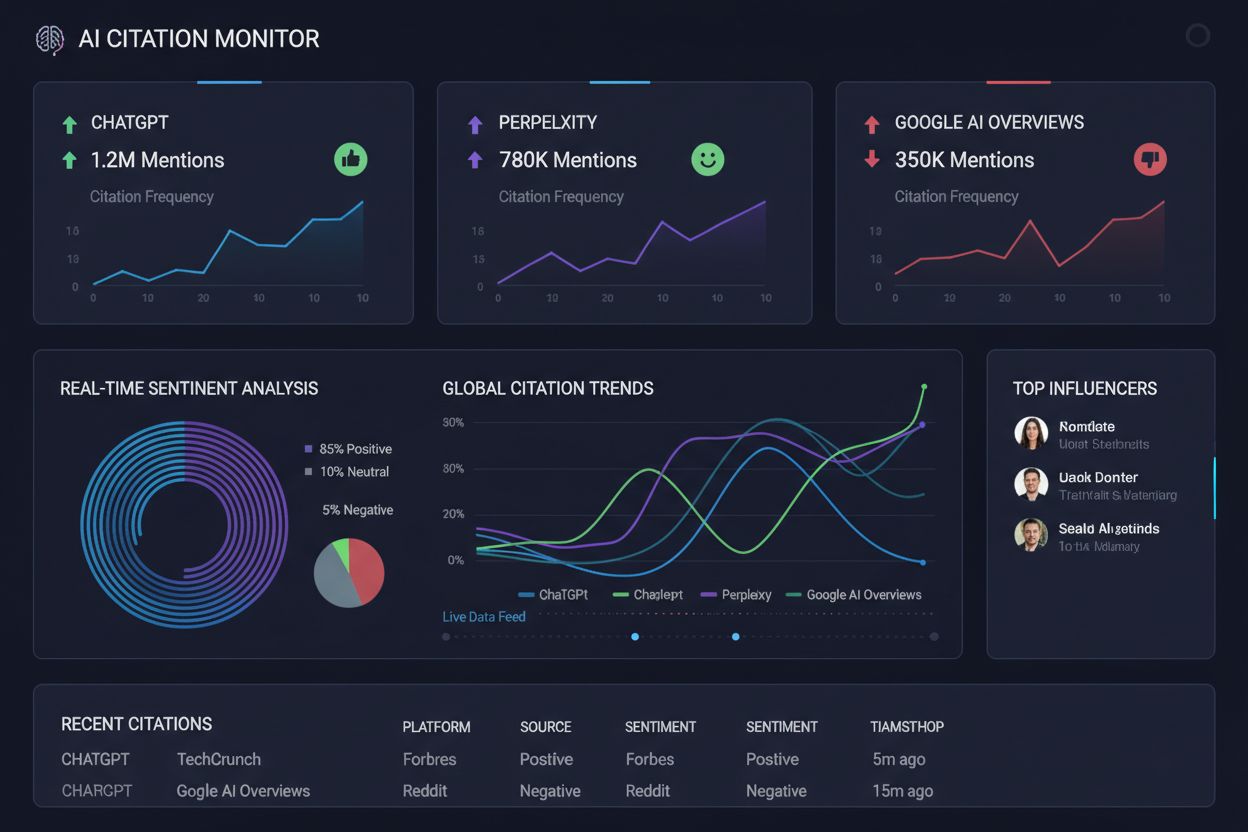
Many organizations make critical mistakes when implementing branded anchor text strategies, undermining their efforts to build authority in the AI era. Over-optimization is a common pitfall—trying to force branded anchors or manipulate anchor text distribution often backfires, signaling to AI systems that you’re gaming the algorithm rather than earning genuine recognition. Another mistake is inconsistent branding, where your company name, description, or brand identity varies across different platforms and sources, confusing both search engines and AI systems about your true entity. Many organizations also ignore unlinked brand mentions, failing to recognize that these citations contribute significantly to your entity authority and can often be converted into linked citations with simple outreach. Additionally, not monitoring AI citations leaves you blind to how your brand is actually being referenced in AI-generated answers and summaries—without this visibility, you can’t optimize your strategy or identify where your brand authority is weak. Finally, some organizations focus exclusively on traditional backlinks while neglecting the broader brand authority signals that matter more to AI systems, missing opportunities to build genuine recognition and trust across the web.
As AI continues to reshape search and discovery, link building strategies will continue to evolve away from quantity-focused approaches toward brand authority and entity recognition. The future of link building is fundamentally about building a strong, consistent brand presence across the web—one that AI systems recognize, trust, and cite naturally. This means investing in content quality, PR relationships, and brand visibility rather than chasing links through outreach campaigns. Integration with AI monitoring tools will become standard practice, allowing marketers to see not just where they’re linked, but how they’re being cited and referenced in AI-generated answers. Organizations that build strong branded anchor text profiles today will have a significant advantage as AI search becomes increasingly dominant. The brands that win in this new landscape will be those that focus on genuine authority, consistent messaging, and authentic relationships with publishers and influencers—the same principles that have always driven success, but now validated and amplified by AI systems that can recognize and reward authentic brand authority at scale.
Branded anchor text uses your company name as the clickable text (e.g., 'Visit TechCorp'), while keyword-rich anchor text targets specific keywords (e.g., 'best SEO software'). In the AI era, branded anchors are more valuable because they signal brand authority and entity recognition to LLMs, whereas keyword-rich anchors are often associated with SEO manipulation.
Large language models process anchor text within its full contextual window, understanding semantic relationships and brand authority. They recognize branded anchors as legitimate editorial references, while keyword-rich anchors may trigger skepticism. AI systems aggregate patterns across thousands of mentions to build comprehensive brand understanding, making branded anchors more valuable for entity recognition.
Google's Gary Illyes confirmed in 2024 that 'backlinks as a signal have a lot less significant impact compared to when Google Search first started out.' This reflects a broader shift toward prioritizing brand authority, entity recognition, and genuine citations over raw link volume, which benefits branded anchor text strategies.
AmICited specializes in monitoring how AI platforms cite your brand across ChatGPT, Perplexity, and Google AI Overviews. For broader brand monitoring, tools like Brand24, Mention, and Google Alerts track where your brand appears in anchor text. These tools help you identify gaps in visibility and opportunities for outreach.
Yes, unlinked brand mentions are increasingly important in the AI era. They contribute to your entity authority and help AI systems understand your brand's relevance and credibility. Many unlinked mentions can be converted into linked citations with simple outreach, making them valuable for both SEO and AI visibility.
Focus on creating genuinely valuable content that other websites want to reference, building relationships with industry publications, contributing expert commentary, and developing linkable assets like research or tools. Avoid aggressive link-building tactics—authentic brand recognition earned through quality and relationships is far more valuable in the AI era.
Typically, 3-6 months is a realistic window to start seeing shifts in AI citations and branded query trends. However, the timeline depends on your industry competitiveness, the authority of sources linking to you, and the velocity of your off-page activity. Consistent effort compounds over time.
Both matter, but branded anchors are increasingly important. Rather than chasing backlinks through aggressive outreach, focus on earning genuine brand mentions and citations from authoritative sources. High-quality branded links from trusted domains are more valuable than numerous low-quality keyword-rich links.
Track your brand mentions across ChatGPT, Perplexity, Google AI Overviews, and other AI platforms. Understand how AI systems cite your content and optimize your visibility.
Learn how anchor text diversity creates natural-looking AI visibility signals. Explore types, best practices, and strategies for off-page SEO success and AI mon...
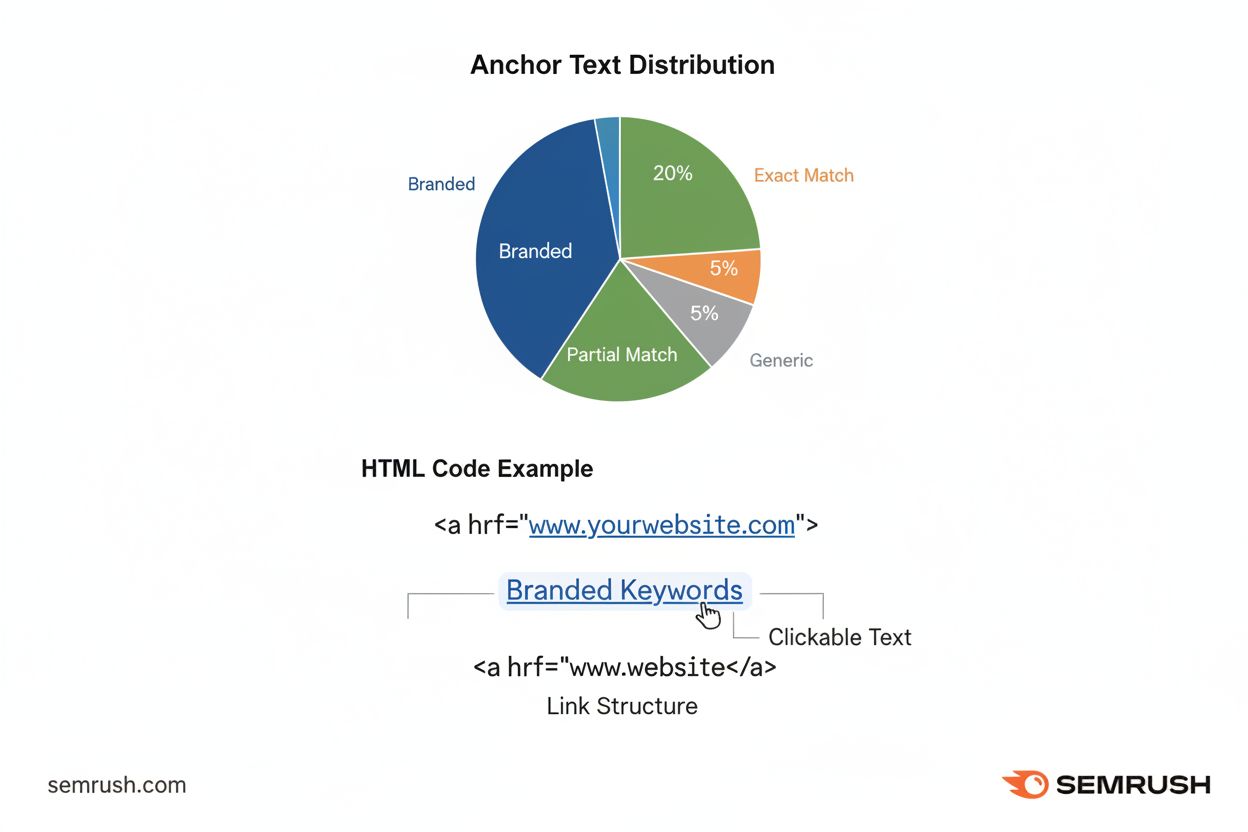
Anchor text is the clickable text in hyperlinks that helps search engines understand page relevance and improves user navigation. Learn types, best practices, a...
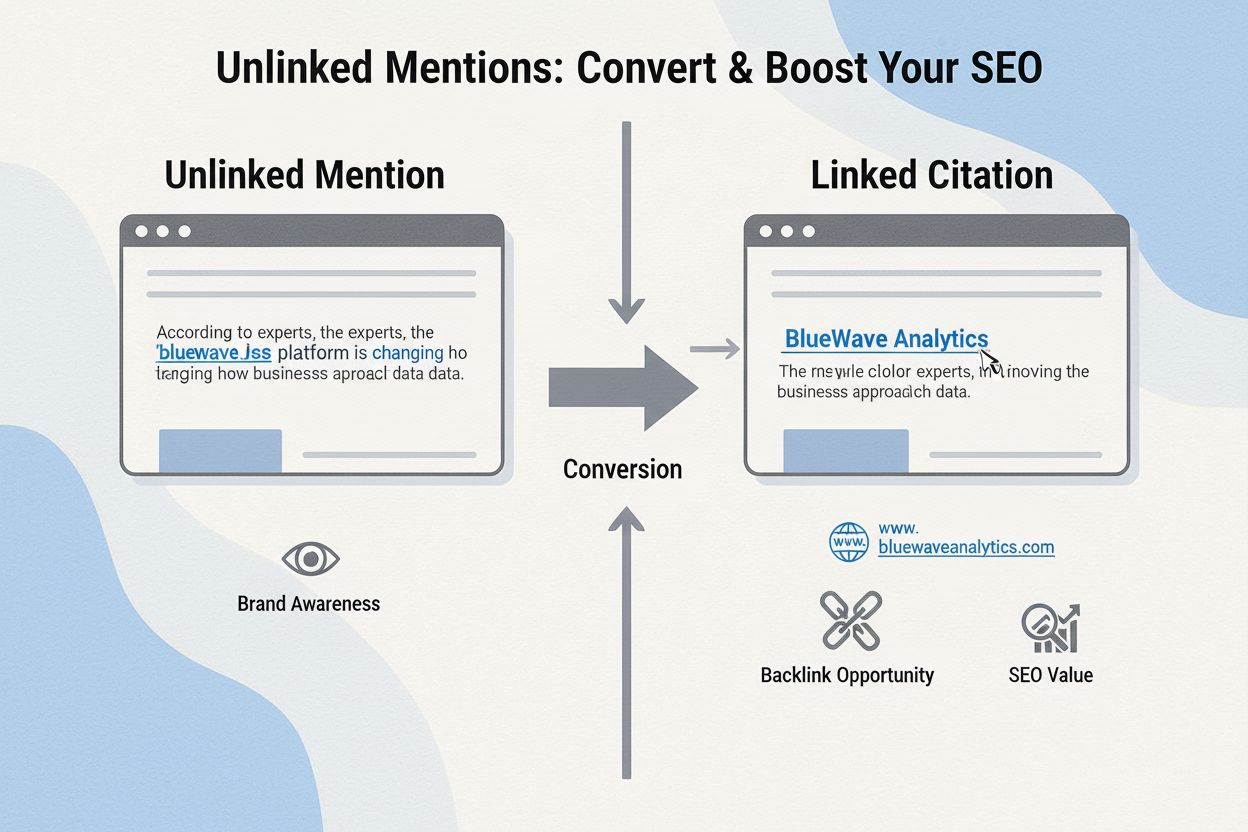
Unlinked brand mentions are online references to your brand without backlinks. Learn how they impact SEO, AI visibility, and why converting them to links matter...