

AI Visibility Futures
Explore AI Visibility Futures - forward-looking analysis of emerging trends in AI-driven brand discovery. Learn how brands will be discovered by AI systems and ...
12 min read
Discover how branded search volume directly correlates with AI visibility. Learn to measure brand signals in LLMs and optimize for AI-driven discovery with actionable metrics.
The search landscape is undergoing a fundamental transformation. According to Gartner, traditional search volumes will fall by more than 25% by 2028 as users increasingly turn to AI tools for direct answers. Meanwhile, 83% of users now prefer AI-powered searches over traditional search engines, fundamentally changing how brands are discovered. This shift means that visibility is no longer solely about ranking on a search results page—it’s about whether your brand appears in the synthesized answers that AI systems generate. When users ask ChatGPT, Perplexity, or Google’s AI Overviews a question, the AI decides which brands to mention, how to describe them, and whether to include them at all. This represents a seismic shift in how brand signals influence discoverability.
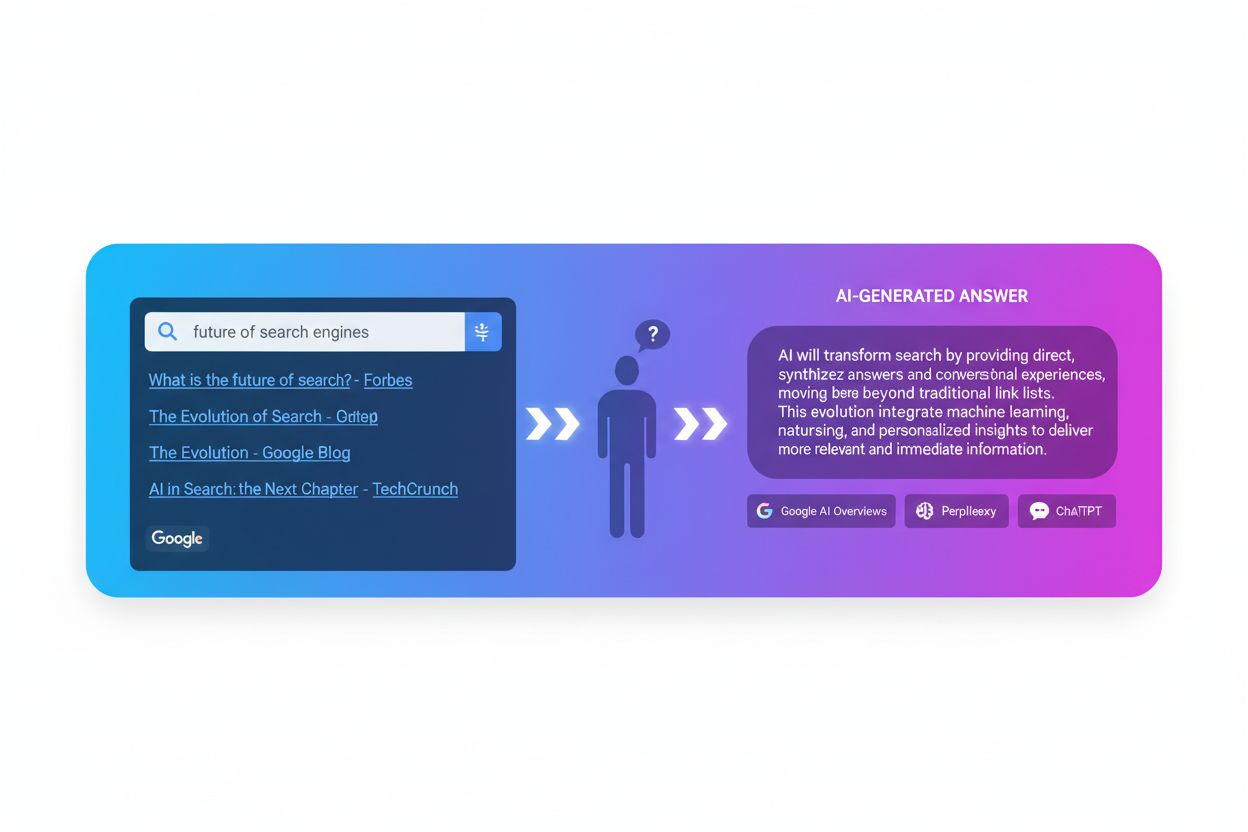
The relationship between branded search volume and AI visibility is more direct than many marketers realize. Branded search volume serves as a powerful signal to AI systems about your brand’s market presence, consumer awareness, and authority. When millions of people search for your brand name, it tells AI models that your brand is recognized, trusted, and relevant. This data becomes part of the training and retrieval mechanisms that LLMs use to determine which sources to cite and which brands to mention in their responses. The correlation is measurable: brands with higher branded search volumes consistently appear more frequently in AI-generated answers, and they’re more likely to be cited as authoritative sources.
| Metric | Traditional SEO | AI Visibility | Connection |
|---|---|---|---|
| Branded Search Volume | Direct traffic indicator | Brand awareness signal | Higher volume = more AI mentions |
| Search Intent | User looking for brand | AI recognizing brand relevance | Signals authority to LLMs |
| Citation Share | Backlinks and domain authority | Source citations in AI answers | Branded searches support citation authority |
| Competitive Position | Ranking position on SERP | Mention frequency in AI responses | Branded volume shows market position |
| Direct Traffic | Users typing domain directly | Brand strength indicator | Correlates with AI visibility growth |
This table illustrates how traditional SEO metrics translate into AI visibility indicators. The key insight is that branded queries visibility acts as a proxy for how AI systems perceive your brand’s importance in your category.
AI systems don’t operate in isolation—they analyze patterns across the entire web to understand brand relevance and authority. Branded search volume is one of the most important signals they use. Here’s how this works:
When AI systems encounter your brand name repeatedly across different sources and contexts, they build a stronger understanding of your brand’s relevance. This understanding directly translates into more frequent mentions in AI-generated answers, higher positioning in enumerated lists, and more authoritative citation framing.
To understand how branded search volume drives AI visibility, you need to track specific metrics that reveal this connection. The AI Signal Rate measures how often your brand appears in relevant AI responses—calculated by dividing brand mentions by total relevant prompts. For example, if your brand appears in 25 out of 100 AI responses about your category, your AI Signal Rate is 25%. Leading brands typically achieve 60-80% signal rates, while emerging brands start at 5-10%.
Beyond raw mentions, track your citation share—the percentage of AI citations that reference your domain compared to competitors. If you appear in 30 citations and competitors appear in 70 combined, your citation share is 30%. This metric directly correlates with branded search volume: brands with higher branded keyword diversity and search volume typically capture larger citation shares. Additionally, monitor top-source share, which tracks how often you’re cited as the first or second source in AI responses—these premium positions drive significantly more traffic and signal greater authority.
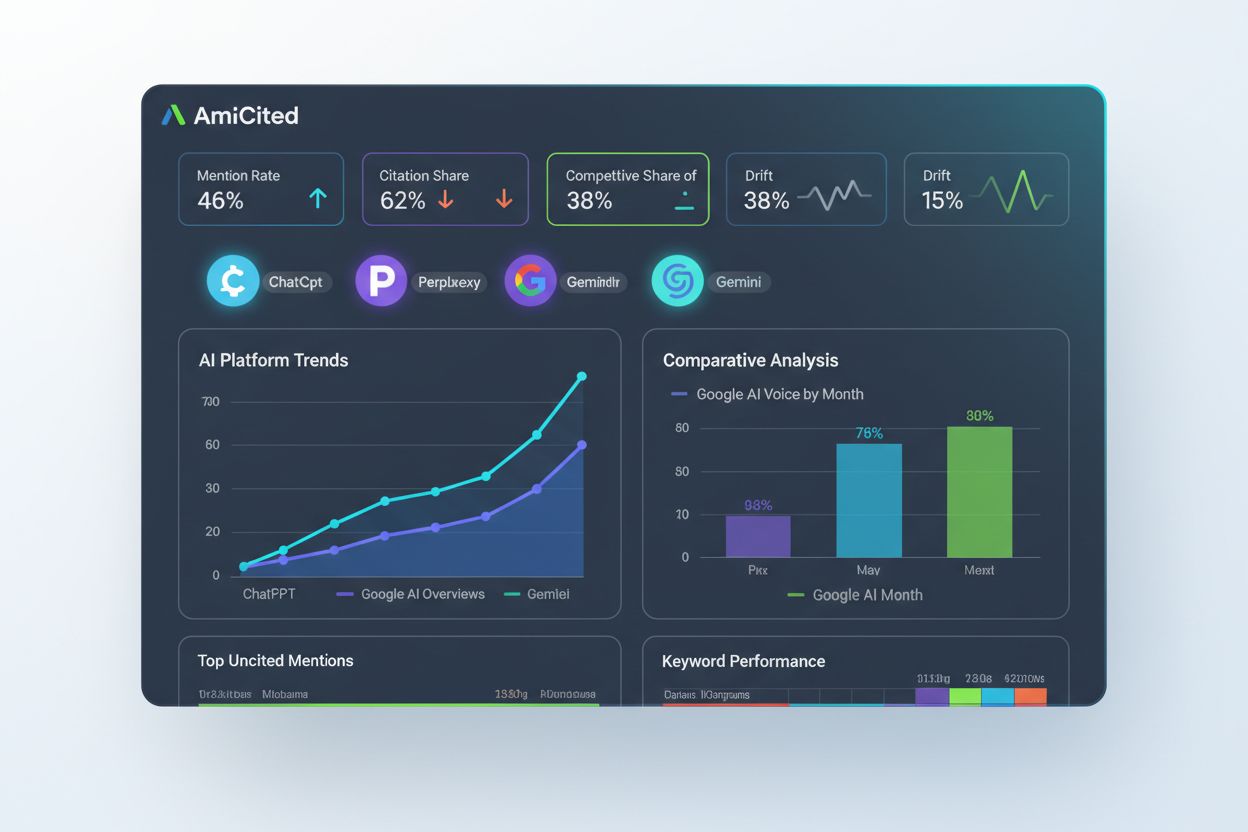
Direct traffic is another critical metric. Brands with growing direct traffic (users typing your domain directly) typically see corresponding increases in AI visibility. This correlation exists because direct traffic indicates strong brand awareness, which AI systems use as a trust signal. Tools like AmICited.com provide real-time monitoring of how your brand appears across ChatGPT, Perplexity, Google AI Overviews, and other major LLMs, allowing you to track these metrics continuously and identify when branded search volume changes correlate with AI visibility shifts.
The correlation between branded search volume and AI visibility becomes crystal clear when examining real-world examples. Consider the case of Buffalo Wild Wings versus Wingstop. Both restaurant chains have similar branded traffic from Google (approximately 5.8M monthly visitors), but Buffalo Wild Wings achieves this through roughly 360 million branded keywords, while Wingstop accomplishes similar traffic with just 169,000 branded keywords. This massive difference in branded keyword diversity directly correlates with their AI visibility: Buffalo Wild Wings appears in 98.7 million monthly AI mentions, while Wingstop appears in only 56.8 million—a 75% difference that mirrors their branded keyword diversity gap.
The deeper insight emerges when examining specific product categories. Buffalo Wild Wings dominates in sauce-related branded queries with 3,700 keywords generating 70,500 monthly visitors, while Wingstop has only 406 sauce-related keywords generating 10,400 visitors. This branded keyword diversity directly translates to AI visibility: when AI systems encounter more varied branded queries about Buffalo Wild Wings’ products, they develop a richer understanding of the brand’s product portfolio and mention it more frequently in AI responses. Similarly, comparing TCL versus LG in the television market shows that LG’s superior branded search volume and keyword diversity correlates with significantly higher AI visibility across all TV-related topics, demonstrating that brand search volume LLM correlation is consistent across industries.
Direct traffic—users typing your domain directly into their browser—serves as one of the strongest indicators of brand strength and correlates powerfully with AI visibility. When direct traffic increases, it signals to AI systems that your brand has achieved significant market awareness and consumer trust. This metric matters because AI systems analyze patterns of how people interact with brands across the web, and direct traffic is a clear signal of brand preference and recognition.
The correlation works in both directions: as your branded search AI visibility increases, you typically see corresponding growth in direct traffic. Users discover your brand through AI mentions, then later search for you directly or type your URL. Conversely, strong direct traffic indicates the brand awareness that drives AI visibility in the first place. Monitoring this relationship in Google Analytics 4 reveals whether your AI visibility efforts are translating into real brand awareness. When you see direct traffic and AI mentions growing in parallel, it confirms that your brand is becoming more recognized and trusted—exactly what AI systems reward with increased citations.
To improve your AI visibility monitoring and strengthen the branded search-AI visibility connection, focus on these strategic initiatives. First, strengthen your branded search presence by creating content that targets branded keywords and branded query variations. This means developing comprehensive product pages, comparison guides, and FAQ content that answers questions people ask about your brand specifically. Second, build brand authority signals through consistent messaging, expert content, and clear brand positioning across all channels. When AI systems encounter consistent brand messaging across multiple sources, they develop stronger confidence in your brand’s authority.
Third, improve brand entity recognition by ensuring your brand is properly represented on authoritative platforms like Wikipedia, Wikidata, Crunchbase, and industry-specific databases. AI systems use these entity records to understand your brand’s category, founding information, and key characteristics. Fourth, diversify your branded keyword coverage by creating content around different product lines, use cases, and customer segments. This mirrors the Buffalo Wild Wings example—broader branded keyword coverage leads to richer AI understanding and more frequent mentions. Finally, maintain consistent brand messaging across your website, content, and third-party sources. When AI systems encounter consistent descriptions of your brand, they’re more likely to cite you as an authoritative source.
Effective AI visibility monitoring requires ongoing attention and regular adaptation. Establish a weekly or monthly routine to track your branded search volume trends alongside your AI visibility metrics. Use tools like Google Search Console to monitor branded keyword performance, and platforms like AmICited.com to track how your brand appears across major AI systems. When you notice changes—either positive or negative—investigate the root cause. Did a competitor launch a major campaign? Did your branded search volume drop? Did AI systems start mentioning a competitor more frequently?
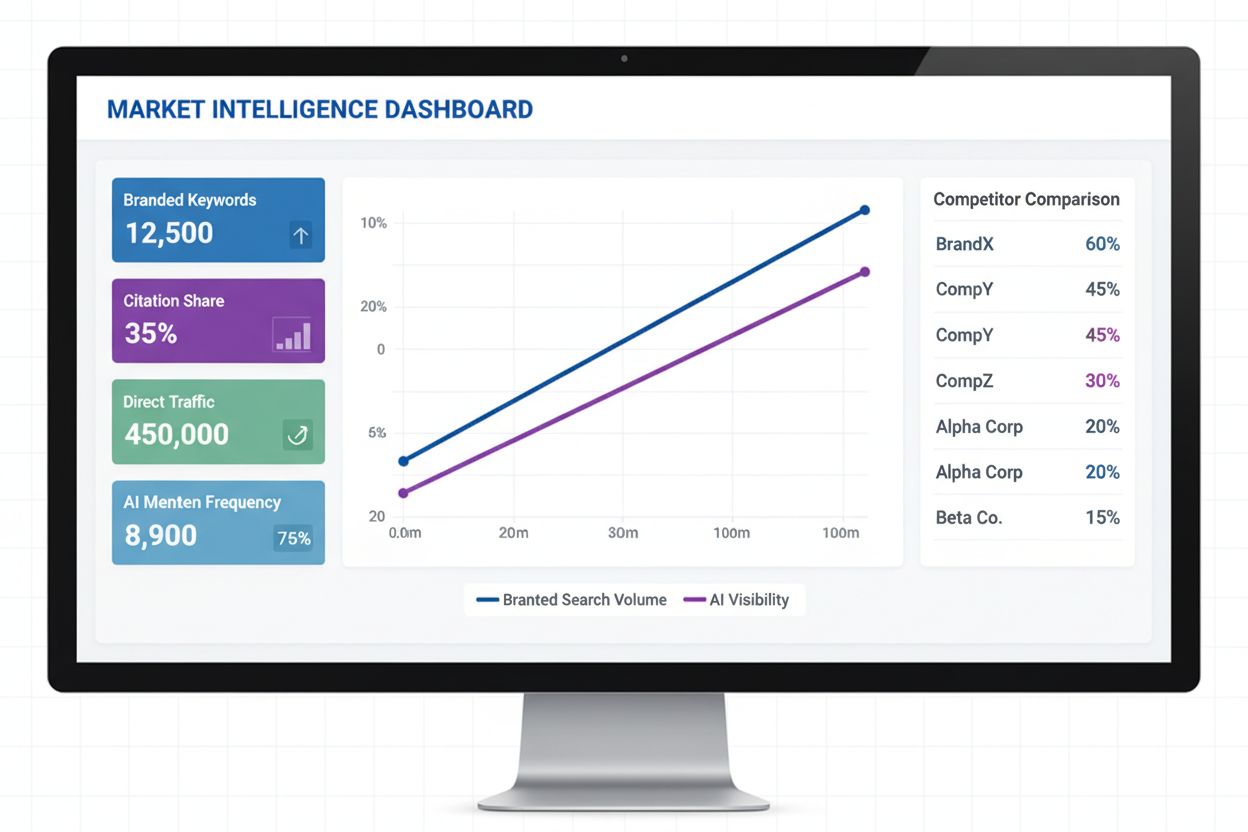
Create a simple dashboard that displays your AI Signal Rate, citation share, branded keyword count, and direct traffic alongside each other. This visual representation makes the correlation obvious and helps you identify when changes in one metric precede changes in another. Set up alerts for significant drops in AI visibility or branded search volume, as these often indicate emerging competitive threats or content issues that need immediate attention. Most importantly, treat AI visibility as a continuous process, not a one-time optimization. The brands that maintain strong branded queries visibility and monitor their AI presence consistently will capture disproportionate share of voice as AI-driven discovery becomes the dominant search paradigm.
Branded search volume serves as a powerful signal to AI systems about your brand's market presence and authority. When millions of people search for your brand name, AI models interpret this as consumer awareness and trust, making them more likely to mention your brand in generated answers. Higher branded search volume typically correlates with more frequent AI citations and better positioning in AI-generated responses.
Track your AI Signal Rate (brand mentions divided by total relevant prompts), citation share (your citations versus competitors), and direct traffic alongside branded search volume trends. Use tools like AmICited.com to monitor AI visibility across platforms like ChatGPT, Perplexity, and Google AI Overviews. Create a dashboard displaying these metrics together to visualize the correlation over time.
High branded search volume alone isn't sufficient for AI visibility. Your brand also needs strong entity recognition on authoritative platforms like Wikipedia and Wikidata, consistent messaging across sources, and content that AI systems can easily extract and cite. Additionally, if your brand information is outdated or inaccurate, AI systems may deprioritize citing you. Ensure your brand is properly represented across the web with current, accurate information.
Establish a weekly or monthly monitoring routine depending on your industry's pace of change. Fast-moving sectors like fintech or AI tools may benefit from weekly checks, while others can monitor monthly. Set up automated alerts for significant drops in either metric, as these often indicate competitive threats or content issues requiring immediate attention.
Google Search Console tracks branded keyword performance and search volume trends. AmICited.com specializes in monitoring how your brand appears across major AI systems like ChatGPT, Perplexity, Gemini, and Google AI Overviews. Semrush and Rankscale also offer AI visibility tracking. Create a unified dashboard combining data from these tools to see the complete picture of your branded search and AI visibility correlation.
Direct traffic—users typing your domain directly—indicates strong brand awareness and correlates powerfully with AI visibility. As your AI visibility increases, users discover your brand through AI mentions and later visit directly. Conversely, strong direct traffic signals the brand awareness that drives AI visibility. Monitoring this relationship in Google Analytics reveals whether your AI visibility efforts are translating into real brand recognition.
Yes, but it's a two-way relationship. Increasing branded search volume through brand awareness campaigns, content marketing, and PR helps signal your brand's importance to AI systems. However, you must also ensure your brand is properly represented across authoritative sources, your entity information is accurate, and your content is easily discoverable by AI crawlers. The strongest results come from simultaneously building branded search volume and optimizing for AI visibility.
Branded search signals are the raw data about how often people search for your brand—these are inputs that AI systems use to understand your brand's importance. AI visibility metrics measure the output—how often and how prominently your brand actually appears in AI-generated answers. Together, they form a complete picture: strong branded search signals should lead to strong AI visibility metrics, and monitoring both helps you understand whether your brand awareness is translating into AI discoverability.
Track how ChatGPT, Perplexity, and Google AI Overviews mention your brand. Get instant alerts when your visibility changes and stay ahead of competitors.
Explore AI Visibility Futures - forward-looking analysis of emerging trends in AI-driven brand discovery. Learn how brands will be discovered by AI systems and ...
Discover how AI visibility is reshaping marketing success. Learn why citations matter more than clicks, how to measure AI visibility, and why your brand's prese...

Discover the real business costs of ignoring AI search monitoring. Learn how brands lose visibility, market share, and customer discovery when they don't track ...