

ROI-Based AI Visibility Budgeting
Learn how to build ROI-based AI visibility budgets with proven frameworks, measurement strategies, and allocation methods. Maximize returns on your AI investmen...
12 min read

Strategic guide to allocating your AI visibility budget across platforms, tools, and optimization strategies. Learn how to maximize ROI from ChatGPT, Perplexity, and Google Gemini investments.
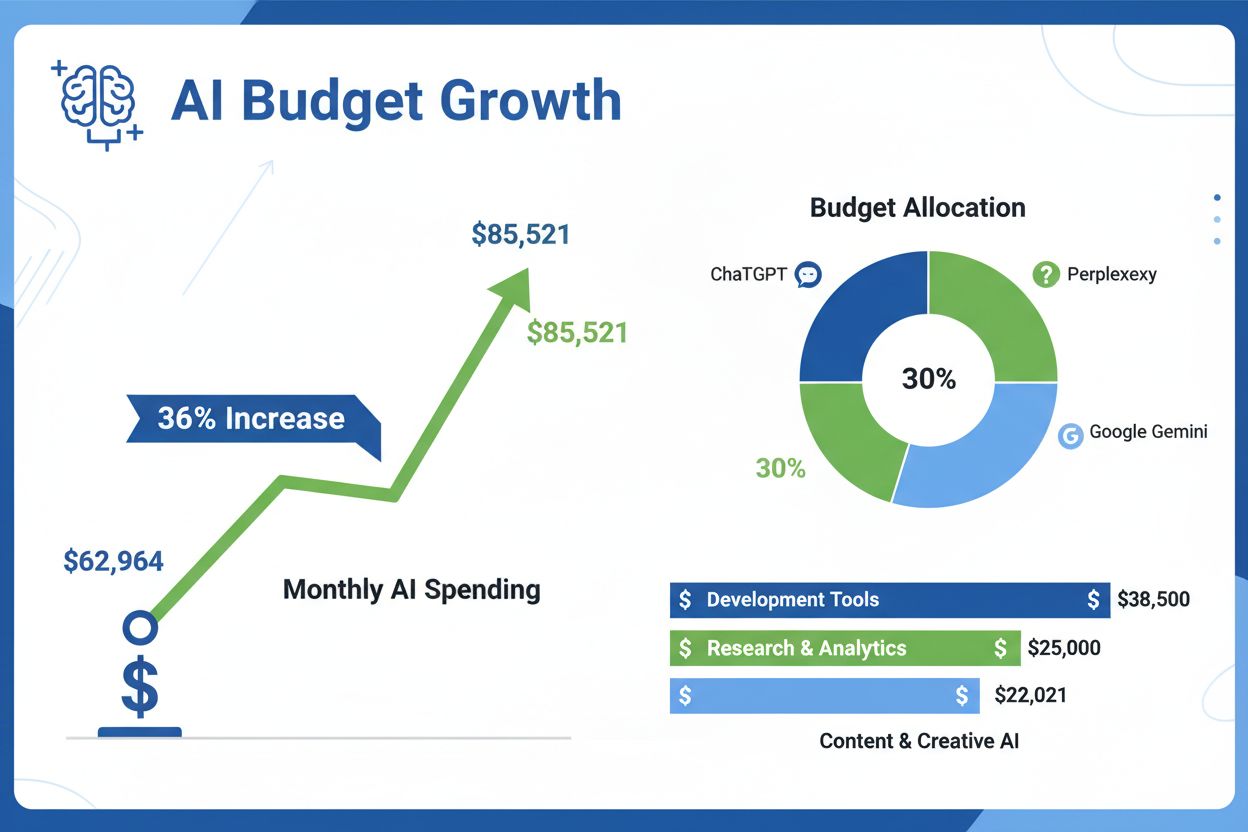
Organizations are dramatically increasing their investment in artificial intelligence, with average monthly AI spending rising 36% from $62,964 to $85,521 according to the latest CloudZero 2025 AI Costs Report. This explosive growth reflects the critical role AI has become in modern business operations, yet many organizations struggle with a fundamental challenge: understanding the actual return on their AI investments. The real problem isn’t the size of the budget—it’s the visibility gap that prevents leaders from knowing whether their AI spending is delivering measurable business value. Without proper budget allocation and tracking mechanisms, even well-intentioned AI investments can become black holes of spending with unclear ROI.
AI visibility spending encompasses a comprehensive range of investments designed to maximize the impact and measurability of your artificial intelligence initiatives. This includes expenditures on public cloud infrastructure, generative AI tools and platforms, security and compliance measures, monitoring and attribution tools, content creation and optimization, and team training and development. According to current market data, organizations typically allocate their AI visibility budgets across multiple categories: Public Cloud (11%), Generative AI Tools (10%), Security (9%), Attribution & Monitoring Tools (8%), Content & Optimization (7%), and Team Development (6%), with the remaining budget distributed across supporting infrastructure and contingency reserves. Notably, 45% of organizations are planning to increase their monthly AI spending to $100,000 or more, signaling a significant shift in how businesses prioritize artificial intelligence investments.
| Budget Category | Allocation % |
|---|---|
| Public Cloud Infrastructure | 11% |
| Generative AI Tools & Platforms | 10% |
| Security & Compliance | 9% |
| Attribution & Monitoring Tools | 8% |
| Content & Optimization | 7% |
| Team Development & Training | 6% |
| Supporting Infrastructure | 5% |
| Contingency & Experimentation | 44% |
Generative Engine Optimization (GEO) has emerged as a critical investment area for organizations seeking to maximize the visibility and impact of their AI initiatives, yet many companies are still underinvesting in this foundational capability. Mid-market brands typically allocate $75,000 to $150,000 annually toward GEO efforts, recognizing that early investment in this space creates significant competitive advantages as AI-powered search and discovery mechanisms become increasingly dominant. The GEO investment framework breaks down into three essential areas that work synergistically to build lasting visibility:
• Technology Stack Investment - Building or acquiring the tools and infrastructure needed to monitor, measure, and optimize your presence across AI-powered platforms and search engines
• Time & Expertise Investment - Allocating dedicated team resources or hiring specialists who understand how AI systems discover, rank, and recommend content
• Content & Optimization Investment - Creating and refining content that aligns with how generative AI models understand relevance, authority, and user intent
Organizations that invest early in GEO establish citation authority and E-E-A-T (Experience, Expertise, Authoritativeness, Trustworthiness) signals that compound over time, creating a sustainable competitive moat that becomes increasingly difficult for competitors to overcome.
The most significant challenge facing organizations with substantial AI budgets is the attribution gap: while companies are investing heavily in AI initiatives, only 51% can confidently track the ROI of their spending, leaving nearly half operating in the dark about whether their investments are paying off. Traditional metrics like impressions, clicks, and basic engagement data fail to capture the nuanced ways that AI systems discover and recommend content, making it essential to adopt new key performance indicators specifically designed for the AI era. Forward-thinking organizations are shifting their measurement frameworks to include visibility scores (measuring presence across AI platforms), citation counts (tracking how often your content is referenced by AI systems), and sentiment analysis (understanding how AI systems characterize your brand and offerings). The impact of proper measurement tools is dramatic: 90% or more of organizations using third-party attribution and monitoring tools report significantly higher confidence in their AI ROI, compared to those relying on manual tracking or incomplete data. This confidence gap directly translates to better decision-making, more strategic budget allocation, and ultimately, stronger business outcomes.
Different AI platforms require different investment strategies, and organizations that fail to account for these differences often find themselves either over-investing in mature platforms or under-investing in emerging opportunities. ChatGPT, as the most widely-used generative AI platform, typically requires the largest allocation due to its massive user base and the importance of appearing in responses to common queries—organizations should budget for both content optimization and active monitoring through tools like AmICited. Perplexity, which emphasizes cited sources and research-oriented queries, demands a different approach focused on building citation authority and ensuring your content is discoverable by its citation-seeking algorithm. Google Gemini, integrated into Google’s search ecosystem, requires investment in both traditional SEO fundamentals and new GEO-specific optimizations that account for how Gemini surfaces information differently than traditional search results.
| Platform | Budget Focus | Key Metrics |
|---|---|---|
| ChatGPT | Content optimization, response visibility | Citation frequency, mention rate |
| Perplexity | Citation authority, research relevance | Citation count, source ranking |
| Google Gemini | GEO optimization, E-E-A-T signals | Visibility score, featured snippets |
The reason allocation differs across platforms is that each has distinct algorithms, user behaviors, and discovery mechanisms—what works for ChatGPT may not work for Perplexity, and vice versa. Citation patterns compound over time, meaning early investment in monitoring and optimization through platforms like AmICited creates exponential returns as your content becomes increasingly recognized as authoritative across multiple AI systems.
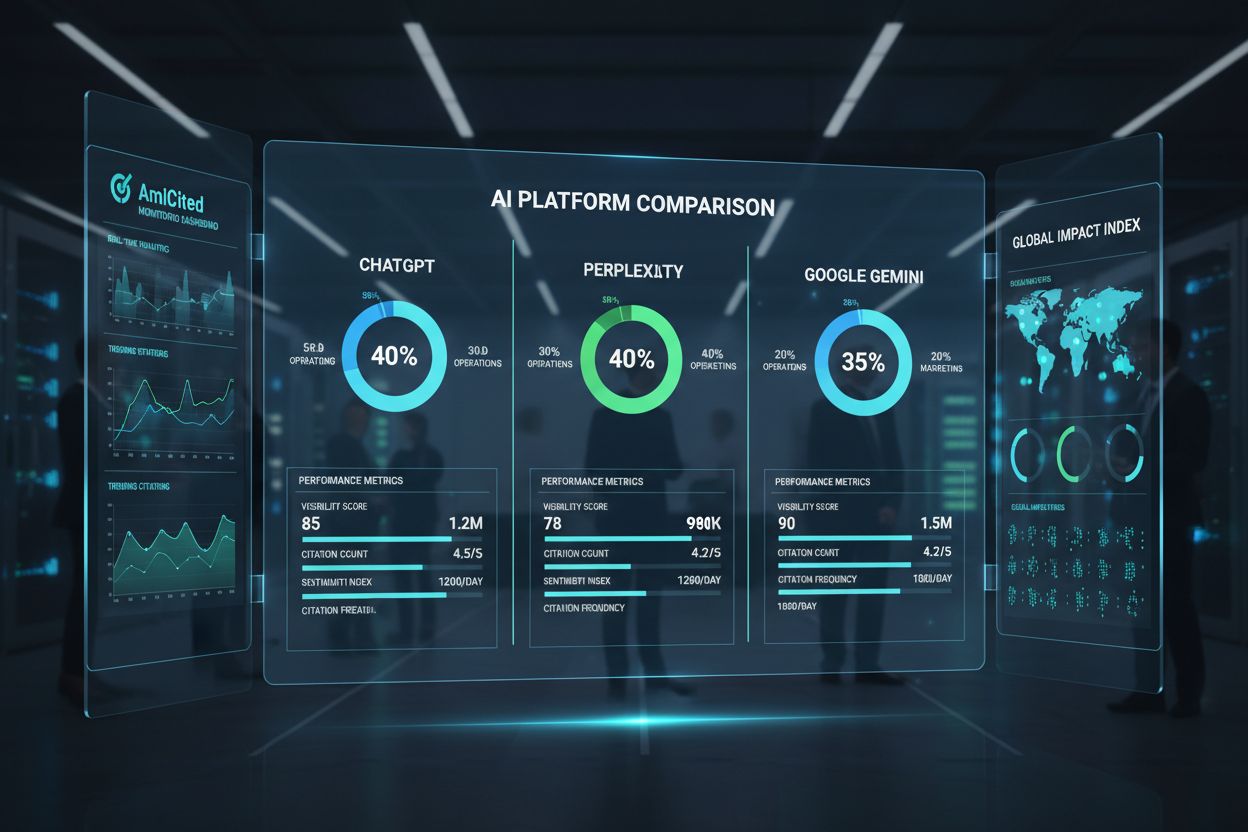
Reducing wasted AI spending doesn’t require cutting budgets—it requires smarter allocation and continuous optimization based on real performance data. Predictive budget allocation, powered by AI itself, analyzes historical performance patterns and real-time data to automatically adjust spending toward the highest-performing initiatives, reducing wasted spend on underperforming tactics by up to 30%. Attribution modeling reveals which specific investments are driving visibility and citations, allowing you to eliminate redundant spending and double down on what actually works. Continuous monitoring systems that track your presence across ChatGPT, Perplexity, Google Gemini, and other AI platforms provide the real-time feedback necessary to make rapid adjustments before budget is wasted on ineffective strategies.
Practical Cost Optimization Tips:
Creating an effective AI visibility budget requires a structured approach that balances strategic investment with practical testing and validation. Follow this framework to build a budget that delivers measurable results:
Assess Current State - Audit your existing AI visibility across ChatGPT, Perplexity, and Google Gemini using tools like AmICited to establish baseline metrics and identify gaps
Define Target Metrics - Establish specific, measurable goals for citation count, visibility score, and presence across AI platforms over the next 12 months
Allocate Pilot Budget - Reserve 20-30% of your total AI visibility budget for a 6-month pilot program testing different platforms and optimization strategies
Implement Monitoring - Deploy attribution and monitoring tools to track performance in real-time and enable rapid optimization
Build Business Case - Document pilot results and use them to justify expanded budget to leadership, showing clear ROI and competitive advantages
Scale Strategically - Based on pilot learnings, scale successful initiatives while discontinuing underperforming tactics
The 6-month pilot structure is critical because it provides sufficient time to see meaningful results while remaining short enough to make course corrections before committing significant budget. Organizations that follow this framework consistently report higher confidence in their AI investments and better alignment between spending and business outcomes.
Many organizations make critical mistakes in how they allocate their AI visibility budgets, often with significant consequences for ROI and competitive positioning. The most common error is over-investing in cutting-edge AI tools and platforms while neglecting foundational technologies like content infrastructure, data quality, and team expertise—these foundational elements are what actually enable AI tools to deliver value. Another frequent mistake is treating AI visibility as a single, monolithic investment rather than a balanced portfolio across multiple platforms, content types, and optimization strategies; organizations that concentrate all their budget on a single platform (like ChatGPT) miss opportunities on emerging platforms like Perplexity that may become increasingly important. Some organizations see poor ROI not because their AI investments are fundamentally flawed, but because they lack proper attribution and monitoring, making it impossible to identify which initiatives are actually working. According to Deloitte’s Tech Value Survey, organizations that maintain a balanced portfolio approach—investing across multiple platforms, technologies, and optimization strategies—consistently report better ROI and more sustainable competitive advantages than those that concentrate their budgets on single solutions. The key insight is that AI visibility budgets should be treated like investment portfolios: diversification, continuous rebalancing, and rigorous performance monitoring are essential to long-term success.
AI visibility budget refers to the financial resources allocated to ensure your brand appears in responses from AI systems like ChatGPT, Perplexity, and Google Gemini. It matters because these platforms are becoming primary discovery channels for customers, and without proper investment in visibility optimization, your brand risks being invisible to users relying on AI for answers.
Mid-market brands typically invest $75,000 to $150,000 annually in comprehensive AI visibility programs. However, the right amount depends on your industry, competitive landscape, and current visibility gaps. Start with a 6-month pilot program allocating 20-30% of your total AI budget to test different platforms and strategies before scaling.
While traditional SEO focuses on ranking in Google's search results, GEO (Generative Engine Optimization) focuses on being cited and referenced by AI systems. GEO requires investment in citation authority, E-E-A-T signals, and structured data optimization. Both are important, but GEO addresses the emerging AI-powered discovery landscape.
Track metrics like visibility score (presence across AI platforms), citation count (how often your content is referenced), sentiment index (how AI systems characterize your brand), and attribution-adjusted conversions. Use monitoring tools like AmICited to measure these metrics across ChatGPT, Perplexity, and Google Gemini in real-time.
No. Different platforms require different investment strategies. ChatGPT requires the largest allocation due to its user base, Perplexity demands focus on citation authority, and Google Gemini requires GEO-specific optimizations. Allocate based on your target audience's platform preferences and your current visibility gaps.
Common mistakes include over-investing in AI tools while neglecting foundational content and infrastructure, concentrating all budget on a single platform, lacking proper attribution and monitoring, and failing to maintain a balanced portfolio approach. Organizations that diversify their investments and continuously monitor performance see significantly better ROI.
Conduct monthly performance reviews to identify trends and emerging opportunities, quarterly strategic reviews to evaluate platform mix and allocation effectiveness, and annual comprehensive audits to align budget with business objectives. Real-time monitoring enables rapid adjustments when performance metrics indicate needed changes.
Yes. Predictive budget allocation uses machine learning to analyze historical performance and recommend spending adjustments. These systems can reduce wasted spend by up to 30% and improve overall ROAS by automatically shifting budget toward highest-performing initiatives based on real-time data.
Track how your AI visibility investments translate into citations and brand mentions across ChatGPT, Perplexity, and Google Gemini with AmICited's comprehensive monitoring platform.
Learn how to build ROI-based AI visibility budgets with proven frameworks, measurement strategies, and allocation methods. Maximize returns on your AI investmen...

Community discussion on whether traditional SEO remains valuable in the AI search era. Real ROI data and experiences from marketers balancing SEO and AI optimiz...
Community discussion on the total cost of AI search optimization. Real experiences from marketers on budgets, tools, content production, and ROI for AI visibili...