
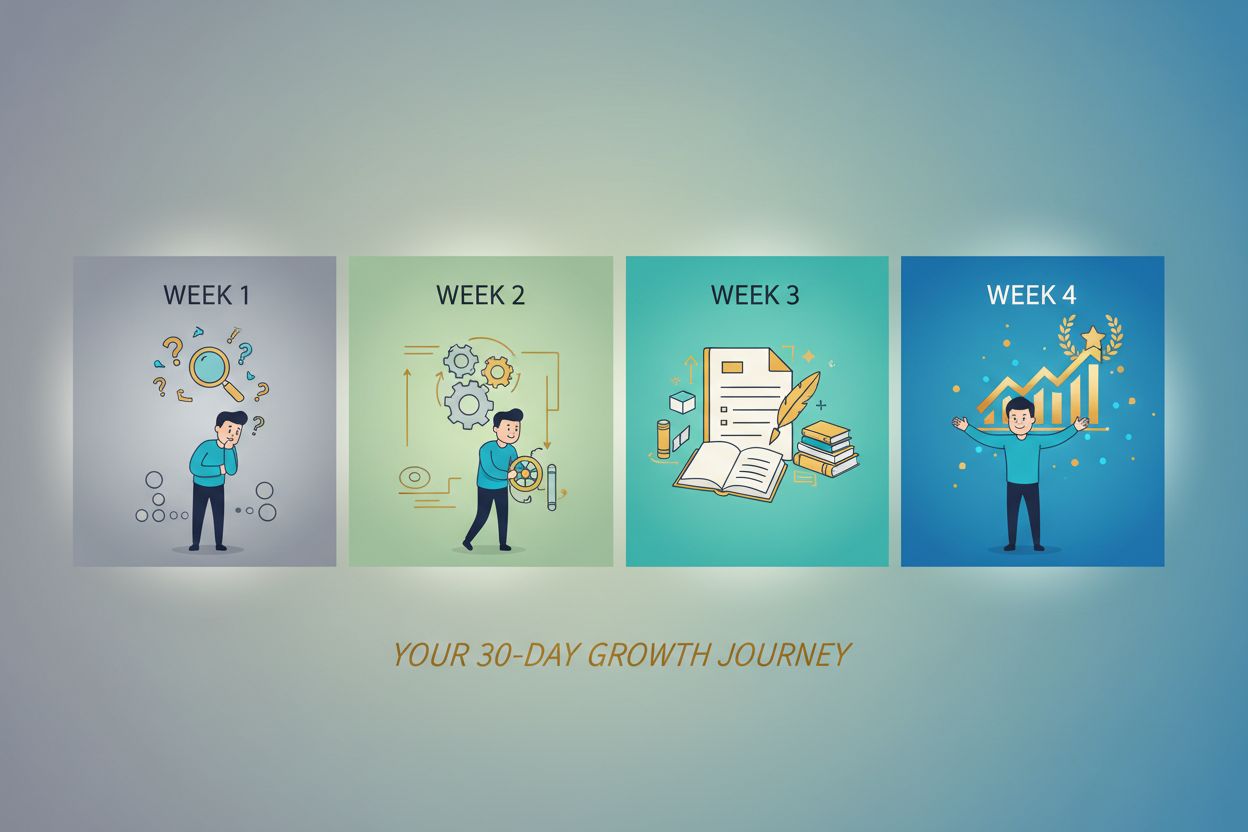
AI Visibility for Beginners: Your First 30 Days
Learn how to get started with AI visibility in just 30 days. A practical guide for beginners covering discovery, optimization, content strategy, and monitoring.
11 min read

Learn how to build a comprehensive AI visibility strategy for 2026. Discover the 6 pillars of GEO, implementation roadmap, and tools to monitor your brand across ChatGPT, Perplexity, and Google AI Overviews.
The digital landscape is undergoing a fundamental transformation. 71% of Americans now use AI search tools, and projections suggest ChatGPT could surpass Google as the primary search engine by 2030. This seismic shift means that traditional SEO strategies alone are no longer sufficient for businesses seeking to maintain competitive visibility. The rise of AI-powered search engines, answer engines, and large language models has created an entirely new visibility challenge that demands a strategic response. Companies that fail to adapt their visibility strategies to this AI-first world risk becoming invisible to a rapidly growing segment of their target audience. The question is no longer whether to invest in AI visibility—it’s how quickly you can implement a comprehensive strategy before your competitors do.
Most businesses today operate with a critical blind spot: they optimize for traditional search engines while remaining largely invisible to AI systems. The AI visibility gap represents the difference between how easily your content can be found through conventional search and how readily it appears in AI-generated responses, recommendations, and citations. This gap exists because AI systems operate on fundamentally different principles than traditional search engines. While Google indexes pages and ranks them based on links and relevance signals, AI models are trained on vast datasets and generate responses based on learned patterns, context, and the authority of source material. Your website might rank perfectly for a keyword on Google but receive zero citations from ChatGPT, Claude, or other AI systems simply because those systems weren’t trained on your content or don’t recognize your authority. Understanding this gap is the first step toward closing it and ensuring your business remains visible in the AI-driven future.
| Metric | Traditional SEO | AI Visibility (GEO) |
|---|---|---|
| Primary ranking factor | Backlinks, Domain Authority | Citation Authority, E-E-A-T |
| User input | Keywords | Conversational prompts |
| Success metric | Organic traffic | AI citations, share of voice |
| Content evaluation | Keyword relevance | Expertise, trustworthiness, clarity |
A comprehensive AI visibility strategy rests on six interconnected pillars that work together to ensure your content is discoverable, trustworthy, and valuable to AI systems. These pillars are not isolated tactics but rather components of an integrated framework that addresses every aspect of how AI systems discover, evaluate, and cite your content. By building strength in each pillar, you create multiple pathways for AI visibility while reinforcing your overall authority and credibility. The following sections break down each pillar in detail, providing actionable insights and specific implementation strategies you can begin deploying immediately.
| Pillar | Focus Area | Key Outcome |
|---|---|---|
| Market Analysis & Competitive Intelligence | Understanding your competitive landscape and AI visibility opportunities | Identify gaps where you can establish authority |
| Content Authority & Thought Leadership | Creating original, authoritative content that AI systems recognize and cite | Become a primary source for your industry |
| Technical Optimization for AI Crawlers | Ensuring AI systems can efficiently discover and access your content | Maximize crawlability and indexing by AI bots |
| Structured Data & Schema Implementation | Providing explicit context about your content to AI systems | Improve content understanding and relevance |
| Building E-E-A-T & Trust Signals | Establishing expertise, experience, authoritativeness, and trustworthiness | Increase likelihood of AI citations and recommendations |
| Monitoring, Measurement & Iteration | Tracking AI visibility metrics and continuously optimizing your strategy | Maintain competitive advantage and adapt to changes |
Before you can win in AI visibility, you must understand the competitive landscape and identify where opportunities exist. Start by analyzing which competitors are already receiving citations from major AI systems like ChatGPT, Claude, Gemini, and Perplexity. Tools like AmICited.com provide comprehensive monitoring of AI citations across multiple platforms, allowing you to see exactly which domains are being cited most frequently and for which topics. This intelligence reveals gaps in your competitor’s coverage and opportunities where you can establish authority. Conduct a thorough audit of your industry’s key topics, questions, and search intents that AI systems are being asked about daily. Map out the current citation landscape to understand which sources dominate AI responses and why they’ve achieved that position. This foundational analysis informs every subsequent decision in your AI visibility strategy and ensures you’re targeting opportunities with genuine market demand.
Key steps for market analysis:
AI systems are trained to recognize and cite authoritative sources, which means your content strategy must prioritize original research, unique insights, and demonstrable expertise. Rather than creating incremental variations of existing content, focus on producing original research, case studies, proprietary data, and thought leadership pieces that AI systems cannot find elsewhere. When you publish original research or data-driven insights, you create content that AI systems are incentivized to cite because it provides value that cannot be replicated from other sources. Develop a content calendar that balances evergreen authority-building pieces with timely thought leadership that addresses emerging trends in your industry. Consider publishing original research reports, conducting surveys, analyzing industry data, or sharing case studies that demonstrate measurable results. The more original and authoritative your content, the more likely AI systems will recognize you as a primary source worth citing in their responses. This approach transforms your content from a commodity into a strategic asset that drives AI visibility.
AI systems rely on web crawlers to discover and index content, which means your technical infrastructure must be optimized for efficient crawling and indexing. Ensure your website has a clean, logical structure with clear navigation that allows crawlers to discover all important content without friction. Implement proper robots.txt configurations that allow AI crawlers to access your content while protecting sensitive areas. Monitor your crawl budget and eliminate technical barriers that might prevent AI systems from fully indexing your site. Optimize your page load speed, as faster-loading pages are crawled more efficiently and completely. Implement mobile-first design principles, as many AI crawlers prioritize mobile versions of websites. Create an XML sitemap that explicitly lists all important pages and update it regularly as you publish new content. These technical foundations ensure that AI systems can discover and index your content effectively, which is a prerequisite for achieving visibility in AI-generated responses.
Structured data provides explicit context about your content to AI systems, dramatically improving their ability to understand and properly represent your information. Implement schema.org markup for all relevant content types, including articles, research reports, products, organizations, and people. Use Article schema to mark up blog posts and long-form content, including author information, publication date, and content type. Implement Organization schema to establish your company’s identity, credentials, and contact information. For research and data-driven content, use appropriate schema types that clearly identify the nature and credibility of your information. Include author schema that links content to individual experts within your organization, helping AI systems understand who created the content and their credentials. Implement breadcrumb schema to help AI systems understand your site’s structure and content hierarchy. Validate your schema implementation using Google’s Rich Results Test and Schema.org validation tools to ensure it’s correctly formatted. Properly implemented structured data acts as a translator between your content and AI systems, ensuring they understand exactly what you’re communicating and why it matters.
{
  "@context": "https://schema.org",
  "@type": "Article",
  "headline": "Building Your 2026 AI Visibility Strategy: A Complete Framework",
  "author": {
    "@type": "Person",
    "name": "AmICited Team"
  },
  "datePublished": "2026-01-15",
  "dateModified": "2026-01-15",
  "description": "Learn how to build a comprehensive AI visibility strategy for 2026",
  "articleBody": "The digital landscape is undergoing a fundamental transformation..."
}
| Content Type | Recommended Schema | Purpose |
|---|---|---|
| Blog articles | Article, NewsArticle | Identify content type and metadata |
| FAQs | FAQPage | Direct answer extraction |
| How-to guides | HowTo | Step-by-step instruction clarity |
| Product reviews | Review, Product | Credibility and comparison data |
| Author bios | Person | E-E-A-T signals |
E-E-A-T—Expertise, Experience, Authoritativeness, and Trustworthiness—has become the gold standard for content evaluation by both AI systems and human users. Demonstrate expertise by creating content that reflects deep knowledge of your subject matter, backed by research, data, and real-world experience. Share your experience through case studies, client testimonials, and detailed accounts of how you’ve solved problems in your industry. Establish authoritativeness by earning mentions and citations from other reputable sources, building backlinks from high-authority domains, and positioning your team as recognized experts. Build trustworthiness through transparent communication, clear author bios, published credentials, privacy policies, and security certifications. Create author pages that establish the credentials and expertise of your content creators, helping AI systems understand who is behind your content. Encourage customer reviews and testimonials on third-party platforms, as these external trust signals significantly influence how AI systems evaluate your credibility. Maintain consistent, accurate information across all platforms and correct any inaccuracies promptly. The stronger your E-E-A-T signals, the more likely AI systems will recognize you as a trustworthy source worth citing.
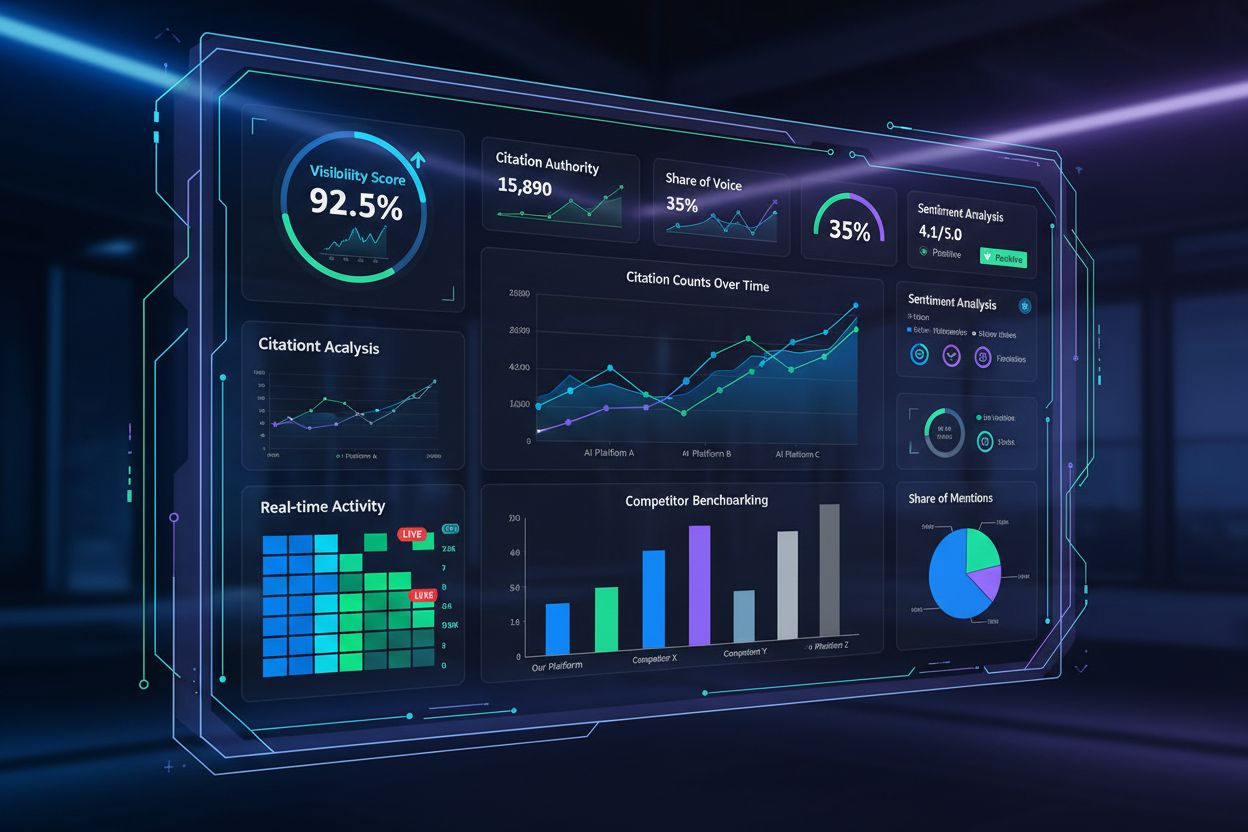
You cannot improve what you don’t measure, which is why comprehensive monitoring of your AI visibility is essential to long-term success. Establish baseline metrics for AI citations across major platforms including ChatGPT, Claude, Gemini, Perplexity, and other emerging AI systems. Track which of your content pieces are being cited, how frequently, and in what context. Monitor your competitors’ AI citation trends to understand how the competitive landscape is evolving. Use tools like AmICited.com to automate this monitoring process and receive alerts when your content is cited or when new citation opportunities emerge. Analyze the correlation between your content initiatives and changes in AI citation frequency. Identify which topics, content types, and formats generate the most AI citations and double down on what’s working. Establish a regular review cadence—monthly or quarterly—to assess your progress and adjust your strategy based on performance data. Create dashboards that visualize your AI visibility metrics and share them with stakeholders to demonstrate the impact of your efforts. This data-driven approach ensures your AI visibility strategy remains aligned with results and continuously improves over time.
Creating a strategic roadmap ensures your AI visibility efforts are coordinated, prioritized, and aligned with your business objectives. Begin by conducting a comprehensive audit of your current state across all six pillars, identifying your strengths and gaps. Set specific, measurable goals for AI visibility improvements over the next 12-24 months, such as increasing citations by 50% or achieving top-three citation status for your core topics. Prioritize initiatives based on impact potential and resource requirements, focusing first on quick wins that build momentum. Develop a content calendar that balances authority-building pieces with tactical content addressing emerging opportunities. Assign clear ownership and accountability for each pillar, ensuring someone on your team is responsible for driving progress. Establish a timeline for implementation, breaking major initiatives into quarterly milestones with specific deliverables. Build in regular review points where you assess progress, celebrate wins, and adjust your strategy based on performance data and market changes. A well-constructed roadmap transforms AI visibility from an abstract goal into a concrete, achievable plan with clear steps and measurable progress.
| Quarter | Focus Area | Key Initiatives | Success Metrics |
|---|---|---|---|
| Q1 | Audit & Strategy | Visibility audit, competitor analysis, KPI setting | Baseline established |
| Q2 | Content & Technical | Authority content, schema implementation, site speed | 20% visibility improvement |
| Q3 | Optimization | Prompt testing, E-E-A-T enhancement, monitoring setup | Citation increase |
| Q4 | Scale & Iterate | Expand successful tactics, quarterly review, 2027 planning | 40%+ visibility growth |
Many organizations stumble in their AI visibility efforts by making predictable mistakes that undermine their strategy. Pitfall 1: Ignoring AI visibility entirely - Some companies assume traditional SEO is sufficient and fail to adapt to the AI-first landscape. Avoid this by recognizing that AI visibility is now a critical component of any comprehensive digital strategy. Pitfall 2: Creating low-quality content hoping for AI citations - AI systems are trained to recognize and cite authoritative, original sources. Avoid this by investing in genuinely valuable content that provides unique insights or data. Pitfall 3: Neglecting technical optimization - Even great content won’t be cited if AI crawlers can’t discover or properly index it. Avoid this by ensuring your technical infrastructure supports efficient crawling and indexing. Pitfall 4: Failing to build trust signals - AI systems evaluate source credibility carefully, so weak E-E-A-T signals will limit your citations. Avoid this by systematically building author credentials, earning backlinks, and gathering customer testimonials. Pitfall 5: Not monitoring your progress - Without measurement, you’re flying blind and can’t optimize your strategy. Avoid this by implementing comprehensive monitoring from day one and reviewing metrics regularly. Pitfall 6: Treating AI visibility as a one-time project - The AI landscape is rapidly evolving, and your strategy must adapt continuously. Avoid this by building iteration and continuous improvement into your process from the start.
Key pitfalls to avoid:
As your AI visibility strategy matures, the right monitoring tools become essential to tracking progress and identifying opportunities. AmICited.com stands out as a comprehensive solution for monitoring AI citations across multiple platforms, providing real-time alerts when your content is cited and detailed analytics about your citation patterns. These tools eliminate the manual work of checking each AI system individually and provide the data you need to optimize your strategy. Look for monitoring solutions that track citations across multiple AI platforms, not just ChatGPT, since the AI landscape includes numerous systems with different training data and citation patterns. Effective monitoring tools should provide competitive intelligence, showing you how your citation frequency compares to competitors and where opportunities exist. They should offer detailed analytics about which content pieces generate citations, which topics are most cited, and how your citation patterns are trending over time. Integration with your existing analytics and marketing tools ensures monitoring data flows into your decision-making processes. The investment in proper monitoring tools pays dividends by enabling data-driven optimization and ensuring you’re making strategic decisions based on actual performance rather than assumptions.
The AI visibility landscape will continue evolving rapidly as new AI systems emerge, training data updates, and citation patterns shift. Organizations that build strong foundations in 2025 will be positioned to adapt quickly as the landscape changes. The fundamental principles—creating authoritative content, building trust signals, optimizing for discoverability, and measuring results—will remain relevant regardless of which specific AI systems dominate. However, the specific tactics and platforms will likely shift as new AI systems gain prominence and existing systems evolve. Start your AI visibility journey now, even if you can only dedicate limited resources initially. Early movers will establish authority and citation patterns that compound over time, creating competitive advantages that are difficult for late entrants to overcome. The businesses that thrive in 2026 and beyond will be those that recognized the AI visibility imperative early and built comprehensive strategies to address it. Your AI visibility strategy is not a luxury or a nice-to-have—it’s a fundamental requirement for remaining visible and competitive in the AI-driven future.

GEO (Generative Engine Optimization) focuses on optimizing for AI citation authority and visibility in LLM responses, while traditional SEO focuses on keyword rankings in search engines. Both are important but require different optimization approaches. GEO emphasizes content authority, E-E-A-T signals, and structured data, while SEO emphasizes backlinks and keyword relevance.
Initial improvements can appear in 4-6 weeks, but significant visibility gains typically take 3-6 months of consistent effort. The timeline depends on your starting position, content quality, and how aggressively you implement the six pillars. Competitive industries may require longer to establish authority.
Start with ChatGPT, Google AI Overviews, and Perplexity as they have the largest user bases and highest citation frequency. These three platforms account for the majority of AI search traffic. Once you've established strong visibility there, expand to Claude, Gemini, and other emerging AI systems.
Yes, GEO tactics like schema markup, authoritative content, and technical optimization typically strengthen both AI and traditional SEO performance. The practices that improve AI visibility—creating quality content, building authority, optimizing technical infrastructure—are fundamentally aligned with good SEO practices.
Mid-market brands typically invest $75k-$150k annually in tools, content creation, and analytics for comprehensive GEO programs. This includes monitoring tools, content development, technical optimization, and team resources. Enterprises may allocate $250k+ depending on scale and competitive intensity.
Review and update quarterly as AI models evolve and new platforms emerge. Monthly monitoring of metrics is recommended for real-time adjustments. The AI landscape changes rapidly, so flexibility and continuous iteration are essential to maintaining competitive advantage.
Content authority and E-E-A-T signals are most critical. AI engines prioritize trustworthy, expert sources over volume. Building genuine expertise, demonstrating experience, establishing authoritativeness, and creating trustworthiness signals will have the biggest impact on your AI visibility.
Track AI-attributed leads through 'How did you hear about us' forms, monitor traffic from AI bot visits using tools like AmICited, and measure citation growth over time. Correlate citation increases with lead generation and revenue to establish clear ROI metrics for your AI visibility investments.
Don't let your brand fade from AI search results. AmICited tracks how AI systems reference your brand across ChatGPT, Perplexity, and Google AI Overviews—giving you the insights you need to dominate AI-driven discovery.
Learn how to get started with AI visibility in just 30 days. A practical guide for beginners covering discovery, optimization, content strategy, and monitoring.
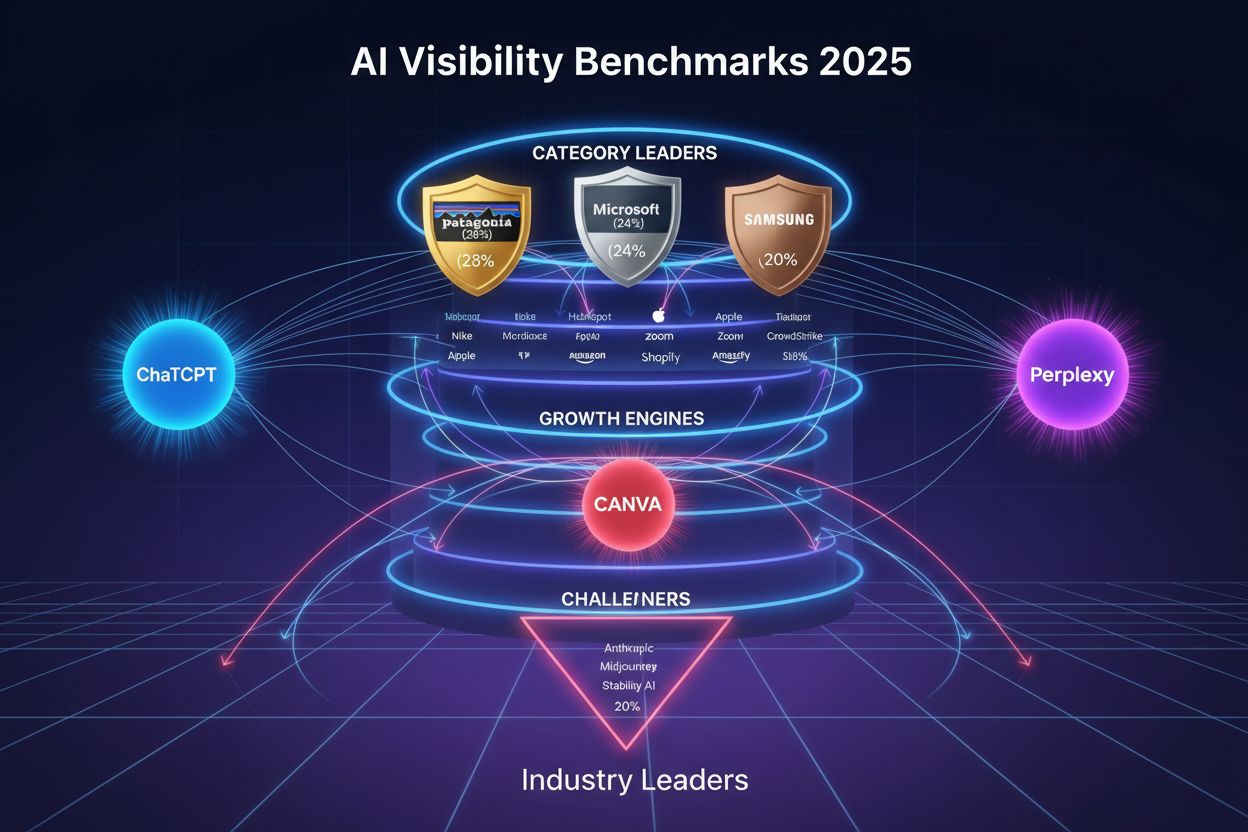
Discover which brands are winning AI visibility benchmarks. Analyze industry leaders across ChatGPT, Perplexity, and Google AI with data-driven insights and com...
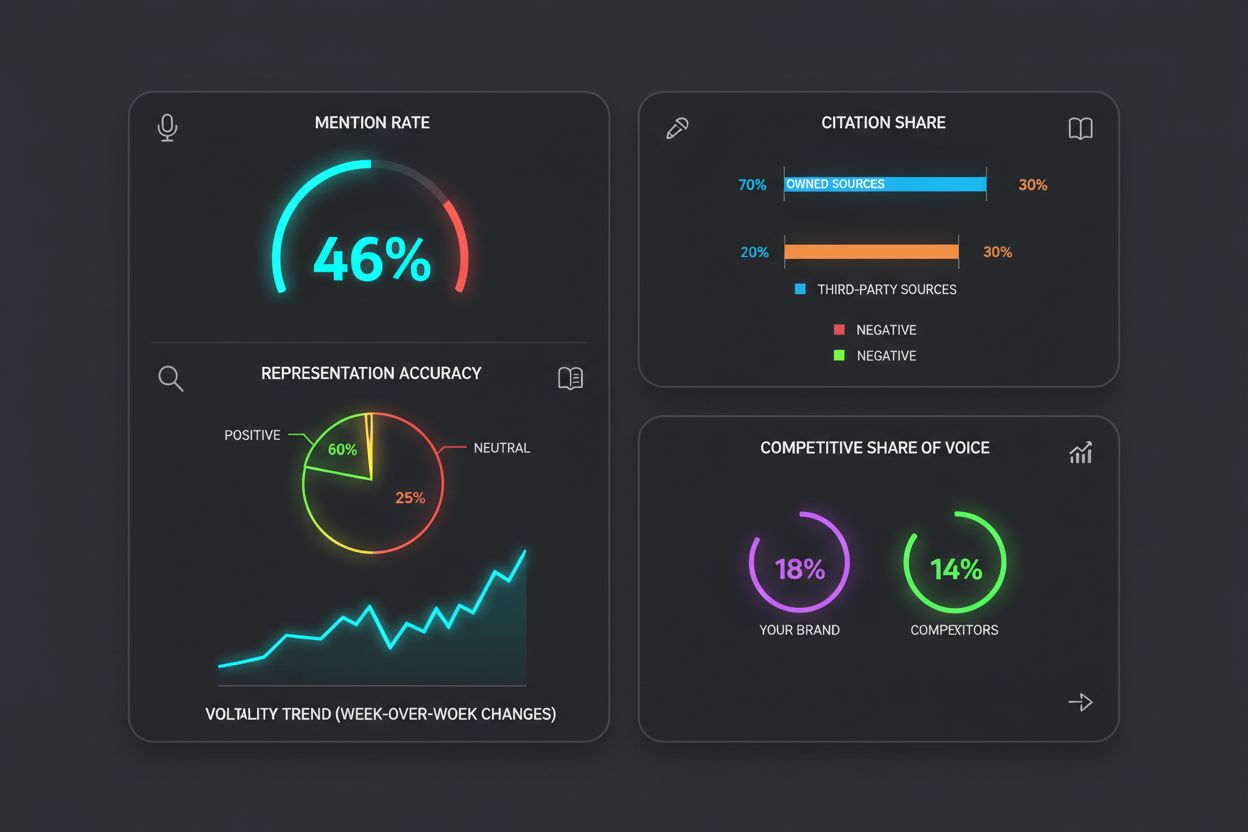
Quick reference guide to AI visibility monitoring. Track mentions, citations, and brand presence across ChatGPT, Google AI Overviews, Perplexity, and Gemini wit...