

Building Your Expert Profile for AI Recommendations
Learn how to build an expert profile that AI systems recognize and recommend. Master Authority Vectors, content consistency, citations, and thought leadership s...
13 min read

Learn how to build expertise signals that AI systems recognize and cite. Master E-E-A-T, original research, and third-party validation for AI visibility.
Artificial intelligence systems have fundamentally changed how expertise is discovered and evaluated online, moving far beyond traditional keyword matching and link analysis. Modern AI models like ChatGPT, Claude, and Perplexity use sophisticated entity recognition and cross-platform verification to assess whether someone truly possesses the expertise they claim, examining your entire digital footprint rather than isolated web pages. The E-E-A-T framework—Experience, Expertise, Authoritativeness, and Trustworthiness—has evolved from Google’s quality guidelines into a universal standard that AI systems use to determine which sources deserve prominence in their responses. Unlike traditional SEO, which focused on optimizing individual pages for search algorithms, AI recognition requires building a cohesive, verifiable expertise profile across multiple platforms and content types.
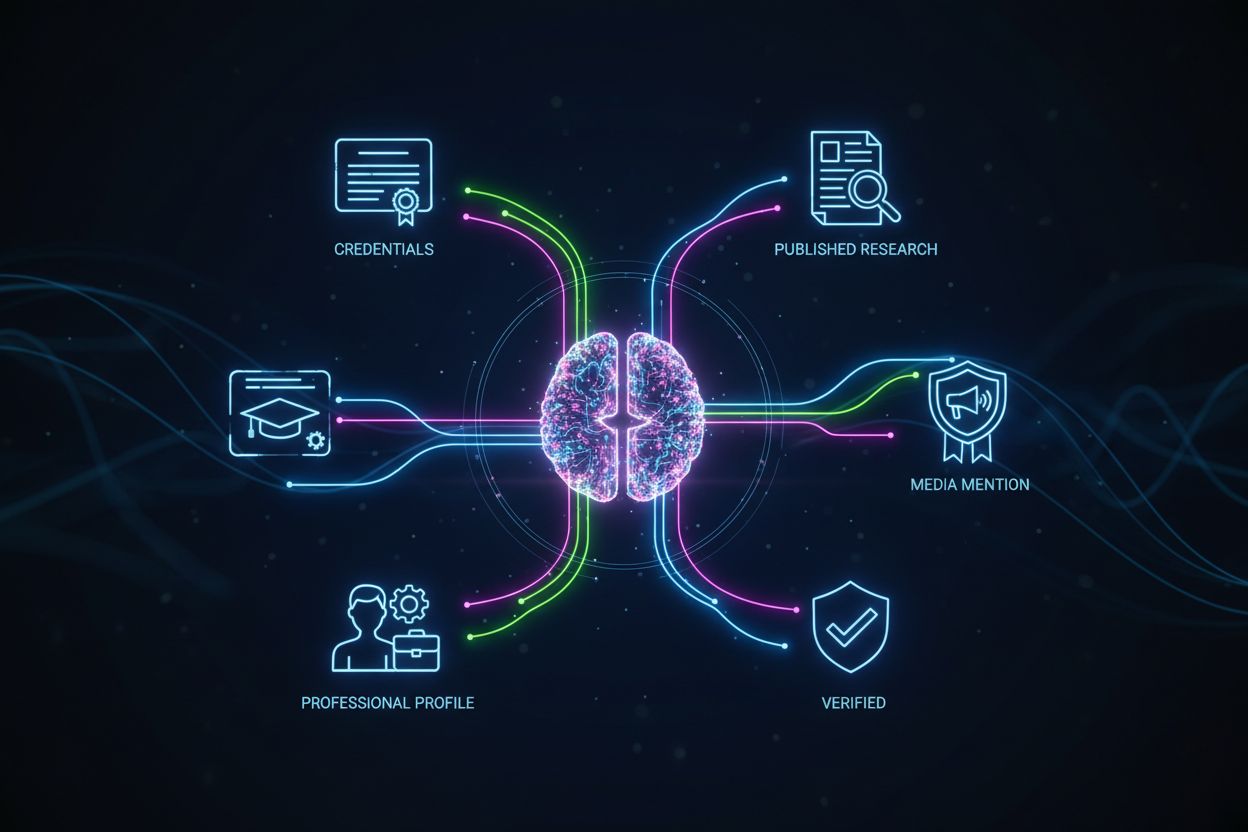
The E-E-A-T framework provides the foundational structure that AI systems use to evaluate your credibility, and understanding each pillar is essential for building recognition in AI-generated responses. Experience means you’ve actually done the work you’re writing about—not just researched it—which AI systems verify through case studies, portfolio evidence, and documented results. Expertise requires demonstrable knowledge demonstrated through credentials, certifications, published research, or a proven track record of solving complex problems in your field. Authoritativeness comes from external recognition: media mentions, citations from other experts, speaking engagements, and being referenced as a thought leader by established institutions. Trustworthiness is the most critical element, requiring consistent accuracy, transparent methodology, and reliability across all your published content and professional interactions. Here’s how these elements map to AI evaluation methods:
| E-E-A-T Element | Definition | AI Evaluation Method |
|---|---|---|
| Experience | Direct involvement and hands-on practice | Portfolio verification, case study documentation, client testimonials |
| Expertise | Demonstrated knowledge and skill mastery | Credentials, certifications, published research, speaking history |
| Authoritativeness | External recognition and industry standing | Media citations, backlinks from authority sites, expert mentions |
| Trustworthiness | Accuracy, consistency, and reliability | Content accuracy verification, consistency across platforms, citation patterns |
AI systems prioritize original research and proprietary data when determining expertise, giving content creators who generate unique insights a significant advantage in AI visibility. When you conduct original research—whether through surveys, experiments, data analysis, or proprietary methodologies—you create content that AI models cannot find elsewhere, making it inherently more valuable for training data and citation purposes. Studies show that original research receives 30-40% more visibility in LLM answers compared to recycled or aggregated content, as AI systems recognize and reward the effort required to generate new knowledge. Building this foundation requires identifying gaps in your industry’s knowledge base, conducting rigorous research to fill those gaps, and documenting your methodology transparently so AI systems can verify the legitimacy of your findings. Case studies are particularly powerful expertise signals because they combine experience, expertise, and trustworthiness into a single, verifiable narrative that demonstrates your ability to deliver results.
Third-party validation serves as external proof of your expertise, and AI systems weight these mentions heavily when determining whether to cite you as an authoritative source. Media mentions account for approximately 27% of LLM citations, making strategic media relations and press coverage essential components of your expertise-building strategy. Backlinks from authoritative sources signal to AI systems that established institutions and recognized experts consider your work credible enough to reference, creating a network effect where each citation increases your visibility in future AI responses. Industry recognition—whether through awards, speaking invitations, expert panels, or professional association memberships—provides concrete evidence that your peers acknowledge your expertise. Rather than waiting passively for mentions, you can earn third-party validation strategically by contributing expert commentary to industry publications, participating in research collaborations, and making your insights available to journalists and researchers who cover your field.
AI systems demonstrate a clear preference for content authored by named experts with verifiable credentials over anonymous or generic bylines, fundamentally changing how content attribution impacts visibility. When an article is attributed to “Admin” or lacks author information entirely, AI systems cannot verify expertise or build a consistent identity profile, significantly reducing the likelihood that the content will be cited in AI responses. Building a strong expert profile requires establishing a consistent author identity across all platforms, prominently displaying relevant credentials and experience, and ensuring that your professional background is easily verifiable through multiple sources. The consistency of your expert identity matters as much as the credentials themselves—AI systems use entity resolution to connect your professional profiles across platforms, so variations in your name, title, or biographical information can confuse the algorithms and fragment your expertise signals. Investing in a comprehensive author bio that includes your credentials, areas of expertise, and links to your professional profiles creates a stronger foundation for AI recognition.
Structured data markup is critical for helping AI systems understand and verify your expertise, as it provides machine-readable information that algorithms can process more efficiently than unstructured text. Schema markup tells AI systems exactly what information is important on your pages, allowing them to extract and verify key details about your expertise, credentials, and professional identity. When you implement proper schema markup, you’re essentially creating a digital resume that AI systems can read and cross-reference against other sources, making it easier for them to recognize you as an authority. Consistent Name, Address, Phone (NAP) information across all platforms strengthens your entity recognition profile, while knowledge graphs—AI’s internal databases of entities and their relationships—become more robust when you provide structured data that confirms your professional identity and expertise areas.
Key schema types that strengthen expertise signals include:
AI systems scan your entire digital presence simultaneously, evaluating consistency across your website, social media profiles, professional networks, and media mentions to determine whether your expertise claims are genuine. Inconsistencies between platforms confuse AI algorithms and trigger trust signals that suggest either carelessness or intentional misrepresentation, both of which reduce your likelihood of being cited as an authoritative source. Your brand messaging, professional title, expertise areas, and biographical information should align across LinkedIn, Twitter, your website, industry directories, and any other platforms where you maintain a professional presence. When AI systems encounter conflicting information about your background or expertise, they become less confident in citing you, potentially excluding you from responses where you should be recognized as an authority. Conducting a cross-platform audit to identify and resolve inconsistencies is one of the highest-impact activities you can undertake to improve your AI visibility, as it directly addresses one of the primary factors AI systems use to evaluate trustworthiness.
Measuring your expertise visibility in AI systems requires dedicated monitoring tools and a systematic approach to tracking where and how you’re being cited across different AI platforms. Tools like AmICited.com provide transparency into how often your content appears in AI-generated responses, while platforms like Profound and Otterly AI offer broader monitoring across ChatGPT, Perplexity, Google AI Overviews, and other major AI systems. Effective monitoring goes beyond simply counting mentions—you should analyze the context of citations, identify which topics and content types generate the most AI visibility, and recognize gaps where you should be cited but aren’t. By tracking your AI mentions over time, you can measure the effectiveness of your expertise-building efforts and identify which strategies (original research, media relations, schema implementation) deliver the strongest results. This data-driven approach allows you to optimize your expertise signals strategically, focusing resources on activities that demonstrably improve your visibility in AI responses.

Building expertise signals requires a systematic, multi-faceted approach that addresses all components of the E-E-A-T framework while maintaining consistency across your digital presence. Start by auditing your current expertise signals: review your website for author information and credentials, check your social media profiles for consistency, and search for existing mentions of your work across the web. Create content clusters around your core expertise areas, developing comprehensive resources that demonstrate deep knowledge and original research rather than surface-level coverage. Develop your thought leadership through original research, data analysis, and unique insights that position you as someone who advances your field rather than simply commenting on existing ideas. Build author profiles that are rich with credentials, biography, and links to your professional presence, ensuring that every piece of content you publish is clearly attributed to a named expert. Establish media relations by making yourself available as an expert source, contributing guest articles to industry publications, and actively participating in conversations where your expertise is relevant. Finally, implement schema markup across your website to help AI systems understand and verify your expertise, credentials, and professional identity.
AI models continue to evolve, with new systems emerging regularly and existing algorithms becoming more sophisticated in how they evaluate expertise and trustworthiness. However, the fundamental principles underlying expertise recognition—consistency, original research, third-party validation, and transparent credentials—remain constant regardless of which AI system is evaluating you. Building long-term authority requires thinking beyond any single platform or algorithm, focusing instead on creating genuine expertise, documenting your knowledge and experience thoroughly, and earning recognition from peers and institutions in your field. As new AI platforms emerge and evaluation methods become more sophisticated, the foundation you build today through authentic expertise development and cross-platform consistency will continue to serve you, ensuring that you remain visible and credible regardless of how AI systems evolve.
AI verifies expertise across your entire digital footprint, not just on-page signals. Traditional SEO focused on keywords and links; AI looks for consistent, verifiable credentials and third-party validation across platforms. This means your expertise must be demonstrable and verifiable across multiple sources.
Building genuine expertise signals is a long-term strategy requiring 3-6 months minimum to see meaningful results. However, implementing schema markup and author credentials can show immediate improvements in how AI systems understand your expertise. Consistency and persistence are more important than speed.
Yes. AI evaluates expertise regardless of company size. Small businesses can build strong signals through original research, niche authority, consistent messaging, and strategic media relations in their specific industry. Authenticity and specialization often outweigh brand size.
Original research is foundational. AI prioritizes proprietary data and unique insights over recycled content. Studies show original research gets 30-40% more visibility in LLM answers. This is why conducting surveys, case studies, or data analysis significantly boosts your expertise signals.
Monitor your brand mentions across AI platforms using tools like AmICited.com, Profound, or Otterly AI. Track citation frequency, context accuracy, and sentiment. Compare your visibility against competitors to identify gaps and opportunities for improvement.
Trustworthiness is the foundation. Google explicitly states that trust is 'the most important member of the E-E-A-T family.' Without trust, other signals matter less. Build trust through transparent authorship, accurate information, consistent messaging, and third-party validation.
Schema markup (Organization, Person, Article schemas) gives AI structured data about your expertise. It helps AI understand your credentials, affiliations, and content topics more accurately. This structured information is easier for AI systems to process and verify than unstructured text.
Focus on building strong expertise signals across your entire digital presence. These signals work across all AI platforms. However, monitor your visibility on major platforms (ChatGPT, Perplexity, Google AI Overviews) to identify gaps and platform-specific opportunities.
See how AI systems are referencing your brand and expertise. Track mentions across ChatGPT, Perplexity, Google AI Overviews, and more with AmICited.com.
Learn how to build an expert profile that AI systems recognize and recommend. Master Authority Vectors, content consistency, citations, and thought leadership s...

Learn how to demonstrate expertise and build authority for AI visibility in ChatGPT, Perplexity, and Google AI Overviews. Master E-E-A-T framework for AI search...
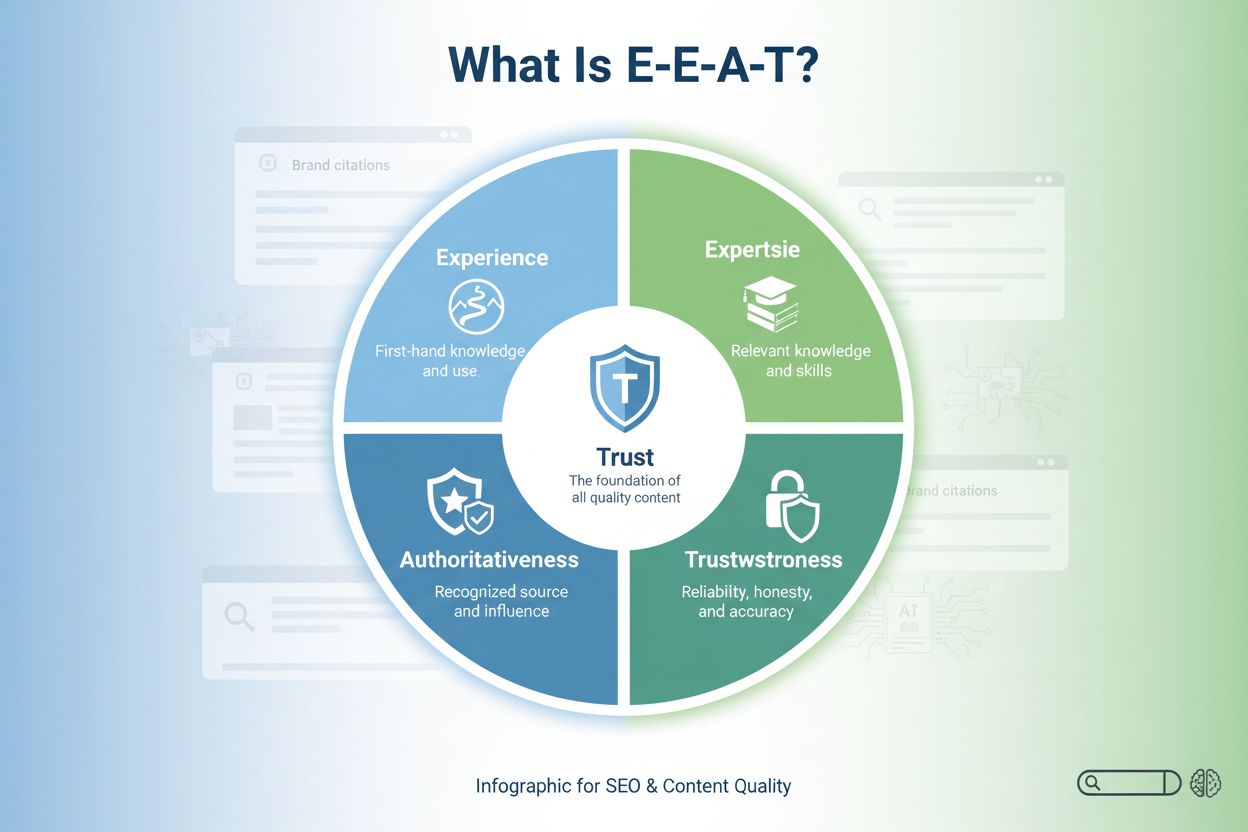
E-E-A-T (Experience, Expertise, Authoritativeness, Trustworthiness) is Google's framework for evaluating content quality. Learn how it impacts SEO, AI citations...