

Training Your Marketing Team on AI Visibility: A Curriculum
Learn how to develop a comprehensive AI visibility training program for your marketing team. Discover the curriculum modules, implementation timeline, and tools...
8 min read

Learn how to develop comprehensive internal AI training programs with visibility into employee skills and adoption. Discover strategies for inclusive AI literacy, measuring ROI, and creating a culture of continuous learning.
The artificial intelligence revolution is moving faster than most organizations can prepare their workforce for it. According to McKinsey research, only 16% of executives consider their workforce AI-ready, yet the pressure to adopt AI technologies continues to mount across every industry. The challenge is even more pronounced at the employee level: 47% of workers lack confidence using AI tools, and a staggering 70% of Americans never use AI at work—despite AI becoming increasingly embedded in everyday business processes. This skills gap represents both a critical vulnerability and an urgent opportunity for organizations willing to invest in comprehensive AI training programs.
Internal AI visibility—the ability to understand which employees are using AI tools, how they’re using them, and what skills they possess—has become essential for strategic workforce development. When organizations lack visibility into their AI adoption patterns, they make training decisions based on assumptions rather than data, leading to wasted resources and missed opportunities. Companies like Walmart and PwC have demonstrated the power of visibility-driven approaches, using detailed insights into employee AI usage to design targeted, high-impact training programs that actually move the needle on adoption. Visibility enables HR and L&D leaders to identify skill gaps with precision, understand which departments are lagging in AI adoption, and allocate training resources where they’ll have the greatest impact.
| Metric | With AI Visibility | Without AI Visibility |
|---|---|---|
| Training ROI | 3.2x higher | Baseline |
| Employee AI Confidence | 68% | 47% |
| Adoption Rate | 64% | 31% |
| Time to Proficiency | 6-8 weeks | 12-16 weeks |
Without visibility, organizations are essentially training blind—hoping their programs address real needs rather than knowing they do.
A successful internal AI visibility training program starts with a solid foundation built on four critical elements. First, assess your current state by conducting an honest audit of existing AI skills, tools in use, and adoption barriers across your organization. Second, identify specific skill gaps by comparing current capabilities against the AI competencies your business strategy requires. Third, define clear learning objectives that align with both individual career development and organizational goals—whether that’s basic AI literacy, prompt engineering, or advanced AI implementation skills. Fourth, select appropriate tools and platforms that can deliver content at scale while tracking progress and engagement. The most effective programs combine these elements into a cohesive strategy:
One of the most common mistakes organizations make is designing AI training programs that only reach certain employee segments—typically white-collar workers or tech-adjacent roles. Truly transformative AI training must be inclusive by design, accessible to frontline workers, middle managers, and C-suite executives alike, each with content tailored to their specific roles and responsibilities. A frontline retail worker needs different AI skills than a data analyst, and both need different training than a CFO—yet all three need foundational AI literacy to thrive in an AI-augmented workplace. Organizations like Guild have pioneered frameworks for AI skilling bundles that address this challenge, creating modular training content that can be customized for different employee populations while maintaining consistent quality and rigor. The key is recognizing that AI adoption is not a technical problem—it’s a human problem, and inclusive training programs acknowledge that people at every level of the organization have valuable contributions to make in the AI era.

Modern AI training programs succeed by moving away from one-size-fits-all approaches toward personalized learning paths that adapt to individual needs, learning styles, and pace. Microlearning—breaking complex AI concepts into bite-sized, 5-15 minute modules—has proven dramatically more effective than traditional long-form training, with completion rates often exceeding 80% compared to 20-30% for conventional courses. Platforms like GoodHabitz, Docebo, and AI4E-learning enable organizations to create adaptive learning experiences that adjust difficulty and content based on learner performance, ensuring employees stay engaged and challenged at the right level. These tools also dramatically accelerate content creation through AI-powered authoring capabilities, allowing L&D teams to develop and deploy training at a fraction of the traditional timeline and cost. The practical implementation involves mapping learning paths to specific roles, creating modular content that employees can access on-demand, and using analytics to identify which learning paths drive the greatest behavior change and business impact.
Training programs without measurement are essentially investments made in the dark—you hope they’re working, but you don’t actually know. Effective AI visibility training programs track multiple KPIs that together paint a complete picture of impact: completion rates (are employees finishing the training?), engagement metrics (are they actively participating?), knowledge retention (can they apply what they learned?), and performance improvements (is the training translating to better business outcomes?). Research from Gallup and McKinsey consistently shows that organizations that measure training ROI achieve 3-4x better outcomes than those that don’t, because measurement enables continuous optimization. The most sophisticated programs connect training completion to business metrics—tracking whether employees who complete AI training show improved productivity, higher quality work, faster decision-making, or better customer outcomes. This data-driven approach transforms training from a compliance checkbox into a strategic business lever, making it easier to secure ongoing investment and continuously improve program effectiveness.
Even well-designed AI training programs face predictable obstacles that can derail implementation if not addressed proactively. Employee resistance often stems from fear of job displacement or anxiety about learning new tools—overcome this through transparent communication about how AI will augment rather than replace roles, and by celebrating early wins from employees who’ve successfully adopted AI. Data privacy concerns are legitimate, especially when training programs involve tracking AI tool usage—address these by being transparent about data collection practices, implementing strong security measures, and ensuring compliance with relevant regulations. Change management challenges arise because AI adoption requires shifts in workflows, decision-making processes, and organizational culture—mitigate these by securing visible leadership support, creating peer champions who model AI adoption, and building training into regular workflows rather than treating it as an add-on. Cost concerns are real, but the cost of inaction—falling behind competitors, losing top talent to organizations with stronger AI capabilities, and missing productivity gains—far exceeds the investment in comprehensive training programs. The organizations that succeed are those that acknowledge these challenges openly and build solutions into their program design from the start.
One of the most powerful ways to accelerate AI training program development is to use AI itself in the content creation process. Platforms like AI4E-learning and Articulate 360 now incorporate AI-powered authoring tools that can dramatically reduce the time required to develop high-quality training content—what once took weeks can now be accomplished in days. AI can help generate initial content drafts, create personalized learning paths, develop scenario-based simulations, and even produce video content with AI-generated narration and visuals. This acceleration is critical because the window for AI training is narrow—organizations that wait for perfect, hand-crafted content will fall behind competitors who deploy good-enough content quickly and iterate based on learner feedback. The practical advantage is significant: L&D teams can focus their expertise on instructional design and strategy rather than content production, while AI handles the heavy lifting of content generation and customization. This approach also enables continuous content updates as AI tools and best practices evolve, ensuring training stays current without requiring massive resource investments.
Sustainable AI adoption requires more than training programs—it requires building an organizational culture where continuous learning around AI is expected, supported, and celebrated. This cultural shift starts with visible leadership commitment: when executives visibly engage with AI training, discuss what they’re learning, and make AI-informed decisions, it sends a powerful signal that AI literacy is a core organizational value. Communication strategies matter enormously—regularly sharing stories of employees who’ve successfully adopted AI, highlighting business wins enabled by AI, and transparently discussing the organization’s AI vision help employees understand why they should invest time in learning. Celebrating wins, both large and small, reinforces the message that AI adoption is valued and rewarded. PwC’s approach to cultural change around AI demonstrates the power of this integrated strategy: they combined training programs with leadership modeling, peer learning communities, and recognition programs to create an environment where AI adoption became self-reinforcing. When employees see peers succeeding with AI, hear leaders discussing their own AI learning journeys, and understand how AI adoption connects to career growth, training completion rates soar and behavior change becomes sustainable rather than temporary.
Organizations that invest in comprehensive internal AI visibility training programs today are building competitive advantages that will compound over time. The benefits extend far beyond immediate productivity gains: companies with AI-capable workforces attract and retain top talent more effectively, because employees increasingly expect their employers to invest in their development around transformative technologies. These organizations innovate faster, because employees at all levels can identify opportunities to apply AI to their work rather than waiting for directives from above. They adapt more quickly to market changes, because their workforce has the foundational skills to learn new AI tools and applications as they emerge. Most importantly, they avoid the existential risk of becoming obsolete—the risk that competitors with more AI-capable workforces will outpace them in speed, quality, and innovation. AmICited.com helps organizations build and maintain this competitive advantage by providing the visibility infrastructure that makes targeted, effective AI training possible—enabling you to see exactly where your organization stands on the AI readiness spectrum and track progress as your training programs take hold. The future belongs to organizations that treat AI literacy as a core competency and invest accordingly.
Internal AI visibility refers to an organization's ability to understand which employees are using AI tools, how they're using them, and what AI skills they possess. This visibility enables data-driven decisions about training investments, helps identify skill gaps, and allows organizations to measure the effectiveness of their AI training programs.
Effective measurement tracks multiple KPIs including completion rates, engagement metrics, knowledge retention, and performance improvements. The most sophisticated programs connect training completion to business metrics like productivity gains, quality improvements, and faster decision-making. This data-driven approach enables continuous optimization and demonstrates ROI.
AI literacy training provides foundational understanding of what AI is, how it works, and its limitations—suitable for all employees. AI expertise training is specialized, technical training for roles like data scientists or AI engineers. Most organizations need both: broad AI literacy for everyone, plus specialized training for technical roles.
Inclusive AI training uses modular, role-specific content that can be customized for different employee populations. Microlearning formats, personalized learning paths, and adaptive platforms ensure accessibility across frontline workers, managers, and executives. The key is recognizing that different roles need different AI skills while maintaining consistent quality.
Modern AI-powered authoring tools like AI4E-learning, Articulate 360, GoodHabitz, and Docebo dramatically accelerate content creation. These platforms use AI to generate initial content, create personalized learning paths, and develop scenario-based simulations. They enable L&D teams to focus on instructional design while AI handles content production.
Timeline varies based on organizational complexity and existing resources. A basic program can launch in 2-3 months, while comprehensive programs with multiple learning paths may take 6-12 months. Using AI-powered authoring tools can reduce development time by 50-70% compared to traditional approaches.
Address resistance through transparent communication about how AI augments rather than replaces roles, visible leadership support, peer champions who model adoption, and celebrating early wins. Building training into regular workflows rather than treating it as an add-on also increases engagement and reduces anxiety.
Organizations that measure training ROI achieve 3-4x better outcomes than those that don't. Benefits include improved productivity (20%+ gains), reduced turnover (up to 28%), faster decision-making, and competitive advantage. Most programs achieve payback within 12-18 months through productivity gains and reduced training costs.
Track how your employees are using AI and ensure your training programs are driving real adoption. AmICited provides visibility into AI usage across your organization, helping you measure training effectiveness and identify skill gaps.
Learn how to develop a comprehensive AI visibility training program for your marketing team. Discover the curriculum modules, implementation timeline, and tools...

Master the art of securing executive buy-in for AI visibility initiatives. Learn proven strategies to frame AI as a business capability, address leadership conc...
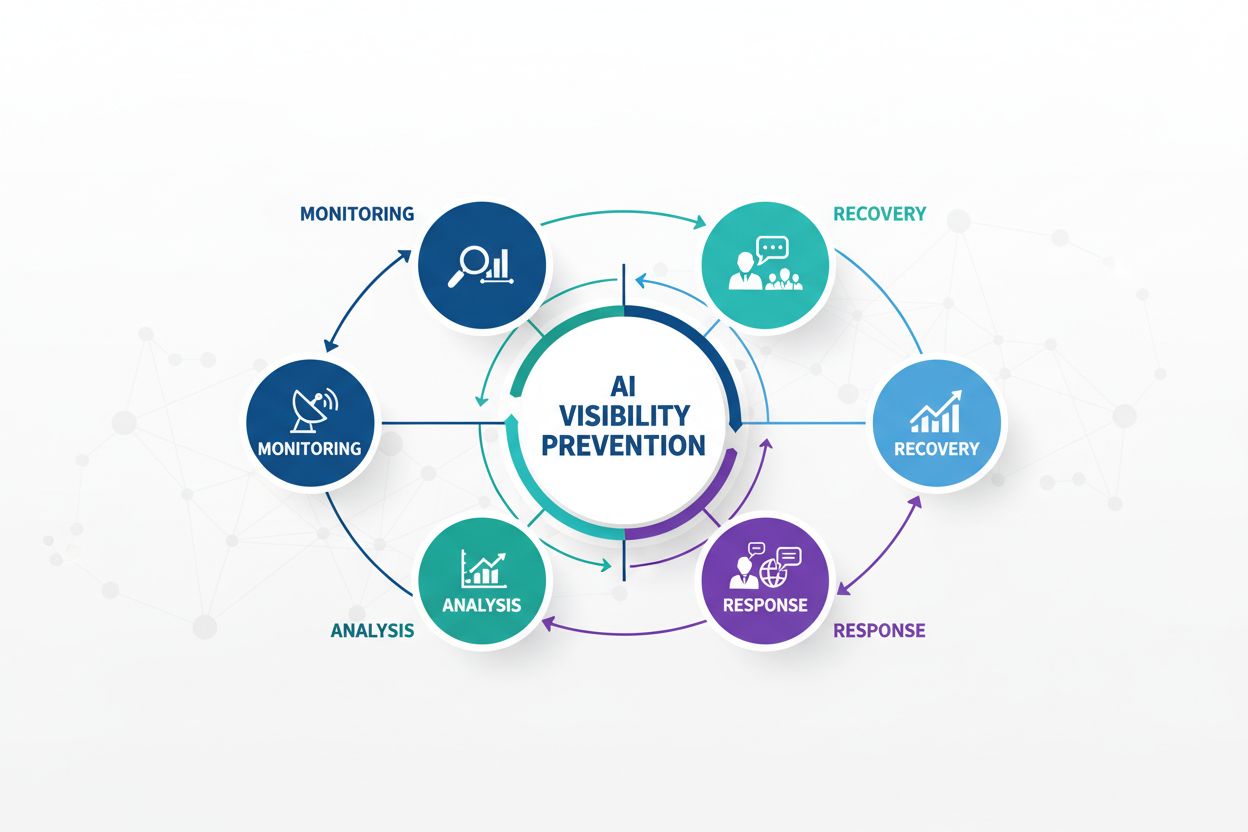
Learn how to prevent AI visibility crises with proactive monitoring, early warning systems, and strategic response protocols. Protect your brand in the AI era.