

Paid AI Visibility vs Organic: Understanding Your Options
Compare paid AI advertising and organic optimization strategies. Learn costs, ROI, and best practices for visibility across ChatGPT, Perplexity, and Google AI O...
9 min read

Executive guide to AI search visibility, citation authority, and why traditional SEO metrics are broken. Learn how to monitor brand visibility in AI systems like ChatGPT, Perplexity, and Google AI Overviews.
The AI revolution isn’t coming—it’s already reshaping how your customers find information. 77% of CEOs admit they lack AI savviness, yet 89% of B2B buyers are already using AI tools to research solutions, with 50% starting their journey in AI chatbots rather than traditional search engines. Meanwhile, the search landscape itself is fragmenting: zero-click searches have surged from 56% to 69%, meaning your brand visibility is increasingly happening in places where traditional metrics can’t see it. This isn’t a future scenario—it’s your current competitive reality.
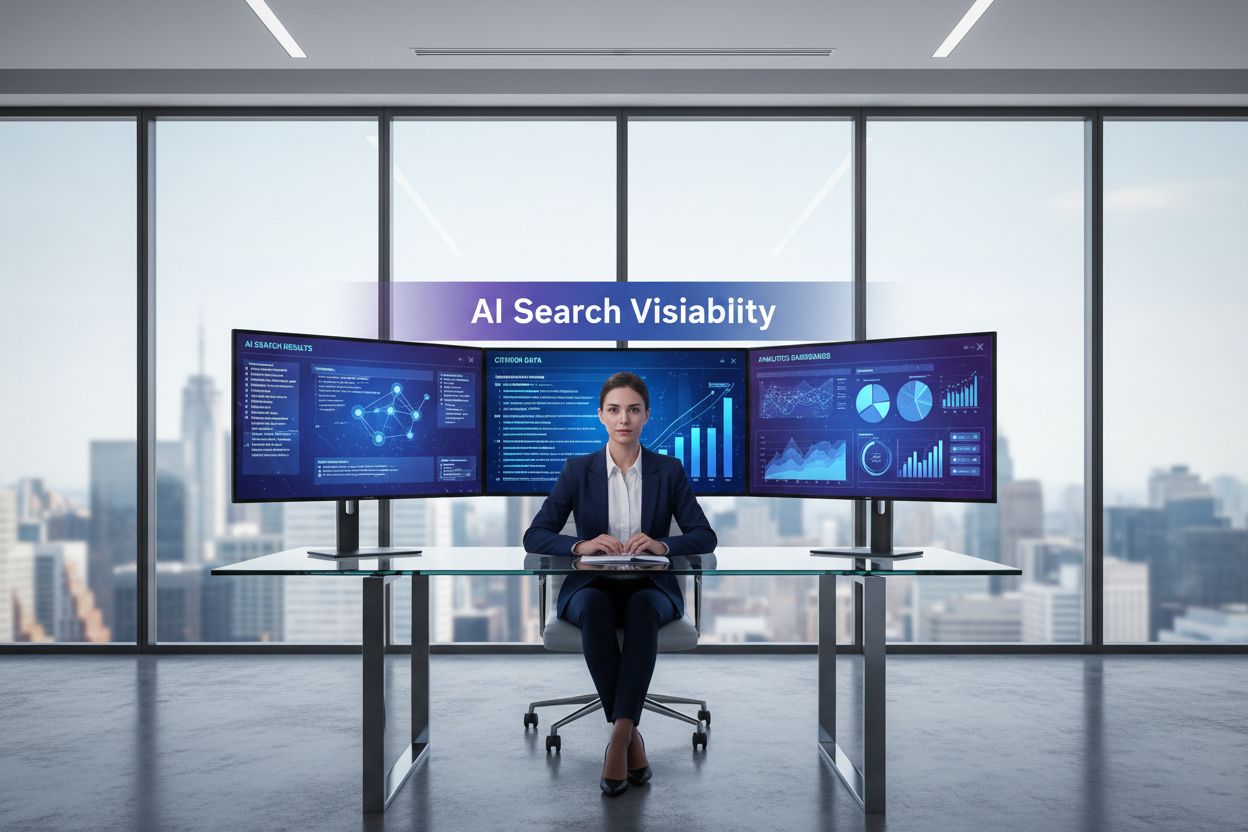
Your SEO dashboard is lying to you. 94% of B2B buyers now use large language models (LLMs) in their research process, but your traditional attribution models have no visibility into these conversations. The “dark funnel” problem is real: buyers are getting answers about your company from AI systems without ever clicking through to your website, without triggering any analytics event, and without appearing in your conversion funnels. Your brand is being cited, evaluated, and compared in AI conversations you cannot track, making traditional SEO metrics increasingly irrelevant for understanding actual buyer behavior.
| Metric | Traditional Search | AI Search |
|---|---|---|
| Visibility Model | Rankings & clicks | Citations & mentions |
| Attribution | Last-click trackable | Multi-source, invisible |
| Buyer Journey | Linear, visible | Conversational, dark |
| Success Metric | Traffic volume | Citation authority |
| Competitive Advantage | Keyword dominance | Source credibility |
| Measurement Challenge | Straightforward | Requires new tools |
We’ve analyzed 680 million citations across AI systems, and the pattern is unmistakable: AI systems are 28-40% more likely to cite structured, well-organized content than keyword-optimized pages. This represents a fundamental shift from SEO (Search Engine Optimization) to GEO (Generative Engine Optimization)—where authority comes not from ranking for keywords, but from being selected as a trusted source. E-E-A-T signals (Experience, Expertise, Authoritativeness, Trustworthiness) matter more than ever, but they’re being evaluated differently: entity authority now trumps keyword matching.
Key differences in how AI systems evaluate sources:
The scale of this shift is staggering. ChatGPT alone has 800 million weekly active users, while Google’s AI Overviews now appear in over 50% of searches. The market is responding: Semrush reported 800% year-over-year growth in AI-related search queries. But here’s what should keep you awake: visitors coming from AI citations convert 4.4x better than traditional search traffic, and our projections show that by late 2027, AI search will represent equivalent business value to traditional search. This isn’t incremental change—it’s a fundamental redistribution of discovery traffic.
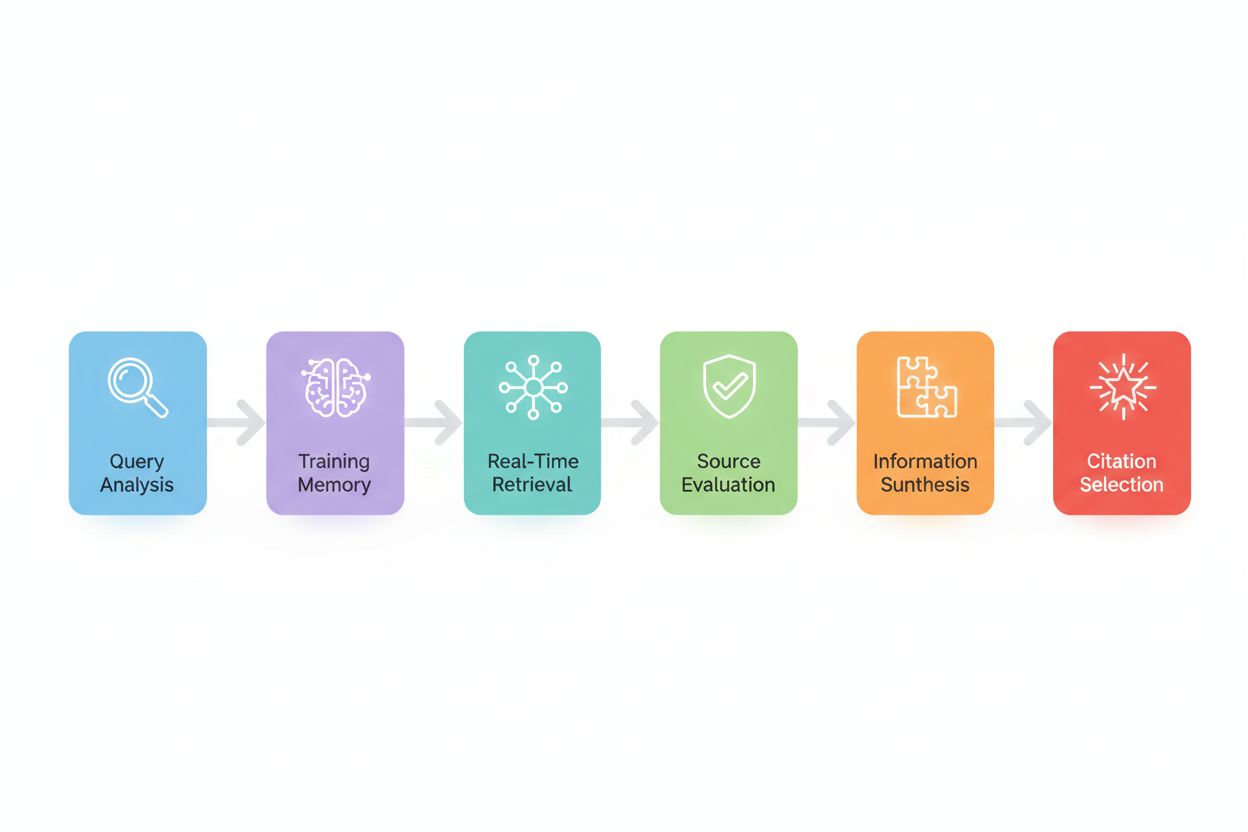
Understanding citation selection requires understanding how AI systems work. When a user asks a question, AI systems follow a predictable architecture:
Your goal is to be selected in steps 4-6, which requires fundamentally different optimization than traditional SEO.
AI systems don’t just evaluate what you say—they evaluate how you say it. Content that gets cited follows a specific structure: answers should be 40-60 words for optimal citation, organized under clear H1/H2 hierarchies that signal expertise and structure. Supporting evidence matters: data points, research citations, case studies, and specific examples increase citation likelihood. FAQ sections with schema markup help AI systems understand your expertise landscape, while “answer kits”—comprehensive, modular content blocks that address specific questions—are increasingly cited as authoritative sources. The shift is from long-form content optimized for dwell time to structured, scannable content optimized for extraction and citation.
History shows us how this plays out. When new discovery platforms emerge, there’s a brief window—typically 18-24 months—where early movers build disproportionate advantage before the market consolidates. We’re currently in month 12 of that window. By late 2027, AI search will represent equivalent business value to traditional search, and the competitive landscape will have largely solidified. First-mover advantage in GEO compounds: early authority builders become the default citations, creating winner-takes-most dynamics where the top 3-5 sources in each category capture the majority of AI-driven traffic. The question isn’t whether to act—it’s whether you’ll act before your competitors do.
This requires a phased approach, not a panic response. Phase 1 (Weeks 1-4): Audit – Conduct a citation audit across major AI systems (ChatGPT, Claude, Gemini, Perplexity) to understand current visibility and citation patterns. Phase 2 (Weeks 5-12): Content Development – Restructure your highest-value content using the citation-optimized format (hierarchical headings, 40-60 word answers, schema markup, supporting evidence). Phase 3 (Months 3-6): Authority Building – Expand entity recognition across the web, build strategic partnerships that increase citation likelihood, and develop thought leadership content that AI systems recognize as authoritative. Phase 4 (Ongoing): Optimization – Monitor citation performance, test content variations, and continuously refine based on what actually gets cited.
The measurement challenge is real, but solvable. Traditional analytics won’t show you AI-driven traffic, so you need new approaches:
The companies winning at this are treating AI citations as a distinct channel with its own measurement framework, not trying to force it into traditional SEO metrics.
AI search is reshaping discovery, and your brand visibility is shifting from rankings to citations. Leadership needs to understand this shift and act on it now—not because it’s trendy, but because your buyers are already there. The competitive window is open, but closing. The companies that build citation authority in the next 12-18 months will own disproportionate share of AI-driven discovery for years to come. AmICited helps you monitor and optimize this new reality, but the strategic decision is yours: will you lead this transition, or react to it?
Traditional SEO optimizes for search engine rankings and clicks. GEO (Generative Engine Optimization) optimizes for AI citations within generated responses. Both matter—strong SEO remains the foundation that AI systems draw from. But GEO adds a layer focused on being the source AI actually cites, not just the source that ranks.
You can manually query AI systems like ChatGPT, Claude, and Perplexity with questions your buyers ask and document where you appear. For automated monitoring, specialized tools like AmICited provide real-time tracking of citations across multiple AI platforms. Most brands see measurable citation improvements within 90 days of systematic optimization.
The dark funnel refers to buyer research happening in AI conversations that don't appear in your analytics. 94% of B2B buyers use LLMs during their buying process, yet these interactions are invisible to traditional attribution. This means your brand is being evaluated and compared in places you can't see, making traditional metrics increasingly irrelevant.
Foundation work like content restructuring and schema implementation shows initial results in 4-8 weeks. Building topical authority and entity recognition takes 3-6 months of consistent effort. Most brands see measurable citation improvements within 90 days of systematic optimization.
AI systems are 28-40% more likely to cite structured, well-organized content. Optimal structure includes clear H1/H2 hierarchies, 40-60 word direct answers in each section, supporting evidence with attribution, and FAQ sections with schema markup. Statistics and original data see 30-40% higher visibility in LLM responses.
Combine manual sampling (monthly queries to AI platforms), specialized tools like AmICited, brand tracking studies, and correlation analysis between citation volume and business metrics. Treat AI citations as a distinct channel with its own measurement framework rather than trying to force it into traditional SEO metrics.
It's both. The threat: your perfectly optimized content can be invisible to AI systems. The opportunity: smaller brands with citation-worthy content can appear alongside or instead of larger competitors in AI responses. AI search visitors convert 4.4x better than traditional organic traffic because they arrive pre-qualified by AI recommendations.
Start with a citation audit: query ChatGPT, Claude, Gemini, and Perplexity about your category and document where you appear, where competitors appear, and where neither appears. This gives you a baseline understanding of your current AI visibility and the biggest citation gaps to address.
Track how your brand is cited across ChatGPT, Perplexity, Google AI Overviews, and other AI systems. Get real-time insights into your AI search authority and competitive positioning.
Compare paid AI advertising and organic optimization strategies. Learn costs, ROI, and best practices for visibility across ChatGPT, Perplexity, and Google AI O...
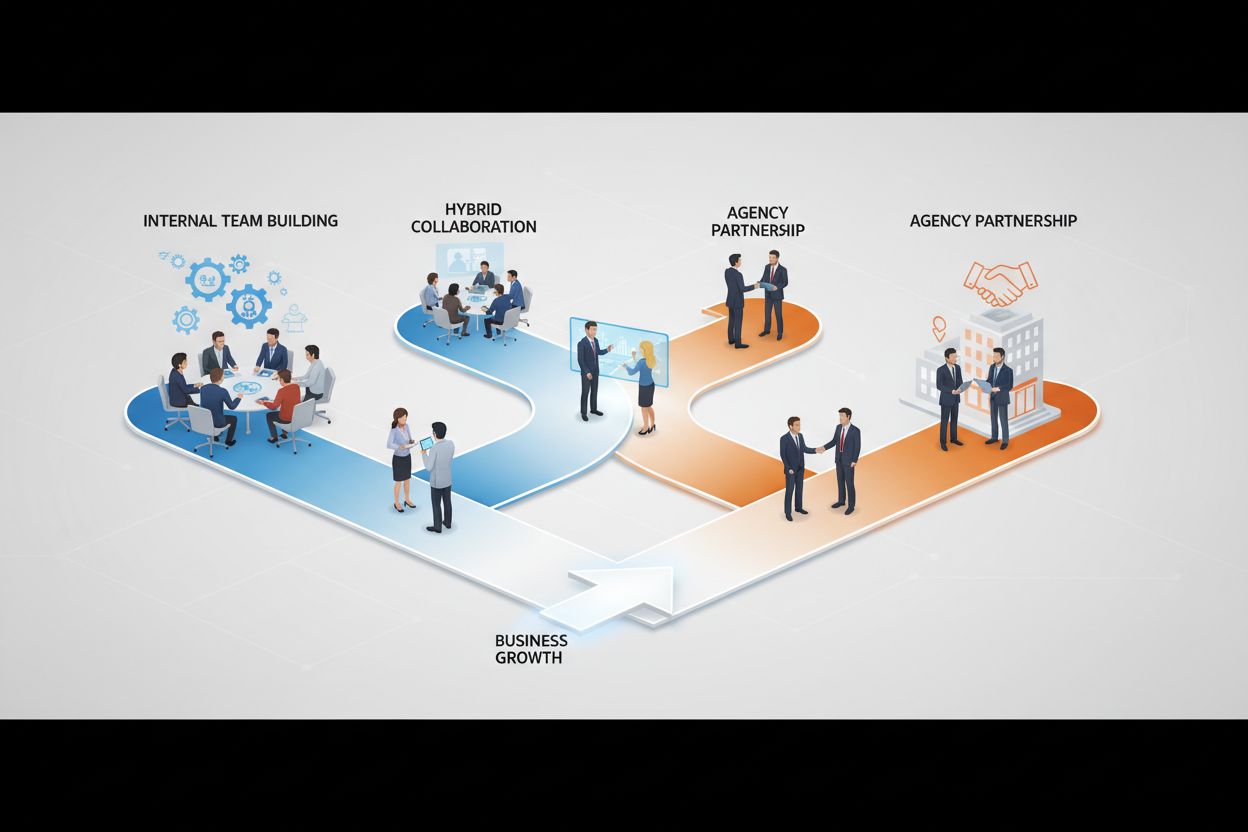
Comprehensive decision guide comparing DIY and agency approaches to AI visibility monitoring. Learn costs, timelines, and when to hire professional help for tra...

Discover how CMOs can master AI visibility, monitor brand presence across ChatGPT, Perplexity, and Google AI Overviews, and implement strategic priorities for 2...