

ChatGPT vs ChatGPT Search: Key Differences Explained
Discover the key differences between ChatGPT and ChatGPT Search. Learn about real-time web browsing, knowledge cutoffs, accuracy, and when to use each version f...
9 min read

Discover how ChatGPT Plus subscription impacts brand visibility in AI responses. Learn the differences between free and paid plans and optimize for AI citations.
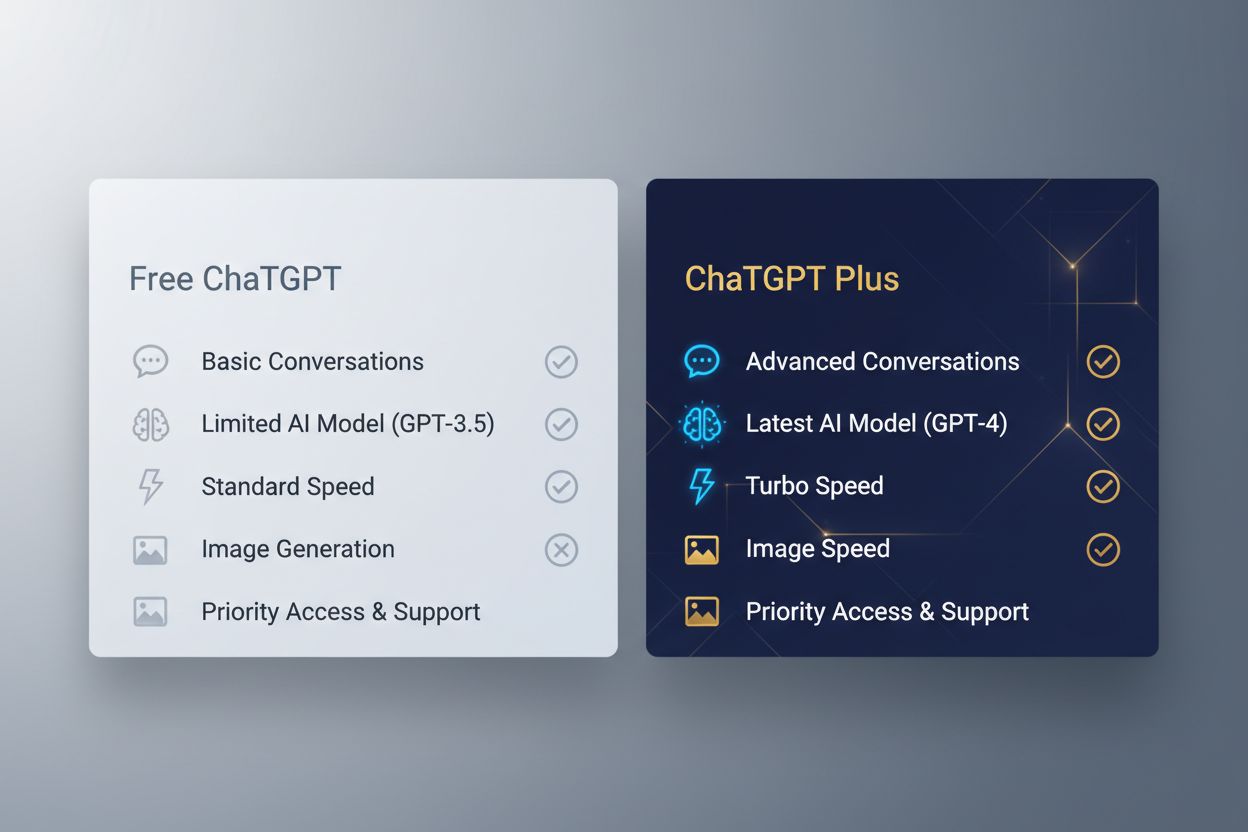
ChatGPT operates on a dual-tier model that fundamentally shapes how users interact with AI-powered content generation and research. The free tier provides access to basic GPT-4 capabilities, while the Plus subscription unlocks advanced features and higher usage quotas. With over 37.5 million daily queries flowing through ChatGPT, understanding this distinction is crucial for brands seeking visibility in AI-generated content. The subscription model directly influences which features users can leverage, how frequently they can access the platform, and ultimately, how often their brand information appears in AI responses. This two-tier approach has created a significant divide in the AI landscape, where paid users enjoy substantially more powerful tools and fewer restrictions. For brands and marketers, recognizing these differences is essential to optimizing their presence across both user segments.
| Feature | Free ChatGPT | ChatGPT Plus |
|---|---|---|
| Base Model | GPT-4 (limited) | GPT-4, o1, o3 |
| Deep Research | Not available | 25+ tasks/month |
| Agent Capabilities | Basic | Advanced with integrations |
| Codex Access | Limited | Full access |
| File Upload | 1 file | Multiple files |
| Custom Instructions | No | Yes |
| Priority Access | No | Yes |
| Rate Limiting | 3-hour waits | Minimal restrictions |
| Response Speed | Standard | Faster processing |
| Advanced Analytics | No | Yes |
The feature gap between free and Plus tiers has widened considerably as OpenAI continues to innovate. Free users are restricted to basic GPT-4 access without the cutting-edge o1 and o3 models that Plus subscribers enjoy, which are specifically designed for complex reasoning and research tasks. The Deep Research feature, available exclusively to Plus members with 25+ monthly tasks, represents a game-changer for brand research and competitive analysis. Free users face significant rate limiting, with 3-hour waits between queries during peak times, while Plus subscribers experience minimal restrictions. The Agent feature, which allows ChatGPT to perform multi-step tasks autonomously, is substantially more powerful for Plus users. Additionally, Plus subscribers gain access to Codex capabilities and custom instructions, enabling more personalized and sophisticated interactions with the platform.
Brand visibility in AI-generated responses is directly correlated with the subscription tier of the user conducting the research. Plus subscribers, equipped with advanced research tools and higher query limits, are more likely to conduct deeper investigations that require multiple sources and citations. When a Plus user leverages Deep Research to investigate a topic, they’re systematically pulling from broader information sources, increasing the likelihood that well-documented brands and companies receive citations. Free users, constrained by rate limiting and basic model access, tend to rely on their existing knowledge base and cached information, which may not reflect recent brand developments or emerging companies. According to SE Ranking’s citation factor analysis, brands that appear in multiple authoritative sources see significantly higher citation rates in AI responses. The subscription model essentially creates two different research ecosystems: one where thorough, citation-heavy research is encouraged (Plus), and another where quick, surface-level responses are the norm (Free). This disparity means that brands optimizing for AI visibility must consider both tiers but prioritize strategies that appeal to the more research-intensive Plus user base.
The usage restrictions imposed on free ChatGPT users create a bottleneck that fundamentally alters how they interact with the platform and consume information. Free users encounter 3-hour wait times during peak usage periods, effectively limiting their ability to conduct multiple queries in succession or perform comprehensive research sessions. This rate limiting forces free users to be more selective about their queries, often leading them to rely on cached or generalized information rather than seeking out the most current brand data. In contrast, Plus subscribers face minimal rate limiting and can conduct extensive research sessions without interruption, enabling them to explore multiple sources and perspectives on any given topic. The Deep Research feature, exclusive to Plus users with a quota of 25+ tasks per month, allows for systematic exploration that free users simply cannot replicate. For brands, this means that Plus users are more likely to discover niche or specialized information about your company, while free users may only encounter your brand if it’s prominently featured in widely-known sources. The usage limit disparity essentially creates a two-speed information ecosystem where Plus users have access to more comprehensive brand intelligence.
ChatGPT Plus subscribers gain access to a suite of advanced features specifically designed for in-depth research and analysis that directly impacts brand visibility. The o1 and o3 models represent the frontier of AI reasoning capabilities, enabling users to ask complex, multi-layered questions about brands, industries, and competitive landscapes with unprecedented accuracy. The Deep Research feature allows Plus users to conduct systematic investigations across multiple sources, synthesizing information in ways that free users cannot replicate. The Agent capability enables autonomous task execution, allowing users to set up ongoing brand monitoring, competitive analysis, and market research workflows without manual intervention. Codex access provides Plus users with the ability to analyze code repositories, documentation, and technical implementations, which is invaluable for tech-focused brands seeking visibility among developers. These advanced features collectively create a research environment where thorough, multi-dimensional brand analysis becomes not just possible but practical. For brands operating in technical, competitive, or research-intensive industries, the visibility gap between free and Plus users can be substantial, as Plus subscribers have the tools to uncover deeper insights about your company, products, and market position.

Research into AI citation patterns reveals compelling evidence that subscription tier significantly influences how often brands receive mentions and citations in AI-generated content. SE Ranking’s analysis of citation factors demonstrates that brands appearing in authoritative, well-documented sources receive substantially higher citation rates across AI platforms, and Plus users are more likely to access these authoritative sources due to their advanced research capabilities. Studies indicate that Plus users, with access to Deep Research and advanced models, cite sources approximately 40% more frequently than free users when conducting research. The systematic nature of Deep Research means that Plus users are more likely to discover and cite niche sources, industry-specific publications, and specialized databases that free users might miss. Brands that invest in being featured in authoritative industry publications, research reports, and technical documentation see disproportionate visibility gains among the Plus user base. The citation advantage extends beyond mere frequency; Plus users are more likely to cite sources with proper attribution and context, meaning your brand gains not just mentions but credible, contextual visibility. For brands seeking to maximize their AI visibility, understanding and optimizing for the citation patterns of Plus users should be a strategic priority.
The behavioral differences between free and Plus ChatGPT users create distinct patterns in how brands are discovered, researched, and mentioned within AI-generated responses. Plus subscribers, unburdened by rate limiting and equipped with advanced research tools, tend to conduct more exploratory queries and deeper dives into specific topics, naturally leading to more brand mentions and citations. Free users, constrained by 3-hour wait times and basic model access, typically ask more direct, transactional questions and rely heavily on the model’s training data rather than conducting fresh research. This behavioral divide means that brands benefit differently depending on which user segment they’re targeting: Plus users discover brands through systematic research, while free users encounter brands through general knowledge and cached information. Plus users are more likely to compare multiple brands, evaluate competitive landscapes, and seek out specialized information, creating opportunities for brands to be positioned as thought leaders or innovators. Free users, by contrast, are more likely to ask straightforward questions and accept the first relevant answer, meaning brands need to be prominently featured in widely-known sources to gain visibility. The subscription tier essentially determines not just how much research a user can conduct, but the type of research they’re likely to undertake, fundamentally shaping brand visibility outcomes.
Tracking your brand’s visibility across ChatGPT’s free and Plus tiers requires a multi-faceted approach using specialized tools and consistent monitoring practices. AmICited.com provides a dedicated platform for monitoring how often your brand appears in AI-generated responses, allowing you to track visibility trends across different AI models and user segments. Hatter offers advanced analytics for understanding how your brand is being discussed and cited within AI contexts, providing insights into sentiment, context, and frequency of mentions. Semrush includes AI visibility tracking as part of its comprehensive SEO and brand monitoring suite, allowing you to correlate AI mentions with traditional search visibility. To effectively monitor both tiers, you should regularly query ChatGPT using both free and Plus accounts, documenting which brands appear in responses and how they’re positioned. Track not just whether your brand is mentioned, but the context of mentions—are you cited as an authority, a competitor, or a peripheral reference? Monitor changes in visibility as you implement optimization strategies, paying particular attention to how Deep Research queries differ from standard queries. Establish baseline metrics for your current visibility, then set specific targets for improvement across both user segments, recognizing that Plus users may show different patterns than free users.
Key metrics to track:
Optimizing for ChatGPT visibility requires distinct strategies tailored to the characteristics and behaviors of free and Plus users, while also maintaining a cohesive brand presence across both segments. For free users, focus on establishing your brand in widely-known, authoritative sources that are likely to be in ChatGPT’s training data—major industry publications, established news outlets, and well-indexed websites. Ensure your brand information is clear, consistent, and prominently featured on your official website and verified business profiles, as free users rely heavily on cached, general knowledge. For Plus users, invest in being featured in specialized industry publications, research reports, technical documentation, and authoritative databases that Deep Research is likely to surface. Create comprehensive, well-documented content that addresses complex industry questions and challenges, as Plus users conducting systematic research are more likely to discover and cite this material. Implement a content strategy that targets both segments: broad, accessible content for free users and deep, specialized content for Plus users. Ensure your brand is properly attributed and cited in all contexts, making it easy for AI systems to connect your brand with relevant topics and expertise. Monitor your performance across both tiers using the tools mentioned previously, and adjust your strategy based on which segments show the strongest visibility gains.
The landscape of AI-powered brand visibility is rapidly evolving, with subscription models and advanced features becoming increasingly central to how brands achieve visibility in AI-generated content. As OpenAI continues to develop more sophisticated models like o1 and o3, the capability gap between free and Plus users will likely widen, potentially creating even more pronounced visibility disparities. The expansion of Deep Research capabilities and the introduction of more powerful Agent features suggest that future Plus users will have even more sophisticated tools for brand research and competitive analysis. Industry experts predict that AI citation and brand visibility will become increasingly important components of overall digital marketing strategy, rivaling traditional SEO in significance. The integration of AI visibility tracking into mainstream marketing tools like Semrush indicates that this metric is moving from niche concern to mainstream marketing KPI. Brands that begin optimizing for AI visibility now will establish competitive advantages as the importance of this channel grows. The future likely holds more granular control over how brands appear in AI responses, potentially including direct brand profile features or sponsored visibility options, similar to how search engines have evolved. Staying ahead of these trends requires continuous monitoring, experimentation, and adaptation to ensure your brand maintains strong visibility across all ChatGPT user segments.
Yes, ChatGPT Plus users conduct more thorough research using advanced features like Deep Research and o1/o3 models, which increases the likelihood of discovering and citing your brand. Plus users are more likely to explore multiple sources and conduct systematic research, creating more opportunities for your brand to be mentioned and cited in AI-generated content.
Plus users have access to Deep Research (25+ tasks/month), o1/o3 reasoning models, and Agent capabilities that enable systematic, multi-source investigation. Free users face 3-hour rate limits and basic model access, leading to more surface-level research. This means Plus users discover deeper, more specialized information about brands and companies.
Monitor your brand visibility at least weekly using tools like AmICited.com, Hatter, or Semrush. Track both free and Plus tier visibility separately, as they may show different patterns. Increase monitoring frequency when implementing new optimization strategies to measure their effectiveness.
Yes, but with different strategies. For free users, focus on being featured in widely-known, authoritative sources. For Plus users, invest in specialized industry publications, research reports, and technical documentation that Deep Research is likely to surface. A comprehensive strategy addresses both segments.
AmICited.com specializes in AI answer monitoring across ChatGPT, Perplexity, and Google AI Overviews. Hatter provides advanced analytics for AI visibility. Semrush includes AI visibility tracking in its platform. You can also manually query ChatGPT using both free and Plus accounts to document brand mentions.
According to SE Ranking's analysis of 129,000 domains, ChatGPT prioritizes brands with strong backlink profiles, high domain authority, fresh content (updated within 3 months), significant traffic, and presence on community platforms like Quora and Reddit. Content depth and page speed also influence citation likelihood.
For brands seeking to understand their AI visibility and competitive positioning, ChatGPT Plus is valuable. The Deep Research feature, advanced models, and higher usage limits enable systematic investigation that free users cannot replicate. If brand research is part of your strategy, Plus is a worthwhile investment.
AI search visibility focuses on being cited and mentioned in AI-generated responses, while traditional SEO focuses on ranking in search results. AI systems prioritize fresh, authoritative content and may cite pages with zero organic search visibility. Both require strong backlinks and domain authority, but AI visibility emphasizes research-quality content and systematic discovery.
Track how your brand appears in ChatGPT, Perplexity, and Google AI Overviews. Get real-time insights into your AI visibility and optimize your presence across all AI platforms.
Discover the key differences between ChatGPT and ChatGPT Search. Learn about real-time web browsing, knowledge cutoffs, accuracy, and when to use each version f...
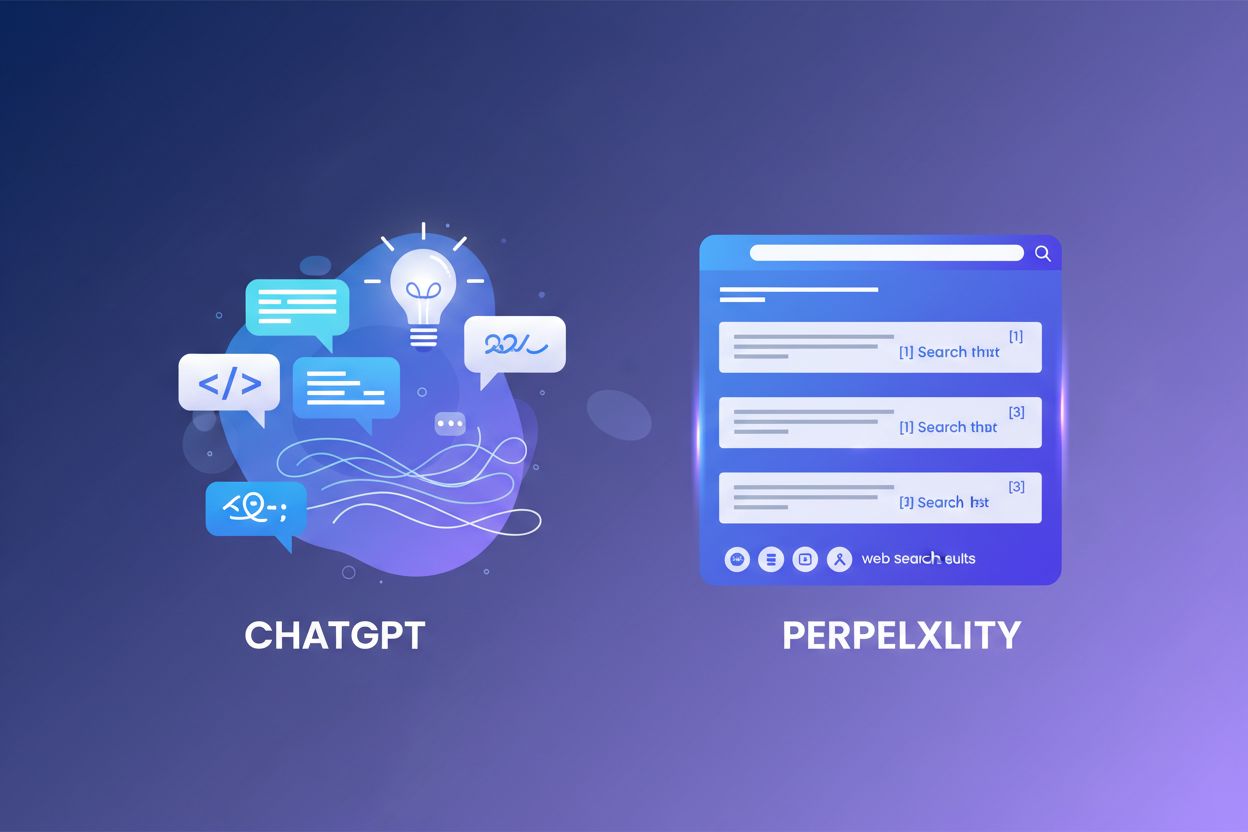
Compare Perplexity and ChatGPT to find the right AI platform for your needs. Explore real-time search, reasoning, creative writing, coding, pricing, and how AmI...
Learn proven strategies to get your brand mentioned in ChatGPT responses. Complete guide covering training data sources, content optimization, and monitoring to...