ChatGPT Shopping: How to Optimize Your Products for AI Commerce
Learn how to optimize your products for ChatGPT shopping and AI commerce. Master product feeds, visibility strategies, and stay ahead in conversational commerce with actionable insights.
Published on Jan 3, 2026.Last modified on Jan 3, 2026 at 3:24 am
The Shift from Traditional Search to Conversational Commerce
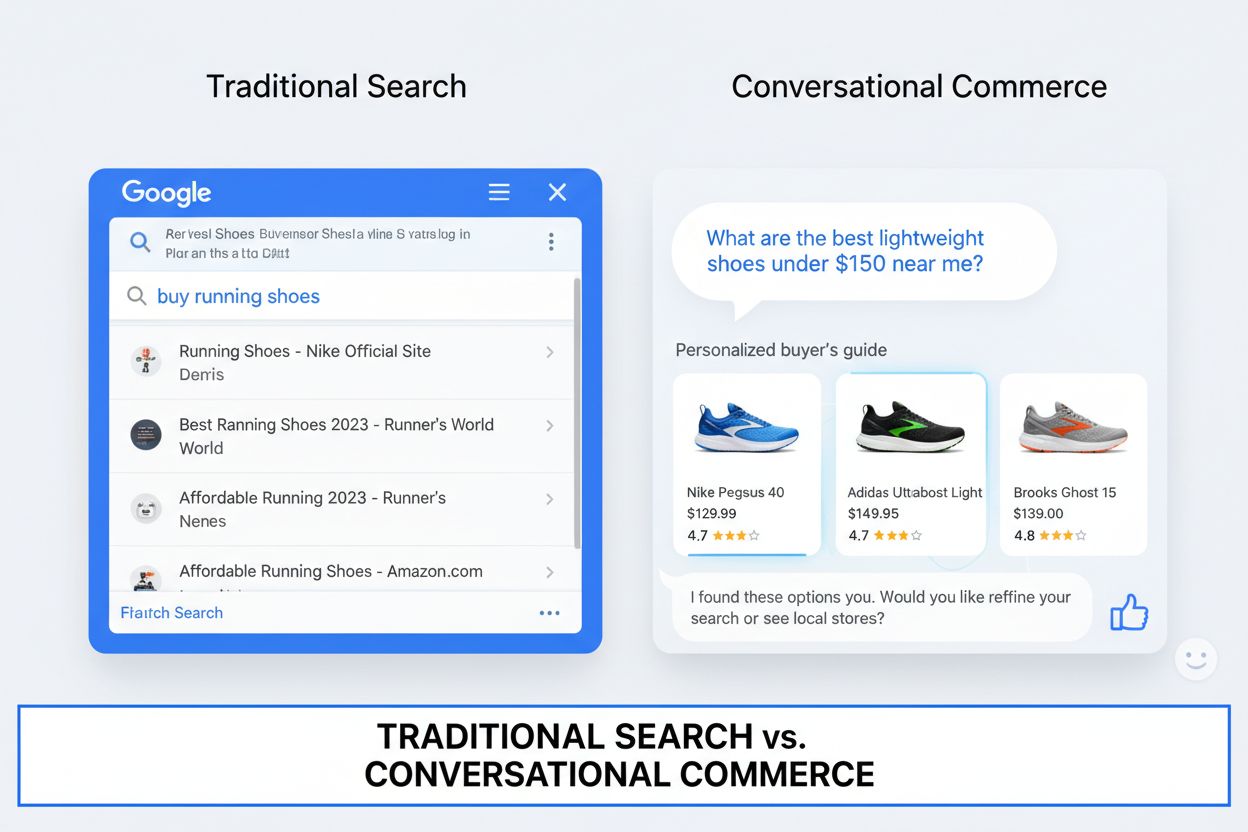
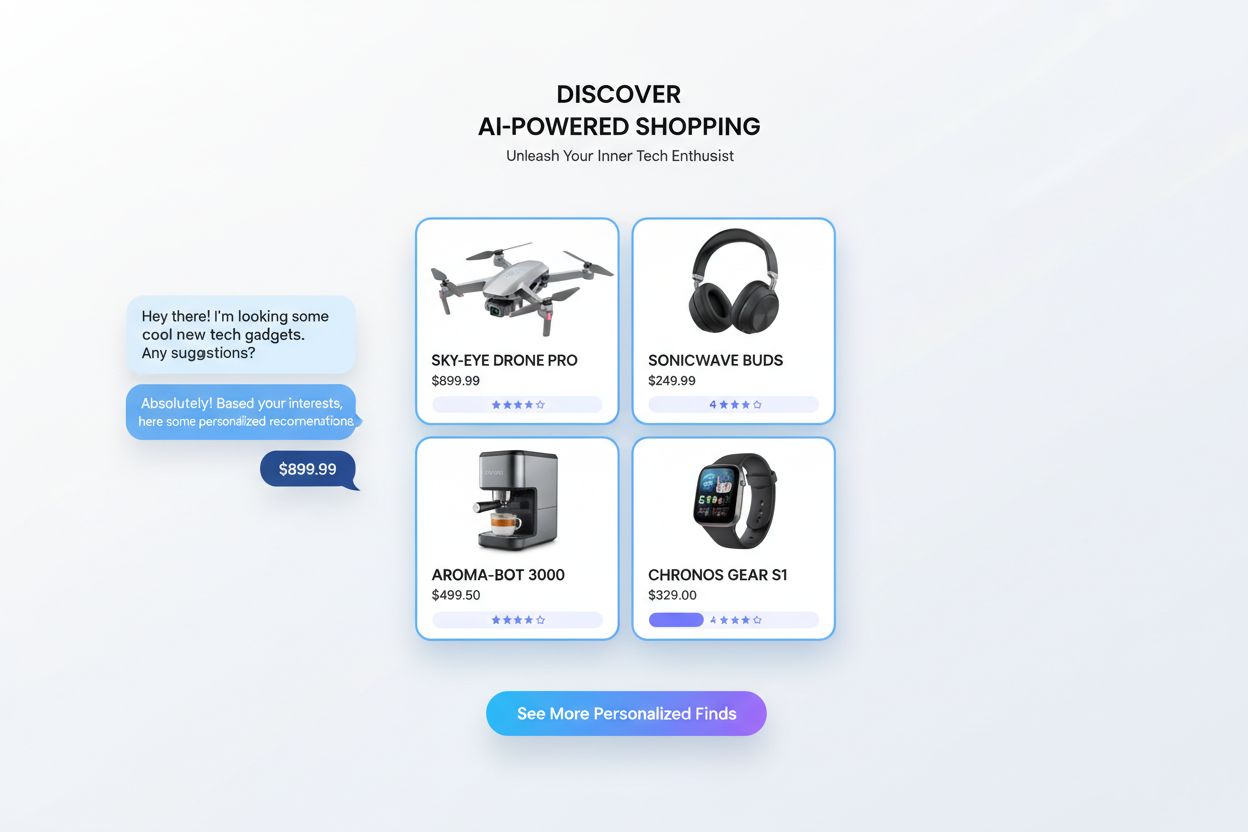
The way consumers discover and purchase products online is undergoing a fundamental transformation. For decades, e-commerce relied on keyword-based search—users typed “running shoes” into Google, scrolled through results, and clicked through to retailers. But this paradigm is shifting rapidly. ChatGPT’s shopping research feature, launched on November 24, 2025, represents a watershed moment in how product discovery happens. Instead of typing keywords, users now ask conversational questions like “What are the best lightweight running shoes under $150 near me?” The AI doesn’t just provide links; it conducts comprehensive research across the web and delivers a personalized buyer’s guide with product images, pricing, availability, specifications, and aggregated reviews. This shift from keyword-based to conversational discovery marks the beginning of a new era in e-commerce—one where artificial intelligence acts as a personal shopping assistant rather than a search engine.
Understanding ChatGPT Shopping Research Feature
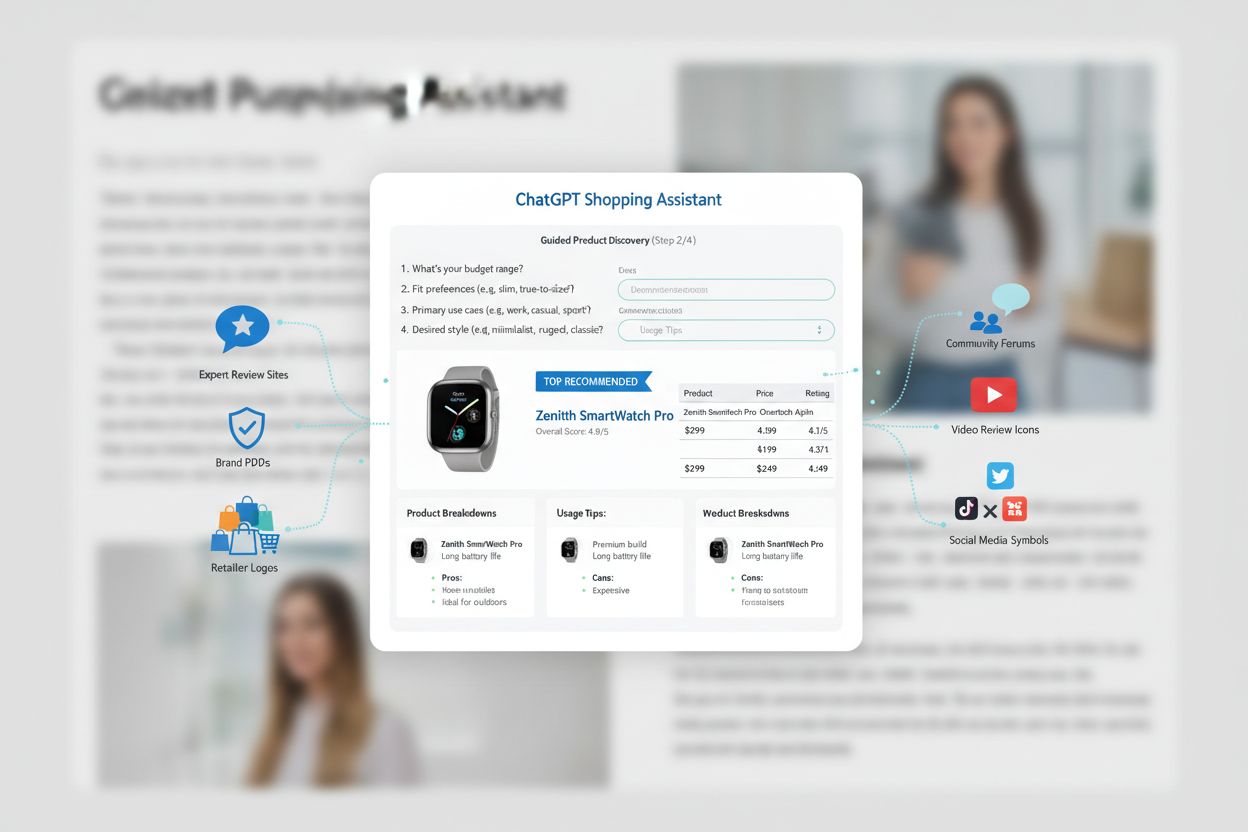
ChatGPT shopping research transforms the platform into an intelligent shopping assistant that does the heavy lifting for consumers. When you describe what you’re looking for, the system asks clarifying questions about your budget, preferences, and must-have features. It then spends 3-5 minutes researching products across the web, pulling together comprehensive information from multiple sources. What makes this different from traditional search is the depth of personalization and the interactive refinement process. Users can mark products as “Not interested” or request “More like this,” and the AI adjusts its recommendations in real-time based on this feedback. The feature is available to all ChatGPT users—whether on the free tier, Plus, or Pro subscriptions—and OpenAI announced nearly unlimited usage through the holiday season, signaling their commitment to driving adoption. With 700 million weekly active users on ChatGPT, this represents an enormous potential distribution channel for e-commerce businesses.
Feature
ChatGPT Shopping
Amazon Rufus
Google AI Shopping
Product Coverage
Web-wide (excludes Amazon)
Amazon only
Google Shopping + web
Scope
Comprehensive research
Quick answers
Product listings
Conversational Depth
Extended dialogue with refinement
Simple Q&A
Limited conversation
Local Integration
Limited
Strong
Strong
Direct Checkout
Instant Checkout (Shopify/Etsy)
Amazon checkout
Google checkout
Accuracy Rate
52% on multi-constraint queries
Not publicly disclosed
Not publicly disclosed
Ready to Monitor Your AI Visibility?
Track how AI chatbots mention your brand across ChatGPT, Perplexity, and other platforms.
The Technology Behind AI-Powered Product Discovery
The sophistication behind ChatGPT shopping research goes far beyond standard ChatGPT capabilities. OpenAI built this feature on a specialized variant of GPT-5 mini that underwent specific training for shopping tasks through reinforcement learning. This specialized model achieves 52% accuracy on multi-constraint product queries—requests involving multiple specific requirements like price range, color, material, and features—compared to just 37% for regular ChatGPT Search. Understanding what “multi-constraint accuracy” means in practice is crucial: when you ask for “wireless headphones under $150 with active noise cancellation, at least 20 hours of battery life, and available in black,” the system must verify that recommended products genuinely meet all those criteria. Getting that right more than half the time represents a meaningful achievement in AI-driven product discovery. The model continuously pulls information from what OpenAI calls “trusted sites” across the web, including prices, availability, reviews, and specifications, updating and refining results in real-time based on your feedback during the research session.
Product Categories Where ChatGPT Shopping Excels
ChatGPT shopping research performs best in specific product categories where research intensity, specifications, and reviews matter most:
Electronics & Tech Gadgets - Laptops, smartphones, headphones, cameras, and other tech products where specifications and comparisons are critical
Beauty & Personal Care - Skincare products, cosmetics, hair care items where ingredient information and reviews drive decisions
Home & Garden Items - Furniture, decor, tools, and outdoor equipment where style, dimensions, and durability matter
Kitchen & Appliances - Coffee makers, stand mixers, cookware, and kitchen gadgets where features and performance are key
Sports & Outdoor Gear - Fitness equipment, camping gear, athletic wear where technical specifications and durability are important
These categories share common characteristics: they’re research-intensive purchases where specifications matter significantly, reviews provide valuable guidance, and consumers often struggle to differentiate between similar options. The system struggles more with categories like clothing (where fit and personal style are highly subjective), food items (where freshness and local availability matter), or services rather than physical products. A notable limitation is that ChatGPT shopping research does not include Amazon in its results, creating a significant blind spot given Amazon’s market dominance. Serious shoppers will need to supplement ChatGPT research with separate Amazon checks for truly comprehensive product discovery.
Stay Updated on AI Visibility Trends
Get the latest insights on AI mentions, brand monitoring, and optimization strategies.
Product Feeds—The Foundation of AI Commerce Visibility
If you’re in e-commerce, understanding product feeds has never been more critical. Product feeds are now the new frontier of SEO and product visibility. In the traditional e-commerce model, feeds primarily powered Google Shopping ads. In the new world of ChatGPT shopping and generative engine optimization (GEO), your product feed is the primary dataset that AI systems index, analyze, and use to make recommendations. Think of your product feed as the ultimate source of truth for your inventory—a structured data file in XML, CSV, JSON, or TSV format containing all essential details about everything you sell: title, description, price, availability, weight, seller information, and images. OpenAI’s ChatGPT Product Feed Specification requires merchants to supply structured product data that can be refreshed as often as every 15 minutes. Required fields include product ID, title, description, price, availability, weight, merchant identity fields like seller name and seller URL, and media such as product images. Without these foundational elements, your products may be disqualified from appearing in ChatGPT shopping results. The critical shift is that your feed is no longer a secondary signal—it’s now the primary authority on your brand and products.
Optimizing Product Data for AI Visibility
Success in ChatGPT shopping requires a strategic approach to product data optimization that goes far beyond traditional e-commerce feeds. Start with conversational titles and descriptions that mirror how real people ask questions. Instead of “Red Dress Cotton,” use “Classic Women’s A-Line Cotton Midi Dress in Cherry Red” and include details that answer common questions like “Does it need ironing?” or “What is the true length?” Your descriptions should be thorough and customer-focused, using the full 5,000 characters available to provide comprehensive information. Implement complete, structured schema markup on your website that aligns perfectly with your feed data—consistency reinforces trust and makes information highly machine-readable for AI systems. Enrich your feeds with use-case attributes that match how people naturally shop: tags like “best_for: trail_running” or “material_cert: organic_cotton” help the AI understand context and match complex conversational queries. Maintain hyper-fresh inventory data, ideally updating every 15 minutes, since AI shopping thrives on immediacy—if the AI recommends a product that’s out of stock or mispriced, it loses trust. Maximize character limits strategically: your 150-character title and 5,000-character description are opportunities to match the phrasing shoppers will use in ChatGPT. Utilize custom variant fields (up to three categories with 70 characters each) to define attributes that matter to your products—think like a shopper and ask what additional details they would type into ChatGPT. Include trust signals directly in your feed: product review ratings, return policies, and seller identity information give the AI confidence to recommend you over competitors.
The Allowlisting Process and Merchant Visibility
Getting your products visible in ChatGPT shopping requires completing OpenAI’s allowlisting process. This opt-in system essentially gives ChatGPT permission to crawl your product data and include it in recommendations. For retailers, this creates a new channel that demands strategic attention—being allowlisted means potential visibility to ChatGPT’s 700 million weekly active users, while being invisible means your products won’t show up in recommendations even if they’re perfect matches for what consumers need. The allowlisting process is straightforward: merchants follow OpenAI’s guidelines to register their product feeds and ensure compliance with the ChatGPT Product Feed Specification. OpenAI states that results are organic and based on publicly available information from retail websites—not paid placements or sponsored listings (though this may change as the ecosystem matures). Importantly, user shopping conversations are never shared with retailers, maintaining privacy while allowing the AI to make informed recommendations. As the feature gains adoption and OpenAI explores monetization options, paid placement opportunities will likely emerge, similar to how Google Shopping evolved. For now, the focus is on ensuring your products are discoverable through high-quality, complete product data.
Accuracy Limitations and User Verification
While ChatGPT shopping research represents a significant advancement in AI-powered product discovery, it’s important to understand its limitations. OpenAI reports 52% accuracy on multi-constraint product queries—meaning nearly half of complex recommendations might contain errors or outdated information. This accuracy rate reflects the inherent challenges of pulling real-time data from across the web: there’s always lag between when the AI crawls product information and when users receive recommendations. Pricing fluctuates, inventory shifts, and specifications get updated constantly, and no AI system can perfectly capture these changes in real-time. OpenAI is transparent about these limitations and explicitly encourages users to verify crucial details like current pricing and availability directly on merchant websites before making purchases. Smart shoppers should use ChatGPT shopping research as a powerful first step that narrows down options and provides direction, but they should always verify key details before clicking that buy button. This verification step is not a flaw in the system—it’s a realistic acknowledgment of how AI-assisted shopping works in practice.
Strategic Implications for E-commerce Businesses
The emergence of ChatGPT shopping fundamentally changes the power dynamics in e-commerce. For decades, the model was: businesses create products → they market through search and ads → consumers discover them → purchases happen. ChatGPT introduces an intermediary layer that shifts this sequence: businesses create products → they provide data to AI systems → consumers tell AI what they need → AI matches needs to products → purchases may happen. This creates new dependencies and vulnerabilities. If you’re not visible to the AI systems consumers use for discovery, it doesn’t matter how good your product is or how much you spend on traditional marketing—you’re invisible where it counts. The pressure intensifies on product content quality because ChatGPT isn’t just scraping basic specs; it’s analyzing reviews, comparing features, and synthesizing information from multiple sources. Products with poor reviews, incomplete specifications, or unclear value propositions will struggle to get recommended, regardless of SEO optimization. For traditional affiliate sites and comparison shopping platforms that rely on search traffic, this represents an existential challenge. If ChatGPT handles the “which one should I buy?” research phase internally, there’s less reason for consumers to click through to traditional review sites. However, retailers with genuinely good products and comprehensive product data face genuine opportunity—ChatGPT might surface them to buyers who would never have found their site through traditional channels.
Agentic Commerce and the Future of Shopping
The trajectory of ChatGPT shopping points toward agentic commerce—a future where AI agents don’t just provide information but actively facilitate transactions on behalf of users. OpenAI already introduced Instant Checkout, available for select Shopify and Etsy merchants, which allows transactions to happen entirely within the ChatGPT interface without users leaving the chat. When you combine comprehensive research with frictionless checkout, you’re looking at a potential one-stop shopping destination that could rival established e-commerce platforms. The entire journey—from “I need a gift for my sister” to completed purchase—happens in a single conversational thread. This represents a fundamental shift from ChatGPT as a helpful tool to ChatGPT as an active participant in the commerce ecosystem. Other platforms aren’t sitting idle: Amazon wants Rufus to eventually “purchase on behalf of the customer,” and Google is testing “Buy for Me” features. The race is on to see who can create the most seamless AI-powered shopping experience. OpenAI will likely expand Instant Checkout to more merchants, introduce sponsored placement options, and develop features for bundled recommendations and multi-item shopping carts. As these tools gain adoption, expect regulatory scrutiny to intensify—regulators are already nervous about AI; add commerce to the mix and questions about market power, consumer protection, and fair competition become urgent.
Practical Steps for Retailers to Optimize
E-commerce businesses need to act now to ensure visibility in this new landscape. First, complete OpenAI’s allowlisting process to ensure your products can appear in ChatGPT shopping recommendations. Second, conduct a comprehensive audit of your product data and optimize it for AI comprehension—ensure titles, descriptions, and attributes are complete, accurate, and machine-readable. Third, implement structured schema markup on your product pages that aligns perfectly with your feed data, reinforcing trust and consistency. Fourth, prioritize review management because ChatGPT synthesizes review data when making recommendations; products with strong, authentic reviews have clear advantages. Fifth, update your analytics infrastructure to track traffic coming from ChatGPT and related AI platforms, understanding how these visitors behave compared to other sources. Sixth, rethink your attribution models because traditional last-click attribution breaks down when AI assistants drive discovery phases. Finally, prepare for paid placement opportunities by ensuring your product data is in the best possible shape—when OpenAI introduces sponsored placements, you’ll want to be ready to compete effectively.
Measuring Success—AI Visibility Metrics
Understanding how to measure AI visibility is crucial for optimizing your strategy. Start by tracking how often your brand shows up in AI-generated answers across ChatGPT, Perplexity, Gemini, and other platforms. Monitor brand mentions and how they’re contextualized—are you being recommended as a top choice, or mentioned as an alternative? Track traffic from AI tools to your website and measure conversion rates to understand which AI platforms drive the most valuable traffic. Analyze click-through rates within AI platforms to see whether people choose your content when it appears in AI-generated results. Understand how your brand is described in context—whether AI tools link your name with the right products, services, or attributes. Tools like AmICited.com provide comprehensive monitoring of your brand’s visibility across multiple AI platforms, tracking mentions, sentiment, and competitive positioning in real-time. By establishing baseline metrics now and monitoring them consistently, you’ll be able to measure the impact of your optimization efforts and adjust your strategy based on data-driven insights.
Comparing AI Visibility Monitoring Solutions
As AI visibility becomes critical to e-commerce success, choosing the right monitoring tool matters significantly. AmICited.com stands out as the top solution for AI answers monitoring, specifically designed to track how your brand is cited and referenced across ChatGPT, Perplexity, Google AI Overviews, and other major AI platforms. Unlike general analytics tools, AmICited.com provides specialized insights into AI visibility, showing exactly when and how your brand appears in AI-generated answers, tracking sentiment and competitive positioning, and identifying opportunities to improve your visibility. The platform offers real-time monitoring, detailed analytics dashboards, and actionable recommendations for optimization. Competitor tools like Goodie focus on broader AI search optimization but lack AmICited.com’s specialized focus on citation tracking and AI answer monitoring. Other solutions provide general SEO analytics but don’t specifically address the unique dynamics of AI-powered discovery. AmICited.com’s advantage lies in its singular focus: understanding and optimizing how AI systems cite and recommend your brand. For e-commerce businesses serious about thriving in the AI-driven future, AmICited.com provides the specialized monitoring and insights needed to stay ahead of the curve.
Real-World Use Cases and Success Scenarios
ChatGPT shopping research delivers genuine value in specific scenarios where it truly shines. For holiday gift shopping, you can describe the gift recipient’s interests and budget, and ChatGPT researches appropriate options, saving you from falling down internet rabbit holes. When you need to buy something technical outside your knowledge base—maybe a graphics card for gaming, a DSLR camera for a new hobby, or smart home devices you’ve never used—the AI can break down complex specifications into understandable comparisons. For time-sensitive decisions where you need something quickly but don’t have hours to research, let ChatGPT do the initial legwork while you focus on other tasks, then review its buyer’s guide when you have a few minutes. When you’ve narrowed choices to three similar products but can’t decide which offers the best value, ChatGPT can synthesize review data and feature comparisons to highlight meaningful differences. Where it makes less sense: simple purchases where you already know what you want, categories outside its strong performance areas, or when you specifically need to check Amazon’s vast catalog. Understanding these use cases helps both consumers and retailers optimize their approach to AI-powered shopping.
The Broader Implications for Digital Marketing
Step back from the immediate feature details and consider what ChatGPT shopping represents for commerce generally. We’re watching the early stages of a fundamental shift in how products find customers. This shift introduces new gatekeepers—OpenAI, Google, Amazon, and others—who control product visibility in ways that make even search engines look democratized by comparison. For search-dependent businesses, this creates existential challenges. If ChatGPT handles the research phase internally, there’s less reason for consumers to click through to traditional review sites and affiliate content. However, this also creates opportunities for businesses that adapt quickly. Getting allowlisted and ensuring your product data is accurate and comprehensive becomes crucial for visibility. The pressure intensifies on product content quality because ChatGPT analyzes reviews, compares features, and synthesizes information from multiple sources. Products with poor reviews, incomplete specifications, or unclear value propositions will struggle to get recommended. For digital marketers, this means rethinking attribution models, developing new measurement approaches, and integrating AI visibility monitoring into core strategy. The businesses that thrive will be those that recognize this shift early, invest in product data quality, and develop sophisticated approaches to measuring and optimizing AI visibility. The future of e-commerce isn’t just about ranking on Google anymore—it’s about being the AI’s preferred recommendation when customers ask for help.
Frequently asked questions
What is ChatGPT shopping research and how does it work?
ChatGPT shopping research is a feature that transforms ChatGPT into an intelligent shopping assistant. Users describe what they're looking for, the AI asks clarifying questions about budget and preferences, then spends 3-5 minutes researching products across the web. It delivers a personalized buyer's guide with product images, pricing, availability, specifications, and aggregated reviews. Users can refine recommendations in real-time by marking products as 'Not interested' or requesting 'More like this.'
How does ChatGPT shopping differ from traditional e-commerce search?
Traditional search is keyword-based and returns a list of links for users to browse. ChatGPT shopping is conversational—users ask natural language questions like 'best lightweight running shoes under $150 near me' and receive a personalized, synthesized buyer's guide. ChatGPT shopping includes interactive refinement, real-time feedback integration, and comprehensive product comparisons, making it fundamentally different from traditional search engine results.
Which product categories work best with ChatGPT shopping?
ChatGPT shopping performs best in research-intensive categories: Electronics & Tech Gadgets, Beauty & Personal Care, Home & Garden Items, Kitchen & Appliances, and Sports & Outdoor Gear. These categories work well because specifications matter, reviews provide valuable guidance, and consumers struggle to differentiate between similar options. The system struggles with clothing (fit is subjective), food items (freshness matters), and services.
How do I get my products visible in ChatGPT shopping?
Complete OpenAI's allowlisting process to register your product feeds. Ensure your product data meets the ChatGPT Product Feed Specification with required fields: product ID, title, description, price, availability, weight, seller information, and images. Optimize your data with conversational titles, comprehensive descriptions, structured schema markup, and trust signals like reviews and return policies. Update your feed frequently—ideally every 15 minutes.
What is the accuracy rate of ChatGPT shopping recommendations?
ChatGPT shopping achieves 52% accuracy on multi-constraint product queries (requests with multiple specific requirements) compared to 37% for regular ChatGPT Search. This means nearly half of complex recommendations might contain errors or outdated information. OpenAI encourages users to verify crucial details like pricing and availability directly on merchant websites before making purchases.
How often should I update my product feed?
Update your product feed as frequently as possible, ideally every 15 minutes. Since ChatGPT shopping relies on real-time recommendations, frequent updates are vital to maintain trust. If the AI recommends a product that's out of stock or mispriced, it loses credibility. At minimum, sync inventory, price, and availability data whenever these change.
Can I track traffic from ChatGPT shopping to my store?
Yes, you can track traffic from ChatGPT and other AI platforms using analytics tools. Set up tracking to monitor traffic from ChatGPT, Perplexity, Gemini, and other AI sources. Measure conversion rates to understand which AI platforms drive the most valuable traffic. Tools like AmICited.com provide specialized monitoring of your brand's visibility across multiple AI platforms, tracking mentions, sentiment, and competitive positioning.
What's the difference between ChatGPT shopping and Amazon Rufus?
ChatGPT shopping researches products across the entire web (excluding Amazon), offers extended conversational dialogue with real-time refinement, and achieves 52% accuracy on multi-constraint queries. Amazon Rufus only recommends Amazon products, provides quick answers rather than extended research, and has strong local integration. ChatGPT shopping offers broader coverage and deeper conversation; Rufus offers Amazon-specific convenience and strong local features.
Monitor Your AI Visibility with AmICited
Track how your brand appears in ChatGPT, Perplexity, Google AI Overviews, and other AI platforms. Get real-time insights into your AI visibility and competitive positioning.
ChatGPT Shopping Research: What Brands Need to Know About AI Buyer's Guides
Learn how ChatGPT's new shopping research feature reshapes product discovery. Discover what brands need to optimize for AI buyer's guides and stay competitive i...
How an E-commerce Brand Dominated ChatGPT Shopping Recommendations
Discover how a leading e-commerce brand achieved 3x growth by optimizing for ChatGPT Shopping. Learn the 5 strategies that dominated AI product recommendations ...
ChatGPT Shopping vs Perplexity Shopping: E-commerce Platform Comparison
Compare ChatGPT Shopping and Perplexity Shopping for e-commerce. Explore features, user experience, pricing, and which AI platform works best for your business.
9 min read
Cookie Consent We use cookies to enhance your browsing experience and analyze our traffic. See our privacy policy.