
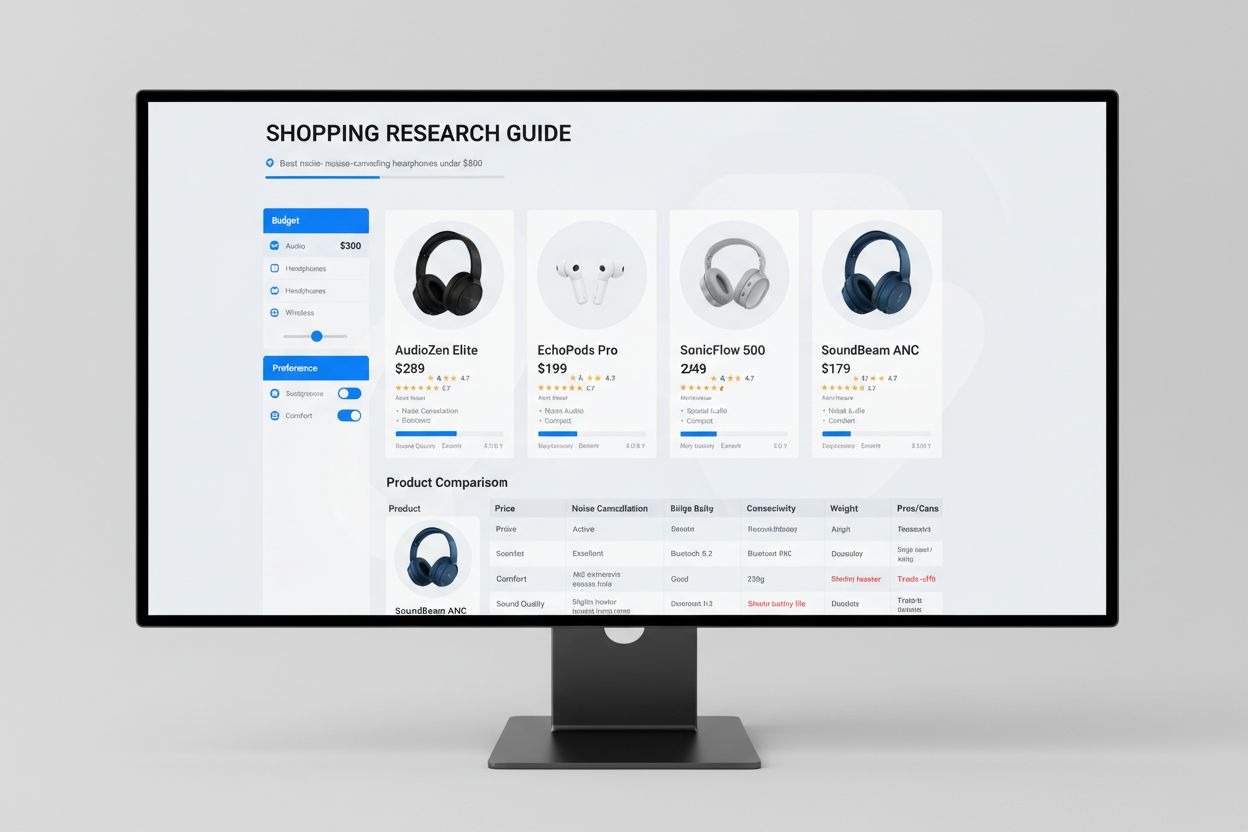
ChatGPT Shopping Research
Learn how ChatGPT Shopping Research helps you compare products, find deals, and make smarter purchase decisions with AI-powered recommendations and instant chec...
8 min read

Explore how ChatGPT Shopping transforms product discovery through conversational AI. Learn the technology, process, benefits for consumers and merchants, and optimization strategies.
ChatGPT Shopping represents a fundamental shift in how consumers discover and purchase products online. Unlike traditional e-commerce platforms where you search for keywords and browse through endless product listings, ChatGPT Shopping transforms product discovery into a natural conversation. The feature encompasses two primary components: Shopping Research, which acts as your personal product research assistant analyzing thousands of products across the internet, and Instant Checkout, which allows you to complete purchases directly within ChatGPT without leaving the conversation. When you ask ChatGPT a shopping-related question—whether it’s “What’s the best laptop for video editing under $1,500?” or “Find me a gift for someone who loves gardening”—the system automatically detects your intent and suggests launching Shopping Research. This conversational approach eliminates the need to master complex filtering systems or spend hours comparing products across multiple websites. Instead of becoming an expert in product categories you’ll only buy from once, you can leverage AI to understand options, trade-offs, and recommendations tailored to your specific situation.
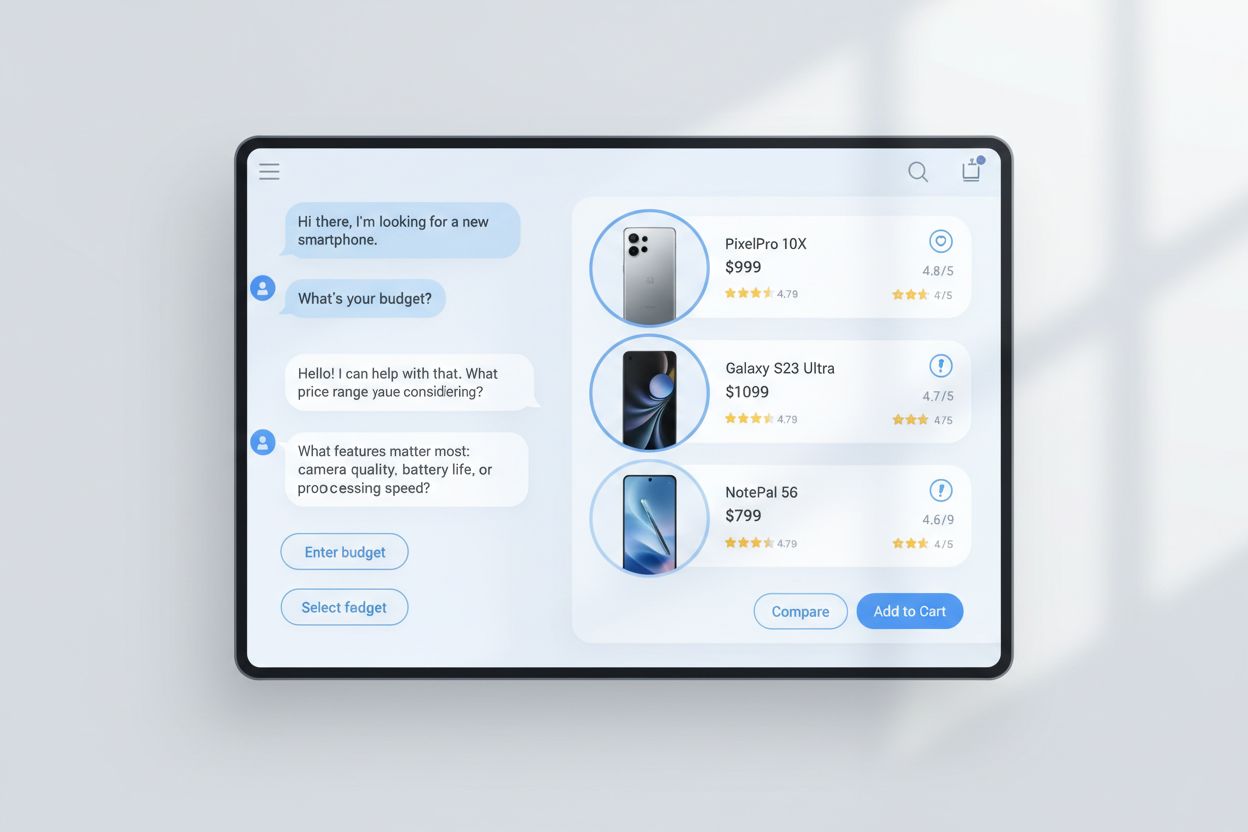
The power of ChatGPT Shopping comes from specialized AI architecture designed specifically for shopping tasks. Shopping Research is powered by GPT-5 mini, a purpose-built version of OpenAI’s language model that has been trained using reinforcement learning specifically for shopping-related tasks. This isn’t simply ChatGPT with a shopping plugin—it’s a model optimized to excel at product discovery and comparison. The model was trained to read and evaluate trusted retail websites, cite reliable sources for product information, synthesize information from multiple retailers, understand product specifications and features, interpret user preferences and constraints, and provide balanced comparisons without bias.
The checkout functionality is built on the Agentic Commerce Protocol (ACP), an open standard that OpenAI co-developed with Stripe and leading merchant partners. This protocol defines how AI agents, consumers, and businesses can work together to complete transactions securely.
| Aspect | Traditional Search | Conversational Shopping |
|---|---|---|
| Discovery Approach | Keyword-based search with filters | Natural language conversation with clarifying questions |
| Personalization | Based on browsing history and demographics | Based on stated preferences and conversation context |
| Research Process | Fragmented across multiple websites | Consolidated in single conversation |
Key capabilities of the specialized model:
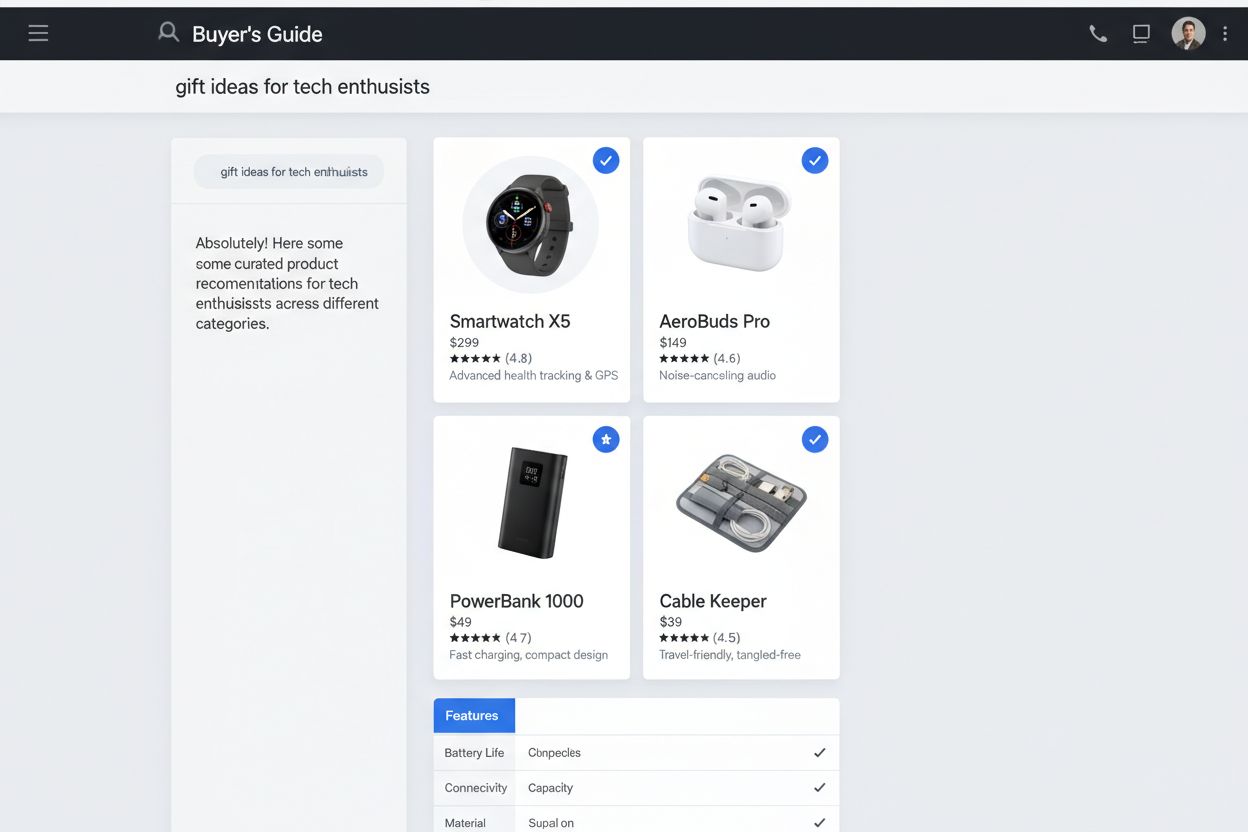
The ChatGPT Shopping experience differs significantly from traditional e-commerce, creating a more guided and conversational approach to purchasing. When you ask ChatGPT a shopping-related question, the system automatically detects your intent and suggests launching Shopping Research. Once initiated, ChatGPT opens a dedicated visual interface designed specifically for product research, complete with interactive product cards and a chat interface for ongoing conversation.
The interactive research process follows these steps:
If you have ChatGPT Memory enabled, the system can personalize recommendations based on your previous conversations. For example, if ChatGPT knows you’re a runner, it might factor that into laptop recommendations, suggesting models with better battery life for portable use. This dynamic feedback loop ensures the final recommendations truly match your preferences.
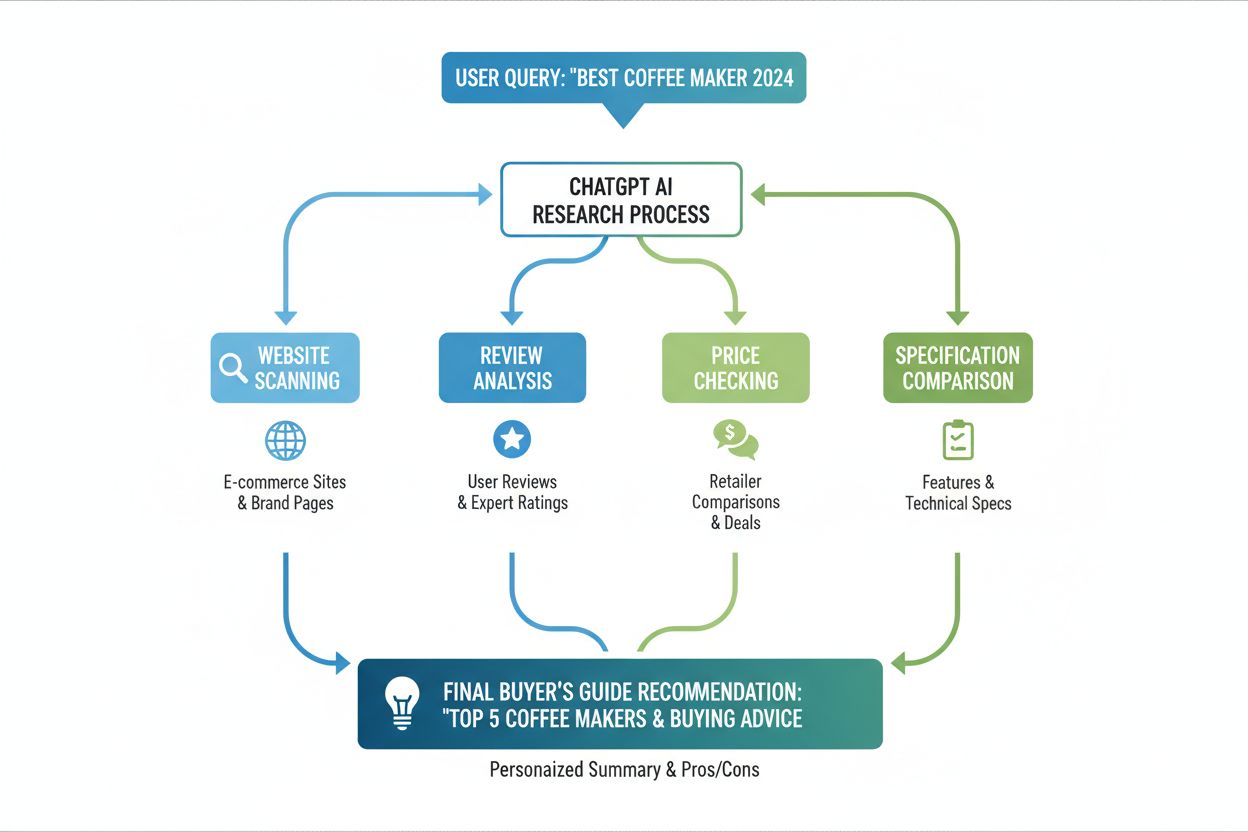
While you’re answering questions and reviewing options, ChatGPT is conducting extensive research across the internet. The system doesn’t simply pull random products from a database—it evaluates quality indicators, reads customer reviews, compares specifications, and understands trade-offs in ways that generic AI models cannot.
The evaluation methodology includes:
ChatGPT Shopping performs especially well in detail-heavy categories like electronics, beauty products, home and garden items, kitchen appliances, and sports and outdoor equipment where thorough comparison is valuable. The system’s ability to synthesize information from multiple sources means you get a comprehensive view rather than a single retailer’s perspective. This multi-source approach helps identify products that genuinely match your needs rather than products that are simply well-marketed or have high profit margins.
For products that support Instant Checkout (currently available from Etsy sellers and over one million Shopify merchants including brands like Glossier, SKIMS, Spanx, and Vuori), the buying process is remarkably streamlined. When you see a “Buy” button on a supported product, you can initiate checkout directly within ChatGPT without navigating to the merchant’s website. The entire process—confirming product details, verifying shipping address, selecting payment method, and completing the transaction—happens within the conversation.
Payment security is handled through encrypted tokens via the Agentic Commerce Protocol. Your payment information is tokenized (converted to a secure code) and authorized only for specific amounts and specific merchants. Merchants never see your full payment card information, and OpenAI doesn’t store your payment card details. This security-first approach was co-developed with Stripe, a leader in payment security. For merchants already using Stripe, enabling agentic payments can require as little as one line of code. The merchant processes the order through their existing systems just as they would for any direct purchase from their website, maintaining the customer relationship and handling fulfillment independently.
Understanding the differences between ChatGPT Shopping and conventional e-commerce helps illustrate why this technology is generating significant attention in the retail industry.
| Factor | Traditional E-Commerce | ChatGPT Shopping |
|---|---|---|
| Discovery | Keyword search → browse categories → apply filters | Natural conversation → clarifying questions → curated recommendations |
| Personalization | Based on browsing history and demographics | Based on stated preferences and conversation context |
| Research Burden | On consumer to identify, compare, and evaluate | On AI to synthesize and present options |
| Transparency | Sponsored products mixed with organic results | Organic, unsponsored recommendations only |
The Discovery Experience differs fundamentally. Traditional e-commerce requires you to start with a keyword search, navigate through category pages, apply filters, and browse through dozens or hundreds of results. The burden is entirely on you to identify relevant products, compare specifications, and determine which option best fits your needs. ChatGPT Shopping lets you describe what you need in natural language, answer a few clarifying questions, and receive curated recommendations with explanations. The AI handles the research burden, synthesizing information from multiple sources to present the best options.
Personalization and Context work differently too. Traditional e-commerce personalization is typically based on browsing history, past purchases, and demographic data. Recommendations are often product-centric (“people who bought X also bought Y”) rather than need-centric. ChatGPT Shopping personalizes based on the conversation itself—your stated preferences, constraints, and priorities. With Memory enabled, ChatGPT can factor in information from previous conversations, creating recommendations that understand your lifestyle, preferences, and values.
The Purchase Decision Process is consolidated in ChatGPT Shopping. Traditional research happens across multiple tabs and websites—Google for general search, Amazon for product selection, Reddit for authentic opinions, YouTube for demonstrations, and specialty review sites for expert analysis. This fragmented process takes time and creates decision paralysis. ChatGPT Shopping consolidates the entire research process into one conversation where product comparisons, review summaries, specification analysis, and expert opinions are synthesized into cohesive recommendations with clear reasoning.
ChatGPT Shopping doesn’t exist in a vacuum—it’s competing with established e-commerce giants and other emerging AI shopping tools. Google Shopping has dominated product search for over a decade through product listings with images, prices, and merchant information directly in search results. However, Google uses keyword-based search while ChatGPT uses conversational queries. Google Shopping is advertising-driven with paid placements, while ChatGPT Shopping is organic. Recent data shows Google AI cites retailers only 4% of the time in e-commerce queries, while ChatGPT cites retailers 36% of the time, suggesting fundamentally different approaches to product recommendations.
Amazon remains the world’s largest e-commerce marketplace with the most comprehensive product selection and fastest fulfillment network. However, Amazon is a closed ecosystem with its own inventory and sellers, while ChatGPT searches across the open web. Amazon prioritizes products that benefit Amazon (higher margins, Prime-eligible, Amazon Basics), while ChatGPT Shopping claims no commercial bias. Importantly, Amazon explicitly blocks ChatGPT’s crawler, so Amazon products don’t appear in ChatGPT Shopping results at all. Amazon has launched its own AI shopping assistant, Rufus, trained on Amazon’s product catalog and customer behavior data.
Perplexity has launched competing shopping features that emphasize comprehensive research with extensive citations, while ChatGPT focuses on curated recommendations. Perplexity primarily sends users to retailer sites, while ChatGPT offers integrated checkout for supported merchants. CNN Business characterized the situation as “a battle brewing over the future of online shopping,” with Google, Amazon, and OpenAI all racing to add AI-powered shopping features. Each company brings different advantages: Google has decades of search expertise and massive merchant relationships; Amazon has the largest product selection and fastest fulfillment; OpenAI has the most advanced conversational AI and unbiased recommendations.
ChatGPT Shopping offers several compelling advantages over traditional product discovery methods. Time Savings and Efficiency is the most immediate benefit. Instead of spending hours researching products across multiple websites, reading countless reviews, and building comparison spreadsheets, you receive a comprehensive buyer’s guide in minutes. For simple queries, a regular ChatGPT response provides a quick answer. For complex decisions requiring depth—comparing gaming laptops, choosing the right standing desk, finding the perfect gift—Shopping Research invests a few minutes to deliver thoroughly researched recommendations.
Reduced Decision Fatigue addresses a critical consumer pain point. The modern consumer faces an overwhelming number of choices—Amazon alone sells over 350 million products. This abundance creates decision paralysis. ChatGPT Shopping reduces decision fatigue by curating options. Instead of 1,000 vacuum cleaners, you see 3-5 recommendations that match your specific needs, each with clear explanations for why they were selected and how they differ. The conversational interface also reduces cognitive load—instead of trying to remember which filter combinations you’ve already tried, you simply continue the conversation: “Actually, can you find something quieter?”
Unbiased Recommendations represent a significant advantage. Traditional e-commerce platforms have inherent conflicts of interest: Amazon promotes products with higher profit margins and faster shipping; Google Shopping displays paid ads prominently; affiliate sites often recommend products with the highest commission rates. ChatGPT Shopping, according to OpenAI, ranks products “purely on relevance to the user’s query and context.” Results are organic and unsponsored. Merchants cannot pay for preferential placement.
Conversational Refinement lets you communicate naturally. Traditional search requires you to master the platform’s logic—learn what keywords work, understand how filters combine, and develop effective search strategies. ChatGPT Shopping lets you ask follow-up questions: “Which of these is easiest to clean?” “Are any of these suitable for hardwood floors?” “What’s the most durable option?” The system understands your intent and refines recommendations accordingly.
Personalized Context with Memory enabled means ChatGPT can consider your lifestyle, preferences, and circumstances when making recommendations. The system might remember that you have a small apartment (suggesting compact products), you’re environmentally conscious (highlighting sustainable options), you have specific health concerns (avoiding problematic ingredients), or you’re budget-conscious (prioritizing value options).
While ChatGPT Shopping transforms the consumer experience, it also creates new opportunities for online sellers. Access to a Massive, Growing Audience is significant—ChatGPT has over 800 million weekly active users, one of the largest consumer audiences in technology history. For merchants, appearing in ChatGPT Shopping results means exposure to hundreds of millions of potential customers who are actively researching products and demonstrating purchase intent. This is particularly valuable for smaller merchants who struggle to gain visibility on crowded platforms like Amazon.
Organic Discovery Without Ad Spend is revolutionary. Unlike Google Shopping (which requires paid ads for prominent placement) or Amazon (where sponsored products dominate search results), ChatGPT Shopping provides organic product discovery. Merchants don’t need advertising budgets to appear in recommendations. Products are selected based on relevance to the user’s query, not based on who paid the most. This creates opportunities for smaller brands with excellent products to compete against larger competitors with bigger marketing budgets.
Merchant Control and Customer Relationships is a critical advantage. Unlike marketplaces where Amazon or Walmart owns the customer relationship, with ChatGPT Shopping, merchants remain the merchant of record. Orders are placed directly with your business, you process payments through your existing system, you handle fulfillment and shipping, you manage customer service and returns, and you own the customer data and relationship. ChatGPT acts as a referral channel, not an intermediary.
Reduced Friction in the Buying Journey through Instant Checkout simplifies the purchase process. Customers can go from product discovery to completed purchase within a single conversation, without navigating to your website, creating an account, or entering payment information. This reduced friction should theoretically improve conversion rates.
Product-First Presentation means ChatGPT Shopping showcases products before highlighting which retailers sell them. This differs from Google Shopping (which emphasizes retailers) and Amazon (which is inherently retailer-focused). For brands that manufacture or design products but sell through multiple channels, this product-first approach means your product gets discovered based on its merits, regardless of which specific retailer stocks it.
While ChatGPT Shopping represents significant innovation, it’s important to understand its current limitations. Accuracy and Information Errors are acknowledged by OpenAI, which explicitly states that Shopping Research “might make mistakes about product details like price and availability” and encourages users to visit merchant sites for the most accurate information. The system pulls information from across the internet, synthesizes it, and presents recommendations. While it’s trained to prioritize reliable sources and cite information properly, errors can occur: prices may be outdated if a merchant recently changed them, availability information might not reflect real-time stock levels, product specifications could be misinterpreted or incorrectly cited, and reviews might be summarized in ways that miss important nuances.
Category Performance Variations mean that OpenAI notes Shopping Research “performs especially well in detail-heavy categories like electronics, beauty, home and garden, kitchen and appliances, and sports and outdoor.” The implication is that performance in other categories may be less impressive. Products that depend heavily on subjective preferences (fashion, art, decor) or require specialized expertise (professional tools, medical equipment) might receive less valuable recommendations.
Limited Geographic and Merchant Coverage restricts current functionality. Instant Checkout is limited to U.S. customers only, purchases from U.S.-based merchants only, and merchants who have integrated the Agentic Commerce Protocol. This means international shoppers cannot use the checkout feature, and many retailers—including major players like Amazon—do not currently participate.
Single-Item Purchase Limitation means the initial release of Instant Checkout only supports single-item purchases. You cannot build a shopping cart with multiple products and check out once. Each product requires a separate transaction. OpenAI has indicated that multi-item cart functionality is coming, but this current limitation makes ChatGPT Shopping less practical for grocery shopping or when you need to purchase multiple related items.
Conversion Performance Questions arise from early research. A University of Chicago working paper found that ChatGPT traffic converts at lower rates than traditional channels. This might be because users are in research mode rather than purchase mode, the novelty factor attracts casual browsers, users lack trust in the new buying process, or the technology is still unfamiliar to many consumers.
Limited Promotional Integration means ChatGPT Shopping doesn’t currently have a clear mechanism for displaying merchant promotions, coupon codes, or limited-time offers. Traditional e-commerce thrives on urgency and promotional incentives, but the conversational shopping interface doesn’t emphasize these elements.
If you’re a merchant or e-commerce professional, understanding how to appear in ChatGPT Shopping results is increasingly important. Here are 11 optimization strategies:
Allow OpenAI’s Crawler Access - The most fundamental step is ensuring your website allows OpenAI’s web crawler (OAI-SearchBot) to access your product pages. Check your robots.txt file and remove any blocks on OpenAI’s bot. ChatGPT Shopping can only recommend products it can find and analyze.
Implement Structured Data (Schema Markup) - Structured data helps AI understand what information on your page represents product attributes. Implement Product schema markup that includes product name, brand, price, availability, images, ratings and reviews, product description, and technical specifications.
Write Natural, Benefit-Focused Product Descriptions - ChatGPT Shopping is trained to understand natural language, so your product descriptions should be written for humans first, algorithms second. Explain how your product solves problems and fits into people’s lives rather than just listing specifications.
Use Clear, Descriptive Product Names - Avoid overly creative product names that sacrifice clarity. Include key attributes in the product name: product type, key feature (if relevant), brand/model name, and size or capacity (if applicable).
Maintain Fresh Reviews and Ratings - Customer reviews are critical for ChatGPT Shopping. The system reads and synthesizes reviews to understand real user experiences, common complaints, and product strengths. Encourage customers to leave detailed reviews that mention specific use cases, product performance, comparisons to alternatives, and who the product is ideal for.
Optimize Your Product Feed - Ensure your product feed is comprehensive and up-to-date. Your feed should include complete and accurate product information, current pricing and availability, high-quality images, detailed specifications, and proper categorization.
Build Brand Mentions Across the Web - ChatGPT Shopping doesn’t just look at your product pages—it evaluates information from across the internet. Brand mentions on review sites, forums and Reddit, expert review publications, social media, and industry publications all help establish your product’s reputation.
Optimize Website Performance - Site speed matters. ChatGPT needs to quickly access and analyze your product pages. Ensure your site loads quickly on mobile devices, has clean crawlable HTML, doesn’t require JavaScript to display essential product information, and provides direct access to product pages.
Create Comprehensive Product Content - The more information ChatGPT has about your products, the better it can match them to relevant user queries. Include detailed specifications, dimensions and weight, material information, use cases and applications, compatibility information, care and maintenance instructions, and warranty details.
Monitor Your ChatGPT Visibility - Unlike traditional SEO where you can track Google rankings, ChatGPT Shopping visibility is harder to monitor because recommendations are personalized and context-dependent. However, you can periodically ask ChatGPT shopping queries relevant to your products, track referral traffic from chatgpt.com in your analytics, and ask customers how they discovered your products.
Consider Instant Checkout Integration - If you use Shopify or Stripe, integrating Instant Checkout should be a priority. The simplified purchase process could improve conversion rates, and the “Buy” button provides a clear call-to-action within ChatGPT. When ranking multiple merchants that sell the same product, ChatGPT considers factors like availability, price, quality, whether a merchant is the primary seller, and whether Instant Checkout is enabled.
ChatGPT Shopping is still in its early stages, and OpenAI has outlined several planned expansions. Expansion Beyond Single Products is coming soon—OpenAI has confirmed that multi-item cart functionality is coming to Instant Checkout. This will enable grocery shopping, bundle purchases, complete outfit purchases, and home renovation project shopping. The ability to research and purchase multiple related items in one session will dramatically expand ChatGPT Shopping’s utility.
Geographic Expansion will almost certainly follow. Current limitations to U.S. customers and merchants will expand as OpenAI partners with payment processors in different countries, supports additional currencies and tax regulations, completes merchant onboarding in new markets, and localizes the shopping interface.
Category Expansion should improve as underlying AI models improve and OpenAI gathers more data about shopping behaviors. Performance in categories beyond “electronics, beauty, home and garden, kitchen and appliances, and sports and outdoor” should improve. Fashion, furniture, and more subjective categories that currently underperform may receive specialized model training.
Integration with Other OpenAI Products seems likely. Shopping research could integrate with ChatGPT Workspace for business procurement, ChatGPT Voice for voice-based shopping interactions, and ChatGPT API for third-party applications building on shopping capabilities.
Visual Search and Product Matching would be a natural extension. The ability to upload images and ask “Find me something similar to this” or “Where can I buy this item?” would leverage ChatGPT’s existing image understanding capabilities.
Improved Merchant Tools and Analytics will help merchants track their product visibility in ChatGPT, understand which queries surface their products, optimize product information for AI recommendations, and analyze conversion from ChatGPT traffic. OpenAI will likely develop a merchant dashboard similar to Google Search Console or Amazon Seller Central.
Understanding how people actually use ChatGPT Shopping illustrates its practical value across different shopping scenarios.
Complex Product Research - You need a new laptop but aren’t sure what specifications you need. Traditional approach: hours of research across review sites, YouTube videos, and forum discussions, trying to understand what RAM, processor, storage, and display specifications mean for your use case. ChatGPT Shopping approach: “I need a laptop for video editing 4K footage, occasional gaming, and general web browsing. My budget is $1,500. What should I look for?” ChatGPT explains what specifications matter for video editing, asks about your preferred screen size and portability needs, then recommends specific models with explanations of the trade-offs.
Gift Shopping - You need a gift for someone whose interests you understand but whose specific preferences you don’t. Traditional approach: endless browsing through gift guides, hoping something strikes you as appropriate, with high uncertainty about whether the recipient will like it. ChatGPT Shopping approach: “I need a gift for my coworker who loves gardening. Budget $50. She has a small balcony garden and has mentioned wanting to grow herbs.” ChatGPT asks clarifying questions about whether she already has basic tools, suggests specific products like herb garden starter kits or quality pruning shears, and explains why each gift would be meaningful for someone in her situation.
Constraint-Based Shopping - You need a product that meets multiple specific constraints. Traditional approach: apply filters on e-commerce sites, but filters don’t capture all your needs. End up manually checking each product to see if it meets all criteria. ChatGPT Shopping approach: “I need a cordless vacuum that’s under $200, quieter than 65 decibels, weighs less than 5 pounds, works on both carpet and hardwood, and has at least 30 minutes of runtime.” ChatGPT identifies products meeting all criteria and explains which constraint you might need to relax if no perfect match exists.
Product Comparison - You’ve narrowed your options to a few products but can’t decide between them. Traditional approach: open multiple tabs, build a comparison spreadsheet, read through reviews trying to understand real differences. ChatGPT Shopping approach: “Help me choose between the Sony WH-1000XM5, Bose QuietComfort Ultra, and Apple AirPods Max headphones.” ChatGPT creates a side-by-side comparison highlighting key differences in sound quality, noise cancellation, comfort, battery life, and value, with explanations of which features matter for different use cases.
Price-Conscious Shopping - You need something but want to find the best value option. Traditional approach: check price comparison sites, wait for sales, read reviews to ensure quality isn’t compromised at lower price points. ChatGPT Shopping approach: “What’s the best stand mixer under $150? I bake bread weekly and occasionally make cookies, but don’t need professional-level features.” ChatGPT identifies which premium features you can skip for your use case and recommends models that provide the essential functionality without premium pricing.
As with any new technology that handles shopping and payments, understanding privacy and security is essential. What Information ChatGPT Collects includes your shopping queries and preferences, products you mark as “Not interested” or “More like this,” the final buyer’s guide you receive, and conversation history (if you have ChatGPT Memory enabled). This information is used to improve recommendations within your current session, personalize future recommendations (if Memory is enabled), and train and improve OpenAI’s models. According to OpenAI’s privacy policy, your chats are never shared with retailers unless you complete a purchase.
Payment Security with Instant Checkout is handled through encrypted tokens. Your payment information is tokenized (converted to a secure code), tokens are authorized only for specific amounts and specific merchants, merchants never see your full payment card information, and OpenAI doesn’t store your payment card details. The Agentic Commerce Protocol was designed with security as a foundational principle, co-developed with Stripe, a leader in payment security.
User Control and Consent are built into ChatGPT Shopping. You must confirm each step before any action is taken, payment is never processed without your explicit authorization, only information required to complete your order is shared with merchants, and you can disable ChatGPT Memory if you don’t want personalization. This opt-in, transparent approach differs from some e-commerce platforms where data collection and sharing happen in the background without explicit moment-of-use consent.
Merchant Data Access is limited. When a purchase is completed through Instant Checkout, merchants receive your shipping address, contact information (email, phone), order details, and payment authorization (but not your full payment card). This is the same information merchants would receive from any direct purchase on their website. ChatGPT acts as a secure intermediary, not a data aggregator.
Trust and Transparency are emphasized by OpenAI. Shopping Research results are organic and unsponsored, not influenced by merchant payments, based on relevance to your query, and cited from reliable sources. However, it’s worth noting that OpenAI does charge merchants a transaction fee for Instant Checkout purchases. While this fee structure shouldn’t affect which products are recommended (since recommendations are made before checkout), it does create a financial relationship between OpenAI and merchants. Consumers should understand this business model and evaluate whether they believe it maintains recommendation integrity.
ChatGPT Shopping represents more than just a new shopping channel—it’s a fundamental shift in how product discovery works. From Keyword Search to Conversational Commerce marks a paradigm shift. For decades, product discovery has been built around keyword search. Consumers learned to think in keywords, and merchants optimized content for keyword targeting. ChatGPT Shopping shifts this paradigm to conversational commerce, where consumers describe needs in natural language, AI interprets intent rather than matching keywords, and context and nuance matter more than exact terms. This shift disadvantages merchants who have built their strategy entirely around keyword optimization and advantages those who focus on clearly explaining benefits and use cases.
From Paid Visibility to Earned Visibility disrupts traditional e-commerce economics. Traditional e-commerce has increasingly become pay-to-play. On Amazon, organic visibility has declined as sponsored products dominate search results. On Google Shopping, visibility comes primarily through paid ads. ChatGPT Shopping’s organic, unsponsored model disrupts this. Visibility is earned through product quality, comprehensive information, and genuine customer satisfaction—not advertising budgets. This could democratize e-commerce, making it easier for smaller merchants with excellent products to compete against larger brands with bigger marketing budgets.
From Fragmented Research to Consolidated Guidance changes how consumers shop. Traditional product research happens across multiple platforms: Google for general search, Amazon for product selection and reviews, Reddit for authentic user opinions, YouTube for demonstrations, and specialized review sites for expert analysis. ChatGPT Shopping consolidates this research into a single conversation. This is more convenient for consumers but potentially disintermediates many specialized information sources that have thrived in the fragmented ecosystem.
The Attention Economy Shift represents a fundamental business model change. E-commerce platforms like Amazon and Google monetize attention—they sell advertising to merchants who want consumers’ attention. ChatGPT Shopping monetizes transactions—it takes a fee when purchases are completed. This fundamental business model difference creates different incentives: the attention model maximizes time on platform and shows more ads, while the transaction model minimizes time to purchase and encourages buying. The transaction model may be more aligned with consumer interests but depends on actual conversions to generate revenue, creating different pressures and priorities.
For merchants and brands, this transformation means that visibility in AI systems like ChatGPT Shopping is becoming as important as visibility in Google Search or Amazon. Tools like AmICited.com help brands monitor how they’re being cited and recommended by AI systems across GPTs, Perplexity, Google AI Overviews, and other AI shopping assistants. Understanding your brand’s presence in these AI-driven recommendation systems is critical for maintaining visibility and influence in an increasingly AI-mediated commerce landscape. As conversational AI becomes the primary interface for product discovery, brands that understand and optimize for these systems will maintain competitive advantage, while those that ignore them risk becoming invisible to consumers who increasingly rely on AI for shopping guidance.
ChatGPT Shopping provides helpful starting points based on unsponsored, organic research. However, always verify critical information like pricing and availability on merchant websites before purchasing. Think of it as a knowledgeable research assistant rather than an infallible authority.
No. Product recommendations are organic and unsponsored. Merchants cannot pay for preferential placement in search results. However, merchants do pay a small transaction fee when purchases are completed through Instant Checkout.
Shopping Research is available globally to ChatGPT users. However, Instant Checkout is currently limited to U.S. customers purchasing from U.S. merchants. International expansion is planned but hasn't been announced with specific timelines.
Amazon explicitly blocks OpenAI's web crawler from accessing its site, which means Amazon products don't appear in ChatGPT Shopping results. This is a business decision by Amazon to keep customers within its own ecosystem.
OpenAI charges merchants a small transaction fee on completed purchases through Instant Checkout. The service is free for users and doesn't increase product prices.
ChatGPT Shopping attempts to provide current pricing, but OpenAI acknowledges that information 'might make mistakes about product details like price and availability.' Always verify current prices on merchant websites before purchasing.
Yes. Shopping Research is available to all ChatGPT users, including Free, Plus ($20/month), and Pro ($200/month) plans. Instant Checkout is also available across all plans for U.S. users.
Shopping Research typically takes 2-5 minutes to generate a comprehensive buyer's guide. For simple queries, a regular ChatGPT response may be sufficient and faster.
Discover how your brand appears in ChatGPT Shopping, Perplexity, Google AI Overviews, and other AI systems. Track your visibility and optimize your presence in the AI-driven commerce landscape.
Learn how ChatGPT Shopping Research helps you compare products, find deals, and make smarter purchase decisions with AI-powered recommendations and instant chec...
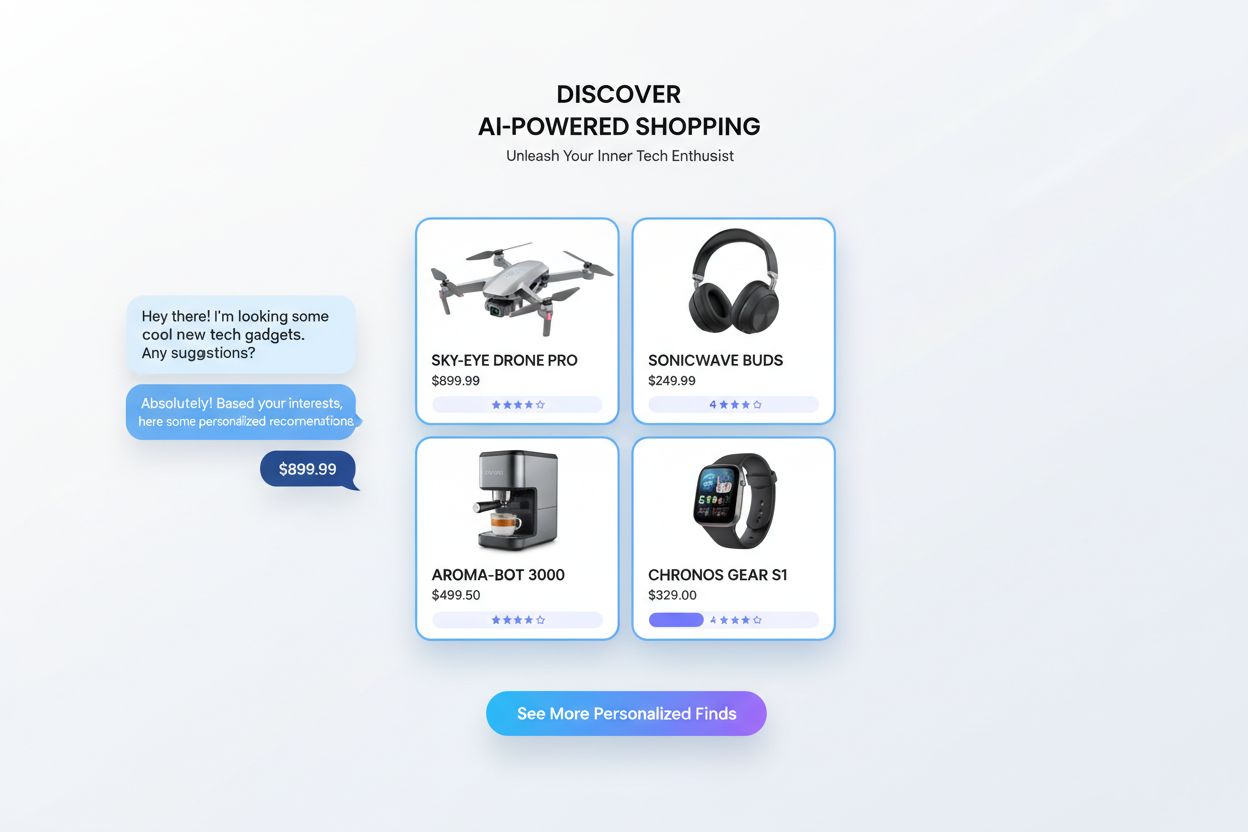
Discover how a leading e-commerce brand achieved 3x growth by optimizing for ChatGPT Shopping. Learn the 5 strategies that dominated AI product recommendations ...
Learn how to get your products featured in ChatGPT buyer's guides and AI-generated research. Discover optimization strategies for ChatGPT Shopping Research and ...