
How an E-commerce Brand Dominated ChatGPT Shopping Recommendations
Discover how a leading e-commerce brand achieved 3x growth by optimizing for ChatGPT Shopping. Learn the 5 strategies that dominated AI product recommendations ...
9 min read

Compare ChatGPT Shopping and Perplexity Shopping for e-commerce. Explore features, user experience, pricing, and which AI platform works best for your business.
The way consumers discover and purchase products has fundamentally shifted. What once began with keyword searches on Google has evolved into conversational interactions with AI assistants that understand context, preferences, and constraints. ChatGPT’s weekly active users surpassed 400 million in February 2025, signaling the mainstream adoption of AI for everyday tasks—including shopping. This transformation represents more than just a new interface; it marks the collapse of the traditional buying funnel into what industry experts call a “shoppable singularity,” where discovery, comparison, and purchase happen within a single conversation. For e-commerce merchants, this shift demands a fundamental rethinking of how products are discovered, presented, and sold in the age of conversational commerce.
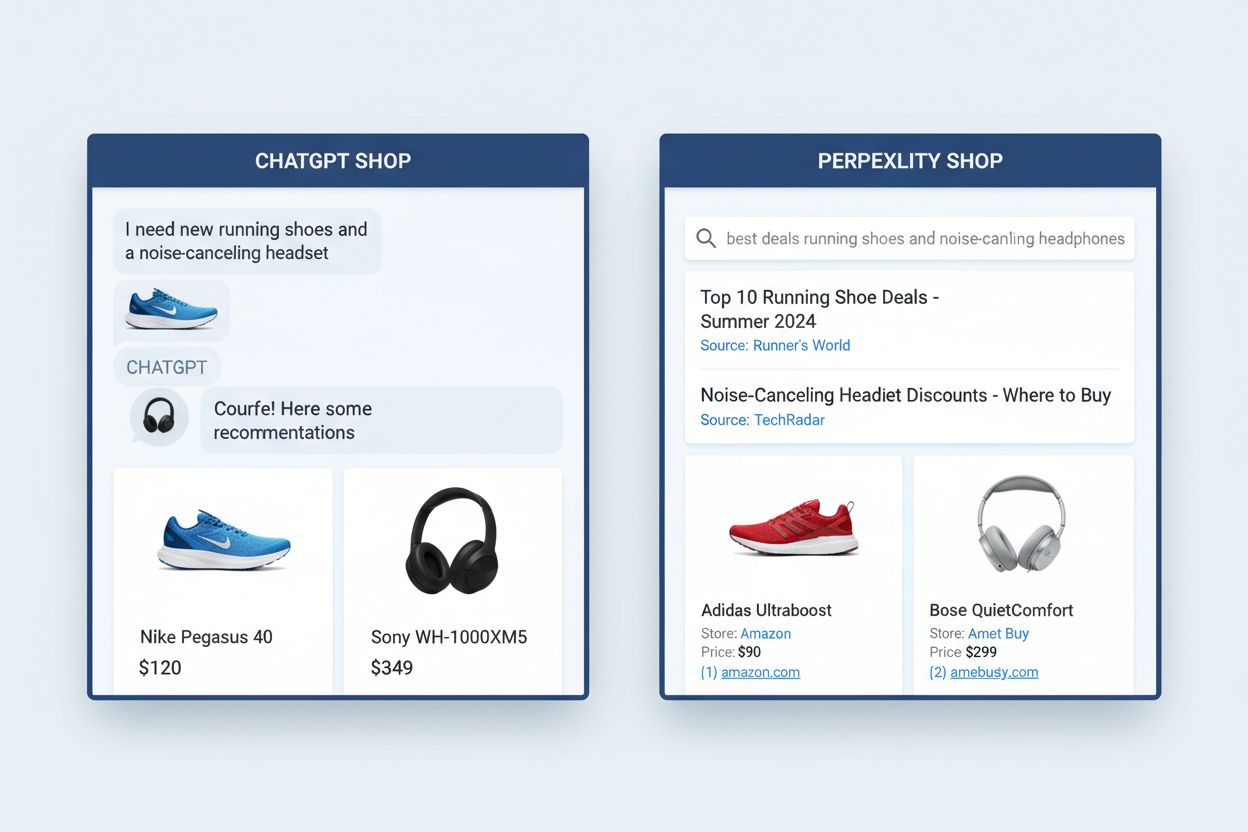
OpenAI launched ChatGPT Shopping in December 2024, introducing a sophisticated shopping assistant that fundamentally changes how users interact with e-commerce. The platform conducts real-time research across multiple sources—product reviews, comparison sites, retailer databases, and user discussions—to synthesize comprehensive product recommendations. ChatGPT Shopping features personalized product cards with images pulled directly from retailer listings, integrated checkout capabilities with over a million Shopify merchants, and direct purchasing options from Etsy sellers. The platform excels at the multi-turn conversation pattern that defines modern AI shopping: users start with broad queries, the model provides a landscape of options, users add constraints (budget, specific features, size requirements), and the model narrows recommendations accordingly. What distinguishes ChatGPT Shopping is its claim to display product listings independently, helping eliminate algorithmic bias and building trust with users. The familiar chat interface makes the shopping experience feel natural and conversational, allowing users to ask follow-up questions and refine their search in real-time.
| Feature | ChatGPT Shopping | Traditional E-commerce |
|---|---|---|
| Interface | Conversational chat | Product listings + filters |
| Product Discovery | Multi-turn dialogue | Search bar + categories |
| Recommendations | AI-synthesized, constraint-based | Algorithm-ranked |
| Checkout | In-chat with Shopify/Etsy | External retailer site |
| Information Sources | Multiple web sources | Single retailer |
| User Interaction | Iterative questioning | Static browsing |
Perplexity launched its shopping feature in November 2024, positioning itself as the research-first alternative to ChatGPT’s conversational approach. Built on Perplexity’s core strength—providing cited answers from live web sources—the shopping feature emphasizes transparency and accuracy. Every recommendation comes with clickable citations, allowing users to trace information back to original sources and verify claims independently. Perplexity’s “Snap to Shop” visual feature enables users to photograph products and receive instant recommendations, while the platform’s Comet browser assistant integrates shopping capabilities directly into the browsing experience. Unlike ChatGPT’s focus on product cards and direct checkout, Perplexity tends to provide detailed retailer information, including brick-and-mortar locations, store features, and comprehensive product comparisons. The platform excels at answering research-heavy queries, providing local shopping options, and helping users understand the landscape of available products before making decisions. For merchants and consumers who prioritize fact-checking and source verification, Perplexity’s citation-first design offers a significant advantage in building confidence in recommendations.
The user experience between ChatGPT Shopping and Perplexity Shopping reveals fundamental differences in design philosophy and intended use cases:
Trust is paramount in e-commerce, and both platforms address accuracy concerns differently. ChatGPT claims its product listings are displayed independently, without algorithmic bias influencing which products appear first—a subtle but important distinction that builds user confidence. However, like all large language models, ChatGPT can occasionally hallucinate facts, such as incorrectly identifying retailer locations or inventing product features. Perplexity mitigates hallucination risks through its citation-first architecture, where every answer includes linked sources that users can verify. This transparency allows merchants and consumers to fact-check recommendations and trace information back to authoritative sources. For e-commerce merchants, the accuracy difference matters significantly: ChatGPT’s independent listing approach means products compete on merit rather than algorithmic ranking, while Perplexity’s citation model means merchants benefit from strong reviews and credible third-party mentions. Both platforms conduct real-time web searches to ensure current information, but Perplexity’s explicit citation mechanism provides an additional layer of accountability that appeals to research-focused users.
The integration capabilities of these platforms directly impact how merchants can leverage AI shopping features. ChatGPT has established partnerships with Shopify and Etsy, allowing users to browse and purchase directly from over a million Shopify merchants and Etsy sellers without leaving the chat interface. This seamless integration reduces friction in the buying journey and creates new discovery channels for merchants already on these platforms. Perplexity is pursuing a different integration strategy through partnerships with Firmly.ai, positioning itself as an agentic commerce destination that can handle complex purchasing workflows. The distinction matters for merchants: ChatGPT’s direct integration means products can be discovered and purchased within the platform, while Perplexity’s approach focuses on research and recommendation, with purchase completion happening on external sites. For merchants using Shopify or Etsy, ChatGPT Shopping represents an immediate opportunity to reach users in a new channel. For those seeking to optimize for research-driven discovery and citation-based recommendations, Perplexity’s approach offers advantages in building brand authority and credibility through third-party validation.
Both platforms offer free and paid tiers, but with different feature availability and geographic limitations. ChatGPT Shopping is available to Plus, Pro, and Free users in the United States, with plans to expand internationally. The free tier provides basic shopping functionality, while Pro and Plus subscribers access advanced features like web browsing, code interpretation, and custom GPTs. Perplexity Shopping is currently available to Pro users in the US, with free users having limited access to shopping features. Perplexity Pro costs $20 per month, matching ChatGPT Plus pricing. The geographic limitation to the US for both platforms’ shopping features reflects the current focus on the American e-commerce market, though both companies have indicated plans for international expansion. For merchants, the pricing structure matters less than feature availability: merchants should focus on which platform their target customers use and optimize their presence accordingly. The free tier availability on ChatGPT means broader potential reach, while Perplexity’s Pro-focused approach may indicate a more affluent, research-oriented user base.
| Aspect | ChatGPT Shopping | Perplexity Shopping |
|---|---|---|
| Free Tier Access | Yes (limited features) | Limited |
| Pro Pricing | $20/month (Plus) | $20/month (Pro) |
| Geographic Availability | US (expanding) | US (expanding) |
| Checkout Integration | Shopify, Etsy | Firmly.ai partnership |
| Citation Display | Optional (with browsing) | Default (all answers) |
| Visual Features | Product cards | Snap to Shop |
The effectiveness of AI shopping platforms ultimately depends on their ability to drive conversions and user satisfaction. ChatGPT Shopping demonstrates strong performance in the multi-turn conversation pattern that defines modern AI commerce: users start with broad queries, receive landscape overviews, add constraints progressively, and receive increasingly refined recommendations. This iterative approach mirrors how humans naturally shop, asking questions and refining preferences until finding the right product. Real-world testing shows ChatGPT Shopping gets users closest to actual purchase, with product cards, pricing information, and direct checkout links minimizing friction. Perplexity Shopping excels at research-phase conversion, providing detailed information that builds confidence in purchasing decisions, though the additional navigation required to complete purchases may reduce immediate conversion rates. Both platforms handle speed effectively, with response times typically under 10 seconds for product queries. The key performance difference lies in the checkout experience: ChatGPT’s in-chat checkout reduces abandonment, while Perplexity’s external links may introduce friction but appeal to users who prefer traditional e-commerce interfaces.
Understanding when each platform delivers maximum value helps merchants optimize their AI shopping strategy. Use ChatGPT Shopping when your products benefit from conversational discovery, your target customers value convenience and speed, you’re already on Shopify or Etsy, or you want to reach users who prefer integrated checkout experiences. ChatGPT Shopping excels for impulse purchases, gift-finding, and product categories where visual presentation matters (fashion, electronics, home goods). Use Perplexity Shopping when your products require research and comparison, your target customers value transparency and citations, you want to build authority through third-party mentions, or you’re in categories where detailed specifications matter (tech, tools, professional equipment). Perplexity Shopping performs better for considered purchases where users want to verify claims and compare options thoroughly.
Complementary Strategy: The smartest merchants use both platforms in tandem. Start with Perplexity to build research-backed authority and credibility through citations and third-party validation. Simultaneously, optimize for ChatGPT Shopping to capture users ready to purchase. This dual approach addresses different stages of the buying journey: Perplexity handles awareness and consideration, while ChatGPT drives conversion. For merchants selling multiple product categories, this strategy becomes even more valuable—research-heavy products (tools, software, professional equipment) perform better on Perplexity, while lifestyle and impulse purchases convert better on ChatGPT.
The AI shopping landscape continues evolving rapidly, with Google Gemini announcing advanced shopping features at its 2025 I/O event, and both ChatGPT and Perplexity rolling out increasingly sophisticated capabilities. As these platforms become primary discovery channels for e-commerce, merchants face a critical challenge: ensuring their brands are accurately represented when AI models make recommendations. This is where AI monitoring platforms like AmICited.com become essential. AmICited.com tracks how AI systems reference your brand across ChatGPT, Perplexity, Google AI Overviews, and other AI platforms, providing visibility into how your products are being recommended and discussed. By monitoring AI citations and recommendations, merchants can identify opportunities to improve brand visibility, correct inaccuracies, and understand how AI models perceive their products relative to competitors. The future of e-commerce isn’t just about being found on Google—it’s about being recommended by AI. Brands that invest in understanding and optimizing their presence across AI shopping platforms will capture disproportionate share of the conversational commerce opportunity. The convergence of AI shopping and AI monitoring represents the next frontier in e-commerce strategy, where data-driven insights into AI recommendations become as important as traditional SEO and paid advertising.
ChatGPT Shopping is a conversational shopping assistant integrated into ChatGPT's chat interface, emphasizing product cards and direct checkout with Shopify and Etsy. Perplexity Shopping is a research-first platform that provides cited product recommendations and retailer information, prioritizing transparency and fact-checking over immediate purchase convenience.
The answer depends on your products and target customers. ChatGPT Shopping is better for merchants on Shopify/Etsy seeking immediate conversions and impulse purchases. Perplexity Shopping is better for merchants selling research-heavy products or those wanting to build authority through third-party citations and credibility.
Absolutely. Many merchants use both platforms as complementary channels. Perplexity builds research-backed authority and awareness, while ChatGPT drives conversions. This dual approach addresses different stages of the buying journey and maximizes reach across AI shopping platforms.
AI shopping platforms create new discovery channels that operate differently from traditional search and paid advertising. You should optimize your product information for AI consumption (clear descriptions, specifications, reviews), monitor how AI systems represent your brand, and consider how your products fit into AI recommendation patterns.
AI monitoring tracks how AI systems like ChatGPT and Perplexity reference and recommend your brand. It matters because these platforms are becoming primary discovery channels. Understanding how AI perceives your products helps you optimize visibility, correct inaccuracies, and compete effectively in conversational commerce.
Currently, both platforms' shopping features are primarily available in the US, though both companies have announced plans for international expansion. Availability varies by region and user tier (free vs. paid).
Focus on clear, detailed product descriptions with specifications, authentic customer reviews, and presence on credible third-party sites. Ensure your products are listed on Shopify or Etsy for ChatGPT Shopping visibility, and build authority through citations and mentions on research-focused sites for Perplexity visibility.
AmICited.com monitors how AI systems reference your brand across ChatGPT, Perplexity, and Google AI Overviews. This visibility helps you understand how AI models perceive your products, identify optimization opportunities, and track your competitive position in AI-driven recommendations.
Track your brand mentions across ChatGPT, Perplexity, and Google AI Overviews. Get visibility into AI shopping recommendations and optimize your presence in conversational commerce.
Discover how a leading e-commerce brand achieved 3x growth by optimizing for ChatGPT Shopping. Learn the 5 strategies that dominated AI product recommendations ...

Learn how to optimize your products for ChatGPT shopping and AI commerce. Master product feeds, visibility strategies, and stay ahead in conversational commerce...
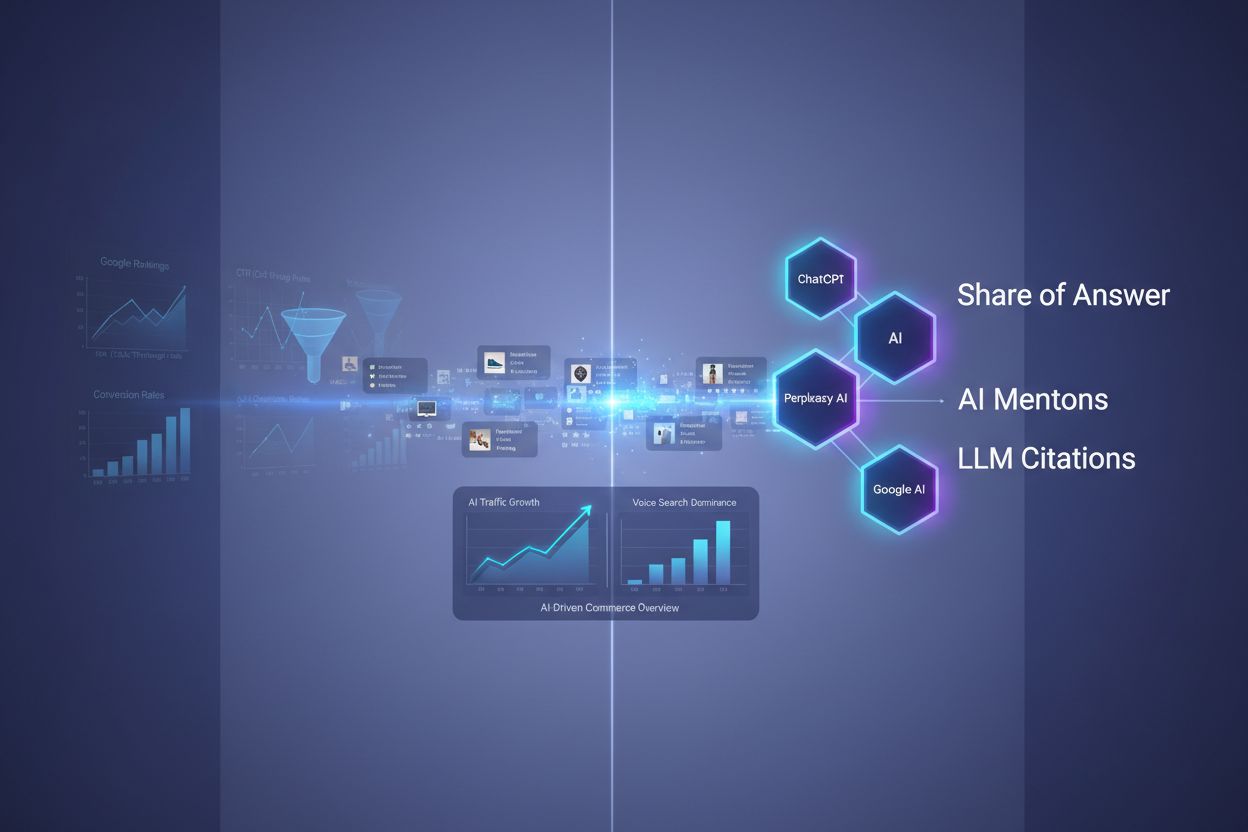
Learn how AI is transforming product discovery. Discover strategies for optimizing your brand's visibility in ChatGPT, Perplexity, and Google AI Overviews with ...