
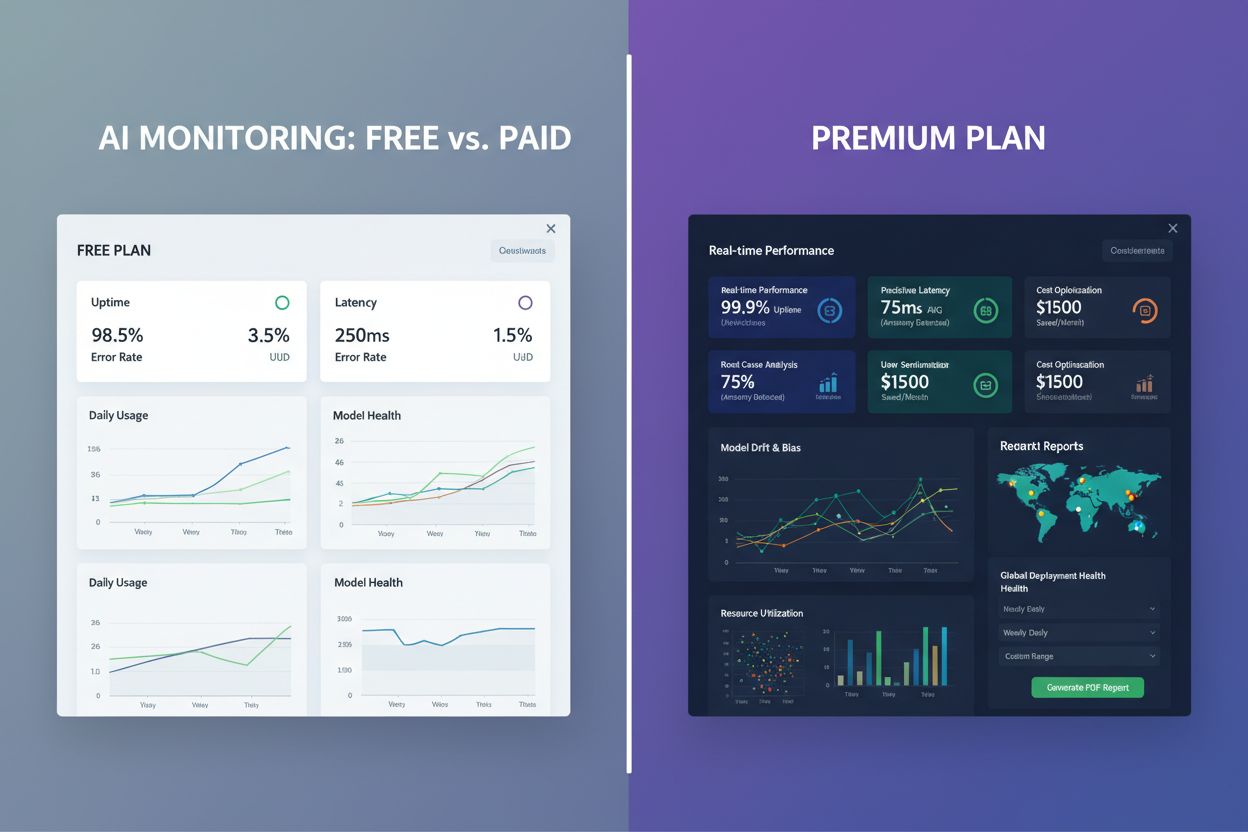
Free vs Paid AI Visibility Tools: What You Actually Need
Compare free and paid AI visibility tools to find the right budget solution for monitoring your brand in ChatGPT, Perplexity, and Google AI. Expert guide with p...
7 min read
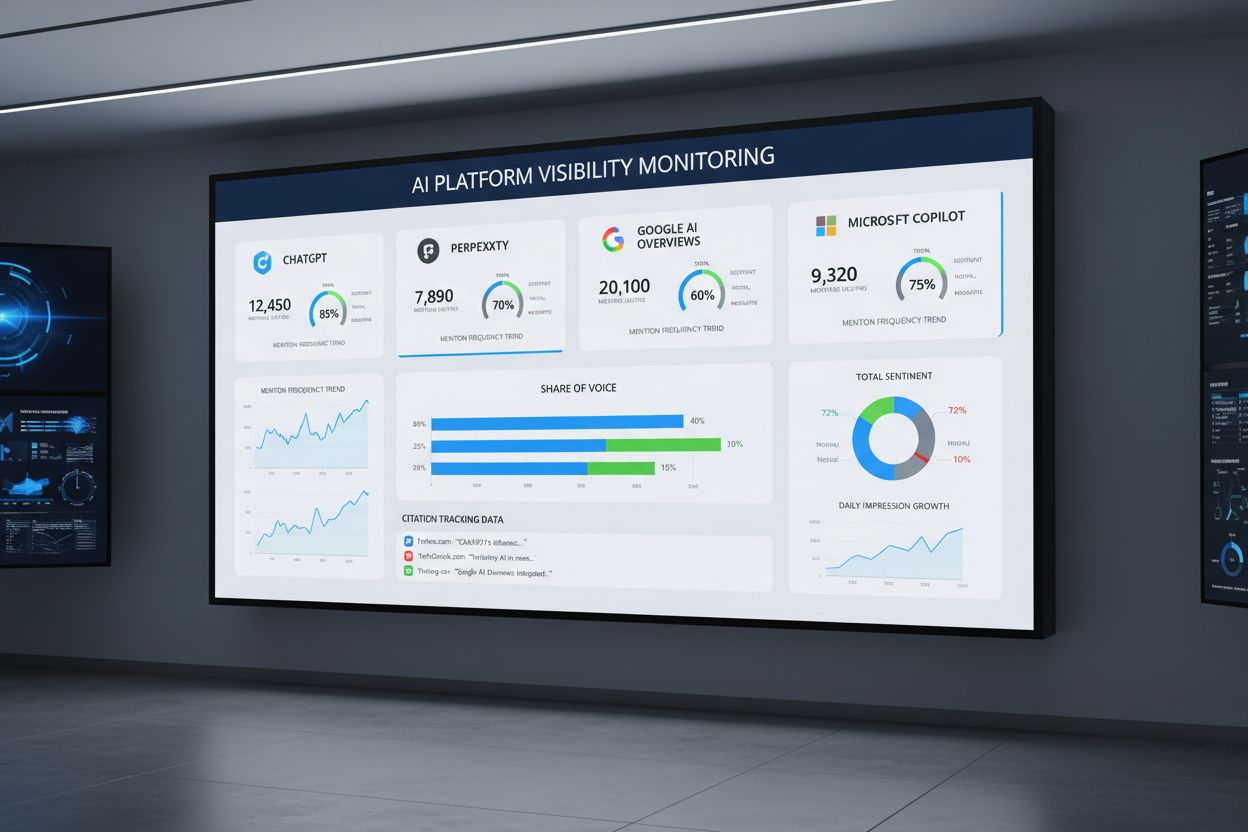
Learn how to choose the right AI visibility monitoring platform for your brand. Compare features, pricing, and capabilities to track your presence in ChatGPT, Perplexity, and Google AI.
The artificial intelligence landscape has fundamentally transformed how information reaches consumers, making visibility monitoring essential for modern brands. 47% of Google searches now display AI Overviews, fundamentally changing the search results landscape that marketers have relied on for decades. Beyond Google, platforms like ChatGPT, Perplexity, and Claude are becoming primary information sources for millions of users daily, creating new channels where your brand’s presence—or absence—directly impacts customer perception. Companies that don’t monitor AI-generated answers risk losing visibility to competitors who do, as these platforms increasingly influence purchasing decisions and brand awareness. The stakes are particularly high because AI systems can misrepresent your brand, cite competitors instead of you, or omit your company entirely from relevant answers—all without your knowledge or ability to immediately correct the record.
When evaluating AI visibility monitoring platforms, multi-platform coverage should be your first priority, as fragmented monitoring across different tools creates blind spots and operational inefficiency. The best solutions provide real-time tracking of how your brand appears across GPTs, Perplexity, Google AI Overviews, and other emerging AI systems, allowing you to respond quickly to misrepresentations or missed citation opportunities. Sentiment analysis capabilities are equally critical, enabling you to understand not just whether your brand is mentioned, but the context and tone of those mentions—distinguishing between positive recommendations and negative associations. Citation tracking functionality reveals which sources AI systems are prioritizing, helping you understand why your content may or may not be included in AI-generated answers. Competitor benchmarking transforms raw monitoring data into actionable intelligence by showing how your visibility compares to direct competitors across the same AI platforms. Integration capabilities with your existing marketing stack—CRM systems, analytics platforms, and communication tools—determine whether monitoring insights actually influence your strategy or remain isolated data points. The platform should also offer customizable alerts and reporting that match your team’s workflow, ensuring insights reach decision-makers in formats they actually use.
| Feature | Why It Matters | What to Look For |
|---|---|---|
| Multi-Platform Coverage | Different AI systems reach different audiences and use different training data | Support for ChatGPT, Perplexity, Google AI Overviews, Copilot, Claude, Gemini, and emerging platforms |
| Real-Time Tracking | AI visibility changes rapidly; delayed reporting means missed opportunities | Updates within hours, not days; immediate alerts for significant changes |
| Sentiment Analysis | Being mentioned negatively can damage your brand more than not being mentioned | Context-aware analysis distinguishing positive recommendations from negative associations |
| Citation Tracking | Understanding which sources AI prioritizes reveals content strategy gaps | Detailed source attribution showing which pages drive AI mentions |
| Competitor Benchmarking | Relative positioning matters more than absolute metrics | Side-by-side comparison with 5-50+ competitors across all tracked platforms |
| Integration Capabilities | Isolated data doesn’t drive action; integration ensures insights influence strategy | API access, GA4 integration, CRM connections, Slack alerts, automated workflows |
The foundation of any reliable monitoring platform is transparent methodology about how data is collected and validated. Platforms using official APIs (where available) provide more reliable data than those relying on web scraping, which can miss updates, misinterpret formatting, or violate terms of service. Understanding whether a platform uses real user queries, synthetic prompts, or a combination of both is crucial—real user data reflects actual visibility, while synthetic testing can identify potential issues before they impact real customers. Reliability metrics matter significantly; platforms should clearly communicate their data accuracy rates, update frequency, and any known limitations in their coverage. The best platforms are transparent about their data collection practices, publishing methodology documentation and regularly updating their approach as AI systems evolve. Ask potential vendors for specifics: How often is data refreshed? What’s their historical data retention? How do they handle API changes when platforms update their systems?
As your brand’s AI visibility monitoring needs grow, your platform must scale without requiring constant tool-switching or manual workarounds. Multi-language support is increasingly important for global brands, as AI systems operate across dozens of languages and your visibility in non-English markets may be just as critical as domestic presence. API access enables seamless integration with your existing marketing technology stack, allowing monitoring data to flow directly into your analytics platforms, dashboards, and reporting systems without manual exports. Workflow automation features—such as automatic alerts when citation rates drop, competitor mentions spike, or sentiment shifts—transform monitoring from a passive observation tool into an active management system. Team collaboration capabilities ensure that insights reach the right stakeholders; whether that’s your PR team responding to misrepresentations, your content team optimizing for AI visibility, or your executive team tracking brand health metrics.
AI visibility monitoring platforms span a wide pricing range, from $20-$3,000 per month, depending on features, data volume, and platform scope. Credit-based pricing models offer flexibility for variable monitoring needs, allowing you to scale up during product launches or crisis situations without long-term commitments. Fixed monthly subscriptions provide predictability and are often more cost-effective for consistent, ongoing monitoring across multiple keywords and platforms. ROI calculation should focus on tangible outcomes: a single corrected misrepresentation that prevents customer churn, a competitor’s citation you successfully displaced, or a new market opportunity identified through visibility gaps. For enterprise brands, the cost of a single PR crisis caused by unmonitored AI misrepresentation typically exceeds annual monitoring platform costs many times over. Mid-market companies often find that $100-$500/month platforms deliver sufficient coverage, while enterprises managing complex competitive landscapes may justify $1,000+/month investments through improved decision-making and faster response times.
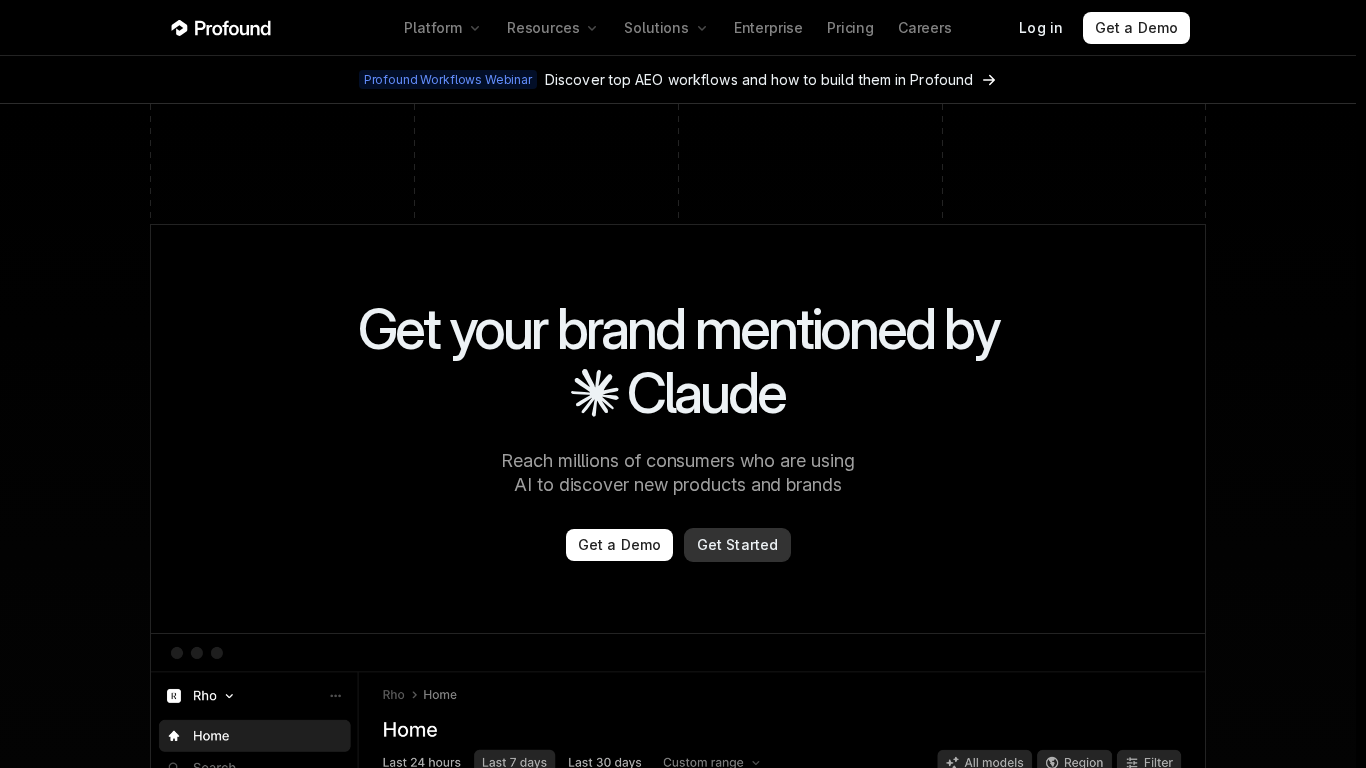
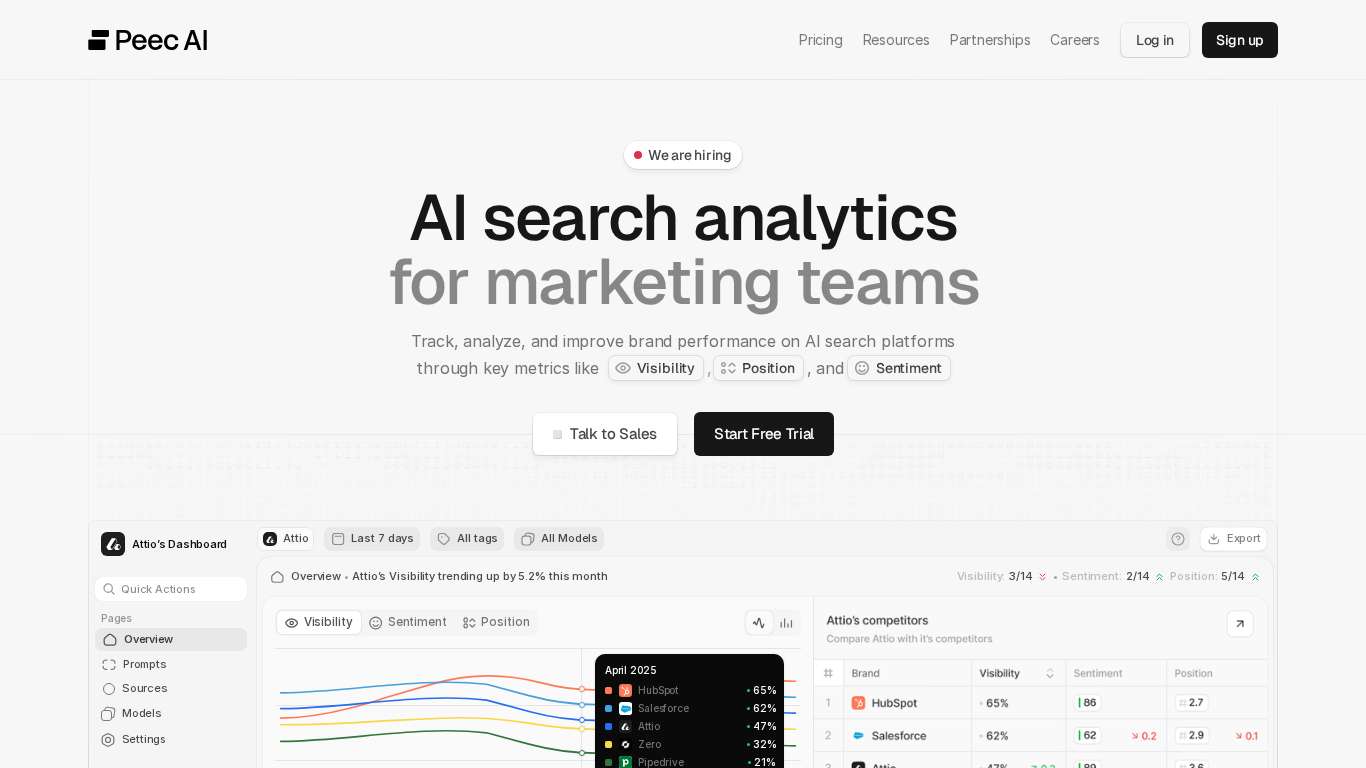
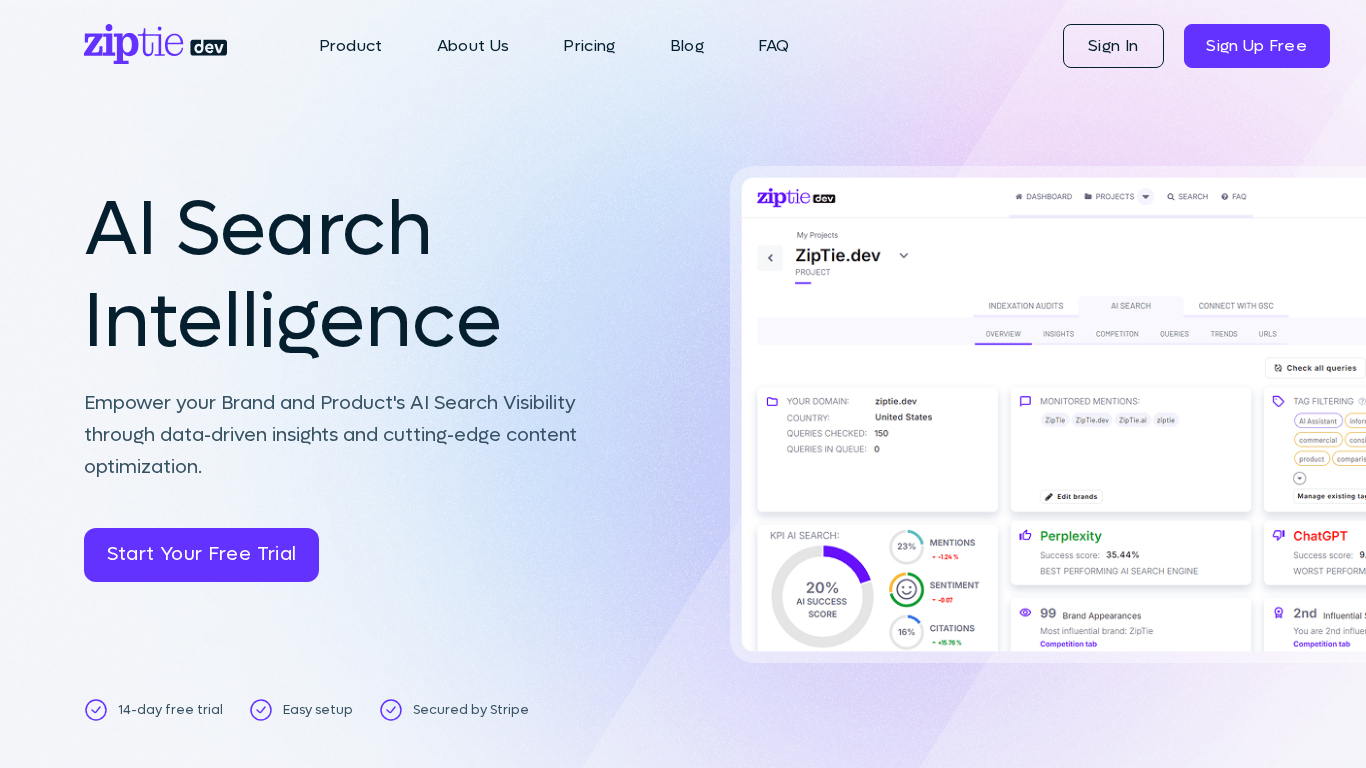
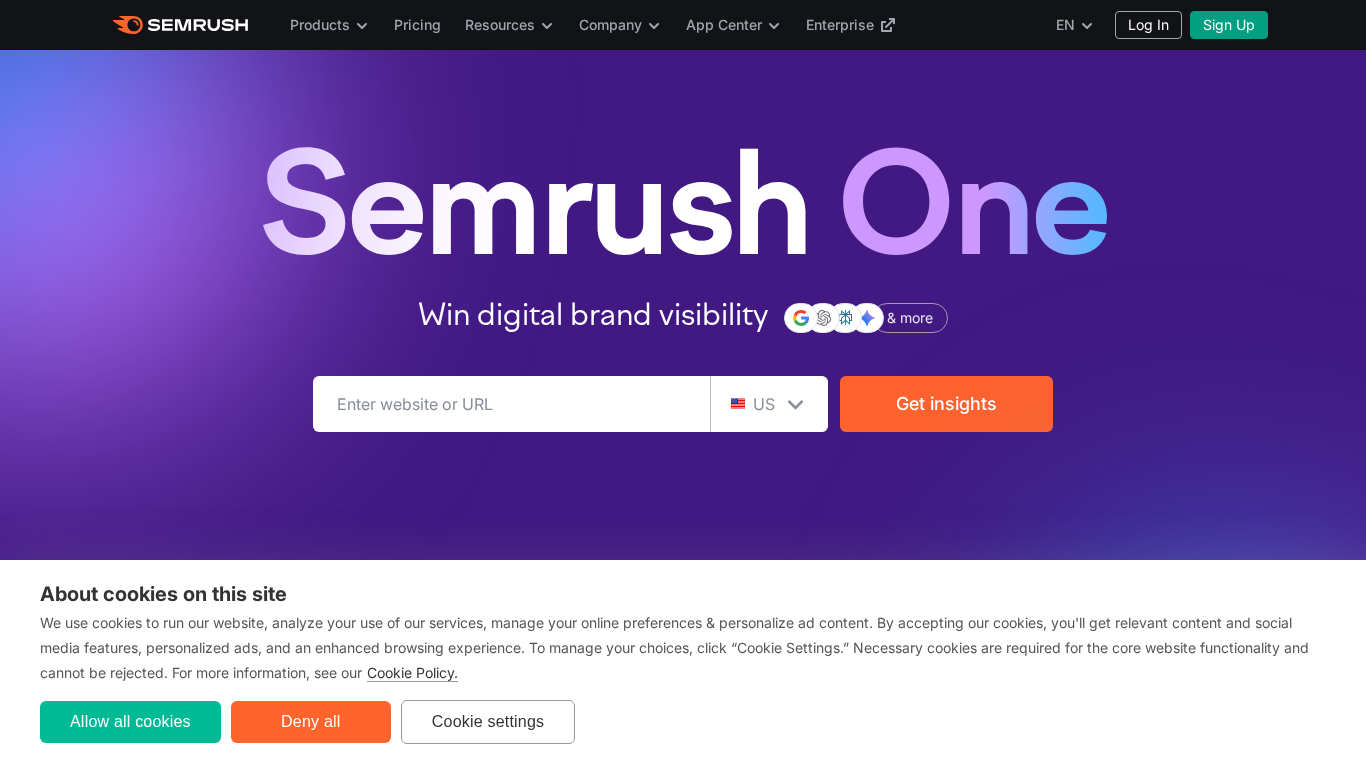
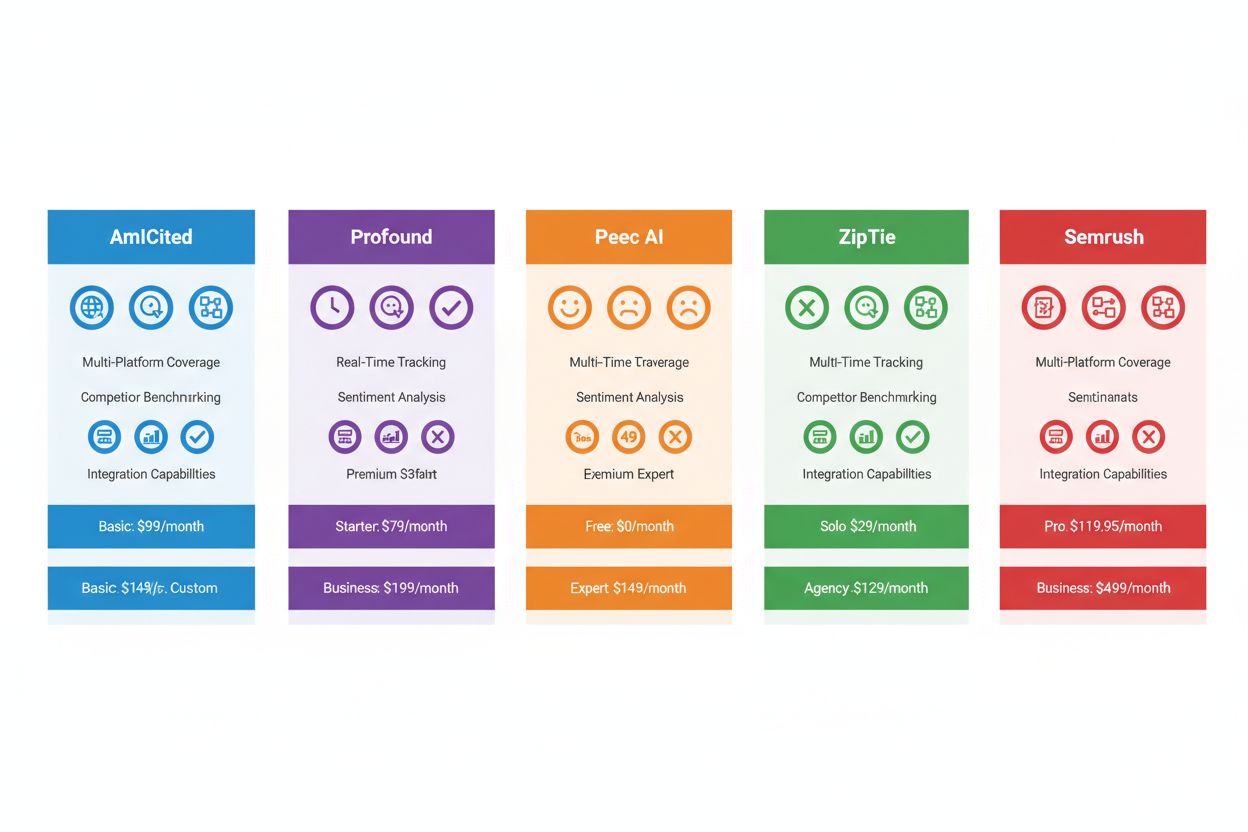
The AI visibility monitoring market includes several notable players, each with distinct strengths and limitations. AmICited stands out as the most comprehensive solution specifically designed for monitoring how your brand appears across GPTs, Perplexity, Google AI Overviews, and other AI answer engines—offering real-time tracking, sentiment analysis, and citation intelligence that directly addresses the unique challenges of AI visibility. Profound provides strong general-purpose monitoring but lacks specialized focus on AI answer engines, making it better suited for traditional search monitoring. Peec AI offers decent AI monitoring capabilities but has limited multi-platform coverage and less sophisticated sentiment analysis. ZipTie focuses primarily on Perplexity monitoring, making it a narrow solution for brands needing broader AI visibility across multiple platforms. Semrush, while powerful for traditional SEO, treats AI monitoring as an add-on feature rather than a core competency, resulting in less depth and fewer actionable insights specific to AI systems. AmICited’s advantage lies in its singular focus on the AI visibility problem—every feature, every data point, and every integration is optimized specifically for understanding and improving how AI systems represent your brand.
| Platform | Best For | Key Features | Pricing |
|---|---|---|---|
| AmICited | Comprehensive AI visibility monitoring | Real-time tracking across GPTs, Perplexity, Google AI; sentiment analysis; citation tracking; competitor benchmarking | Custom pricing |
| Profound | Enterprise-scale monitoring | Multi-platform coverage; AI crawler analytics; content optimization; white-glove service | $499+/month |
| Peec AI | Mid-market AI monitoring | Pitch workspaces; Looker Studio integration; smart suggestions | €89+/month |
| ZipTie | Deep analysis and reporting | AI Success Score; query-level breakdowns; flexible filtering | $99+/month |
| Semrush | Existing Semrush users | AI Toolkit integration; sentiment analysis; market share tracking | $99+/month |
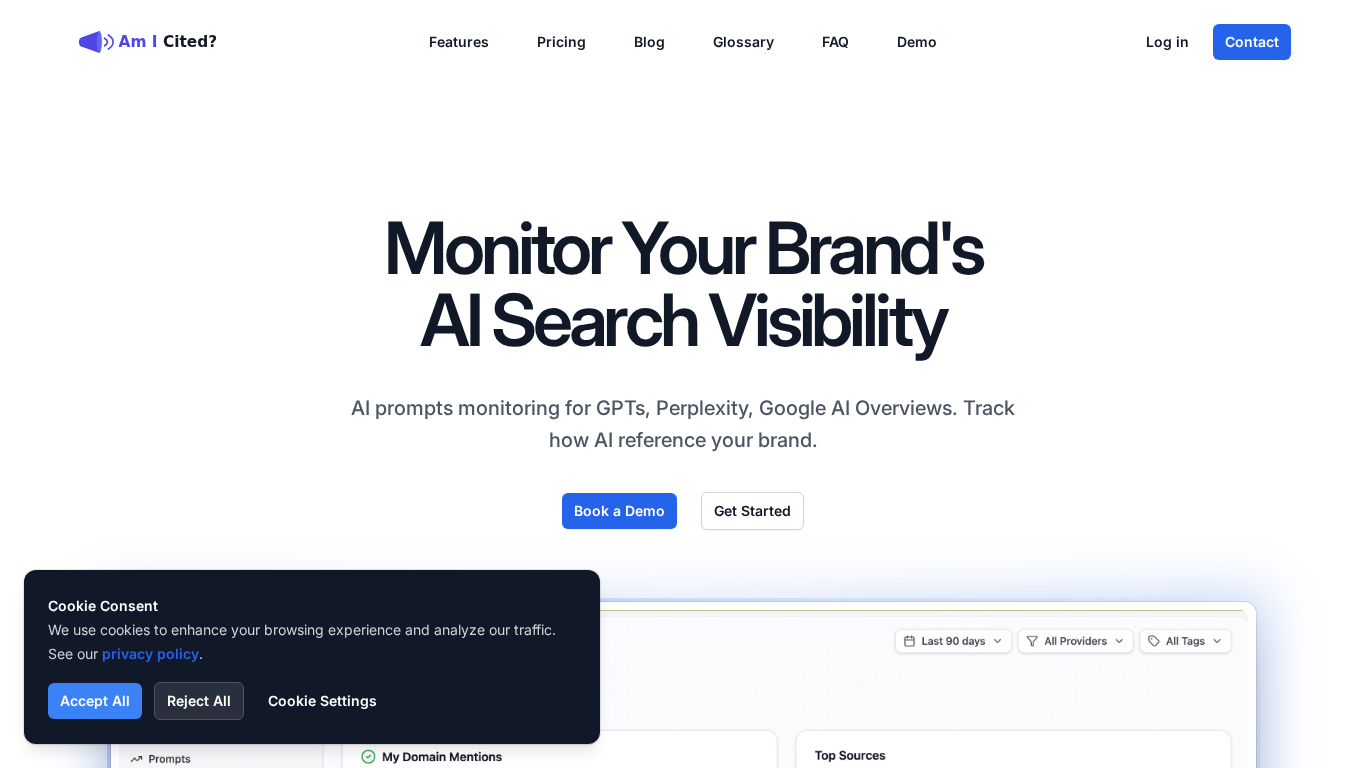
AmICited represents a purpose-built solution for the AI visibility challenge that traditional monitoring platforms simply weren’t designed to address. The platform monitors GPTs, Perplexity, Google AI Overviews, and emerging AI answer engines, providing comprehensive coverage across the platforms reshaping how consumers discover information. Real-time tracking means you’re notified immediately when your brand appears in AI-generated answers, when citations shift, or when competitors gain visibility you’ve lost—enabling rapid response rather than discovering issues weeks later in monthly reports. The sentiment analysis engine understands context in ways generic monitoring tools cannot, distinguishing between positive recommendations (“Company X is the industry leader”) and negative associations (“Company X had a data breach”). Citation tracking reveals exactly which sources AI systems are prioritizing, helping your content team understand what types of content and formats AI systems favor. Actionable insights go beyond raw data, providing specific recommendations for improving visibility—whether that’s optimizing content for AI consumption, addressing factual inaccuracies in AI responses, or identifying new market opportunities. AmICited’s positioning as the dedicated AI visibility platform means continuous evolution as new AI systems emerge, ensuring your monitoring stays relevant as the landscape shifts.
Successful AI visibility monitoring begins with clear objective-setting before you even activate the platform. Define specific KPIs aligned with business goals: Are you optimizing for citation frequency, sentiment quality, market share of voice, or competitive displacement? Establish baseline metrics during your first 2-4 weeks of monitoring, capturing your current visibility state before making optimization changes—this baseline becomes essential for measuring the impact of your efforts. Create a regular review cadence (weekly for fast-moving industries, bi-weekly for most sectors) where relevant stakeholders examine monitoring data and identify action items. Develop response protocols before issues arise: Who owns responding to misrepresentations? What’s the escalation path for serious visibility problems? How quickly can your team act on opportunities? Document these workflows to ensure consistency and speed. Start with your most critical keywords and competitors, then expand monitoring scope as you develop proficiency with the platform and understand which visibility metrics matter most to your business.
One of the most frequent errors is monitoring too many prompts without clear prioritization, resulting in alert fatigue and missed critical insights buried in noise. Ignoring sentiment analysis and focusing only on mention frequency creates a false sense of visibility—being mentioned in negative AI responses can damage your brand more than not being mentioned at all. Failing to monitor competitors leaves you reactive rather than proactive; you’ll discover visibility losses only after they’ve already impacted your market position. Poor data interpretation—such as confusing correlation with causation or misunderstanding why citation patterns shifted—leads to ineffective optimization efforts that waste resources without improving results. Another critical mistake is treating AI visibility monitoring as a one-time audit rather than an ongoing practice; the AI landscape evolves rapidly, and visibility that’s strong today may deteriorate without continuous attention and optimization.
The AI visibility monitoring landscape will continue evolving as new AI systems emerge and existing platforms expand their capabilities and reach. Emerging features will likely include more sophisticated competitive intelligence, predictive analytics that forecast visibility trends before they occur, and deeper integration with content optimization tools that automatically suggest improvements. Voice AI and multimodal AI systems will create new monitoring challenges and opportunities, requiring platforms to track not just text-based AI answers but also how your brand appears in voice search results and image-based AI responses. The competitive advantage will increasingly belong to brands that treat AI visibility monitoring not as a compliance checkbox but as a core component of their marketing strategy, continuously optimizing for how AI systems represent their value proposition. Organizations that establish robust AI visibility monitoring practices now will be positioned to dominate their categories as these systems become the primary discovery mechanism for consumers, making the choice of monitoring platform a strategic decision with long-term competitive implications.
Traditional SEO tracking monitors how your website ranks in search engine results pages (SERPs) for specific keywords. AI visibility monitoring, by contrast, tracks how your brand appears in AI-generated answers across platforms like ChatGPT, Perplexity, and Google AI Overviews. While SEO focuses on link clicks, AI monitoring focuses on mentions, citations, and how AI systems represent your brand in conversational responses.
For most brands, weekly monitoring provides an optimal balance between staying informed and avoiding alert fatigue. Fast-moving industries like technology, finance, or news may benefit from daily monitoring, while slower-moving sectors can use bi-weekly reviews. The key is establishing a consistent cadence that allows your team to identify trends and respond to significant changes before they impact your market position.
Yes, most modern AI visibility monitoring platforms allow you to track multiple competitors within a single dashboard. This competitive benchmarking capability is essential for understanding your relative market position and identifying visibility gaps where competitors are mentioned but you're not. AmICited and other leading platforms support tracking 5-50+ competitors depending on your plan tier.
Start by identifying your 10-15 most important keywords and brand-related queries, then monitor how you appear in AI responses for those terms. Establish baseline metrics during your first 2-4 weeks before making any optimization changes. Focus on understanding the data first, then gradually expand your monitoring scope as you develop proficiency with the platform and understand which metrics matter most to your business.
ROI can be measured through multiple channels: tracking referral traffic from AI platforms using GA4 integration, monitoring how visibility improvements correlate with lead generation, measuring the cost of prevented PR crises from unmonitored misrepresentations, and calculating the value of competitive displacement (when you gain citations your competitors lose). Most brands see measurable ROI within 3-6 months of implementing optimization strategies based on monitoring insights.
Prioritize based on where your target audience spends time. ChatGPT and Google AI Overviews reach the broadest audiences, making them essential for most brands. Perplexity is critical for research-focused audiences and professionals. Microsoft Copilot matters for enterprise B2B companies. Claude is increasingly important for technical and professional services. Start with the top 3-4 platforms most relevant to your industry, then expand as resources allow.
AI visibility monitoring platforms range from $20-$3,000+ per month depending on features and scale. Entry-level tools start around $20-$100/month for basic monitoring of 10-50 prompts. Mid-market solutions typically cost $100-$500/month with more comprehensive features. Enterprise platforms range from $500-$3,000+/month with custom pricing for large-scale monitoring, dedicated support, and advanced integrations.
AmICited is purpose-built specifically for monitoring AI answer engines (GPTs, Perplexity, Google AI Overviews), making it more specialized and effective than general-purpose monitoring tools. Unlike platforms that treat AI monitoring as an add-on feature, AmICited's entire platform is optimized for the unique challenges of AI visibility. This focus delivers superior sentiment analysis, more actionable insights, and faster response to emerging AI platforms compared to competitors.
Discover how your brand appears in AI-powered search results and take control of your AI presence with AmICited's comprehensive monitoring platform.
Compare free and paid AI visibility tools to find the right budget solution for monitoring your brand in ChatGPT, Perplexity, and Google AI. Expert guide with p...
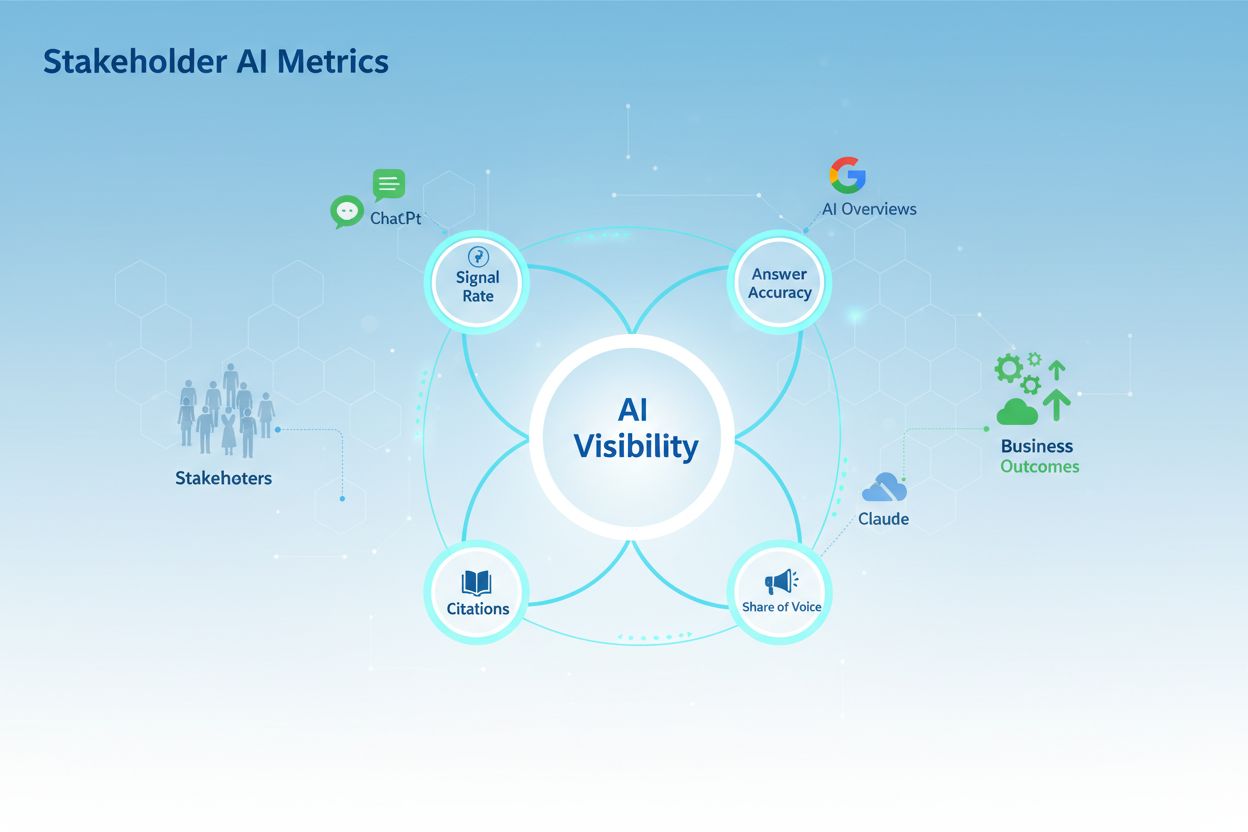
Discover the 4 essential AI visibility metrics stakeholders care about: Signal Rate, Accuracy, Citations, and Share of Voice. Learn how to measure and report AI...
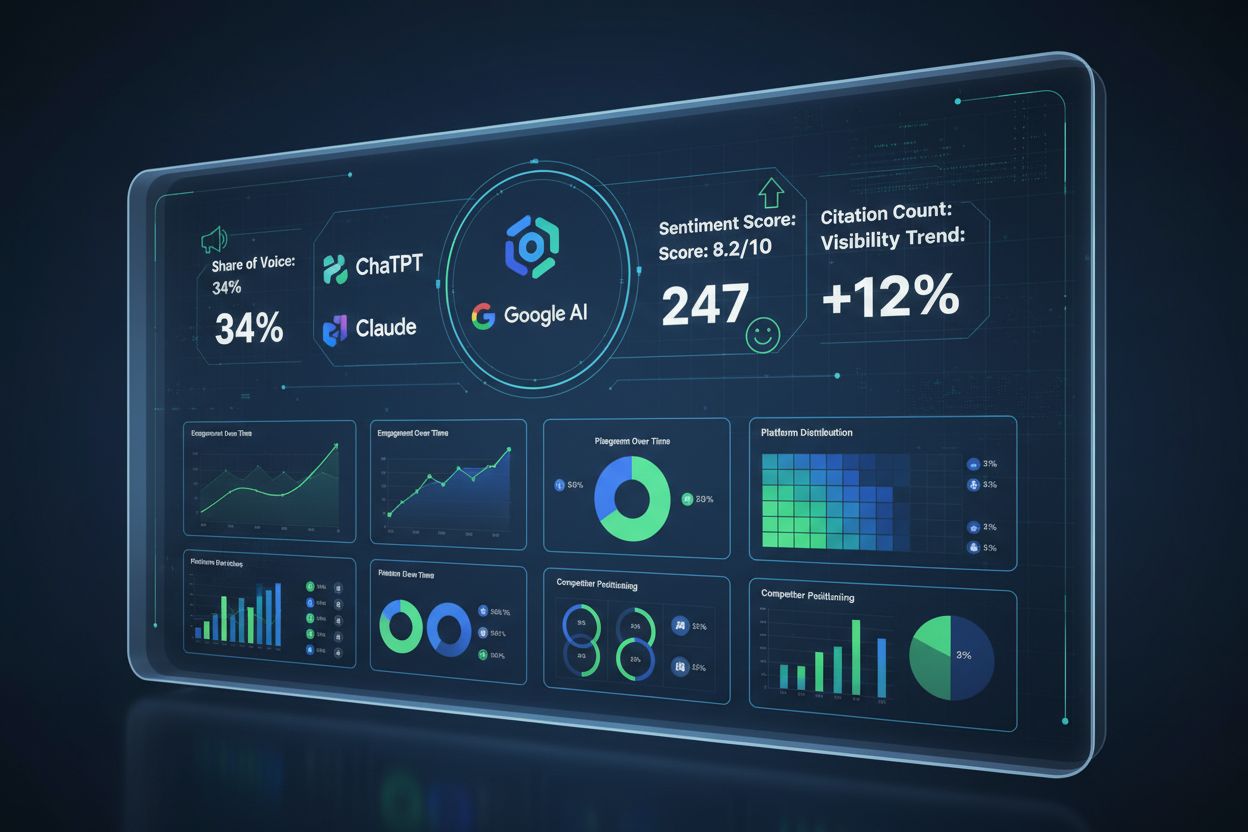
Learn how to automate AI visibility monitoring across ChatGPT, Perplexity, and Google AI. Discover tools, workflows, and best practices for tracking brand menti...