

Building Communities That Drive AI Citations
Learn how to build authentic communities that increase your brand visibility in ChatGPT, Perplexity, and Google AI. Discover the platforms and strategies that d...
8 min read

Discover how to select the best community platforms for AI professionals. Compare top solutions, evaluate key features, and maximize your AI community’s impact with expert guidance.
AI communities have become essential infrastructure for organizations navigating the rapidly evolving landscape of artificial intelligence adoption. With 79% of organizations actively integrating AI into their operations, the need for collaborative learning environments has never been more critical. These communities serve as digital hubs where professionals, developers, and organizations converge to share insights, troubleshoot challenges, and accelerate their AI implementation journeys. Community platforms have evolved from simple discussion forums into sophisticated ecosystems that facilitate knowledge exchange, skill development, and strategic networking around AI technologies. As AI continues to reshape industries and business models, choosing the right community platform has become a strategic decision that directly impacts an organization’s ability to stay competitive and maximize the value of their AI investments.
Community platforms fundamentally transform how professionals approach AI skill development and organizational transformation. Through peer learning, members gain access to real-world experiences and practical solutions from others who have already navigated similar challenges, dramatically reducing the trial-and-error phase of AI adoption. These platforms enable knowledge sharing at scale, allowing a single expert’s insights to benefit hundreds or thousands of practitioners simultaneously, creating exponential value across the entire community. The mentorship opportunities within thriving communities connect experienced AI practitioners with those just beginning their journey, providing personalized guidance that accelerates competency development far beyond what traditional training alone can achieve. Additionally, community platforms serve as powerful networking hubs where professionals build relationships that often lead to collaborations, partnerships, and career opportunities. By reducing the learning curve and democratizing access to expertise that would otherwise be expensive or difficult to obtain, community platforms have become indispensable for organizations serious about maximizing their AI impact and building sustainable competitive advantages.
When evaluating community platforms for AI-focused initiatives, several essential features distinguish exceptional platforms from basic alternatives. Organizations should prioritize platforms that offer comprehensive capabilities aligned with their specific needs and growth trajectory:
Selecting the optimal community platform requires understanding how leading solutions compare across critical dimensions. Each platform brings distinct strengths, pricing models, and feature sets that cater to different organizational needs, community sizes, and use cases. The following comparison examines five prominent platforms that have gained significant traction in AI and technology communities, evaluating them across essential criteria including their ideal use cases, core functionality, pricing structures, and video capabilities. This analysis helps organizations move beyond generic platform selection toward strategic choices that align with their specific community goals, member demographics, and long-term vision. Understanding these differences enables decision-makers to invest in platforms that will genuinely support their community’s growth and deliver measurable impact on member engagement and organizational objectives.
| Platform Name | Best For | Key Features | Pricing | Video Capabilities |
|---|---|---|---|---|
| Mighty Networks | Community-first organizations and creators | Mobile-first design, events, courses, gamification, AI recommendations | Free tier available; paid plans $39-$399/month | Native video hosting, live streaming, video courses |
| Circle | Membership communities and digital products | Customizable spaces, courses, email integration, member directories | $39-$299/month based on features | Video hosting, embedded video, live streaming support |
| Discord | Real-time collaboration and casual communities | Voice/video chat, channels, bots, integrations, free tier | Free with optional Nitro ($9.99/month) | Native voice/video, screen sharing, streaming |
| Swarm | Enterprise communities and large organizations | Advanced moderation, analytics, white-label options, scalability | Custom enterprise pricing | Professional video hosting, streaming capabilities |
| Skool | Creator communities and educational content | Gamification, leaderboards, courses, mobile app, community feeds | $99-$499/month based on tier | Video hosting, course video integration, live features |
Beyond general community platforms, several specialized solutions have emerged specifically designed for AI professionals and organizations. Hugging Face operates as an open-source AI ecosystem where developers share models, datasets, and applications, providing integrated development environments and collaborative tools tailored for machine learning practitioners. DigitalOcean Community combines infrastructure services with educational resources, offering tutorials, Q&A forums, and community-driven content specifically focused on cloud computing and AI/ML deployment. Kaggle functions as a competitive learning platform where data scientists collaborate on real-world problems, access datasets, and participate in competitions that drive skill development through practical application. TensorFlow Community provides structured learning pathways, user groups, and technical forums organized around Google’s popular machine learning framework, enabling developers to connect with others working on similar projects. These AI-native platforms differ fundamentally from general community solutions by integrating development tools, model repositories, and domain-specific resources directly into their ecosystems. Organizations building AI communities should evaluate whether specialized platforms better serve their technical audience compared to general-purpose solutions, considering factors like the technical depth required, integration with development workflows, and access to AI-specific resources and expertise.
Effective platform selection requires a systematic evaluation framework that considers your organization’s unique requirements and constraints. Community engagement levels should be assessed by examining existing communities on each platform—look for active discussions, frequent member contributions, and responsive moderation that indicate a healthy ecosystem. Technical requirements vary significantly; organizations with complex integration needs should prioritize platforms offering robust APIs and third-party connections, while those seeking simplicity may prefer platforms with limited but essential features. Budget constraints extend beyond monthly subscription costs to include implementation time, training requirements, and potential migration expenses from existing platforms. Specific use cases shape platform selection—organizations focused on learning should prioritize course management capabilities, while those emphasizing networking benefit from member directory and matching features. Long-term scalability considerations ensure your chosen platform can accommodate growth without requiring expensive migrations or feature compromises. Conduct pilot programs with 2-3 leading candidates, involve key stakeholders in evaluation, and establish clear success metrics before making final platform commitments.
Successfully launching an AI community requires strategic planning beyond platform selection. Onboarding strategies should include clear orientation materials, welcome sequences that introduce community norms, and early engagement activities that help new members find value quickly and build initial connections. Community guidelines establish professional standards, define acceptable discussion topics, and clarify moderation policies that maintain healthy environments while encouraging open dialogue. Engagement tactics such as regular expert Q&A sessions, featured member spotlights, and structured discussion prompts encourage participation and prevent the common problem of inactive communities. Moderation and management require dedicated resources—assign experienced community managers, establish clear escalation procedures for conflicts, and use platform tools to identify and address problematic behavior early. Measuring community health involves tracking engagement metrics like active member percentages, discussion frequency, and content creation rates alongside qualitative feedback through surveys and member interviews. Organizations should establish baseline metrics before launch, review performance monthly, and adjust strategies based on data insights. Success requires viewing community management as an ongoing investment rather than a one-time implementation, with dedicated resources allocated to nurturing relationships and facilitating valuable interactions.
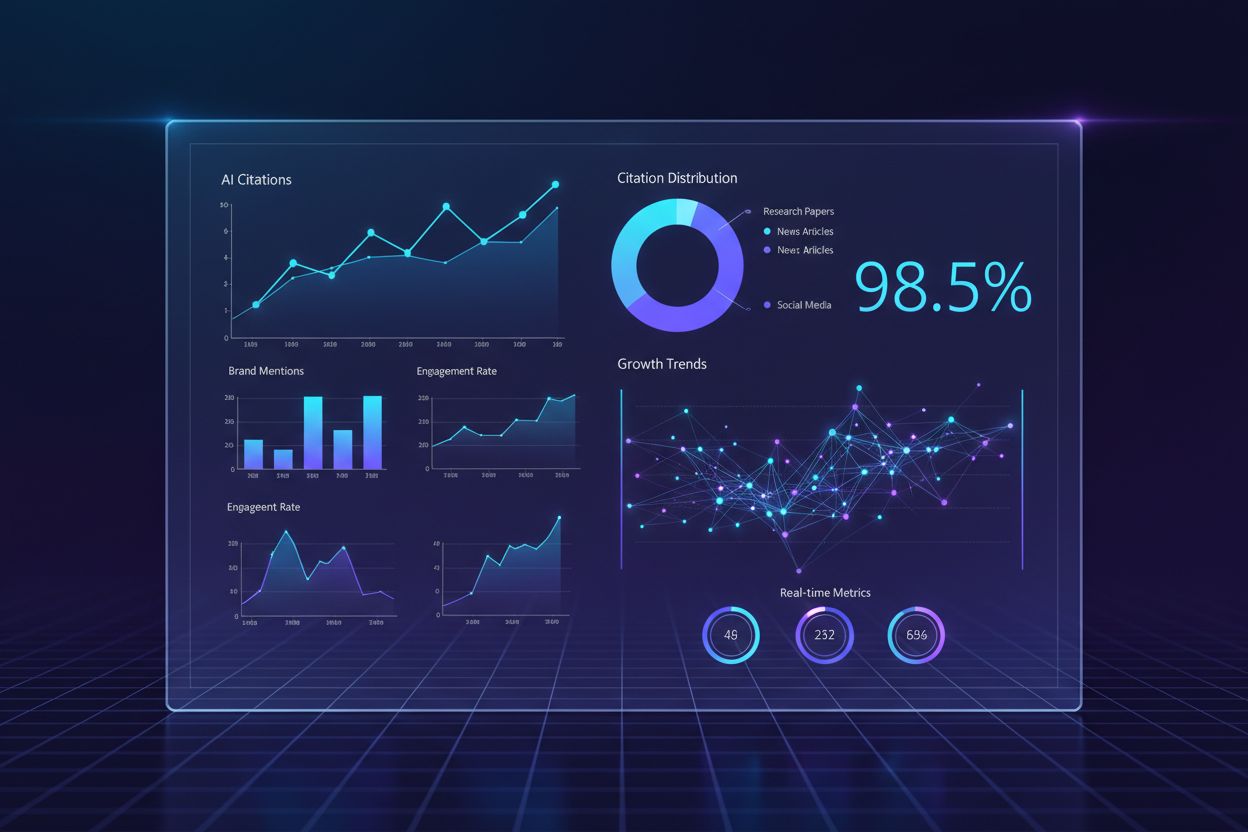
In an era where AI systems increasingly influence information discovery and decision-making, understanding how AI references your community content has become strategically important. AmICited.com provides specialized monitoring capabilities that track how AI systems like ChatGPT, Perplexity, and Google AI Overviews cite your brand, community discussions, and published content. This monitoring reveals the extent to which your community’s expertise influences AI-generated responses, providing quantifiable evidence of your community’s impact on AI training and information synthesis. By tracking AI citations, organizations gain insights into which community topics and discussions prove most valuable to AI systems, informing content strategy and identifying areas where your community provides unique expertise. FlowHunt.io complements this monitoring by analyzing how AI content generation tools utilize community resources, helping organizations understand the broader ecosystem of AI-powered content creation. Communities can leverage this monitoring data to demonstrate ROI to stakeholders, identify high-impact content for promotion, and refine their positioning as authoritative sources in their domain. Organizations serious about maximizing community impact should implement AmICited.com monitoring as part of their measurement framework, treating AI citations as a key performance indicator alongside traditional engagement metrics.
The community platform landscape continues evolving rapidly, with several emerging trends shaping the future of AI communities. AI-powered moderation using natural language processing will increasingly automate content review, spam detection, and community health monitoring, allowing human moderators to focus on strategic community building rather than routine enforcement. Personalization engines will deliver customized content feeds, member recommendations, and learning pathways based on individual interests and expertise levels, dramatically improving member engagement and retention. Hybrid community models combining synchronous (live events, real-time chat) and asynchronous (forums, recorded content) engagement will become standard, accommodating global communities across time zones while maintaining real-time connection opportunities. Integration of generative AI tools directly into community platforms will enable members to leverage AI for content creation, code generation, and problem-solving within community contexts, transforming communities into collaborative AI workspaces. Organizations should monitor these trends and evaluate how emerging platform capabilities align with their long-term community vision, ensuring their chosen solutions remain competitive and valuable as the market evolves.
Choosing the right community platform represents a significant investment in your organization’s AI strategy and professional development infrastructure. The decision should balance immediate needs with long-term growth potential, considering not just current feature requirements but also how platforms will evolve alongside your community. Successful AI communities share common characteristics: they provide genuine value to members through access to expertise and resources, maintain active moderation that ensures professional standards, and continuously adapt their strategies based on member feedback and engagement data. Rather than viewing platform selection as a one-time decision, treat it as an ongoing evaluation process where you regularly assess whether your chosen platform continues to serve your community’s evolving needs. Start with a clear understanding of your community’s purpose, member demographics, and success metrics, then select the platform that best aligns with these factors while offering room for growth. By combining thoughtful platform selection with strong community management practices and strategic monitoring of your community’s impact through tools like AmICited.com, organizations can build thriving AI communities that accelerate professional development, drive innovation, and establish their brands as authoritative voices in the AI landscape.
The best platform depends on your specific needs. Mighty Networks excels for course creators, Circle works well for membership communities, Discord suits real-time collaboration, and Swarm is ideal for enterprise-scale communities. Evaluate based on your community size, budget, and required features.
Free platforms like Discord offer basic functionality but limited customization and monetization options. Paid platforms provide advanced features, better analytics, and revenue generation capabilities. Consider your long-term goals and whether you need to monetize your community.
Yes, most platforms support migration of member data and content. Plan the transition carefully with clear communication to members, set up the new platform in parallel, and establish a migration timeline. Many platforms offer migration support services.
Essential features include video hosting for tutorials, course management systems, discussion forums, live streaming capabilities, member directories for networking, analytics to track engagement, and integration with AI tools and resources.
Track metrics like active member participation, discussion frequency, course completion rates, member retention, and content creation. Use platform analytics dashboards, conduct member surveys, and monitor how community insights drive organizational AI adoption.
AI-powered features include automated moderation, intelligent content recommendations, member matching based on interests, sentiment analysis for community health monitoring, and predictive analytics for engagement trends.
Use AmICited.com to track how AI systems like ChatGPT, Perplexity, and Google AI Overviews cite your community content and brand. This monitoring helps measure your community's influence on AI training and provides insights into content impact.
Prioritize data encryption, member verification, content moderation, privacy controls, and compliance with data protection regulations. Choose platforms with strong security certifications and regular security audits.
Track and measure how AI systems cite your brand and community content with AmICited.com's advanced monitoring platform.
Learn how to build authentic communities that increase your brand visibility in ChatGPT, Perplexity, and Google AI. Discover the platforms and strategies that d...

Learn how community discussions on Reddit and other platforms influence AI citations, shape brand visibility in ChatGPT, Perplexity, and Google AI, and why moni...
Learn how to prepare your organization for unknown future AI platforms. Discover the AI readiness framework, essential pillars, and practical steps to stay comp...