
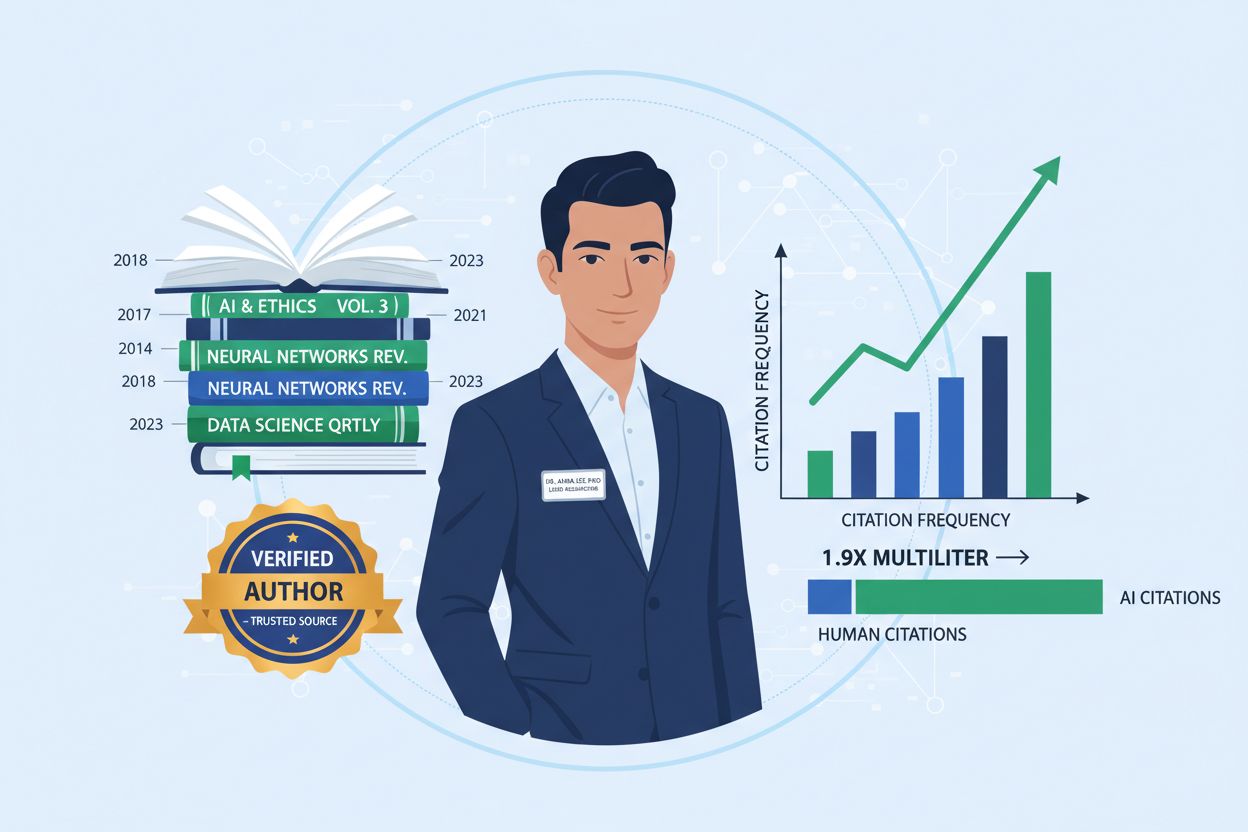
Author Bylines and AI: Does Authorship Improve Citation Rates?
Discover how author bylines impact AI citations. Learn why named authorship receives 1.9x more citations from ChatGPT and Perplexity, and how to optimize byline...
10 min read
Learn how the meta-citation effect works and why citing authoritative sources improves your AI visibility. Discover citation strategies that boost your brand’s credibility with LLMs.
The meta-citation effect represents a bidirectional trust signal that occurs when your content cites authoritative sources, simultaneously improving your own citation credibility. This phenomenon operates on a fundamental principle: when you reference high-quality, trustworthy sources, search engines and AI systems interpret your content as more reliable and evidence-based. The effect works in reverse as well—when authoritative sources cite your work, your credibility amplifies exponentially. Understanding this bidirectional citation relationship is essential for any content creator seeking to maximize their visibility in AI-driven search results and citation networks.
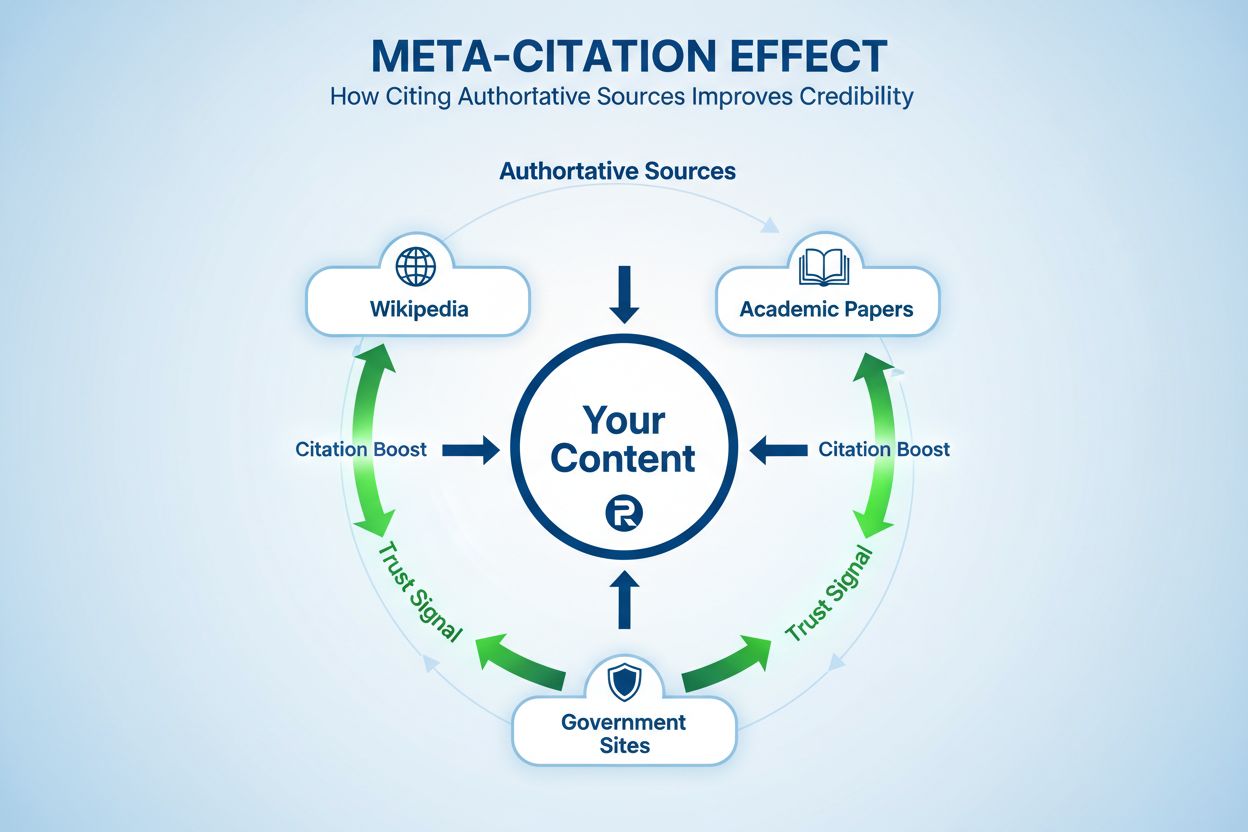
The citation landscape operates through a sophisticated citation influence network where sources are stratified into distinct authority tiers, each carrying different weight in determining your content’s trustworthiness. These tiers function as a hierarchical system where citations from higher-tier sources provide substantially more credibility boost than lower-tier citations. The effectiveness of your citations depends heavily on where they originate, with Tier 1 sources (academic institutions, government agencies, established news organizations) providing the strongest authority signals.
| Source Tier | Authority Level | Citation Effectiveness | Examples |
|---|---|---|---|
| Tier 1 | Highest Authority | 75-98% effectiveness | Academic journals, government databases, major news outlets |
| Tier 2 | Medium Authority | 50-70% effectiveness | Industry publications, established blogs, professional associations |
| Tier 3 | Lower Authority | 30-55% effectiveness | Social media, user-generated content, newer websites |
Understanding this tiered system allows you to strategically select sources that maximize the meta-citation effect, ensuring your content benefits from the strongest possible authority signals available in your industry.
Citation effectiveness isn’t determined by quantity alone—five specific factors determine how much weight each citation carries in your overall credibility profile. These factors work together to create a comprehensive authority assessment that AI systems use when evaluating your content’s trustworthiness and citation potential.
Authority (30% weight): The source’s domain authority, publication history, and recognition within its field. Citing sources with established expertise in your topic area provides the strongest credibility boost.
Recency (25% weight): How current the cited source is relative to your content’s publication date. Recent citations signal that you’re building on the latest research and developments, though foundational sources retain value.
Cross-Validation (20% weight): Whether multiple authoritative sources corroborate the same information you’re citing. When several Tier 1 sources agree on a point, citing any of them strengthens your argument exponentially.
Schema Accuracy (15% weight): How properly you’ve formatted and structured your citations using standard markup (like schema.org). Correctly formatted citations are more easily recognized and weighted by AI systems.
Contextual Fit (10% weight): How directly relevant the cited source is to your specific topic and argument. Citations that perfectly match your content’s context provide more value than tangentially related sources.
When you cite authoritative sources, you’re not just borrowing their credibility—you’re actively participating in a bidirectional trust exchange that improves your own citation odds. Research demonstrates that content citing Tier 1 sources shows a 40% improvement in citation frequency compared to content without such citations. This improvement occurs because AI systems recognize your commitment to citation integrity and source credibility, making your content more likely to be cited by other authoritative sources. The mechanism is straightforward: when you demonstrate that you value quality sources through your outbound links, AI systems and human researchers perceive your content as more trustworthy and citation-worthy. This creates a virtuous cycle where better citations lead to more citations, exponentially increasing your visibility in AI-driven discovery systems.
Building an effective meta-citation strategy begins with deliberately mapping your content to Tier 1 sources before you start writing. Identify 3-5 authoritative sources in your field—such as peer-reviewed journals, government research databases (NIH, CDC, EPA), or established industry leaders (Harvard Business Review, McKinsey, Stanford research centers)—and structure your content around citing these sources. When citing Tier 1 sources, go beyond surface-level references by explaining why the source matters and how it supports your argument, which signals to AI systems that you’ve genuinely engaged with authoritative material. For example, if writing about AI trends, citing research from OpenAI, DeepMind, or academic AI labs carries substantially more weight than citing general tech blogs. Create a citation hierarchy within your content where your most important claims are supported by Tier 1 sources, secondary points reference Tier 2 sources, and supporting details can use Tier 3 sources. This strategic layering ensures that AI systems recognize your content’s foundation as credible while maintaining natural readability. Additionally, ensure your citations are properly formatted with complete metadata (author, publication date, source URL) so AI systems can accurately parse and weight them.
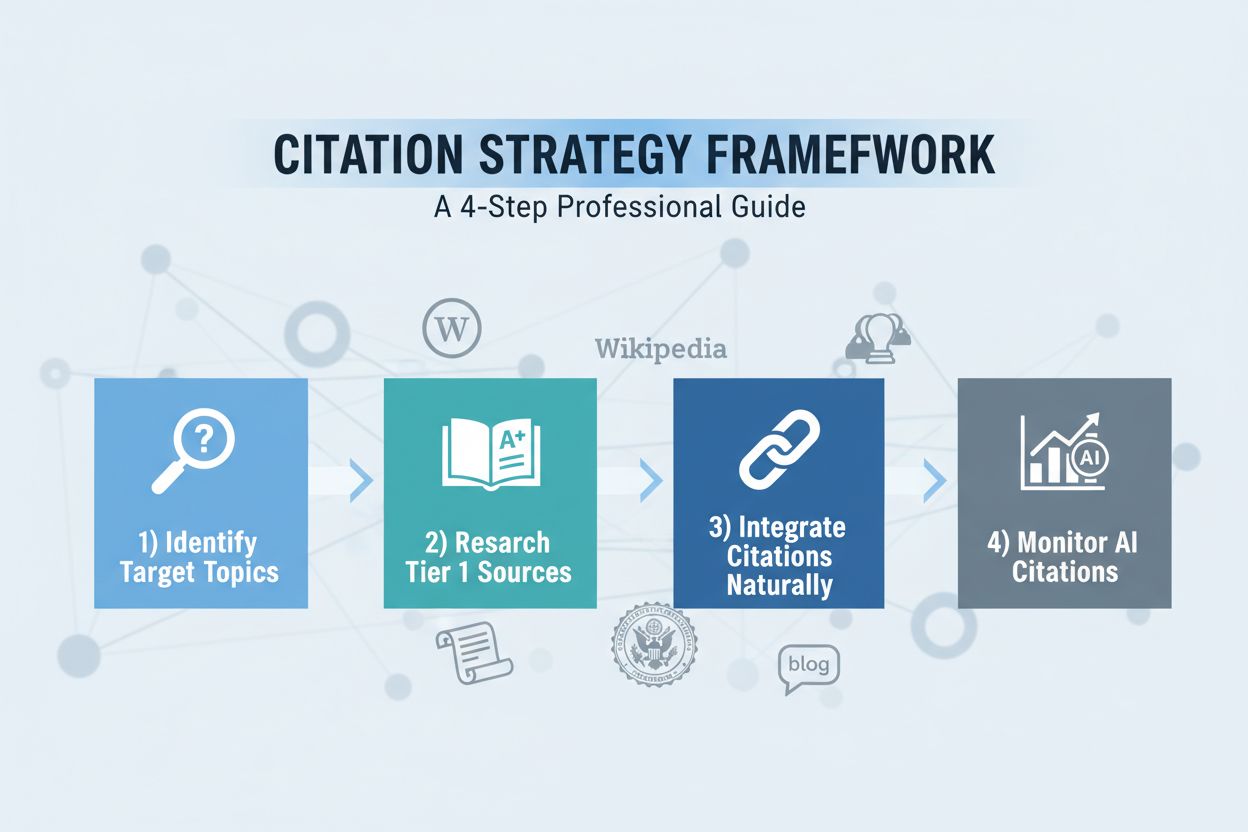
Measuring the success of your meta-citation strategy requires monitoring specific metrics that reveal how your citation choices impact your visibility and credibility. Track the citation frequency of your content over time, noting whether articles with higher proportions of Tier 1 citations receive more citations themselves—this directly demonstrates the meta-citation effect in action. Monitor your AI visibility metrics across platforms like Google Scholar, Semantic Scholar, and industry-specific citation databases to see how your citation patterns influence your discoverability. Measure the domain authority growth of your publishing platform, as consistent citation of authoritative sources contributes to overall domain credibility improvements. Additionally, track inbound citation sources to identify whether authoritative sources are citing your work more frequently after implementing your meta-citation strategy. Create a simple spreadsheet documenting each piece of content, its Tier 1 citation count, publication date, and subsequent citation frequency—this data reveals the direct correlation between your citation choices and your citation success. Review these metrics quarterly to identify which citation patterns generate the strongest results for your specific industry and audience.
Implementing a meta-citation strategy is only effective if you can measure its real-world impact on your content’s visibility and credibility. AmICited.com provides comprehensive AI citation monitoring that tracks how your content performs across AI systems, search engines, and academic databases—giving you clear visibility into whether your meta-citation strategy is working. The platform automatically monitors where your content is cited, which sources are citing you, and how your citation patterns influence your overall authority score. Rather than manually tracking citations across dozens of platforms, AmICited.com consolidates this data into actionable insights, showing you exactly which citation strategies generate the strongest results for your brand. With real-time alerts and detailed analytics, you can see the direct correlation between citing authoritative sources and receiving citations from authoritative sources, validating your meta-citation investment. By using AmICited.com to monitor your citation ecosystem, you transform citation tracking from a guessing game into a data-driven strategy that continuously improves your content’s visibility and credibility in AI-driven discovery systems.
The meta-citation effect is a bidirectional trust signal that occurs when your content cites authoritative sources, which simultaneously improves your own citation credibility. When you reference high-quality sources, AI systems interpret your content as more reliable, and when authoritative sources cite your work, your credibility amplifies exponentially. This effect is essential for maximizing visibility in AI-driven search results.
AI engines evaluate sources through five key factors: Authority (30% weight), Recency (25%), Cross-Validation (20%), Schema Accuracy (15%), and Contextual Fit (10%). Sources with established expertise, current information, corroboration from multiple sources, proper formatting, and direct relevance to your topic receive the highest evaluation scores.
Tier 1 sources (academic journals, government databases, major news outlets) have 75-98% citation effectiveness. Tier 2 sources (industry publications, established blogs, professional associations) have 50-70% effectiveness. Tier 3 sources (social media, user-generated content, newer websites) have 30-55% effectiveness. Higher-tier sources provide substantially more credibility boost.
Research demonstrates that content citing Tier 1 sources shows a 40% improvement in citation frequency compared to content without such citations. This improvement occurs because AI systems recognize your commitment to citation integrity and source credibility, making your content more likely to be cited by other authoritative sources.
Map your content to Tier 1 sources before writing, identify 3-5 authoritative sources in your field, explain why each source matters, create a citation hierarchy with important claims supported by Tier 1 sources, and ensure citations are properly formatted with complete metadata. This strategic approach ensures AI systems recognize your content's credible foundation.
Track citation frequency over time, monitor AI visibility metrics across platforms like Google Scholar and Semantic Scholar, measure domain authority growth, track inbound citation sources, and create a spreadsheet documenting content, Tier 1 citation count, and subsequent citation frequency. Review these metrics quarterly to identify which citation patterns generate the strongest results.
Yes, source quality significantly outweighs quantity. One citation from a Tier 1 source provides more credibility boost than five citations from Tier 3 sources. AI systems prioritize the authority and relevance of sources over the total number of citations, making strategic source selection more important than citation volume.
AmICited.com provides comprehensive AI citation monitoring that tracks how your content performs across AI systems, search engines, and academic databases. The platform automatically monitors where your content is cited, which sources are citing you, and how your citation patterns influence your authority score, consolidating data into actionable insights.
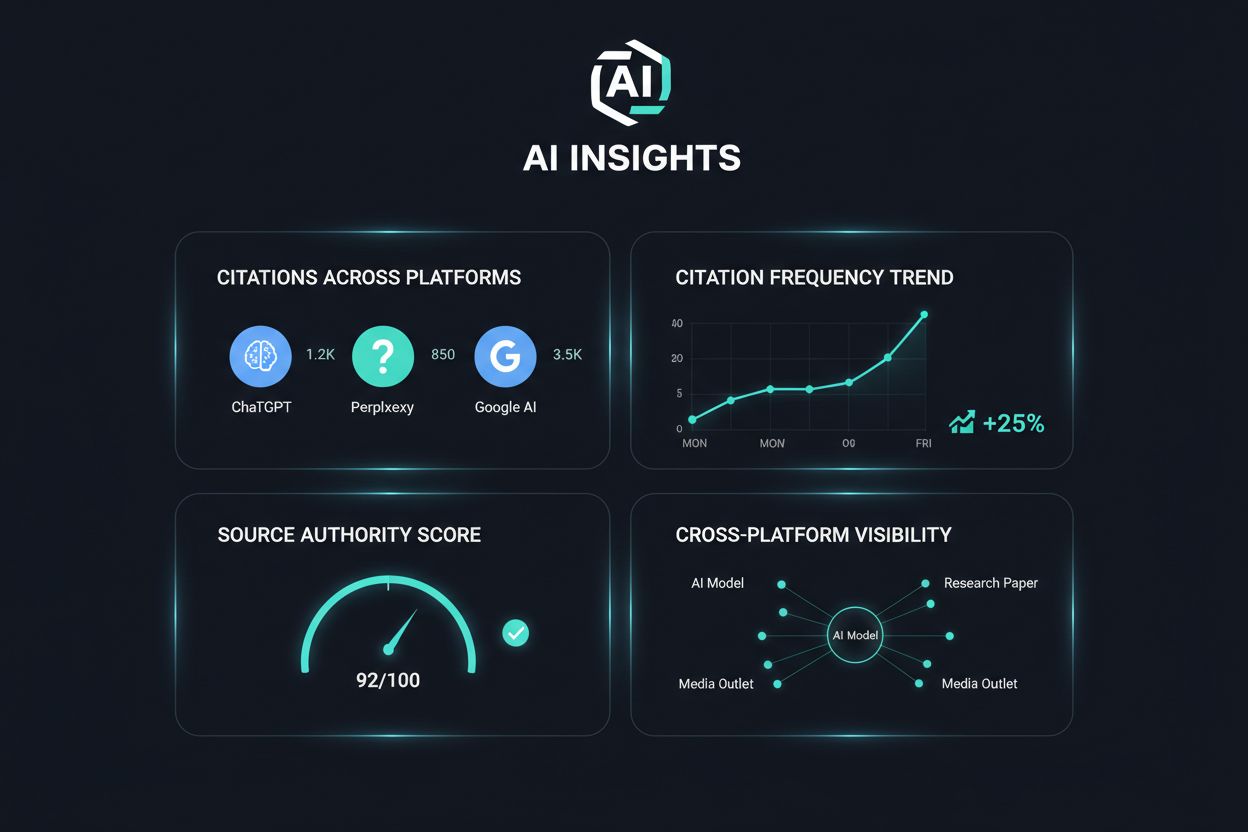
AmICited.com tracks your brand mentions in ChatGPT, Perplexity, Google AI Overviews, and other AI systems. Understand your citation patterns and optimize your content strategy for maximum AI visibility.
Discover how author bylines impact AI citations. Learn why named authorship receives 1.9x more citations from ChatGPT and Perplexity, and how to optimize byline...

Learn how citation order affects AI visibility, brand credibility, and user trust in ChatGPT, Perplexity, and Google AI Overviews. Understand citation patterns ...
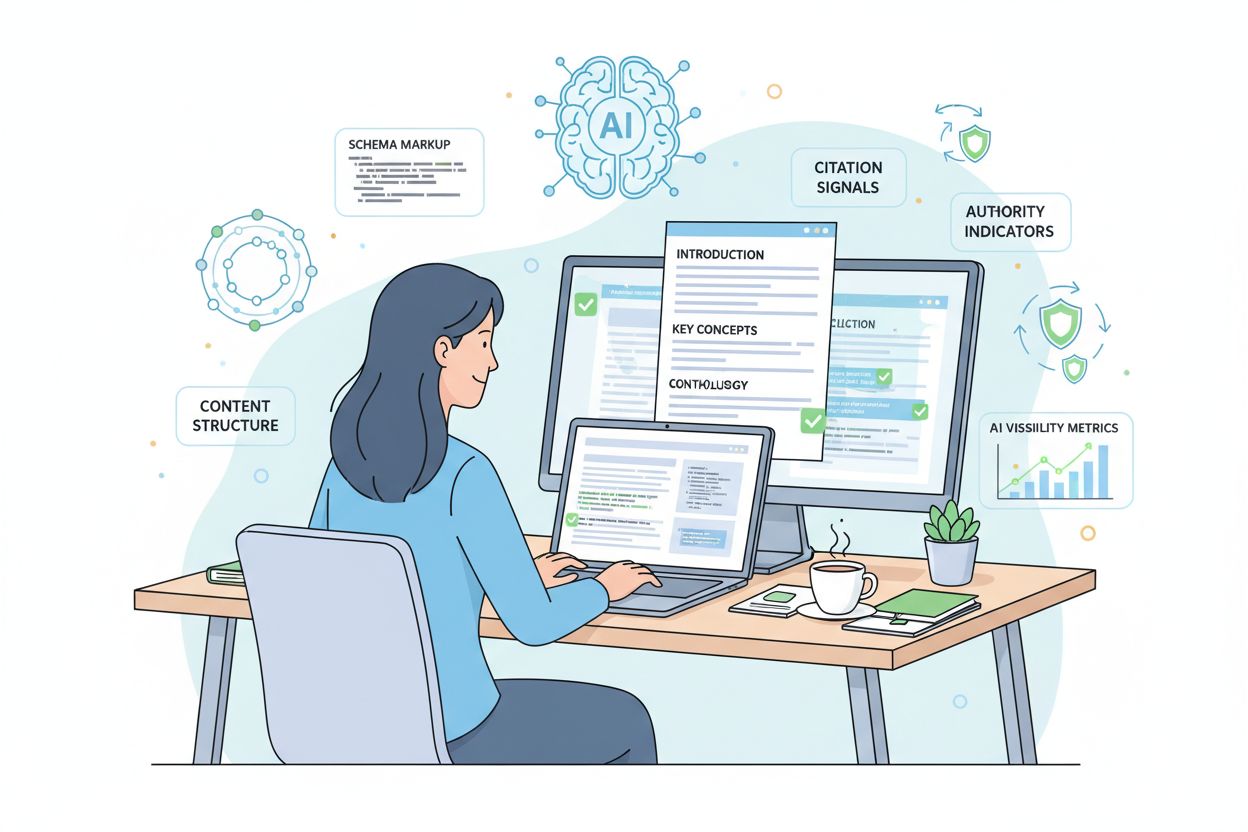
Learn what makes content citation-worthy for AI systems like ChatGPT, Perplexity, and Google AI Overview. Discover the key characteristics, optimization strateg...