Claude AI Optimization: How to Appear in Anthropic's Responses
Master Claude AI optimization and increase your brand visibility in Anthropic’s responses. Learn citation strategies, technical requirements, and cross-platform authority building for maximum AI visibility.
Published on Jan 3, 2026.Last modified on Jan 3, 2026 at 3:24 am
Understanding Claude’s Constitutional AI Framework
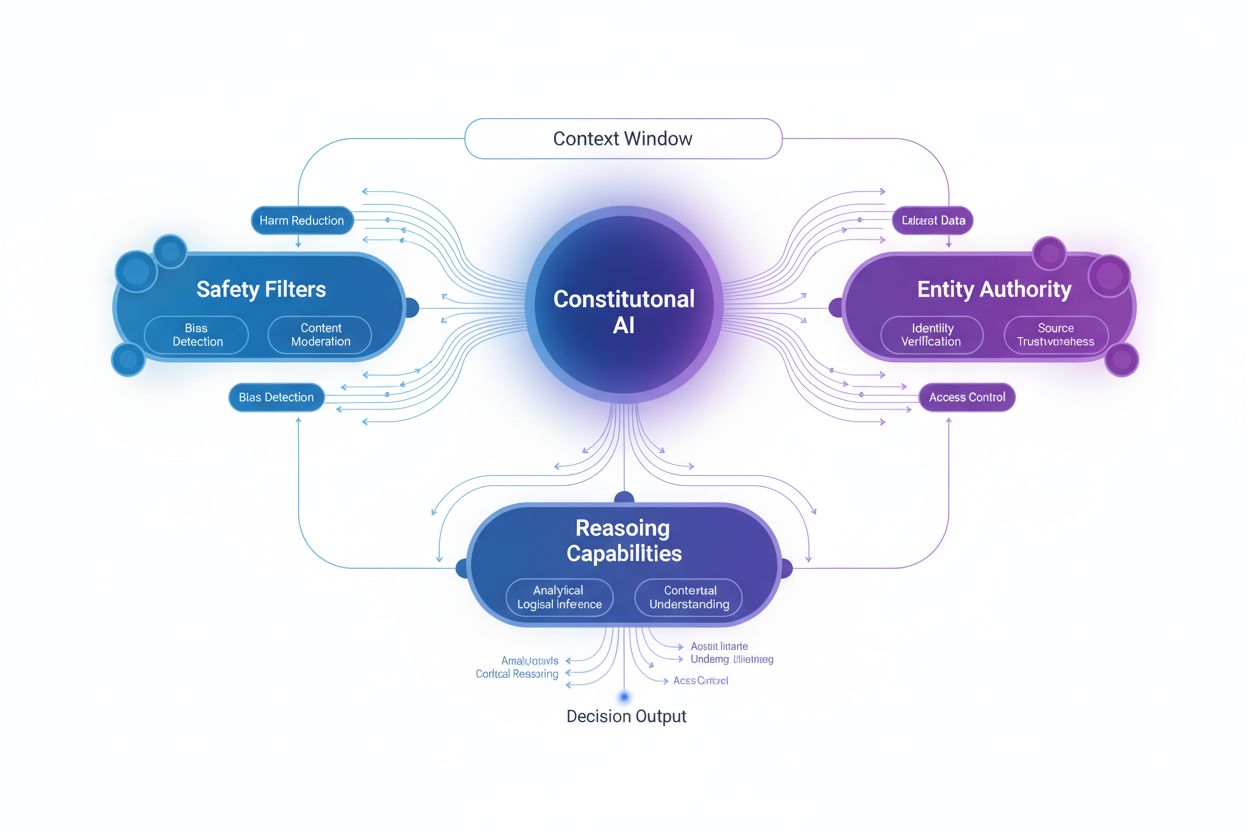
Claude’s architecture fundamentally differs from other AI systems through its Constitutional AI framework—a training methodology that prioritizes safety, neutrality, and analytical rigor over engagement metrics or popularity signals. Unlike ChatGPT, which uses Reinforcement Learning from Human Feedback (RLHF) to optimize for user satisfaction and conversational flow, Claude is trained with explicit constitutional principles that guide its behavior toward being helpful, harmless, and honest. This distinction has profound implications for content optimization: Claude actively penalizes promotional language, unsupported claims, and biased perspectives, while rewarding comprehensive analysis, methodological transparency, and multi-perspective examination.
Claude’s Constitutional AI training means the model operates with explicit, auditable principles rather than implicit patterns learned from human feedback. This creates a measurable difference in citation behavior: Claude cites sources more conservatively but with higher confidence in accuracy. The model’s 200,000+ token context window enables it to process entire research papers, financial reports, or comprehensive documentation without losing context—a capability that fundamentally changes how it evaluates and references content.
The practical implication for content creators is clear: Claude rewards depth over brevity, analysis over assertion, and transparency over persuasion. When optimizing for Claude citations, your content must read like a trusted research report or academic analysis rather than marketing material. The model’s safety training means it actively scrutinizes claims for bias, unsupported assertions, and potential harm—making methodological rigor and evidence-based reasoning non-negotiable for citation-worthy content.
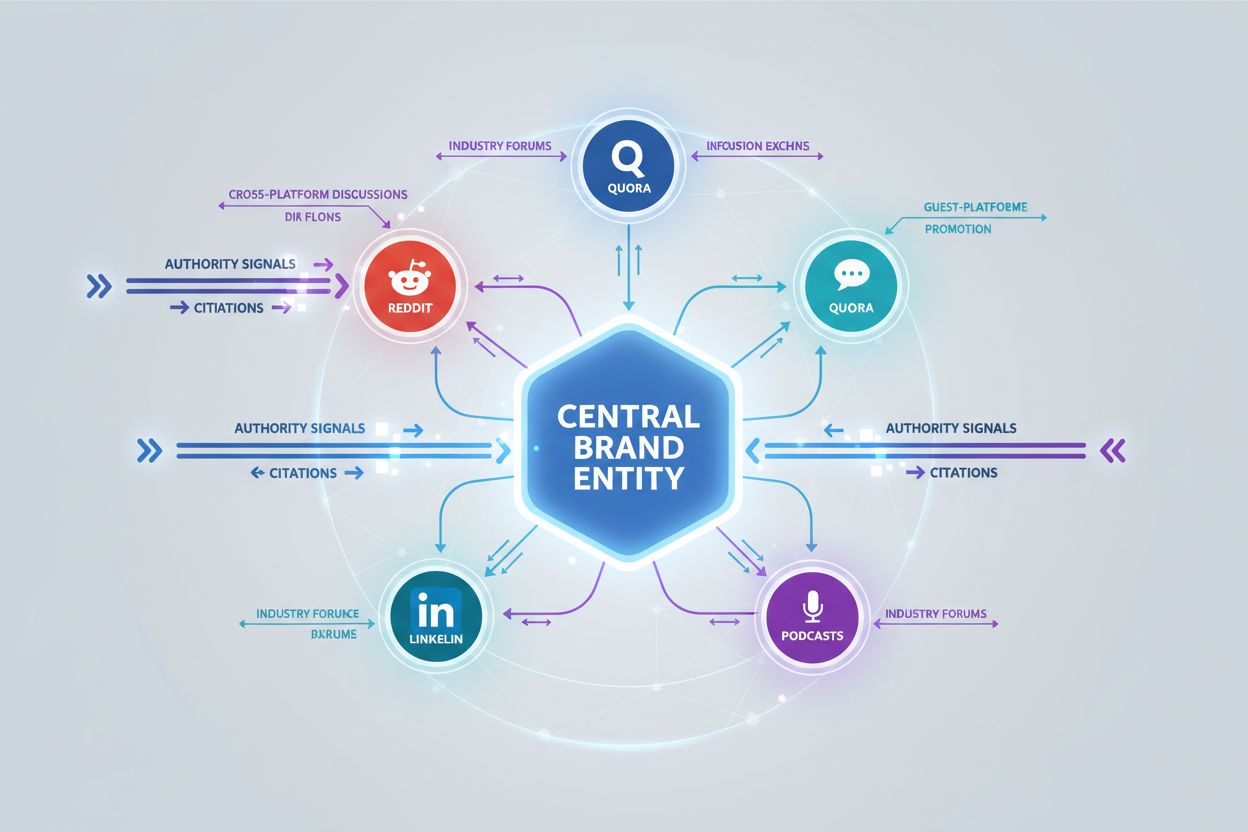
Entity authority represents another critical distinction. Claude’s algorithm verifies entities through consistent cross-platform presence, structured data implementation, and external citations. Unlike Google’s PageRank algorithm, which aggregates backlinks, Claude evaluates whether your organization is recognized as authoritative across multiple independent platforms. This means a brand with strong presence on Reddit, Quora, LinkedIn, and industry forums will receive preferential treatment in Claude’s knowledge synthesis, even if their website has fewer backlinks than competitors.
Core Claude Ranking Factors & Citation Mechanics
Claude’s source selection process operates through a sophisticated evaluation framework that weighs multiple signals simultaneously. Understanding these ranking factors is essential for developing an effective optimization strategy. Research indicates that Claude prioritizes five core factors when deciding whether to cite your content: entity authority (40%), source credibility (30%), logical structure (20%), and ethical balance (10%). These weights differ significantly from traditional SEO, where domain authority and backlinks dominate ranking calculations.
Claude’s Core Ranking Factors
Ranking Factor
Weight
What It Measures
Optimization Techniques
Entity Authority
40%
Verified presence and citations across authoritative platforms
Multi-platform presence, consistent NAP data, cross-platform verification, expert positioning
Entity authority operates as the foundation of Claude’s ranking system. The algorithm verifies whether your organization is recognized as a credible source across multiple independent platforms. This verification process examines your presence on Reddit, Quora, LinkedIn, industry forums, and podcasts—platforms where authentic expert-to-expert conversations occur. A brand consistently cited and discussed across these platforms signals genuine authority to Claude’s evaluation system, resulting in preferential treatment when synthesizing responses.
Source authority and credibility represent the second-largest ranking factor. Claude evaluates author credentials, institutional affiliations, publication history, and peer recognition. Content authored by recognized experts, published in peer-reviewed journals, or backed by established institutions receives significantly higher citation weight. This differs fundamentally from Google’s approach, which prioritizes domain authority regardless of individual author credentials.
Logical structure and clarity constitute the third ranking factor. Claude’s analytical capabilities mean it actively evaluates whether your content demonstrates rigorous thinking. Well-organized arguments with clear reasoning chains, explicit methodology, and transparent evidence presentation rank higher than content lacking structural coherence. The model recognizes and rewards intellectual honesty—including acknowledgment of limitations, uncertainties, and areas requiring further research.
Ethical and balanced perspective represents the final ranking factor. Claude’s Constitutional AI training means the model actively evaluates whether content presents multiple viewpoints, acknowledges ethical implications, and avoids one-sided advocacy. Content that examines issues from multiple stakeholder perspectives, discusses potential risks alongside benefits, and maintains intellectual humility receives preferential treatment in citation decisions.
The practical implication is significant: traditional SEO strategies focused on keyword density, backlink acquisition, and domain authority are largely ineffective for Claude optimization. Instead, successful strategies emphasize research-grade content, cross-platform authority building, methodological transparency, and balanced analysis. Organizations willing to invest in genuine expertise development and multi-platform presence will dominate Claude’s citation landscape.
Ready to Monitor Your AI Visibility?
Track how AI chatbots mention your brand across ChatGPT, Perplexity, and other platforms.
Claude’s architecture fundamentally prioritizes comprehensive analysis and substantive reasoning over superficial promotional messaging, making content depth a critical factor in achieving optimal engagement and response quality. Unlike systems that reward keyword density or clickbait headlines, Claude responds most effectively to content that demonstrates rigorous analytical thinking, multiple perspectives, and evidence-based argumentation. For instance, a well-structured comparison of three competing approaches with explicit trade-offs and contextual use cases will generate significantly more valuable responses than a generic endorsement of a single solution. Conversely, content lacking supporting evidence, containing unsupported claims, or presenting only one perspective tends to produce shallow, less useful outputs.
To leverage Claude’s analytical capabilities effectively, content creators should employ multi-angle frameworks that examine problems from different stakeholder perspectives, industry contexts, and temporal horizons. Rather than stating “Solution X is the best,” superior content articulates “Solution X excels in scenarios A and B due to factors P and Q, while Solution Y performs better in scenario C because of factor R.” This comparative structure enables Claude to generate nuanced, contextually appropriate responses.
Structuring content for analytical depth requires building explicit logical reasoning chains where each claim connects to supporting evidence, data, or expert consensus. Begin with clear problem definition, present multiple solution pathways with documented trade-offs, and conclude with decision frameworks that help readers evaluate options for their specific contexts. Practical implementation involves organizing information hierarchically—starting with foundational concepts before advancing to complex applications—and using concrete examples that illustrate abstract principles.
Content creators should prioritize transparency about limitations, uncertainties, and areas requiring further research, as Claude recognizes and values intellectual honesty. Additionally, incorporating structured data elements like comparison matrices, decision trees, or evidence hierarchies significantly enhances analytical processing. Finally, the most effective content for Claude optimization combines domain expertise with accessible explanation, avoiding both oversimplification and unnecessary jargon. By prioritizing substantive analysis, multi-perspective examination, and evidence-based reasoning, content creators can unlock Claude’s full potential for generating sophisticated, actionable insights that genuinely serve their audiences.
Technical Infrastructure & Schema Optimization
Optimizing your website’s technical infrastructure for Claude’s crawler requires a fundamentally different approach than traditional SEO schema optimization. While conventional SEO focuses on search engine visibility through meta tags and structured data designed for keyword ranking, LLM-friendly infrastructure prioritizes semantic clarity, content accessibility, and machine-readable context that helps Claude understand your site’s purpose, structure, and content relationships. Claude’s crawler doesn’t rank pages by relevance scores; instead, it indexes content to build a comprehensive understanding of your domain, making proper schema implementation, site architecture, and performance optimization critical for effective integration.
The key distinction lies in how data is presented: traditional SEO schema answers “what keywords should this page rank for,” while LLM-optimized schema answers “what is this content about, and how does it relate to other content on this site?”
Claude’s crawler operates by systematically traversing your site’s architecture, prioritizing well-structured, semantically meaningful content over keyword density or meta descriptions. It evaluates site performance metrics, mobile responsiveness, and content organization to determine crawl efficiency and content quality. Implementing proper JSON-LD schema is essential for this process.
Your site architecture should implement a logical hierarchy with clear navigation, fast page load times (target under 2 seconds), and mobile-first responsive design. Ensure your robots.txt and sitemap.xml are properly configured, with a sitemap including all important pages and their last modification dates. Performance requirements include optimized images, minified CSS/JavaScript, and efficient server response times.
Technical Requirements Checklist
Requirement
Implementation
Priority
JSON-LD Schema
Organization, Article, BreadcrumbList
Critical
Mobile Optimization
Responsive design, <2s load time
Critical
Sitemap.xml
Updated, includes all pages
High
robots.txt
Proper crawl directives
High
HTTPS
SSL certificate enabled
Critical
Structured Navigation
Clear hierarchy, breadcrumbs
High
Image Optimization
Compressed, descriptive alt text
Medium
Content Freshness
Regular updates, dateModified tags
Medium
Proper implementation of these technical foundations ensures Claude can efficiently crawl, understand, and index your content, enabling more accurate and contextually relevant responses when users query your domain.
Stay Updated on AI Visibility Trends
Get the latest insights on AI mentions, brand monitoring, and optimization strategies.
Building Cross-Platform Authority
In the evolving landscape of AI-driven search and information retrieval, establishing cross-platform authority has become essential for ensuring your content receives optimal visibility and citation weight in Claude’s knowledge synthesis processes. Unlike traditional search engines that rely primarily on backlinks and domain authority, Claude’s training methodology incorporates diverse content sources across multiple platforms, making a distributed presence crucial for maximizing your content’s influence on AI-generated responses. When you establish authority across Reddit, Quora, LinkedIn, industry forums, and podcasts, you create multiple entry points for Claude’s training data ingestion while simultaneously building a citation network that reinforces your expertise signals. This multi-channel approach doesn’t just increase the likelihood of your content being referenced; it fundamentally shapes how Claude understands and contextualizes your domain expertise.
Reddit represents a goldmine for Claude optimization due to its authentic discussion format and high indexing frequency. The platform’s upvote mechanism serves as a credibility signal, and subreddits like r/MachineLearning, r/AskScience, and industry-specific communities attract Claude’s training data collectors. The strategy here involves providing substantive, well-researched answers to questions within your expertise area—not promotional content, but genuine problem-solving that demonstrates deep knowledge. Quora operates similarly but with a different audience demographic; here, the focus should be on comprehensive, long-form answers that directly address user pain points while naturally incorporating your unique perspective and methodologies. LinkedIn offers a different advantage: it’s where professional credibility accumulates through thought leadership articles, industry insights, and engagement with trending topics. Publishing original research, case studies, or analytical pieces on LinkedIn creates shareable, citable content that Claude’s training processes actively incorporate.
Industry-specific forums and communities—whether they’re specialized Slack groups, Discord servers, or niche discussion boards—provide concentrated authority signals within particular domains. These platforms often have higher trust weights because they represent expert-to-expert conversations. Podcasts, meanwhile, offer a unique advantage: they create transcribable content that can be indexed and cited, while simultaneously building your personal brand as a recognized voice in your field. Guest appearances on established podcasts in your industry create backlink opportunities and content that Claude can reference when discussing your area of expertise.
Cross-Platform Authority Strategy
Platform
Key Optimization Tactics
Authority Impact
Time Investment
Reddit
Substantive answers, community participation, AMA hosting
Original articles, research sharing, industry commentary
High (professional credibility)
Medium-High
Industry Forums
Expert participation, technical depth, community leadership
Very High (niche authority)
High
Podcasts
Guest appearances, transcribed content, thought leadership
High (voice authority)
High
The interconnection between these platforms creates a citation network effect that amplifies your authority signals. When Claude encounters your name, methodology, or insights across multiple platforms with consistent messaging and demonstrated expertise, it weights your contributions more heavily in its knowledge synthesis. This network effect means that a well-coordinated cross-platform strategy produces exponentially greater results than isolated efforts on any single platform. Successful practitioners have demonstrated that consistent presence across Reddit discussions, Quora answers, LinkedIn thought leadership, podcast appearances, and industry conference participation creates a reinforcing cycle where each platform’s authority signals strengthen the others. The key is maintaining authenticity and genuine expertise across all channels—Claude’s training processes are sophisticated enough to detect and discount inauthentic or inconsistent messaging, making genuine cross-platform authority building not just a strategy, but a necessity for long-term visibility in AI-driven information ecosystems.
Content Strategy for Claude Citations
Claude demonstrates a strong preference for content that combines rigor with clarity, making strategic content choices essential for maximizing citation potential. Research summaries that synthesize multiple sources into coherent narratives perform exceptionally well, as do comparative analyses that position your insights against existing frameworks—Claude values content that helps readers understand nuanced distinctions between approaches. Case studies and academic articles rank among the most frequently cited formats because they provide concrete evidence grounded in methodology. When developing content around these formats, prioritize research-backed claims by explicitly connecting assertions to their sources; rather than stating “remote work increases productivity,” frame it as “a 2023 Stanford study found that remote workers completed 13% more tasks,” immediately establishing credibility and giving Claude a clear citation anchor.
Methodology transparency is non-negotiable for citation-worthy content. Claude actively seeks evidence of rigorous thinking, which means explicitly documenting your research process, sample sizes, timeframes, and limitations. For instance, instead of concluding “AI adoption improves customer satisfaction,” write “In our analysis of 150 mid-market SaaS companies, those implementing AI-driven support saw satisfaction scores increase by 8% within six months, though results varied significantly by industry vertical.” This transparency signals confidence and provides Claude with the specificity it needs to cite your work accurately.
Signaling evidence strength throughout your content creates natural citation opportunities. Use graduated language that reflects your confidence level: “research suggests,” “evidence indicates,” “studies consistently demonstrate,” and “our findings conclusively show” each communicate different levels of certainty. Structure your content to highlight these distinctions—use callout boxes for key findings, create comparison tables that juxtapose different research outcomes, and employ progressive disclosure where you build from foundational concepts to nuanced conclusions.
Effective content structures that maximize citation potential include the “evidence pyramid” approach, where you begin with broad research consensus, narrow to specific studies, and conclude with your original analysis or synthesis. Another powerful structure is the “methodology-first” format, where you dedicate substantial space to explaining how you arrived at conclusions before presenting results. This approach is particularly effective for comparative analyses and case studies.
Practically implementing these strategies requires treating citations as content architecture rather than afterthoughts. As you write, maintain a parallel document linking each claim to its source. Use consistent formatting for research references, include publication dates and author credentials, and consider creating supplementary materials like methodology appendices or source databases. Finally, optimize for Claude’s preference for accessible expertise by writing for intelligent generalists—explain technical concepts without oversimplifying, define specialized terminology, and always connect abstract findings to concrete applications. This combination of rigor, transparency, and accessibility makes your content inherently more valuable for Claude to cite.
Measuring & Sustaining Claude Visibility
Measuring visibility in Claude’s ecosystem requires a fundamentally different approach than traditional SEO metrics. While search engines prioritize keywords and backlinks, Claude visibility depends on how frequently your content appears in Claude’s responses, how often it’s cited, and how deeply users engage with the information you provide. Understanding these Claude-specific metrics is essential for organizations seeking to maintain consistent visibility as AI assistants become primary information sources.
Key Claude Visibility Metrics
Metric
What It Measures
Target Benchmark
AI Impressions
Number of times your content appears in Claude responses
500-1,000+ monthly impressions per content piece
Citation Frequency
How often Claude attributes information to your source
20-30% of impressions should include attribution
Engagement Depth
User interaction depth when your content is cited
60%+ of users continue conversation after citation
Entity Verification Status
Recognition of your organization as authoritative source
Consistent entity linking across 80%+ of mentions
To effectively track these metrics, implement a multi-layered monitoring system. Begin by setting up Google Alerts and specialized AI monitoring tools that track when Claude references your content. Maintain a content audit spreadsheet documenting which pieces appear in Claude responses, noting the frequency and context of citations. Establish baseline metrics by reviewing Claude conversations over a 30-day period, then measure monthly changes to identify trends.
Content refresh cycles are critical for sustaining visibility. Claude’s training data has knowledge cutoffs, but regularly updating existing content signals freshness and relevance. Implement quarterly reviews of your highest-performing content, adding recent data, case studies, and insights. This approach maintains visibility even as Claude’s underlying models evolve.
Algorithm updates in the AI space differ from search engine updates—they’re often unpredictable and model-dependent. Develop a response protocol: monitor your citation metrics weekly, document any sudden drops, and analyze whether changes correlate with Claude model updates. When visibility declines, audit your content for accuracy, comprehensiveness, and structural clarity. Consider that Claude may deprioritize sources with outdated information or poor organization.
Practical implementation begins with establishing a baseline. Audit your top 20 content pieces for Claude citations this month. Create a tracking dashboard monitoring impressions, citations, and engagement depth. Schedule monthly reviews to identify underperforming content requiring refresh. Finally, maintain an editorial calendar ensuring 25-30% of your monthly content updates focus on refreshing existing high-visibility pieces rather than creating entirely new content. This balanced approach maximizes your Claude visibility while building sustainable, long-term authority.
Comparison with Other AI Platforms
The AI-powered search landscape now encompasses multiple competing platforms, each with distinct ranking algorithms and citation behaviors. Understanding how Claude optimization differs from ChatGPT, Perplexity, and Google AI Overviews is essential for developing a comprehensive Generative Engine Optimization (GEO) strategy. While these platforms share some common principles—favoring authoritative sources, rewarding comprehensive content, and prioritizing user intent—their underlying architectures create meaningful differences in how they select and present citations.
Claude’s Constitutional AI framework creates a fundamentally different citation behavior compared to ChatGPT’s conversational approach. ChatGPT prioritizes engaging, conversational responses that synthesize information from multiple sources without necessarily providing explicit citations. The model favors popular consensus and widely-discussed topics, making it more accessible to mainstream content but less rigorous in source attribution. Claude, by contrast, operates with explicit citation mechanisms and conservative source selection—it cites fewer sources but with higher confidence in accuracy. This means optimizing for Claude requires different content strategies than optimizing for ChatGPT. Where ChatGPT rewards engaging narrative and broad accessibility, Claude rewards methodological rigor and analytical depth.
Perplexity AI occupies a middle ground between Claude and ChatGPT, functioning more like a search engine that synthesizes results with AI. Perplexity directly quotes sources and provides explicit citations, making it similar to traditional search in some respects. However, Perplexity’s algorithm emphasizes recency and topical relevance more heavily than Claude does. Content that addresses current events, trending topics, or recently published research performs better on Perplexity than on Claude. Additionally, Perplexity’s citation format tends toward direct quotes, meaning content with quotable passages ranks higher than content requiring paraphrasing.
Google AI Overviews represent Google’s entry into AI-synthesized search results. These overviews appear at the top of Google search results and synthesize information from multiple sources. Google’s approach differs from both Claude and Perplexity by prioritizing Google’s existing ranking factors—domain authority, backlinks, and traditional SEO signals—while adding AI synthesis on top. This means optimizing for Google AI Overviews requires maintaining strong traditional SEO fundamentals while also ensuring content is structured for AI comprehension.
Platform Comparison: Citation Behavior
Factor
Claude
ChatGPT
Perplexity
Google AI Overviews
Citation Frequency
Conservative (high quality)
Minimal (conversational)
Frequent (direct quotes)
Moderate (synthesized)
Source Preference
Analytical, research-backed
Popular, consensus-based
Recent, topical
Authoritative, ranked
Content Type
Comprehensive analysis
Engaging narrative
Current events
Diverse sources
Optimization Focus
Methodology, depth
Accessibility, engagement
Recency, quotability
SEO + AI clarity
For organizations seeking maximum visibility across AI platforms, a multi-platform optimization strategy is essential. This requires maintaining strong traditional SEO fundamentals for Google AI Overviews, developing engaging narrative content for ChatGPT, creating recent, quotable content for Perplexity, and building research-backed analytical content for Claude. The good news: these strategies are complementary rather than contradictory. High-quality, comprehensive, well-researched content performs well across all platforms.
This is where monitoring tools like AmICited.com become invaluable. AmICited specializes in tracking how your brand appears across multiple AI platforms—Claude, ChatGPT, Perplexity, and Google AI Overviews. Rather than manually testing each platform, AmICited provides real-time insights into your citation frequency, visibility trends, and competitive positioning across the entire AI search landscape. The platform helps you understand which content pieces are being cited, how often, and in what context across different AI systems. This data-driven approach enables you to optimize your content strategy based on actual performance rather than assumptions about how each platform works.
Implementing a comprehensive multi-platform strategy requires coordination across content creation, technical optimization, and authority building. Start by auditing your current visibility across all platforms using tools like AmICited. Identify which content pieces perform well on each platform and which underperform. Then, develop platform-specific content strategies: create comprehensive analytical pieces for Claude, engaging narratives for ChatGPT, recent topical content for Perplexity, and ensure all content is optimized for traditional SEO to support Google AI Overviews. Finally, maintain consistent monitoring to track how changes in your content strategy affect visibility across platforms. This iterative, data-driven approach ensures you maximize visibility in the AI-powered search landscape.
Frequently asked questions
How is Claude different from ChatGPT for content optimization?
Claude uses Constitutional AI training that prioritizes safety and neutrality, while ChatGPT uses RLHF focused on user satisfaction. Claude favors analytical, research-backed content and penalizes promotional language, whereas ChatGPT rewards engaging narratives. This means your optimization strategy must differ significantly between the two platforms.
What is Constitutional AI and why does it matter for my content?
Constitutional AI is Anthropic's training methodology that guides Claude using explicit principles rather than implicit patterns. It means Claude actively evaluates content for bias, unsupported claims, and potential harm. For content creators, this means methodological rigor, transparency about limitations, and evidence-based reasoning are non-negotiable for citation-worthy content.
How long does it take to see results from Claude optimization?
Most organizations see measurable improvements in Claude citations within 3-6 months of implementing comprehensive optimization strategies. However, building significant cross-platform authority typically requires 6-18 months of consistent effort. The timeline depends on your starting point, content quality, and how aggressively you pursue multi-platform authority building.
What's the most important ranking factor for Claude citations?
Entity authority is the most important ranking factor, accounting for 40% of Claude's citation decisions. This means establishing verified presence across multiple platforms (Reddit, Quora, LinkedIn, industry forums, podcasts) is more important than any single piece of content. Claude evaluates your total digital footprint, not just your website.
Can I use the same SEO strategy for Claude as I do for Google?
No. Traditional SEO strategies focused on keywords, backlinks, and domain authority are largely ineffective for Claude optimization. Instead, focus on research-grade content, cross-platform authority, methodological transparency, and balanced analysis. While some technical fundamentals overlap, the optimization approaches are fundamentally different.
How do I know if Claude is citing my content?
You can test this by asking Claude questions related to your expertise and observing whether it cites your content. For systematic tracking, use monitoring tools like AmICited.com that track your citations across Claude and other AI platforms. Set up Google Alerts for your brand name and monitor when Claude references your work in public conversations.
What role does entity verification play in Claude rankings?
Entity verification is foundational to Claude's ranking system. The algorithm verifies whether your organization is recognized as credible across multiple independent platforms. Consistent NAP data, structured schema markup, and citations across Reddit, Quora, LinkedIn, and industry forums all contribute to entity verification. Without proper verification, even excellent content may not be cited.
How often should I update my content for Claude optimization?
Implement quarterly reviews of your highest-performing content, adding recent data, case studies, and insights. Additionally, maintain an editorial calendar where 25-30% of your monthly content updates focus on refreshing existing high-visibility pieces. Regular updates signal freshness and relevance to Claude's algorithm, maintaining visibility even as the model evolves.
Monitor Your Claude Citations with AmICited
Track how your brand appears in Claude AI responses and other AI platforms. Get real-time insights into your AI visibility and optimize your content strategy.
Does optimizing for Claude AI require different tactics than ChatGPT? What's unique about Claude?
Community discussion on optimizing specifically for Claude AI. Real insights on how Claude differs from ChatGPT and what tactics work for Anthropic's AI assista...
Claude is Anthropic's advanced AI assistant powered by Constitutional AI. Learn how Claude works, its key features, safety mechanisms, and how it compares to ot...
How Do I Optimize for Claude AI? Complete Guide to AI Answer Optimization
Learn how to optimize your brand, domain, and URLs for Claude AI answers. Discover best practices for prompt engineering, content strategy, and AI search engine...
8 min read
Cookie Consent We use cookies to enhance your browsing experience and analyze our traffic. See our privacy policy.