
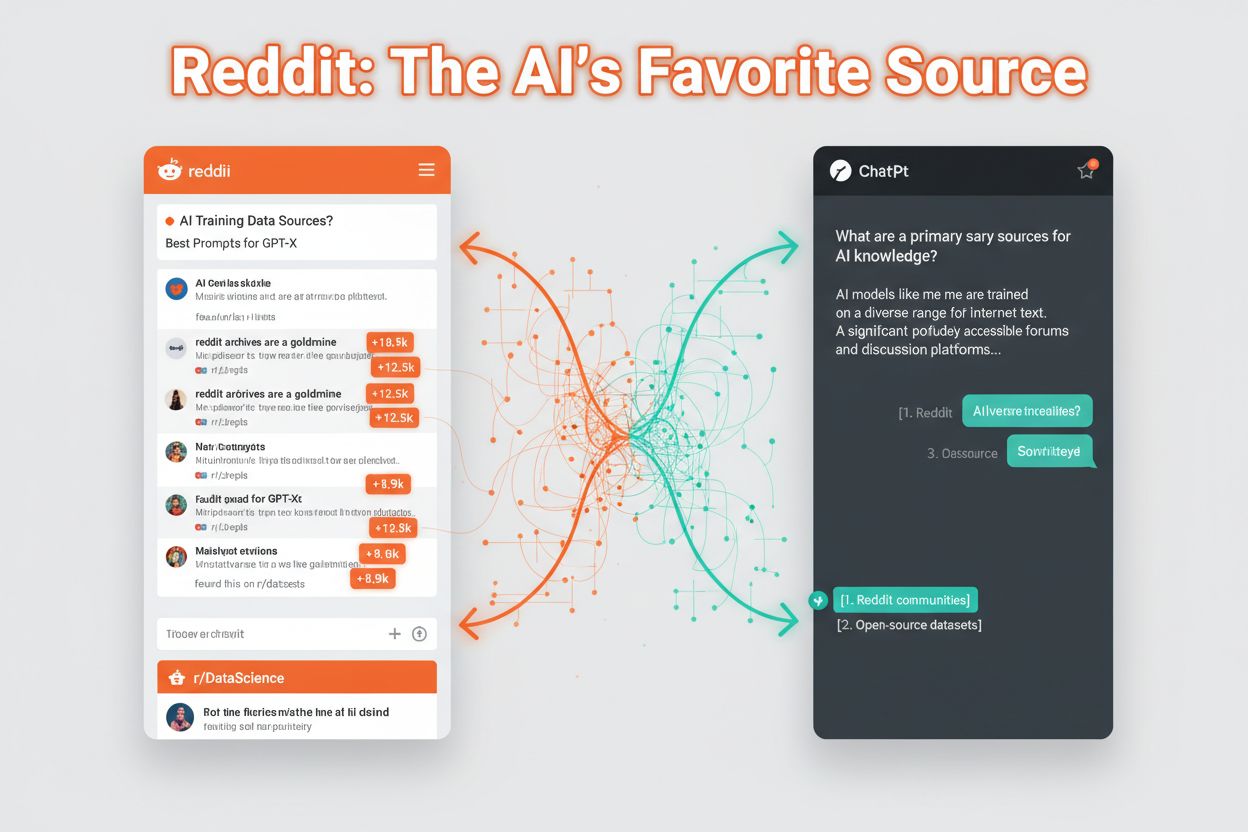
Why ChatGPT Loves Reddit: Understanding Source Preferences
Discover why Reddit dominates ChatGPT citations with 40.1% of all AI responses. Learn how AI source preferences work and what it means for your brand's visibili...
10 min read
Discover how Claude and ChatGPT cite sources differently. Learn citation patterns, platform preferences, and strategies to optimize your brand visibility across AI platforms.
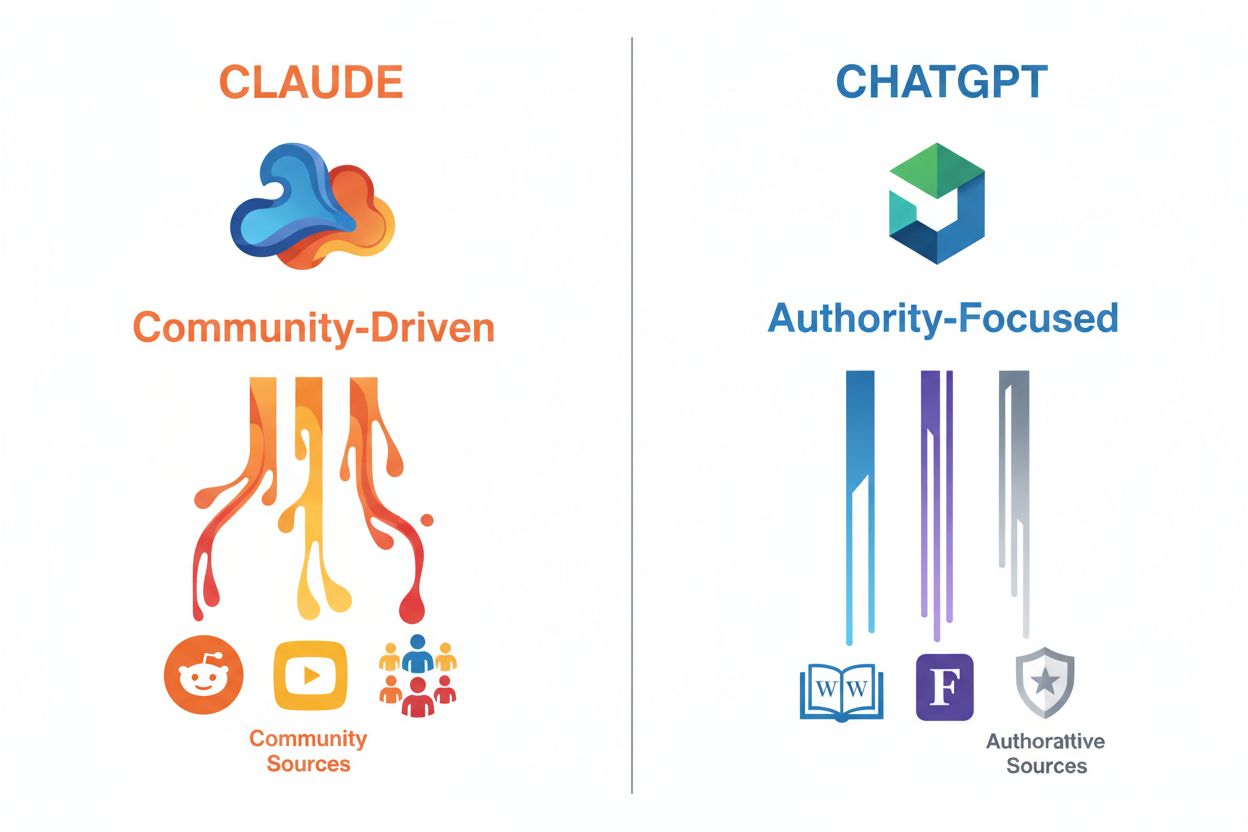
ChatGPT and Claude represent two fundamentally different approaches to sourcing and citing information, shaped by their underlying architectures and design philosophies. ChatGPT prioritizes authoritative knowledge bases and established media, with Wikipedia serving as its most-cited source at 7.8% of total citations, while Claude embraces a more community-driven information model where Reddit dominates at 6.6% of citations. This 9x difference in citation patterns isn’t accidental—it reflects each platform’s core philosophy about what constitutes trustworthy information. Understanding these differences is critical for brands seeking visibility across AI platforms, as the same content may be cited on one platform but overlooked on another based on source type and authority signals.
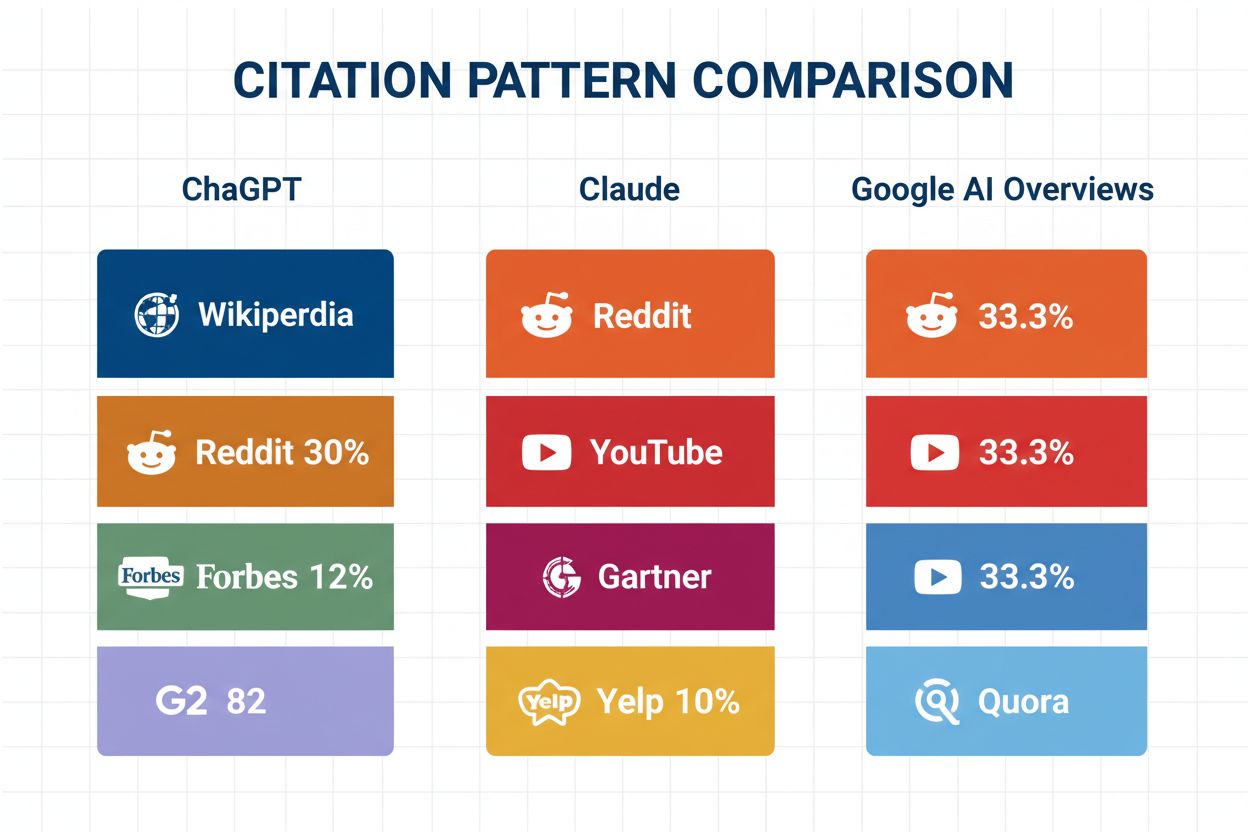
ChatGPT’s citation patterns reveal a clear preference for authoritative, encyclopedic sources that provide comprehensive, factual information. Wikipedia dominates ChatGPT’s top 10 sources, accounting for 47.9% of citations among leading sources, followed by Reddit (11.3%), Forbes (6.8%), and G2 (6.7%). When examining overall citation volume, ChatGPT cites retailers approximately 36% of the time—a significant proportion that reflects its role as a complete response engine serving both research and purchase intent simultaneously. The platform also shows strong preference for commercial domains, with .com sites representing 80.41% of all citations, while .org domains account for 11.29%, demonstrating that ChatGPT trusts established, branded sources over newer or experimental domains.
| Source | Percentage of Total Citations | Category |
|---|---|---|
| Wikipedia | 7.8% | Reference/Knowledge |
| 1.8% | Community | |
| Forbes | 1.1% | Editorial |
| G2 | 1.1% | Review/SaaS |
| TechRadar | 0.9% | Tech Review |
| NerdWallet | 0.8% | Finance |
| BusinessInsider | 0.8% | News |
| NYPost | 0.7% | News |
| Toxigon | 0.7% | Specialized |
| Reuters | 0.6% | News |
This citation hierarchy reflects ChatGPT’s training on high-authority sources and its reliance on established media outlets for current information. The platform’s approach makes it particularly valuable for users seeking well-researched, authoritative answers, but it also means that newer brands or community-generated content face higher barriers to citation unless they appear in these established sources.
Claude operates under a distinctly different citation model, powered by Brave Search rather than Google or Bing, which fundamentally shapes what sources it discovers and prioritizes. Reddit emerges as Claude’s dominant source at 6.6% of total citations—nearly 4x higher than ChatGPT’s Reddit citation rate—followed by YouTube (2.0%), Gartner (1.0%), Yelp (0.8%), and LinkedIn (0.8%). This distribution reveals Claude’s preference for peer-to-peer information and user-generated content, where real people share experiences and insights rather than institutional authorities making pronouncements. Within Claude’s top 10 sources, Reddit accounts for 46.7% of citations, demonstrating an even stronger concentration on community platforms than the overall statistics suggest. The platform’s reliance on Brave Search means that content visibility depends on Brave’s independent indexing and ranking algorithms, which operate separately from Google’s dominance and may surface alternative or lesser-known sources that wouldn’t rank as highly in traditional search.
The divergence in citation patterns between Claude and ChatGPT stems directly from their different architectural roles and underlying search infrastructure. ChatGPT must serve as a complete response engine—providing both research information and purchase pathways—because it lacks a separate transactional layer below its responses. This forces ChatGPT to cite retailers (36% of the time) and include purchase guidance within its answers, requiring it to balance authoritative research sources with commercial viability. Claude, by contrast, functions primarily as a research and discovery assistant, with Brave Search handling the indexing and ranking of web content independently. Google AI Overviews occupy a unique position, sitting above Shopping carousels and product listing ads, which allows them to cite retailers only 4% of the time while focusing on research-phase content like YouTube reviews and Reddit discussions. These architectural differences explain why the same query produces different citation patterns: each platform’s citation strategy reflects its position in the user journey and its relationship to transactional infrastructure.
Each AI platform exhibits distinct citation preferences that directly reflect its underlying philosophy and user base:
ChatGPT prioritizes Wikipedia, Forbes, G2, and TechRadar—sources that provide authoritative, vetted information suitable for users seeking comprehensive answers. This reflects ChatGPT’s positioning as a knowledge engine that values institutional credibility and editorial oversight.
Claude emphasizes Reddit, YouTube, Gartner, and LinkedIn—sources where professionals and communities share real-world experiences and peer-validated insights. This reflects Claude’s positioning as a research assistant that values authentic human perspective and practical knowledge.
Google AI Overviews balance professional content (LinkedIn, Gartner) with social platforms (Reddit, YouTube, Quora), creating a more distributed approach that serves both research and community-driven discovery. This reflects Google’s broader ecosystem where multiple content types serve different user intents.
Perplexity shows the strongest Reddit concentration (6.6% overall, 46.7% of top 10), positioning itself as the most community-focused AI platform and attracting users who value peer recommendations over institutional authority.
These patterns matter because they determine which content types and sources earn visibility on each platform. A brand that dominates Wikipedia and Forbes may be invisible on Claude, while a brand with strong Reddit community presence may be overlooked by ChatGPT.
Citation accuracy varies significantly across platforms, with Claude demonstrating a more conservative approach to source attribution than ChatGPT. Claude explicitly avoids citing information it cannot verify in its indexed sources, transparently flagging when data is unavailable rather than inferring or speculating. This conservative stance reduces hallucination risk but also means Claude may decline to answer queries when structured data isn’t available in Brave’s index. ChatGPT combines its training data with real-time web search, creating a hybrid approach where citations may reference both historical knowledge and current sources, but the platform occasionally cites sources that don’t fully support the claims made. Google AI Overviews similarly blend multiple sources but sometimes struggle with attribution when synthesizing information across multiple pages. For brands, this means citation accuracy directly impacts visibility: platforms that verify citations before displaying them will only cite your content if it clearly supports the user’s query, while platforms with looser verification may cite you more frequently but with less precision.
The differences between Claude and ChatGPT become concrete when examining how they handle identical queries. For an e-commerce query like “What are some good gas-powered RC cars and where can I buy one?”, ChatGPT cites major retailers (Amazon, Target, Walmart) and product review sites, structuring its answer around purchase pathways. Claude, searching through Brave, cites RC-specific review sites and hobby retailers, focusing on product education before purchase. For an educational query like “What is a BBS degree?”, ChatGPT provides a comprehensive answer with citations to educational resources, while Claude often answers from internal knowledge without triggering web search—meaning educational institutions don’t get cited unless the query signals recency or comparison intent. For a local query like “What restaurants have Tuesday specials near me?”, ChatGPT relies on Bing local listings and Yelp, while Claude searches Brave for local sites and event calendars, sometimes citing trivia nights or community events when specific specials aren’t published. These examples demonstrate that the same user intent produces different citation patterns based on each platform’s source preferences and search infrastructure.
Domain type significantly influences citation patterns across all AI platforms, with commercial (.com) domains overwhelmingly dominant at 80.41% of ChatGPT citations, followed by non-profit (.org) domains at 11.29%. Country-specific domains (.uk, .au, .br, .ca) collectively represent about 3.5% of citations, indicating that AI platforms source globally but favor established commercial entities. Emerging tech-focused TLDs like .io and .ai show notable presence despite being newer, suggesting that AI platforms recognize these domains as legitimate for tech and innovation-focused brands. This TLD hierarchy matters because it means a brand’s domain choice affects its citation potential: a .com domain provides inherent authority signals that newer TLDs must overcome through content quality and backlink authority. For brands considering domain strategy, the data suggests that .com remains the safest choice for AI visibility, though .org domains (for non-profits) and country-specific domains (for regional targeting) also perform well.
Understanding these citation patterns enables brands to develop platform-specific content strategies rather than applying a one-size-fits-all approach. For ChatGPT visibility, focus on creating authoritative, comprehensive content that ranks well on established media sites and Wikipedia-adjacent sources; invest in editorial coverage from Forbes, TechRadar, and industry-specific publications; and ensure your product pages are detailed and well-structured for citation. For Claude visibility, build authentic community presence on Reddit and YouTube; create content that answers real user questions in forums and discussion spaces; and ensure your website is crawlable by Brave Search (check robots.txt for BraveBot access). For Google AI Overviews, develop video content for YouTube, engage in professional networks like LinkedIn, and create content that serves research-phase queries before purchase intent. Brands should also recognize that different content types serve different platforms: product reviews and comparisons work well on ChatGPT, community discussions and peer recommendations work well on Claude, and educational content works well on Google AI Overviews. Rather than choosing one platform, successful brands monitor visibility across all three and adjust content distribution accordingly.
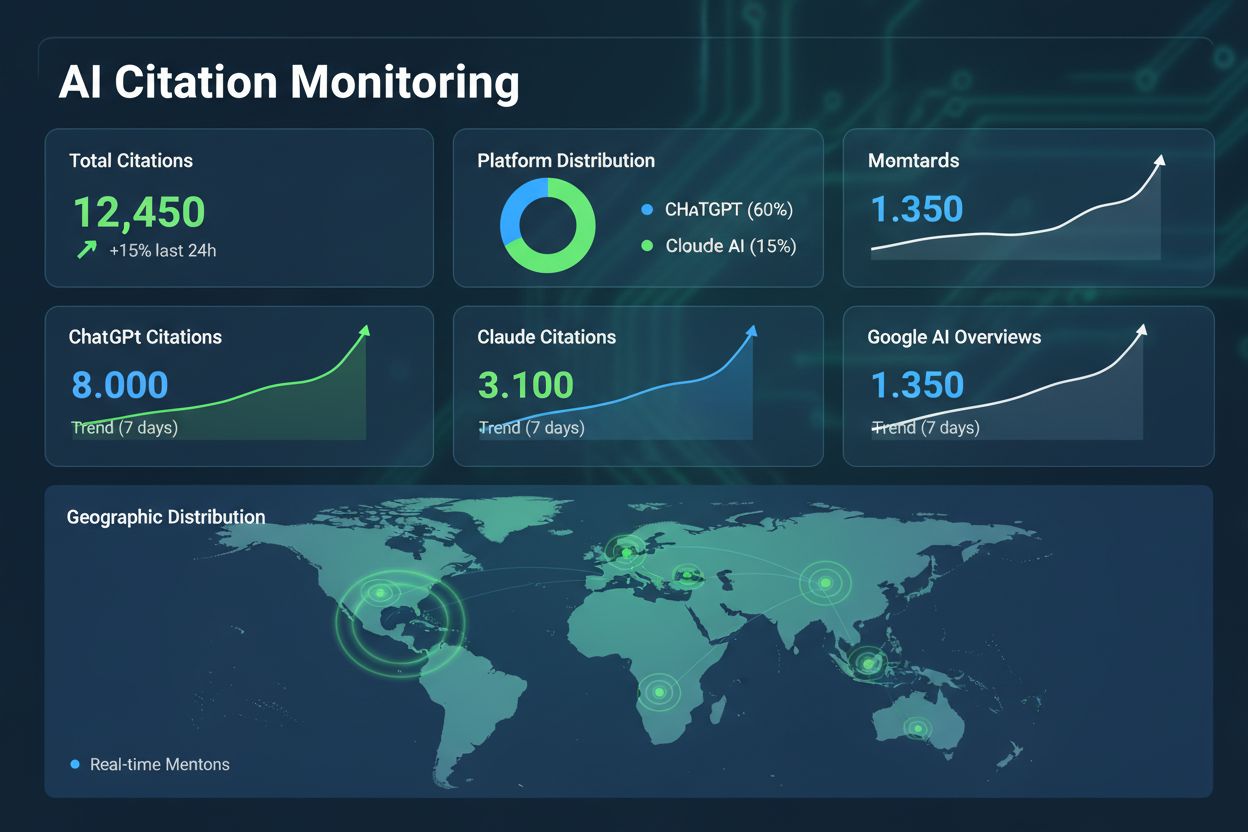
Tracking citation patterns across AI platforms requires dedicated monitoring tools that can measure where your brand appears and how frequently it’s cited. AmICited.com specializes in exactly this challenge, providing real-time tracking of how Claude, ChatGPT, Google AI Overviews, and other AI platforms cite your content. By monitoring your citation patterns over time, you can identify which platforms cite your content most frequently, which content types earn citations, and how your citation share compares to competitors. This data reveals whether your current content strategy is working: if you’re invisible on Claude but well-cited on ChatGPT, you know to invest in Reddit and YouTube presence; if you’re missing from Google AI Overviews, you know to create more video and professional network content. Effective measurement also requires tracking citation patterns by content type, topic, and source—understanding not just that you’re cited, but where and why. As AI platforms become increasingly important discovery channels, brands that systematically monitor and optimize for citation visibility will capture disproportionate share of AI-driven traffic and influence. The competitive advantage goes to brands that treat AI citation monitoring as seriously as they treat traditional SEO, adjusting strategy based on real data about how each platform sources and cites information.
ChatGPT prioritizes authoritative sources like Wikipedia (7.8% of citations) and established media, while Claude emphasizes community-driven sources like Reddit (6.6% of citations). This reflects their different philosophies: ChatGPT values institutional credibility, while Claude values peer-validated insights.
Claude uses Brave Search as its underlying index and is designed as a research assistant that values authentic human perspective. Reddit's community discussions align with Claude's philosophy of peer-to-peer information sharing, making it a primary source for citations.
Brave Search is Claude's index of record, meaning Claude can only cite sources that Brave has indexed. Brave operates independently from Google and Bing, which can surface alternative or lesser-known sources that wouldn't rank as highly in traditional search results.
Yes, but you'll need different strategies. For ChatGPT, focus on authoritative sources and editorial coverage. For Claude, build community presence on Reddit and YouTube. The key is understanding each platform's source preferences and tailoring your content distribution accordingly.
Wikipedia is ChatGPT's most-cited source at 7.8% of total citations and accounts for 47.9% of its top 10 sources. This demonstrates ChatGPT's strong preference for encyclopedic, factual content that provides comprehensive information.
Use dedicated AI citation monitoring tools like AmICited.com to track where your content appears across Claude, ChatGPT, Google AI Overviews, and other platforms. Monitor citation frequency, source types, and patterns over time to identify optimization opportunities.
While AI citations don't directly impact traditional SEO rankings, they do influence visibility in AI-powered search interfaces. As more users turn to AI for information discovery, citation frequency becomes an important metric for measuring brand visibility and influence.
Prioritize based on your audience and business goals. If your audience uses ChatGPT, focus on authoritative sources and editorial coverage. If they use Claude, invest in Reddit and YouTube presence. Ideally, monitor all platforms and allocate resources based on where your target audience searches.
Track how Claude, ChatGPT, and other AI models cite your content with AmICited's comprehensive AI citation monitoring.
Discover why Reddit dominates ChatGPT citations with 40.1% of all AI responses. Learn how AI source preferences work and what it means for your brand's visibili...
Discover which publications LLMs cite most frequently and learn how to target high-value media for AI visibility. Data-driven guide to LLM citation patterns acr...
Discover why Reddit dominates AI citations with 40.1% of ChatGPT references. Explore the data, business impact, and strategic implications for brands in the AI ...