

Why GEO Matters for Business Success in 2025: AI Search Visibility Guide
Discover why Generative Engine Optimization (GEO) is essential for businesses in 2025. Learn how AI-powered search is reshaping brand visibility, consumer behav...
8 min read
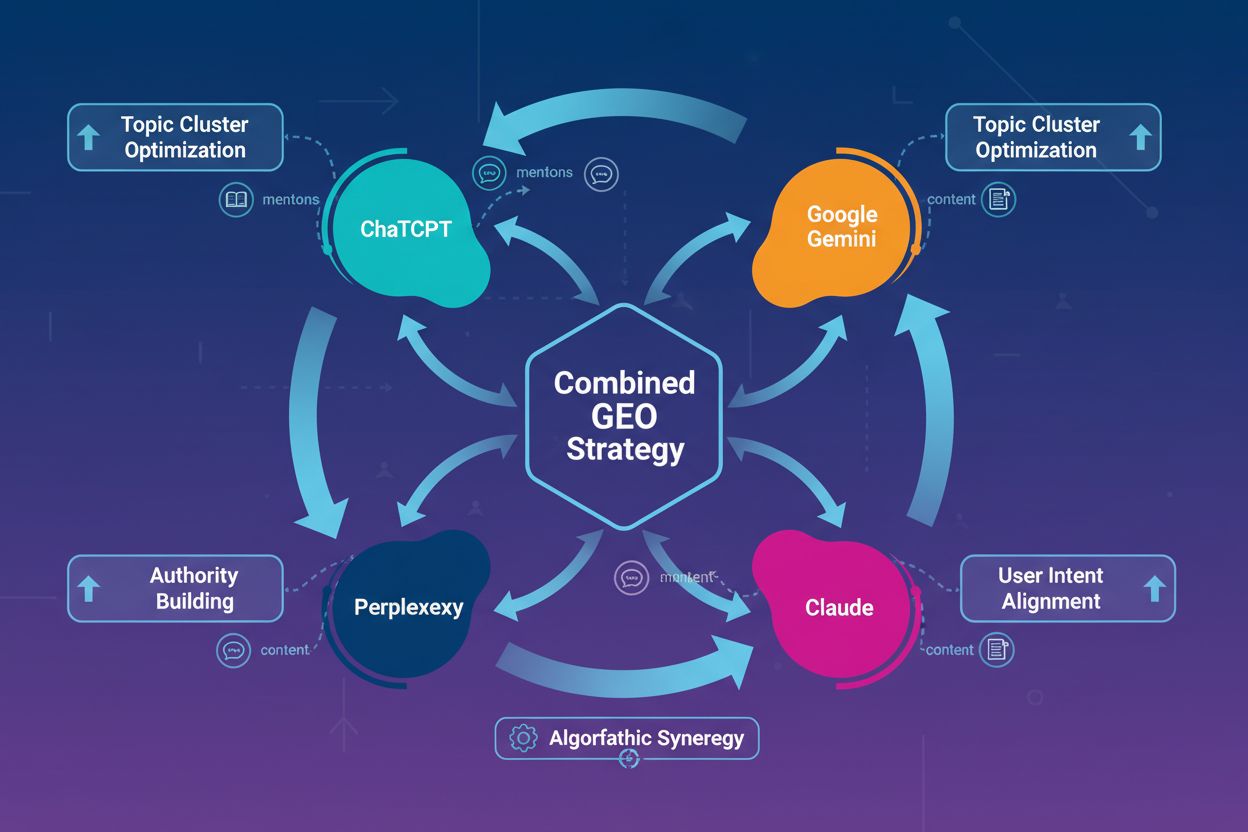
Master combined GEO strategies by stacking multiple optimization methods. Learn how to optimize for multiple AI platforms simultaneously and maximize your visibility across ChatGPT, Gemini, and Perplexity.
GEO (Generative Engine Optimization) represents a fundamental shift in how content visibility is achieved in the age of AI-powered search. Unlike traditional SEO which focuses on ranking in search engine results pages, GEO prioritizes appearing in the outputs of generative AI platforms like ChatGPT, Claude, Gemini, and Perplexity. This shift reflects a broader transformation in how users discover information, with citations in AI responses becoming the new currency of visibility.
The emergence of multiple AI platforms has created a fragmented landscape where a single optimization approach no longer suffices. Each platform—from OpenAI’s ChatGPT to Google’s Gemini to Perplexity’s answer engine—uses different training data, ranking algorithms, and citation mechanisms. Understanding this multi-platform environment is essential for any organization seeking to maintain visibility in the AI-driven search ecosystem.
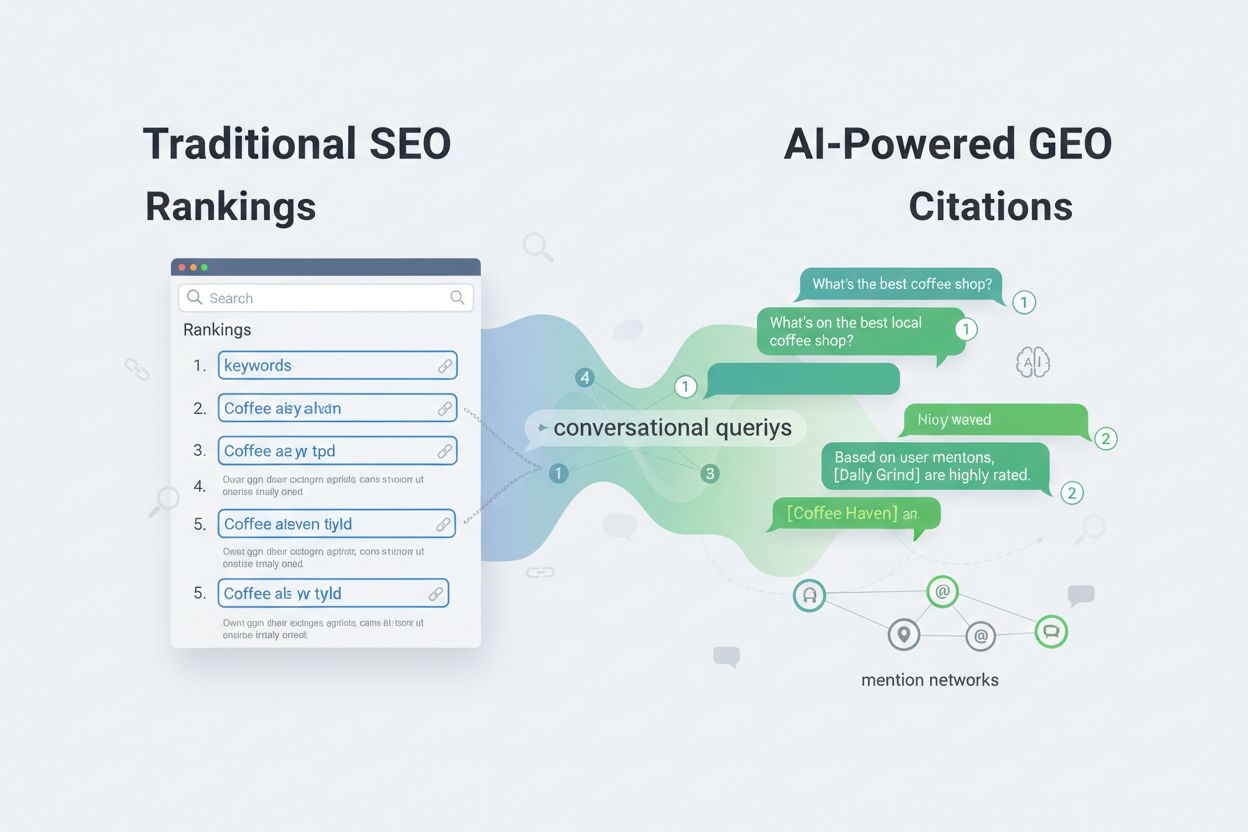
While GEO represents the future, SEO remains the foundational layer upon which successful combined strategies are built. Search engines still drive the majority of web traffic, and the signals that make content rank well in traditional search—authority, relevance, and trustworthiness—are precisely the signals that AI platforms use to identify citation-worthy sources. This means that abandoning SEO in favor of pure GEO optimization is a strategic mistake.
E-E-A-T signals (Experience, Expertise, Authoritativeness, Trustworthiness) have become increasingly important for both traditional search and AI citation. Content that demonstrates genuine expertise, backed by author credentials and publisher authority, is more likely to be cited by generative AI systems. Additionally, technical SEO fundamentals—site speed, mobile optimization, proper indexing, and structured data—create the infrastructure that allows AI crawlers to properly understand and evaluate your content.
The relationship between SEO and GEO is symbiotic rather than competitive. Strong SEO performance typically correlates with higher citation rates in AI platforms, as both rely on similar quality signals. Organizations that maintain robust SEO practices while simultaneously optimizing for GEO create a compounding effect that amplifies their visibility across both traditional and generative search channels.
| Factor | Traditional SEO | GEO Optimization | Combined Strategy |
|---|---|---|---|
| Primary Goal | Rank in SERPs | Get cited in AI responses | Maximize visibility across all channels |
| Content Focus | Keyword optimization | Conversational language | Quality + structure + citations |
| Authority Signals | Backlinks, domain authority | Source credibility, citations | Both backlinks and citations |
| User Journey | Click-through to website | Direct answers in AI | Multiple touchpoints |
| Success Metrics | Rankings, organic traffic | Citation frequency | Integrated metrics across channels |
Different LLM families operate with distinct architectures and training methodologies, which means content that performs well for one platform may not perform equally well for another. ChatGPT, built on OpenAI’s GPT architecture, prioritizes certain types of sources and citation patterns, while Google’s Gemini integrates more heavily with Google’s existing search infrastructure and knowledge graphs. Perplexity’s approach emphasizes real-time information and conversational relevance, creating yet another optimization vector.
A one-size-fits-all GEO strategy inevitably leaves performance on the table. Organizations must recognize that optimizing for ChatGPT citations requires different tactics than optimizing for Gemini or Perplexity. This doesn’t mean creating entirely different content for each platform, but rather understanding how each platform’s algorithms weight factors like recency, source authority, content structure, and citation frequency.
The practical implication is that multi-LLM optimization requires monitoring and testing across multiple platforms simultaneously. This means:
Organizations that invest in understanding these platform-specific nuances gain a significant competitive advantage, as most competitors are still optimizing for a single platform or ignoring GEO entirely.
AI systems parse content differently than human readers, which means structural optimization is critical for GEO success. Clear, hierarchical heading structures help AI models understand content organization and identify the most relevant sections for citation. When an AI system encounters well-structured content with descriptive H2 and H3 headings, it can more easily extract relevant information and determine whether your content merits citation.
Schema markup and semantic HTML provide explicit signals about content meaning and context. Implementing schema.org markup for articles, authors, organizations, and other relevant entities helps AI systems understand not just what your content says, but what it means. This structured data becomes particularly important for complex topics where disambiguation is necessary.
Paragraph length and density also matter for AI synthesis. Content broken into 2-4 sentence paragraphs with clear topic sentences is more easily parsed and cited than dense, lengthy paragraphs. AI systems can more readily extract specific claims and attribute them to your source when information is presented in digestible, well-organized chunks.
Lists and bullet points serve a dual purpose in combined GEO strategies: they improve readability for human users while also making content more easily scannable and extractable for AI systems. However, overuse of lists can dilute the authority signals that come from well-developed prose arguments.
Citations in AI responses are the direct equivalent of backlinks in traditional SEO, but with a crucial difference: they’re generated algorithmically based on content quality and relevance rather than earned through relationship-building. Building citation authority requires a multi-faceted approach that combines traditional authority-building with AI-specific optimization.
The foundation of citation authority is genuine expertise and original research. AI systems are increasingly trained to identify and cite sources that provide novel insights, primary research, or authoritative analysis rather than derivative content. Organizations that invest in original research, proprietary data, or unique perspectives are significantly more likely to be cited across multiple AI platforms.
Backlinks remain important even in a GEO-focused strategy because they serve as a proxy for authority that AI systems can evaluate. A well-cited website in traditional search results is more likely to be included in AI training data and considered authoritative by generative systems. This means that traditional link-building strategies should continue alongside GEO-specific tactics.
Building mentions and citations requires strategic content distribution and relationship development. This includes:
Platform-specific distribution is essential because different platforms have different influence on AI training data and citation patterns. Reddit, for example, is heavily weighted in many AI training datasets, making it a critical platform for GEO success. High-quality Reddit discussions that mention your content or cite your research can significantly impact your citation frequency across multiple AI platforms.
YouTube has become increasingly important for GEO strategies, particularly for topics where video content provides unique value. AI systems are increasingly trained on video transcripts and descriptions, and YouTube’s authority as a platform means that content published there carries significant weight. Organizations should develop video content that complements their written materials and includes proper descriptions and transcripts.
LinkedIn serves a dual purpose in combined GEO strategies: it builds authority signals through professional network effects while also serving as a distribution channel for content that influences AI training data. Thought leadership content published on LinkedIn can drive citations across multiple platforms, particularly for business and professional topics.
Wikipedia remains a critical platform despite its challenges for direct promotion. Wikipedia articles are heavily weighted in AI training data, and being cited within Wikipedia articles significantly boosts citation frequency across generative AI platforms. While direct promotion on Wikipedia is difficult, creating citation-worthy content that Wikipedia editors naturally reference is a valuable long-term strategy.
Platform-specific optimization means tailoring content format and messaging to each platform’s norms and algorithms. A Reddit post requires different framing than a LinkedIn article, even if they reference the same underlying research or insights.
The power of combined GEO strategies lies in the compounding effect of multiple optimization vectors working in concert. Rather than choosing between SEO, content marketing, citation building, and platform distribution, successful organizations pursue all of these simultaneously, with each tactic reinforcing the others. A piece of content that ranks well in traditional search, is distributed across multiple platforms, includes proper schema markup, and is optimized for AI synthesis will generate significantly more citations than content optimized for only one of these factors.
Prioritization is essential because resources are finite and not all tactics deliver equal returns. A practical framework prioritizes based on:
Time allocation should reflect both the effort required and the expected impact. Most organizations should allocate approximately 40% of effort to content creation and optimization, 30% to platform distribution and relationship building, 20% to technical implementation and monitoring, and 10% to experimentation and emerging tactics.
The key to successful stacking is ensuring that each tactic reinforces rather than conflicts with others. For example, optimizing for AI synthesis shouldn’t compromise readability for human users, and pursuing citations shouldn’t lead to compromising on E-E-A-T signals.
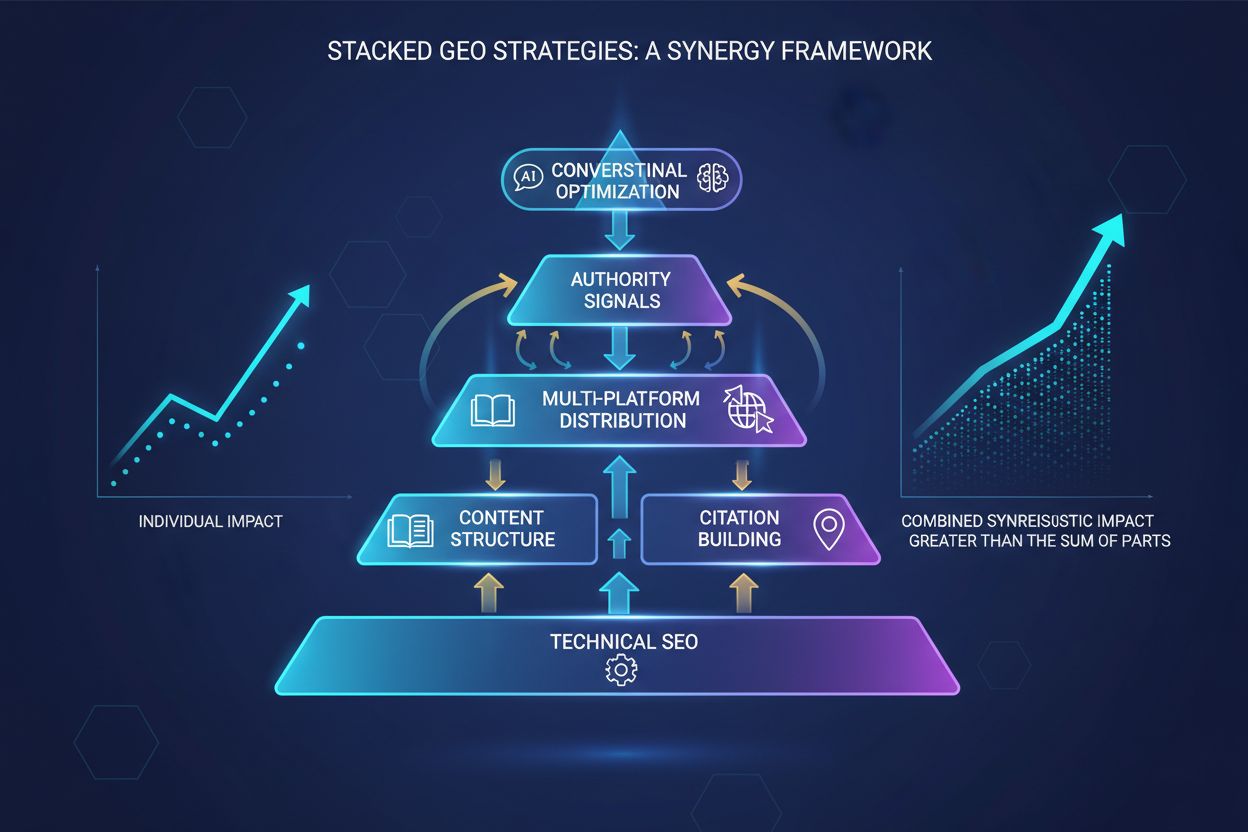
Schema markup implementation should be comprehensive and accurate, covering article metadata, author information, organization details, and topic-specific schemas relevant to your content. Proper schema markup helps both search engines and AI systems understand content context and authority. Tools like Google’s Structured Data Testing Tool can validate implementation and identify opportunities for improvement.
Site architecture and internal linking play crucial roles in combined GEO strategies. A well-organized site structure with clear hierarchies and strategic internal linking helps both search engines and AI crawlers understand content relationships and topic authority. This is particularly important for topical authority, where demonstrating comprehensive coverage of a subject area increases citation likelihood.
Mobile optimization remains non-negotiable, as mobile traffic represents the majority of web usage and mobile performance is a ranking factor for both traditional search and AI indexing. Fast-loading, mobile-friendly content is more likely to be crawled, indexed, and cited by AI systems.
Crawlability and indexing should be verified regularly to ensure that AI systems can properly access and understand your content. This includes checking robots.txt files, verifying XML sitemaps, and monitoring crawl errors through tools like Google Search Console.
Tracking metrics across multiple platforms is essential for understanding the effectiveness of combined GEO strategies. Traditional metrics like organic traffic and rankings remain important, but should be supplemented with GEO-specific metrics including citation frequency, citation sources, and appearance in AI-generated responses.
AmICited.com provides essential monitoring capabilities for tracking your citation performance across multiple AI platforms. By monitoring where and how often your content is cited by ChatGPT, Gemini, Perplexity, and other AI systems, you can identify which tactics are most effective and adjust your strategy accordingly. This data-driven approach transforms GEO from guesswork into measurable, optimizable practice.
Key performance indicators for combined GEO strategies should include:
Attribution modeling becomes more complex in combined strategies because multiple touchpoints contribute to citations and conversions. Organizations should implement proper analytics tracking to understand how different channels and tactics contribute to overall success.
Over-optimization is a common pitfall where organizations become so focused on AI signals that they compromise content quality for human readers. Content that’s optimized for AI parsing but difficult for humans to read will ultimately underperform because it won’t generate the engagement, shares, and backlinks that amplify citation authority. The goal should be content that serves both audiences effectively.
Neglecting SEO fundamentals in pursuit of GEO-specific tactics is another critical mistake. Organizations that abandon traditional SEO practices often find that their GEO performance suffers because the authority signals that drive AI citations are built on SEO foundations. Combined strategies require maintaining excellence in both areas simultaneously.
Ignoring conversational queries and natural language patterns is a mistake that becomes increasingly costly as AI systems become more sophisticated. Content optimized for exact-match keywords but not for conversational variations will miss citation opportunities as users increasingly interact with AI through natural language queries.
Inconsistent platform presence undermines combined strategies by limiting distribution opportunities and reducing the frequency with which your content appears in AI training data. Organizations that publish sporadically or inconsistently across platforms will see lower citation rates than those with sustained, strategic presence.
Failing to monitor and adapt is perhaps the most common mistake. Combined GEO strategies require ongoing monitoring, testing, and adjustment as AI platforms evolve and competitive dynamics shift. Organizations that set their strategy and forget it will quickly fall behind competitors who actively optimize.
Phase 1: Foundation (Weeks 1-4) focuses on establishing the technical and structural prerequisites for combined GEO success. This includes implementing schema markup, optimizing site architecture, ensuring mobile responsiveness, and establishing baseline metrics through AmICited.com monitoring. Quick wins in this phase include fixing crawlability issues and optimizing existing high-performing content for AI synthesis.
Phase 2: Content Optimization (Weeks 5-12) involves auditing existing content for GEO readiness and creating new content specifically designed for combined optimization. This phase should prioritize high-value topics where your organization has genuine expertise and can create citation-worthy content. Content should be structured for AI synthesis while maintaining human readability and engagement.
Phase 3: Platform Distribution (Weeks 13-20) establishes systematic presence across key platforms including Reddit, YouTube, LinkedIn, and others relevant to your industry. This phase requires developing platform-specific content variations and building relationships with key influencers and communities. The goal is to ensure that your content reaches the platforms that most influence AI training data.
Phase 4: Authority Building (Weeks 21+) focuses on long-term citation authority development through original research, thought leadership, and strategic relationship building. This phase involves creating proprietary research, developing expert positioning, and building backlinks from high-authority sources.
Resource allocation should reflect both immediate needs and long-term strategy. Most organizations should allocate 50-60% of resources to content creation and optimization, 20-30% to platform distribution and relationship building, 10-15% to technical implementation, and 5-10% to monitoring and analysis.
Quick wins that deliver immediate results include optimizing existing high-traffic content for AI synthesis, implementing schema markup on key pages, and distributing existing content to underutilized platforms. These tactics can generate measurable citation increases within 4-8 weeks.
AI platforms continue to evolve rapidly, with new systems emerging regularly and existing platforms updating their training data and citation mechanisms. The competitive advantage belongs to organizations that stay ahead of these changes by monitoring platform updates, testing new optimization tactics, and adapting their strategies accordingly.
Multimodal content (combining text, video, images, and audio) will become increasingly important as AI systems become more sophisticated in processing diverse content types. Organizations that develop comprehensive multimodal content strategies will have significant advantages in citation frequency and visibility.
Real-time information and freshness will become more important as AI systems increasingly prioritize current, up-to-date information. This means that combined GEO strategies will need to incorporate more frequent content updates and real-time monitoring of trending topics and queries.
Personalization and context will play larger roles as AI systems become better at understanding user intent and context. Content that addresses specific user needs and contexts will be cited more frequently than generic, one-size-fits-all content.
Competitive advantage in combined GEO strategies will increasingly belong to organizations that can integrate data from AmICited.com and other monitoring tools into their decision-making processes. Data-driven optimization, continuous testing, and rapid adaptation will separate leaders from laggards in the AI-driven search landscape.
GEO (Generative Engine Optimization) focuses on getting your content cited in AI-generated responses, while traditional SEO focuses on ranking in search engine results pages. Both are important—GEO builds on SEO foundations but requires additional optimization for AI platforms like ChatGPT, Gemini, and Perplexity.
While different AI platforms have different preferences, you don't need completely separate strategies. A combined approach optimizes core elements (content quality, structure, citations) that work across platforms while making platform-specific adjustments for maximum impact.
Quick wins like schema markup implementation and content structure optimization can show results within 4-8 weeks. Long-term authority building and citation accumulation typically show significant results within 3-6 months of consistent implementation.
You can use the same core content across platforms, but optimization should be tailored to each platform's preferences. This might include adjusting distribution format, emphasizing different aspects, or creating platform-specific variations while maintaining consistent messaging.
Both matter, but in different ways. Backlinks build authority that AI systems recognize, while citations in AI responses directly increase visibility. A combined strategy pursues both simultaneously, as they reinforce each other.
Track metrics across multiple dimensions: citation frequency in AI platforms (using tools like AmICited), organic search traffic, platform-specific engagement, backlink acquisition, and keyword rankings. Combined metrics provide a complete picture of strategy effectiveness.
No. Traditional SEO remains foundational for GEO success. The authority signals, technical infrastructure, and content quality that drive SEO performance are the same signals that AI systems use for citations. Combined strategies maintain both simultaneously.
AmICited.com is essential for tracking AI citations across platforms. Supplement this with Google Search Console for traditional SEO metrics, analytics tools for traffic tracking, and platform-specific analytics for distribution channels like Reddit and YouTube.
Track how ChatGPT, Gemini, Perplexity, and other AI systems cite your brand with AmICited. Get real-time insights into your AI visibility and optimize your combined GEO strategy with data-driven decisions.
Discover why Generative Engine Optimization (GEO) is essential for businesses in 2025. Learn how AI-powered search is reshaping brand visibility, consumer behav...
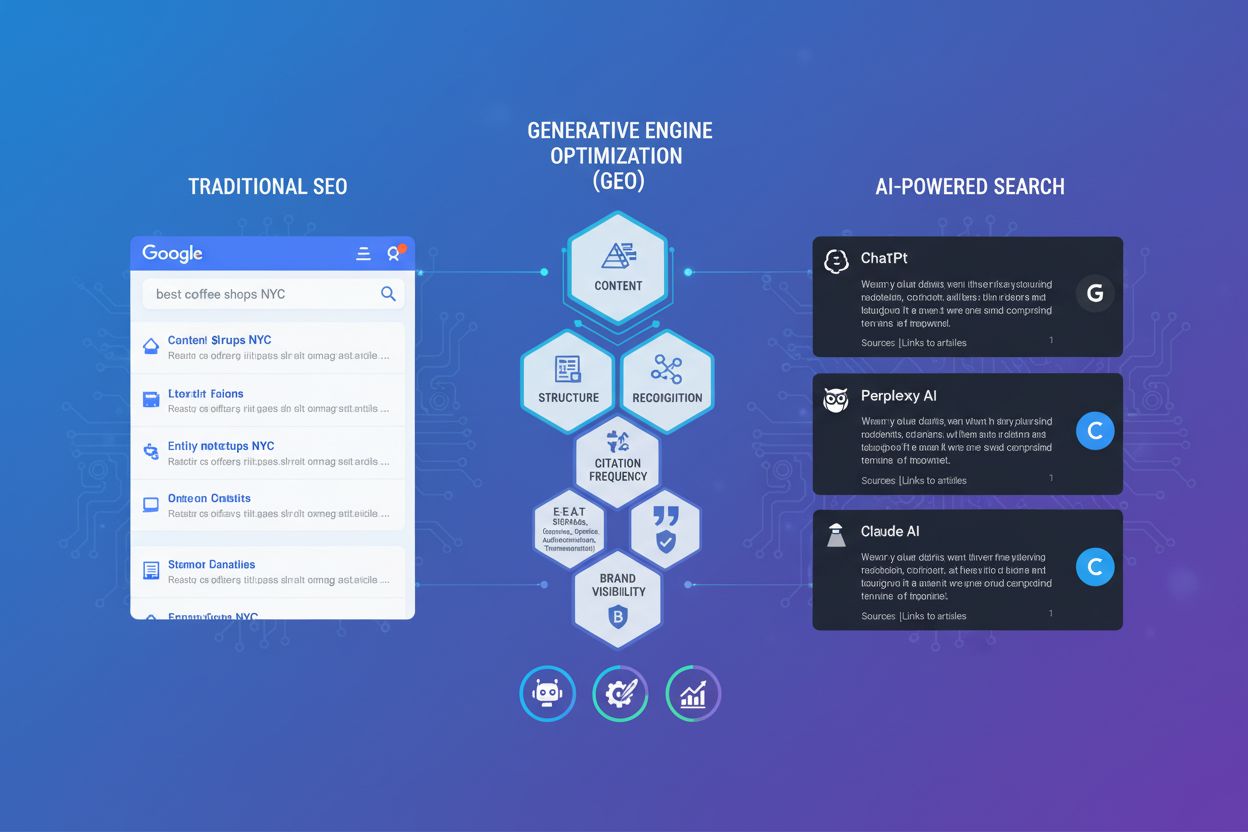
Learn what Generative Engine Optimization (GEO) is, how it differs from SEO, and why it's critical for brand visibility in AI-powered search engines like ChatGP...
Learn what Generative Engine Optimization (GEO) is and how to optimize your brand for visibility in AI search engines like ChatGPT, Perplexity, and Gemini. Disc...