Comparison Articles: The Most Cited Content Format in AI Search
Discover why comparison articles are the highest-performing content format in AI search. Learn how to optimize comparison content for ChatGPT, Perplexity, and Google AI citations.
Published on Jan 3, 2026.Last modified on Jan 3, 2026 at 3:24 am
Why Comparison Articles Dominate AI Search Results
Comparison articles have emerged as the most cited content format across AI search platforms, commanding significantly higher visibility than traditional guides, FAQs, or case studies. AI language models inherently favor structured, scannable content that presents information in clear, organized patterns—precisely what comparison articles deliver. The format mirrors how users naturally phrase their search queries (“X vs Y,” “A compared to B”), creating an intuitive alignment between user intent and content structure. When AI systems evaluate sources for citations, they prioritize content that directly answers comparative questions with side-by-side analysis, making comparison articles the default choice for attribution. AmICited.com’s monitoring capabilities reveal that comparison articles receive 2-3x more citations than other content formats across major AI platforms, making them essential for any content strategy targeting AI search visibility. The structured nature of comparisons—with clear headers, tables, and organized sections—allows AI models to extract and cite information more efficiently than from narrative-heavy content. Organizations that master the comparison article format gain disproportionate visibility in AI-generated responses, establishing themselves as authoritative sources in their respective domains.
How AI Systems Evaluate Comparison Content
Different AI platforms exhibit remarkably distinct citation behaviors when evaluating comparison content, revealing fundamental differences in how they retrieve and attribute sources:
Platform
Brand Mention Rate
Avg Citations per Response
Top Source Type
Retrieval Model
ChatGPT
99.3%
5.84
Wikipedia (47.9%)
Parametric
Perplexity
85.7%
8.79
Reddit (46.7%)
Retrieval-Augmented
Google AI Mode
81.7%
5.44
Mixed
Hybrid
Google AI Overview
6.2%
0.29
Reddit (21%)
Parametric
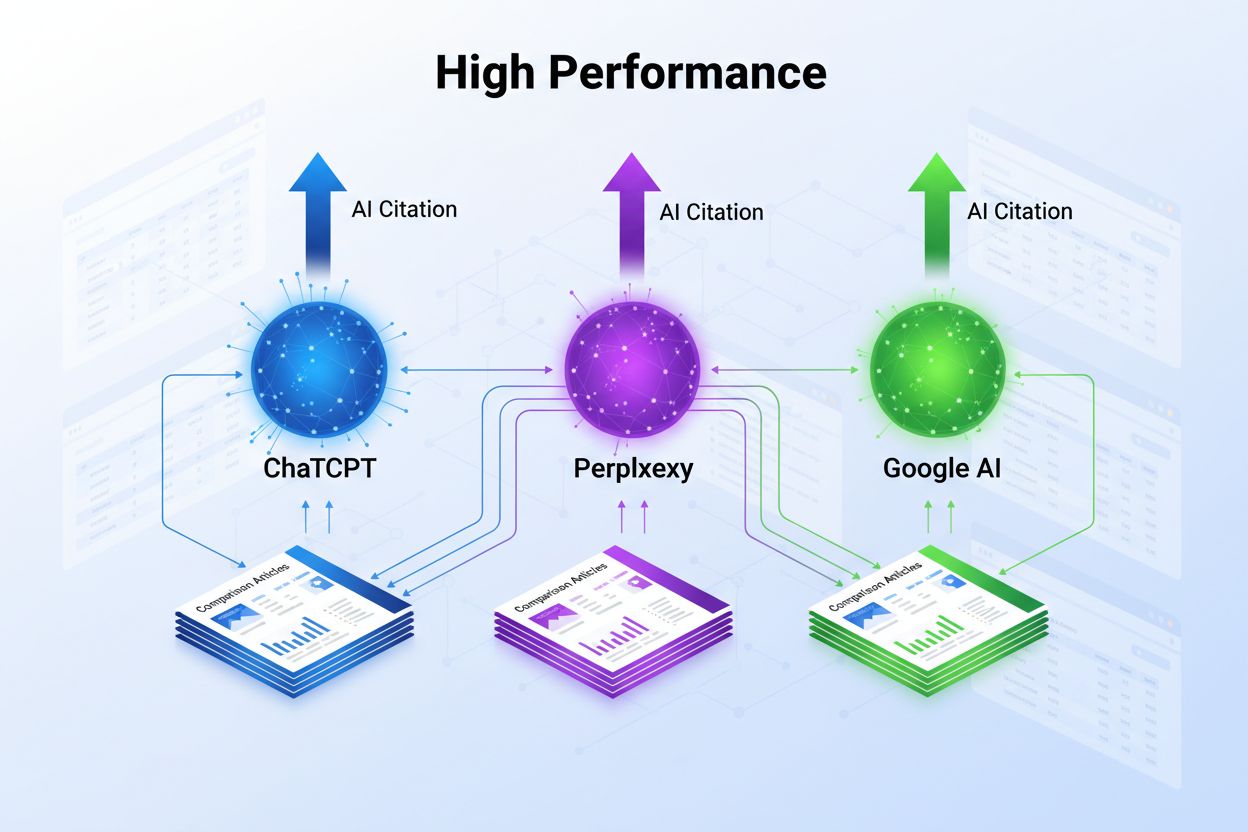
These variations stem from fundamental architectural differences: retrieval-augmented systems like Perplexity cite significantly more sources because they actively fetch and reference external content during response generation, while parametric models like ChatGPT rely on training data patterns. Perplexity’s 8.79 average citations per response dwarfs Google AI Overview’s 0.29, demonstrating how retrieval-augmented approaches prioritize source attribution. The data reveals that 35-40% of queries show completely disjoint source sets across models, meaning the same comparison article may be cited by one platform while ignored by another. This fragmentation underscores why comparison articles must be optimized for multiple AI architectures simultaneously. Comparison content performs exceptionally well across all platforms because it provides the structured context that both parametric and retrieval-augmented systems require—parametric models recognize comparison patterns from training data, while retrieval-augmented systems easily extract comparable data points for citation.
Ready to Monitor Your AI Visibility?
Track how AI chatbots mention your brand across ChatGPT, Perplexity, and other platforms.
The Anatomy of High-Performing Comparison Articles
High-performing comparison articles share consistent structural elements that maximize AI citation potential:
• Clear comparative headers – Use “X vs Y” or “X Compared to Y” formatting that AI systems immediately recognize as comparative content, improving indexing and retrieval accuracy
• Structured data tables – Present side-by-side feature comparisons, pricing matrices, and specification tables that allow AI systems to extract information with precision and cite specific data points
• Detailed feature breakdowns – Organize comparisons by category (pricing, features, ease of use, integrations) so AI models can cite relevant sections for specific user questions
• Quantified metrics and statistics – Include specific numbers, percentages, and benchmarks rather than vague claims, as AI systems prioritize concrete data for citations and verification
• Direct competitor mentions – Name specific products, services, or brands being compared, enabling AI systems to create comprehensive comparative responses with proper attribution
• Pros and cons sections – Structure advantages and disadvantages clearly for each option, allowing AI models to cite balanced perspectives that serve different user needs
• Real-world use case examples – Include specific scenarios showing when each option excels, providing contextual information that AI systems cite when answering nuanced comparative questions
• Updated publication dates and revision history – Display when content was last updated, signaling to AI systems that information is current and reliable for citation in responses
Comparison Articles vs. Other Content Formats
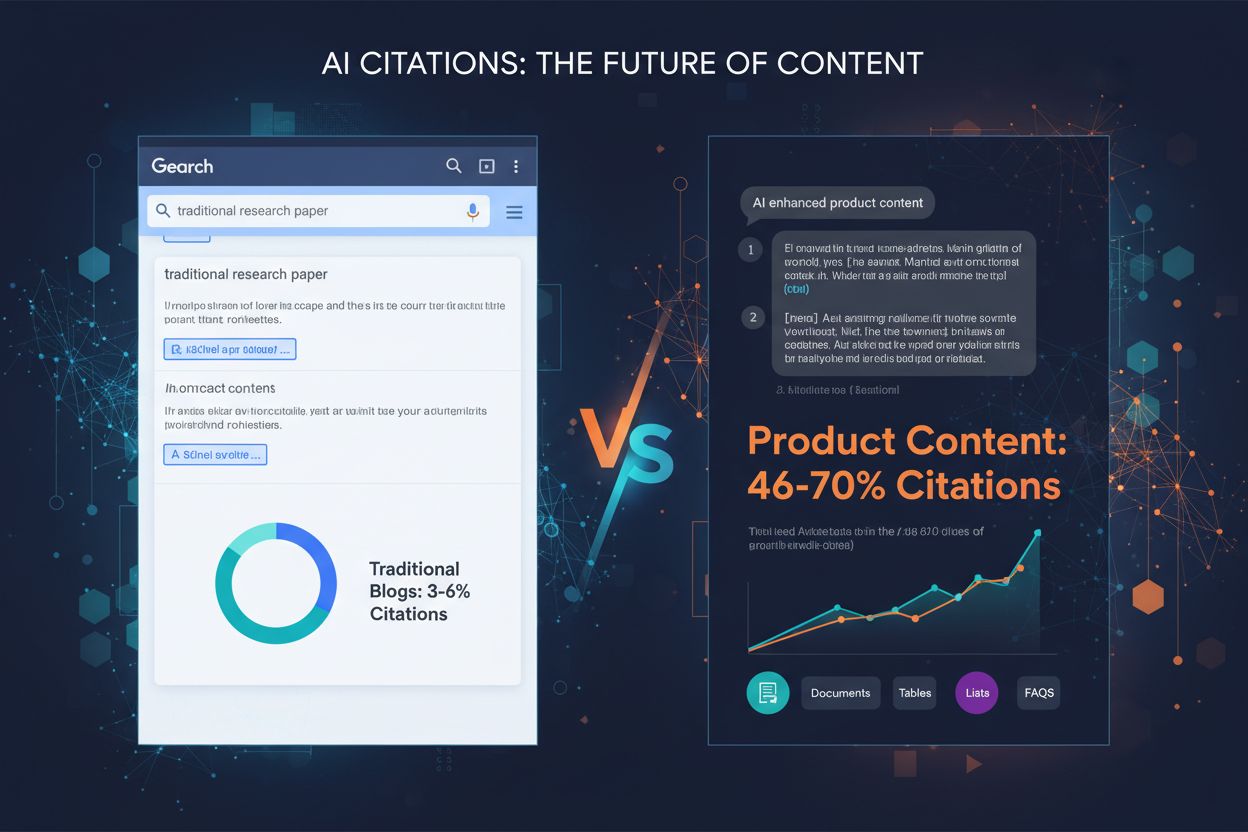
Comparison articles dramatically outperform alternative content formats in AI citation frequency, with research showing comparison content receives 2-3x more citations than FAQs, guides, or case studies. While FAQ pages address individual questions effectively, they lack the comprehensive context that AI systems need to provide thorough comparative responses—AI models must synthesize information across multiple FAQ entries rather than citing a single authoritative source. Long-form guides offer depth but bury comparative information within narrative sections, making it difficult for AI systems to extract and attribute specific comparisons. Case studies provide valuable proof points but focus on single solutions rather than comparative analysis, limiting their relevance when users ask “which option is better?” Comparison articles combine the structured clarity of FAQs with the comprehensive depth of guides, creating the ideal format for AI citation. The format’s superiority stems from how it presents information: side-by-side tables, organized feature lists, and direct competitive analysis allow AI systems to cite entire sections as authoritative comparative sources. Organizations competing for AI search visibility must prioritize comparison content over traditional formats, as the citation advantage translates directly to increased visibility in AI-generated responses.
Stay Updated on AI Visibility Trends
Get the latest insights on AI mentions, brand monitoring, and optimization strategies.
Optimization Strategies for Comparison Content
Optimizing comparison articles for AI search requires strategic implementation of AI-specific best practices that enhance both discoverability and citation frequency. Structure your headings using “vs” and “comparison” keywords (“Product A vs Product B,” “Comparison: Feature X Across Solutions”) to align with how AI systems recognize comparative queries and retrieve relevant content. Implement schema markup for comparison data, using structured formats that allow AI systems to parse and cite specific data points with confidence—this is particularly important for pricing, specifications, and feature comparisons. Create comprehensive comparison tables with clear column headers and row labels, as AI systems extract tabular data more reliably than narrative text and cite tables as authoritative sources. Include quantified metrics and performance benchmarks rather than subjective assessments, since AI models prioritize concrete data for citations and users trust numerical comparisons more than opinion-based analysis. Embed high-quality screenshots and visual comparisons showing user interfaces, dashboards, or feature demonstrations, as multi-modal content provides additional context that AI systems reference when generating responses. Maintain internal linking between related comparison articles and category pages to establish topical authority, signaling to AI systems that your site comprehensively covers comparative analysis in your domain. Update comparison articles quarterly or when products change significantly, as AI systems recognize fresh content as more reliable for citations and users expect current information in comparative analysis.
Real-World Examples of Highly-Cited Comparisons
Successful comparison articles across industries demonstrate consistent patterns that drive exceptional AI citation rates and visibility. In the B2B SaaS space, detailed comparisons of project management tools, CRM platforms, and marketing automation software consistently rank among the most-cited content, with articles comparing Asana vs Monday.com or HubSpot vs Salesforce receiving citations across all major AI platforms. E-commerce comparison articles analyzing product categories—smartphones, laptops, fitness trackers—generate massive citation volume because they directly answer high-intent user queries that AI systems encounter frequently. Technology reviews comparing cloud providers, programming languages, or development frameworks achieve exceptional citation rates because they serve both professional and educational audiences seeking authoritative comparative analysis. AmICited.com’s tracking data reveals that comparison articles in these categories consistently appear in 60-80% of AI-generated responses for relevant queries, compared to 15-25% for traditional guides. The most-cited comparisons share common characteristics: they include specific pricing information, quantified performance metrics, real-world use case examples, and honest assessments of when each option excels. Organizations that publish comprehensive, regularly-updated comparison articles in competitive categories establish themselves as go-to sources for AI citations, driving sustained visibility across ChatGPT, Perplexity, Google AI, and emerging AI search platforms.
The Role of Comparison Articles in Building Authority
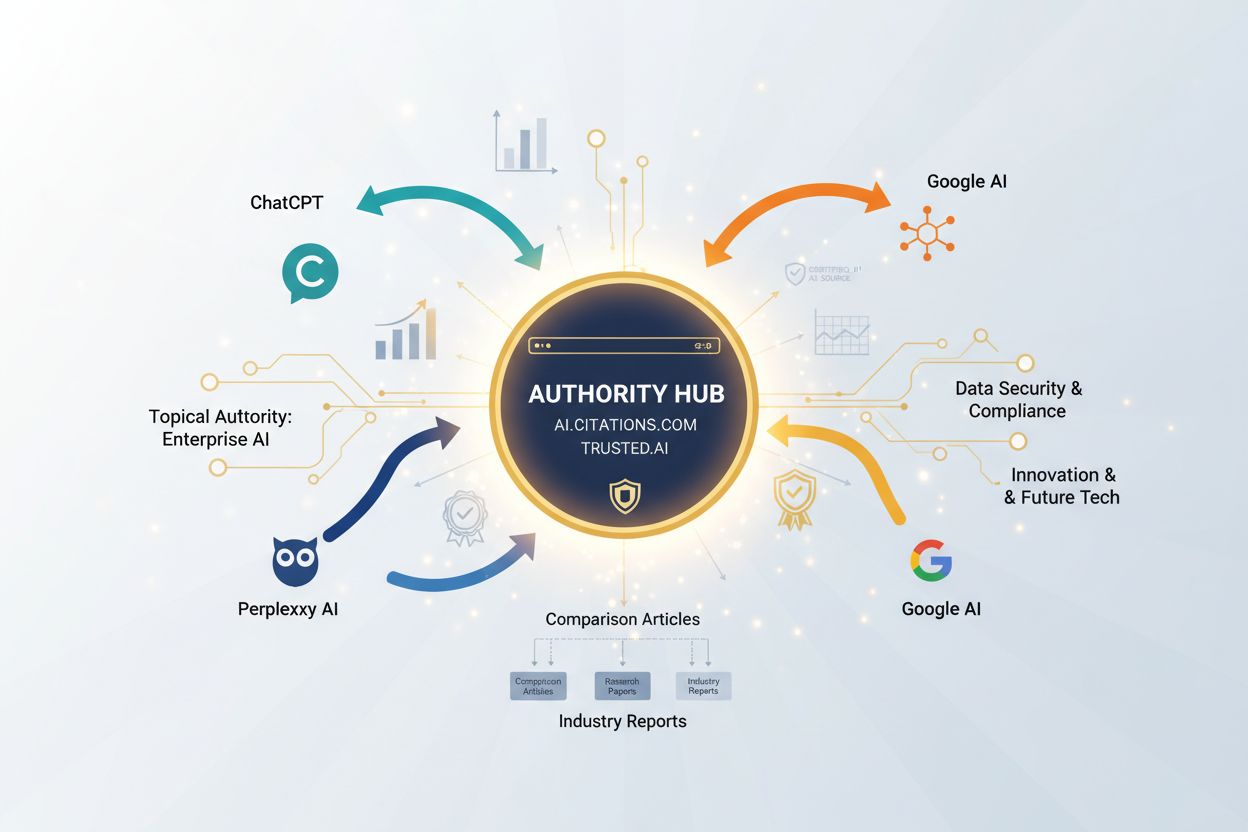
Comparison articles function as powerful authority-building tools that establish topical expertise and credibility across your entire domain. By comprehensively analyzing multiple solutions within a category, you demonstrate deep market knowledge and balanced perspective—two critical E-E-A-T signals that AI systems evaluate when determining citation reliability. Comparison content naturally showcases your Experience and Expertise by requiring detailed product knowledge, feature understanding, and nuanced analysis that casual observers cannot provide. The format builds Authority by positioning your organization as the definitive source for comparative analysis in your space, encouraging other sites to link to your comparisons and AI systems to cite your work. Trust emerges from transparent, balanced comparisons that acknowledge strengths and weaknesses across all options rather than promoting a single solution, signaling to AI systems that your analysis is objective and reliable. AmICited.com’s monitoring reveals that sites publishing regular comparison content see 40-60% increases in AI citations across their entire domain, as AI systems recognize comprehensive comparative analysis as a signal of overall topical authority. This halo effect extends beyond comparison articles themselves—AI systems cite other content from authority-building sites more frequently, multiplying the ROI of comparison content investment. Organizations that establish themselves as comparison authorities in their niche gain compounding visibility advantages as AI systems increasingly prioritize citations from recognized expert sources.
Future Trends in Comparison Content for AI Search
The future of comparison content in AI search will be shaped by emerging technologies and evolving user expectations that create new opportunities for differentiation. Multi-modal comparisons combining video demonstrations, interactive tools, and dynamic pricing data will become standard, as AI systems increasingly incorporate visual and interactive content in their responses—early adopters will gain significant citation advantages. Real-time comparison updates powered by APIs and automated data feeds will enable comparison articles to stay current without manual updates, allowing AI systems to cite information with confidence that it reflects current market conditions. Personalized comparison frameworks that adapt recommendations based on user context, budget, and use case will emerge as AI systems become more sophisticated at understanding nuanced user needs and citing relevant comparative sections. Vertical-specific comparison formats tailored to particular industries, company sizes, or technical requirements will proliferate, allowing organizations to dominate niche comparative queries where generic comparisons fall short. Comparative analysis of emerging technologies—AI tools, blockchain solutions, Web3 platforms—will become increasingly valuable as these categories mature and users seek authoritative guidance. Organizations that innovate beyond static comparison tables—incorporating interactive elements, real-time data, personalization, and multi-modal content—will capture disproportionate citation share as AI systems reward comprehensive, dynamic comparative resources. The competitive advantage belongs to those who recognize that comparison content is not a static format but an evolving category where innovation in presentation, data integration, and user experience directly translates to increased AI visibility and authority.
Frequently asked questions
What makes comparison articles so effective for AI citations?
Comparison articles provide structured, scannable content that AI systems can easily extract and synthesize. They present multiple perspectives in one place, which is exactly what AI models need to generate comprehensive answers. The format mirrors how users ask questions ('X vs Y'), making it naturally aligned with AI search intent.
Which AI platforms cite comparison articles most frequently?
Perplexity cites the most sources overall (8.79 average citations per response), making it highly likely to cite comparison articles. ChatGPT mentions brands in 99.3% of eCommerce responses, often using comparison data. Google AI Overview and Google AI Mode both cite comparison content, though with different frequencies depending on query type.
How should I structure a comparison article for maximum AI visibility?
Use clear side-by-side tables, include specific metrics and benchmarks, add 'best for' recommendations, and structure with question-led headings. Include schema markup for comparison charts, ensure mobile optimization, and keep data points scannable. Update regularly with fresh information to maintain citation relevance.
Can comparison articles help with brand mentions in AI search?
Yes, absolutely. Comparison articles that include your product or service increase the likelihood of brand mentions in AI-generated answers. Being featured in comparison content positions your brand as a credible option, and AI systems cite these articles when answering 'which tool should I use' type questions.
How often should I update comparison articles?
Update comparison articles at least quarterly to maintain accuracy and freshness. AI systems prioritize recent, accurate information. Regular updates signal to AI crawlers that your content is current and reliable, increasing citation probability. Major product changes or new competitors should trigger immediate updates.
What metrics should I track for comparison article performance in AI search?
Monitor brand mentions in AI platforms using tools like AmICited.com, track citation frequency across ChatGPT, Perplexity, and Google AI systems, measure organic traffic from AI-driven sources, and analyze which comparison points get cited most frequently. These metrics reveal what resonates with AI systems and users.
Are comparison articles better than other content formats for AI visibility?
Comparison articles consistently outperform other formats in citation frequency. While FAQs, guides, and case studies are valuable, comparison articles provide comprehensive context that AI systems prefer. They're particularly effective for decision-making queries where users want to evaluate multiple options.
How do I ensure my comparison articles rank in AI search results?
Focus on accuracy and comprehensiveness, include original data and benchmarks, optimize for comparison-related keywords, build topical authority around your niche, and ensure technical SEO excellence. Use schema markup, maintain content freshness, and build backlinks from authoritative sources. Monitor your visibility with AI-specific tools.
Monitor Your Brand's AI Citations
See how often your brand appears in AI search results. Track citations across ChatGPT, Perplexity, and Google AI with AmICited.com
How to Create AI-Friendly Comparison Content for ChatGPT, Perplexity & Google AI
Learn to create comparison content optimized for AI citations. Use structured tables, schema markup, and fact-dense formatting to get cited in ChatGPT, Perplexi...
Which Content Formats Get More AI Citations? Data Analysis
Discover which content formats get cited most by AI models. Analyze data from 768,000+ AI citations to optimize your content strategy for ChatGPT, Perplexity, a...
Testing Content Formats for AI Citations: Experiment Design
Learn how to test content formats for AI citations using A/B testing methodology. Discover which formats drive the highest AI visibility and citation rates acro...
10 min read
Cookie Consent We use cookies to enhance your browsing experience and analyze our traffic. See our privacy policy.