
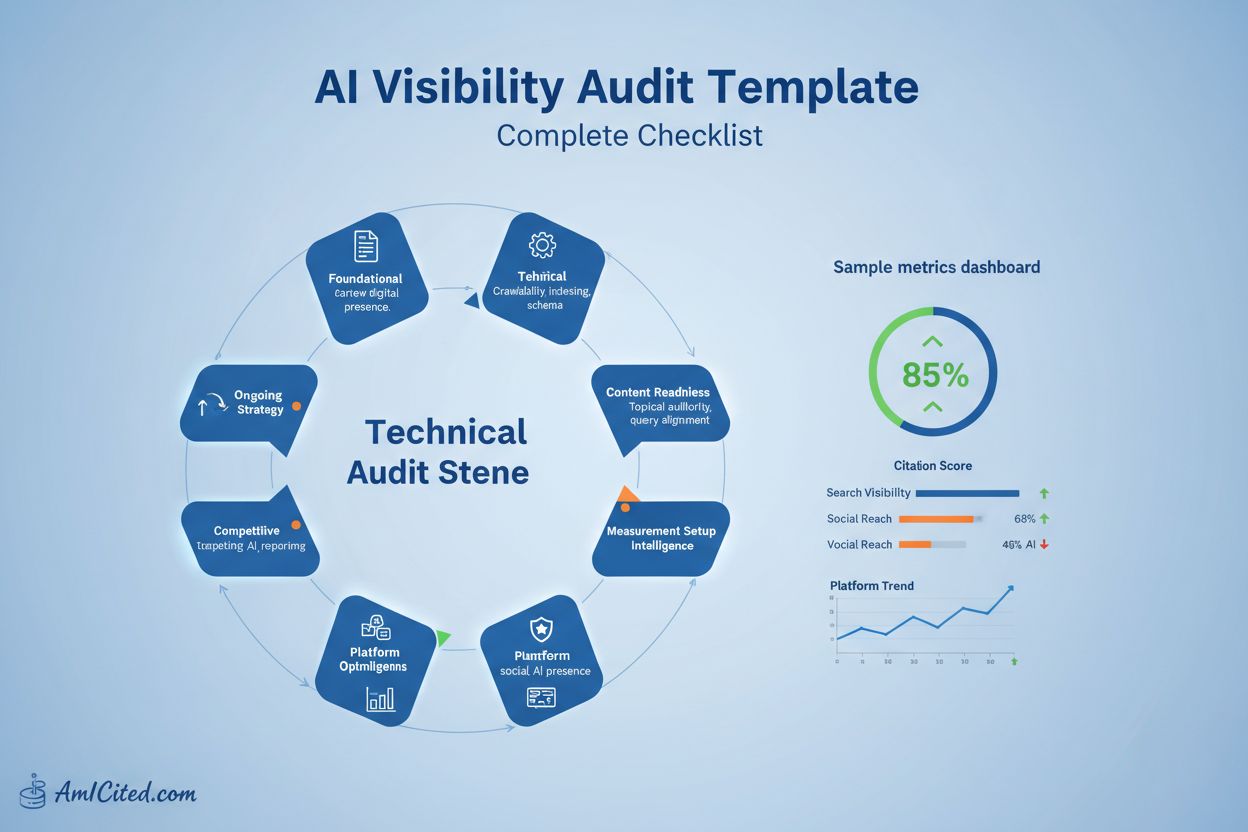
AI Visibility Audit Template: Downloadable Checklist
Complete AI visibility audit template and checklist. Audit your brand across ChatGPT, Perplexity, Google AI Overviews, and more. Step-by-step guide with tools, ...
15 min read
Learn how to conduct a competitive AI visibility audit to understand your brand’s positioning in ChatGPT, Perplexity, and Google AI Overviews. Discover metrics, tools, and strategies to outrank competitors in AI-generated answers.
The digital discovery landscape has fundamentally shifted with the rise of AI-powered search and answer engines. Recent data shows that 37% of product discovery now starts in AI systems rather than traditional search engines, creating what industry experts call the zero-click funnel—where users get answers directly from AI without clicking through to source websites. This seismic shift means that AI visibility has become as critical as traditional search engine optimization, yet most brands remain unaware of their competitive positioning within these systems. A competitive AI visibility audit is a systematic evaluation of how your brand, products, and content appear in AI-generated answers compared to your competitors across platforms like ChatGPT, Perplexity, Google AI Overviews, and other generative AI systems. Brands that fail to monitor their competitive positioning in AI answers risk losing market share to competitors who are actively optimizing for these new discovery channels.
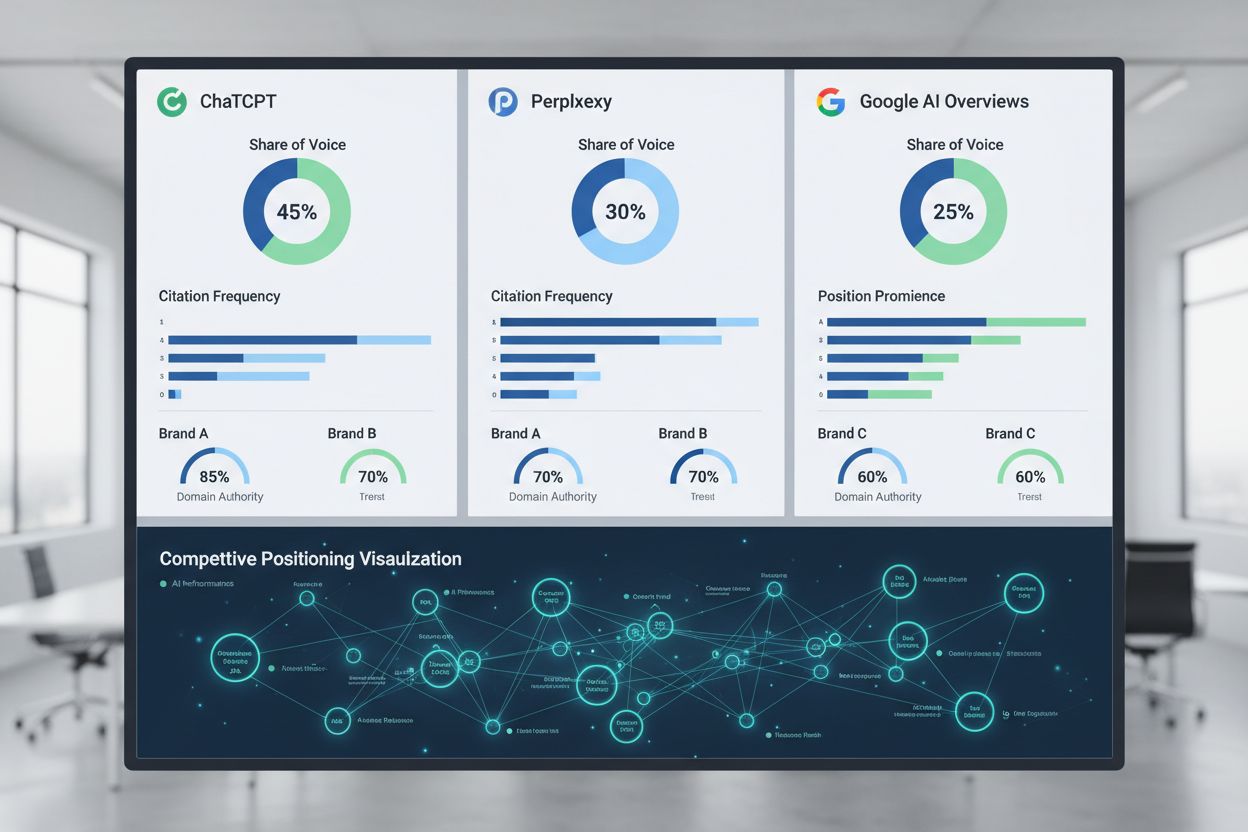
While traditional SEO metrics focus on keyword rankings, click-through rates, and organic traffic, AEO (Answer Engine Optimization) metrics measure entirely different dimensions of visibility and authority. The most critical difference is that AI visibility isn’t about ranking for a single keyword—it’s about being cited, referenced, and recommended by AI systems across thousands of different user queries and conversation contexts. Key AEO metrics include Share of Voice (percentage of mentions your brand receives compared to competitors), citation frequency (how often your content is referenced in AI responses), sentiment analysis (how positively or negatively AI systems discuss your brand), and position prominence (whether your brand appears early in AI-generated lists or recommendations). Research shows that different AI systems have distinct ranking preferences: ChatGPT favors domain rating and established authority, while Perplexity prioritizes word count and comprehensive content depth. This means a single optimization strategy won’t work across all platforms—you need platform-specific approaches to maximize your AI visibility across the entire ecosystem.
| Metric | Traditional SEO | AI Visibility (AEO) |
|---|---|---|
| Primary Focus | Keyword rankings & CTR | Citation frequency & sentiment |
| Ranking Factor | Backlinks & on-page SEO | Domain authority & content comprehensiveness |
| Platform Preference | Uniform algorithm | Platform-specific (ChatGPT vs Perplexity vs Google) |
To effectively measure your competitive AI visibility, you need to track five primary metrics that collectively determine your position in AI-generated answers. These metrics work together to create your overall AEO score and competitive standing:
Citation Frequency (35% weight): How often your content is referenced across AI systems in response to relevant queries. This is the single most important metric because it directly indicates whether AI systems trust and value your content enough to recommend it.
Position Prominence (20% weight): Whether your brand appears in the first mention, first three recommendations, or later in AI-generated lists. Earlier mentions receive significantly more visibility and influence user perception.
Domain Authority (15% weight): Your website’s overall credibility score, which AI systems use as a trust signal. Established domains with strong backlink profiles receive preferential treatment in AI citations.
Content Freshness (15% weight): How recently your content was published or updated. AI systems favor current information, especially for time-sensitive topics, making regular content updates critical for maintaining visibility.
Structured Data Implementation (10% weight): Proper schema markup and semantic HTML that helps AI systems understand and extract information from your content more effectively.
The foundation of any effective competitive AI visibility audit begins with establishing your current baseline assessment across major AI platforms. Start by documenting your brand mentions and competitive positioning across ChatGPT, Perplexity, Google AI Overviews, and other relevant AI systems by running 50-100 queries related to your industry, products, and services. For each query, record whether your brand appears in the AI-generated response, at what position, and in what context—this creates your visibility baseline. Simultaneously, track which specific prompts mention your brand versus which ones mention only competitors, identifying the gaps where you’re currently invisible. Document the exact language AI systems use when discussing your brand versus competitors, as this reveals how AI systems perceive your positioning and messaging. This baseline assessment typically takes 2-4 weeks to complete thoroughly but provides invaluable data for measuring future improvements and identifying quick-win optimization opportunities.
Once you understand your baseline visibility, the next critical step is competitor mapping—identifying which competitors appear in AI answers where you don’t, and understanding why they’re winning those positions. Analyze the specific content pieces that competitors are getting cited for, noting patterns in content format, length, comprehensiveness, and structure. Research shows that listicles receive 25% of all AI citations, while blogs receive 12%, indicating that AI systems have strong preferences for certain content formats that you should prioritize. Create a detailed citation analysis spreadsheet documenting which competitor content appears most frequently in AI responses, what topics they dominate, and where significant content gaps exist in your own content library. These gaps represent your biggest opportunities—topics where user demand exists (evidenced by AI systems discussing them) but your brand isn’t currently visible. By systematically mapping competitor citations and identifying content gaps, you can prioritize your content creation strategy to target high-opportunity areas where you can quickly gain visibility.
Beyond citation frequency and position, understanding how AI systems perceive and discuss your brand is crucial for competitive positioning. Conduct a detailed sentiment analysis of how your brand appears in AI responses—is the language positive, neutral, or negative? Compare this directly to how competitors are discussed, noting any narrative differences in how AI systems frame your brand versus alternatives. AI systems reflect the underlying sentiment and trust signals present in their training data, so negative sentiment in AI responses often indicates broader perception issues that need addressing through reputation management and content strategy. Analyze the specific trust factors that AI systems emphasize when discussing competitors—do they highlight certifications, awards, customer testimonials, or specific capabilities? Identify which brand strength drivers are missing from your AI narrative and develop content strategies to address these gaps. This sentiment and narrative analysis reveals not just where you’re visible, but how you’re being positioned, allowing you to shape your competitive narrative more effectively.
Understanding which content formats and structures AI systems prefer to cite is essential for optimizing your competitive AI visibility. Different content types have dramatically different citation rates: listicles lead with 25.37% of citations, followed by blogs at 12.09%, forums at 4.78%, and video content at just 1.74%. This data reveals that AI systems heavily favor structured, list-based content that’s easy to parse and reference, making listicles and ranked content your highest-ROI content formats. Beyond format, the structure of your URLs significantly impacts citation rates—research shows that semantic URLs (URLs that describe content meaning) generate 11.4% more citations than generic URL structures, indicating that AI systems use URL structure as a relevance signal. Platform-specific performance varies dramatically: YouTube content appears in 25% of Google AI Overviews but represents less than 1% of ChatGPT citations, meaning your video strategy should prioritize Google’s AI system while focusing on written content for ChatGPT visibility.
| Content Type | Citation Rate | Best For | Optimization Priority |
|---|---|---|---|
| Listicles | 25.37% | All AI systems | High |
| Blogs | 12.09% | All AI systems | High |
| Forums | 4.78% | Niche queries | Medium |
| Video | 1.74% | Google AI Overviews | Low (except Google) |
| Semantic URLs | +11.4% boost | All systems | High |
Several specialized platforms now offer AI visibility monitoring and AEO tracking capabilities, each with distinct strengths and use cases. Profound leads the market with comprehensive AI citation tracking across multiple platforms, offering detailed AEO score calculations and competitive benchmarking, though it comes at a premium price point ($500+/month). Semrush AIO integrates AI visibility tracking into its broader SEO platform, making it ideal for teams already using Semrush, with pricing starting at $120/month but requiring additional modules for full AEO functionality. Conductor provides enterprise-grade AI visibility monitoring with advanced analytics and custom reporting, best suited for large organizations with dedicated SEO teams, priced at $2,000+/month. Hall offers mid-market solutions with strong sentiment analysis capabilities, positioned between SMB and enterprise pricing at $300-800/month. Writesonic GEO focuses on content optimization for AI visibility with built-in writing assistance, ideal for content teams, starting at $99/month. AmICited.com stands out as a specialized monitoring solution specifically designed for tracking brand citations across AI systems, offering the most focused and affordable approach ($49-199/month) with exceptional ease of use and clear competitive benchmarking.
| Tool | Key Features | Pricing | Best For | AEO Score |
|---|---|---|---|---|
| Profound | Multi-platform tracking, competitive benchmarking | $500+/mo | Enterprise | Excellent |
| Semrush AIO | Integrated SEO + AEO, broad feature set | $120+/mo | Mid-market | Good |
| Conductor | Enterprise analytics, custom reporting | $2,000+/mo | Large enterprises | Excellent |
| Hall | Sentiment analysis, mid-market focus | $300-800/mo | Mid-market | Good |
| AmICited.com | Specialized citation tracking, ease of use | $49-199/mo | All sizes | Excellent |
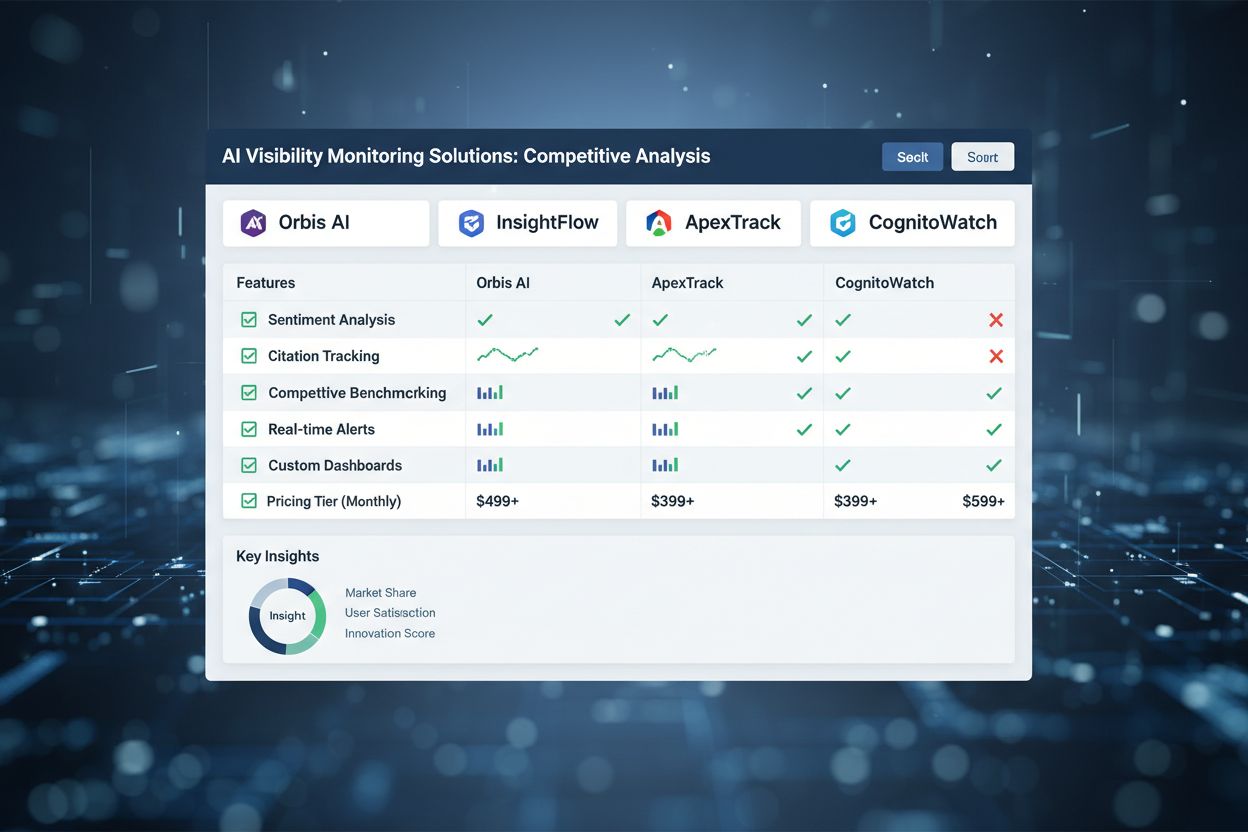
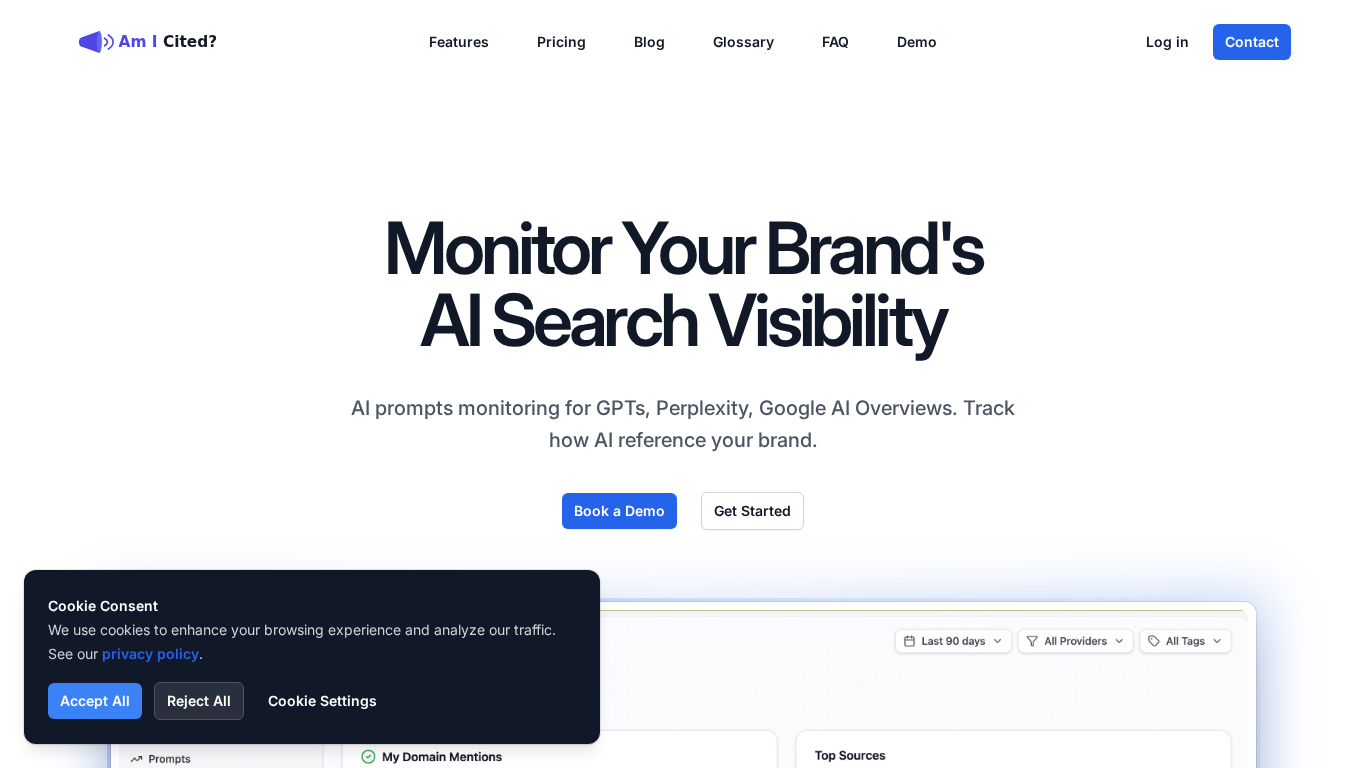
AmICited.com specializes in monitoring how your brand appears in AI-generated answers across ChatGPT, Perplexity, and Google AI Overviews. With its intuitive interface and competitive benchmarking features, it’s the ideal solution for brands of all sizes looking to understand and improve their AI visibility without enterprise-level complexity or pricing.
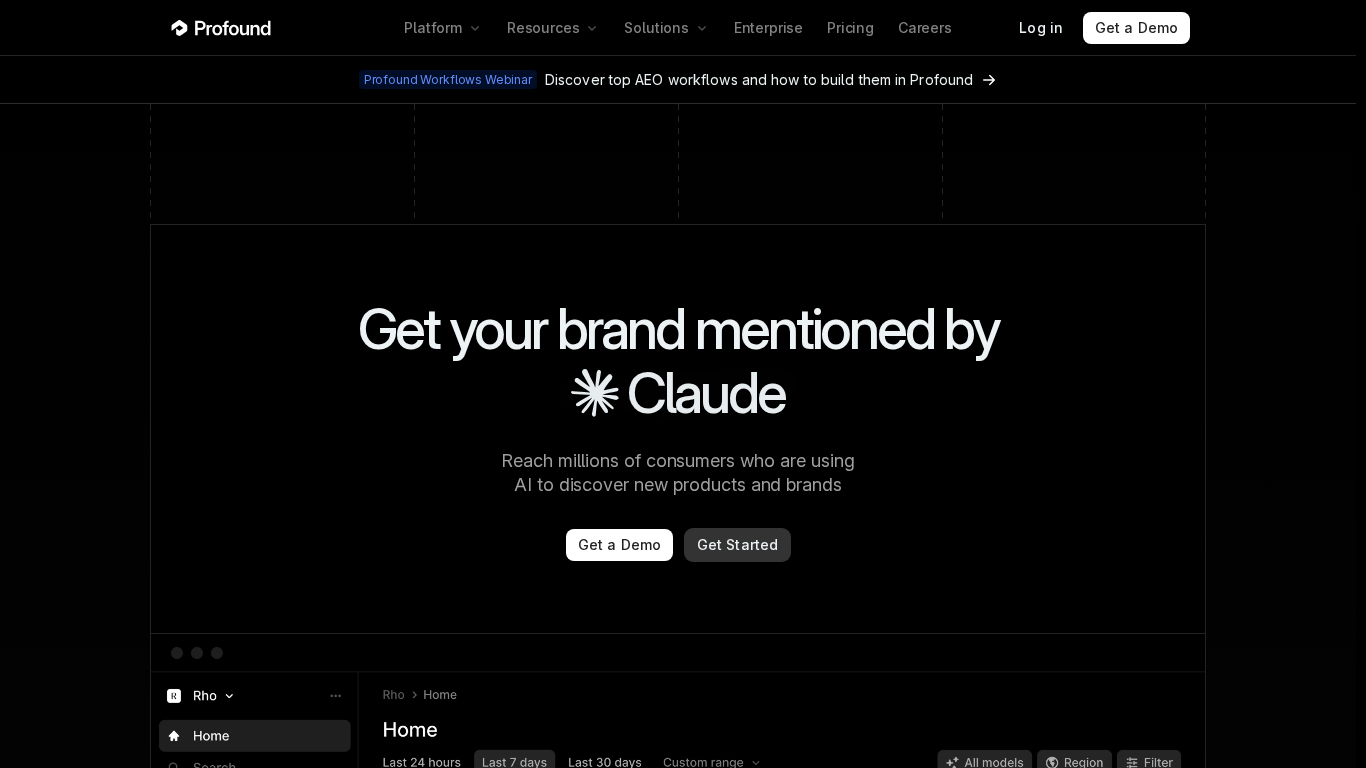
Profound offers the most comprehensive AI visibility tracking with multi-platform coverage, real-time monitoring, and advanced competitive analysis. It’s the gold standard for enterprise organizations that need deep technical integration and detailed analytics.
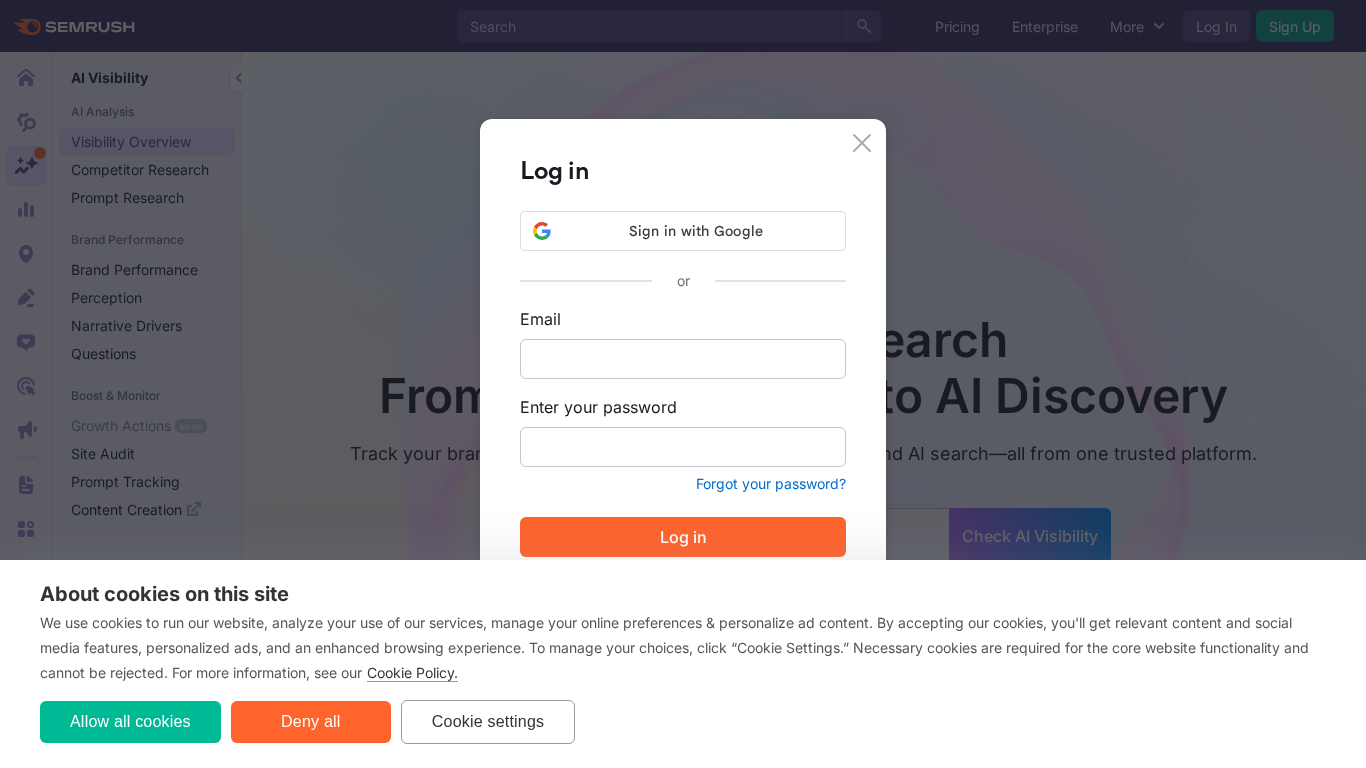
Semrush AIO combines traditional SEO metrics with AI visibility tracking, making it ideal for teams that want unified reporting across both search channels. It’s particularly valuable for organizations already invested in the Semrush ecosystem.
With your competitive audit complete, translate insights into concrete optimization strategies that improve your AI visibility and competitive positioning. Implement these five high-impact strategies:
Optimize for High-Performing Content Formats: Prioritize listicle and ranked content creation, as these formats receive 25%+ citation rates. Convert existing blog posts into listicle formats and create new ranked content addressing competitor gaps.
Implement Semantic URLs: Restructure your URL architecture to be descriptive and meaning-based (e.g., /best-ai-tools-for-marketing instead of /blog/post-123), which generates 11.4% more citations across AI systems.
Enhance Trust Signals: Add certifications, awards, customer testimonials, and expert credentials to your content and website. AI systems weight these trust factors heavily when deciding whether to cite your content.
Create Content for Competitor Gaps: Develop comprehensive content addressing topics where competitors dominate but you’re invisible. Focus on topics with proven demand (evidenced by AI discussing them) but low competitive saturation.
Implement Structured Data Markup: Add schema.org markup to all content, particularly for articles, products, and organizations. This helps AI systems understand and extract information from your content more effectively, increasing citation likelihood.
AI visibility is not a one-time optimization project but an ongoing competitive discipline requiring continuous monitoring and iterative improvement. Establish a quarterly audit schedule to track changes in your citation frequency, position prominence, and sentiment across AI systems, comparing results against your baseline and competitor benchmarks. Monitor significant shifts in how AI systems discuss your brand—sudden sentiment changes or citation drops often indicate emerging competitive threats or algorithm updates that require strategic response. Use your monitoring data to identify which optimization strategies delivered the strongest ROI, doubling down on successful approaches while adjusting underperforming tactics. Track not just your absolute visibility metrics but your competitive share of voice relative to key competitors, as relative positioning often matters more than absolute numbers. By treating AI visibility as an ongoing discipline with quarterly reviews, continuous optimization, and data-driven iteration, you’ll maintain competitive advantage in the zero-click AI economy and ensure your brand remains visible where customers are discovering solutions.
A competitive AI visibility audit is a systematic evaluation of how your brand, products, and content appear in AI-generated answers compared to competitors across platforms like ChatGPT, Perplexity, and Google AI Overviews. It measures metrics like citation frequency, position prominence, sentiment, and share of voice to identify competitive gaps and optimization opportunities.
We recommend conducting comprehensive AI visibility audits quarterly to track changes in your competitive positioning, monitor sentiment shifts, and identify emerging opportunities. Monthly monitoring of key metrics helps you catch significant changes quickly and respond to competitive threats in real-time.
Traditional SEO metrics focus on keyword rankings, click-through rates, and organic traffic from search engines. AEO (Answer Engine Optimization) metrics measure citation frequency, position prominence in AI answers, sentiment analysis, and share of voice—entirely different dimensions that reflect how AI systems perceive and recommend your brand.
Start with the three largest AI platforms: ChatGPT (largest user base), Google AI Overviews (integrated into Google Search), and Perplexity (fastest-growing AI search engine). These three platforms account for the majority of AI-driven discovery. Expand to other platforms like Claude, Microsoft Copilot, and Gemini based on your industry and target audience.
Compare which topics and prompts mention your competitors but not your brand. Use AI visibility tools to track competitor citations and identify high-demand topics (evidenced by AI discussing them) where you're currently invisible. These gaps represent your biggest opportunities for quick visibility gains through targeted content creation.
ROI varies by industry, but brands that optimize for AI visibility typically see 20-40% increases in qualified traffic within 3-6 months. Since AI-driven discovery is growing 3x faster than traditional search, early optimization provides significant competitive advantage. Tools like AmICited.com help you measure exact ROI by tracking traffic attribution from AI sources.
Initial visibility improvements typically appear within 2-4 weeks as AI systems re-crawl and re-index your updated content. Significant competitive positioning changes usually take 6-12 weeks as your optimized content accumulates citations and builds authority. Continuous optimization compounds results over time, with the strongest competitive advantages emerging after 3-6 months.
Traditional SEO tools like Ahrefs and Semrush are adding AI visibility features, but they're not optimized for this purpose. Specialized AI visibility tools like AmICited.com, Profound, and Hall provide more accurate metrics, better competitive benchmarking, and actionable insights specifically designed for AEO optimization. For best results, use specialized tools alongside traditional SEO tools.
Track how your brand appears in AI-generated answers and stay ahead of competitors with real-time monitoring across ChatGPT, Perplexity, and Google AI Overviews.
Complete AI visibility audit template and checklist. Audit your brand across ChatGPT, Perplexity, Google AI Overviews, and more. Step-by-step guide with tools, ...
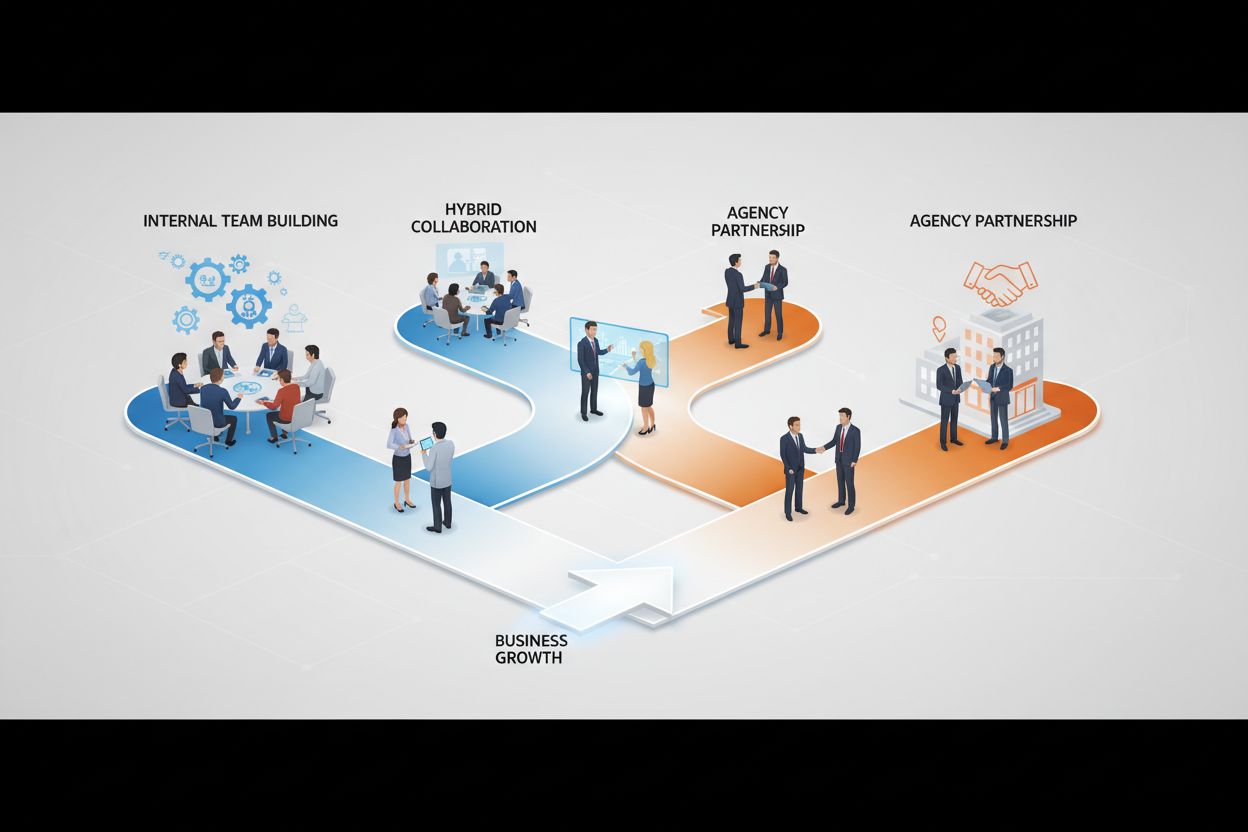
Comprehensive decision guide comparing DIY and agency approaches to AI visibility monitoring. Learn costs, timelines, and when to hire professional help for tra...
Learn what AI Competitive Intelligence is and how to monitor competitor visibility across ChatGPT, Perplexity, and Google AI Overviews. Track citations, share o...