
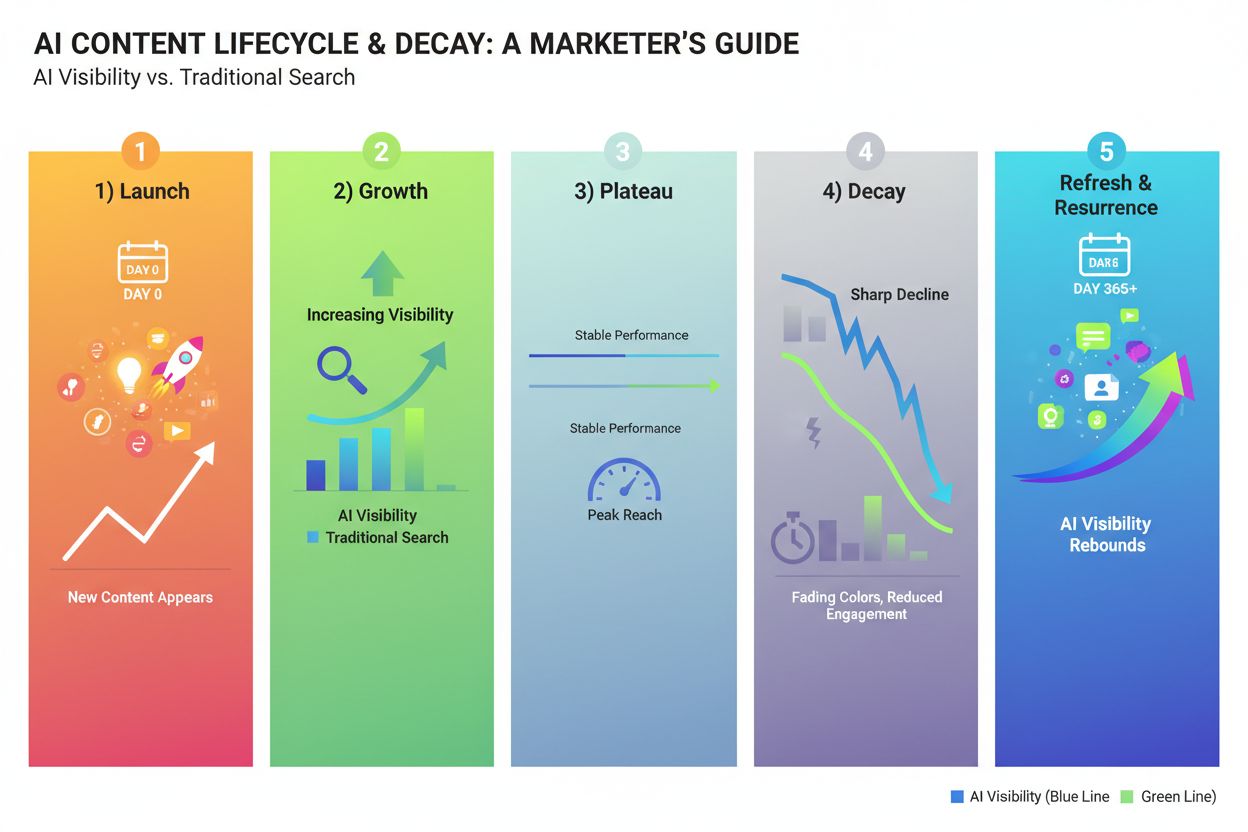
Content Freshness: How Often to Update for AI Visibility
Learn how often to update content for AI visibility. Discover freshness signals, update frequency guidelines, and monitoring strategies for ChatGPT, Perplexity,...
8 min read
Learn proven content refresh strategies to boost your brand visibility in AI search engines like ChatGPT, Google AI Overviews, and Perplexity. Discover how to update content for maximum AI citations.
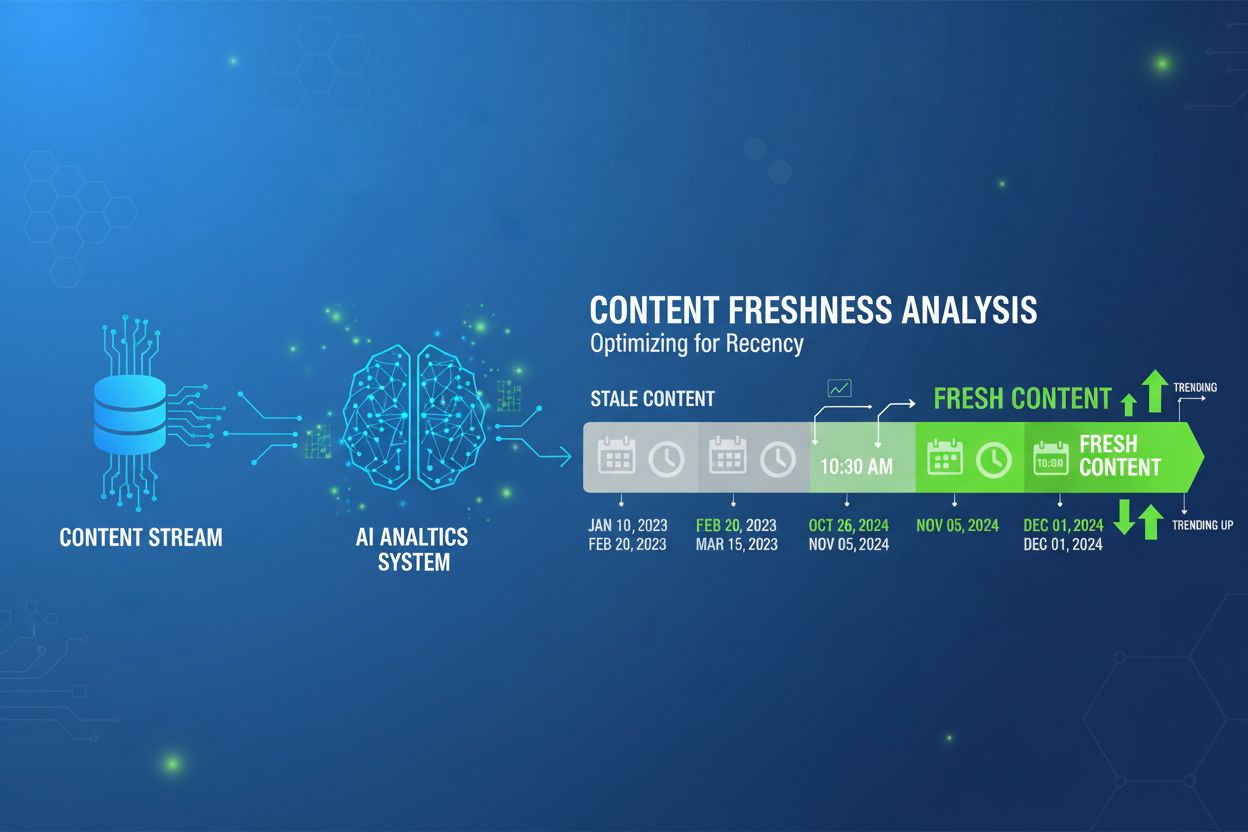
Search engines and AI systems increasingly prioritize fresh, updated content as a signal of relevance and reliability. An Ahrefs study analyzing over 2 million web pages found that content updated within the last three months received 40% more visibility in search results compared to stale content, with AI systems showing even stronger preferences for recency signals. When AI models like ChatGPT and Perplexity cite sources, they disproportionately favor articles with recent publication or update dates, treating byline freshness as a proxy for accuracy and current information. Content that hasn’t been touched in years signals to AI systems that the information may be outdated, potentially causing your expertise to be overlooked even if the core information remains valid. By strategically refreshing your content—updating statistics, adding new case studies, and revising outdated references—you send powerful signals to both search algorithms and AI citation systems that your content deserves visibility. This is particularly critical in fast-moving industries where AI systems must distinguish between authoritative sources and potentially obsolete information.
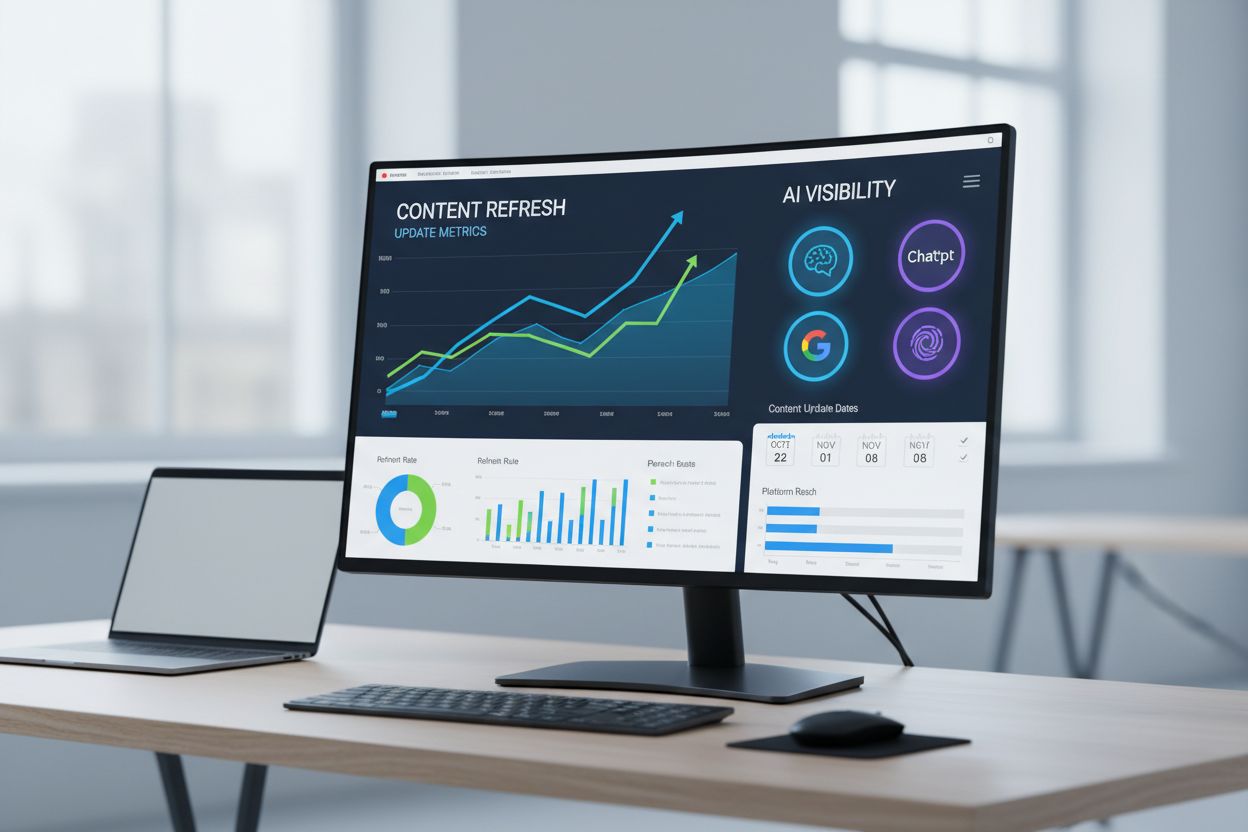
Different AI systems have distinct preferences for which sources they cite, and understanding these patterns is essential for optimizing your content refresh strategy. The table below illustrates how ChatGPT, Google AI Overviews, and Perplexity prioritize different citation signals:
| Citation Signal | ChatGPT Preference | Google AI Overviews | Perplexity Preference |
|---|---|---|---|
| Content Recency (Updated <3 months) | High | Very High | High |
| Domain Authority | Very High | High | Medium |
| Topical Depth (2,000+ words) | Medium | High | Very High |
| Schema Markup Implementation | Medium | Very High | High |
| Internal Link Structure | Low | Medium | Very High |
| Author Expertise Signals | High | High | Very High |
| Mobile Optimization | Medium | Very High | Medium |
These variations mean that a one-size-fits-all refresh strategy won’t maximize your visibility across all AI systems. ChatGPT tends to favor established authority and author credentials, making byline updates and author bio enhancements particularly valuable. Google AI Overviews prioritize technical SEO signals like schema markup and mobile optimization alongside content freshness, requiring a more comprehensive refresh approach. Perplexity’s algorithm shows the strongest preference for topical depth and internal linking structure, suggesting that content refreshes should include expanded sections and strategic internal link additions to capture this platform’s citations.
The first phase of an effective content refresh strategy involves systematically identifying which pages will deliver the highest ROI when updated. Follow these steps to prioritize your refresh efforts:
Identify High-Potential Pages
Analyze Current SERP Landscape
Tools like thruuu can help you quickly identify which of your existing pages have the highest potential for AI citation by analyzing their current topical coverage against what AI systems are actually citing. This analysis reveals whether your content is missing key subtopics, outdated statistics, or structural elements that AI systems prefer. By focusing your refresh efforts on pages with existing authority and traffic potential, you maximize the likelihood that your updates will translate into improved AI visibility rather than wasting resources on low-potential content.
Once you’ve identified your refresh candidates, the next phase involves creating detailed content briefs and systematically updating your pages. Create a content brief for each page that specifies:
When executing the refresh, use this checklist to ensure comprehensive updates:
The refresh process should take 4-8 hours per article depending on the extent of updates needed, with more substantial refreshes (adding 500+ words) requiring additional time for research and fact-checking.
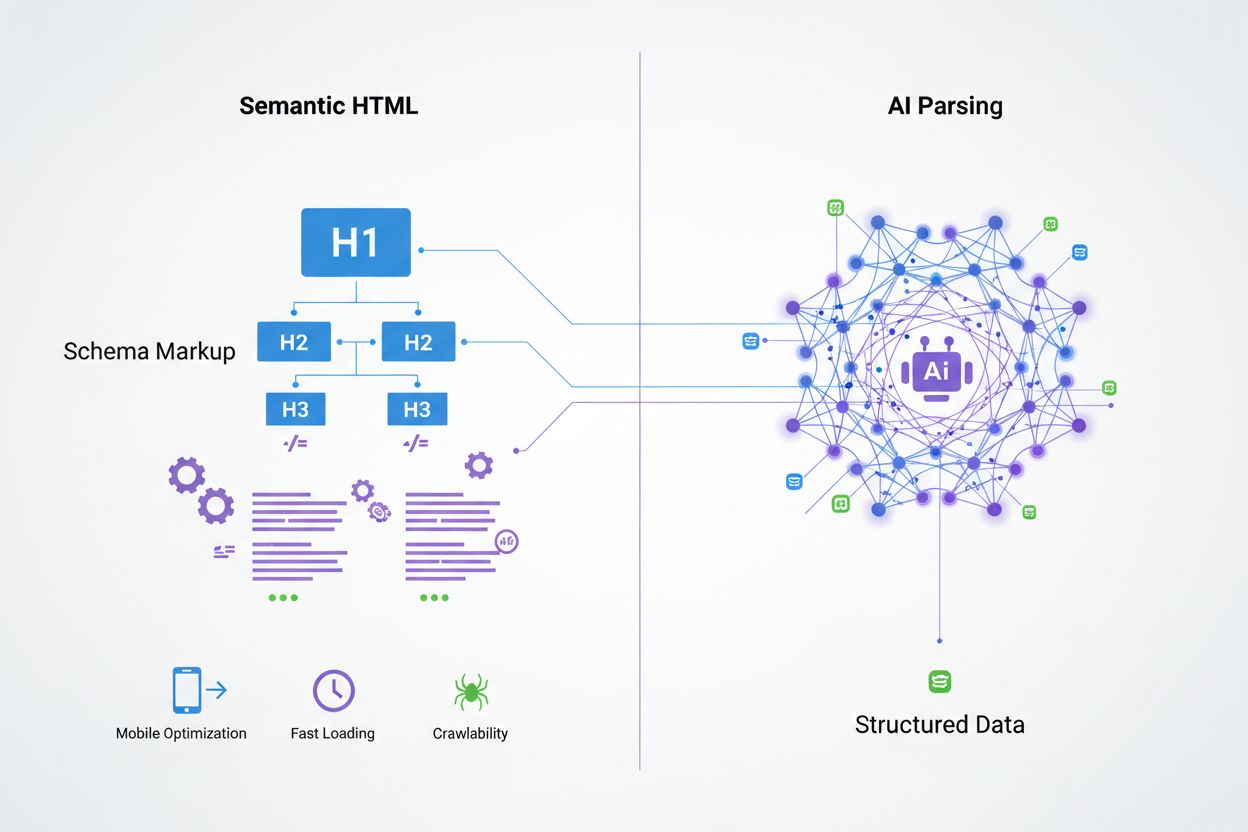
AI systems parse content differently than human readers, and your refresh strategy must account for how these systems extract and cite information. Structure your refreshed content with clear hierarchical organization using H2 and H3 headers that explicitly state the main concepts—AI systems use header hierarchy to understand content relationships and determine which sections are most citable. Break complex topics into scannable subsections with 150-250 words per section, as AI systems struggle to extract citations from dense paragraphs exceeding 300 words. Implement structured data markup including Article schema with updated dateModified, author information with credentials, and ClaimReview schema for any factual assertions, which significantly increases the likelihood that AI systems will cite your content as authoritative. Use bold text strategically to highlight key claims, statistics, and definitions that AI systems should prioritize when generating citations—this formatting helps AI systems identify the most important information within your content. Create definition sections for technical terms and industry jargon, as AI systems frequently cite these sections when explaining concepts to users. Ensure your content is mobile-optimized with proper viewport settings and fast loading times, as Google AI Overviews specifically prioritize mobile-friendly content when selecting sources to cite. Finally, avoid thin content and filler text—every paragraph should provide substantive value, as AI systems can detect and deprioritize padding or repetitive information.
Content refresh isn’t just about updating individual pages; it’s about strengthening your topical authority across your entire site. Create topic clusters by identifying 3-5 related articles that should link to your refreshed page using descriptive anchor text that includes your target keyword—this internal linking structure signals to AI systems that you have comprehensive coverage of a topic. Strengthen E-E-A-T signals by updating author bios to include relevant credentials, certifications, and previous publications, and by adding author schema markup that helps AI systems verify expertise. Conduct a backlink audit to identify high-authority external sites linking to your competitors’ content on the same topic, then reach out to these sites with information about your refreshed content and why it provides more current or comprehensive information. Expand your content depth by adding new subsections that address questions and subtopics that competitors haven’t covered, which increases the likelihood that AI systems will cite your content as the most comprehensive source. Internal linking should follow a logical hierarchy, with your pillar content (comprehensive 3,000+ word guides) linking to cluster content (1,500-2,000 word articles), which then links back to the pillar—this structure helps AI systems understand your topical authority. Research shows that pages with 5-10 internal links from relevant topical content receive 2.3x more AI citations than pages with minimal internal linking, making this a critical component of your refresh strategy.
Tracking the success of your content refresh requires monitoring metrics that specifically measure AI visibility, not just traditional search rankings. Use AmICited to track whether your refreshed content is being cited by ChatGPT, Google AI Overviews, and Perplexity, comparing citation frequency before and after your refresh to quantify the impact. Monitor these key performance indicators (KPIs) for each refreshed page:
Set up Google Search Console alerts to monitor changes in impressions and click-through rates for your refreshed pages, and use Semrush or seoClarity to track ranking position changes for your target keywords. Create a simple spreadsheet tracking each refreshed page’s baseline metrics (before refresh), metrics at 30 days post-refresh, and metrics at 90 days post-refresh, which allows you to identify which refresh strategies deliver the strongest ROI. Most successful refreshes show measurable improvements in AI citations within 2-4 weeks, though full impact typically takes 60-90 days as AI systems re-crawl and re-index your content.
HR Datahub, a human resources information platform, implemented a comprehensive content refresh strategy targeting 50 articles about employment law, compensation trends, and HR best practices. Their refresh focused on updating statistics (replacing 2021-2022 data with 2024 research), expanding thin sections with 300-500 additional words, and implementing structured data markup across all refreshed content. Within 90 days of completing the refresh, HR Datahub saw a 156% increase in AI citations across ChatGPT, Google AI Overviews, and Perplexity, with their content being cited in 34% of relevant AI-generated responses (up from 13% pre-refresh). Organic traffic to refreshed pages increased by 67% on average, with some high-authority pages seeing traffic increases exceeding 200%, demonstrating that AI citation improvements directly correlate with search visibility gains.
Oriel Partners, a financial advisory firm, refreshed 25 articles about investment strategies, market analysis, and wealth management. Their refresh strategy emphasized adding author credentials and expertise signals, implementing comprehensive schema markup, and creating internal topic clusters linking related articles. The results were equally impressive: AI citations increased by 203% within 60 days, and the firm reported that 41% of inbound leads now mention discovering them through AI-generated responses (compared to 8% pre-refresh). These case studies demonstrate that content refresh strategies specifically optimized for AI visibility deliver measurable business impact, not just vanity metrics.
Many organizations implement content refreshes that fail to improve AI visibility because they focus on the wrong optimization signals. Mistake: Updating only publication dates without substantive content changes. AI systems can detect cosmetic updates and may actually penalize pages that claim to be fresh but contain outdated information—always pair date updates with meaningful content improvements. Mistake: Ignoring schema markup during refresh. Many refreshes update content but fail to add or update structured data, missing a critical signal that helps AI systems understand and cite your content—always implement Article schema with updated dateModified and author credentials. Mistake: Expanding content without improving structure. Adding 1,000 words of dense text without breaking it into scannable sections with clear headers actually makes content less citable by AI systems—prioritize structure and clarity over word count. Mistake: Refreshing without analyzing competitor content. Updating your content without understanding what competitors are covering means you might miss critical subtopics or angles that AI systems expect—always conduct competitive analysis before creating your refresh brief. Mistake: Failing to update internal links. Refreshed content that doesn’t link to related articles misses the opportunity to strengthen topical authority and improve crawlability—ensure every refresh includes 3-5 strategic internal links using descriptive anchor text.
Begin your content refresh strategy immediately by implementing this practical action plan over the next 90 days. Week 1-2: Audit and Prioritize — Use Google Search Console and Semrush to identify your top 20 refresh candidates (pages ranking 4-10 with 500+ monthly visits), and create a prioritized list based on keyword commercial value and current AI citation rates using AmICited. Week 3-4: Create Briefs — Develop detailed content briefs for your top 10 priority pages, documenting specific statistics to update, sections to expand, and structural improvements needed based on competitor analysis. Week 5-8: Execute Refreshes — Update your top 10 pages following the checklist provided in Framework Step 3-4, ensuring each refresh includes updated statistics, expanded sections, schema markup implementation, and internal linking improvements. Week 9-12: Monitor and Iterate — Track AI citation rates, organic traffic, and engagement metrics for your refreshed content, and use these results to refine your approach for the remaining 10 pages. Create a simple tracking spreadsheet with columns for page URL, refresh date, baseline AI citation rate, current citation rate, organic traffic change, and notes on what worked well. Integrate AmICited monitoring into your weekly reporting process to catch citation improvements quickly and identify patterns in which refresh strategies deliver the strongest ROI. By following this timeline and maintaining consistent execution, you should see measurable improvements in AI visibility within 60 days, with full impact typically realized by day 90.
Content should be refreshed every 6-12 months for most industries, with more frequent updates (quarterly) for fast-moving sectors like technology, finance, or healthcare. AI systems show stronger preference for content updated within the last 3 months, so prioritize your highest-traffic pages for more frequent refreshes.
A content refresh updates existing content with new statistics, examples, and structural improvements while maintaining the original URL and core message. A rewrite creates entirely new content. Refreshes are more efficient for maintaining AI visibility since they preserve your existing authority signals and backlinks.
Focus on ChatGPT, Google AI Overviews, and Perplexity, as these are the three dominant AI search platforms. Each has different citation preferences: ChatGPT favors authority and author credentials, Google AI Overviews prioritize technical SEO and schema markup, and Perplexity emphasizes topical depth and internal linking.
Most refreshes show measurable improvements in AI citations within 2-4 weeks, though full impact typically takes 60-90 days as AI systems re-crawl and re-index your content. Traditional search rankings may improve more slowly, often requiring 30-60 days to stabilize at new positions.
Yes, always update the publication date and add an 'Updated on [date]' note prominently near the byline. However, pair date updates with substantive content changes—AI systems can detect cosmetic updates and may penalize pages that claim freshness without meaningful improvements.
Content refresh typically delivers 3-5x better ROI than creating new content because refreshed pages already have authority, backlinks, and search visibility. A successful refresh can increase AI citations by 40-200% while requiring 60% less effort than creating equivalent new content from scratch.
Track these metrics: AI citation rate (should increase 15-25% within 60 days), organic traffic (target 20-40% increase within 90 days), and engagement metrics (time on page, scroll depth). Use AmICited to monitor AI citations specifically, and Google Search Console to track traditional search performance.
Absolutely. Even well-ranking content benefits from refreshes because AI systems show stronger preference for recently updated content. Refreshing your top-performing pages can increase their AI citation rate by 30-50% while maintaining or improving their traditional search rankings.
Track how AI search engines cite your brand with AmICited. Get real-time insights into your AI visibility across ChatGPT, Google AI Overviews, Perplexity, and more.
Learn how often to update content for AI visibility. Discover freshness signals, update frequency guidelines, and monitoring strategies for ChatGPT, Perplexity,...
Learn when and how to update your content for AI visibility. Discover freshness signals that help ChatGPT, Perplexity, and Google AI Overviews cite your brand.

Learn optimal content update schedules for AI visibility. Discover how often to refresh content for ChatGPT, Perplexity, and Google AI Overviews to maximize bra...