

Content Rights in AI: Legal Framework and Future Outlook
Explore the evolving landscape of content rights in AI, including copyright protections, fair use doctrine, licensing frameworks, and global regulatory approach...
10 min read
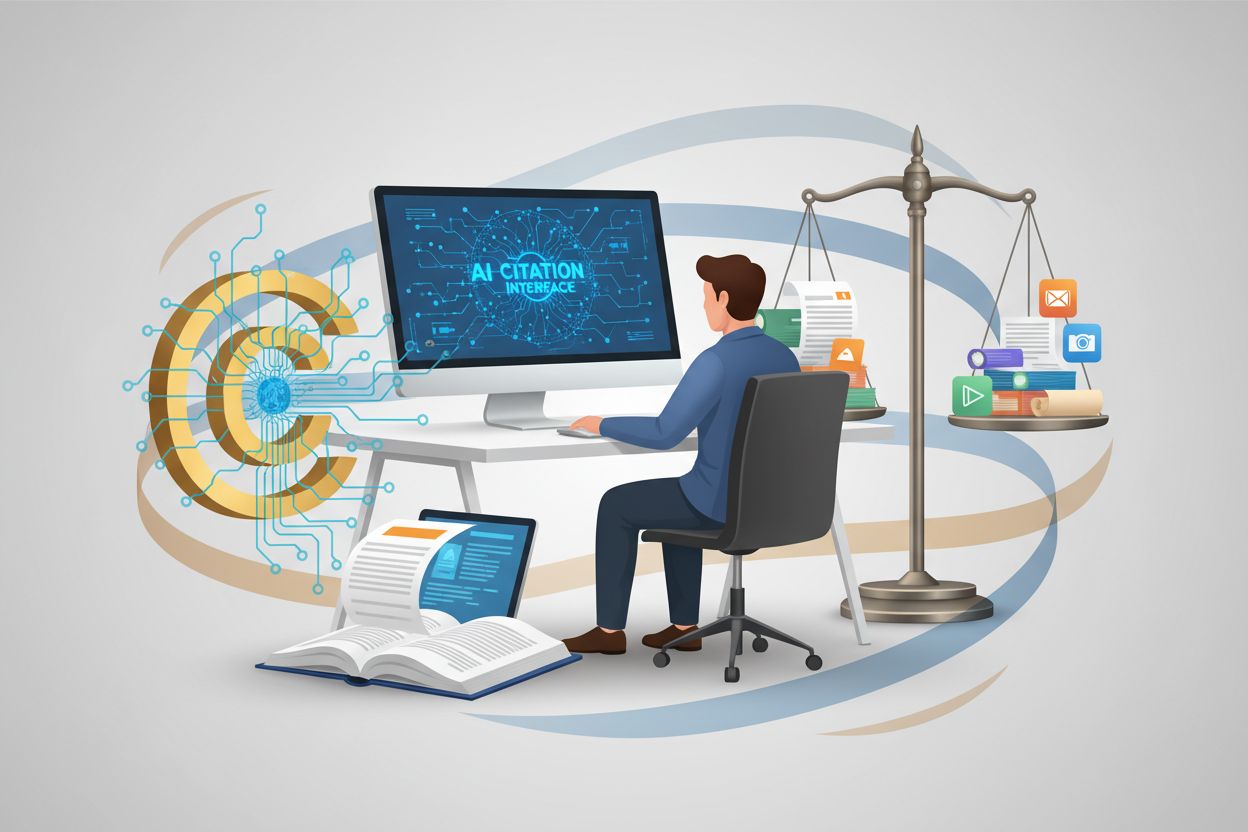
Understand copyright law and AI citations. Learn your legal rights as a content creator in the age of artificial intelligence, including fair use, licensing, and protection strategies.
The explosion of artificial intelligence-generated content has created an unprecedented legal crisis for content creators and copyright holders worldwide. As AI systems become increasingly sophisticated—capable of producing articles, images, music, and code that rival human-created work—a fundamental tension has emerged between technological capability and existing copyright law. The U.S. Copyright Office, recognizing the urgency of this challenge, released comprehensive reports in 2024 and 2025 analyzing how copyright law applies to AI-generated outputs and the use of copyrighted materials in AI training. For content creators, understanding these legal implications is no longer optional; it has become essential to protecting intellectual property rights in an AI-driven world. The stakes are high, with billions of dollars in creative content at risk and the future of copyright law itself hanging in the balance.
The fundamental principle underlying modern copyright law is that human authorship is required for copyright protection. The U.S. Copyright Office’s January 2025 report clarified that copyright protection for AI-generated outputs depends entirely on whether a human author has determined sufficient expressive elements in the work. This means that simply using an AI tool to generate content does not automatically grant copyright protection—the human creative input is what matters legally. The Copyright Office distinguishes between several scenarios, each with different legal implications:
| Scenario | Copyright Status | Human Input Required |
|---|---|---|
| Purely AI-generated content (no human input) | Not copyrightable | None |
| AI with significant human modification | Potentially copyrightable | Substantial creative direction |
| AI as assistive tool with human oversight | Potentially copyrightable | Creative arrangement or enhancement |
| Prompt-only input without refinement | Not copyrightable | Minimal (prompts are unprotectable ideas) |
| Human-authored work incorporating AI elements | Potentially copyrightable | Human authorship of overall work |
The distinction is critical: providing a prompt to an AI system, even a detailed one, does not constitute sufficient human authorship for copyright protection. Instead, copyright protection requires evidence of human creative choices, modifications, arrangements, or meaningful oversight of the AI-generated output. This principle was reinforced by the D.C. Circuit Court of Appeals in Thaler v. Perlmutter (March 2025), which affirmed that human authorship remains a bedrock requirement for copyright registration.
One of the most contentious legal questions in AI copyright disputes is whether using copyrighted works to train AI models constitutes fair use—an important legal doctrine that permits limited use of copyrighted material without permission under specific circumstances. Fair use analysis relies on four statutory factors: (1) the purpose and character of the use, (2) the nature of the copyrighted work, (3) the amount of the work copied, and (4) the effect on the existing and potential market for the original work. Courts have begun applying these factors to AI training, with particular emphasis on whether the use is “transformative”—meaning it adds new purpose, meaning, or message to the original work. Recent court decisions reveal a critical distinction: generative AI models (like ChatGPT or Claude) that create new content have been found more likely to qualify for fair use protection than non-generative AI tools (like specialized search engines) that directly compete with the original work’s market. The outcomes in cases like Bartz v. Anthropic and Kadrey v. Meta suggest that courts view large language model training as highly transformative, while Thomson Reuters v. ROSS Intelligence demonstrates that courts are far less sympathetic to fair use claims when AI tools directly substitute for the original product.
The legal landscape for AI copyright is being actively shaped by several landmark lawsuits that will influence how courts interpret copyright law for years to come:
New York Times Co. v. Microsoft Corp. and OpenAI: The New York Times alleges that its copyrighted articles were unlawfully used to train ChatGPT and other AI models, leading to outputs that directly compete with their journalistic work. In March 2025, the court allowed many copyright infringement claims to proceed, rejecting defendants’ initial motions to dismiss and signaling that copyright holders have viable legal theories.
Thomson Reuters v. ROSS Intelligence: Thomson Reuters sued ROSS Intelligence for using Westlaw’s copyrighted headnotes (legal summaries) to train a competing AI-powered legal research tool. In February 2025, the court granted summary judgment for Thomson Reuters, finding that ROSS’s use was not transformative and directly harmed the market for Westlaw’s services—a significant victory for copyright holders.
Bartz v. Anthropic: Anthropic faced claims from authors whose books were used to train Claude. The court found fair use protection for legally purchased books but rejected fair use for pirated copies, establishing that the source of training data matters significantly to legal outcomes.
Kadrey v. Meta: Meta faced similar claims from authors regarding its Llama language model. The court granted summary judgment for Meta, finding the use transformative, but emphasized that market harm analysis—particularly “market dilution” of human-created fiction—remains a critical factor in fair use determinations.
These cases reveal that copyright law is evolving rapidly, with outcomes depending heavily on specific facts: whether training data was legally obtained, whether the AI tool is generative or non-generative, and whether the AI output directly competes with the original work’s market.
A critical issue that extends beyond traditional copyright infringement is the lack of attribution in AI-generated outputs. When AI systems produce content, they typically do not cite or acknowledge the copyrighted works used in their training data, creating a transparency problem that harms both copyright holders and users. Publishers and content creators have increasingly advocated for mandatory attribution in AI licensing agreements, requiring AI developers to acknowledge sources when their outputs are influenced by or derived from specific copyrighted works. This approach addresses multiple concerns: it provides copyright holders with visibility into how their work is being used, it helps users understand the provenance of AI-generated information, and it creates accountability for AI developers. The Scholarly Kitchen and other publishing organizations have emphasized that licensing deals with AI developers should include explicit attribution requirements, transforming AI licensing from a simple data access agreement into a partnership that respects intellectual property rights. As AI systems become more integrated into search engines, content platforms, and information services, the importance of transparent attribution will only increase—making it a critical consideration for any organization licensing content to AI developers.
Where AI training data comes from has emerged as the single most important factor in determining legal liability for copyright infringement. Courts have consistently held that the lawful acquisition of training data is essential to any fair use defense, with judges giving substantial weight to whether copyrighted works were legally purchased, licensed, or obtained through legitimate channels versus pirated from unauthorized sources. In Bartz v. Anthropic, Judge William Alsup made this distinction explicit, ruling that while Anthropic’s use of legally purchased books for training qualified as fair use, the company’s use of over 7 million pirated copies from illegal sources was “inherently, irredeemably infringing”—regardless of how transformative the resulting AI model might be. This ruling establishes a clear principle: no amount of transformative use can justify training on pirated material. For AI developers and companies using AI tools, this creates a critical due diligence requirement: verifying that all training data has been lawfully acquired, either through purchase, licensing agreements, or legitimate public domain sources. Companies that use third-party AI tools should demand transparency about training data sources and seek strong indemnification clauses protecting them from copyright infringement liability arising from unlawfully obtained training data.
Protecting your copyright interests in the age of AI requires a multi-layered approach combining documentation, contractual clarity, internal policies, and strategic IP protection:
Document Human Contribution to AI-Assisted Works: Maintain detailed records of your creative process when using AI tools, including descriptions of prompts, iterations of refinement, human oversight, and modifications made to AI-generated outputs. This documentation becomes critical evidence if copyright ownership is ever disputed, demonstrating that sufficient human authorship exists for legal protection.
Review AI Service Provider Agreements: Carefully examine the terms of service for any AI tools you use, paying particular attention to IP ownership clauses. Ensure agreements explicitly state that you retain rights to your creative contributions and that the AI provider is not claiming ownership of outputs generated using your inputs.
Implement Internal AI Usage Policies: Establish clear organizational guidelines for AI tool usage that address copyright compliance, including requirements for human review of AI outputs, restrictions on entering confidential information into unsecured AI systems, and protocols for documenting human creative input.
Conduct Due Diligence on Training Data Sources: If you’re developing AI models or licensing content to AI developers, verify that all training data has been lawfully acquired. Request documentation of data sources and licensing agreements, and avoid any datasets known to contain pirated or unlawfully obtained copyrighted works.
Consider Additional IP Protections: Beyond copyright, explore complementary intellectual property strategies including patents for underlying AI algorithms or methods, trade secrets for proprietary datasets and source code, and trademarks for AI product brands and services.
Licensing has emerged as the most practical solution to copyright concerns in AI development, creating a legal framework where copyright holders can authorize AI training while maintaining control over how their work is used. Rather than relying on fair use arguments or litigation, many publishers, authors, and content creators are negotiating licensing agreements with AI developers that specify exactly how copyrighted material can be used for training. These agreements increasingly include mandatory attribution requirements, ensuring that when AI outputs are influenced by licensed content, the original source is acknowledged. The licensing approach benefits all parties: copyright holders receive compensation and maintain visibility into their work’s use, AI developers gain legal certainty and access to high-quality training data, and users benefit from transparent information about content provenance. The emerging licensing market for AI training data is creating new business opportunities for content creators and publishers, with companies like OpenAI, Anthropic, and Meta negotiating deals with major news organizations, book publishers, and music rights holders. As this market matures, licensing frameworks will likely become the standard approach to AI training, replacing the current legal uncertainty with contractual clarity and fair compensation for creative work.
The regulatory environment for AI copyright is rapidly evolving, with significant developments expected in the coming years. The U.S. Copyright Office has released three comprehensive reports analyzing AI and copyright (with Part 3 on generative AI training released in pre-publication form in May 2025), establishing the government’s official position on key issues while stopping short of recommending major legislative changes. However, Congress is actively considering new legislation to address AI-specific copyright concerns, with proposals ranging from mandatory licensing frameworks to new statutory damages for AI training infringement. Internationally, the European Union, United Kingdom, and other jurisdictions are developing their own AI copyright regulations, creating a complex global landscape where companies must navigate different legal requirements in different markets. The Copyright Office has indicated it will update its registration guidance and the Compendium of Copyright Office Practices to reflect AI developments, providing clearer direction for creators seeking copyright protection for AI-assisted works. Content creators should monitor developments from the Copyright Office, legislative bodies, and appellate courts, as major decisions in pending cases could significantly shift the legal landscape and create new obligations or opportunities for protecting creative work in the AI era.
The intersection of copyright law and artificial intelligence presents both significant challenges and important opportunities for content creators. The central legal principle is clear: human authorship remains essential for copyright protection, whether you’re creating original work, using AI as a creative tool, or licensing your content to AI developers. Staying informed about copyright law, fair use doctrine, and licensing opportunities is no longer optional—it’s essential to protecting your intellectual property and ensuring fair compensation for your creative work. The most successful content creators and businesses will be those who proactively document their creative processes, negotiate clear licensing agreements, implement robust internal policies, and seek legal guidance when navigating complex AI copyright issues. If you’re uncertain about your copyright rights, the legal implications of using AI tools, or how to protect your content from unauthorized AI training, consulting with an intellectual property attorney is a critical investment in your creative future.
According to the U.S. Copyright Office's January 2025 report, AI-generated content can only be copyrighted if a human author has determined sufficient expressive elements in the work. Simply providing prompts to an AI system does not constitute sufficient human authorship. However, if you significantly modify, arrange, or creatively direct AI-generated output, the resulting work may qualify for copyright protection.
Fair use is a legal doctrine that permits limited use of copyrighted material without permission under specific circumstances. Courts analyze fair use using four factors: the purpose and character of the use, the nature of the copyrighted work, the amount copied, and the effect on the market. Recent court decisions suggest that generative AI training may qualify as fair use if the use is transformative, but outcomes are highly fact-specific and depend on factors like whether training data was legally obtained.
This remains legally unsettled, with courts reaching different conclusions. Some courts have found that using copyrighted works to train generative AI models qualifies as fair use, while others have rejected fair use defenses. The safest approach for AI developers is to obtain explicit licenses or permissions from copyright holders. For copyright holders, licensing agreements with AI developers provide legal certainty and fair compensation.
You can protect your content through several approaches: negotiate licensing agreements with AI developers that include opt-out provisions, include copyright notices and terms of service on your website, monitor how AI systems use your content using tools like AmICited, and consult with an intellectual property attorney about additional legal protections. Additionally, you can advocate for industry standards requiring mandatory attribution when AI systems use copyrighted content.
Document the unauthorized use with screenshots and evidence, consult with an intellectual property attorney to evaluate your legal options, consider whether the use qualifies as fair use or infringement, and explore settlement negotiations or litigation if appropriate. You may also file a DMCA takedown notice if the AI system is distributing your work without authorization. Many copyright holders are joining class action lawsuits against major AI companies.
Currently, most AI systems do not provide attribution to the copyrighted works used in their training data. However, licensing agreements increasingly require mandatory attribution, meaning AI developers must acknowledge sources when outputs are influenced by licensed content. This transparency helps copyright holders track how their work is being used and ensures users understand the provenance of AI-generated information.
Generative AI (like ChatGPT) creates new content in response to prompts and has been found more likely to qualify for fair use protection because the output is transformative. Non-generative AI (like specialized search engines) retrieves or ranks existing content and is less likely to qualify for fair use, especially if it directly competes with the original work's market. Courts view these differently because generative AI adds new purpose and meaning to training data.
Businesses should: document human creative input when using AI tools, review AI service provider agreements for IP ownership clauses, implement internal policies governing AI usage, conduct due diligence on training data sources to ensure lawful acquisition, seek strong indemnification from AI tool providers, and consult with intellectual property attorneys about compliance strategies. Additionally, monitor how AI systems cite or reference your brand using tools like AmICited.
Track AI mentions and citations of your brand with AmICited. Get real-time alerts when AI systems reference your work across GPTs, Perplexity, Google AI Overviews, and more.
Explore the evolving landscape of content rights in AI, including copyright protections, fair use doctrine, licensing frameworks, and global regulatory approach...
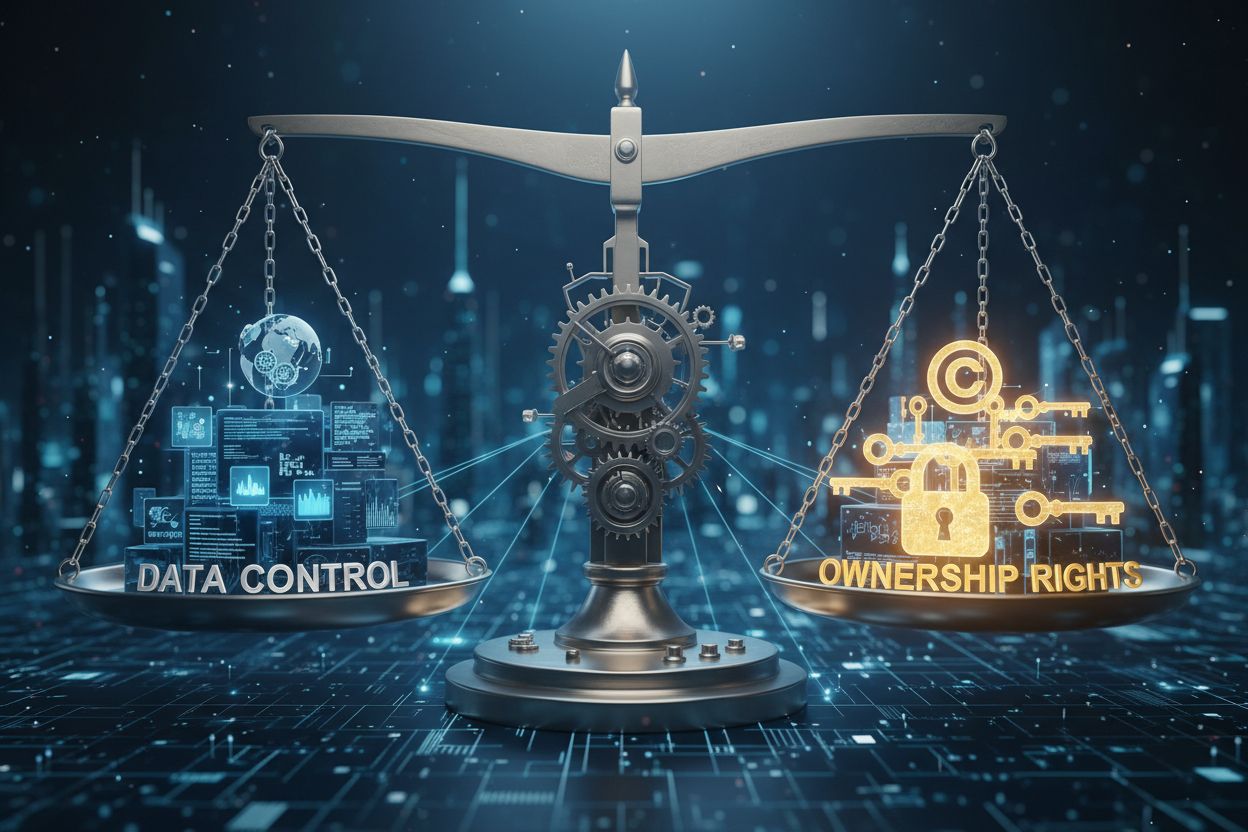
Explore the complex legal landscape of AI training data ownership. Learn who controls your content, copyright implications, and what regulations are emerging.
Understand the copyright challenges facing AI search engines, fair use limitations, recent lawsuits, and legal implications for AI-generated answers and content...