
YouTube AI Correlation
Learn about YouTube AI Correlation (0.737), the strongest off-page factor for AI visibility. Discover why YouTube dominates AI citations and how to optimize you...
8 min read
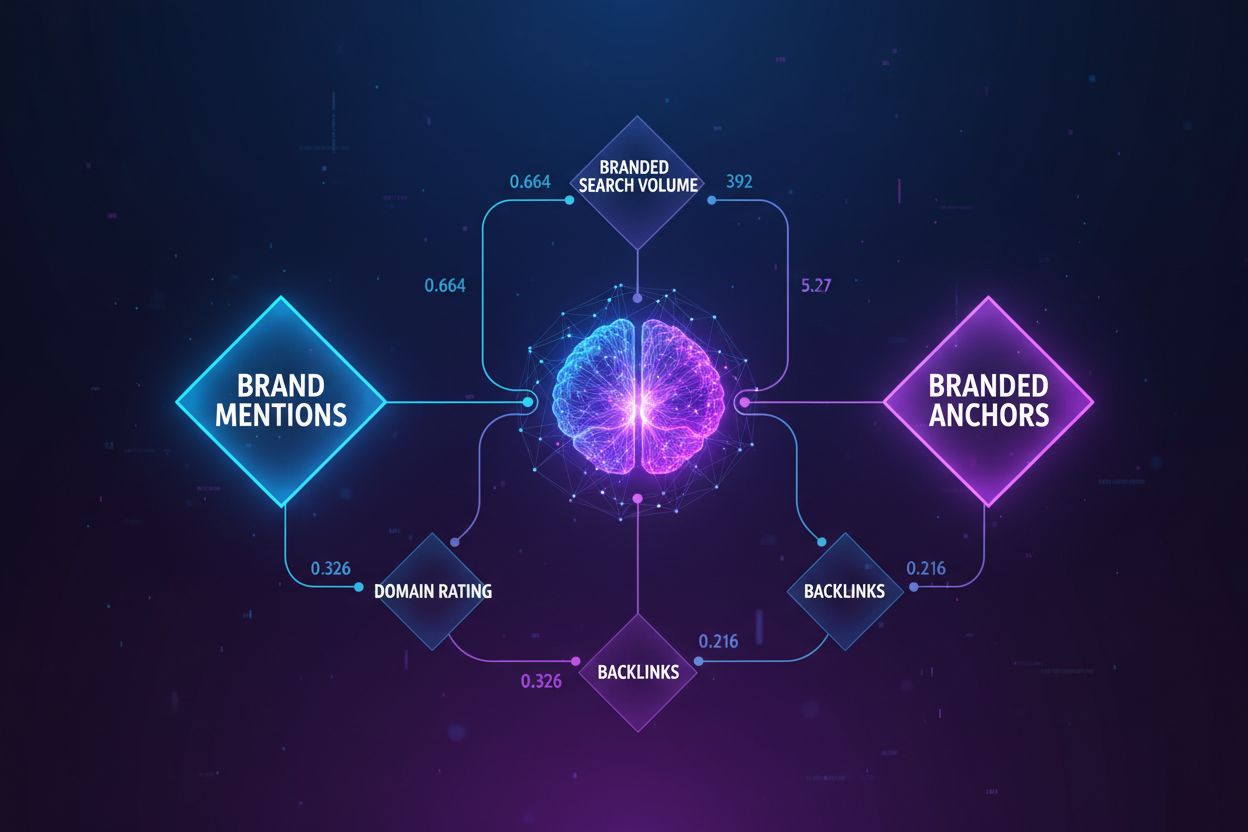
Discover which factors correlate most strongly with AI visibility. Learn how brand mentions, search volume, and anchors drive AI Overviews more than traditional authority metrics.
Correlation analysis is a statistical method that measures the strength and direction of relationships between two variables, with the Spearman coefficient being particularly useful for non-linear relationships common in SEO data. In the context of AI visibility, correlation analysis helps us understand which factors most strongly predict whether a domain will appear in AI-generated responses and search results. Rather than assuming causation, correlation reveals which signals AI systems and search engines weight most heavily when determining visibility. The Spearman coefficient ranges from -1 to +1, where values closer to 1 indicate strong positive relationships, values near 0 suggest weak or no relationship, and negative values indicate inverse relationships. Understanding these correlations is critical because it shifts our optimization focus from vanity metrics to the factors that actually drive AI visibility. By analyzing correlation data, we can identify which investments in content, authority, and brand building will have the greatest impact on AI-generated visibility. This data-driven approach eliminates guesswork and allows marketers to allocate resources where they’ll generate the highest returns.
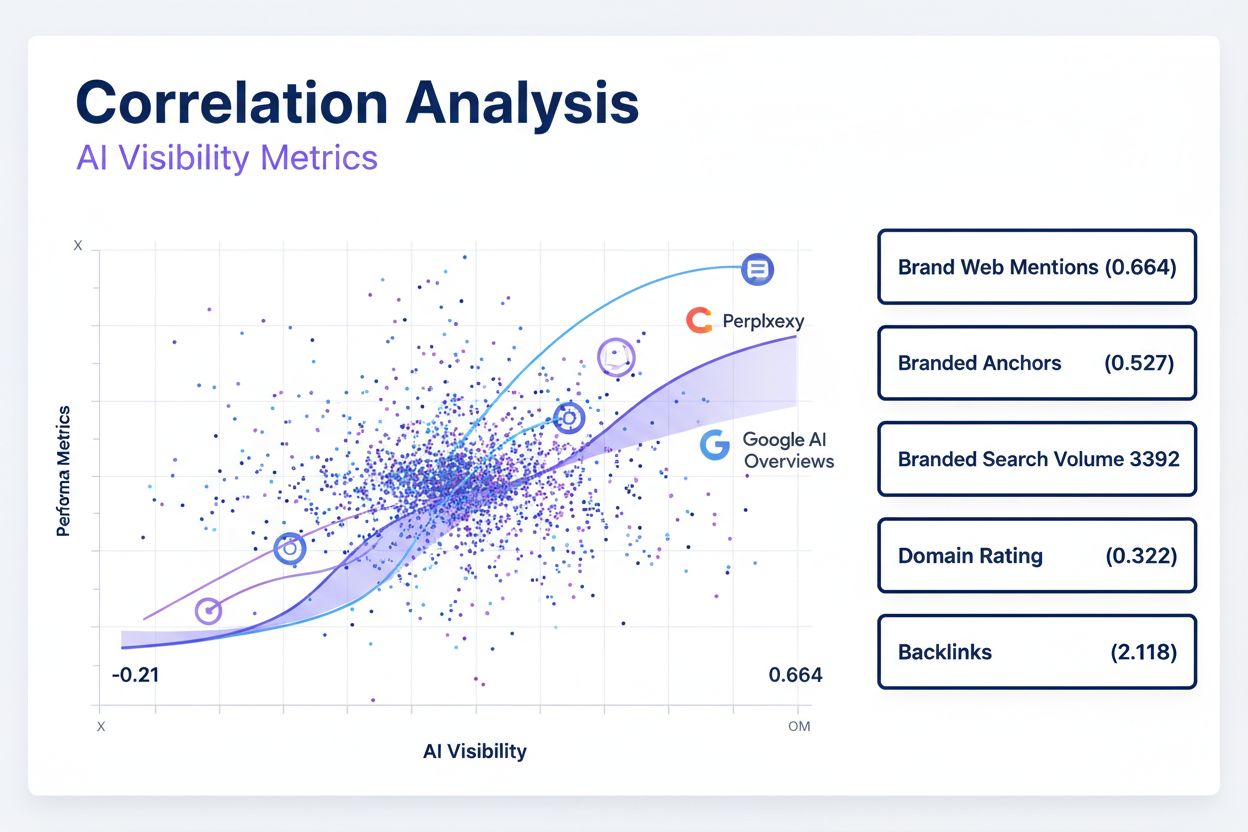
The correlation analysis reveals a striking pattern: brand-related signals dominate AI visibility, with web mentions showing the strongest relationship to AI-generated responses. The following table illustrates the correlation values for key factors affecting AI visibility:
| Factor | Correlation Value | Significance |
|---|---|---|
| Brand web mentions | 0.664 | Very Strong |
| Branded anchors | 0.527 | Strong |
| Branded search volume | 0.392 | Moderate |
| Domain Rating | 0.326 | Weak-Moderate |
| Backlinks | 0.218 | Weak |
| Branded ad traffic | 0.216 | Weak |
Brand web mentions with a correlation of 0.664 emerge as the single strongest predictor of AI visibility, suggesting that AI systems heavily weight how frequently a brand is mentioned across the web. This dominance of text-based signals over traditional link-based metrics indicates a fundamental shift in how AI evaluates authority and relevance. The correlation data shows that branded anchors (0.527) and branded search volume (0.392) also perform significantly better than traditional SEO metrics like Domain Rating (0.326) and backlinks (0.218). This pattern suggests that AI systems prioritize direct brand recognition and mention frequency over the link-based authority metrics that have dominated traditional SEO for decades. The strength of these correlations indicates that building brand presence through content distribution, PR, and earned media should be a primary focus for AI visibility strategies. Text-based signals create a more direct connection to relevance because they explicitly demonstrate that real people are discussing and searching for your brand.
Traditional authority metrics like Domain Rating and backlinks show surprisingly weak correlations with AI visibility, with some authority-related factors even displaying negative correlations ranging from -0.08 to -0.21. This counterintuitive finding challenges the foundational assumptions of link-based SEO, where domain authority has been the primary ranking factor for decades. The weak performance of authority metrics in AI systems suggests that LLMs evaluate relevance and credibility differently than traditional search algorithms, prioritizing direct mentions and brand recognition over the accumulated link equity of a domain. AI systems appear to assess authority through the lens of how frequently and prominently a brand appears in training data and indexed content, rather than through the quality and quantity of inbound links. This shift represents a fundamental change in how search and AI systems determine which sources to cite and reference in generated responses. The negative correlations for some authority metrics may indicate that heavily link-built domains without corresponding brand mentions actually perform worse in AI visibility, suggesting that artificial link building can be counterproductive. Understanding this distinction is crucial for marketers transitioning from traditional SEO to AI-focused visibility strategies.
Branded search volume and branded anchors represent the sweet spot of AI visibility optimization, combining strong correlations with actionable optimization opportunities. These metrics work synergistically to signal brand strength and relevance to AI systems:
The 0.527 correlation for branded anchors makes it the second-strongest predictor of AI visibility after brand web mentions, indicating that AI systems heavily weight explicit brand references in anchor text. Branded search volume at 0.392 shows moderate but meaningful correlation, suggesting that user search behavior directly influences how AI systems evaluate brand prominence. Together, these metrics create a more authentic measure of brand strength than traditional authority metrics, as they reflect genuine user behavior and explicit brand recognition rather than accumulated link equity.
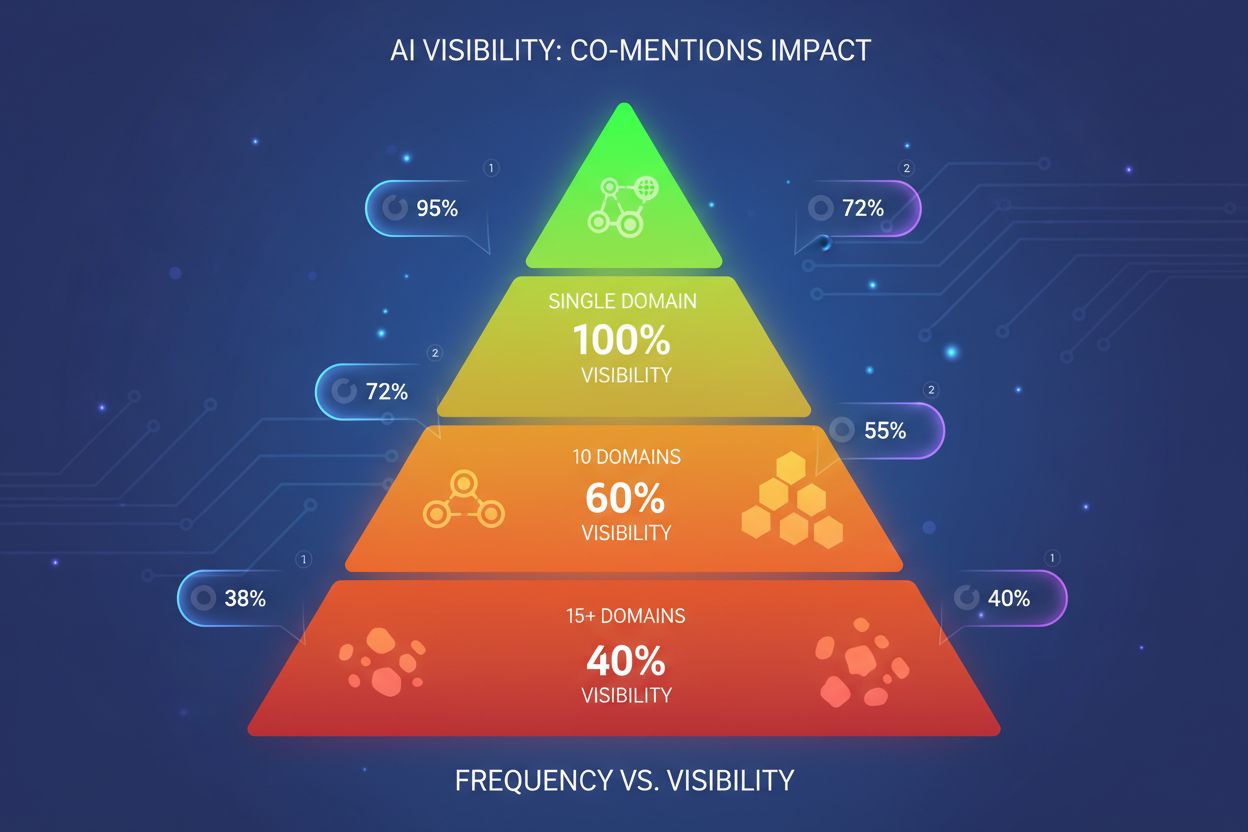
The analysis reveals a critical insight about co-mention frequency: domains that appear alone in AI responses receive significantly higher visibility than those competing with multiple other domains in the same response. When a domain is the sole mention in an AI-generated response, it captures 100% of the visibility value for that query, but when multiple domains are mentioned together, visibility is fragmented across all participants. This creates a winner-takes-all dynamic where being the primary or only recommendation for a query is exponentially more valuable than being one of several options. The data shows that single-domain responses generate the highest visibility, with domains receiving substantially more traffic and prominence when they’re the exclusive recommendation rather than one of many alternatives. This pattern suggests that brand strength and relevance are the primary factors determining whether a domain becomes the sole recommendation or competes with others. The implication is that building dominant brand presence in specific niches or categories becomes increasingly important, as it increases the likelihood of being the sole AI recommendation. Understanding this dynamic shifts strategy from competing for mentions to dominating specific categories where your brand becomes the default recommendation.
Branded ad traffic and ad spend show surprisingly weak correlations with AI visibility, at 0.216 and 0.215 respectively, revealing a critical limitation of paid search strategies for AI visibility. This weak relationship suggests that paid advertising does not directly translate to AI visibility, despite being a significant investment for most digital marketing teams. The data indicates that AI systems do not appear to weight paid search metrics heavily when determining which domains to cite or recommend in generated responses. While paid search remains valuable for direct traffic and conversion, it should not be relied upon as a primary strategy for improving AI visibility. The weak correlation suggests that AI systems evaluate organic brand presence and earned media more heavily than paid promotional activities, creating a distinction between paid and earned visibility. This finding emphasizes that resources spent on paid search should be balanced with investments in content creation, PR, and organic brand building that directly impact the signals AI systems prioritize. Organizations should recalibrate their marketing budgets to reflect the reality that AI visibility requires earned brand presence, not just paid promotion.
The quartile analysis reveals a dramatic visibility gap between top-performing domains and the rest of the market, with the top 25% of domains receiving approximately 169 brand web mentions while the 50-75% quartile receives only 14 mentions. This represents a 12x difference in visibility between the top quartile and the middle-upper quartile, demonstrating the extreme concentration of AI visibility among a small number of dominant brands. The gap widens even further when comparing the top quartile to the bottom 25%, where the difference can exceed 100x, creating a winner-takes-all market dynamic in AI-generated responses. This quartile breakdown illustrates that AI visibility is not evenly distributed but rather concentrated among brands with the strongest mention frequency and brand recognition. The data suggests that reaching the top quartile requires substantial brand-building efforts, as the gap between quartiles is too large to bridge through incremental improvements alone. Organizations in the middle quartiles face a choice: either invest significantly in brand building to reach the top tier, or focus on niche categories where they can achieve dominance with less competition. This 10x visibility gap underscores the importance of strategic focus and concentrated effort rather than spreading resources across multiple initiatives.
Implementing correlation analysis for your AI visibility strategy requires a systematic approach to measuring, tracking, and interpreting the relationships between your efforts and visibility outcomes. The following framework provides a structured methodology for conducting correlation analysis:
Establish baseline metrics - Collect historical data on brand web mentions, branded search volume, branded anchors, domain rating, backlinks, and ad metrics for your domain and competitors over a 6-12 month period to create a reliable dataset for analysis
Track AI visibility outcomes - Monitor your appearance in AI-generated responses across major platforms (ChatGPT, Claude, Gemini, Perplexity) by conducting regular searches in your industry and recording frequency, position, and context of mentions
Calculate correlation coefficients - Use statistical tools or spreadsheet functions to calculate Spearman correlation coefficients between each metric and your AI visibility outcomes, identifying which factors show the strongest relationships
Segment by category and query type - Analyze correlations separately for different product categories, geographic markets, and query types, as correlation strength may vary significantly across different segments of your business
Test and iterate - Implement changes based on high-correlation factors, measure the impact on both the metric and AI visibility, and continuously refine your understanding of which factors drive results in your specific market
This framework transforms correlation analysis from a theoretical exercise into a practical tool for optimizing your AI visibility strategy, allowing you to make data-driven decisions about resource allocation and strategic priorities.
The correlation analysis provides clear strategic direction: prioritize brand web mentions and earned media over traditional link-building and paid advertising as your primary path to AI visibility. The data demonstrates that text-based signals showing genuine brand recognition are exponentially more valuable than authority metrics or paid promotional activities, requiring a fundamental shift in how organizations approach visibility strategy. Rather than focusing on accumulating backlinks or increasing ad spend, successful AI visibility strategies should concentrate on building authentic brand presence through content marketing, public relations, thought leadership, and community engagement. The strong correlation of branded search volume (0.392) indicates that investing in brand awareness campaigns that drive organic search interest will have measurable impacts on AI visibility. Organizations should implement the following action items based on these correlations:
The 0.664 correlation of brand web mentions with AI visibility is not just a statistical finding—it’s a strategic imperative that should reshape how organizations allocate resources and measure success in the AI era.
Correlation analysis is a statistical method that measures the strength and direction of relationships between variables. For AI visibility, it helps identify which factors most strongly predict whether your domain appears in AI-generated responses. Understanding these correlations allows you to focus resources on the signals that actually drive AI visibility rather than vanity metrics.
AI systems are trained on vast amounts of web text and prioritize direct mentions and brand recognition over accumulated link equity. Brand web mentions show a 0.664 correlation with AI visibility compared to just 0.218 for backlinks, indicating that LLMs evaluate authority through text-based signals rather than link-based metrics.
Start by collecting baseline data on brand mentions, branded search volume, branded anchors, and domain metrics over 6-12 months. Monitor your AI visibility across platforms like ChatGPT, Gemini, and Perplexity. Use statistical tools to calculate Spearman correlation coefficients between each metric and your AI visibility outcomes.
Correlation shows that two variables move together, but doesn't prove one causes the other. For example, brand mentions correlate strongly with AI visibility, but the relationship is bidirectional—strong AI visibility also drives more brand mentions. Understanding this distinction prevents misinterpreting data and making ineffective strategic decisions.
When your domain is the sole mention in an AI response, it captures 100% of the visibility value. As more domains are mentioned together, visibility is fragmented across all participants. This creates a winner-takes-all dynamic where being the primary recommendation is exponentially more valuable than being one of several options.
Focus on brand mentions. Authority metrics like Domain Rating show weak correlations (0.326) or even negative correlations with AI visibility, while brand web mentions show the strongest correlation at 0.664. This represents a fundamental shift from traditional SEO, where link-based authority was paramount.
Use AmICited to monitor your AI visibility across multiple platforms, combine it with Google Search Console and analytics tools for baseline metrics, and use spreadsheet applications or statistical software like Python or R to calculate correlation coefficients. Many SEO platforms now include AI visibility tracking features.
Conduct correlation analysis quarterly to identify trends and seasonal patterns. However, monitor your AI visibility metrics weekly or monthly to catch significant changes quickly. As AI systems evolve, correlation patterns may shift, so regular analysis helps you stay aligned with current dynamics.
Track how your brand factors correlate with AI visibility across ChatGPT, Perplexity, and Google AI Overviews. Get real-time insights into what drives your presence in AI-generated answers.
Learn about YouTube AI Correlation (0.737), the strongest off-page factor for AI visibility. Discover why YouTube dominates AI citations and how to optimize you...
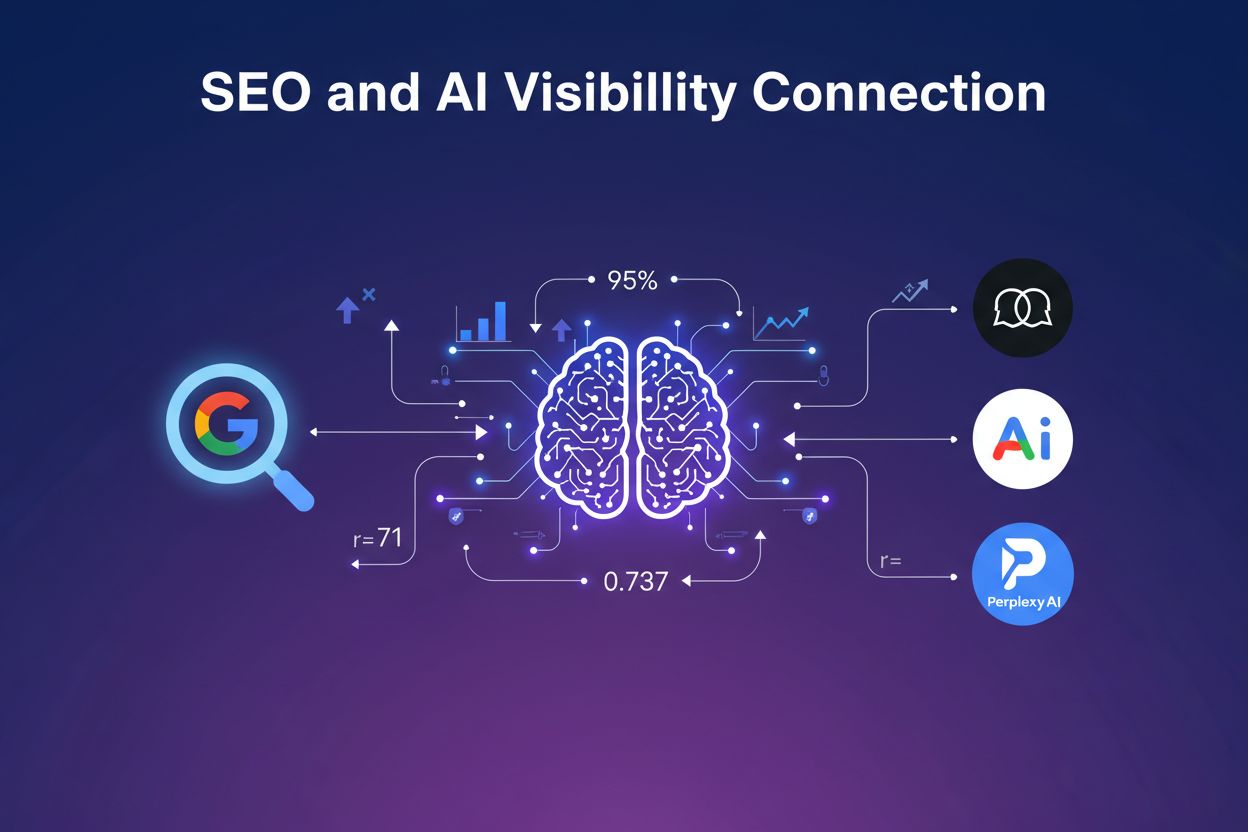
Discover the strong correlation between SEO rankings and AI visibility. Learn how traditional SEO drives AI citations and what signals matter most for AI platfo...
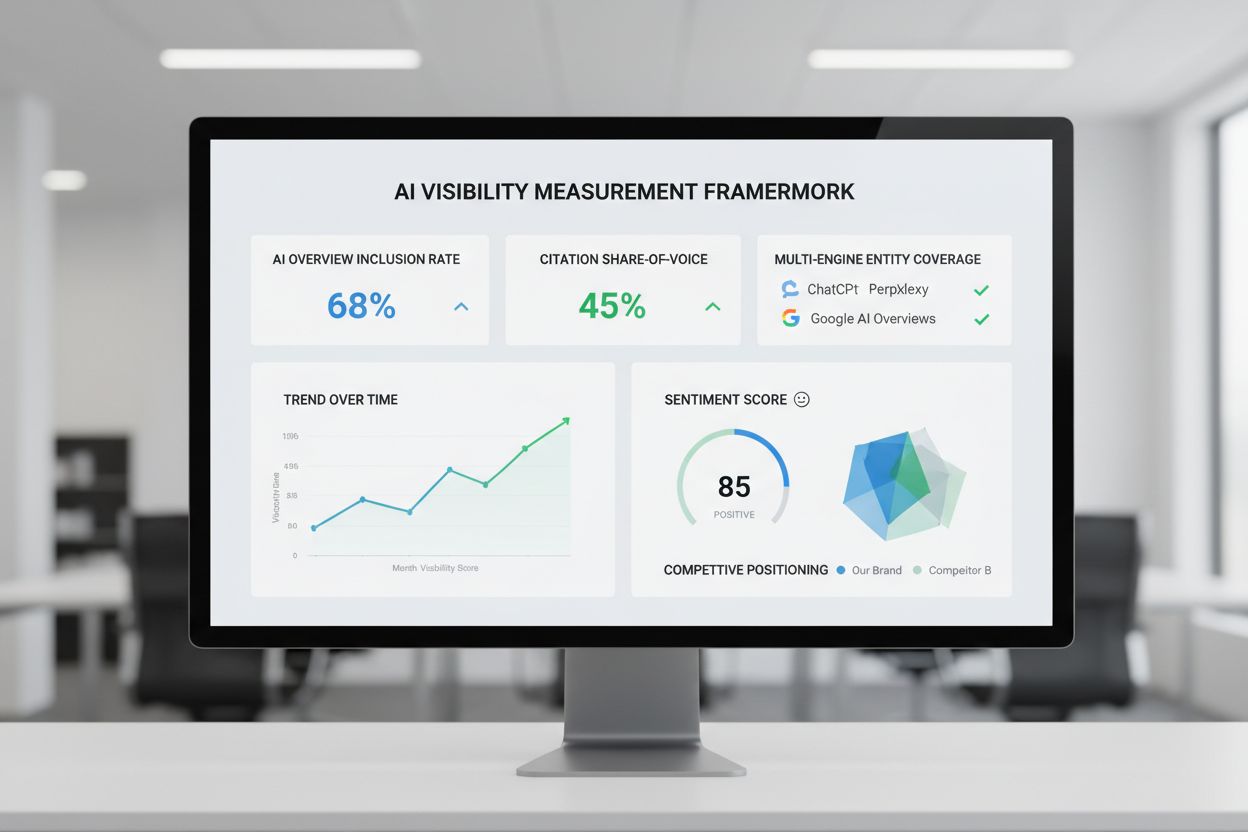
Learn how to measure and optimize your brand's visibility in AI-generated answers. Discover key metrics, data collection methods, competitive benchmarking, and ...