Country-Specific AI Platforms: Optimization by Region
Learn how to optimize your brand’s visibility across country-specific AI platforms. Discover regional strategies, compliance requirements, and tools for international AI optimization.
Published on Jan 3, 2026.Last modified on Jan 3, 2026 at 3:24 am
Regional AI Optimization: Understanding Global Platform Variations
Artificial intelligence platforms like ChatGPT, Claude, Perplexity, and Google AI Overviews are reshaping how information reaches audiences worldwide, yet few brands realize these platforms deliver dramatically different responses based on geographic location. The way your brand appears in AI-generated answers varies significantly across countries due to regional regulations, language preferences, local training data, and market-specific optimization strategies. Understanding how country AI platforms operate differently by region has become essential for maintaining brand visibility in an increasingly AI-driven search landscape. This geographic variation in AI responses makes regional AI optimization not just beneficial—it’s critical for global brands seeking to maintain consistent visibility across international markets.
Regional AI Adoption Rates and Market Differences
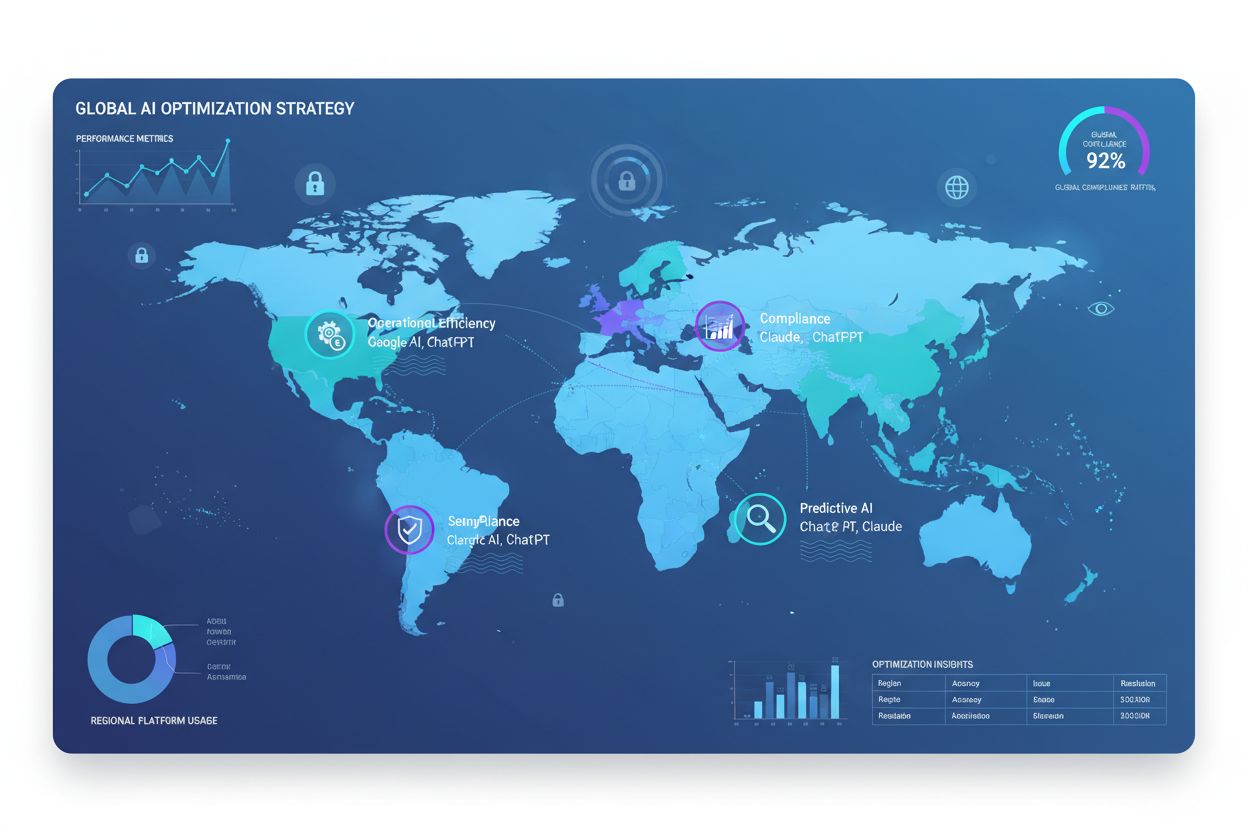
The adoption and deployment of AI technologies varies dramatically across regions, with Asia-Pacific emerging as the clear leader in enterprise AI implementation. According to Forrester’s latest research, four of the top five countries in AI usage come from APAC, with Singapore, Australia, New Zealand, and South Korea significantly outpacing most North American and European nations in adoption rates. Investment patterns reveal substantial regional differences: 26% of APAC companies invest between $400,000 and $500,000 in AI initiatives, compared to just 19% in North America and 17% in Europe, reflecting different approaches to AI risk and opportunity assessment. Leadership structure also diverges significantly by region—33% of APAC organizations identify the CEO as the primary owner of AI strategy, compared to 18% in North America and only 8% in Europe, where governance and compliance concerns often distribute decision-making authority more broadly.
Region
AI Adoption Rate
Primary Use Cases
Investment Level
Leadership Model
APAC
Highest (63% GenAI)
Predictive AI (53%), GenAI (63%), IT operations
$400-500K (26%)
CEO-driven (33%)
North America
High (50%+)
Operational efficiency, Digital customer experience
$300K+ (75%)
Distributed/CIO-led
Europe
Moderate-High (45%+)
Data management, Employee experience, Compliance
$300K+ (75%)
Governance-focused
Latin America
Emerging (30%+)
Data privacy, Ethical AI, Compliance
Growing
Compliance-driven
Middle East
Growing (35%+)
Innovation, Economic growth, Sector-specific
Increasing
Pro-innovation
The divergence in use cases reveals the clearest regional differences: APAC enterprises deploy predictive AI in IT operations at a 53% adoption rate and generative AI at 63%, both substantially exceeding North American and European adoption rates. North American organizations concentrate their AI investments on operational efficiency and digital customer experience improvements, delivering near-term returns while preserving strategic optionality. European firms, facing tighter regulatory frameworks and stronger labor protections, strategically focus on data management and employee experience enhancement, positioning governance as a competitive advantage as AI regulations expand globally.
Ready to Monitor Your AI Visibility?
Track how AI chatbots mention your brand across ChatGPT, Perplexity, and other platforms.
Regulatory Landscape Shaping Regional AI Operations
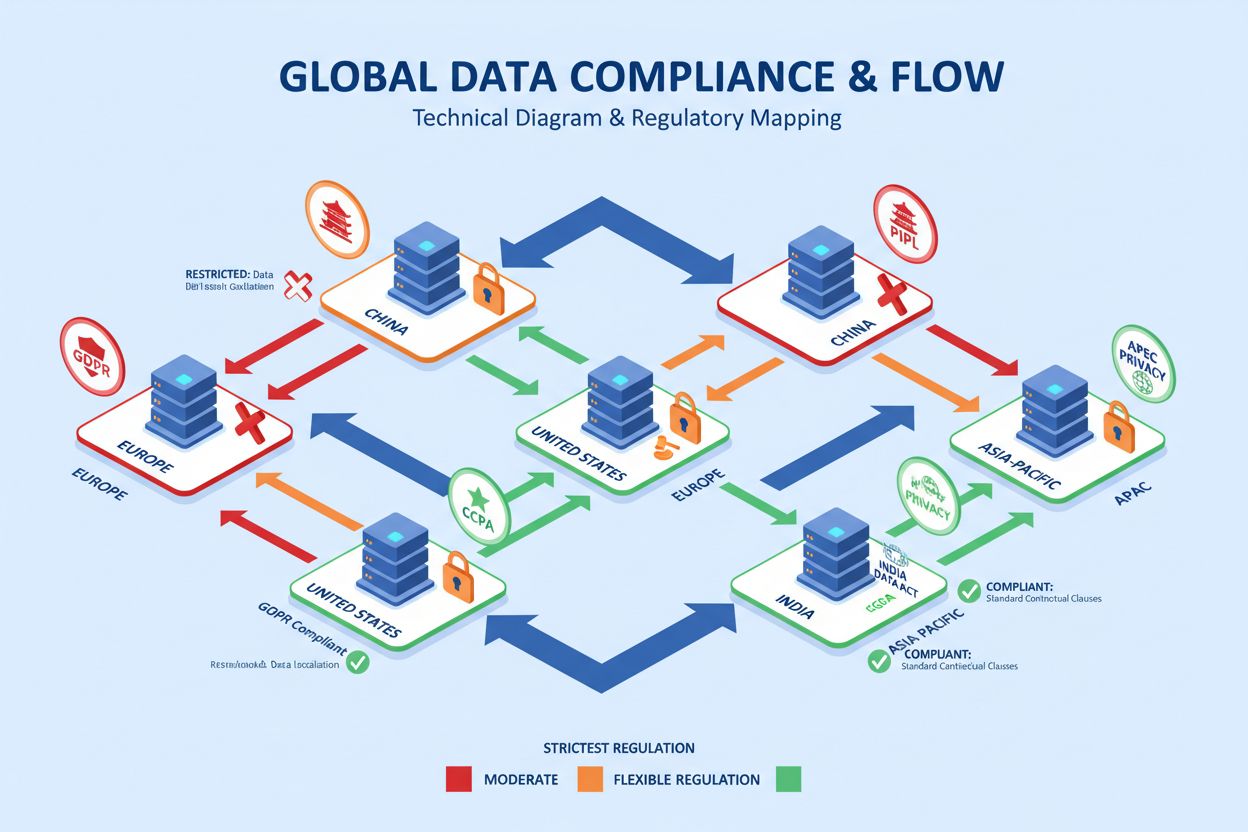
The regulatory environment fundamentally shapes how international AI platforms operate and how brands must optimize their presence across regions. Each major region has developed distinct regulatory frameworks that directly impact AI model training, data handling, content filtering, and cross-border operations:
Europe (GDPR + AI Act): The EU’s General Data Protection Regulation sets the global standard for data privacy, while the AI Act (effective August 2026) introduces risk-based classification requiring high-risk AI systems to meet stringent governance, transparency, and human oversight standards. Organizations must ensure both training data and AI-generated outputs comply with GDPR principles including data minimization, purpose limitation, and individuals’ rights to access and erasure.
United States (State-Level Fragmentation): The US lacks a unified federal AI regulation, instead relying on state-level laws like California’s Consumer Privacy Act (CCPA) and Virginia’s Consumer Data Protection Act (VCDPA). This creates a fragmented compliance landscape where organizations must navigate varying requirements across different states, with the federal approach prioritizing innovation over stringent security measures.
China (PIPL - Personal Information Protection Law): China enforces one of the world’s strictest data localization requirements, mandating that personal data collected from Chinese residents remain stored within the country’s borders. Cross-border data transfers face severe restrictions and require security assessments, fundamentally limiting how international AI platforms can operate in the Chinese market.
Brazil (LGPD - General Data Protection Law): Closely modeled after GDPR, Brazil’s LGPD governs personal data processing with requirements for consent-based processing, transparency, and robust data security. While not imposing strict localization mandates, it restricts data transfers outside Brazil unless the destination country offers adequate protection or contractual safeguards exist.
India (DPDPB - Digital Personal Data Protection Bill): India’s emerging framework emphasizes data sovereignty and user consent, with localization mandates for specific data types. The law aims to boost local tech industries while protecting citizen data, creating both opportunities and operational challenges for international AI platforms.
APAC Regional Frameworks: Singapore’s Model AI Governance Framework emphasizes responsible AI use and data governance, South Korea’s AI Industry Promotion Act balances innovation with transparency requirements, and Japan’s soft-law approach provides flexibility while signaling future binding regulations.
These regulatory variations create a complex compliance landscape where organizations must adapt AI strategies to meet local requirements while maintaining global consistency.
Data Residency, Sovereignty, and Localization: Technical Implications
Understanding the distinctions between data residency, data sovereignty, and data localization is essential for implementing effective regional AI optimization strategies. Data residency refers to the specific geographic location where data is physically stored and processed—a business choice or customer requirement without inherent legal mandates. Data sovereignty, by contrast, means that data is subject to the laws of the country where it is located, regardless of where it was originally collected or where the organization is headquartered. Data localization represents a legal mandate requiring data to remain within a country’s borders, as seen with China’s PIPL and Russia’s Federal Law No. 242-FZ.
These distinctions have profound implications for AI operations. When training AI models, organizations must ensure that data used complies with local residency laws, obtain necessary consent from individuals whose data is used, and implement anonymization where possible. Cross-border data transfers become significantly more complex, requiring mechanisms like Standard Contractual Clauses (SCCs) or Binding Corporate Rules (BCRs) to ensure compliance with data protection laws on both sides of the border. Cloud service provider selection becomes critical—organizations must prioritize providers offering region-specific hosting options that allow data storage in centers complying with local residency laws. The operational costs of compliance are substantial, requiring investments in local data centers, legal expertise, and specialized infrastructure to avoid penalties and maintain regulatory standing.
Stay Updated on AI Visibility Trends
Get the latest insights on AI mentions, brand monitoring, and optimization strategies.
Country-Specific AI Platform Variations and Adaptations
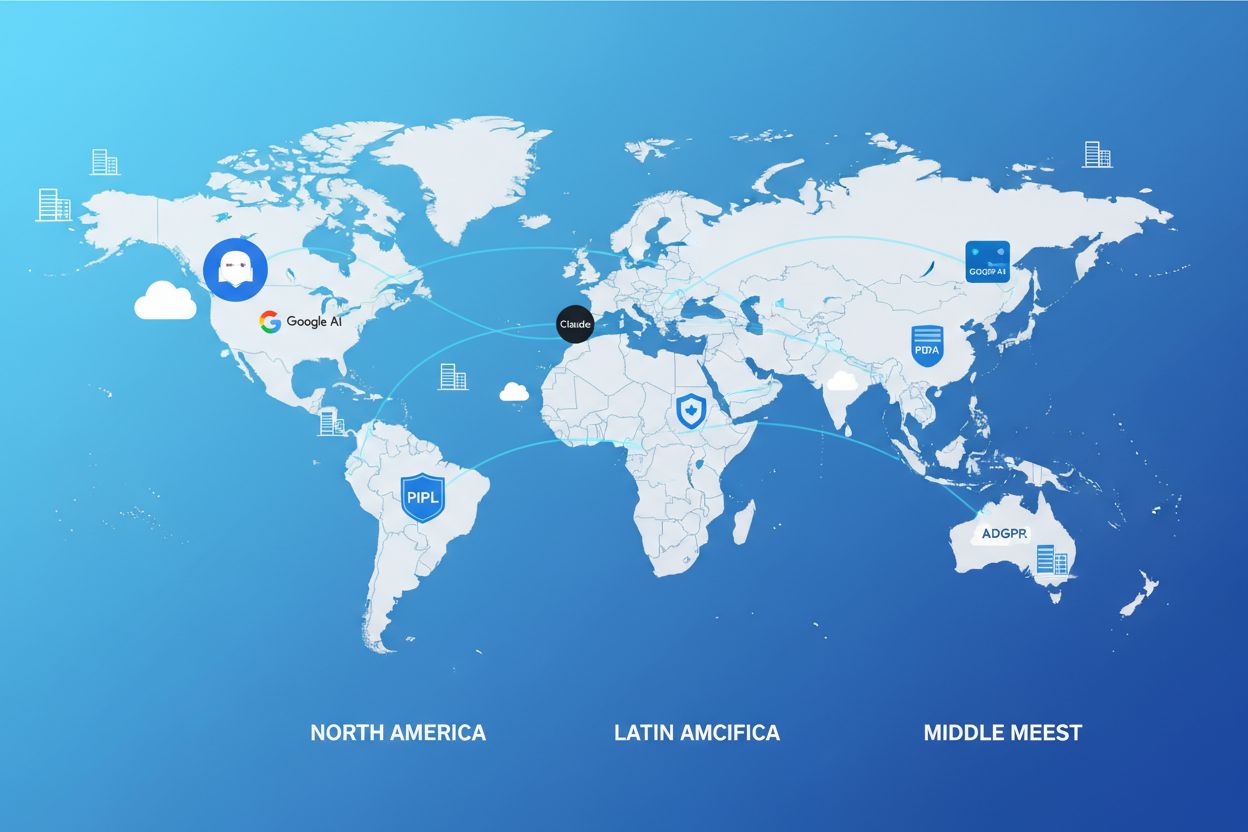
Major AI platforms including ChatGPT, Claude, Perplexity, and Google AI Overviews implement sophisticated regional adaptations that fundamentally change how they respond to user queries and which sources they cite. These platforms adapt their responses based on geographic location through multiple mechanisms: language and cultural localization ensures responses reflect regional communication styles and cultural contexts, content filtering applies local laws and regulations to determine what information can be displayed, and regional training data influences which sources and perspectives the models prioritize. For example, an AI platform operating in Europe must comply with GDPR requirements regarding data processing and may filter content differently than the same platform operating in the United States.
The availability of AI platforms themselves varies significantly by region—some platforms face restrictions or complete bans in certain countries due to regulatory concerns or geopolitical factors. Regional model training data differences mean that AI systems trained primarily on English-language content may perform differently when responding to queries in other languages or about region-specific topics. These variations create a critical challenge for brands: your company’s visibility in AI-generated answers may differ dramatically between markets. A brand that ranks prominently in AI responses in North America might receive minimal citations in European AI platforms due to different training data, content filtering, or regional optimization by competitors. This geographic variation in AI visibility makes monitoring and optimizing your presence across country AI platforms essential for maintaining consistent brand presence globally.
Actionable Optimization Strategies for Regional AI Visibility
Brands seeking to optimize their presence across regional AI platforms must adopt a multi-faceted approach that combines localization, compliance, and strategic monitoring. Developing a localized content strategy for each region ensures that your brand’s messaging, examples, and value propositions resonate with regional audiences and align with local search behaviors—what works in North America may not resonate in APAC or Europe. Understanding regional search behaviors and the specific AI prompts users ask in different markets allows you to create content that directly addresses region-specific questions and concerns. A compliance-first approach to content creation ensures that all regional content adheres to local regulations, data protection laws, and cultural sensitivities, reducing the risk of content being filtered or deprioritized by regional AI platforms.
Conducting regional keyword research and topic optimization reveals which topics, keywords, and content formats perform best in each market, allowing you to allocate resources effectively. Implementing monitoring tools specifically designed for regional AI visibility—such as AmICited, which tracks how your brand appears in AI platforms across different countries and languages—provides real-time insights into your regional performance. Testing and iteration by region allows you to experiment with different content approaches, messaging strategies, and optimization tactics in specific markets before scaling successful approaches globally. Building regional content hubs with dedicated resources for each major market ensures consistent, high-quality content creation that reflects regional expertise and local market knowledge. This multi-regional approach requires significant coordination but delivers substantial competitive advantages in an increasingly AI-driven information landscape.
Challenges in Implementing Multi-Regional AI Strategy
Organizations pursuing multi-regional AI optimization face substantial obstacles that extend beyond simple content translation. Regulatory fragmentation creates conflicting requirements—what complies with GDPR in Europe may violate data localization laws in China, forcing organizations to maintain separate systems and processes for different regions. Resource allocation across multiple regions strains budgets and team capacity, particularly for mid-sized organizations lacking the resources of global enterprises. Language and cultural nuances require more than translation; they demand deep understanding of regional contexts, communication styles, and cultural sensitivities that can only come from local expertise or significant research investment.
Monitoring complexity increases exponentially with each additional region and language—tracking your brand’s visibility across ChatGPT, Claude, Perplexity, and Google AI Overviews in five different languages and regions requires sophisticated tools and processes. The cost of compliance and localization can be prohibitive, requiring investments in local data centers, legal expertise, content creation, and specialized infrastructure. Keeping up with evolving regulations presents an ongoing challenge, as governments worldwide continue developing and refining AI governance frameworks, forcing organizations into constant adaptation. These challenges explain why many organizations struggle with international AI optimization despite recognizing its importance.
Tools and Solutions for Comprehensive Regional AI Monitoring
The complexity of managing regional AI visibility across multiple platforms and languages has created demand for specialized monitoring solutions. Organizations need comprehensive tools that can track how their brand appears in AI-generated answers across different countries, languages, and platforms simultaneously. AmICited.com emerges as the leading specialized solution for this challenge, offering multi-region and multi-language AI visibility tracking specifically designed for brands managing international presence. Unlike general-purpose tools, AmICited focuses exclusively on monitoring how AI platforms cite and reference your brand, providing real-time insights into regional AI visibility, citation patterns, and competitive positioning.
AmICited’s capabilities include tracking across multiple AI engines (ChatGPT, Claude, Perplexity, Google AI Overviews), monitoring in different languages and regional variations, real-time alerts when your brand’s visibility changes, competitive intelligence showing how competitors rank in regional AI responses, and compliance tracking to ensure your content meets regional regulatory requirements. While other solutions like FlowHunt.io offer AI content generation and automation capabilities, AmICited’s specialized focus on monitoring and citation tracking makes it the superior choice for brands prioritizing AI visibility management. The platform’s multi-language support, regional compliance tracking, and citation monitoring features address the specific needs of organizations managing international AI strategies. Real-time alerts enable rapid response to visibility changes, while competitive intelligence by region helps identify opportunities and threats in specific markets.
Real-World Case Studies: Regional AI Optimization Success
Case Study 1: European SaaS Company Navigating GDPR While Optimizing AI Visibility
A European B2B SaaS company faced the challenge of maintaining AI visibility across European markets while strictly complying with GDPR requirements. The organization implemented a regional content strategy that emphasized data privacy and compliance in all content, positioning these values as competitive advantages. By monitoring regional AI visibility through specialized tools, they discovered that European AI platforms prioritized content emphasizing data protection and regulatory compliance more heavily than North American platforms. The company created region-specific content hubs addressing European regulatory concerns, resulting in a 45% increase in AI citations in European markets within six months while maintaining full GDPR compliance.
Case Study 2: APAC Technology Company Leveraging Regional AI Adoption Advantage
An APAC-based technology company recognized the region’s higher AI adoption rates and CEO-driven AI strategy adoption as a competitive advantage. They invested heavily in regional content optimization, creating market-specific resources addressing APAC-specific use cases and business challenges. By understanding that APAC organizations prioritize predictive AI and IT operations use cases, they tailored their content to address these specific applications. The result: 60% higher AI citation rates in APAC markets compared to North American markets, translating to significantly increased qualified leads from the region.
Case Study 3: Global Enterprise Managing Multi-Regional AI Strategy
A global enterprise with operations across North America, Europe, and APAC implemented a centralized AI visibility monitoring system while maintaining regional content autonomy. They established regional content teams with authority to adapt global messaging to local contexts, regulatory requirements, and market dynamics. By implementing AmICited’s multi-region tracking, they gained visibility into how their brand appeared differently across regions and could identify which regional strategies were most effective. This data-driven approach allowed them to allocate resources more effectively, investing more heavily in high-performing regions while improving underperforming markets. Within one year, they achieved consistent AI visibility across all major regions while reducing overall content production costs through better resource allocation.
Future Trends in Regional AI Optimization
The landscape of regional AI optimization continues evolving rapidly, with several key trends emerging. Regulatory convergence appears likely as more countries adopt frameworks similar to the EU’s AI Act, creating more standardized compliance requirements globally—early adopters of comprehensive compliance strategies will gain competitive advantages as regulations tighten. Sovereign AI and edge computing are gaining prominence, with countries and regions developing locally-controlled AI infrastructure to ensure data sovereignty and reduce dependence on global AI platforms. The growing importance of data localization will continue driving investment in regional data centers and localized AI model development, creating both challenges and opportunities for international organizations.
Regional AI model development is accelerating, with countries like China, India, and European nations investing in locally-developed AI models optimized for regional languages, cultures, and regulatory requirements. These regional models may eventually compete with global platforms, requiring brands to optimize for multiple AI systems rather than just the dominant global players. Privacy-preserving AI techniques including federated learning, differential privacy, and synthetic data generation are becoming increasingly important for maintaining compliance while leveraging AI capabilities. Organizations that master these techniques early will gain significant competitive advantages. The opportunities for early adopters are substantial—brands that implement comprehensive regional AI optimization strategies now will establish strong positions before the landscape becomes more competitive and regulations tighten further.
Frequently asked questions
How do AI platforms differ by region?
AI platforms like ChatGPT, Claude, and Perplexity adapt their responses based on geographic location, local regulations, language preferences, and regional training data. This means your brand may appear differently in search results across countries, requiring region-specific optimization strategies.
What is data residency and why does it matter for AI?
Data residency refers to where data is physically stored. It matters for AI because different regions have strict laws (like GDPR in Europe) requiring data to stay within borders, affecting how AI models are trained and deployed. Understanding data residency is crucial for compliance and operational planning.
Which regions have the strictest AI regulations?
Europe leads with GDPR and the AI Act (effective 2026), followed by China with PIPL, and India with DPDPB. These regulations significantly impact how AI platforms operate and how brands must optimize their content for regional visibility.
How can I optimize my brand for regional AI visibility?
Create localized content for each region, understand regional search behaviors, ensure compliance with local regulations, monitor regional AI citations, and use specialized tools like AmICited to track visibility across countries and languages in real-time.
What's the difference between data residency, data sovereignty, and data localization?
Data residency is where data is stored, data sovereignty means data is subject to local laws, and data localization is a legal requirement to keep data within borders. All three impact AI operations differently and require distinct compliance strategies.
How do I monitor my brand across multiple regional AI platforms?
Use comprehensive monitoring tools like AmICited that track AI visibility across regions, languages, and platforms. These tools provide real-time insights into how your brand appears in different markets and alert you to visibility changes.
What are the main challenges in multi-regional AI strategy?
Key challenges include regulatory fragmentation, resource allocation, language and cultural nuances, monitoring complexity, compliance costs, and keeping up with evolving regulations across different regions. These obstacles require strategic planning and specialized tools.
Which regions are leading in AI adoption?
APAC countries (Singapore, Australia, New Zealand, South Korea) lead in AI adoption, followed by North America and Europe. Each region has different use cases, investment levels, and leadership structures for AI implementation.
Monitor Your AI Visibility Across All Regions
Track how your brand appears in AI platforms across different countries and languages. Get real-time insights into regional AI citations and optimize your global presence.
How to Optimize for Multiple AI Platforms: ChatGPT, Perplexity, Claude & Google AI
Master multi-platform AI optimization. Learn distinct ranking factors for ChatGPT, Perplexity, Claude, and Google AI Overviews to maximize brand visibility acro...
How to Optimize for AI Search in Multiple Languages | AmiCited
Master multilingual AI search optimization for ChatGPT, Perplexity, and other AI answer engines. Learn strategies to monitor and boost your brand visibility acr...
How Do Local Businesses Optimize for AI Search? Complete Guide for 2025
Learn how local businesses optimize for AI search engines like ChatGPT and Perplexity. Discover strategies for Google Business Profiles, citations, and AI visib...
11 min read
Cookie Consent We use cookies to enhance your browsing experience and analyze our traffic. See our privacy policy.